Pine-scented air, chipmunks darting across the path, and a bald eagle waiting somewhere ahead. That is what greeted me at this New Hampshire wildlife center, and I had no idea what to expect on my first visit.
I left genuinely amazed by how much this place packs into its forest, meadow, and marshland. It is not a traditional zoo with concrete enclosures and tropical animals.
Honestly, that is exactly what makes it so special. This state has been quietly sitting on one of the most thoughtful, immersive wildlife experiences in all of New England.
I spent an afternoon walking those trails, stopping at every enclosure, learning about native species I had only ever seen in books. The staff moved with quiet confidence, answering questions I had not even thought to ask.
By the time I reached the bald eagle, I realized I had been holding my breath without knowing it. It is well past time people started talking about this place.
The Live Animal Exhibit Trail Is Unlike Any Zoo Path You Have Walked Before
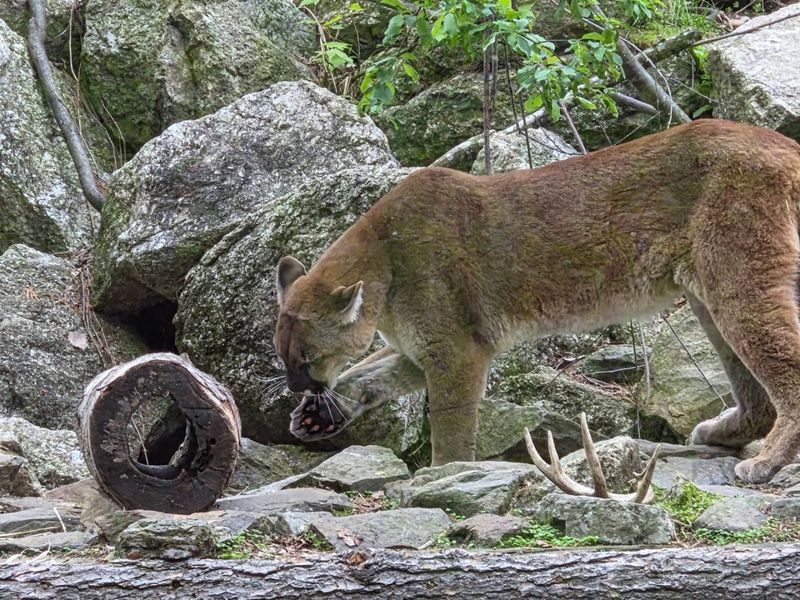
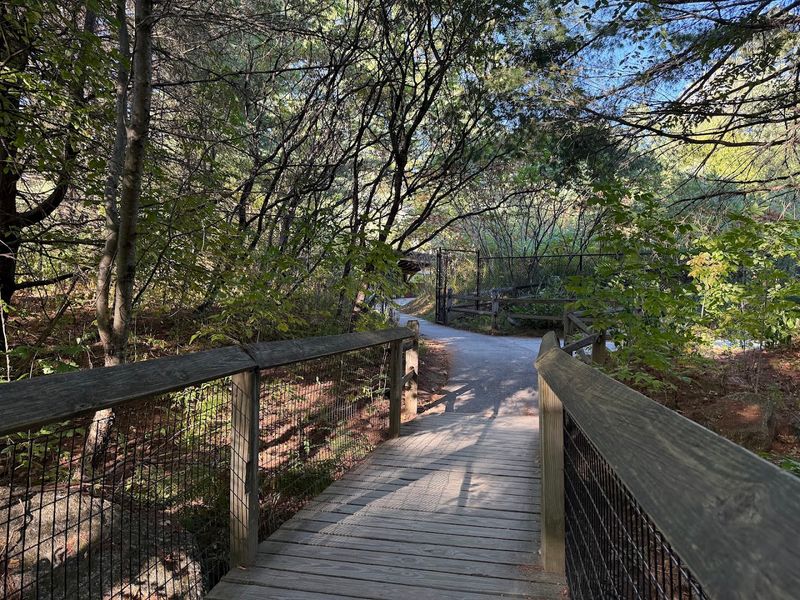
The first time you round a bend on this trail and find yourself eye level with a mountain lion lounging in a naturalistic habitat, you realize this is not your average zoo visit. The Live Animal Exhibit Trail at Squam Lakes Natural Science Center stretches three-quarters of a mile through open meadows, mature forest, and marsh boardwalks.
It typically takes around two and a half hours to complete, and that time flies.
Every animal you encounter here is a non-releasable native New Hampshire species. That means each one has a story, and the signage along the trail actually tells it.
You learn why a particular red fox cannot survive in the wild, or how a fisher came to call this place home. That context changes the experience entirely.
It stops feeling like a spectacle and starts feeling like something meaningful.
Black bears, bobcats, coyotes, river otters, white-tailed deer, and red and gray foxes are just a few of the residents you might spot along the way. The habitats are designed to feel like extensions of the surrounding forest rather than cages dropped into a landscape.
Chipmunks scurry freely across the path, and dragonflies hover near the boardwalk sections.
Interactive exhibits at each stop dig into animal adaptations, ecosystem connections, and the relationship between wildlife and the land. Kids can solve puzzles, match tracks, and explore hands-on displays.
Adults tend to get just as absorbed. The whole trail has an unhurried, thoughtful quality that most zoos simply cannot replicate.
Raptors Up Close Will Leave You Genuinely Speechless
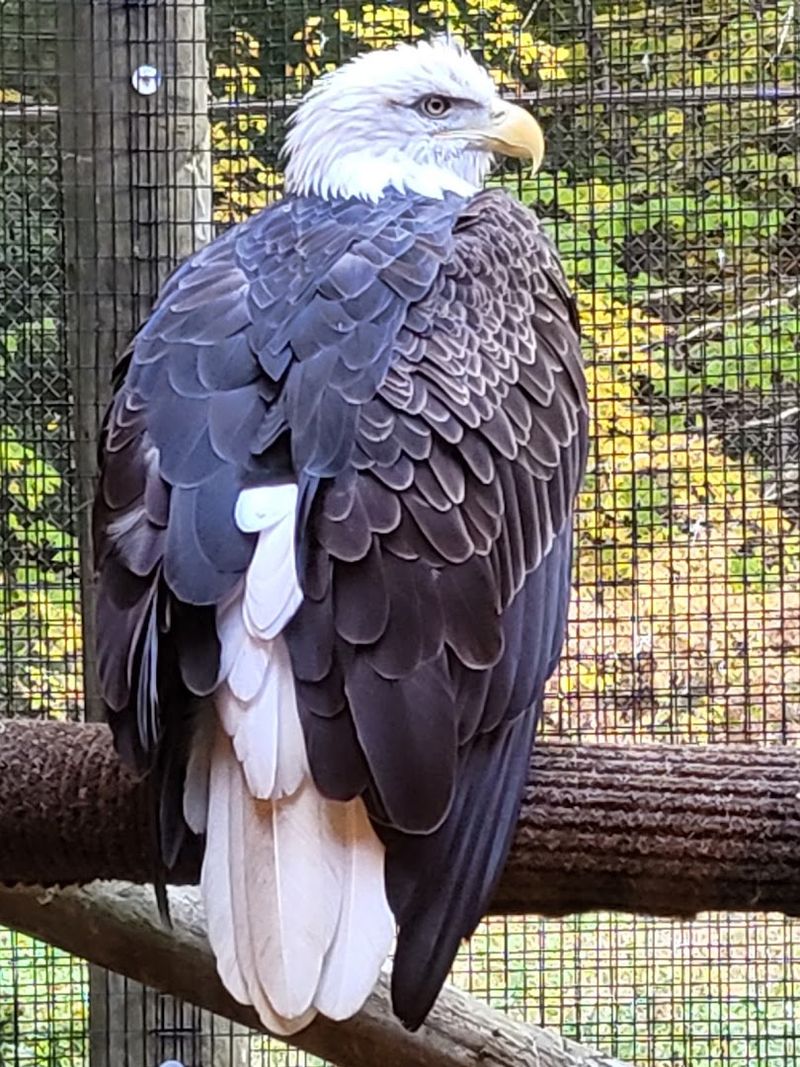
There is a particular moment on the trail when you approach the raptor exhibits and suddenly understand just how large a bald eagle actually is. Photos do not prepare you for it.
Standing a few feet from one of these birds, watching it shift its weight and fix you with that sharp, golden gaze, is something that sticks with you long after the visit ends.
Squam Lakes Natural Science Center is home to an impressive lineup of birds of prey. Barred owls, red-tailed hawks, broad-winged hawks, red-shouldered hawks, American kestrels, Northern Goshawks, and turkey vultures all have a presence here.
Each bird is non-releasable, meaning it arrived at the center due to injury or other circumstances that make life in the wild no longer viable.
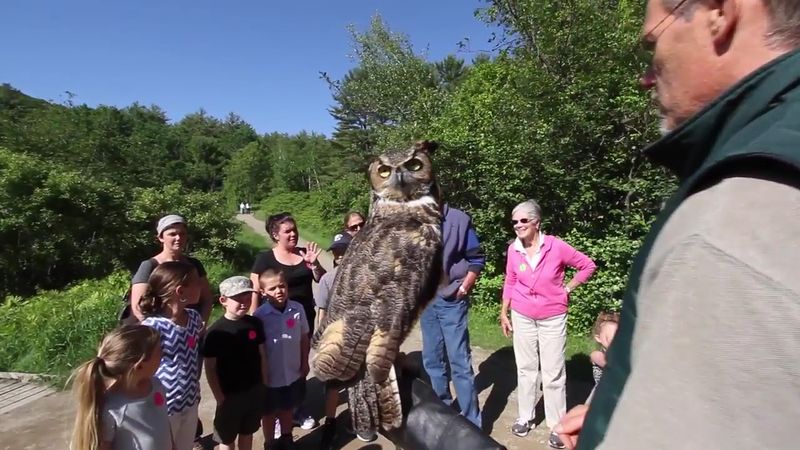
The daily “Up Close to Animals” presentations are worth planning your visit around. Naturalists bring out animal ambassadors and share details about behavior, biology, and conservation in a way that feels conversational rather than scripted.
Watching a hawk extend its wings just a few feet away from you is the kind of experience that makes kids go quiet in the best possible way.
For adults who think they have seen enough bald eagles on TV to feel impressed, I will just say this: you have not. Seeing one in person, at close range, in a setting this calm and natural, resets your sense of scale completely.
The raptor section alone is worth the trip to Holderness.
The Squam Lake Cruises Add a Whole Different Layer to the Visit
Most people come to the Science Center for the trail, and they leave without realizing there is an entirely separate adventure waiting on the water. The guided Squam Lake Cruises run from May through October and last about 90 minutes.
Each cruise is led by an experienced naturalist who knows these waters and the creatures that call them home.
Common loons are one of the highlights out on the lake. Spotting one gliding low across the water, or hearing that haunting call echo across the surface, is the kind of moment that feels almost cinematic.
Bald eagles have been known to appear along the shoreline too, which never gets old no matter how many times you have seen one on the trail earlier in the day.
The cruise is a genuinely different pace from the trail experience. Out on the water, the whole landscape opens up.
You see the lake ecology from a perspective that no land-based trail can offer. The naturalist guides the conversation naturally, pointing out features of the shoreline, explaining how the lake ecosystem functions, and fielding questions with obvious enthusiasm for the subject.
Squam Lake has its own kind of quiet magic. The water reflects the tree line in a way that makes everything feel still and unhurried.
Families with younger kids tend to love the change of scenery after the trail, and adults who just want to sit and absorb the landscape find it equally rewarding. It is a beautiful addition to an already full day.
Kirkwood Gardens and the Surrounding Trails Deserve More Credit
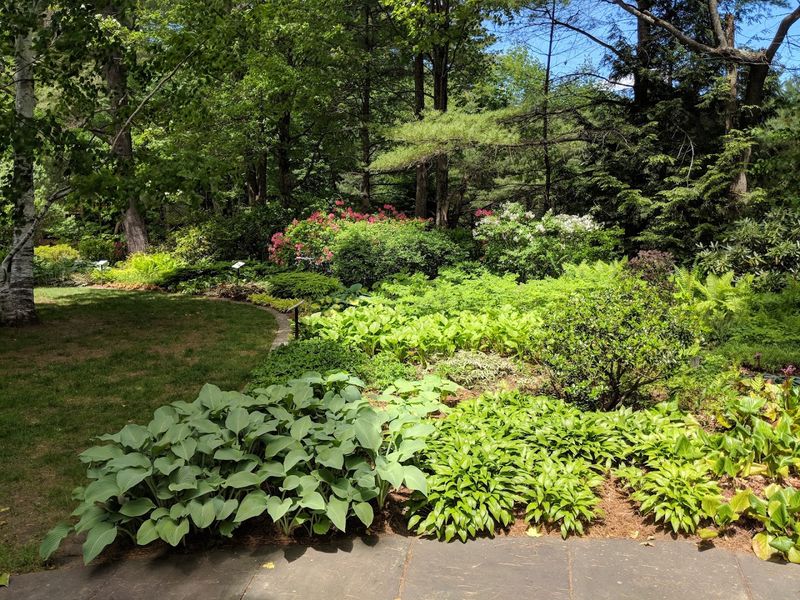
Not everything at Squam Lakes Natural Science Center roars or swoops. The Kirkwood Gardens offer a quieter kind of discovery, one that rewards patience and a slow pace.
This public garden showcases native plant species from the New Hampshire region and draws in local pollinators like bees and butterflies in impressive numbers during the warmer months.
Watching a monarch butterfly move through a garden designed specifically to support it feels different from seeing one in a random backyard. There is intention behind every plant here, and that sense of purpose comes through in how the space feels.
It is peaceful in a way that is hard to describe but easy to appreciate.
Beyond the gardens, the center offers additional hiking trails that extend the experience well past the main animal exhibit loop. The Ecotone, Forest, and Mt.
Fayal Trails each offer something distinct. Some are short and easy, others provide more of a workout, but all of them move through landscapes that feel genuinely wild rather than manicured.
The “Hidden Stories” trail camera project adds another layer of depth to the experience. It uses real collected data, images, and video to show how local wildlife like red fox, white-tailed deer, coyote, and black bear actually move through and use the surrounding landscape.
It is the kind of exhibit that makes you think about what is happening in these woods long after dark, when the visitors have gone home and the animals have the place to themselves again.
This Place Was Built With Kids in Mind, But Adults Love It Just As Much
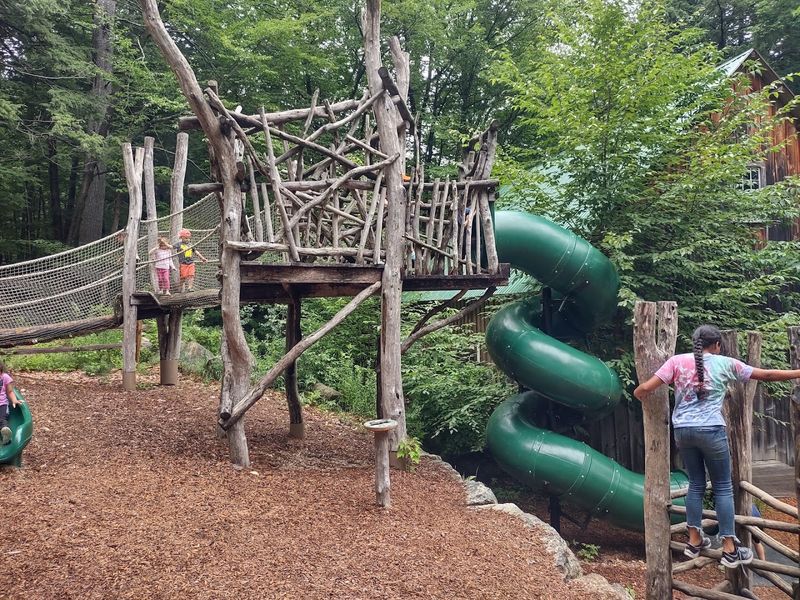
Every exhibit stop along the trail comes equipped with something hands-on for younger visitors. Puzzles, matching games, interactive walls, and tactile displays keep energy levels high and attention spans from wandering.
Parents who expect to drag kids through a quiet nature walk are often surprised to find their children leading the charge from one stop to the next.
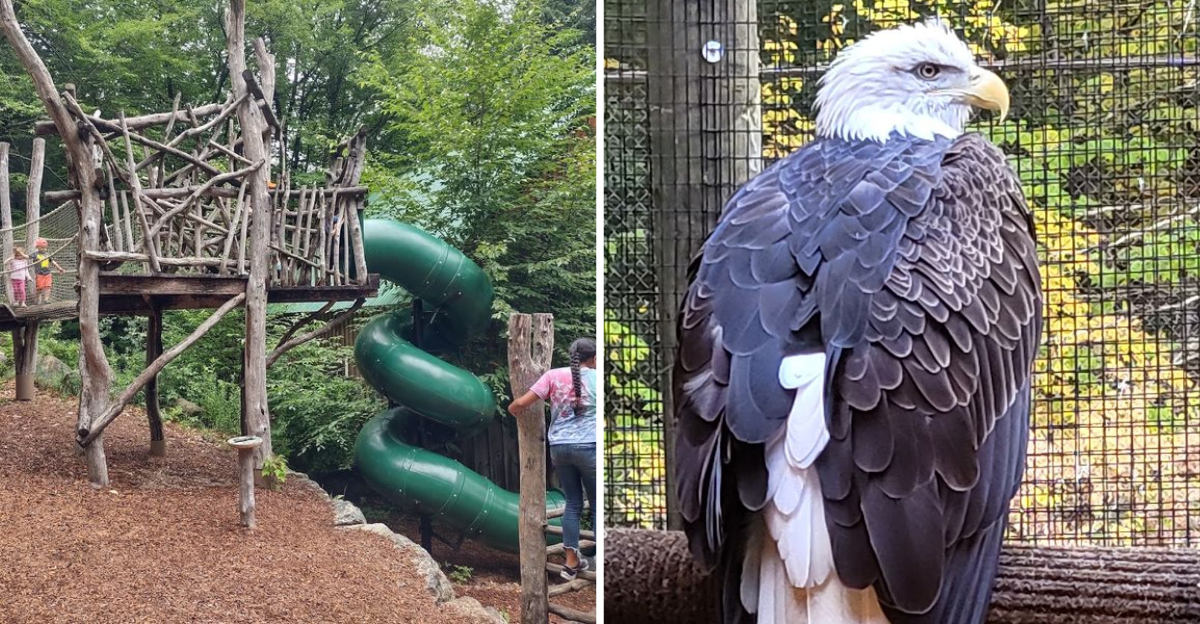
The play barn is a genuine crowd-pleaser. It has climbing spots, tunnels, and slides built into a structure that fits naturally into the surrounding landscape.
After a couple hours of walking and learning, having a space to burn off energy is a smart design choice that parents clearly appreciate. A nature-inspired playground woven into the trail itself adds more spontaneous moments of joy along the way.
Picnic tables are scattered throughout the property, and bringing your own lunch is a perfectly reasonable strategy for a full day visit. The snack bar handles the moments when hunger sneaks up mid-trail.
The gift shop near the entrance carries nature-inspired items at prices that do not make you wince, which is a detail that anyone who has visited a major zoo will genuinely appreciate.
Squam Lakes Natural Science Center is also a Certified Sensory Inclusive facility through KultureCity. Sensory bags with noise-canceling headphones, visual cue cards, and fidget tools are available at the entrance.
That kind of thoughtful accessibility makes the center welcoming to a much wider range of visitors, and it reflects the care that clearly goes into every aspect of this place.
The Science Center’s Mission Sets It Apart From Every Other Wildlife Attraction in the Region
Founded in 1966, Squam Lakes Natural Science Center has been doing this work for decades before wildlife education became a popular concept. Its mission is straightforward: advance the public’s understanding of ecology through an exploration of New Hampshire’s natural world.
Everything on the property, from the trail design to the educational signage to the cruise program, exists in service of that goal.
The center holds AZA accreditation, making it the only Association of Zoos and Aquariums-accredited institution in all of northern New England. That is not a small distinction.
It reflects a commitment to animal care standards, conservation practices, and educational programming that meets rigorous professional benchmarks. The animals here are not props.
They are ambassadors for an ecosystem that most visitors drive through without really seeing.
The Blue Heron School, New Hampshire’s first nature-based Montessori school, operates on the property. That detail says a lot about the center’s long-term investment in environmental education.
This is not a seasonal attraction that packs up in November and calls it a year. It is a living, functioning institution with roots deep in the community and the landscape.
Visiting between May 1 and November 1 gives you access to the full trail experience, with hours running from 9:30 a.m. to 5:00 p.m. and last admission at 3:30 p.m. Arriving earlier in the day tends to mean more active animals and a quieter experience overall.
New Hampshire has been quietly hosting something genuinely special in Holderness, and it is the kind of place that earns a return visit every single season.
Address: 23 Science Center Road, Holderness, NH 03245
