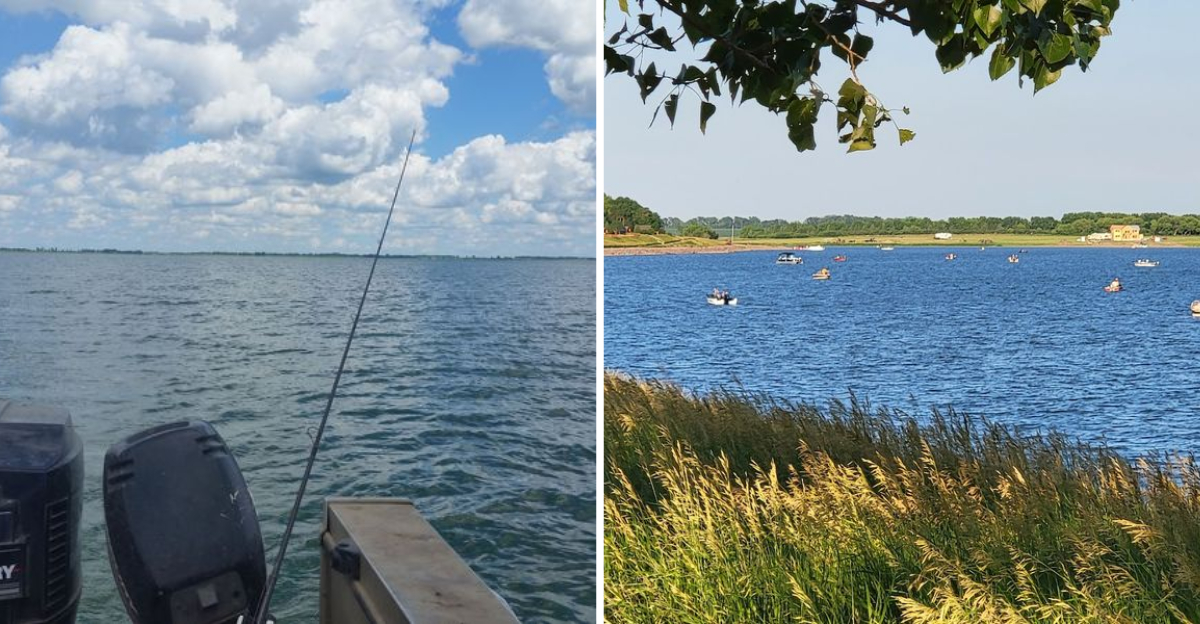
That lake in South Dakota that has completely dried up, come back to life, and done the whole thing over again more times than most people realize. This lake on the open prairie is one of those places that feels almost too strange to be real.
I first heard about it from a local who casually mentioned that cattle once grazed where the water now sits, and that stopped me cold.
The lake’s original name meant something like Dry Woods Lake, which tells you everything about its personality.
It has flooded roads, overflowed into rivers, and then quietly disappeared back into the earth like nothing happened. This place rewrites your idea of what a lake even is.
A Lake With a Name That Warned You From the Start
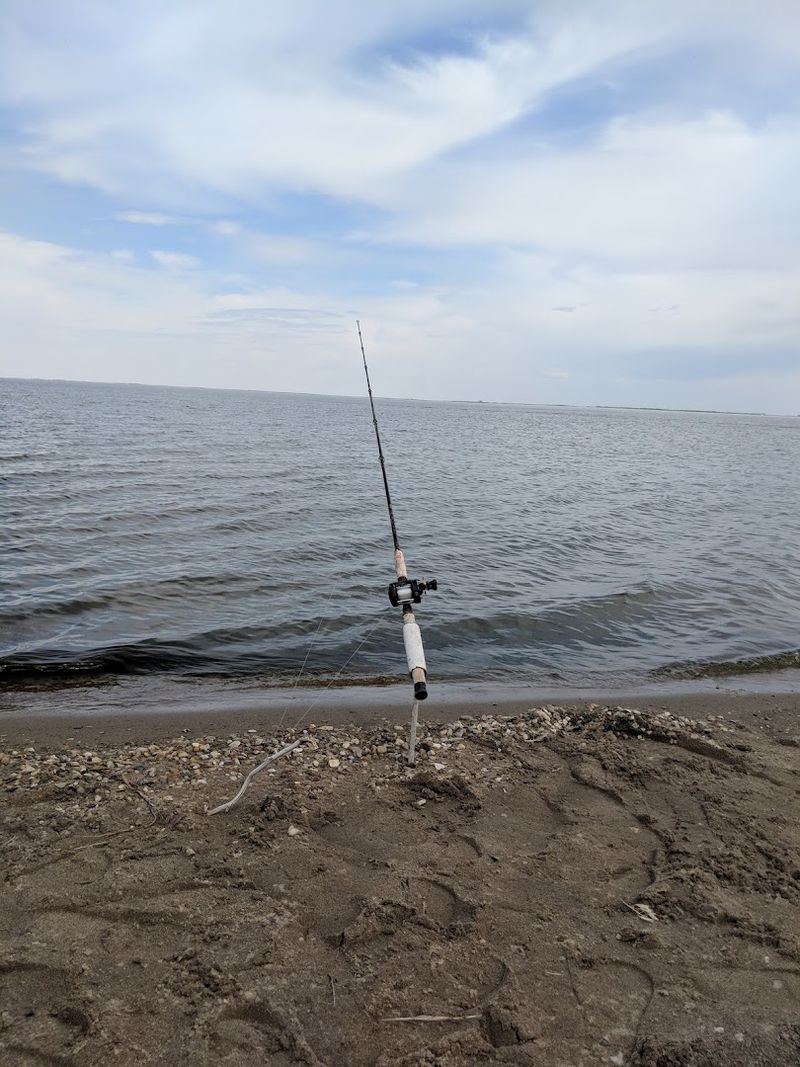
Long before anyone built a boat ramp or pitched a tent on its shores, the people who knew this land best had already figured out what Lake Thompson truly was. American Indians called it “Dry Woods Lake,” a name that carried a quiet but honest warning.
It was not named for its beauty or its fish. It was named for what it did when the rain stopped coming.
That original name is one of the most telling details about this place. Most lakes get poetic names tied to color, shape, or legend.
This one got a name that basically said, “do not count on us.” There is something refreshingly honest about that, especially compared to how we usually talk about natural landmarks.
The name stuck around in memory even after newer maps replaced it with something more formal. Locals and historians still reference it when explaining why the lake behaves the way it does.
It sits in the Prairie Pothole Region, a landscape shaped by glaciers that left behind thousands of shallow, bowl-like depressions. Some hold water for decades.
Some dry out every few years. Lake Thompson does both, sometimes within a single generation’s lifetime, making its old name feel less like history and more like a living description.
The 1930s: When the Lake Became a Pasture
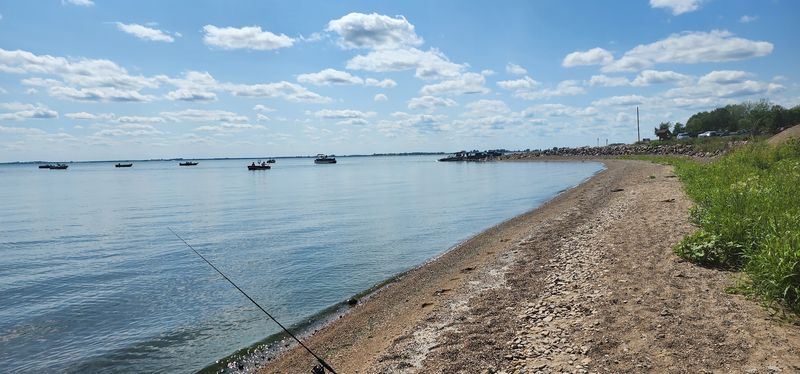
Picture the 1930s in South Dakota. The Dust Bowl was grinding across the plains, rainfall had become a distant memory for many communities, and farmers were doing everything they could just to survive.
Out in Kingsbury County, something remarkable was happening at Lake Thompson, or rather, something unremarkable, because the lake had simply ceased to exist.
The entire lakebed had dried out completely. Where fish once swam and waterfowl once gathered, there was now open, flat land.
Farmers and ranchers recognized the opportunity and put the former lakebed to use as pastureland. Cattle grazed right where boats would eventually float decades later.
It is a detail that feels almost surreal when you are standing at the water’s edge today watching a pelican coast overhead.
This was not a partial drying. The lake did not shrink to a puddle.
It vanished. The 1930s drought was brutal across the region, and Lake Thompson simply reflected the reality of that era in the most literal way possible.
That total disappearance is part of what makes the lake’s story so compelling. It did not fade quietly.
It transformed entirely, became something else for a while, and then slowly, eventually, came back.
The Mid-1980s Comeback Nobody Saw Coming
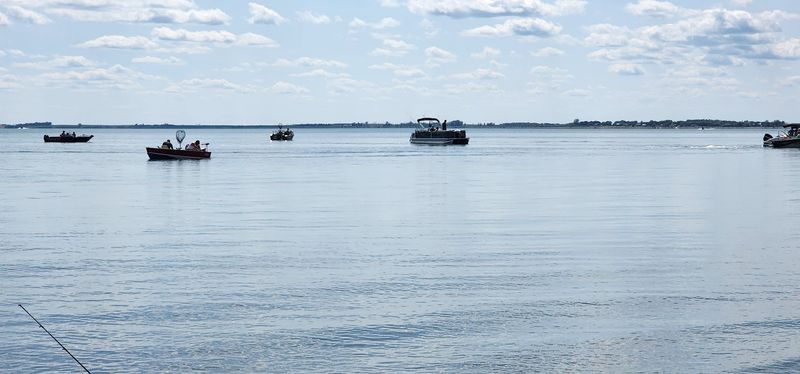
By the early 1980s, Lake Thompson was essentially a large, soggy slough. There was some open water, but calling it a lake felt generous.
Then the rain came, and it did not stop. Heavy rainfall and significant snowmelt through the mid-1980s began pouring water into the shallow basin at a rate that caught nearly everyone off guard.
Water levels rose by nearly 20 feet. That is not a typo.
Twenty feet of new water depth transformed a marshy wetland back into a full, sprawling lake in just a few years. By the early 1990s, Lake Thompson had grown to more than 20,000 acres, making it the largest natural lake in South Dakota.
The turnaround was staggering in scale and speed.
Roads flooded. Properties along the shoreline were affected.
The lake was not just back, it was bigger and more forceful than it had been in living memory. In October 1986, the water rose so high that it overflowed into the East Fork Vermillion River.
That overflow was noted as the first of its kind in over 100 years. The lake had not just returned.
It had made an entrance that nobody in the region was likely to forget anytime soon.
Fishing at Lake Thompson: What the Water Holds Today
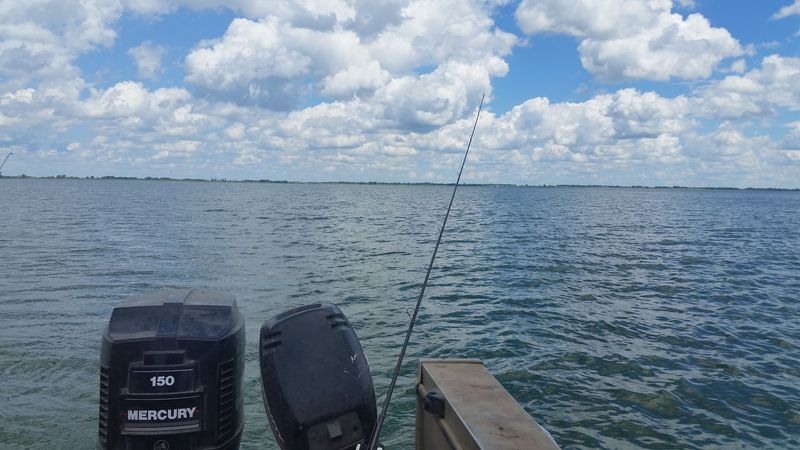
One of the best things about visiting Lake Thompson today is that the fishing is genuinely excellent. The lake holds an impressive variety of species, which means you never quite know what is going to end up on the end of your line.
Walleye, perch, crappie, northern pike, silver bass, and smallmouth bass all call this lake home. That kind of diversity keeps both casual anglers and serious fishers coming back year after year.
The south shore has a fish cleaning station, which is a practical detail that makes a real difference after a long day on the water. There are boat ramps available, and shore fishing is accessible too, so you do not need a boat to enjoy a good afternoon of casting.
The Bait Box, a local shop in the area, is a solid stop before heading out. They carry gear suited to these specific waters and can point you toward what is biting.
Early mornings on the lake have a particular kind of quiet that feels almost private. The light comes up slowly over the flat prairie horizon, and the water sits glassy and still before the wind picks up.
It is the kind of fishing experience that has very little to do with how many you catch and everything to do with where you are while you are doing it.
Camping and Sunsets at the State Park
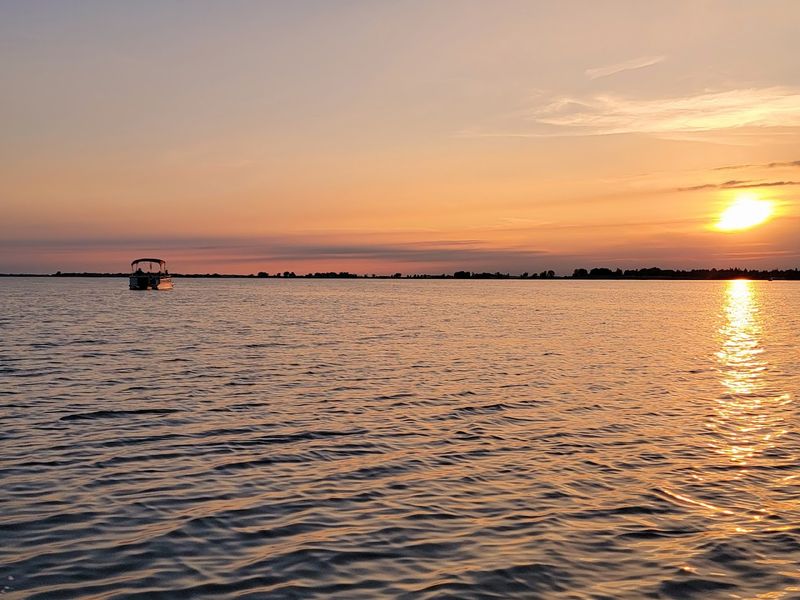
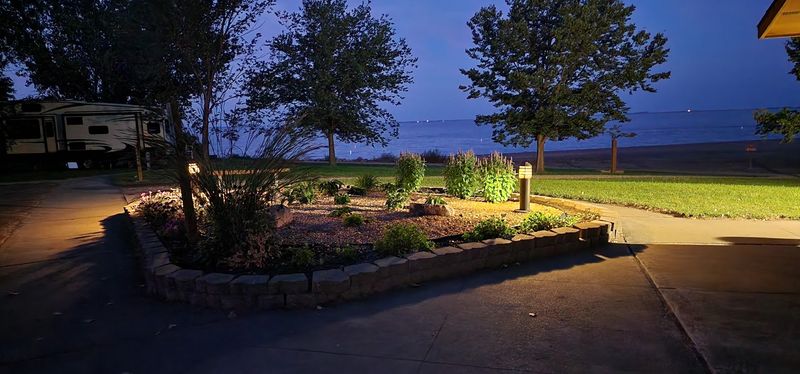
There is a state park campground on Lake Thompson’s shores, and it has the kind of setting that makes you want to slow everything down. Campsites back right up to the water, which means you can fall asleep to the sound of small waves and wake up to the sunrise coming off the lake.
Bathroom facilities and shower rooms are available on site, which adds a layer of comfort without taking away from the outdoor feel.
Cabins are available too, though they are described as minimal, which is honestly part of the charm. You are not coming here for luxury.
You are coming for the open sky, the wide water, and the kind of stillness that is genuinely hard to find anymore. Sunrises and sunsets at Lake Thompson have a reputation among regular visitors for being especially vivid, partly because there is nothing on the flat prairie horizon to interrupt them.
Campfires in the evening have a particular warmth here, maybe because the lake reflects the light back at you and the sky stretches so wide overhead. It feels like a lot of space and very little noise.
For families, weekend trips, or anyone needing a proper reset, this campground delivers something honest and unhurried that is easy to appreciate the moment you arrive.
Why the Lake Keeps Draining and Refilling
The science behind Lake Thompson’s dramatic behavior is rooted in the geography of the Prairie Pothole Region. When glaciers retreated from this part of North America thousands of years ago, they left behind a pockmarked landscape full of shallow depressions.
These potholes collect water during wet years and dry out during droughts. Lake Thompson sits in one of the larger ones, which is why its swings are so extreme.
The lake has no major river feeding it directly. It depends almost entirely on precipitation, snowmelt, and the movement of groundwater.
In wet cycles, water pours in from surrounding fields and wetlands, and the lake expands quickly. In dry cycles, evaporation and seepage pull the water back down just as fast.
There is no dam to regulate it and no large stream to keep a baseline level stable.
This makes Lake Thompson highly sensitive to climate patterns. A few years of above-average snowfall can bring it roaring back.
A stretch of dry summers can shrink it dramatically. Scientists and water managers watch its levels closely because the lake essentially acts as a gauge for regional precipitation trends.
It is less a permanent body of water and more a long-running record of what the sky over South Dakota has been doing for the past several thousand years.
Planning Your Visit to Lake Thompson Today
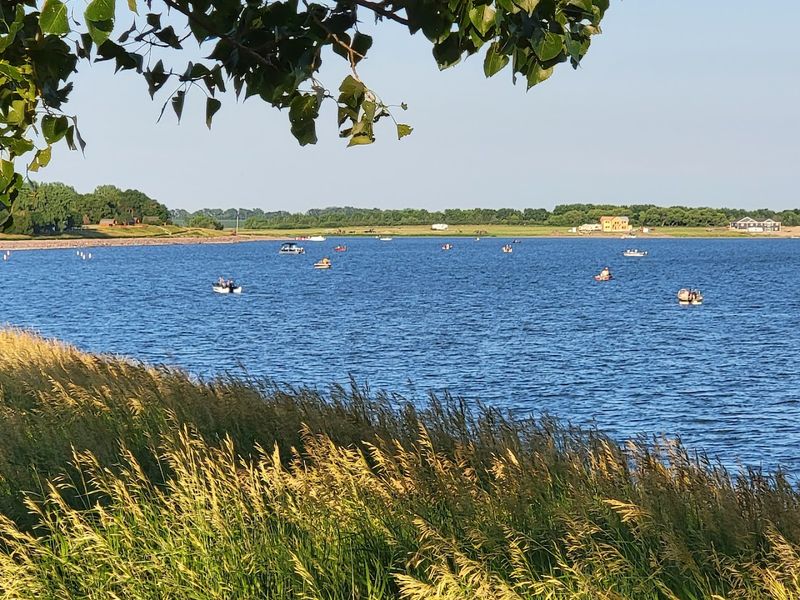
Getting to Lake Thompson is straightforward if you are heading through eastern South Dakota. The lake sits in Kingsbury County, roughly in the middle of the state’s eastern half, and is accessible from several directions off the highway.
The surrounding area is quiet and rural, which is a big part of the appeal. You are not fighting crowds or navigating a busy tourist corridor.
The recreation area on the south shore is the main hub for visitors. You will find the campground, boat ramps, beach area, fish cleaning station, and bathroom facilities all within easy reach.
The beach has a reputation for being smooth and mostly stone-free, which makes it comfortable for swimming when the water conditions are right. Algae blooms can appear during warm months, so checking conditions before a swim is always a good idea.
There is a relaxed, unpretentious energy to this place that is hard to manufacture. People come here to fish, to camp, to sit by the water without an agenda.
The lake’s strange history adds a layer of meaning to every visit. Knowing that the ground beneath the water was once dry pasture, and that the water itself has come and gone more times than anyone has fully documented, makes standing at the shoreline feel a little more significant than it might otherwise.
