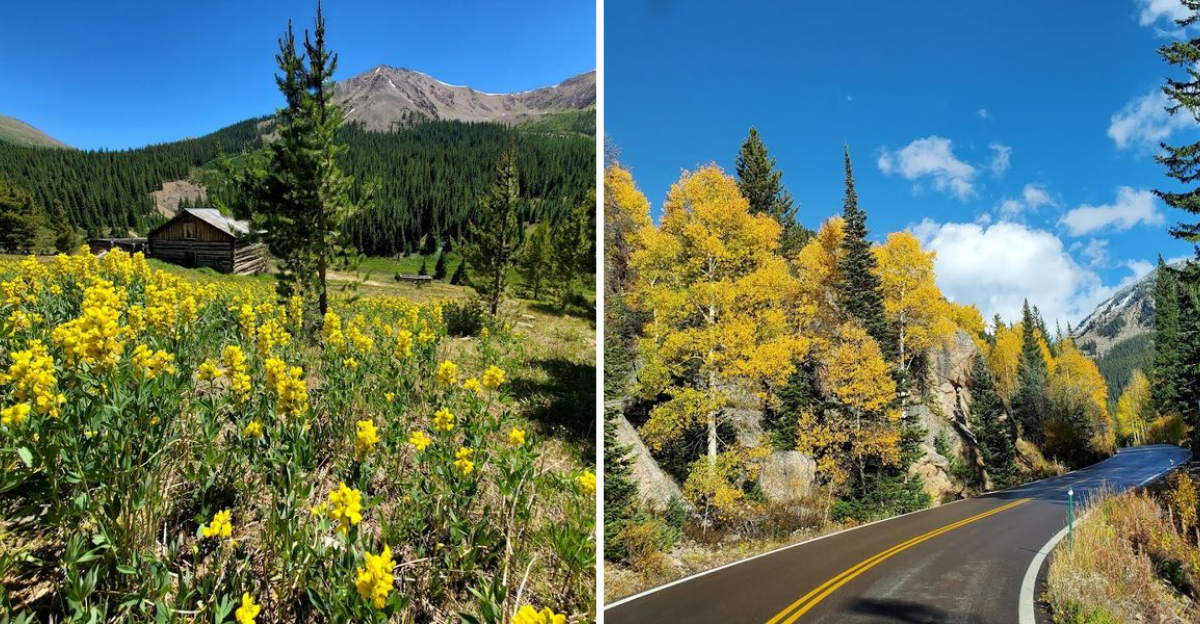
Somewhere around mile marker 50 on a Colorado highway, the trees thin out and the world suddenly opens up into something that feels almost unreal.
I had been told about a ghost town tucked high in the Rocky Mountains at nearly 11,000 feet, but nothing quite prepares you for the first glimpse of those weathered wooden buildings surrounded by an explosion of color.
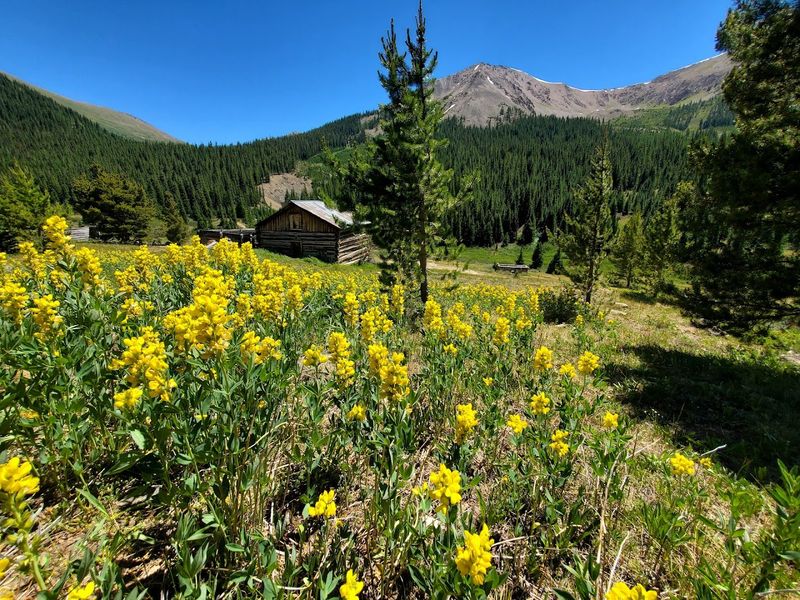
The wildflowers here spill across meadows and creep right up to the crumbling walls of a town abandoned over a century ago.
Botanists, ecologists, and climate researchers make the trek up the pass specifically to study what grows here, because the floral diversity at this elevation is genuinely extraordinary.
I wandered through the ruins on a clear morning, wildflowers brushing against my boots, trying to imagine what it must have been like to live here when the mines were still running.
The combination of gold rush history and living, breathing botanical spectacle makes this place unlike anywhere else I have ever visited.
It earns a permanent place in your memory, not because of any single dramatic moment, but because every step reveals something new and quietly astonishing.
A Mountain Dream, Briefly Lived: The History of Independence Ghost Town
Gold has a way of making people believe the impossible. On July 4, 1879, prospectors discovered gold in these high mountains, and within just a few years, a rough tent camp had transformed into a community of over 1,500 people.
More than 40 businesses operated here, including post offices, grocery stores, and boarding houses, all serving miners chasing their fortunes above treeline.
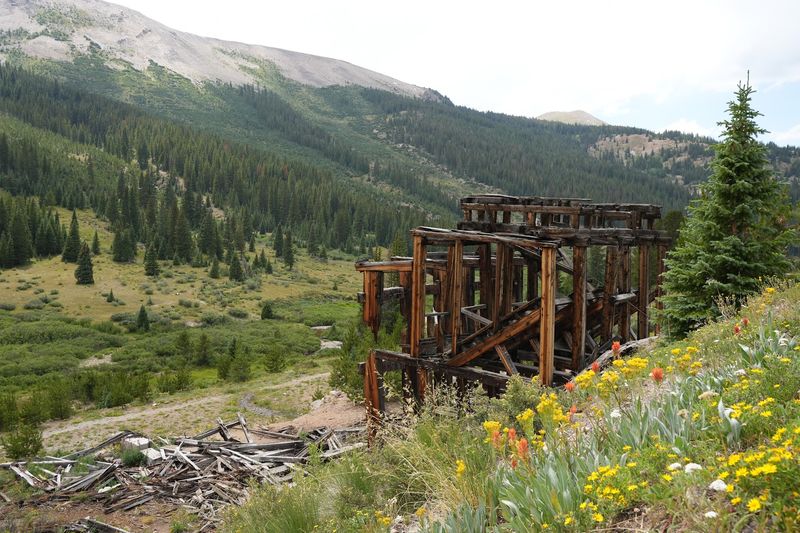
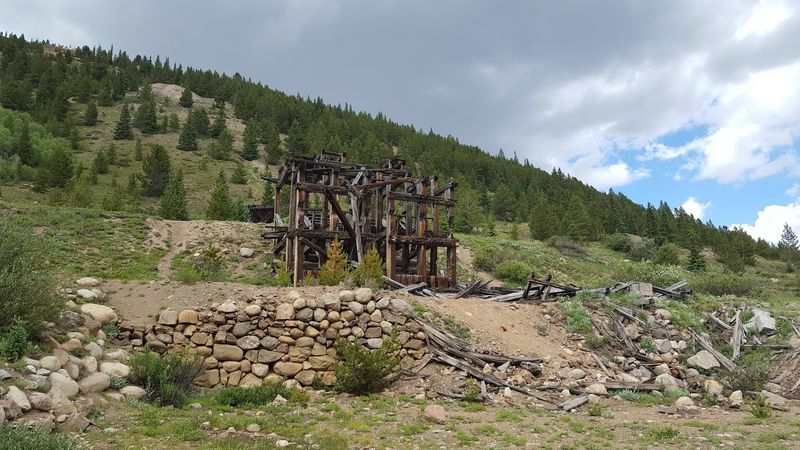
Between 1881 and 1882, the mines produced more than $190,000 worth of gold, a staggering figure for the era. The Farwell Stamp Mill, whose impressive ruins still stand today, dates from this peak period of activity.
The local newspaper, the Independence Miner, kept residents connected and informed.
But the gold veins proved shallow. By 1888, fewer than 100 people remained, most having followed silver discoveries to nearby Aspen.
A catastrophic blizzard in the winter of 1899 cut off supply routes entirely, triggering a mass exodus. By 1912, Independence was completely abandoned.
Today the site is managed by the Aspen Historical Society and the U.S. Forest Service as an archaeological preserve.
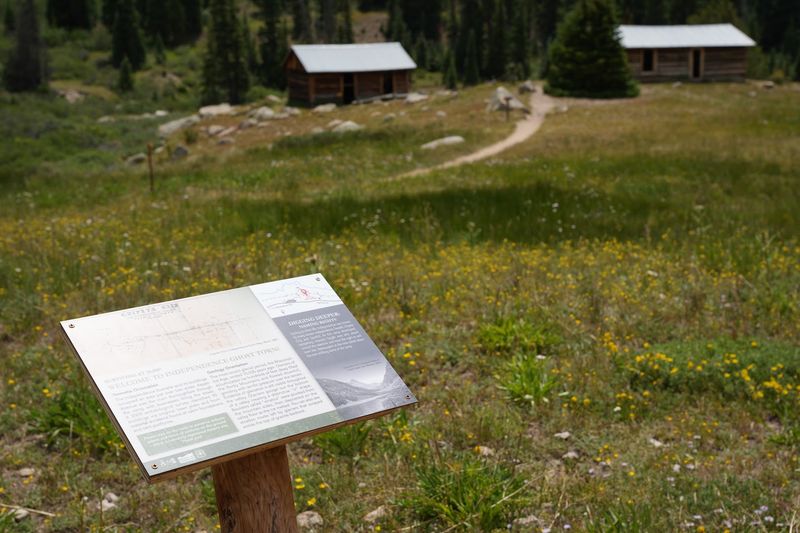
Interpretive signs throughout the grounds tell the full story, making it easy to imagine the vibrant, chaotic energy that once filled these quiet valleys.
Where History Meets the High Alpine Bloom
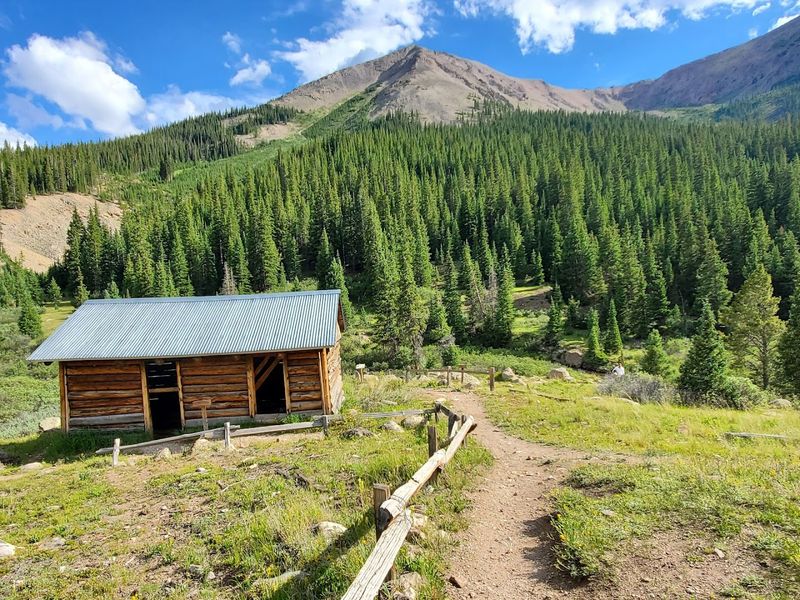
There is something genuinely moving about seeing flowers push up through the floorboards of a building that once housed a family. The ruins of Independence Ghost Town sit within the White River National Forest, and the surrounding landscape offers a network of scenic trails that blend historical exploration with deep natural immersion.
The beauty of the blooms feels more profound here precisely because of that contrast.
Positioned just below the Continental Divide, Independence Pass creates a series of unique microclimates that support an astonishing range of alpine flora. The elevation and terrain channel moisture and sunlight in ways that benefit dozens of wildflower species simultaneously.
I noticed how the vibrant colors seemed to intensify against the muted grays and browns of the old timber structures.
The juxtaposition is not accidental or incidental. Nature has been reclaiming this space for over a century, and the result is a landscape that tells two stories at once.
One story is about human ambition and the brutal realities of mountain life. The other is about resilience, color, and the quiet persistence of living things.
Both stories are worth your full attention, and this trail system gives you the time and space to absorb them properly.
A Kaleidoscope of Colors on Independence Pass
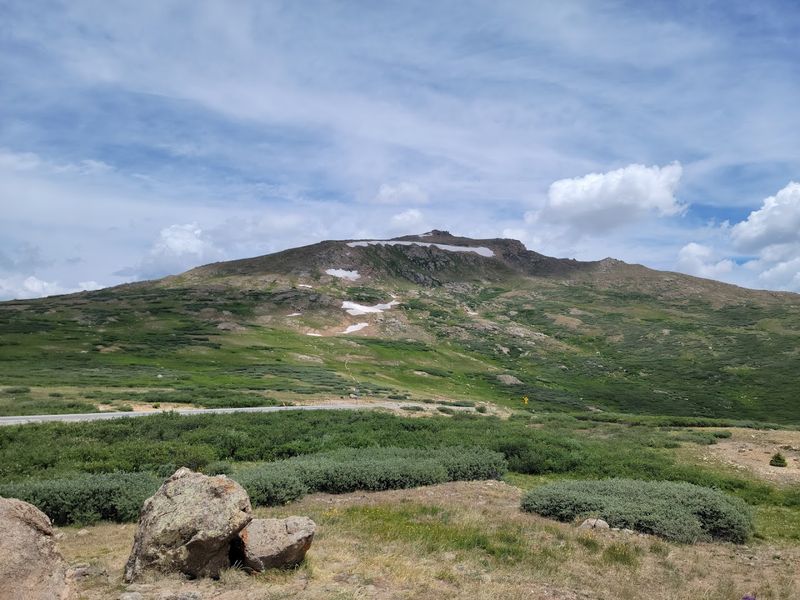
The variety of species growing around Independence is not something you can fully appreciate from a photograph. Deep purples of monkshood stand tall beside the bright yellows of ragwort, while the Colorado blue columbine, the state flower, tucks itself into shaded corners with elegant restraint.
Every few steps brings something new into view, and the cumulative effect is genuinely overwhelming in the best possible way.
Meadows during peak season transform into dense tapestries of color. Fuzzy prairie smoke, delicate bluebells, and several varieties of cinquefoil appear in clusters, their petals ranging from warm yellows to creamy whites.
Purple geraniums and white locoweed add texture and variety to an already rich palette.
During a superbloom year, the experience shifts from impressive to almost surreal. Dormant seeds that have waited years suddenly burst into simultaneous flower, creating carpets so dense they look almost artificial.
Even in a more typical season, the abundance here exceeds what you would find at lower elevations by a significant margin.
Each walk through these meadows feels like a slow, unhurried discovery. The sheer number of species rewards patience and a willingness to crouch down and look closely at what is growing right at your feet.
Tracking the Blooms: The Independence Pass Foundation’s Scientific Work
Casual admiration is one thing, but the wildflowers around Independence attract a different kind of attention entirely. The Independence Pass Foundation, based in Aspen, conducts detailed scientific studies of wildflower phenology in this region.
Their research tracks the timing of biological events like first bloom, peak bloom, and last flowering across multiple species and elevations.
One of their key study areas is the Linkins Lake Trail, located within the broader Independence Pass corridor. Researchers identify species, count individual blooms, and carefully document how timing shifts from year to year.
This kind of long-term data is rare and genuinely valuable for understanding how alpine ecosystems respond to environmental change.
The foundation also runs an annual cover composition study near the summit of Independence Pass. Scientists spend hours on their knees recording every type of ground cover present, noting percentages and species diversity with meticulous care.
It is painstaking, unglamorous work, but the data it generates is irreplaceable.
Their findings help answer pressing questions about whether warming temperatures are compressing the wildflower season or shifting it earlier in the year. The research conducted here feeds directly into broader scientific conversations about mountain ecosystems globally, which is exactly why researchers keep making the long drive up the pass.
Climate’s Embrace: Why the Pass Is a Living Laboratory
Rocky Mountain temperatures have risen measurably over recent decades, and snowmelt is occurring earlier each spring. These shifts have direct, observable consequences for wildflower timing, and Independence Pass sits at the center of ongoing efforts to document and understand those changes.
The elevation and ecological sensitivity of this area make it an ideal natural laboratory.
One of the most pressing concerns researchers are watching is shrubification, a process where hardy shrubs gradually replace grasses and wildflowers as temperatures rise. When shrubs take over alpine terrain, the open meadow habitat that supports so many flowering species begins to disappear.
Tracking this process in real time requires exactly the kind of long-term field data being collected around Independence.
The complexity of the situation keeps scientists returning season after season. Early blooming is not always a straightforward advantage for wildflowers, because late frosts can devastate flowers that emerged too soon.
Understanding which species are resilient and which are vulnerable requires years of careful observation across varied conditions.
Every bloom documented here contributes to a growing body of knowledge about how alpine ecosystems are shifting under pressure. This place is not just beautiful; it is actively helping scientists understand what our mountain environments might look like in the decades ahead.
A Rare Spectacle: The Green Gentian Superbloom
Some natural events are so rare that witnessing them feels like genuine luck. The green gentian, also called the monument plant, spends years, sometimes decades, as a low cluster of leaves before finally sending up a towering stalk of pale green and white flowers.
After that single dramatic bloom, the plant dies. Entire populations of these plants can synchronize their blooming in ways that scientists still do not fully understand.
The Independence Pass Foundation documented over 1,100 green gentians blooming around Independence in a single late June season. Seeing more than a thousand six-foot-tall plants flowering simultaneously across a mountain meadow is the kind of spectacle that genuinely stops you in your tracks.
It is not something you can compare to anything else in ordinary experience.
This kind of synchronized superbloom might only occur once every seven years in a given location. The rarity of the event is part of what draws researchers, who want to understand the environmental triggers that cause so many plants to bloom at the same time after years of dormancy.
For visitors lucky enough to time their trip correctly, the green gentian superbloom adds an entirely different dimension to the Independence experience. It transforms an already remarkable destination into something that feels almost mythological in its scale and beauty.
Experiencing the Wildflower Magic: Planning Your Visit
July through September is the sweet spot for experiencing Independence Ghost Town at its most colorful. Highway 82, part of the Top of the Rockies Scenic Byway, is reliably open during these months, and the long summer days give you plenty of time to explore without rushing.
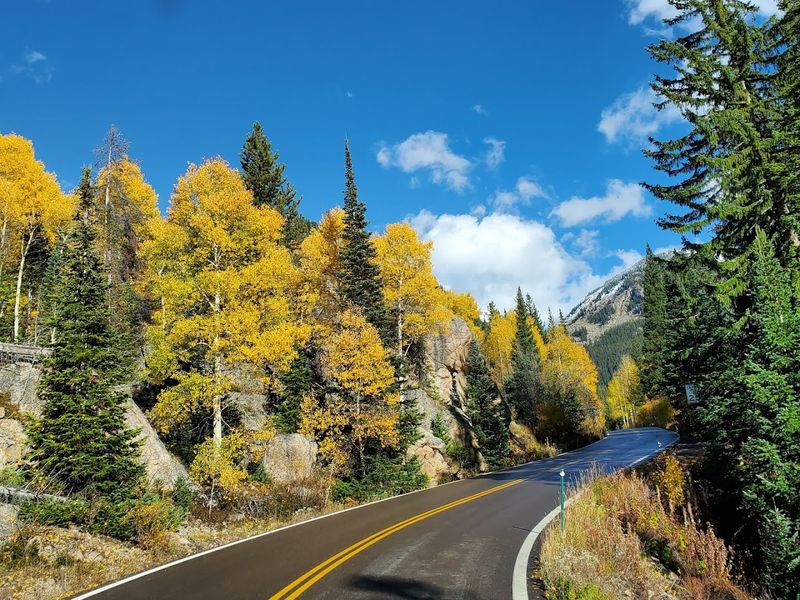
The drive itself is worth the trip, with narrow winding roads and dramatic views that demand your full attention.
Parking is available just off the road, with space for around five or six vehicles. The trail through the ghost town is self-guided, moderate in difficulty, and accessible even for families with younger kids.
Interpretive signs placed throughout the site explain the history of each structure, making the walk genuinely educational rather than just scenic.
A few practical notes worth keeping in mind: the elevation here is close to 11,000 feet, so take it slow and drink plenty of water. Wear sturdy shoes, because the ground is rocky and uneven in places.
The site is free to visit and open year-round, though access depends on road conditions in winter and early spring.
Leave everything exactly as you find it. This is both an archaeological preserve and an active research site, and the wildflowers, the rusted cans, and the old glass fragments all belong exactly where they are.
Address: 35241-36221 CO-82, Aspen, Colorado 81611
