I found that Connecticut museum almost by accident, on a slow drive with no real plan except to see where the road went. From the sidewalk it looks like a modest brick building you would pass a hundred times without blinking, and that is exactly why the inside surprised me so much.
Eight themed rooms sit behind that plain door, packed with locks, keys, handcuffs, safes, and door hardware so detailed it feels closer to jewelry than machinery.
There is a pin-tumbler lock here that is roughly 4,000 years old, made in Egypt, sitting a few rooms away from the original patent model of the cylinder lock that changed the whole industry in the 1800s.
A volunteer walked me through the first floor at a comfortable pace, pointing out small details I would have missed on my own. I left with a strange new respect for something I use every single day without thinking, and a lingering curiosity about the thousands of stories locked away in those glass cases.
If you like places where history feels handmade and human-sized, this one earns the detour.
A Plain Brick Front Hiding Eight Packed Rooms
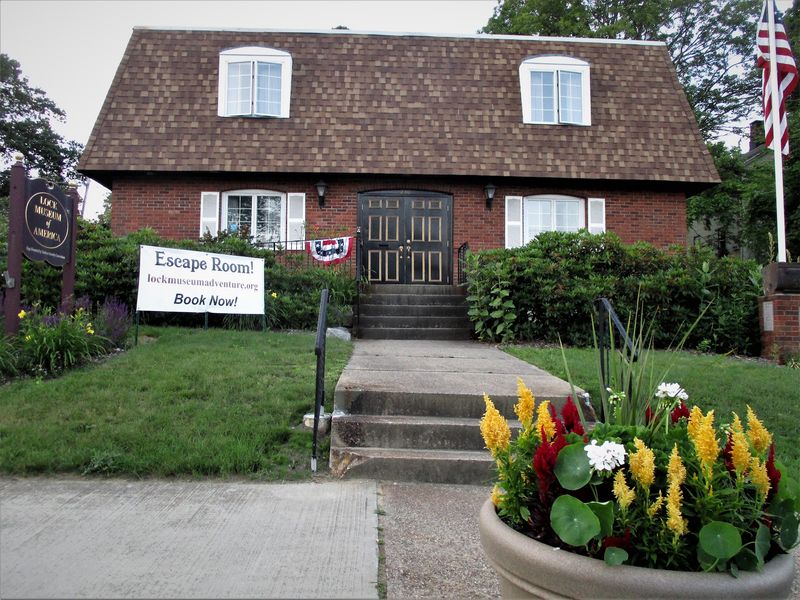
My first thought pulling up was that I had the wrong address. There is no grand entrance, no banners, no gift shop glowing through big windows.
Just a tidy building on Main Street in a Connecticut town most travelers pass through on their way to Route 8.
Then the door opens and the scale of the place rearranges your expectations pretty quickly. Eight themed rooms fan out across two floors, and every wall seems to hold another case of keys, escutcheons, padlocks, or hardware arranged in careful rows.
It is recognized as the world’s largest collection of locks, keys, handcuffs, and ornate door hardware, and it is the only museum of its type in the United States.
What struck me most was the density. Nothing feels stretched out to fill space, which happens a lot at small museums.
Instead you get the sense that someone had to make hard choices about what fit and what stayed in storage.
A practical tip from my visit: give yourself more time than you think you need. I planned forty minutes and stayed well past an hour, mostly because the labels invite you to slow down and actually read them.
Wear comfortable shoes too, since much of the visit is spent standing and leaning toward glass cases.
The building itself carries meaning beyond the collection. Since 1980, the museum has occupied the site of the original headquarters of the Eagle Lock Company, which makes the plain exterior feel a lot less plain once you know it.
The Eagle Lock Room and a Factory Town’s Memory
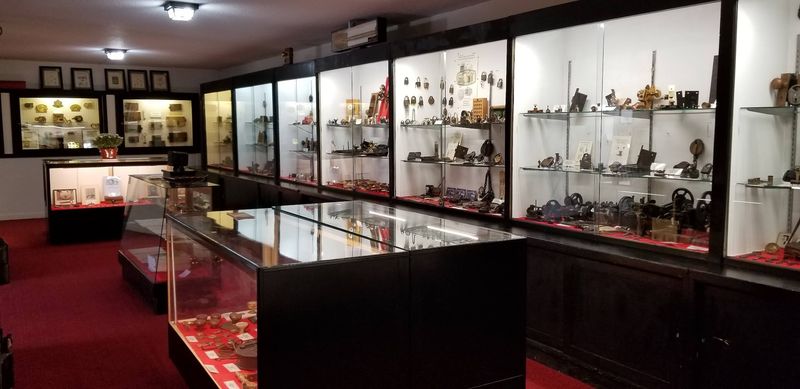
Terryville was a lock town, and the Eagle Lock Room makes that impossible to forget. More than 1,000 locks and keys made by the company between 1854 and 1954 are displayed here, grouped by type until the sheer variety starts to feel almost funny.
Trunk locks, cabinet locks, padlocks, specialty pieces. So many small brass shapes doing slightly different jobs.
James Terry, son of Eli Terry, Jr., founded the company in 1854, and it grew into one of the world’s dominant makers of these smaller locks while employing a large local workforce.
I kept thinking about the hands behind each piece, the daily shifts, the shipments leaving this exact corner of Connecticut for cities all over the world.
Step outside afterward and look across the street. Some buildings from that original Eagle Lock factory are still standing, weathered and quiet, and seeing them right there changes how the room inside reads.
The exhibit stops feeling like a display case and starts feeling like a neighborhood record.
If you enjoy industrial history, this is the section worth lingering in longest. Ask the volunteer on duty about how the company’s product lines shifted over that hundred-year run, because the answers connect to things like railroad travel, home furniture, and changing ideas about privacy.
I came in thinking locks were boring and left with a small notebook of questions. That is a decent measure of a museum, I think.
A 4,000-Year-Old Egyptian Lock That Still Makes Sense
Of everything under glass here, the piece that stopped me cold was a wooden pin-tumbler lock from Egypt, roughly 4,000 years old. Not a replica of an idea.
An actual object made by someone who wanted to keep something safe.
The design principle behind it is essentially the same one working inside your front door right now.
Pins fall into place, a key lifts them to the right height, and the mechanism releases. Four thousand years of refinement, and the core logic never needed replacing.
Nearby, an animated display breaks down exactly how a pin tumbler lock operates, with moving parts you can watch instead of just reading about.
I have looked at diagrams of this before and never really understood it. Watching the pins rise and settle made it click in about ten seconds.
Bring kids to this spot specifically. It is hands-on enough to hold attention, and the jump from ancient wood to modern brass gives them something concrete to grab onto.
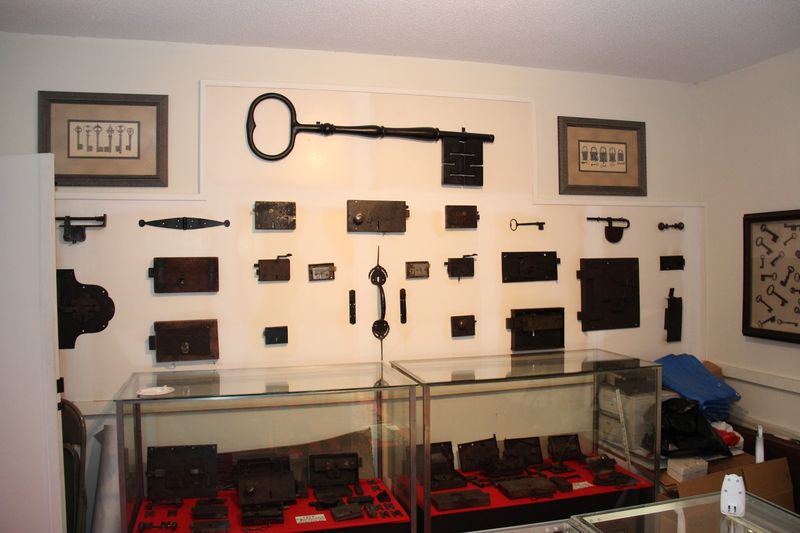
Elsewhere in the museum, the Antique Lock Room stretches the timeline further with colonial American locks and elaborate European work from the 1500s, some of it decorated far beyond what function required.
Those older pieces feel like puzzles disguised as hardware. Iron scrollwork, hidden keyholes, mechanisms that seem designed to impress as much as protect.
My advice is to visit the ancient lock first, then walk the rooms chronologically. The story lands better in order.
Bank Vaults, Time Locks, and a Safe That Fought Back
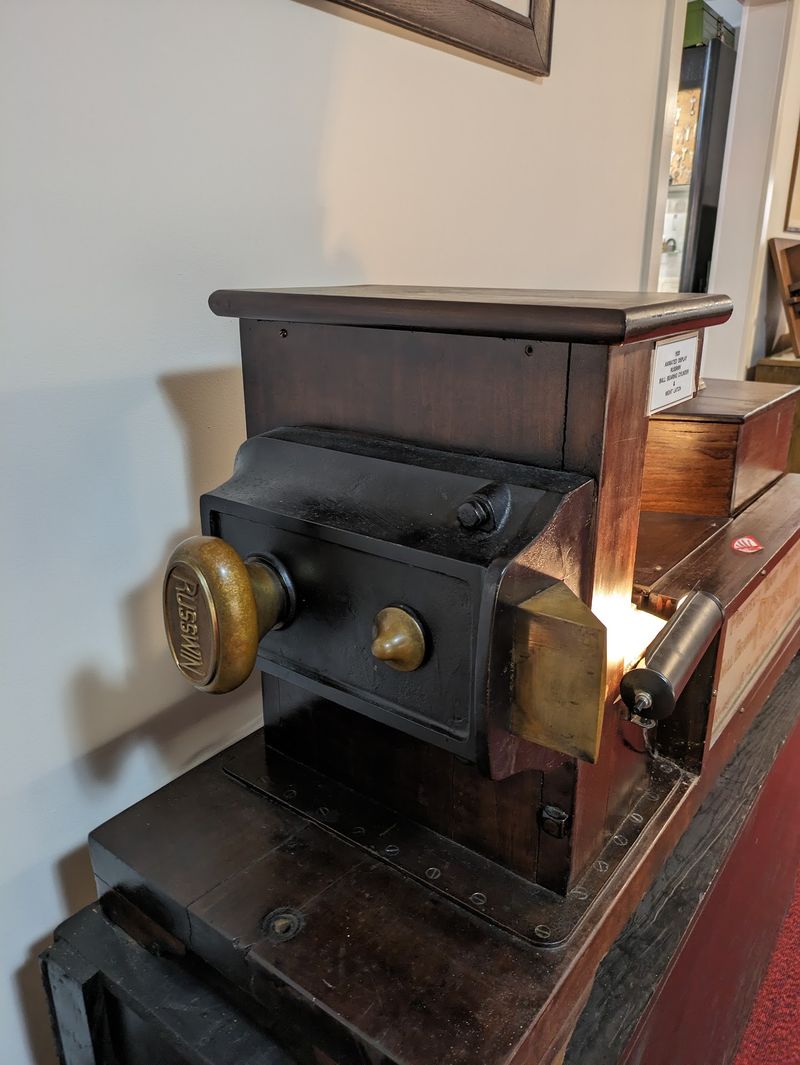
The Bank Lock Room has a different energy than the rest of the museum. Heavier.
More serious.
Vault locks, safe locks, and early time locks fill the space, built by people whose whole job was outthinking thieves.
My favorite detail in the entire building lives here: a 1930 time lock designed to spray tear gas at anyone attempting to crack the safe. Security with an attitude.
It is the kind of object that makes you laugh, then makes you think about how high the stakes must have felt at the time.
Time locks in general fascinated me. The concept is simple and clever, since a lock that cannot open until a set hour makes threats useless.
No amount of pressure gets a door open before the clock agrees.
Two other heavyweights sit in the collection and deserve a look. A cannonball safe weighing 7,000 pounds, round and stubborn, plus a treasure chest connected to the Spanish Armada.
Standing beside something that heavy shifts your sense of scale after a morning of studying tiny keys.
If you are traveling with someone who thinks museums move too slowly, steer them straight to this room. The mechanisms are dramatic, the stories are easy to follow, and the craftsmanship holds up under close inspection.
I spent a while just looking at the machined edges on a vault dial, wondering how many hours went into getting the tolerances right without modern tools.
Yale, Corbin-Russwin, and Hardware Too Pretty to Touch
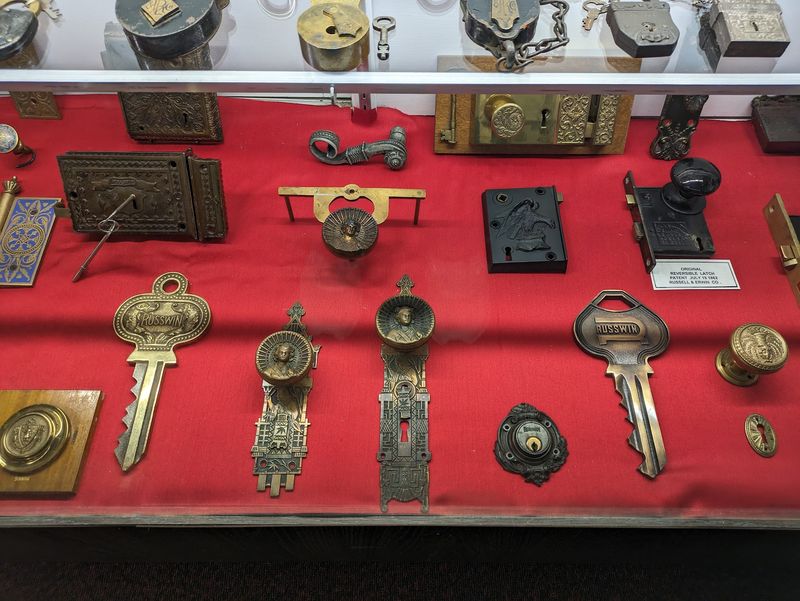
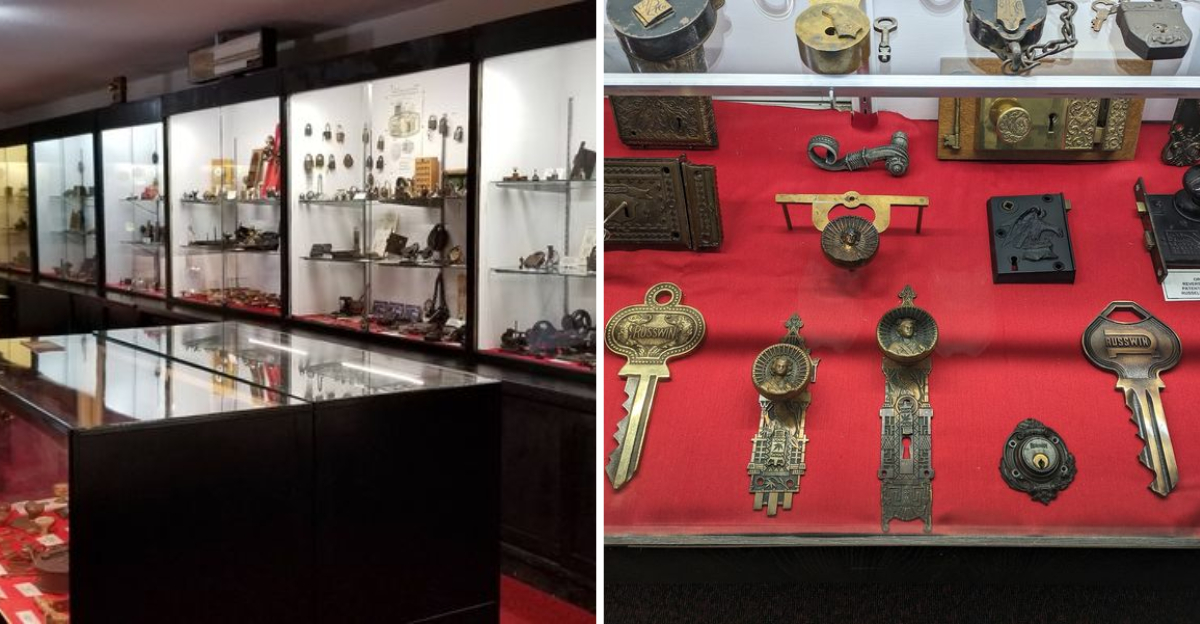
Somewhere between the third and fourth room, I stopped seeing hardware and started seeing design. The Corbin-Russwin Room is responsible for that shift.
Gold-plated and enameled pieces sit alongside a wide spread of Victorian door knobs and escutcheons, patterned in Roman, Greek, and Gothic styles.
A visitor once described this as the golden age of lock hardware, when looks mattered as much as function, and the room proves the point without needing a speech.
These knobs were meant to be admired by anyone entering a home, tiny status symbols mounted at hand height.
The Yale Room next door carries the technical weight. Locks produced by the Yale Lock company between 1860 and 1950 line the space, tracing how one company shaped modern security.
Its centerpiece is the original patent model of the Mortise Cylinder Pin Tumbler Lock, invented by Linus Yale Jr. in 1865.
That single object explains why the key in your pocket looks the way it does. Standing near the model that started it, I felt an odd little jolt of connection.
Practical note for photographers: the glass reflects, so shoot at an angle and skip the flash. The gold-plated pieces catch light beautifully when you find the right position.
Also worth doing is comparing the ornate knobs to whatever hardware you have at home. Ours looked painfully boring afterward, and I have thought about upgrading ever since.
Escape Room Puzzles, Volunteer Guides, and a Water Wheel Nearby
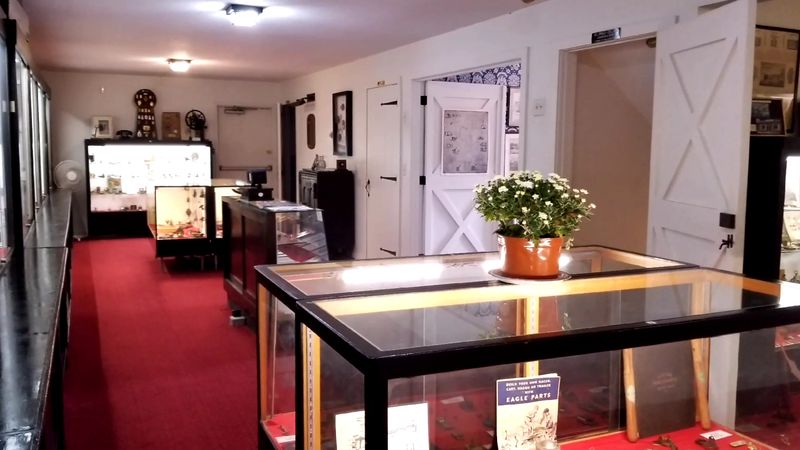
Here is the part nobody expects from a lock museum. Upstairs, the Lock Museum Adventure escape room asks you to solve riddles, codes, and puzzles to open antique locks and safes inside one hour.
Groups usually get a short tour of the first floor exhibits first, which doubles as a hint system if you pay attention.
Everything is run by volunteers, and their enthusiasm carries the whole experience. On my visit the guide happily answered questions long after the tour officially wrapped up.
One practical warning, though. Opening hours are limited to specific dates, so calling ahead at 860-480-4408 to arrange a visit is genuinely the smartest move.
A few travelers have arrived on posted days and found the door locked because a volunteer was out, and a phone call spares you that drive.
Save time for the Eli Terry, Jr. Water Wheel a short walk away. Listed on the National Register of Historic Places, the 22-foot wheel once powered a clock factory and later lock-making machinery using energy from the Pequabuck River.
Interpretive signs explain how it worked, and seeing the water source ties the whole industrial story together.
If your trip lands on Columbus Day Weekend, the annual Antique Lock Collectors Show runs then, free and open to the public, with people buying, selling, and trading locks, keys, and safes.
Address: 230 Main St, Terryville, Connecticut
