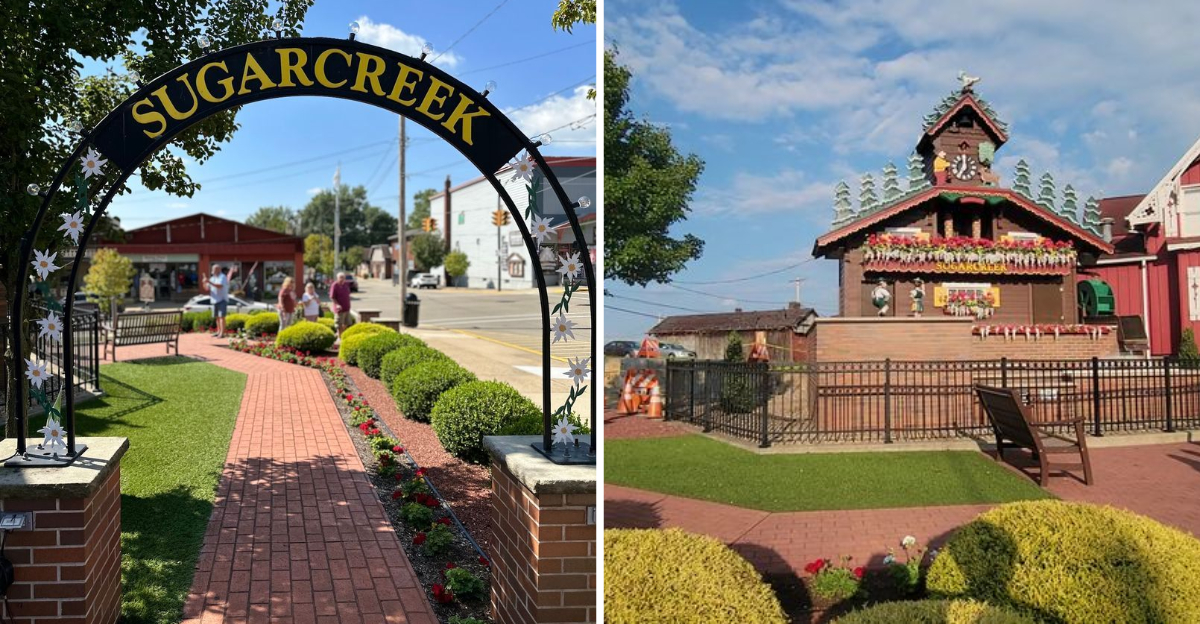
That tall wooden clock in the middle of an Ohio town looks almost too cheerful to be real, like a storybook scene planted right on the main street.
Swiss-style details surround it, making the corner feel warm and old-fashioned, and every half hour the clock wakes up with music, moving figures, and a cuckoo bird that makes people stop what they are doing.
The clock stands as a piece of local pride with a long journey behind it, a roadside oddity that has become a symbol for the community. It was built in Europe and shipped across the ocean, then reassembled and set in place where it has been drawing visitors ever since.
The town has earned its nickname as the Little Switzerland of the state, and the clock makes that name easy to understand.
I stood on the sidewalk and watched a family wait for the show, the kids pressing their faces toward the clock face as the doors opened and the bird appeared.
Unusual landmarks that still feel loved by a community tend to stick with you, and this one is worth slowing down for.
A Giant Clock in the Heart of Sugarcreek
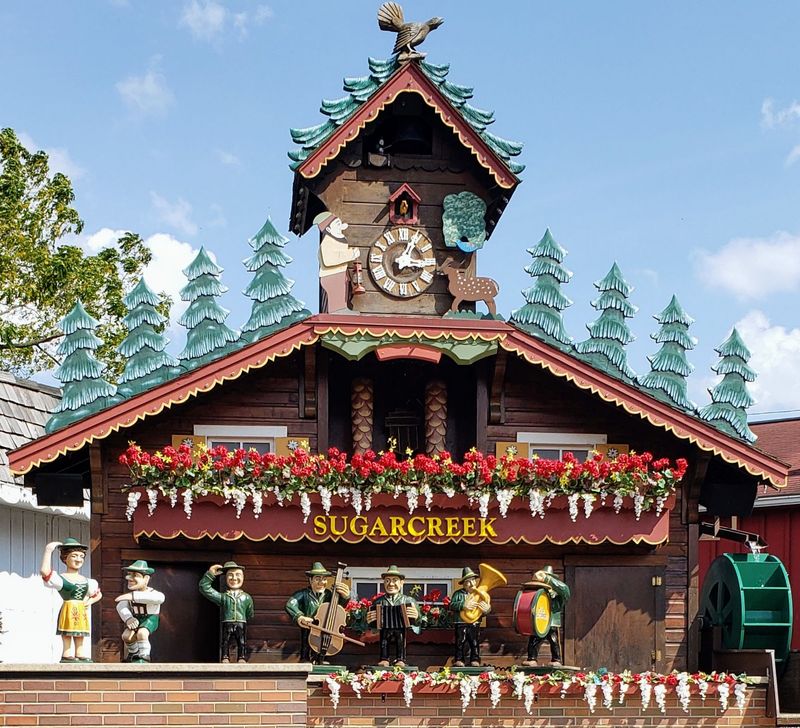
The first thing that caught my eye was how naturally the clock fits into the middle of town, even though it is huge. It stands at Main Street and North Broadway, where Sugarcreek’s Swiss Village look gives the whole corner a playful, old-world mood.
At more than 23 feet tall and 24 feet wide, the clock is not something you casually miss while driving through. Its size makes it feel like a landmark, but the wooden details and painted trim keep it friendly instead of overwhelming.
For travelers, the best way to enjoy it is to park nearby and give yourself time to look around before the show begins. The clock is free to see, and the open downtown setting makes it easy for families, road-trippers, and curious visitors to gather without needing tickets or a long plan.
I like that it does not hide behind gates or a museum wall. It simply lives in the town, marking time for anyone who happens to pass by.
The Half-Hour Moment Everyone Waits For
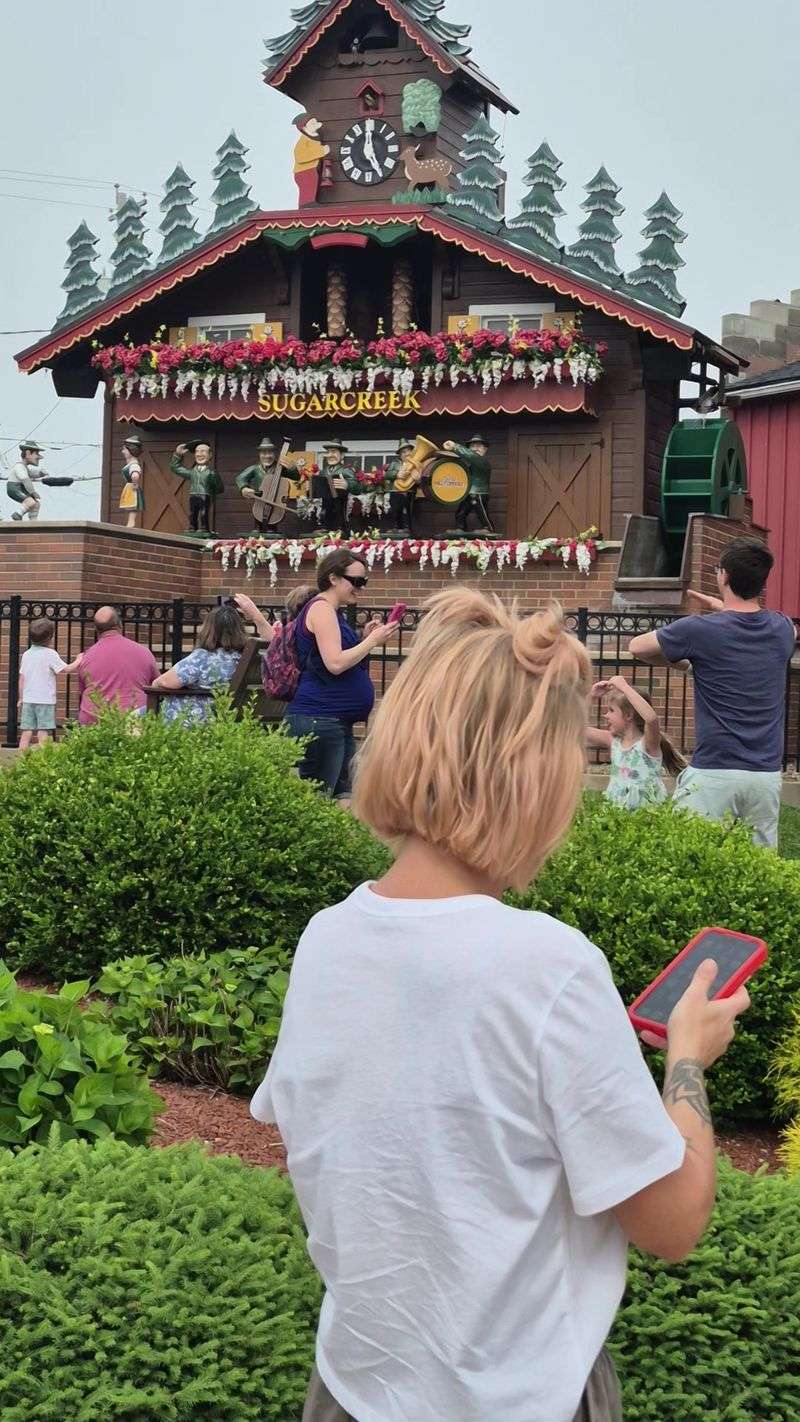
A funny little hush settles in when the minute hand gets close to the hour or half hour. People who were taking photos or checking maps suddenly turn toward the clock, because that is when the whole attraction changes from a big object into a tiny show.
The cuckoo bird appears first, keeping the promise made by the clock’s famous name. Then the mechanical figures take over, and the performance usually lasts only a few minutes, which is just enough time to make everyone smile without stretching the moment too long.
If you are visiting, plan your arrival around the schedule instead of hoping to get lucky. The clock generally performs every half hour and on the hour during its operating season, from morning through evening, weather and seasonal conditions allowing.
I would arrive ten minutes early, especially if you want a clean photo or a spot where younger kids can see. The waiting is part of the fun, because strangers end up facing the same clock together, all ready for a wooden bird to steal the spotlight.
Wooden Musicians with a Swiss Beat

The band is the part that gives the clock its personality, almost like the town hired a tiny wooden orchestra and gave it the best stage. When the figures appear, they play Swiss polka music that matches Sugarcreek’s Alpine style and makes the street feel a little more festive.
The group is often called the Hilltoppers, and its oompah sound connects the attraction to the Swiss and German roots seen around town. The figures are made from Black Forest wood, which adds a nice link to the European clockmaking tradition that inspired the whole design.
Watch the musicians closely instead of only waiting for the bird. Small movements, painted details, and the careful placement of each figure show how much craftsmanship went into making the performance work outside in the real Ohio weather.
It is not a high-tech show, and that is actually part of its charm. The music feels simple, cheerful, and handmade in spirit.
For the best experience, stand far enough back to see the full facade, then move closer afterward to notice the carved faces and instruments.
A Dancing Couple on the Clock Face
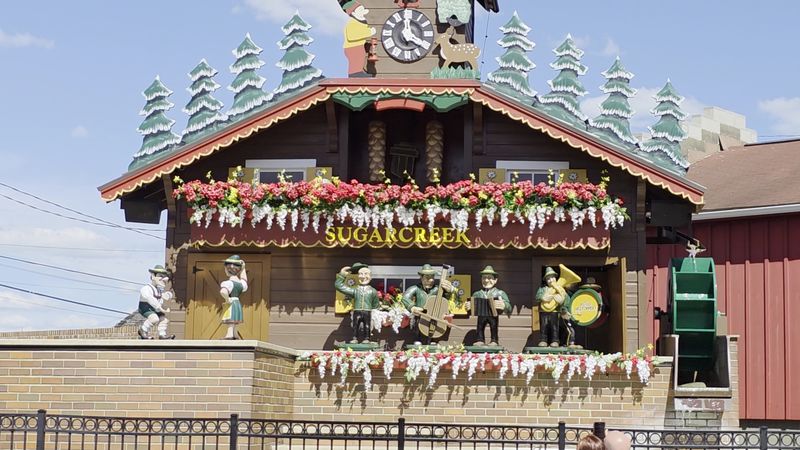
I did not expect the dancing couple to be so easy to like. They appear on the front of the clock during the performance, moving in a polka that feels sweet, a little funny, and very fitting for a town proud of its Swiss heritage.
The couple stands about three feet tall, so they are large enough to see clearly from the sidewalk. Their dance happens along with the music, giving the show more life than a cuckoo bird alone could manage.
Children tend to notice the movement right away, while adults often end up watching the mechanics and smiling at the old-fashioned style. If you enjoy details, look at the costumes and the way the figures are placed within the facade, because they help the clock feel like a small theater.
The moment is short, so it is better to watch first and take photos on a second cycle if you have time. I found that seeing it without a phone in front of my face made the performance feel more personal, like a small town surprise instead of just another picture stop.
A Record-Setting Landmark with Real History

Behind the cheerful music is a backstory that makes the clock more interesting than its size alone. The idea began in 1963 with Alice Grossniklaus, owner of the Swiss-themed Alpine-Alpa restaurant near Wilmot, Ohio.
Clockmaker Karl Schleutermann designed and built the giant timepiece, a long project that took years to complete. The clock was constructed in 1972, and it later gained Guinness World Record recognition as the world’s largest cuckoo clock, even appearing on a Guinness cover in 1977.
Knowing that history changes how you see it. Instead of looking like a random giant roadside prop, it becomes a carefully made attraction that took patience, money, and a strong sense of imagination.
The reported cost was $50,000, which says a lot about the ambition behind it. Travelers who love odd landmarks should spend a minute thinking about how many hands and decisions shaped this one.
It was built to impress, but it has lasted because people kept caring about it. That mix of bold idea and steady care is what gives the clock its staying power.
From Restaurant Showpiece to Downtown Treasure
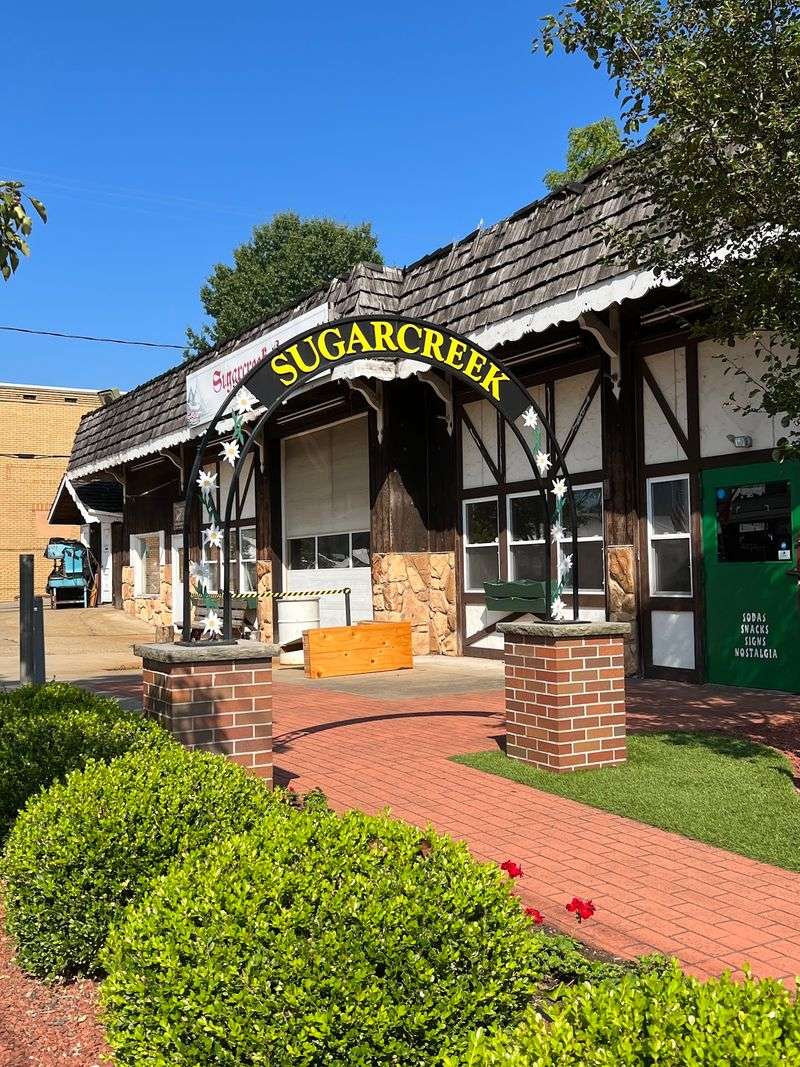
The clock has not always stood in the center of Sugarcreek, which surprised me when I learned its story. It was originally tied to the Alpine-Alpa restaurant near Wilmot, where it served as a giant Swiss-themed showpiece for visitors.
After decades outdoors, the clock needed serious attention, and restoration work in 2007 helped protect it from further wear. When the restaurant closed in 2009, the clock could have faded into memory, but instead it was purchased by Mark Coblentz of Walnut Creek Cheese and donated to the Village of Sugarcreek.
That move gave the clock a second life. It was relocated downtown around 2010 and became operational again after local volunteers and officials worked to restore it, with performances returning in the following years.
I like travel stops with a rescue chapter, because they show what a community chooses to save. In Sugarcreek, people did not just keep an old attraction around.
They gave it a public place where it could belong to everyone. Today, its downtown location feels right, like the clock finally found its permanent stage.
Best Timing for the Full Show
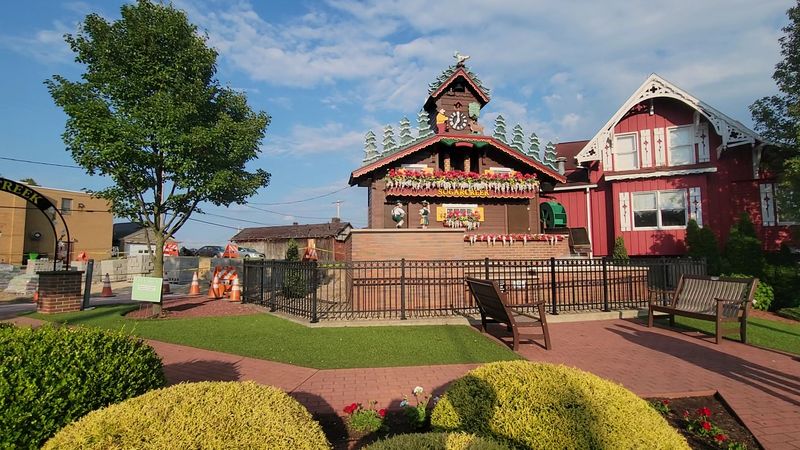
A little planning makes a big difference here, because the clock is most memorable when it is moving. If you arrive just after a show ends, the giant facade still looks great, but you may find yourself waiting nearly half an hour for the next performance.
The clock generally operates daily from 9 am to 9 pm during the warmer season, often from April through November. Winter can pause the moving show, so checking current local information before a long drive is a smart move.
I would aim to arrive about ten to fifteen minutes before the hour or half hour. That gives you time to stretch, choose a viewing angle, read the scene, and avoid feeling rushed.
Weather can matter too, since outdoor mechanical attractions sometimes depend on safe conditions. For photos, try taking one wide shot before the music starts and then enjoy the performance with your eyes.
The whole show is brief, usually around four minutes, so it is easy to miss small details if you are only looking through a screen. Simple timing turns a quick stop into a much better memory.
A Free Stop That Still Feels Special
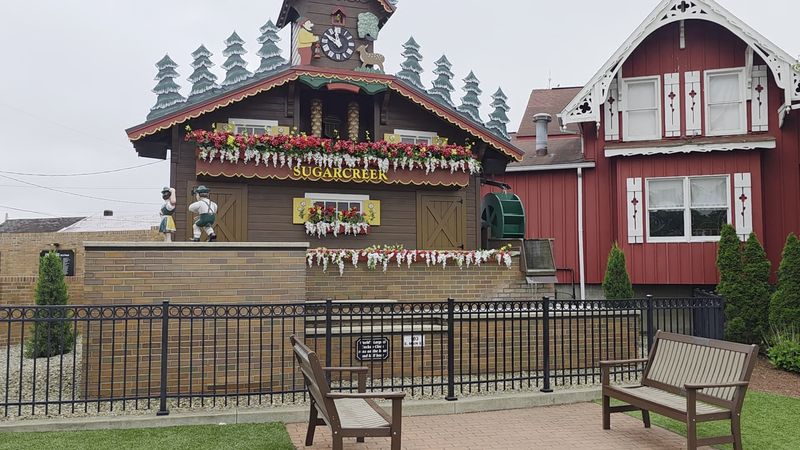
Some travel stops ask for a lot of time and planning, but this one keeps things easy. The World’s Largest Cuckoo Clock is free to view, simple to find, and short enough to enjoy even during a busy day in Ohio Amish Country.
That ease is part of its appeal. You can make it a quick break, a family photo stop, or the small highlight of a slow afternoon in Sugarcreek.
The best mindset is to enjoy it for what it is: a charming mechanical landmark with music, movement, history, and a strong sense of place. It is not trying to be a theme park.
It is more like a shared town ritual that happens every thirty minutes during its active season. People gather, the bird appears, the band plays, the dancers move, and then downtown returns to normal.
I think that rhythm is lovely. It reminds visitors that not every memorable place has to be loud or complicated.
Sometimes a giant wooden clock on a street corner is enough to make a trip feel a little brighter. Address: 100 N Broadway St, Sugarcreek, OH 44681.
