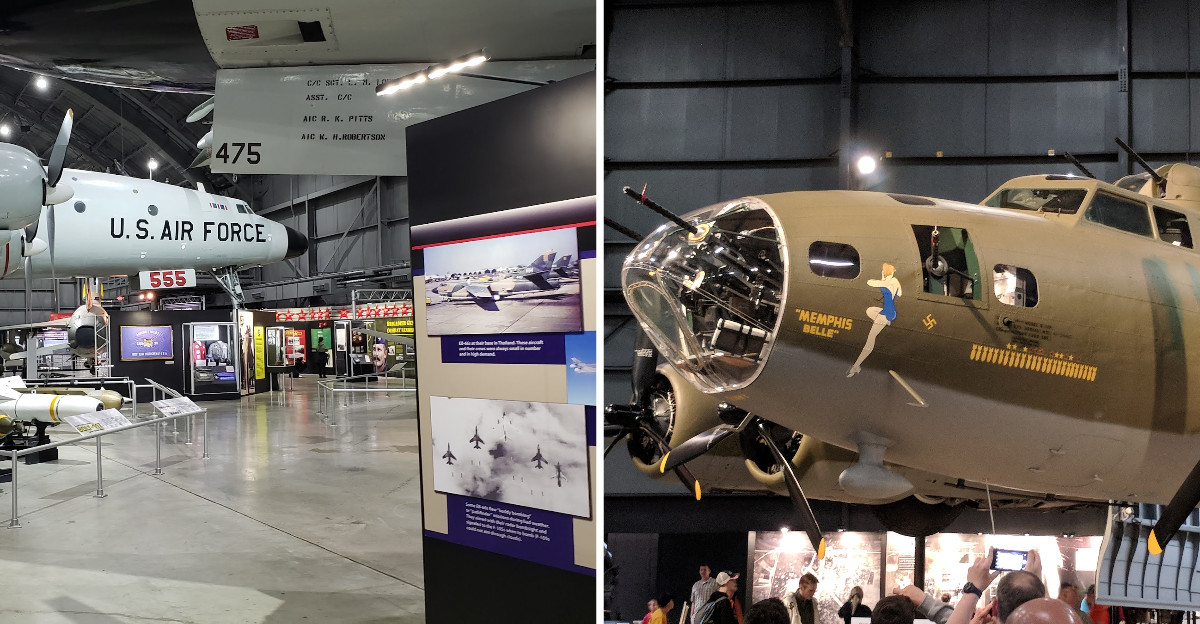
Full-size bombers parked indoors are not something you see every day. Stopping mid-step and laughing out loud at the sheer size is the only reasonable reaction.
This Ohio museum holds more than 350 aircraft and missiles across over 19 acres of indoor space, making it the largest and oldest military aviation museum in the world. The plan was a quick look, but the doors closed before the visit ended, feet sore and camera roll stuffed.
Admission and parking cost nothing, so families, history fans, and curious travelers wander in side by side. Walking among the planes, the scale becomes overwhelming.
Every hangar holds another chapter of aviation history. The stories told through these machines are bigger than any single display.
Hours disappear without notice. Leaving is hard.
The experience stays for weeks.
Hangars So Big You Lose Track of Time
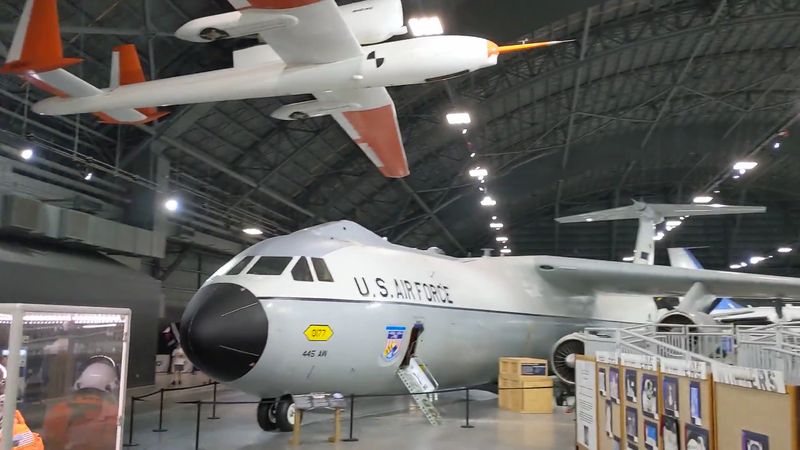
My step counter hit a number I was honestly proud of before lunch. The museum is spread across several connected hangars, plus outdoor areas, and every single one is packed with planes, missiles, and displays.
With more than 19 acres of indoor exhibit space, this place is enormous in a way photos just cannot show. Wings stretch over your head, and some aircraft are hung from the ceiling like giant mobiles in a kid’s bedroom.
The air inside is cool and quiet, broken by the hum of families chatting and the click of cameras.
Plan for at least four or five hours if you want a good look around. Many visitors come back for a second day because there is simply too much to soak up at once.
Comfortable shoes are a must, and so is a little patience with yourself.
Here is a helpful tip. Free wheelchairs, strollers, and electric scooters are available near the entrance, so anyone who tires easily can still enjoy the whole visit.
Benches are scattered all over too.
The museum is open seven days a week from 9 a.m. to 5 p.m. It closes only on Thanksgiving, Christmas, and New Year’s Day, which gives you plenty of chances to plan a trip.
Where the Story of Flight Begins
Dayton, Ohio is the hometown of Wilbur and Orville Wright, so it makes perfect sense that the journey here starts with wooden frames and fabric wings. I liked starting slow, because it made everything later feel even more amazing.
The Early Years gallery shows how fragile those first flying machines really were. Thin wires, simple seats, and wings that look almost like kites remind you that pilots back then were very brave or a little bit wild.
Probably both.
From there, the World War I area picks up the pace. You will see biplanes painted in bold colors, plus uniforms, goggles, and gear from a time when flying into battle was brand new.
Exhibits are arranged in time order, so you basically walk forward through history. That layout makes it easy for kids to follow along, since each room builds on the one before it.
Take a minute to read the signs here instead of rushing ahead. The early stories explain why later planes look the way they do, and that background makes the giant jets ahead much more fun to understand.
It also helps you appreciate how quickly people went from short hops in a field to crossing oceans and beyond.
World War II Legends Up Close
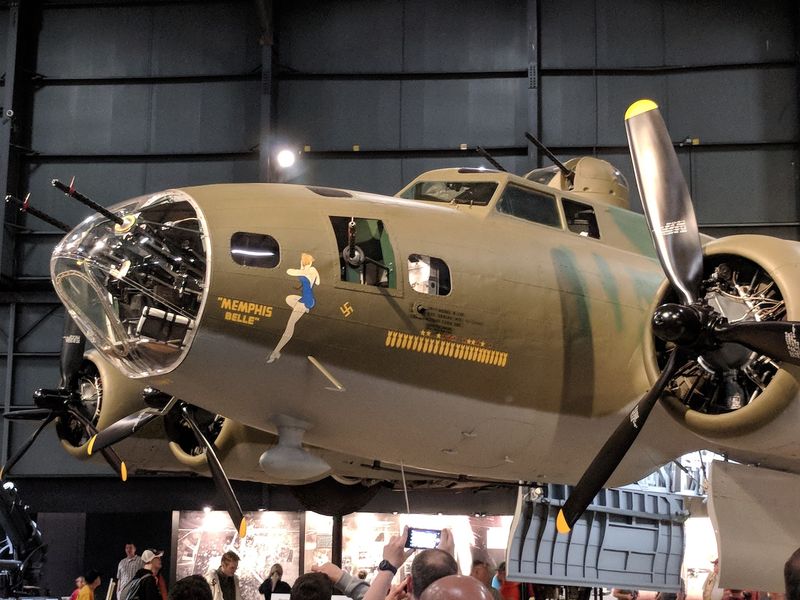
Goosebumps showed up the second I spotted the Memphis Belle. That B-17F bomber is one of the most famous planes in American history, and it sits right there in the World War II gallery.
Its crew was among the first in a B-17 to complete 25 missions over Europe and return home. Knowing that, the dents and details on its metal skin feel a lot more personal.
You start picturing ten young airmen squeezed into tight spaces high above the clouds.
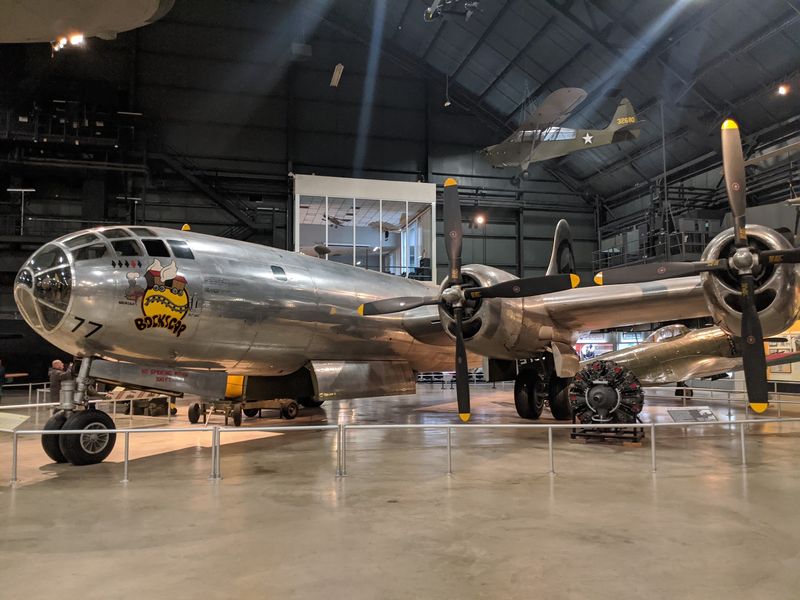
Nearby is Bockscar, the B-29 that dropped the second atomic bomb in 1945. It is a serious stop, and the museum handles its story with care.
Many visitors grow quiet here, which feels fitting.
This gallery is also filled with fighters, trainers, and small artifacts like letters, photographs, and flight jackets. Those personal items helped me connect with the people behind the planes, not just the machines themselves.
If you have older kids, this is a great place to talk about courage and sacrifice. Free guided tours run through the hangars too, and the volunteers bring extra stories you would never find on a sign.
No reservation is needed, so just keep an eye out for a group gathering.
Jet Age Giants From Korea and Southeast Asia
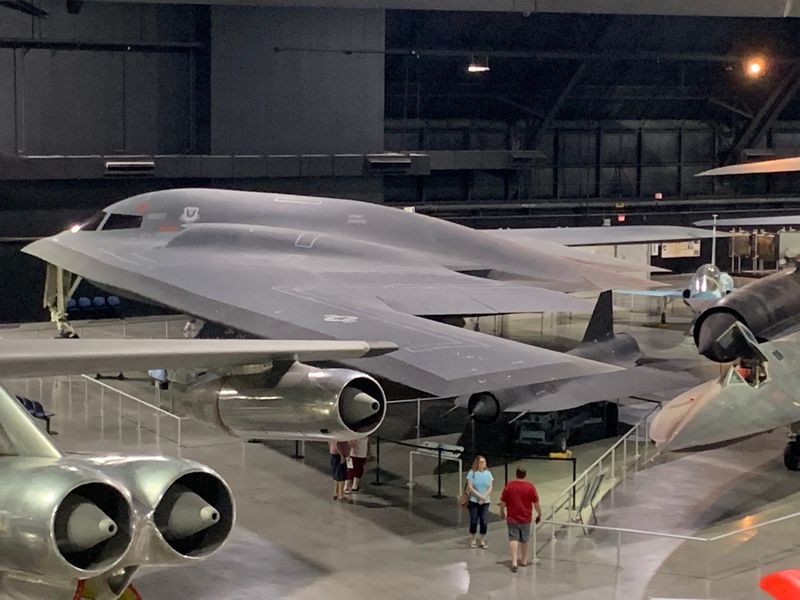
Propellers fade away fast once you reach the Korean War gallery. Sleek silver jets take over, and suddenly the planes look faster just sitting still.
Fighters from the early jet era line the floor here, showing how quickly flying changed after World War II. I found it fun to compare these swept-back wings with the boxy shapes I had seen only an hour earlier.
The jump in design is huge.
Moving into the Southeast Asia War gallery, the mood shifts again. Camouflage paint, helicopters, and rugged attack planes tell stories of jungle missions and daring rescues.
The displays explain what life was like for crews who served during the Vietnam era.
Look for the smaller exhibits tucked between the aircraft. Weapons, survival gear, and personal belongings fill glass cases, and they add depth to the big machines towering beside them.
Some displays even honor prisoners of war, which hits hard in a quiet way.
One small tip from my visit is to pace yourself in these middle galleries. They come right after a lot of walking, and it is easy to skim.
Grab a seat on a bench, sip some water, and give these rooms the attention they deserve. You will be glad you slowed down.
Cold War Speed and the Only Public B-2
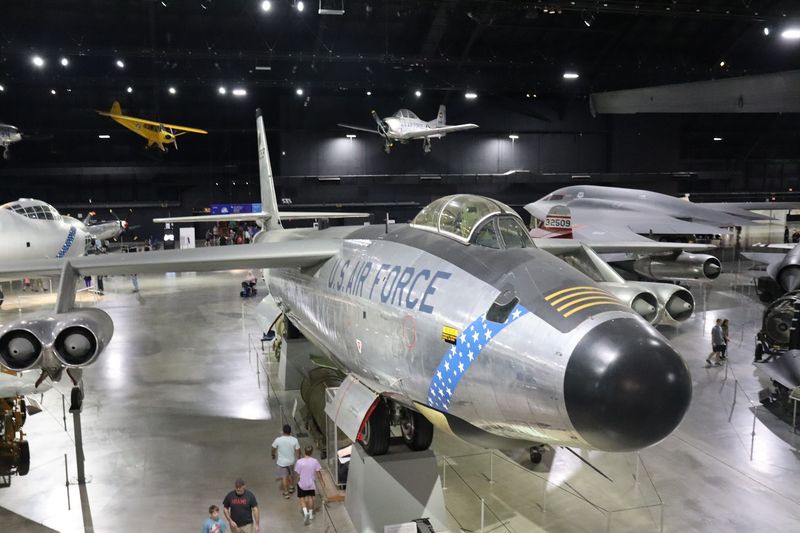
Sharp black wings, zero tail, and a shape that looks borrowed from a sci-fi movie. The B-2 Spirit stealth bomber stopped me cold, and I was not the only one staring with my mouth open.
This is the world’s only permanent public exhibit of a B-2. Seeing it in person, you notice how flat and smooth it is, built to slip past radar like a ghost.
Kids tend to call it a giant boomerang, which is honestly not wrong.
The Cold War gallery is full of record breakers. The SR-71 Blackbird, one of the fastest jets ever flown, looks long and mean even while parked.
There is also the B-58 Hustler, plus huge bombers that once stayed ready at a moment’s notice.
Fun fact for your next trivia night: the SR-71 flew so fast that its metal skin got hot and actually stretched a bit during flight. The museum signs explain cool details like that, so keep reading as you go.
Bring a wide lens or step way back for photos. Many of these aircraft are so long that fitting them into one shot takes some creative angles and a little crouching.
Patience pays off with pictures you will love.
Climbing Aboard Presidential Planes
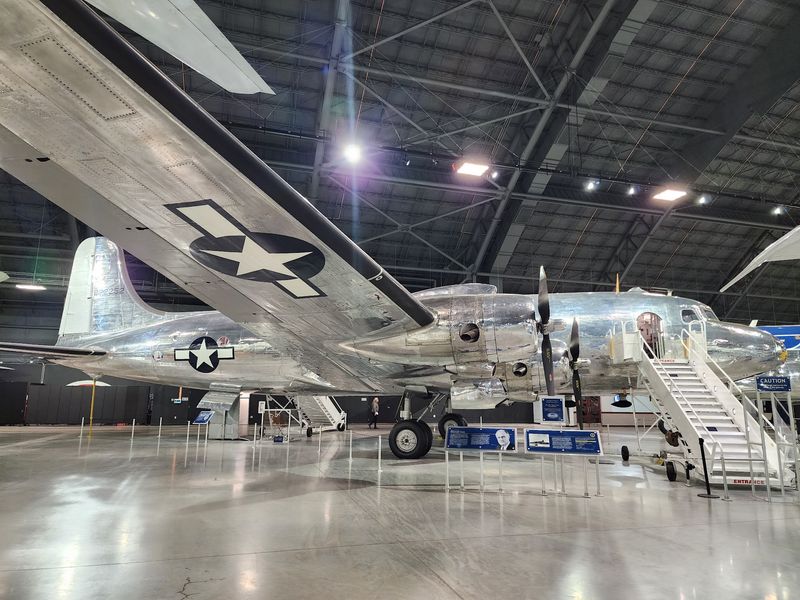
Few things beat the feeling of stepping inside a plane that once carried a president. I grinned the whole way through the cabin, peeking at seats and tables like I had snuck in somewhere off limits.
The Presidential Gallery holds a unique collection of aircraft used by U.S. leaders over the years. Several of them are open so you can walk right through, following the same aisles that presidents, staff, and reporters once used.
Inside, the spaces feel surprisingly simple compared to what you might imagine. You will notice small offices, conference areas, and communication equipment that once kept leaders connected while flying.
It gives you a real sense of history happening thousands of feet up.
This area sits in the fourth building, along with research and development aircraft and space displays. Lines can form during busy times, so heading there earlier in your day is a smart move.
Families really enjoy this stop because it turns history into something you can touch. Little ones love climbing the stairs, and grown-ups often get a bit misty walking where famous moments happened.
Take your time, look out the windows, and imagine the world below during some of the biggest days in American history.
Rockets, Research Planes, and a Peek at Space
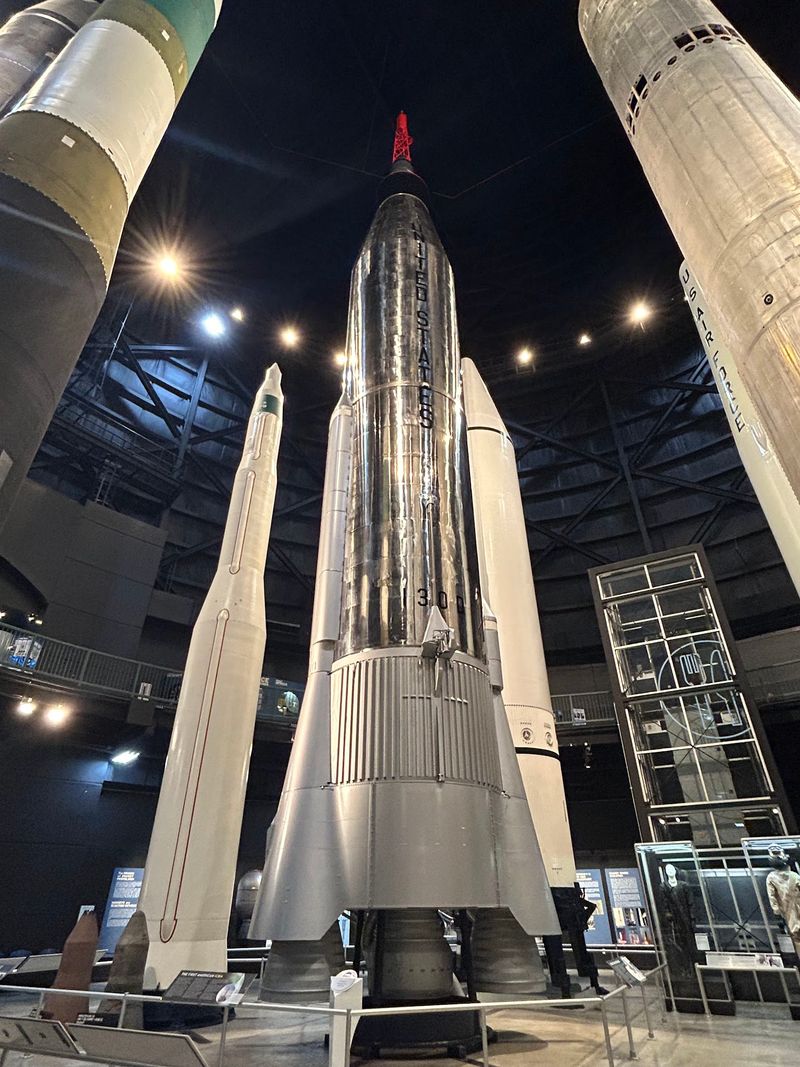
Out of all the hangars, the space and research section made me feel like a curious kid again. Odd shapes, rocket engines, and test planes fill the room, and each one looks like an experiment that somehow worked.
The X-15 is a star here. This black rocket plane flew at hypersonic speeds and reached the edge of space during its test flights in the 1960s.
Standing beside it, you can almost hear the roar.
Research and development aircraft show how engineers kept testing wild ideas. Some designs succeeded, while others stayed one of a kind.
Learning about those trials made me appreciate how much trial and error goes into every jet we see today.
The space displays include capsules, missiles, and items connected to Air Force work in space. Tall rockets reach toward the ceiling, and kids love trying to count how many stories high they go.
There is also a space shuttle trainer that visitors have been able to tour, which is a real treat for space fans. If your crew likes science, give yourselves extra time here.
Questions pile up fast, and the volunteers nearby usually love answering them with stories from their own careers in aviation.
Simulators, Films, and Smart Ways to Plan Your Day
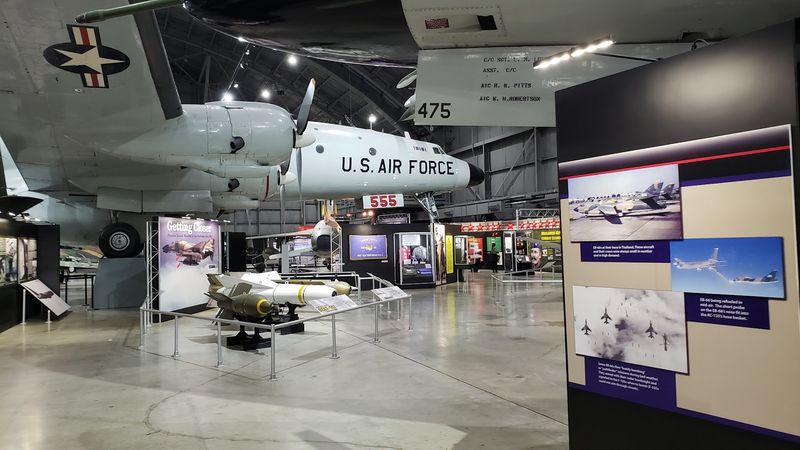
Hands-on fun is sprinkled all over this museum, and my favorite surprise was trying to land a plane at an interactive station. Spoiler: I crashed, and the kid next to me nailed it.
Mock cockpits, quizzes, and simulators let visitors test their skills. The Air Force Museum Theatre shows big screen films about flight and history, and these extras carry a separate fee even though general admission stays free.
The museum also cares about access. Braille signs and small touchable sculptures of planes help blind and low-vision guests, while nursing stations, strollers, and scooters make long days easier for everyone.
For food, there is an on-site cafe with views over the exhibits. Many families also pack a lunch and enjoy it at picnic tables outside, which is a nice break from the indoor walking.
Gift shop lovers should save extra time too, since it is bigger than you might expect.
My last bit of advice is simple. Pick two or three must-see galleries, then let curiosity guide the rest.
Address: 1100 Spaatz Street, Wright-Patterson AFB, Ohio 45433
