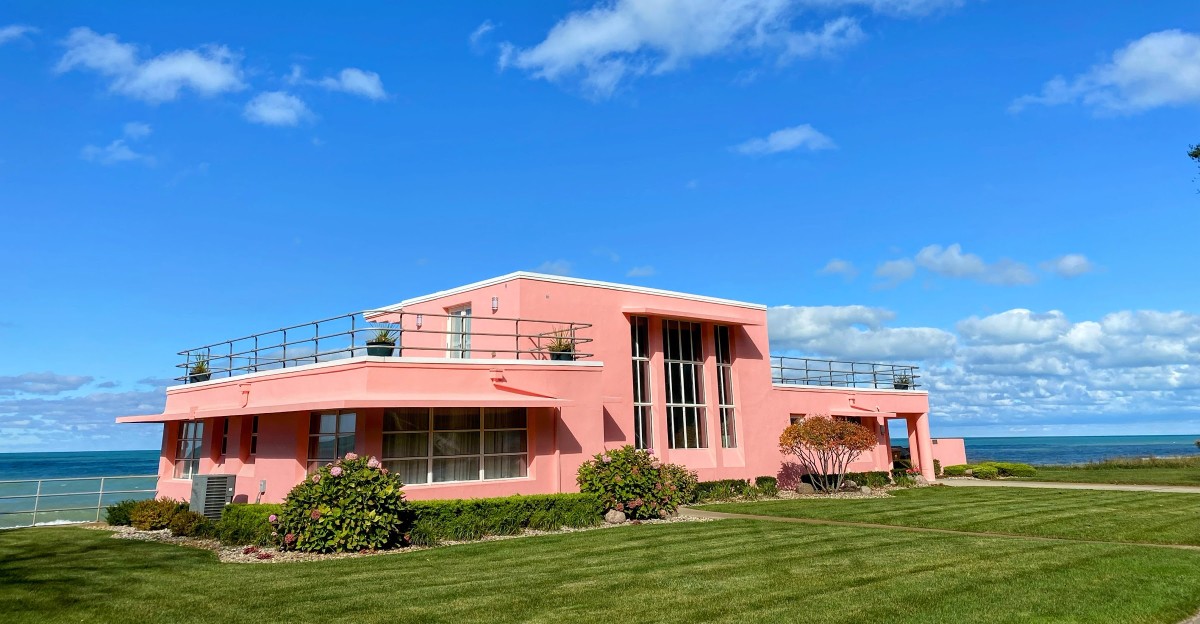
A bright pink house from a 1933 World’s Fair now sits on a dune above Lake Michigan. It floated there on a barge.
Honestly, I can’t stop smiling at that sentence.
It has neighbors that are just as odd. One house is wrapped in porcelain-enameled steel panels.
Another has twelve sides, walls of glass, and once came with its own airplane hangar.
All five were built to show people what homes of the future might look like. Nearly a century later, I believe a few of them still look like they’re waiting for flying cars to show up.
The best part is that they stand together on one short stretch of shoreline in Indiana. You can stroll past all of them in minutes.
The Twelve-Sided Glass House Came With a Hangar
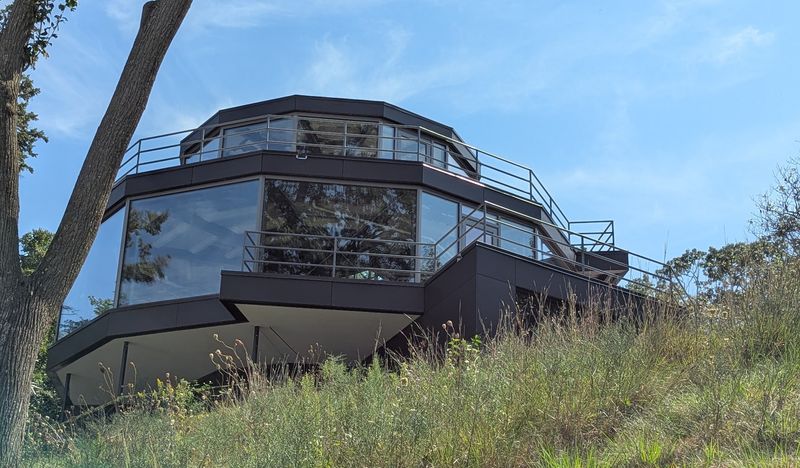
Garage doors that open by themselves feel normal now. In 1933, the House of Tomorrow had one, and fairgoers loved it.
Architect George Fred Keck designed this three-story home with twelve sides. Its walls were mostly glass, and the floor plan was wide open.
The features sound like a sci-fi wish list. It had central air conditioning, a dishwasher, and an automatic garage door.
It also had an airplane hangar. Apparently the future included parking your plane next to the family car.
The House of Tomorrow was the most popular home at the fair. It still looks futuristic, which says a lot about Keck’s bold thinking.
The National Trust for Historic Preservation named it a National Treasure. That honor goes to places considered truly important to American history.
Right now, Indiana Landmarks is guiding a restoration back to its 1933 look. The work was projected to wrap up in 2025, and the group has been seeking a long-term lessee.
So check its status before you go. Even with scaffolding or fresh paint, its round glass shape is hard to miss from the road.
Bring a camera with a wide lens. This house does not fit neatly into small frames.
A World’s Fair Street That Sailed Across the Lake
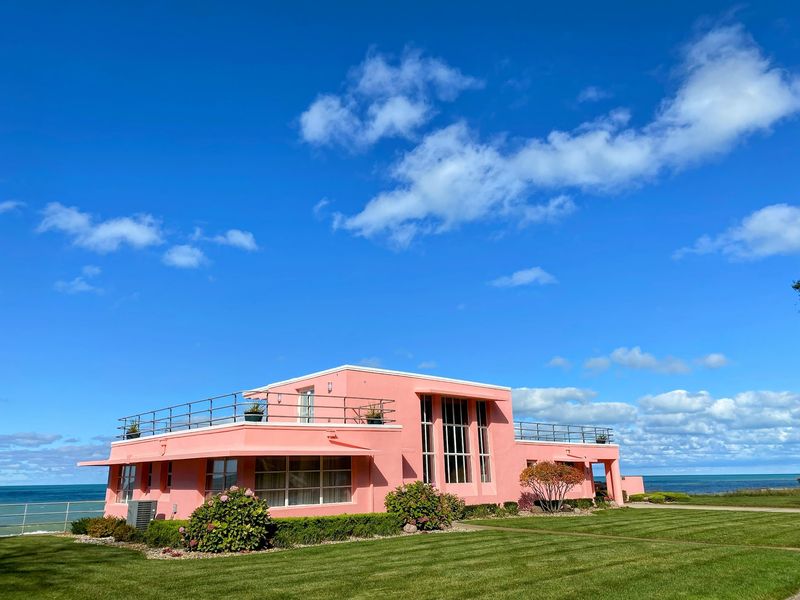
Back in 1933, Chicago threw a giant party called A Century of Progress. Its Homes and Industrial Arts exhibit showed off houses packed with new ideas, like dishwashers and air conditioning.
The Century of Progress Homes are five of those fair houses that found a second life. Today they line Lake Front Drive in Beverly Shores, Indiana, inside Indiana Dunes National Park.
After the fair closed, real estate developer Robert Bartlett bought them around late 1934 or early 1935. He wanted eye-catching homes to promote his new resort community on the dunes.
So he moved them. Four houses traveled across Lake Michigan by barge, which sounds like the world’s slowest parade.
The fifth house, a cypress log cabin, took a different route. Crews took it apart and carried it over by truck.
The group now carries the official name Beverly Shores-Century of Progress Architectural District. It joined the National Register of Historic Places on June 30, 1986.
That’s quite a resume for a few houses meant to be temporary displays. Most fair buildings vanished once the crowds went home, but these got a lakefront retirement instead.
Each one tells a different story about how people in the 1930s pictured tomorrow.
You Can’t Miss the Flamingo-Pink Neighbor
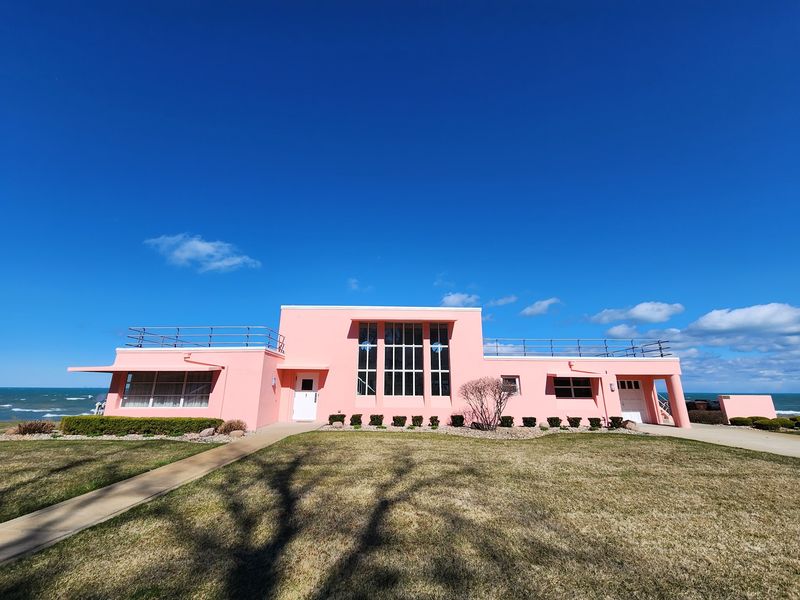
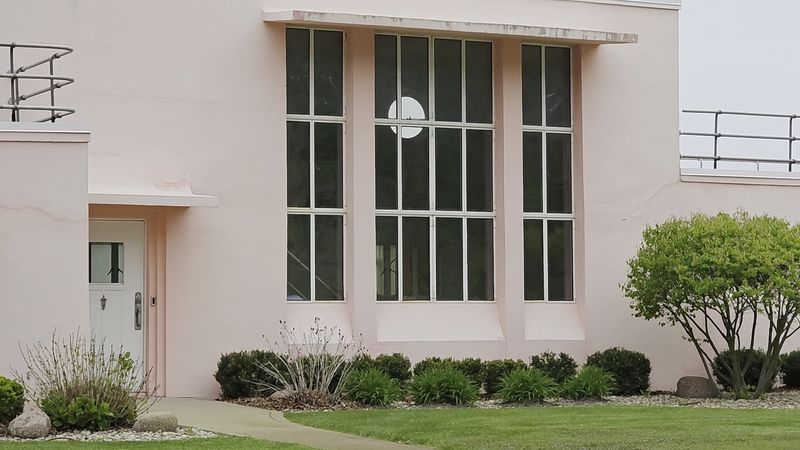
Pink is a brave choice for a house in northern Indiana. The Florida Tropical House wears it proudly anyway.
Miami architect Robert Law Weed designed it for life in southern Florida. That explains the sunny attitude and the beach-ready layout.
Open terraces and large windows blur the line between indoors and outdoors. The goal was breezy living, even on hot days.
The roof was meant to be extra living space. It has tiled floors and a railing, like a patio perched on top.
Underneath the bright stucco, the house has a wood frame. So it’s a bit of a costume, in the best possible way.
Along the Lake Michigan shore, it stands out like a tropical postcard dropped among the dunes. Kids tend to spot it first, and grown-ups usually point right after.
This one is on the annual tour route too. That means a lucky few get to see its first floor in person.
For everyone else, the view from the road works just fine. Its color practically waves hello as you pull up.
Snap your photo, then imagine wintering here. Snow on a pink Miami house is quite the picture.
Steel Walls Built for Everyday Families
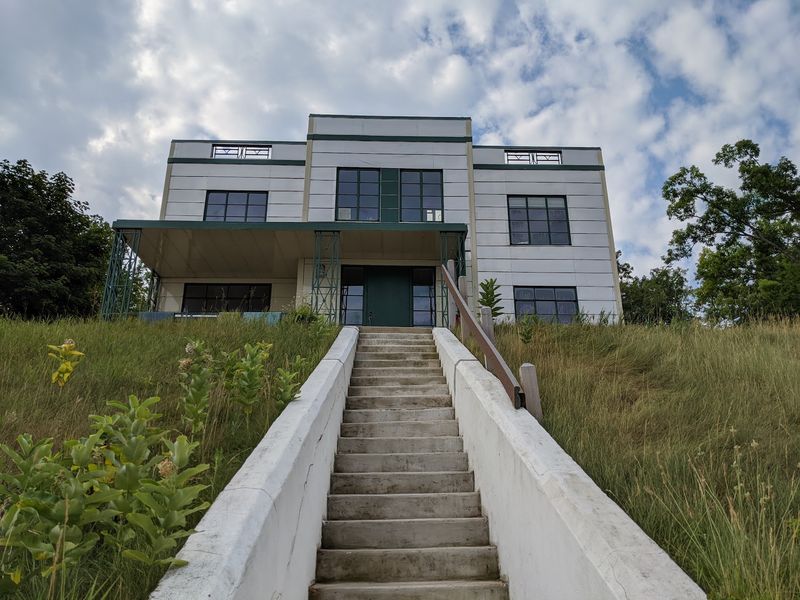
Most fair homes aimed to impress. The Armco-Ferro House aimed to be affordable, which was a pretty big deal during the Great Depression.
Designer Robert Smith, Jr. built it from porcelain-enameled steel. The walls are steel panels, not a traditional wood frame.
That approach meant the house could be mass-produced. In theory, factories could turn out homes much like cars.
The fair had set rules about affordability and mass production. This was the only home that actually met them.
That makes it the practical sibling of the group. While others showed off glass and color, this one quietly solved a real problem.
Think of it as the future for regular people. It promised sturdy, modern housing without a fancy price tag.
The steel idea didn’t take over American neighborhoods. Still, it hinted at the prefab homes that came decades later.
The Armco-Ferro House is one of the four homes opened during the annual tour. Seeing the inside helps you appreciate how different its construction feels.
From the street, look for its tidy, boxy lines. It looks calm and confident, like it already knows it was right.
Fake Stone Never Looked So Sharp
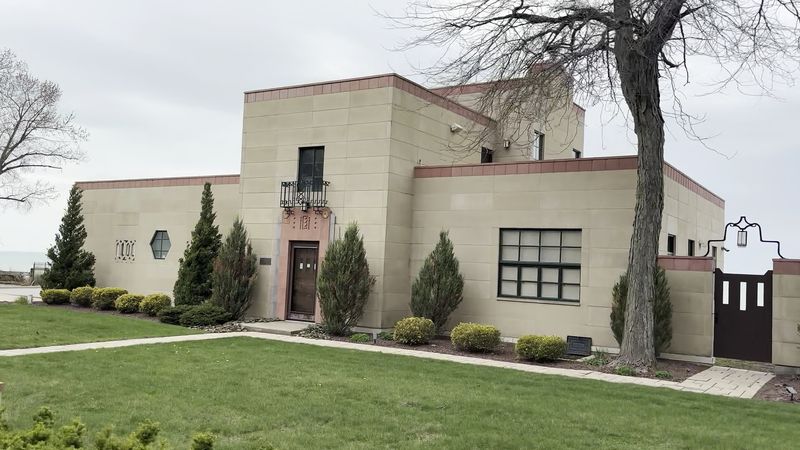
Rostone was supposed to be the building material of tomorrow. It made it to about the 1950s before fading away.
The Wieboldt-Rostone House, often called the Rostone House, shows what all the buzz was about. Architect Walter Scholer covered its exterior with Rostone slabs.
He didn’t stop outside, either. Most of the interior was covered in the material too.
Rostone was a manufactured stone. Sellers promoted it as tough and fireproof, which sounded great for families.
The house itself has clean lines and a flat roof. It feels modern and simple, with no fussy trim.
There’s something charming about a house built from a product that didn’t last. It’s a time capsule of one big idea that didn’t quite pan out.
Restoring a house made of a discontinued material sounds like a real puzzle. You can’t exactly run to the hardware store for more.
This home is part of the annual tour lineup. Ticket holders get to see its first floor.
From the road, it’s one of the sleeker houses on the block. Its smooth surfaces make a nice contrast with the wild dune plants around it.
Sleep Over in a Fair-Famous Log Cabin
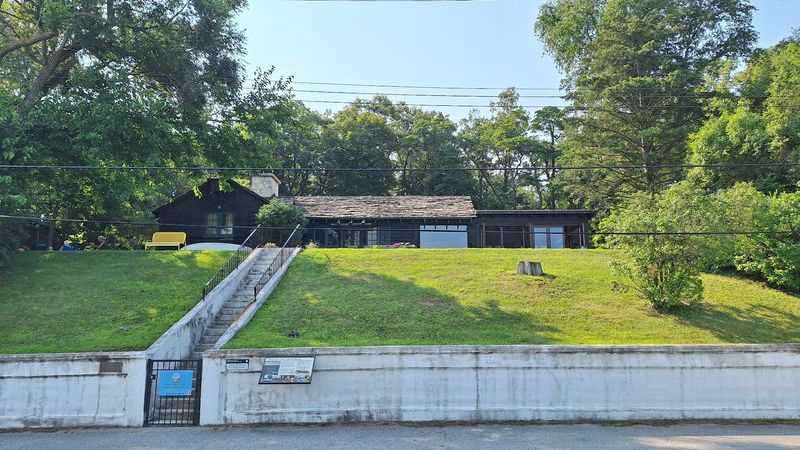
Ever wanted to spend the night inside a World’s Fair exhibit? At the Cypress Log Cabin, you actually can.
Murray D. Heatherington designed this rustic home to show how useful cypress wood could be.
Among its flashy neighbors, it’s the cozy, woodsy one.
Remember, this is the house that didn’t ride a barge. Workers took it apart and trucked it to Beverly Shores.
Today it works as a vacation rental with modern amenities. IN The Dunes Lodging teamed up with Indiana Dunes National Park and Indiana Landmarks to make that happen.
That makes it the only one of the five open for overnight stays. Everyone else gets the street view, but you get the keys.
Picture-perfect for history fans, it also puts you close to the beach. Morning walks on the dunes come with the territory.
The cabin is also on the annual tour. So even day visitors may get a peek inside once a year.
Book early if you’re serious. A stay in a one-of-a-kind historic home in Indiana isn’t the kind of thing that sits open for long.
Pack light, and leave room for bragging rights.
One Day a Year, the Doors Swing Open
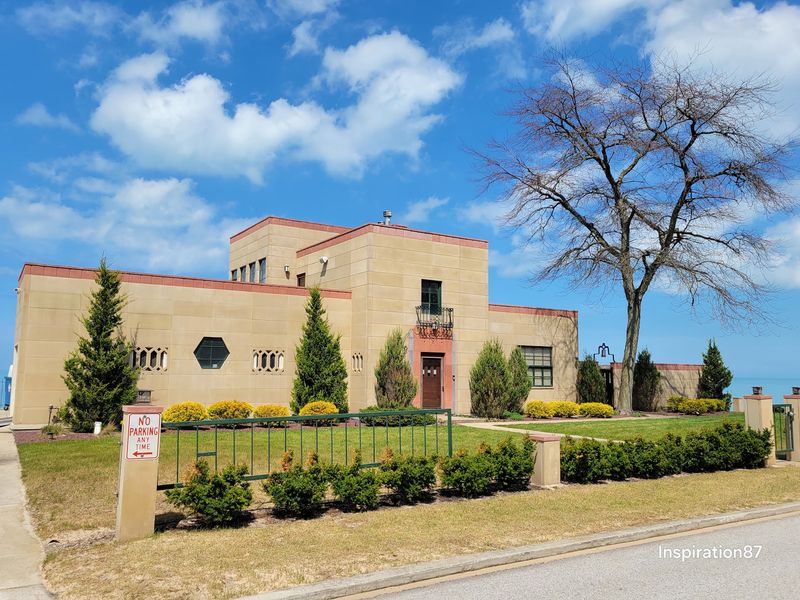
Mark your calendar, then set a backup alarm. The annual home tour is the only time most people get inside these houses.
Indiana Landmarks hosts it with the National Park Service. It usually happens on a single day in late summer or early fall, so check the date each year.
Tickets tend to sell out fast. Hesitate for a day, and you might be watching from the sidewalk instead.
The tour covers the first floors of four homes. Those are the Florida Tropical, Rostone, Armco-Ferro, and Cypress houses.
Park rangers and volunteers guide the visits. They share the history, the materials, and the quirks behind each design.
Why so rare? These are real homes where people live, so privacy matters the rest of the year.
That scarcity makes the day feel special. You’re stepping through doors that stay closed for the other 364 days.
Wear comfy shoes, since some homes sit up on the dune. Bring curiosity, too, because you’ll have questions about steel walls and rooftop patios.
If you miss it, don’t sulk too long. There’s always next year, and the outside views are free anytime.
Real People Keep These Houses Shining
Here’s a clever twist on preservation. Families restore these homes in exchange for the right to live in them.
The National Park Service took over the area in 1966. It became part of Indiana Dunes National Lakeshore, which is now Indiana Dunes National Park.
In the early 2000s, Indiana Landmarks partnered with the park on a lease program. The group leases most of the homes, then subleases them to private residents.
Those residents fix up the houses. In return, they get long-term leases on some truly unusual addresses.
It’s a win for everyone. The homes get loving care, and the public gets beautifully restored history to admire.
That also means good manners matter. Please stay off the private property, and keep your voice down near the houses.
Think of it like visiting a neighborhood, not a museum. Somebody inside might be making breakfast while you take photos.
The effort shows in the details you can see from the road. Fresh paint and careful repairs keep that 1930s spirit looking sharp.
Without this program, some of these homes might have crumbled. Instead, they’re thriving on the dunes of Indiana.
Park Quick, Then Stay for the Lake
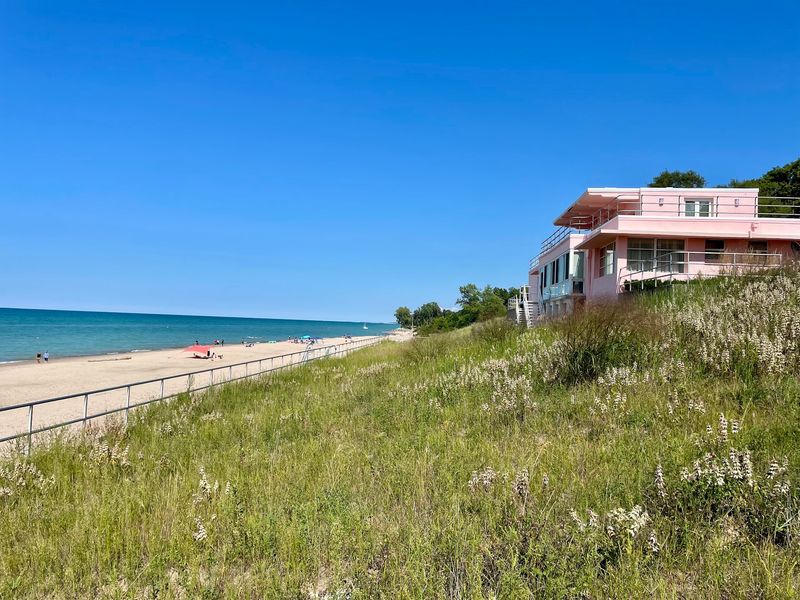
A quick photo stop can easily turn into a full afternoon. Lake Michigan sits right across the road, after all.
Set your GPS for 127 W Lake Front Dr, Michigan City, IN 46360. That gets you to the homes along Lake Front Drive in Beverly Shores.
You can see all five exteriors from the road year-round. Informational signs explain each home, and some include QR codes with more details.
Street parking in front of the houses has a short time limit. More parking for the beach sits nearby, so you can linger without worry.
Beverly Shores is a small, peaceful beach town with fewer than 1,000 residents. Kemil Beach is close, and the national park surrounds you.
The town also has a heritage trail with QR codes. It’s a fun way to learn about other important spots around town.
On a clear evening, the Chicago skyline can appear across the water. That’s a nice nod to where these houses first started.
Bring a towel, a snack, and a little patience for parking. Few places in Indiana pair beach time with World’s Fair history this easily.
