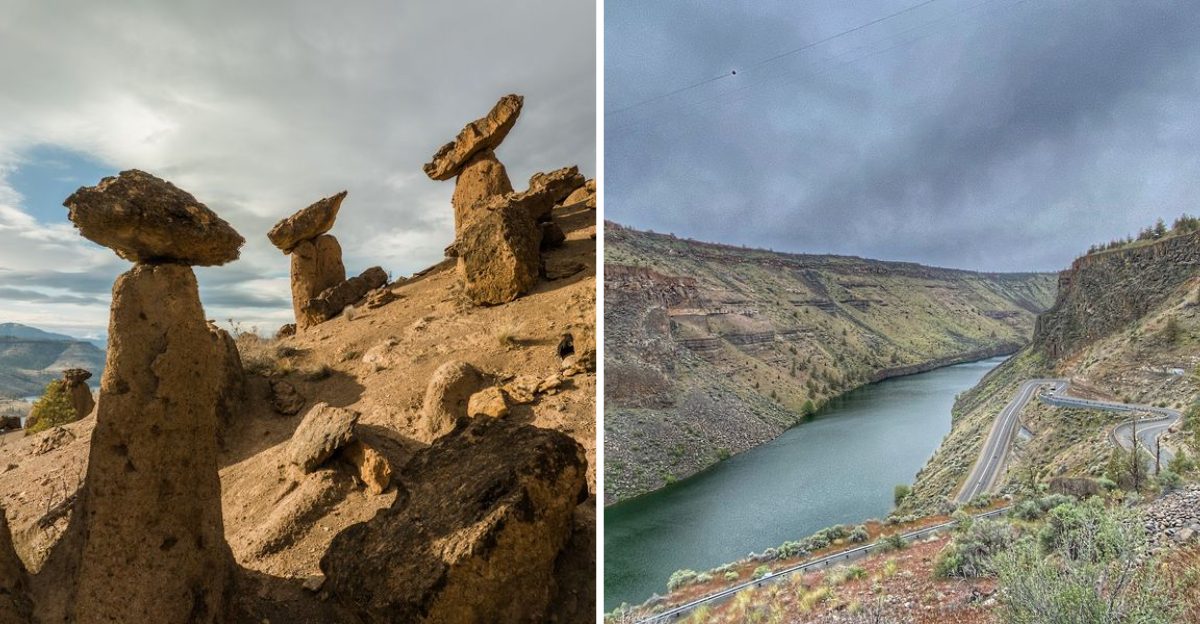
You know that moment when you see something in nature that makes you stop and say, “Wait, is this real?” These Oregon rocks deliver exactly that feeling. Scattered across a quiet stretch of landscape, massive boulders sit perched on top of one another in ways that seem physically impossible.
They look like they were placed there by some giant with a steady hand and a good eye for balance. But no human touch was involved here at all. These formations were shaped by centuries of wind, water, and patient time, leaving behind a spectacle that looks entirely deliberate.
It’s the kind of place where you find yourself walking around each formation, tilting your head, trying to figure out how they’re still standing against all odds.
Grab your camera and prepare to be bewildered. Oregon’s balancing rocks are proof that nature has a sense of humor and an eye for art.
First Glimpse From the Canyon Rim
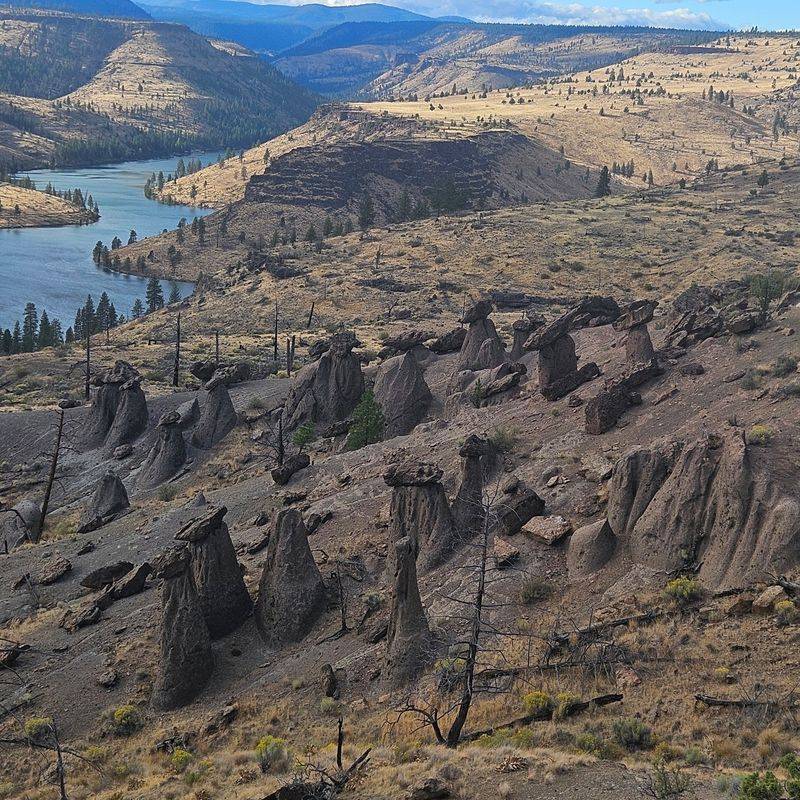
The rim shows up quietly, with no fanfare and no big painted sign to warn you. One minute there are ponderosa pines and dry needles underfoot, then the ground simply drops away.
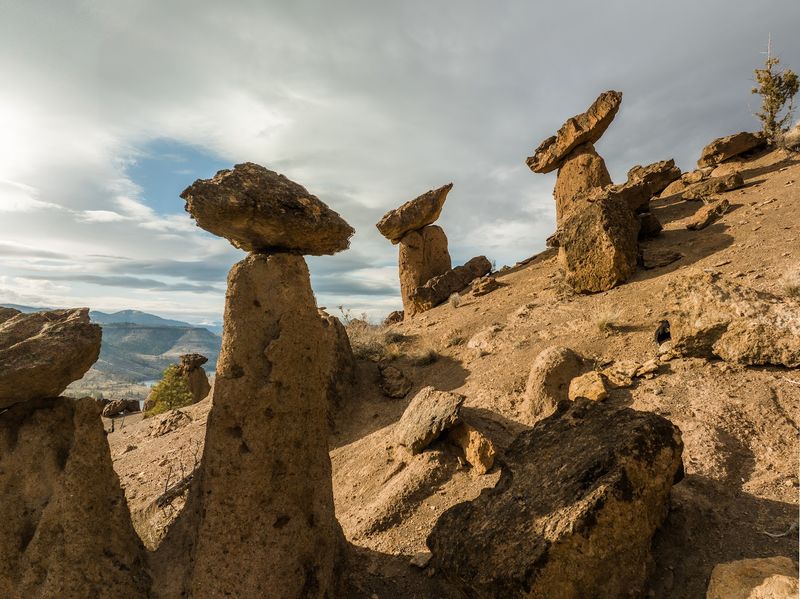
Across the slope sit the rocks themselves, heavy dark caps balanced on pale, skinny stems of hardened ash. They look stacked on purpose.
Scale is the part photos struggle with, since some of those caps stand taller than a person and spread wider than a car. From the overlook the canyon opens in layers of tan, rust and grey, and the formations stand in front of it like odd sculptures nobody bothered to sign.
Give the view a few minutes before reaching for a camera. Eyes adjust, the shapes separate from the background, and suddenly more of them appear scattered across the hillside.
Counting them becomes a small game. The first viewing area is the easiest to reach, and a second one sits a short stroll beyond it with a slightly different angle on the whole scene.
Ancient Ash, Hard Caps and Slow Erosion
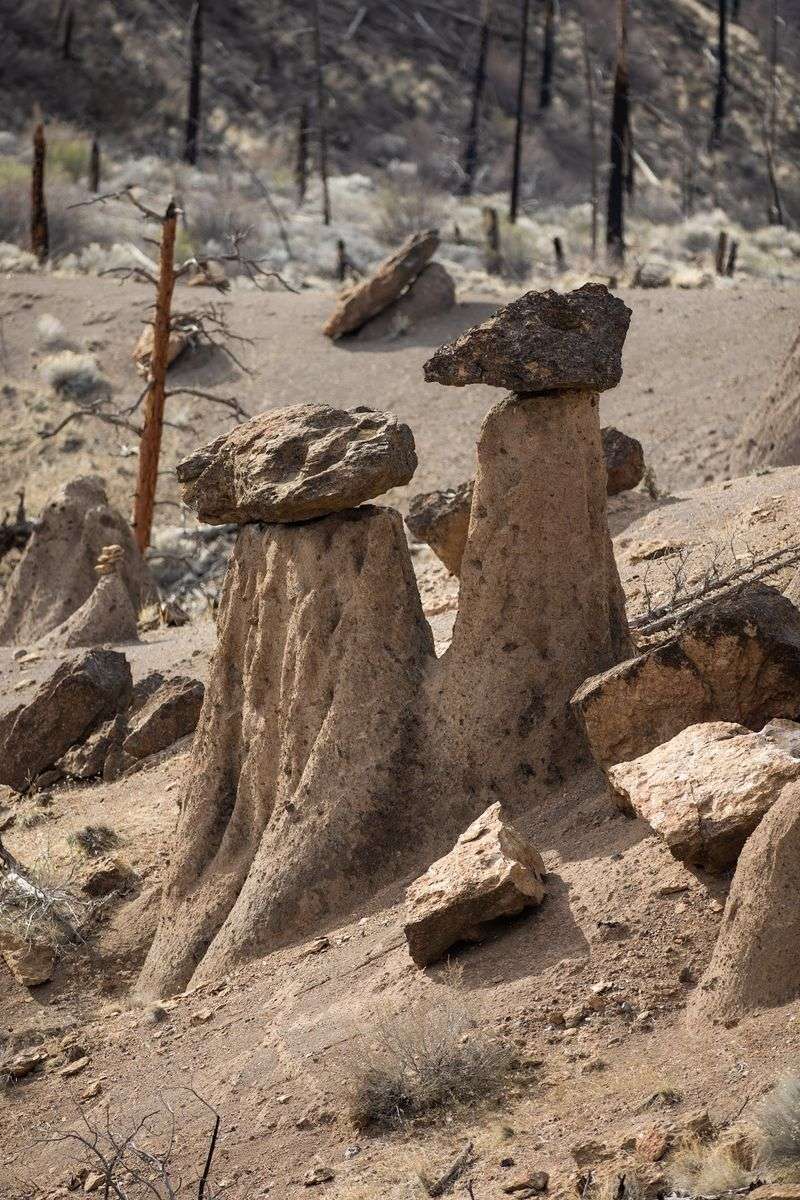
Volcanoes did all the heavy lifting here, long before anyone thought to build a road nearby. Ash flows once buried this landscape, layer over layer, and the material never settled evenly.
Some layers welded together under heat and pressure into tough rock, while the material beneath stayed soft and crumbly. Rain, wind and time then went to work.
Soft ash wears away fast, hard caps do not, so the tough pieces end up sitting on shrinking pedestals like stone umbrellas. Geologists call these hoodoos, though the mushroom nickname fits far better.
The canyon walls repeat the story in stripes, with basalt lava mixed between ash flows and old lake deposits, stacked like an extremely slow layer cake.
Knowing the recipe changes the view completely. Instead of a curiosity, the formations read as erosion caught mid-process, and every single one of them is only temporarily standing.
Someday gravity wins. That thought alone makes the detour feel worth every dusty mile.
A Quarter Mile Walk That Barely Counts as a Hike
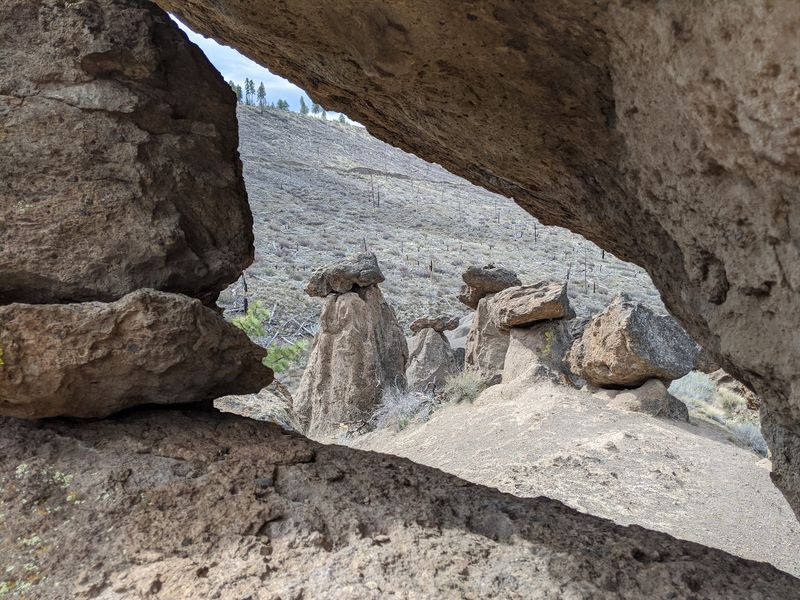
Short is an understatement for this walk. From the small pullout the path runs roughly a quarter mile through open forest, flat enough that ordinary sneakers handle it fine.
Dirt, pine needles, a few roots, nothing dramatic. Most people reach the first viewpoint in six to ten minutes without breathing hard, and that includes stopping to watch lizards or study oddly shaped bark.
No railings exist, no benches, no interpretive panels explaining anything. The edge is real and the drop below it is steep, so keep kids and dogs close and treat the rim with respect.
Footing near the lip turns loose and sandy in places. Sturdy shoes help more than expected for such a mellow distance.
Sun exposure builds once the trees thin out, so carry water even for a quick stop. Hikers wanting more can follow faint use paths along the rim, which open other angles on the formations.
Just watch where the ground gets crumbly. Turn back whenever the footing feels wrong.
Finding the Unmarked Turnoff Without Guesswork
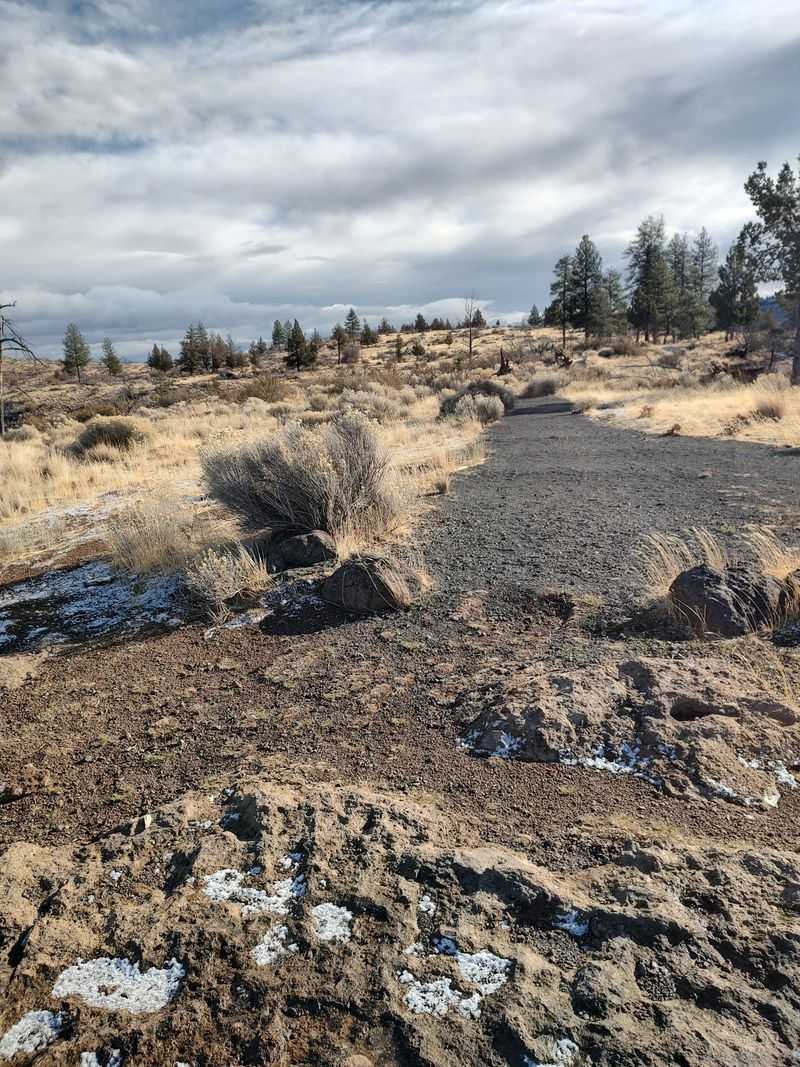
Getting here is honestly the hardest part of the whole trip. The turnoff sits unmarked along a forest road in the Deschutes National Forest above the Metolius River canyon, and drivers roll straight past it all the time.
Download the map before leaving town, because cell service disappears quickly out here.
Two general approaches exist, and people who have tried both tend to recommend the paved route over the long gravel climb, especially in a low car. Gravel here can be washboarded and thick with dust.
Nothing about it is extreme, but a flat tire in the middle of nowhere makes a lousy souvenir. Snow closes forest roads in winter, so late spring through fall is the practical window. Fuel up in Culver, Madras or Sisters before heading out. Signs are scarce for a reason.
Once the route makes sense the drive turns lovely, with pine shade, canyon glimpses, and the pleasant feeling of heading somewhere hardly anyone knows about. Take it slow and enjoy the approach.
Tiny Pullout, Zero Facilities, Big Reward
Parking is small, and that is putting it generously. A few cars fit at the pullout, maybe a handful on a good day, so arriving early on weekends saves plenty of frustration. Weekdays stay quiet enough that the place can feel almost private.
No restrooms exist out here, no water spigot, no trash cans. Plan accordingly, bring a bag for wrappers, and use facilities back in town before starting the drive.
Large rigs and trailers will struggle with the turnaround. Smaller vehicles manage easily, and tucking wheels off the roadway keeps the pullout usable for whoever shows up next.
Pack the basics, meaning water, snacks, sunscreen, a hat and layers for wind. A charged phone counts as smart insurance since help is nowhere close. Bring binoculars if a pair is handy, because details on the far pedestals pop beautifully through them.
Nothing here is arranged to entertain anyone, and that is exactly the point. The reward feels found rather than delivered.
Wind on the Rim and the Light That Flatters It
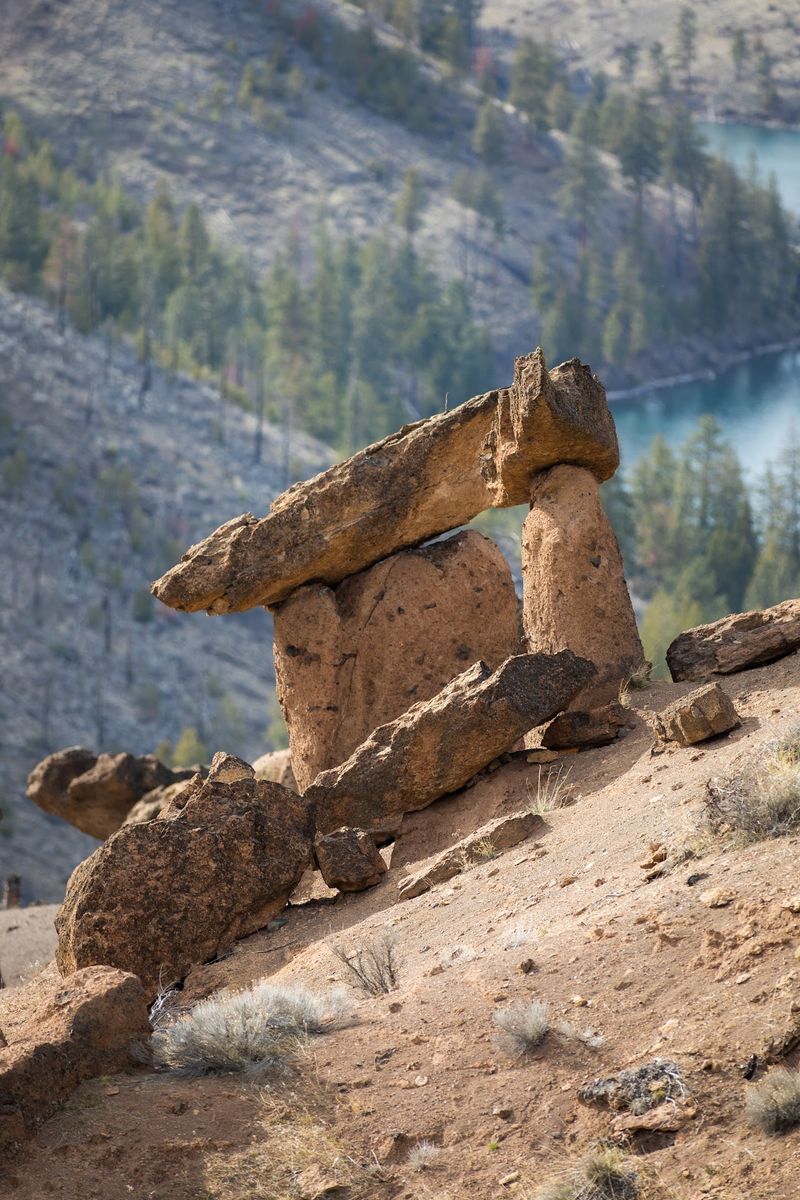
Wind comes with the territory up here. The canyon funnels it, and even on a mild afternoon the rim can feel breezy enough to send a hat flying. Hold onto loose gear.
Mornings run calmer and cooler, which matters in summer when high desert heat builds by midday. Late afternoon light warms the ash into soft gold and throws long shadows beneath each cap, which is when the formations look most sculpted.
Spring brings green grass and wildflowers scattered between the pines. Autumn air turns crisp and clear, with fewer visitors and better long-distance visibility across the canyon.
Storms roll through this region quickly, so keep an eye on the sky. Lingering on an exposed rim during lightning is not a memory worth collecting.
Dress in layers regardless of the forecast, because shade under the pines and sun on the rim feel like two different days. Temperatures swing hard after sunset, too. A light jacket easily earns its space in the pack.
Camera Angles Worth Slowing Down For
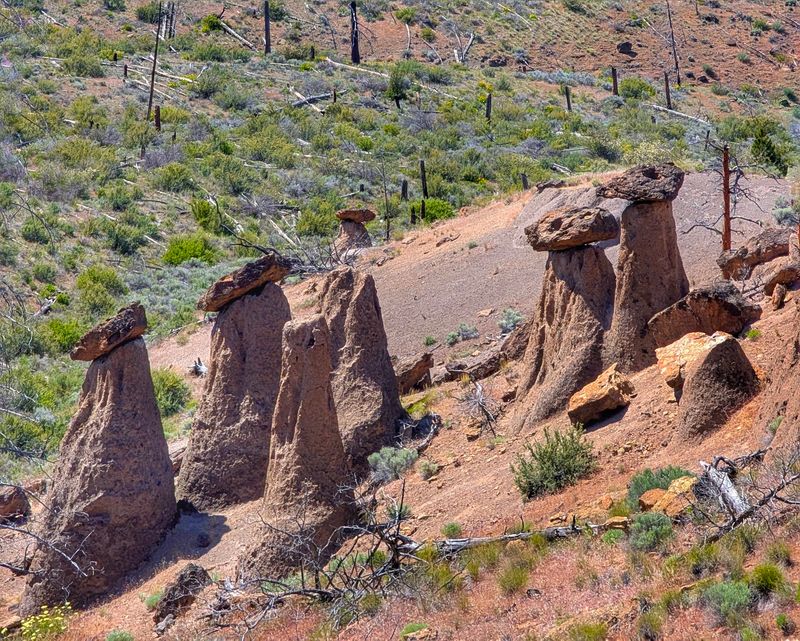
Photographers get spoiled here, though the light demands some patience. Midday sun flattens everything and washes the pale ash to blank white, while early and late hours carve out texture and depth. Golden hour is the obvious winner.
A telephoto lens compresses the pedestals against the canyon wall behind them, which makes the balancing act look even more improbable. Wide shots work too, especially with a pine branch framing one edge.
Try including a companion at a safe distance for scale. Without a human reference, friends back home assume these are knee-high curiosities rather than towering stone toadstools.
Stars burn fiercely bright out here on clear nights, though navigating forest roads after dark takes confidence. Keep tripod legs well back from crumbling edges.
Best advice, take the photo, then put the phone away and simply look for a while. The formations reward slow attention far more than fast shutter clicks. Details keep revealing themselves. Cracks, lichen, faint layering in the ash beneath each cap.
Why Most Visitors Skip the Scramble Below
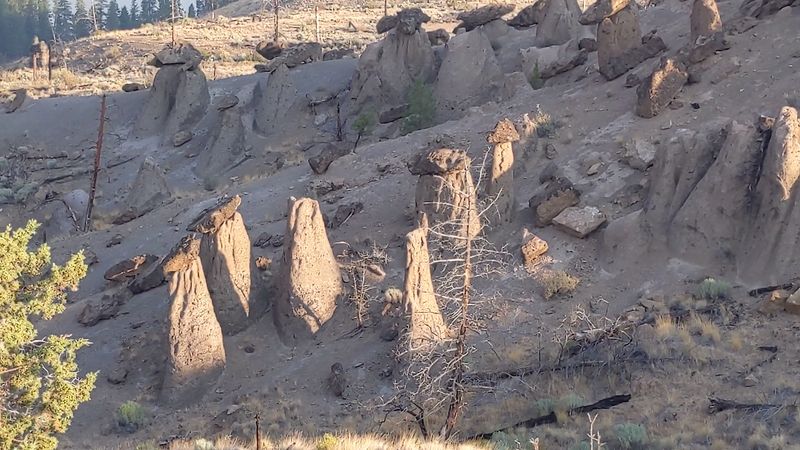
Curiosity pulls people toward the slope below, and thinking twice pays off. Reaching the base of the formations means a steep scramble down loose ash and rock, with no maintained trail to follow. Going down is easy. Climbing back up is the punishment.
Most visitors stay on the rim, and the overlook already delivers the best composition of the whole scene anyway. Anyone who does descend should wear proper shoes, move slowly, and never touch the pedestals.
Soft ash crumbles under hands and boots far more easily than it appears. Every scuff shortens the life of a formation that took an unimaginable stretch of time to shape.
Loose rock travels downhill fast, which puts anyone below at risk. Rescue out here would be slow and complicated.
Staying up top costs nothing and keeps fragile ground intact for whoever arrives next weekend. There is a quiet satisfaction in choosing the safe view. Zoom in with a lens instead of ambition. Sometimes restraint makes the smarter souvenir.
Building a Day Around Canyons and Rivers Nearby
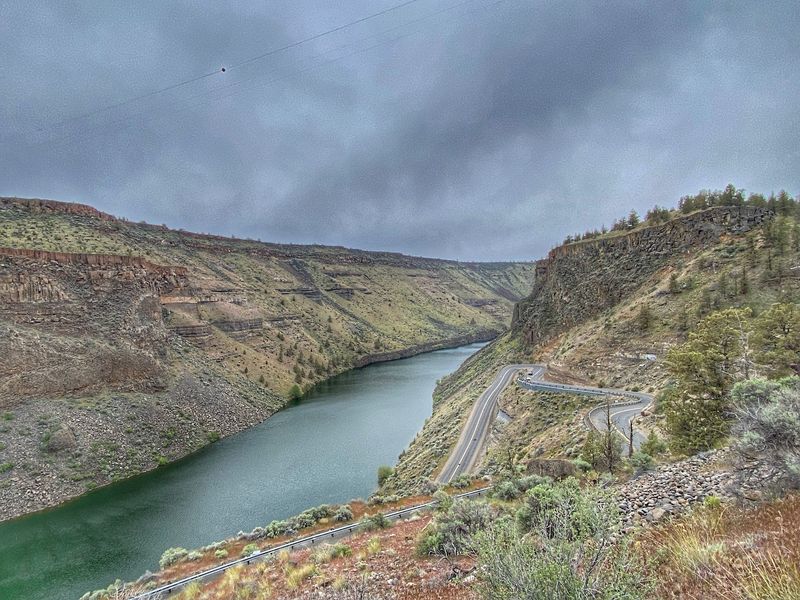
One stop rarely fills a whole day, and the surrounding area makes that easy to fix. Cove Palisades State Park sits nearby, with towering canyon rims above the reservoir and viewpoints that pair naturally with a balancing rocks detour.
Roads between the two thread through some of the most dramatic scenery in central Oregon.
Sisters and Camp Sherman lie to the west, where the Metolius River runs impossibly clear straight from its spring source. Madras and Culver work well as supply stops on the way in.
Smith Rock State Park sits close enough for an ambitious day of driving, if legs and patience allow. Planning a loop makes the gravel miles feel worthwhile.
Start early, catch the rocks while the light stays soft, then follow the canyon down toward the river. Pack lunch, since dining options thin out fast once the pavement ends.
Half the fun is realizing how much strange geology hides in one short stretch of highway. Every turn reveals another rim or river bend. Leave time for detours.
Treading Lightly on Rocks Built by Time
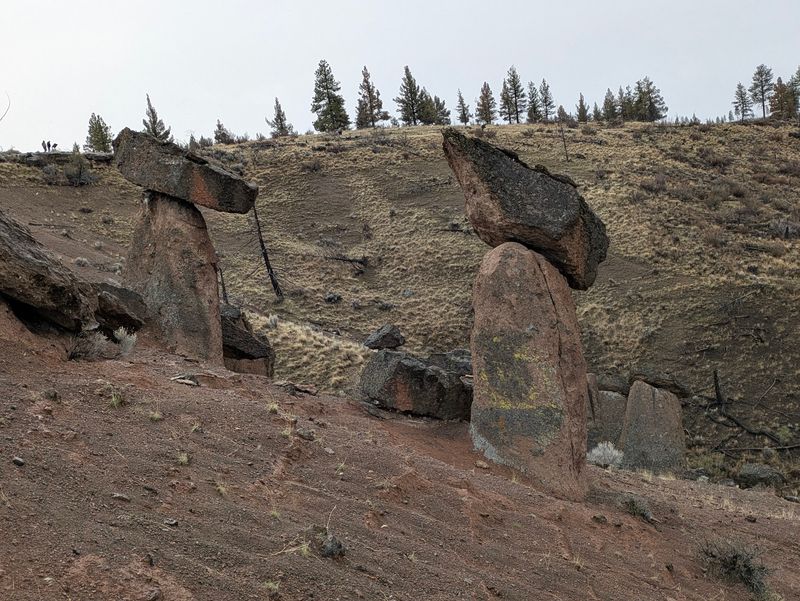
Nobody built this place, and nothing here ever gets repaired. That single thought should shape the entire visit.
Stay on existing paths, keep off the pedestals, and skip the urge to stack little rock towers nearby. Carry out everything brought in, including fruit peels, which break down painfully slowly in dry high desert soil.
Voices carry across the canyon, so keeping noise down lets everyone hear wind moving through the pines. Dogs should stay leashed near the rim.
Mushroom hunters wander these forests in season, a good reminder that the land serves plenty of purposes beyond photographs. Fire risk climbs high through summer, so no open flames, ever.
Small habits keep unmarked wonders like this one worth finding. The formations already survive on borrowed time. Leave the place better than you found it, and the next person gets the same jolt of surprise at the rim.
Address: Culver, OR 97734, United States
