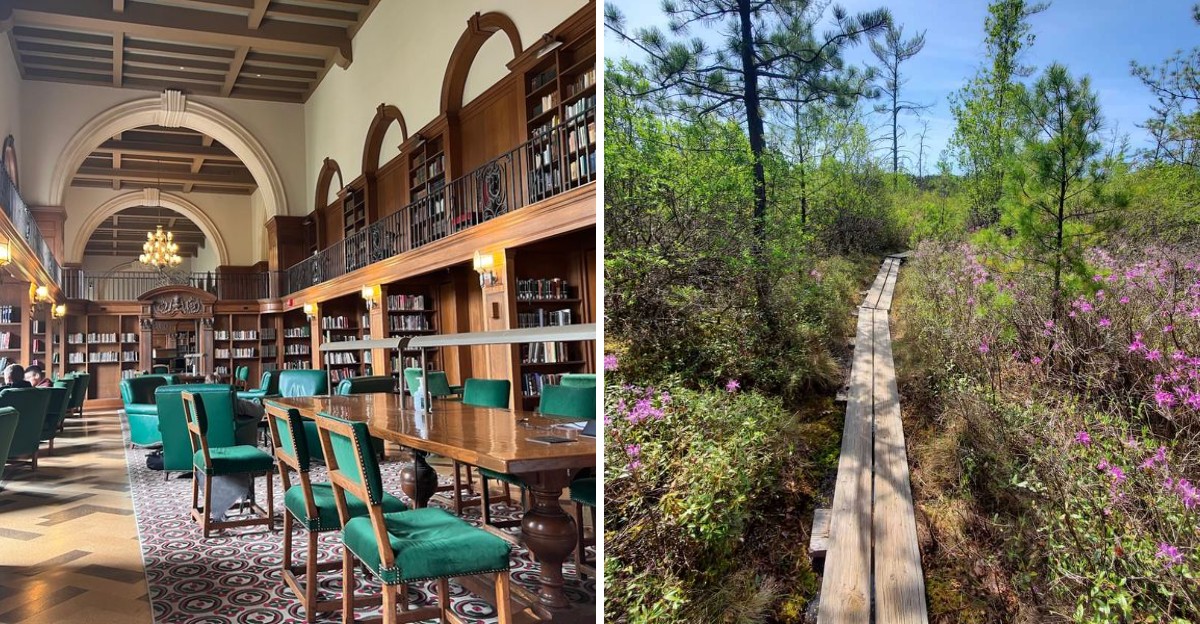
Most people think they know what New Hampshire looks like. Mountains, lakes, and charming small towns.
That is all true, but it is not the whole story. There are attractions across the state that do not fit the usual postcard image, and they are worth seeking out.
A stone structure that has baffled historians for decades. A abandoned settlement slowly being reclaimed by the forest.
A museum dedicated to a subject so specific it borders on obsession. These places are strange, surprising, and completely unforgettable.
They challenge the idea that New Hampshire is just a pretty place to visit. It is also a place full of mysteries and oddities.
If you are willing to look beyond the well known spots, you will find a side of the state that most visitors never see. These New Hampshire attractions might just change the way you see the whole state.
1. America’s Stonehenge Keeps Everyone Guessing
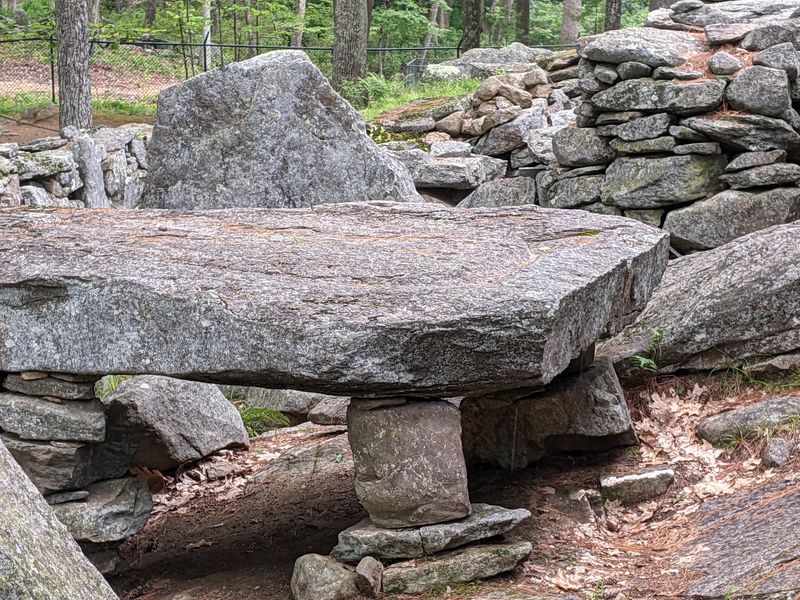
Massive slabs, low stone chambers, and standing rocks aimed at the sunrise. Welcome to the site that refuses to settle its own story.
Find it at 105 Haverhill Road in Salem, where a privately owned archaeological property spreads across a rocky hillside. Some argue the arrangements point to pre-Columbian European builders.
Others credit colonial farmers, quarry work, or later hands entirely.
Once called Mystery Hill, the place earns its reputation through astronomical alignments, with certain stones marking solstice positions. Wander the trails and you will pass chambers, tunnels, and inscribed rocks tucked into the trees.
The famous grooved slab nicknamed the sacrificial table draws the wildest theories, though researchers generally describe it as a practical lye-leaching stone for soap making or a cider press bed. Either explanation still beats a gift shop magnet.
Roughly four thousand years of human presence have been documented on this land, from early Indigenous inhabitants through colonial settlers. Excavation and research continue, which means the final answer stays comfortably out of reach.
Wear shoes with grip, because the paths run over uneven ledge and roots. Fall visits reward you with clear sightlines once the leaves thin out.
An alpaca farm shares the property, so your archaeology puzzle comes with fuzzy company and zero warning. Snowshoe trails open the surrounding woods in winter for anyone who prefers their mysteries frosted.
Bring your skepticism, bring a camera, and leave with an opinion you will defend loudly at dinner.
2. Madame Sherri’s Castle Ruins Feel Ripped From A Storybook
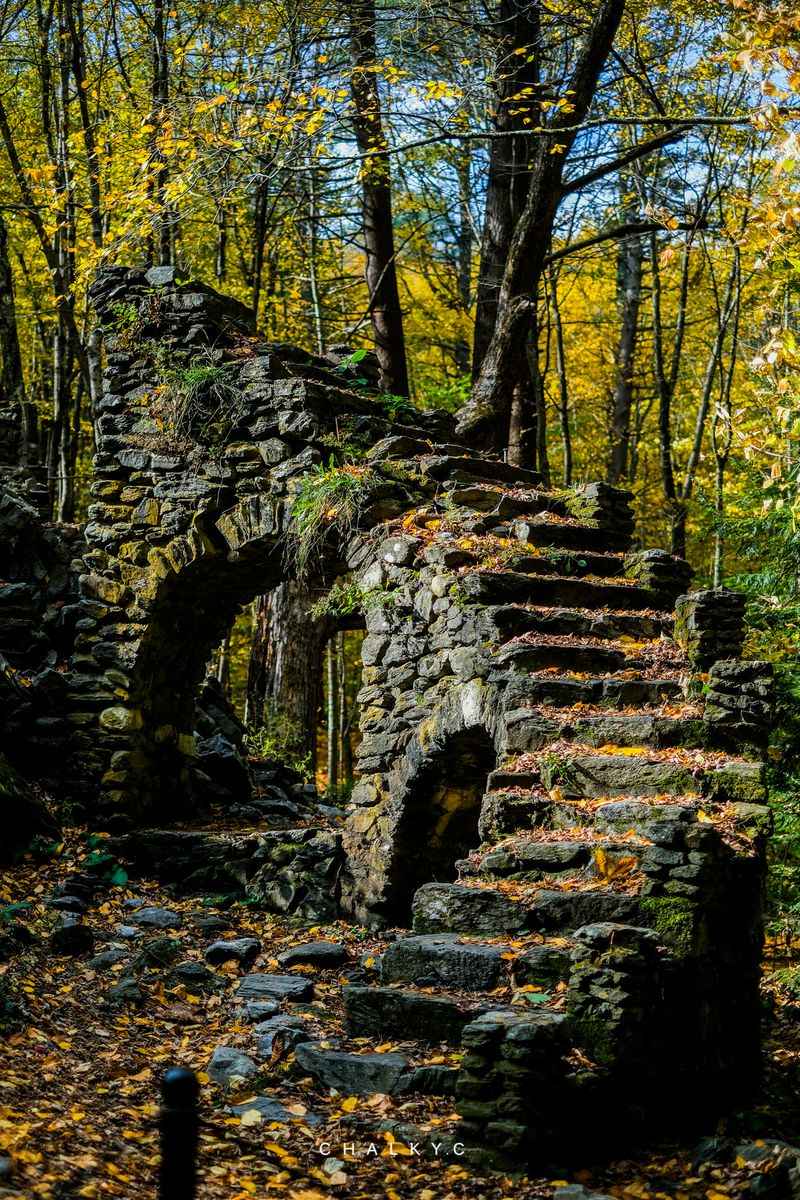
A curving stone staircase climbs into the treetops and then simply stops. No castle, no roof, no explanation, just an arch framing empty air.
Madame Sherri Forest in Chesterfield holds the remains, with the trailhead reached off Castle Road near Gulf Road. Park, walk a short distance, and the ruins appear like a set piece someone forgot to strike.
Antoinette Sherri built her French-inspired summer chateau here in the 1930s after making her name as a theater costume designer in New York City. Stonework, gardens, and that dramatic Roman arch stairway all served her taste for spectacle.
Stories from the area describe lavish parties for Broadway friends, grand arrivals in a custom Packard, and a pet monkey along for the ride. Fortunes faded, the estate emptied, and fire finished the house in 1962.
What survives photographs beautifully in every season, though spring runoff and autumn color do the most for it. Admire the staircase from the ground rather than climbing, since the masonry has aged without maintenance.
Local lore insists faint music and laughter still drift through the pines. Believe that or not, the atmosphere delivers either way.
The surrounding forest covers roughly five hundred acres with quiet trails, a beaver pond, and enough birdsong to justify a slow loop. Ann Stokes Loop makes a pleasant add-on after the ruins.
Pack bug spray in early summer. Ghost stories do not repel mosquitoes.
3. Funspot Holds A World Record And Your Quarters

Guinness World Records calls it the largest arcade on the planet. Your thumbs will call it something less polite by hour three.
Funspot sits at 579 Endicott Street North in the Weirs Beach section of Laconia, a sprawling multi-level complex that started in 1952 as a small penny arcade and miniature golf operation founded by Robert Lawton.
Inside, hundreds of games fill the floors, ranging from 1970s and 80s cabinets to current releases. Pinball fans get a serious lineup, complete with flippers that have survived decades of abuse.
The American Classic Arcade Museum occupies a dedicated section upstairs, preserving coin-operated history in playable form. Rare titles sit alongside icons, and everything still takes tokens.
Bowling runs both ten-pin and candlepin, that stubborn New England variant with skinny pins and small handheld balls. Indoor mini golf, cash bingo, and a functioning snack area round out the roster.
Weekday mornings tend to be calmer, which matters if you want a shot at high scores without a line forming behind you. Summer weekends turn the place into a happy madhouse.
The annual International Classic Video Game Tournament brings competitive players from far beyond New England, and watching a Donkey Kong expert work is oddly hypnotic.
Buy tokens in a bundle rather than dribbling them out one dollar at a time. Rookie mistake, easily avoided.
Sound advice for parents: set a meeting point. Kids vanish into this building like socks into a dryer.
4. GG Allin’s Grave Draws An Unlikely Crowd
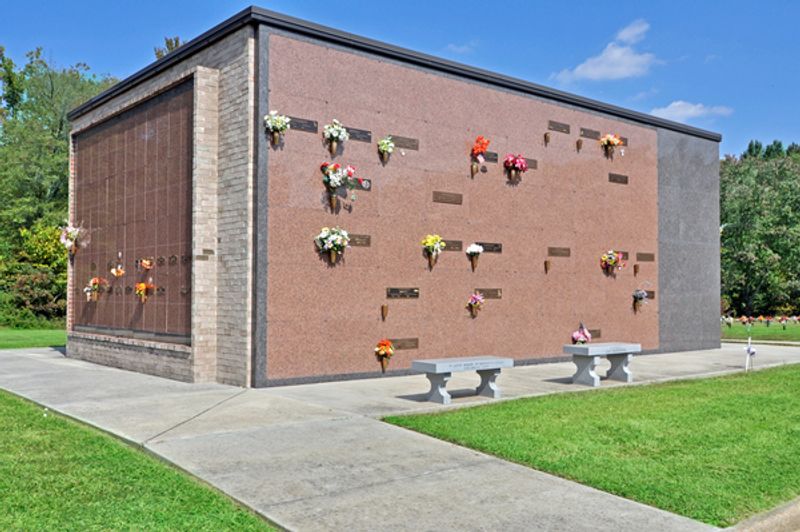
Not every pilgrimage site involves cathedrals. Some involve a flat patch of grass in a small-town cemetery and a legacy nobody agrees on.
Saint Rose of Lima New Catholic Cemetery in Littleton holds the burial plot of GG Allin, the punk musician who died in 1993 and never once aimed for good taste.
Born Jesus Christ Allin, he built a career on performances so extreme that clubs banned him on principle. His funeral followed his own instructions, open casket and thoroughly chaotic, a final statement from a man allergic to restraint.
A headstone went up about a year after his death and became a magnet for fans. Repeated vandalism led the cemetery to remove it in 2010.
Today the plot sits unmarked except for a small letter G placed by those who still make the trip. The absence somehow says more than granite would.
If you go, remember this remains an active burial ground where families visit their own. Keep it quiet, keep it clean, take nothing and leave nothing behind.
The North Country setting adds an odd contrast, with the White Mountains rising nearby and Littleton’s cheerful Main Street just minutes away. Few places swing this hard between wholesome and notorious.
Music historians point to Allin as a case study in how far shock value can travel. Whether that counts as art or spectacle is your call.
Respect first, curiosity second. That order matters here.
5. The Lake Winnipesaukee Mystery Stone Still Stumps Experts

Egg-shaped, dark, smooth, and covered in carvings nobody can explain. It fits in your palm and has occupied academic arguments for over a century.
See it at the New Hampshire Historical Society, 60 Park Street in Concord, where the artifact anchors a collection full of state history.
Workers digging a fence post near Lake Winnipesaukee turned it up in 1872. The rock itself, a hard quartzite or mylonite, does not match local geology, which was the first red flag.
Carvings cover the surface. A human-like face, an ear of corn, a shape resembling a teepee, spirals, arrows, and marks that resist easy reading.
Then there is the hole. A channel runs straight through the center, drilled with what appear to be two different tool sizes, suggesting equipment more advanced than the era should allow.
Theories pile up quickly. Indigenous relic, treaty marker, Victorian hoax, souvenir of a forgotten trade, or something stranger depending on who is talking.
Standing in front of it, the scale surprises you. Something so small should not carry that much unanswered history.
The Historical Society building itself deserves a look, with an elegant stone entrance and a rotunda that feels grander than its footprint suggests. Downtown Concord sits right outside, walkable and full of brick storefronts.
Give the case a few unhurried minutes. Half the appeal comes from realizing that nobody, anywhere, has cracked this one yet.
6. Dinner Inside Old Jail Cells At Margaritas In Concord
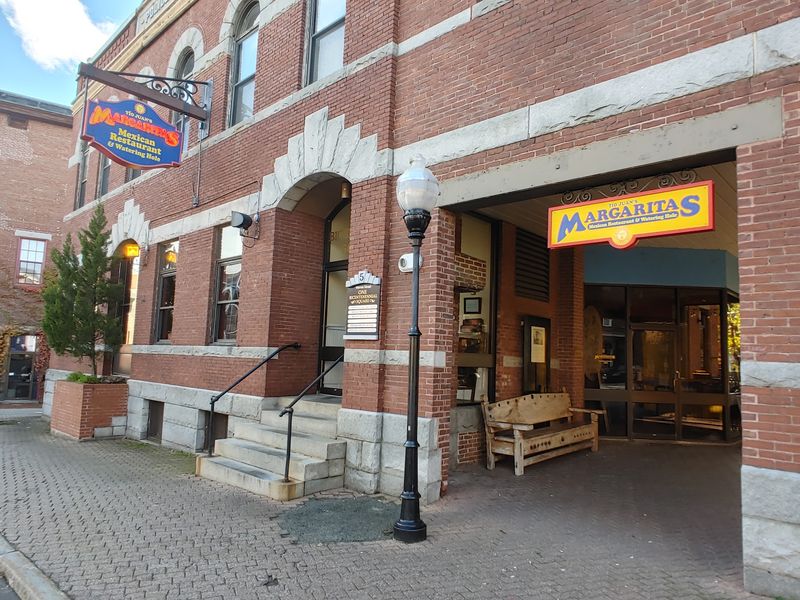
Iron bars, thick stone walls, and a table for two. Sounds grim until you learn the building now serves enchiladas.
Margaritas Mexican Restaurant occupies 1 Bicentennial Square in Concord, inside a structure that spent decades as the city police department and jail before the badges moved out in the 1970s.
Rather than gutting the place, the restaurant kept the bones. Several original cells became dining nooks, which makes reserving one the most requested seat in the house.
Bright hand-painted decor, woven textiles, and warm lighting play against cold granite and heavy hardware. The clash is the whole point, and it works better than it should.
The dining room upstairs feels roomier, with tall windows looking onto the square, so nervous diners have options. Ask about cell seating when you arrive if you want the full effect.
Staff will tell you about a resident spirit nicknamed George, a story that has followed the building for years. Whether he prefers the salsa is undocumented.
Bicentennial Square puts you steps from Main Street, making this an easy pairing with the Mystery Stone or a stroll past the State House and its gold dome.
Weekend evenings fill fast, so arriving early improves your odds considerably.
Few restaurants anywhere let you eat inside genuine lockup architecture while mariachi music plays. The Granite State quietly wins this category, and you will absolutely retell the story later.
7. Chutters And Its Record Breaking Candy Counter

One hundred and twelve feet of candy jars. That is not a typo, and it is not a metaphor.
Chutters stands at 43 Main Street in Littleton, holding the Guinness World Records title for the longest continuous candy counter anywhere. The jars run down one wall in a glittering, slightly overwhelming procession.
Step through the purple and pink storefront and the smell hits first, sugar and fudge in the making. Grab a bag, grab a scoop, and abandon all self-control.
The shop traces back more than a century to Frederick George Chutter, an Englishman who moved from ministry work into dry goods and clearly found his true calling in confections.
Selection covers nostalgic penny candy, sour bombs, chocolates, salt water taffy, and house-made fudge in flavors worth debating. Candy buttons and wax bottles still make appearances for anyone chasing childhood.
Bring a plan or you will fill three bags before reaching the halfway mark. Sampling with your eyes is free, at least.
Littleton’s Main Street deserves the extra hour, with brick sidewalks, independent shops, a working gristmill nearby, and a bronze statue honoring Pollyanna author Eleanor H. Porter, a local daughter.
The Ammonoosuc River runs just behind the buildings, and a covered footbridge gives you a fine spot to eat your haul.
Kids lose their minds here. Adults pretend they are supervising.
8. The Orozco Murals Turn A Library Basement Into A Masterpiece

Fluorescent-lit study tables. Students with laptops.
And wrapping all around them, one of the most powerful murals in North America.
The Epic of American Civilization fills the basement reading room of Baker Memorial Library at Dartmouth College, 25 North Main Street in Hanover. Twenty-four fresco panels cover roughly 3,200 square feet.
Mexican artist José Clemente Orozco painted the cycle between 1932 and 1934, working on-site while classes carried on above him. He chose a functional room on purpose, wanting the work lived in rather than admired from a velvet rope.
The panels move through Indigenous civilizations, the arrival of Europeans, conquest, industrial machinery, and war. Progress does not march forward here, it loops and consumes itself.
Figures seem to push out of the plaster, huge and unsettling under low ceilings. The cramped setting amplifies everything, which is exactly the trick.
Designated a National Historic Landmark, the murals remain open to the public during library hours, free of charge. Check the college website before driving up, since access can shift during exams.
Stay long enough to circle the room twice. First pass for scale, second for the details you missed while staring at the big stuff.
Hanover itself makes a tidy afternoon, with the green, the Hood Museum of Art, and bookshops within a couple of blocks.
Nothing about this reading room prepares you for what is on the walls. Consider that a promise.
9. Ponemah Bog Wobbles Beneath Your Feet
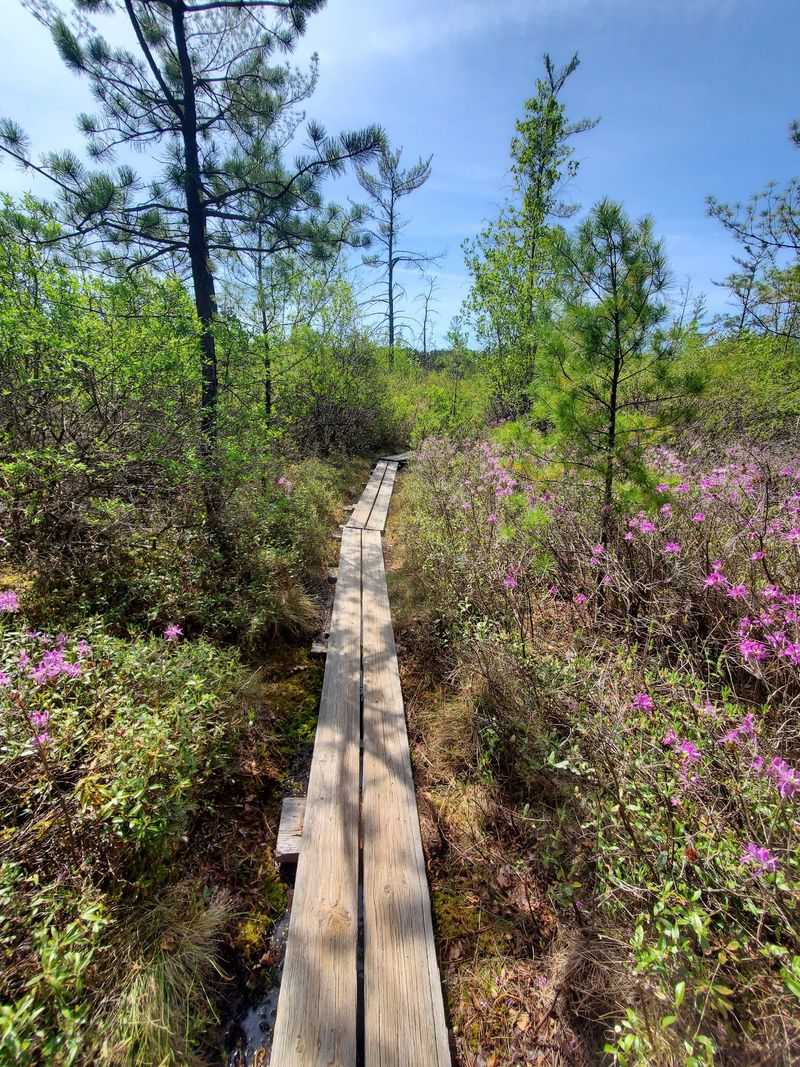
Ground that bounces. Not mud, not a trick, an actual floating mat of moss that flexes with each step.
Ponemah Bog Wildlife Sanctuary occupies about seventy-five acres off Rhodora Drive in Amherst, managed as a quaking bog with a boardwalk looping through the strangest terrain in southern New England.
The basin began as a kettle hole pond left by a retreating glacier more than twelve thousand years ago. Sphagnum moss gradually crept across the water, building a living raft over deep peat.
Walk the boardwalk and the whole surface gives slightly, a sensation somewhere between trampoline and waterbed. Stay on the planks, because the mat beyond them is genuinely fragile.
Plant life here breaks the rules. Pitcher plants and sundews trap insects to survive the acidic soil, while leatherleaf, rhodora, and stunted black spruce crowd the edges.
June brings rhodora and laurel blooms, and the carnivorous plants are easiest to spot in early summer. Dragonflies patrol the open water in dense squadrons.
The name comes from Longfellow’s Hiawatha, where Ponemah refers to the land of the hereafter. Fitting for a place this hushed.
Parking is small and the trail is short, making this an ideal stop between larger destinations. Neighborhoods sit just beyond the treeline, which makes the wilderness feeling even odder.
Quiet pays off. Stand still for five minutes and the bog starts showing you things.
10. Enfield Shaker Museum Proves Simple Can Be Spectacular
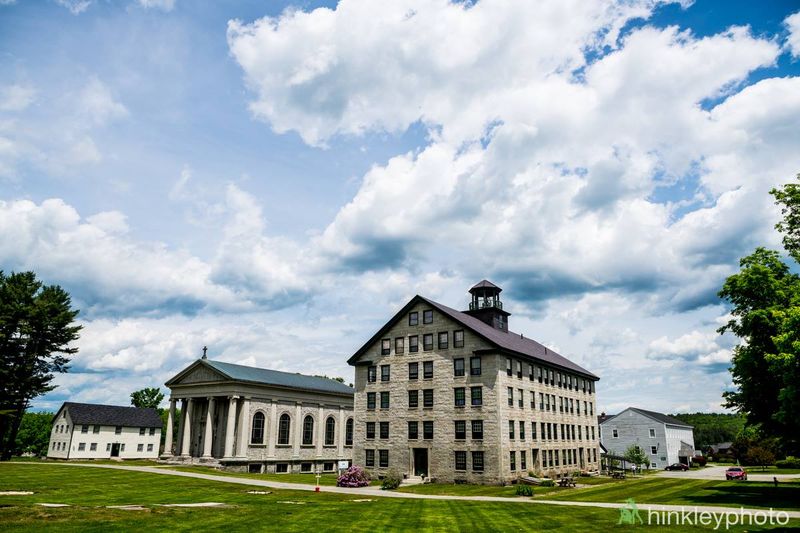
Six stories of hand-cut granite rising beside a lake, built by people who believed furniture should have no unnecessary curves. Restraint, it turns out, can look magnificent.
The Enfield Shaker Museum sits at 447 NH Route 4A, preserving the historic core of a village where a Shaker community lived and worked from 1793 until 1923.
Nine Shaker-built structures remain, along with two cemeteries, restored gardens, and grounds that slope toward Mascoma Lake. The setting alone justifies the drive.
Centerpiece honors go to the Great Stone Dwelling, completed in 1837 and still the largest Shaker residential building ever raised north of Boston. Its masonry demonstrates just how skilled these builders were.
Inside, exhibits explain communal living, separate stairways for men and women, workshop innovation, and a spiritual practice that produced both haunting music and famously excellent chairs.
Herb and flower gardens have been replanted to reflect the community’s self-sufficiency and interest in medicinal plants. Walk them slowly and the logic of the whole village clicks into place.
Seasonal programs cover crafts, music, and history, and the site hosts overnight stays in the Stone Dwelling for anyone wanting the full monastic experience with modern plumbing.
Autumn wraps the property in color, while winter turns the granite facade stark and striking against snow.
Shaker design influenced American furniture more than almost any other movement. Seeing the source in its original landscape recalibrates how you think about this state entirely.
