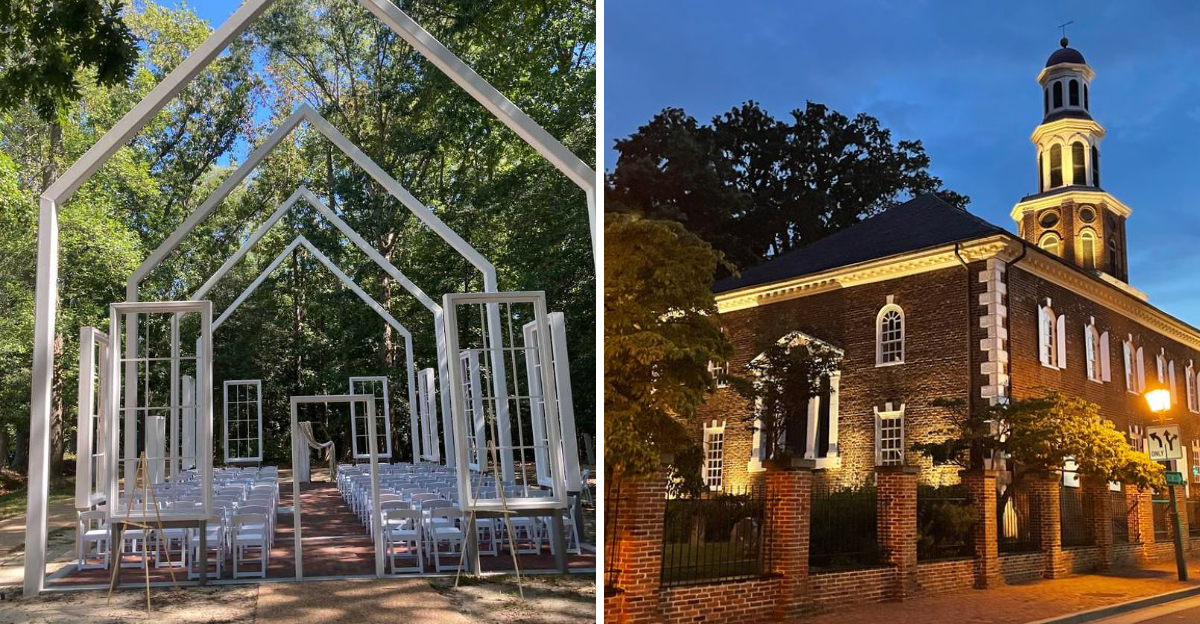
Churches in Virginia are more than places of worship. They are markers of time, witnesses to history, and buildings that have shaped the way we understand the state’s past.
This list has twelve Virginia churches that changed the way we look at history, places where events unfolded and decisions were made. I have visited most of them, and each time I have felt the weight of the stories they hold.
Some are colonial structures that have stood for centuries, their foundations laid before the nation was founded. Others are sites of civil rights activism, where communities gathered and movements grew.
A few are known for their architecture, their stained glass windows and soaring spires. Virginia has plenty of historic buildings, but these churches are windows into the state’s soul.
1. St. Luke’s Historic Church and Museum
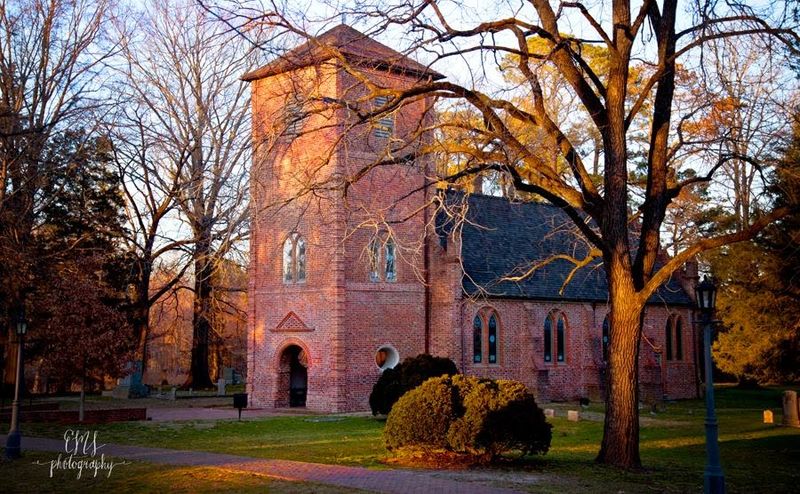
Picture a building so old and so beautifully preserved that simply standing next to it feels like stepping through a time portal. St. Luke’s Historic Church in Smithfield is exactly that kind of place, and it earns every ounce of awe it inspires.
Recognized as a National Historic Landmark, this remarkable structure holds the title of Virginia’s oldest surviving brick church, and its Gothic design connects directly to medieval European craftsmanship.
The church’s buttressed walls, lancet side windows, and breathtaking traceried east window are not just pretty details. They are physical links to an era when settlers poured extraordinary effort into building something meant to outlast them by centuries.
Walking through the grounds, you genuinely feel the weight of over four hundred years of continuous American history pressing gently against your shoulders.
What makes St. Luke’s truly special is how it reframes our understanding of early colonial life. Faith here was not a footnote; it was the foundation around which entire communities organized themselves.
The building stands as a rare, tangible example of how religious expression drove architectural ambition in the New World.
Visiting today, you can explore the museum that contextualizes the church’s layered story with thoughtful exhibits. The surrounding landscape is peaceful and photogenic, making it a rewarding stop for history lovers and curious road-trippers alike.
Smithfield is a charming small town worth exploring beyond the church itself.
Address: 14477 Benn’s Church Blvd, Smithfield, VA 23430
2. Bruton Parish Episcopal Church
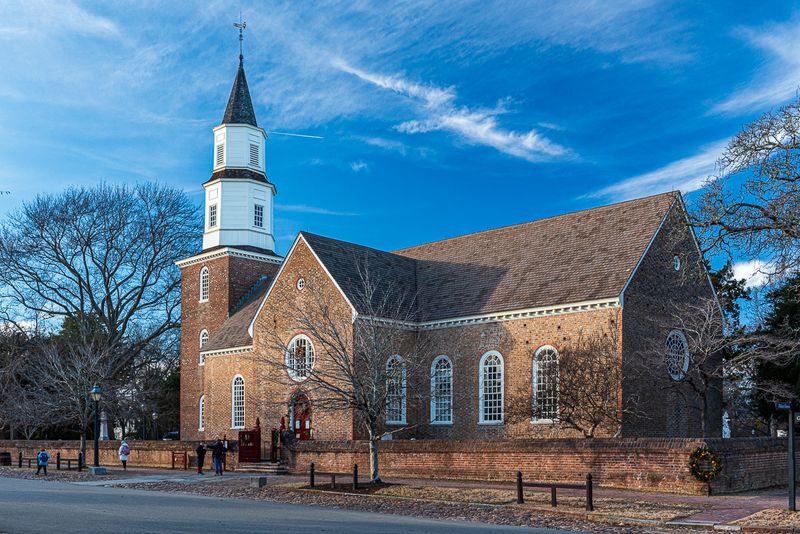
Right in the beating heart of Colonial Williamsburg sits a church that once doubled as the unofficial power center of an entire colony. Bruton Parish Episcopal Church has been a spiritual and political cornerstone since its establishment, and stepping inside feels less like a tourist visit and more like a genuine audience with American history itself.
The present brick building, completed in the early 18th century, served as the court church for colonial Virginia’s capital. That means the Royal Governor, members of the Council, and delegates to the House of Burgesses all filed through these same doors.
You can almost hear the rustling of coats and the murmur of political ambition in the air.
Architecturally, the church blends classic Gothic elements with colonial sensibility. Pointed arch doorways and elongated windows give the building a quiet elegance that feels deliberate and dignified.
Every design choice was a statement about the community’s aspirations and its connection to English tradition.
What shifts your perspective about Virginia history here is realizing how tightly church and government were woven together in colonial life. The pews were literally assigned by social rank, making the building a physical map of the colony’s hierarchy.
That detail alone rewrites how you imagine everyday colonial existence.
Bruton Parish remains an active congregation today, which adds a living warmth to the historical experience. Tours are available, and the churchyard is a serene spot to pause and reflect.
Address: 201 W Duke of Gloucester Street, Williamsburg, VA 23185
3. Historic Christ Church
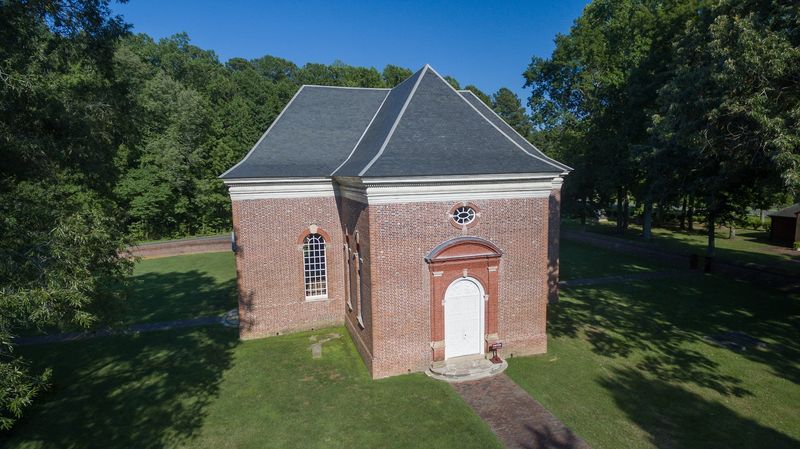
Out in Weems, tucked into the quiet landscape of Lancaster County, Historic Christ Church is the kind of place that stops you mid-step and makes you reassess everything you thought you knew about colonial wealth and religious life. Built by the formidable Robert “King” Carter between 1732 and 1735, this National Historic Landmark is one of the best-preserved colonial churches anywhere in the country.
The Georgian design is stunning in its precision. Rubbed brick doorways, elegant sash windows, and a magnificent walnut altarpiece all point to a builder who wanted permanence and prestige in equal measure.
Carter was among the wealthiest men in colonial America, and this church was his architectural signature.
Inside, the original high-backed box pews survive intact, a feature found in no other colonial Virginia church. That alone makes this place extraordinary.
Add to that one of only two remaining original triple-decker pulpits in the state, and you have an interior that is essentially a time capsule of 18th-century Anglican worship.
Visiting Historic Christ Church reshapes your understanding of how power, faith, and architecture intersected in colonial Virginia. The building was not just a place to pray; it was a public declaration of status and ambition.
Carter’s tomb, located inside the church, reinforces that message with quiet authority.
The surrounding grounds are peaceful and beautifully maintained. A visitor center nearby provides excellent historical context for first-time explorers.
Address: 420 Christ Church Road, Weems, Virginia 22576
4. St. John’s Episcopal Church Richmond
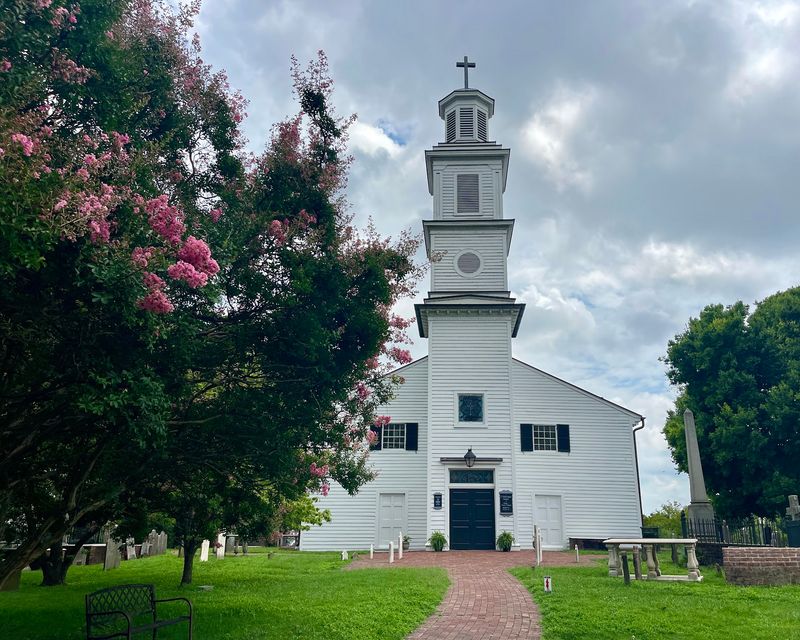
There are places where you can almost hear the echo of words that changed everything, and St. John’s Episcopal Church in Richmond is unquestionably one of them. Established on its current site in the early 18th century, this landmark is forever linked to one of the most electrifying moments in American history.
It was here that Patrick Henry stood up and delivered the speech that lit a fire under an entire revolution.
During the Second Virginia Convention in March 1775, Henry addressed delegates that included George Washington and Thomas Jefferson. His famous cry for liberty rang through these walls and rippled outward across the colonies, hardening resolve and accelerating the march toward independence.
Standing in the same room where that happened is genuinely spine-tingling.
The church itself is a graceful white wooden structure perched on a Richmond hill, surrounded by a historic graveyard that adds layers of atmosphere to every visit. The setting feels cinematic in the best possible way, dramatic without trying too hard.
What many people miss is the church’s post-Civil War chapter. After the conflict ended, St. John’s provided crucial educational opportunities for African Americans in Richmond, expanding its historical role well beyond revolutionary politics.
That dual legacy, as a cradle of independence and a space of post-war healing, gives this church a depth that few landmarks can match.
Reenactments of Henry’s speech are performed regularly, making the experience vivid and accessible for visitors of all ages.
Address: 2401 E Broad St, Richmond, VA 23223
5. Jamestown Memorial Church
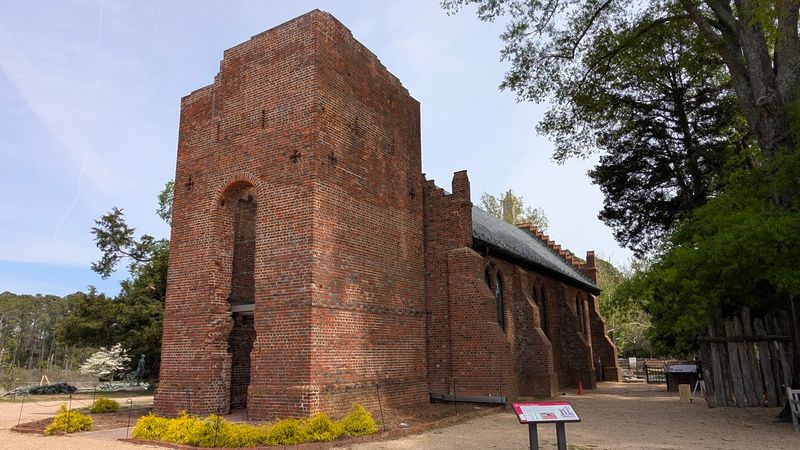
Jamestown is where America essentially started, and the church at its center carries the weight of that monumental origin story on its ancient foundations. The Jamestown Memorial Church, located within Historic Jamestowne, sits on ground that hosted the first elected legislative body in the Americas, the Virginia General Assembly, way back in 1619.
That meeting was a quiet revolution in governance, and it happened right here.
The restored church building you see today dates to the early 20th century, but it rests directly on the foundations of several earlier structures that came before it. Most striking of all is the original colonial-era brick tower standing nearby, a 45-foot survivor that has watched centuries roll by without flinching.
Seeing it in person makes the abstract concept of “early America” suddenly very concrete.
What reframes Virginia history here is the realization that democracy did not arrive fully formed with the Constitution. It grew slowly, awkwardly, and bravely from moments like that 1619 assembly.
This church grounds that story in a physical place you can actually touch and walk around.
The broader Historic Jamestowne site is an archaeological treasure, with ongoing excavations regularly uncovering new details about colonial life. Pair the church visit with a walk along the James River shoreline for full atmospheric effect.
Rangers on site are knowledgeable and genuinely enthusiastic about sharing the layers of this complex history.
Address: 1368 Colonial Pkwy, Jamestown, VA 23081
6. Augusta Stone Church
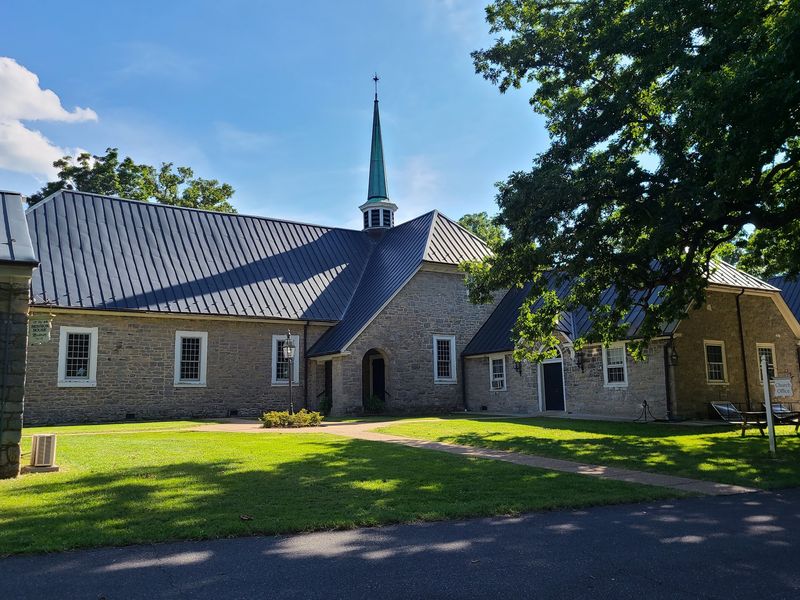
Way out in Fort Defiance, nestled in the broad, beautiful sweep of the Shenandoah Valley, Augusta Stone Church has a story that is equal parts spiritual and survival. Founded by Scotch-Irish settlers in the mid-18th century, it proudly holds the title of the oldest Presbyterian church in continuous use throughout Virginia.
That is not a small claim, and the building absolutely backs it up.
The stone sanctuary, completed in 1749, was more than a house of worship. During the dangerous frontier conflicts of the Seven Years’ War, it served as a fortified refuge for settlers under threat.
That defensive role is literally baked into the name of the surrounding community; Fort Defiance earned its identity from the protective function this building once served.
Reverend John Craig, the first settled Presbyterian minister west of the Blue Ridge, shaped the early character of this congregation with remarkable energy and conviction. His influence extended beyond Sunday sermons into the daily survival strategy of a frontier community.
Learning about Craig here adds a vivid human face to what might otherwise feel like abstract colonial history.
Visiting Augusta Stone Church shifts your sense of what early Virginia religious life looked like outside the wealthy coastal settlements. This was faith forged under pressure, practiced by people who needed it to be real and practical.
The surrounding cemetery is deeply atmospheric, with weathered stones that tell quiet stories about the families who built this corner of the state.
Address: 28 Old Stone Church Lane, Fort Defiance, VA 24437
7. Blandford Church
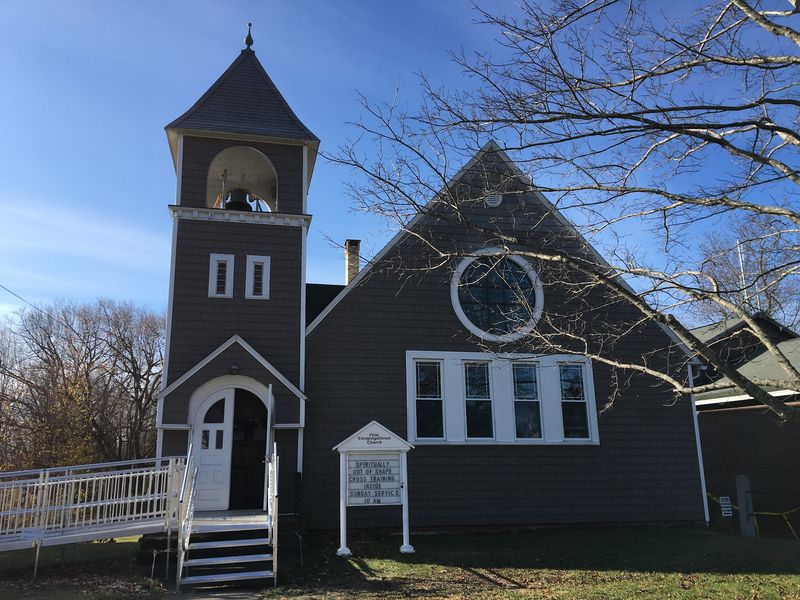
Blandford Church in Petersburg is one of those places that hits you on multiple emotional frequencies simultaneously. Built in the 18th century, it started life as the principal church for Bristol Parish, a relatively straightforward colonial congregation.
Then history arrived with a vengeance, and the building’s story became anything but ordinary.
During the brutal Siege of Petersburg in the Civil War, Blandford Church was converted into a field hospital. Soldiers on both sides of the conflict passed through, and the walls absorbed a kind of grief that still feels palpable today.
That transformation from sacred space to medical sanctuary is a reminder of how completely war reshapes everything it touches.
The church’s most unexpected legacy is its connection to Memorial Day. Local girls who decorated soldiers’ graves here moved Mary Logan, wife of Union General John A.
Logan, so deeply that it contributed to the establishment of a national day of remembrance. A single act of quiet compassion in a Petersburg churchyard rippled all the way into the American calendar.
Today, Blandford Church is also celebrated for its extraordinary collection of Tiffany-glass windows. Each window was commissioned as a memorial from a Confederate or border state, and together they create an interior of breathtaking, jewel-toned beauty.
The contrast between the somber history and the luminous windows is genuinely moving.
The surrounding cemetery is one of the most historically significant in Virginia, worth exploring slowly and thoughtfully.
Address: 319 S Crater Rd, Petersburg, VA 23804
8. Old Chapel
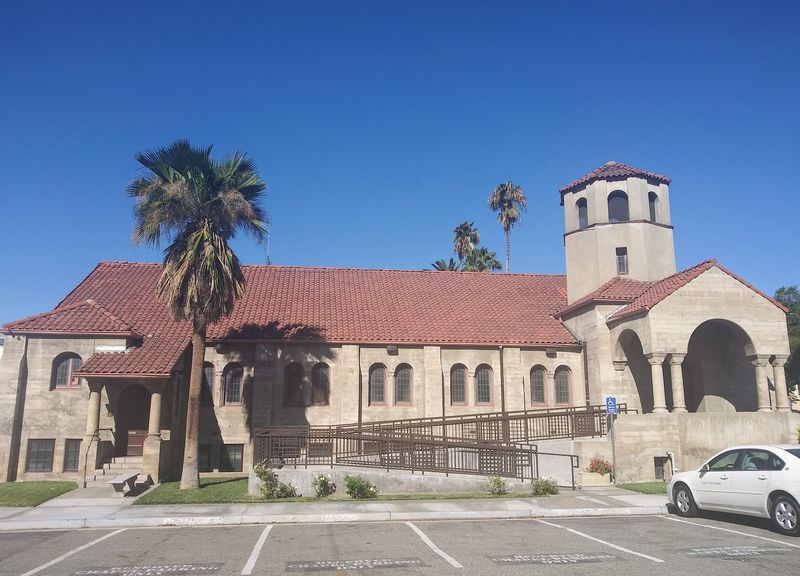
Clarke County is not the first place most people think of when they list Virginia’s historical heavy hitters, but Old Chapel near Boyce quietly holds a distinction that demands attention. It is the oldest Episcopal church building still in active use west of the Blue Ridge Mountains, a record that speaks to both its durability and the loyalty of the community that has maintained it across generations.
Religious activity on this site traces back to a log sanctuary from around the mid-18th century. The current stone chapel replaced that earlier structure toward the end of the 1700s, and it has been welcoming worshippers ever since.
There is something genuinely moving about a building that has never stopped being used for its original purpose across so many centuries of change.
The cemetery surrounding Old Chapel is where the historical depth really accumulates. Edmund Randolph rests here, a figure of remarkable national importance who served as Governor of Virginia, the first U.S.
Attorney General, and U.S. Secretary of State.
Finding his grave in this quiet rural churchyard is a small, surprising jolt of connection to the founding era.
Also buried here are enslaved and formerly enslaved individuals, a sobering and important presence that broadens the narrative beyond the famous names. Old Chapel’s grounds hold the full complexity of Virginia’s past without sanitizing any of it.
That honesty makes it one of the most thought-provoking stops on any historical road trip through the state.
Address: 3605 Bishop Meade Road, Boyce, Virginia 22620
9. Basilica of Saint Mary
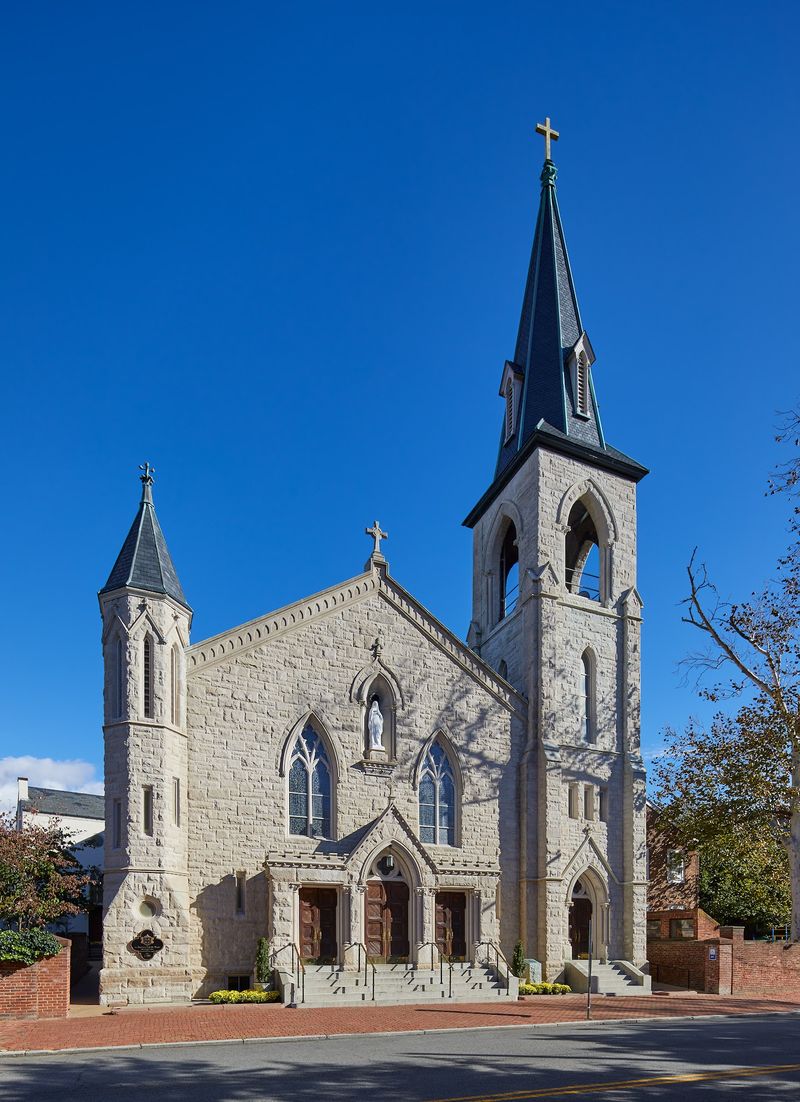
Alexandria has a lot going for it historically, but the Basilica of Saint Mary earns a special spot on any serious Virginia itinerary. As the oldest Catholic parish in the state, founded in the late 18th century, it represents a pivotal chapter in the gradual expansion of religious pluralism in a colony that was decidedly Anglican in its official identity.
The founding story carries a genuinely surprising detail. George Washington himself contributed to the parish’s founding fund, a gesture that underscores the broad community support this congregation attracted from its earliest days.
The father of the nation helping to fund a Catholic church in an Anglican-dominated colony is the kind of nuanced historical fact that completely disrupts simplistic narratives about early American religious life.
The current church building, completed by the early 19th century, is an elegant structure that carries its age with considerable grace. Its classical architectural details fit naturally into Alexandria’s beautifully preserved historic streetscape, making the area around South Royal Street a pleasure to explore on foot.
Pope Francis elevated the church to the status of a minor basilica in 2018, a recognition that cements its enduring importance within the Catholic faith. That elevation transformed it from a local landmark into a destination of international religious significance.
Visiting today, you feel both the intimacy of a neighborhood parish and the grandeur of a place that has earned global recognition.
The surrounding Old Town Alexandria neighborhood is vibrant, walkable, and packed with additional historical stops worth your time.
Address: 310 South Royal Street, Alexandria, VA 22314
10. Historic Polegreen Church
Mechanicsville might not ring a bell for most travelers, but Historic Polegreen Church is the kind of place that rewires your understanding of how American freedom was actually won. Long before the muskets fired, the battle for liberty was being fought in courtrooms, pulpits, and meeting houses just like this one.
Polegreen is ground zero for the colonial struggle for religious liberty in America, full stop.
A young Patrick Henry worshipped here and absorbed the electrifying sermons of Reverend Samuel Davies, an experience that clearly left its mark on his legendary oratorical style. Davies himself was Virginia’s first licensed non-Anglican minister, a radical act in a colony where the Anglican Church held official dominance.
He also promoted literacy among enslaved people and is credited as America’s first hymn writer, making his legacy extraordinarily layered.
The original meeting house was licensed in 1743 and became a powerful symbol of dissent against the established church. Tragically, it was destroyed by friendly fire during the Civil War in 1864, leaving only memory and scorched earth behind.
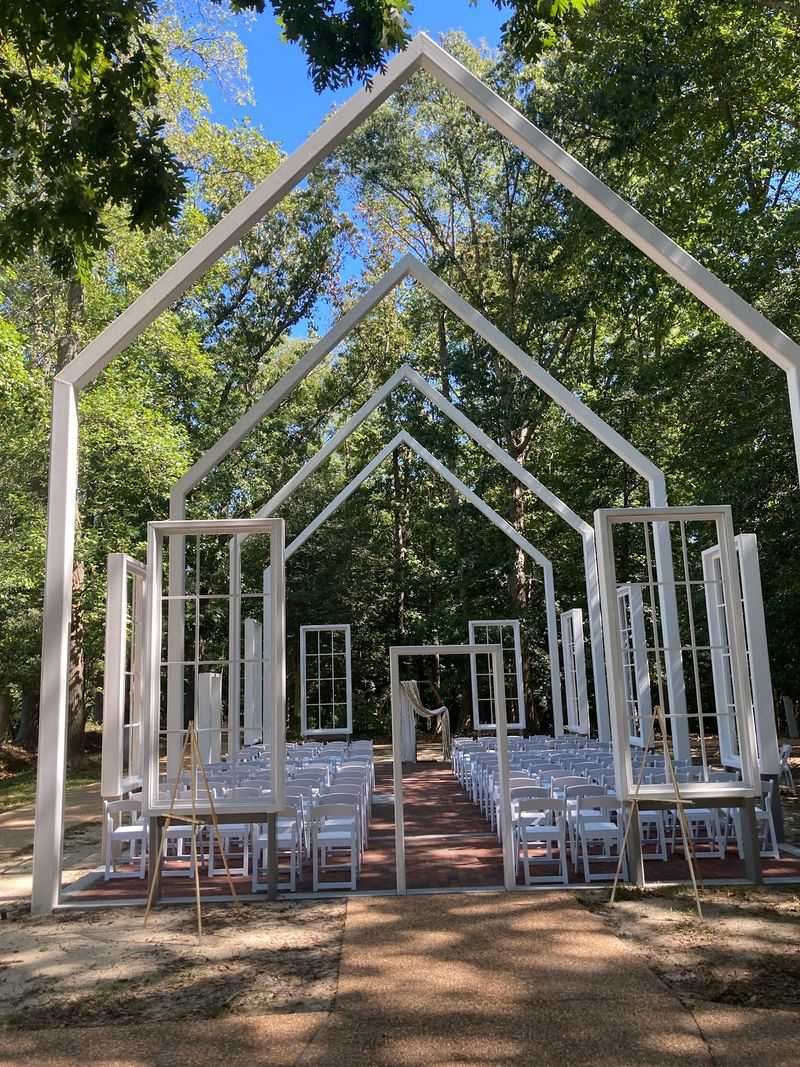
What stands today is a striking open-air ghost structure, a steel framework tracing the outline of the lost building against the open sky.
That ghost structure is genuinely haunting in the best possible way. It invites you to fill in the missing walls with imagination, to picture the packed congregation and the resonant voice of Davies shaping minds that would later reshape a nation.
Few historical sites communicate absence this powerfully or this beautifully.
Address: 6411 Heatherwood Drive, Mechanicsville, VA 23116
11. Christ Church Alexandria
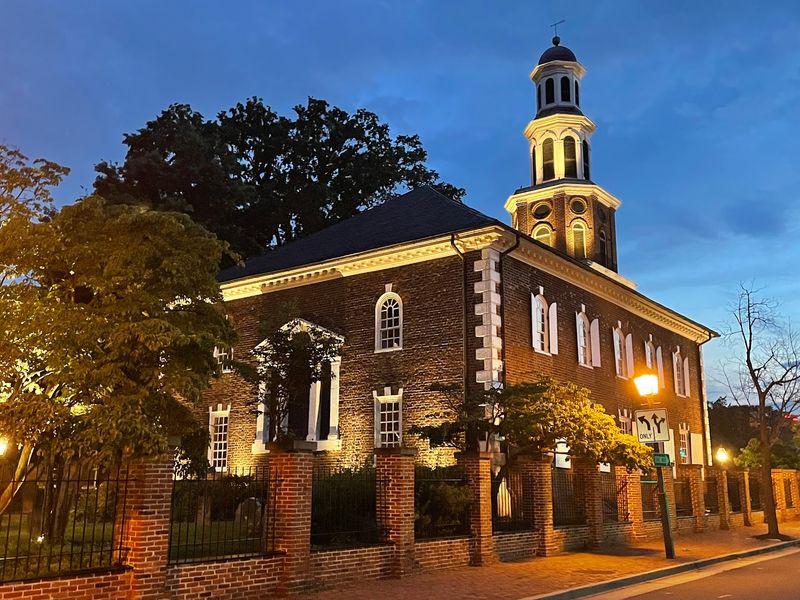
Alexandria’s Christ Church is the kind of historical landmark that delivers a double punch. Not one but two of the most iconic figures in American history claimed this sanctuary as their own, and the building carries that legacy with quiet, dignified confidence.
George Washington worshipped here regularly, contributed to its construction, and his marked pew remains one of the most visited spots inside the church.
Robert E. Lee attended and was confirmed within these same walls decades later, adding a Civil War-era layer to a building already steeped in revolutionary history.
The juxtaposition is striking and thought-provoking, two men of enormous historical consequence, separated by generations and by one of the most divisive conflicts in American history, connected by the same wooden pews and the same stained glass light.
The church opened in 1773 as part of Fairfax Parish within the established Church of England, making it a product of the colonial establishment that the American Revolution would soon upend. Architecturally, it is a beauty, red brick, white steeple, classical colonial proportions that photograph magnificently in the golden afternoon light that floods Alexandria’s historic streets.
The churchyard serves as a burial ground for Confederate soldiers, adding yet another layer of historical complexity to an already multifaceted site. Walking through it is a meditative experience, each stone a small window into a life lived during extraordinary times.
Christ Church Alexandria does not just preserve history; it holds the tension of it, which is exactly what makes it essential.
Address: 118 N. Washington Street, Alexandria, VA 22314
12. The Old Presbyterian Meeting House
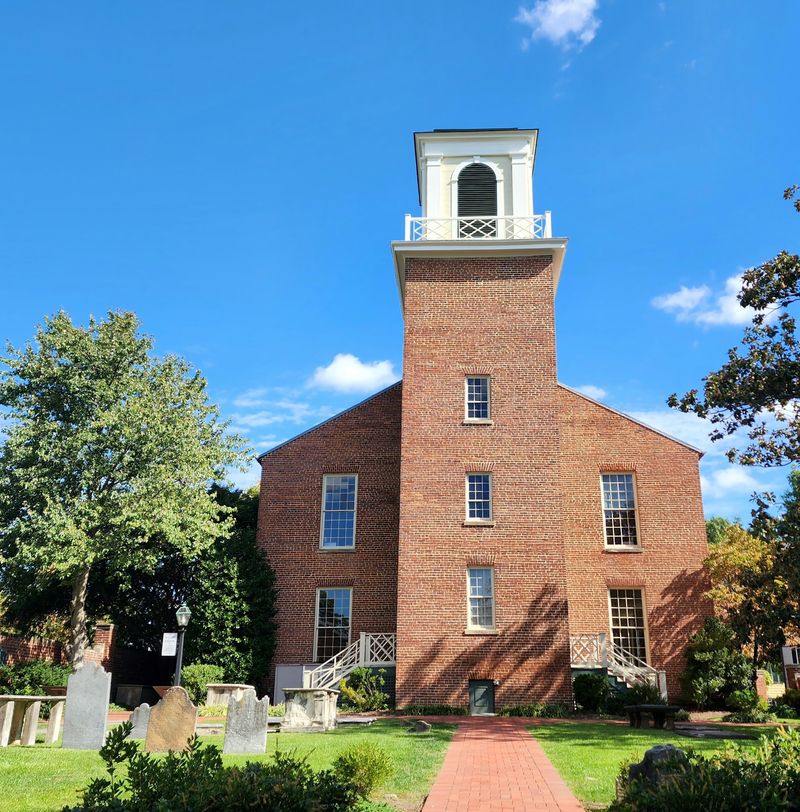
The Old Presbyterian Meeting House in Alexandria has a personality all its own, scrappy, resilient, and deeply tied to the founding spirit of American dissent. As the home of Alexandria’s first non-Anglican religious congregation, it planted the flag for religious pluralism in Virginia at a time when stepping outside the established church was a genuinely bold act.
That founding courage set the tone for everything that followed.
The original structure was completed in 1775, perfectly timed to witness the birth of a new nation. Fire claimed it in 1835, but the congregation rebuilt faithfully just a year later, which says everything you need to know about the community’s commitment to this place.
The rebuilt church you see today carries the spirit of that original structure in every brick.
The burial ground attached to the Meeting House is an absolute treasure for history enthusiasts. Here rests the Tomb of the Unknown Soldier of the American Revolution, dedicated in 1929, a solemn and powerful memorial to the countless unnamed men who gave everything for independence.
Twenty-seven Revolutionary War patriots are also buried here, alongside Dr. James Craik, George Washington’s personal physician and close friend.
That combination of founding-era defiance, dramatic destruction and rebuilding, and a cemetery packed with revolutionary significance makes the Old Presbyterian Meeting House one of the most layered stops in all of Alexandria. The surrounding streets of Old Town are gorgeous and walkable, so build in extra time to soak up the full atmosphere of this remarkable neighborhood.
Address: 321 South Fairfax Street, Alexandria, VA 22314
