A chamber of commerce in West Virginia works out of a building made from 65 tons of coal. The walls are real coal, cut into blocks and stacked like stone.
It went up in 1933, and it is still standing today.
I love that a town looked at its biggest industry and decided to build with it. That kind of stubborn pride says a lot about the people who live here.
It also got me thinking about the landmarks that quietly tell a native they made it back.
I don’t mean the green highway signs at the state line. I mean the bridges, rocks, domes, and odd statues that rise into view after a long trip.
Some of them land on postcards, and some mostly matter to the folks raised nearby.
So which one makes your shoulders drop the second you see it?
1. The Coal House
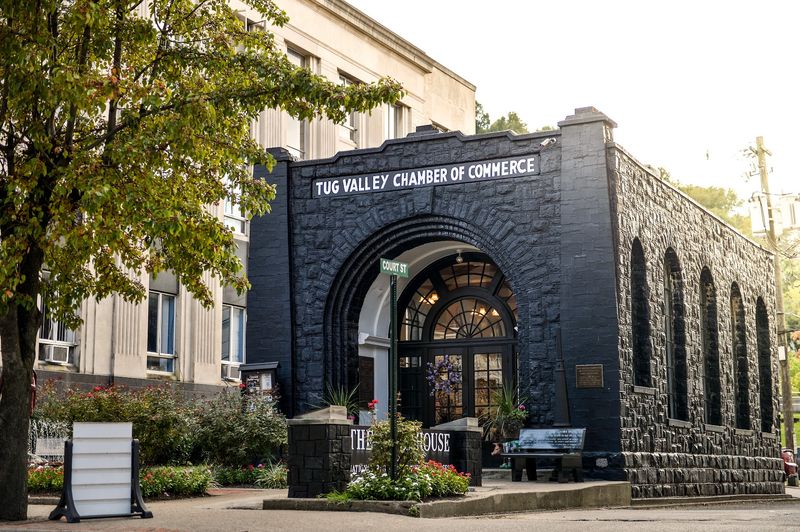
Most towns build with brick. Williamson built with the thing that paid the bills, and the result still turns heads.
The Coal House went up in 1933 using roughly 65 tons of bituminous coal. The blocks came from a local mine, and the building sits right in downtown Williamson.
For folks from the Tug Valley, that black, glossy exterior is about as clear a welcome as you can get. It reads like a family photo of the region’s coal heritage, only you can walk right up to it.
Today the building serves as home base for the Tug Valley Chamber of Commerce. So it isn’t a roped-off relic.
It’s still working, which feels fitting for a coalfield town.
You might notice how the coal catches the light on a bright afternoon. That sheen surprises first-timers, who often expect a dull gray block.
Locals just smile, because they knew all along.
Plan a quick stop if you’re passing through Mingo County. It takes only a few minutes to see, but the story sticks with you much longer.
Address: Court Street and Second Avenue, Williamson, WV 25661
2. New River Gorge Bridge
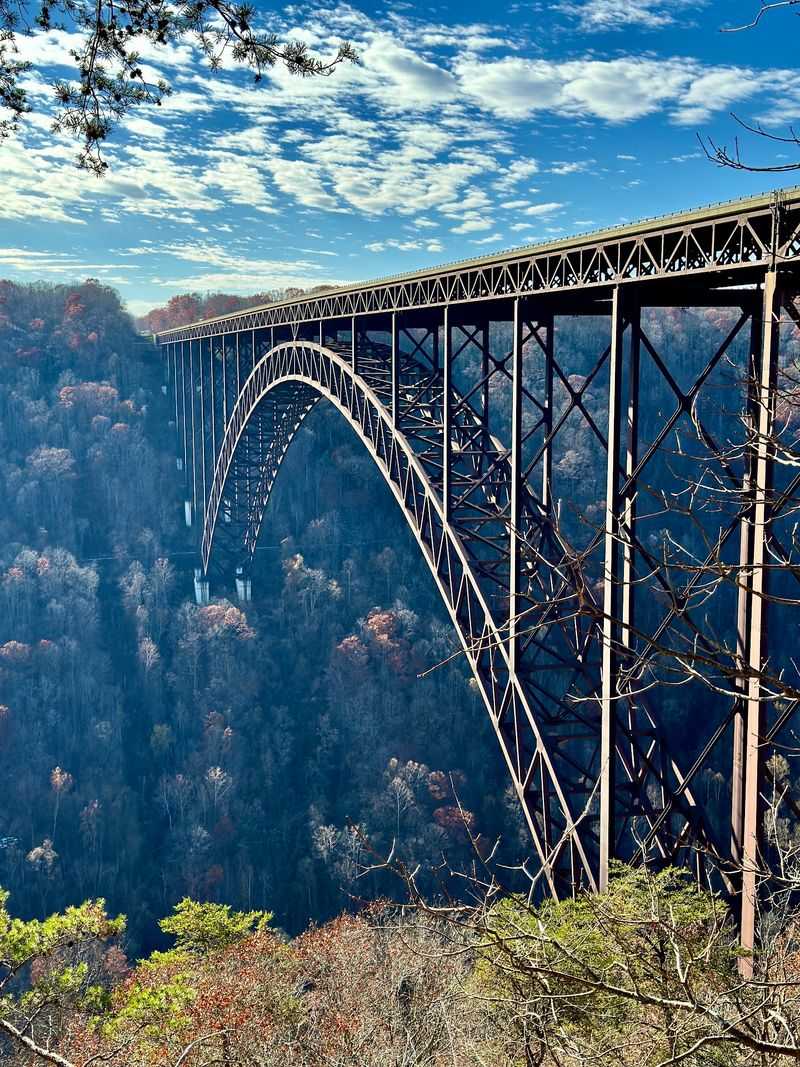
Some homecoming signs whisper. This one spans a canyon and stands 876 feet above the river, according to the National Park Service.
The New River Gorge Bridge opened in 1977 near Fayetteville. Its steel arch stretches 3,030 feet, and it turned a slow drive down the gorge into a crossing of under a minute.
That rust-brown arch shows up on license plates, the state quarter, and countless kitchen calendars. When you see it in person, it hits differently.
Your brain finally catches up with all those pictures.
The best viewing spot sits at the Canyon Rim Visitor Center. A boardwalk leads to overlooks with a clean side view of the arch over the treetops.
Want a wilder perspective? Bridge Day happens on the third Saturday of October, when the bridge closes to cars.
BASE jumpers leap off, and the crowd cheers like it’s a ball game.
The surrounding land became New River Gorge National Park and Preserve in 2020. That makes the view a federal treasure now, though West Virginians claimed it long before.
Address: Canyon Rim Visitor Center, 162 Visitor Center Rd, Lansing, WV 25862
3. West Virginia State Capitol
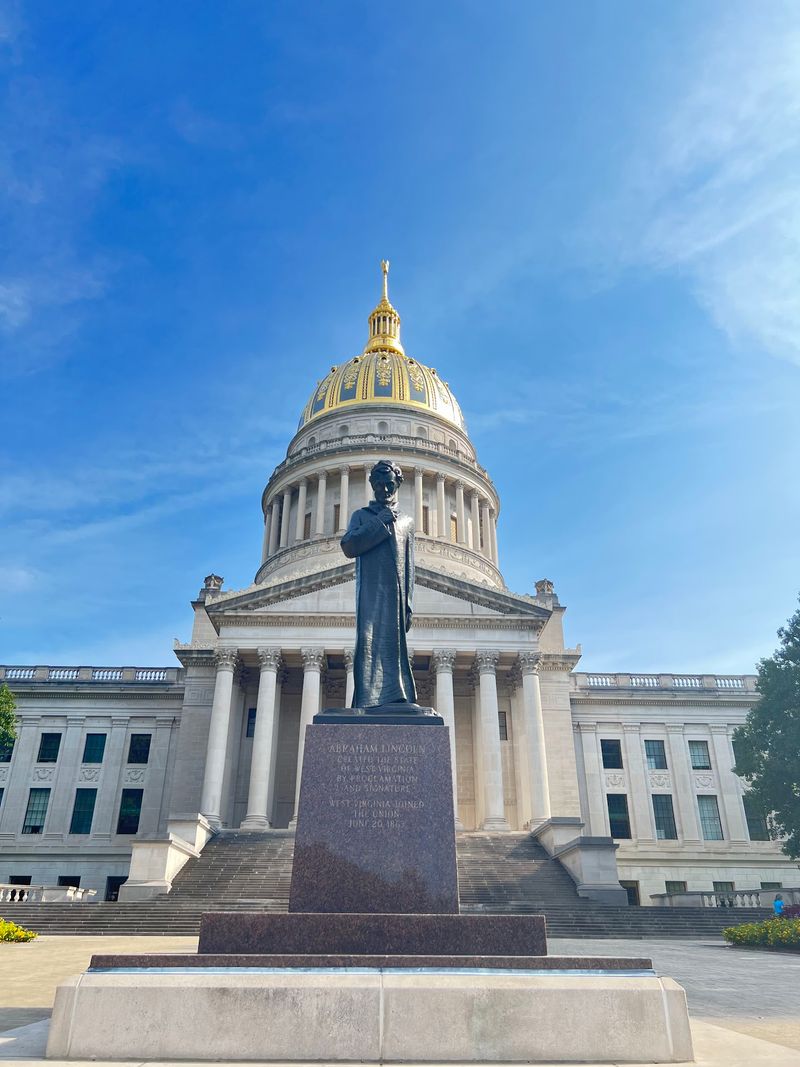
Gold isn’t something you expect to spot from Interstate 64. Then the Capitol dome flashes in the sun over Charleston, and you know exactly where you are.
Architect Cass Gilbert designed the building, and it was completed in 1932. Gilbert also designed the U.S.
Supreme Court Building, so the pedigree is real.
The dome is gilded in gold leaf and rises above the Kanawha River. State tourism sources describe it as taller than the dome on the U.S.
Capitol. That fact tends to win arguments at family reunions.
Inside, you’ll find marble halls and a massive crystal chandelier hanging under the rotunda. Free guided tours are offered on weekdays, which makes it an easy stop for curious grown-ups and kids alike.
The grounds also hold the West Virginia State Museum in the Culture Center next door. Admission there is free too, a nice bonus for budget travelers.
Drivers coming home along the river often catch the dome before the rest of the skyline. It’s a bright, unmistakable signal that Charleston is just ahead.
Address: 1900 Kanawha Blvd E, Charleston, WV 25305
4. Blackwater Falls
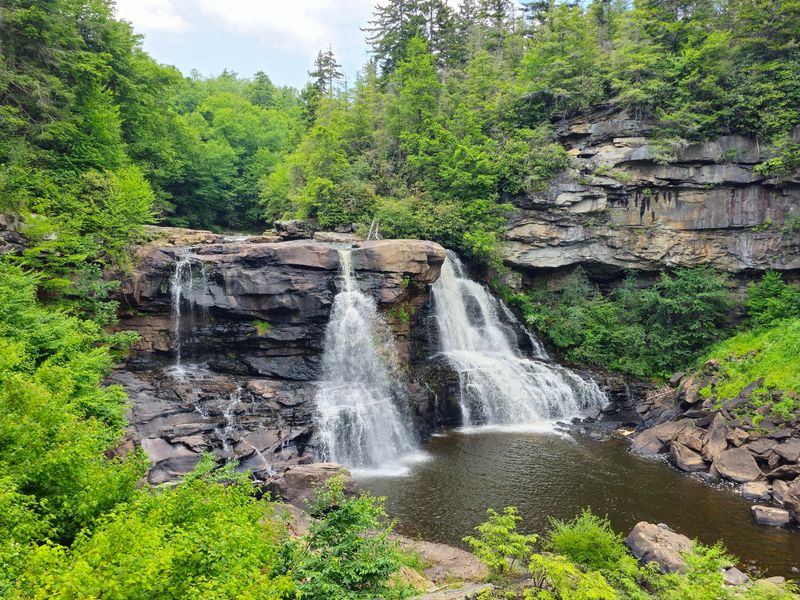
Root beer colored water sounds like a kid’s invention. At Blackwater Falls State Park in Davis, it’s simply how the river looks.
Tannic acid from fallen hemlock and red spruce needles tints the Blackwater River an amber shade. The falls drop about 57 feet into the canyon below, per the state parks system.
For people raised in Tucker County, that tea-colored plunge feels like a front porch light left on. It’s among the most photographed spots in the state, and it earns the attention.
A boardwalk with more than 200 steps leads down to a close view. The climb back up gives your legs a reminder that this is mountain country.
Prefer an easier look? Gentle Trail offers a more accessible overlook of the falls.
Lindy Point and Pendleton Point add sweeping canyon views elsewhere in the park.
The park also has a lodge, cabins, and a campground for anyone who wants to linger. Winter brings a sled run, which might be the most fun way to stay warm in the highlands.
Address: 1584 Blackwater Lodge Rd, Davis, WV 26260
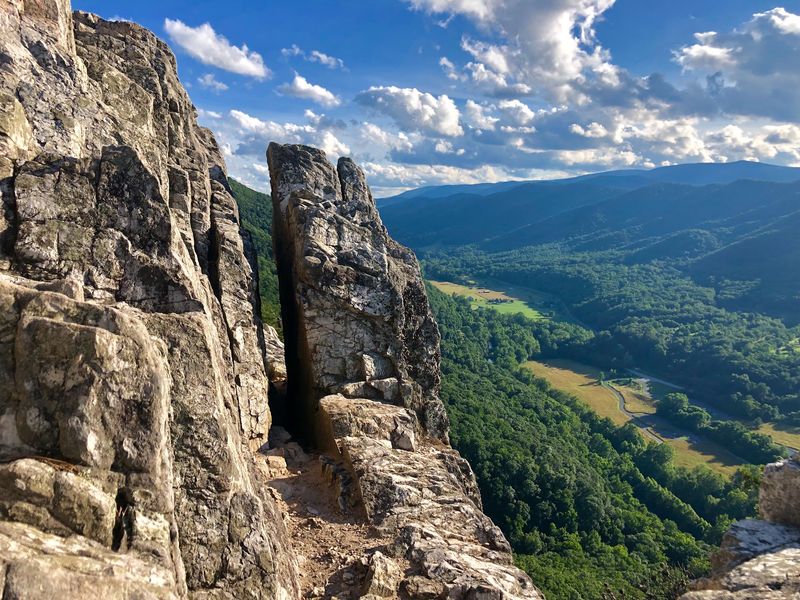
5. Seneca Rocks
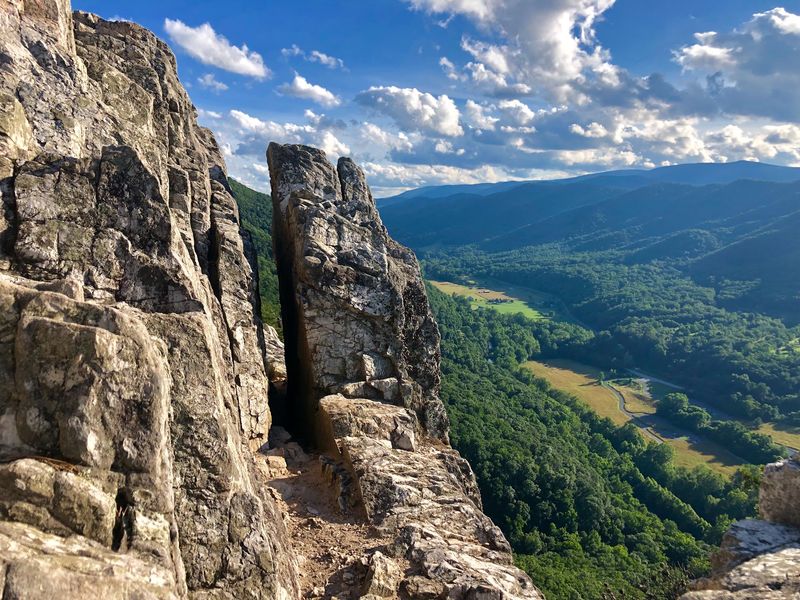
Picture postcards rarely do justice to rock fins that rise nearly 900 feet over a quiet valley. Seneca Rocks pulls that off with zero effort.
The jagged ridge is made of Tuscarora quartzite and towers above the North Fork River in Pendleton County. It’s managed by the Monongahela National Forest.
Natives who grew up in the Potomac Highlands know the moment it appears around the bend on Route 33. Conversations in the car tend to pause right about then.
A trail of about 1.3 miles climbs to an observation platform near the top. It’s steady going, but the reward is a wide look across the valley.
Technical climbers come from across the country to tackle the rock faces. If you’d rather keep both feet on the ground, the view from below is still a showstopper.
The Seneca Rocks Discovery Center sits at the base with exhibits about the area. It’s a handy first stop before you lace up your boots.
Address: Seneca Rocks Discovery Center, 8 Roy Gap Rd, Seneca Rocks, WV 26884
6. Philippi Covered Bridge
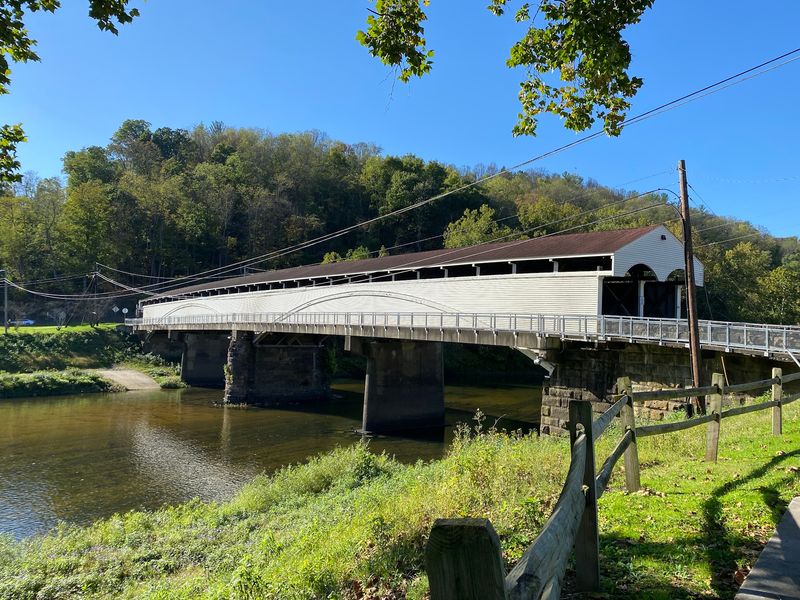
Driving a car through an 1852 bridge sounds like something from a history book. In Philippi, it’s just part of the daily commute.
Lemuel Chenoweth built the Philippi Covered Bridge across the Tygart Valley River. It still carries traffic on U.S.
Route 250, and it’s widely noted as a rare covered bridge serving a federal highway.
History runs deep here. Union and Confederate forces met nearby in June 1861, in what’s often called the first organized land battle of the Civil War.
The bridge has survived plenty since then. A fire in 1989 badly damaged it, and the community restored it to reopen in 1991.
For Barbour County folks, the rumble of tires on those boards means home is minutes away. The white two-lane structure is easy to spot from the riverbank.
Park nearby and walk the area for photos from the water’s edge. The Barbour County Historical Society Museum sits close by, housed in an old B&O railroad station, if you want more local background.
Address: U.S. Route 250 at the Tygart Valley River, Philippi, WV 26416
7. Green Bank Observatory
Your phone may lose signal near Green Bank, and that’s on purpose. The town sits inside the National Radio Quiet Zone, a roughly 13,000 square mile area limiting radio interference.
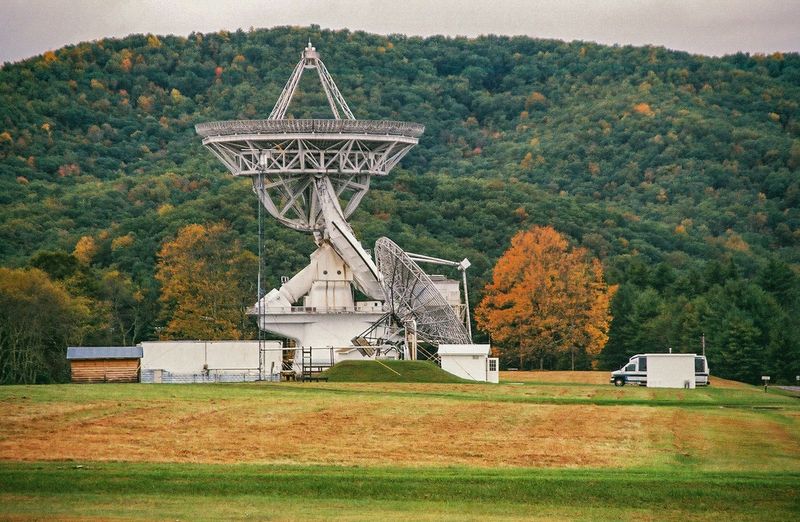
The quiet protects the Green Bank Observatory and its star attraction, the Robert C. Byrd Green Bank Telescope.
It’s billed as the world’s largest fully steerable radio telescope.
The dish measures about 100 by 110 meters. Seeing that white giant rise over Pocahontas County pastures is a jaw-dropper, no matter how many times you’ve driven by.
Families from the area grow up with it as a neighbor. For them, the telescope peeking over the trees is basically a lighthouse for the mountains.
The Science Center offers exhibits, a gift shop, and guided bus tours that bring you closer to the telescopes. Just remember that digital cameras near the instruments are restricted, so check rules before you go.
It’s a fun stop for adults who love science as much as kids do. You’ll leave knowing more about the universe than you did at breakfast.
Address: 155 Observatory Rd, Green Bank, WV 24944
8. Mothman Statue
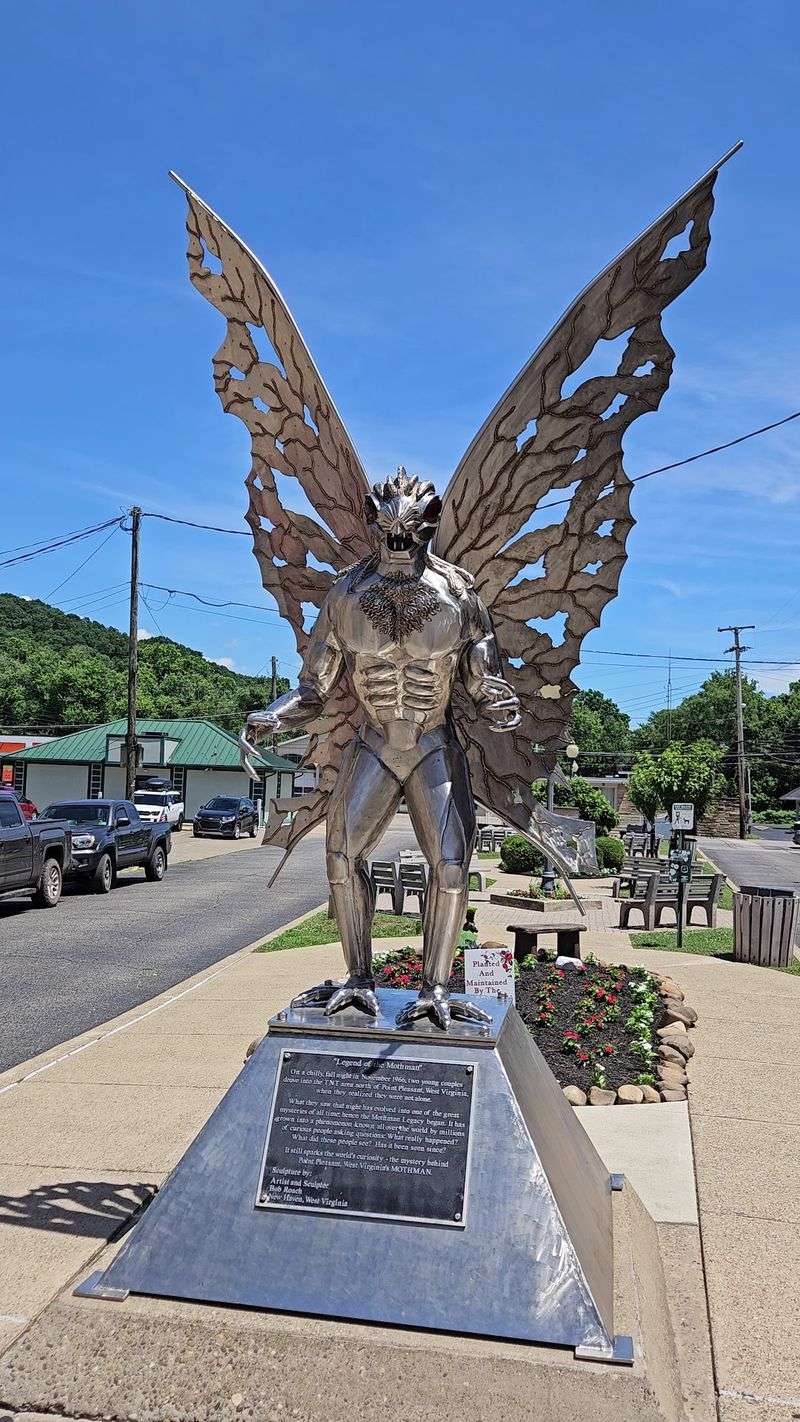
Red eyes and metal wings make for an odd hometown mascot. Point Pleasant embraced it anyway, and the town is better for it.
Local artist Bob Roach created the stainless steel Mothman Statue, unveiled in 2003. It stands downtown and draws visitors snapping selfies with its gleaming wings.
The legend dates to reported sightings in 1966 and 1967. Those stories inspired books, a 2002 movie, and plenty of late-night campfire talk.
Right nearby, the Mothman Museum displays props, newspaper clippings, and other items tied to the tale. It’s a quirky stop that leans into the fun.
Each September, the Mothman Festival fills the streets with vendors, speakers, and costumed fans. Pancakes shaped like the creature have been a festival treat.
For people from Mason County, the statue is a strange but beloved beacon. You know you’re home when the town’s shiniest resident greets you on Main Street.
The Ohio and Kanawha rivers meet here too, so walk down to the floodwall murals. They tell the town’s long story in bright paint.
Address: 400 Main St, Point Pleasant, WV 25550
9. Harpers Ferry
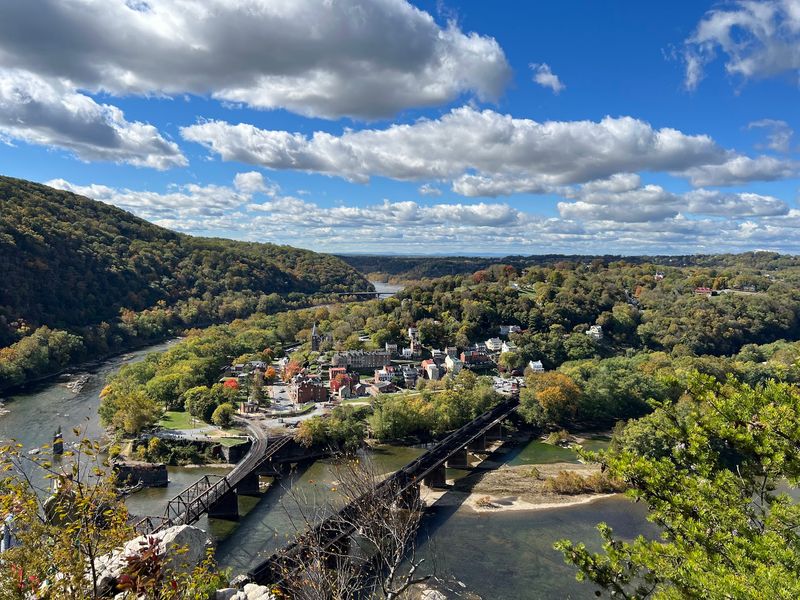
Thomas Jefferson stood on a rock here in 1783 and called the view perhaps one of the most stupendous scenes in nature. Bold words from a Virginian, but he wasn’t wrong.
Harpers Ferry sits where the Potomac and Shenandoah rivers meet. Three states come into view from The Point: West Virginia, Maryland, and Virginia.
Much of the lower town is part of Harpers Ferry National Historical Park. You can explore restored buildings, museums, and John Brown’s Fort, tied to his 1859 raid.
For eastern panhandle natives, crossing the river and seeing those stone buildings stacked on the hill feels like a soft landing. It’s the state’s front door in more ways than one.
Hikers know the spot too. The Appalachian Trail runs right through town, and the Appalachian Trail Conservancy keeps its headquarters here.
Park at the main visitor center and ride the shuttle bus into the lower town. Parking downtown is tight, so the shuttle saves time and stress.
Address: Harpers Ferry National Historical Park, 171 Shoreline Dr, Harpers Ferry, WV 25425
10. Tamarack
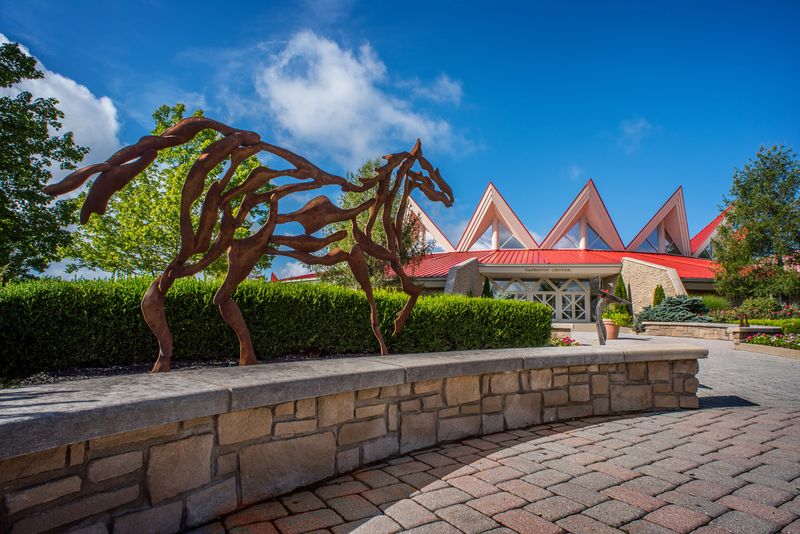
A red roof with pointy peaks next to the interstate is a curious sight. For plenty of travelers heading south, Tamarack is the first real taste of home cooking and handmade pride.
Tamarack: The Best of West Virginia opened in 1996 in Beckley. It sits right off Interstate 64 and Interstate 77, making it an easy stop on long drives.
Inside, you’ll find work from West Virginia artisans. Quilts, pottery, glass, woodwork, and jewelry fill the galleries and shops.
Artists often work in studios on site, so you might catch someone shaping clay or weaving. It turns a quick bathroom break into a mini art lesson.
The food court leans into Appalachian comfort, and the menu changes over time. Locals and road-trippers alike pull in for a hot meal before the final stretch.
Gift shopping here keeps your money with mountain makers instead of big chains. That’s a practical win for anyone hunting a meaningful present.
For natives, that roofline means the hills are close and supper is waiting. Few rest stops can say the same.
Address: One Tamarack Park, Beckley, WV 25801
