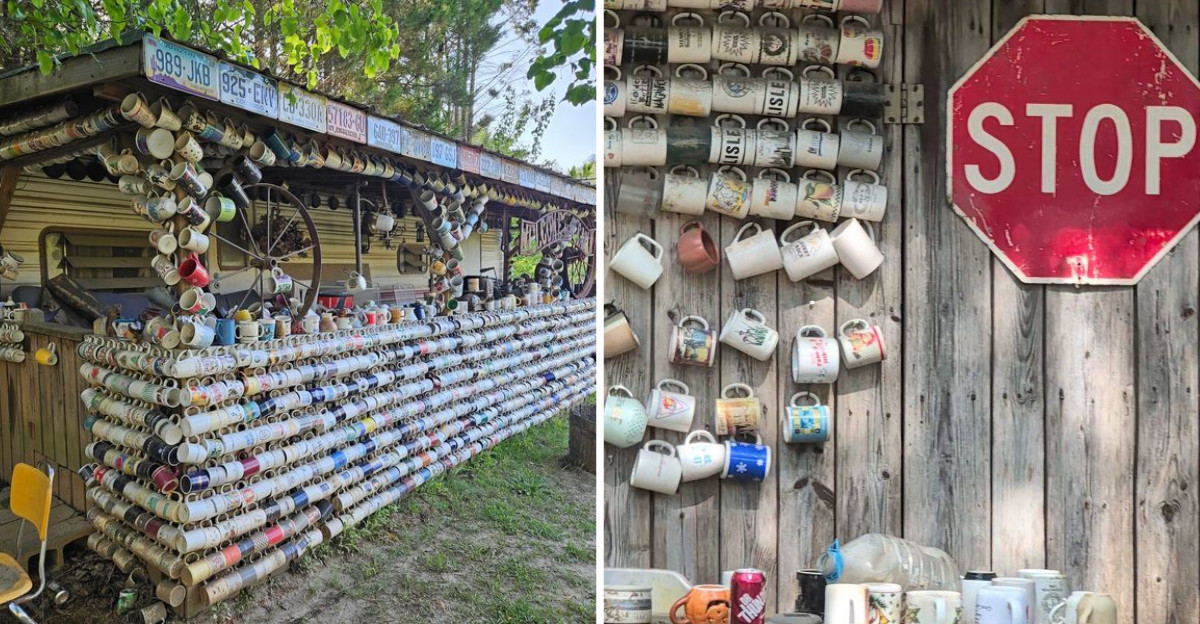
Handles hooked on nails and ceramic glinting in the afternoon light, that is what I found at the end of a gravel road in North Carolina. I had heard about a cabin covered in coffee mugs while planning a lazy drive, and I honestly thought someone was exaggerating.
The creek came up alongside the car, the road narrowed, and suddenly there it was, a small cabin wearing thousands of mugs like armor. The story started with a flea market purchase of 750 mugs for $15 back in 2000, and the collection grew into something close to folk art.
The mugs now cover the house, the fence, even the trees, and visitors are welcome to add their own if they can find an empty nail.
I stood in the yard reading slogans from towns I have never visited and years I barely remember, and the whole place hummed with the quiet energy of a collection that outgrew its owner.
A stop that costs nothing and sticks with you for months is exactly what this place delivers.
The Flea Market Box That Started Everything
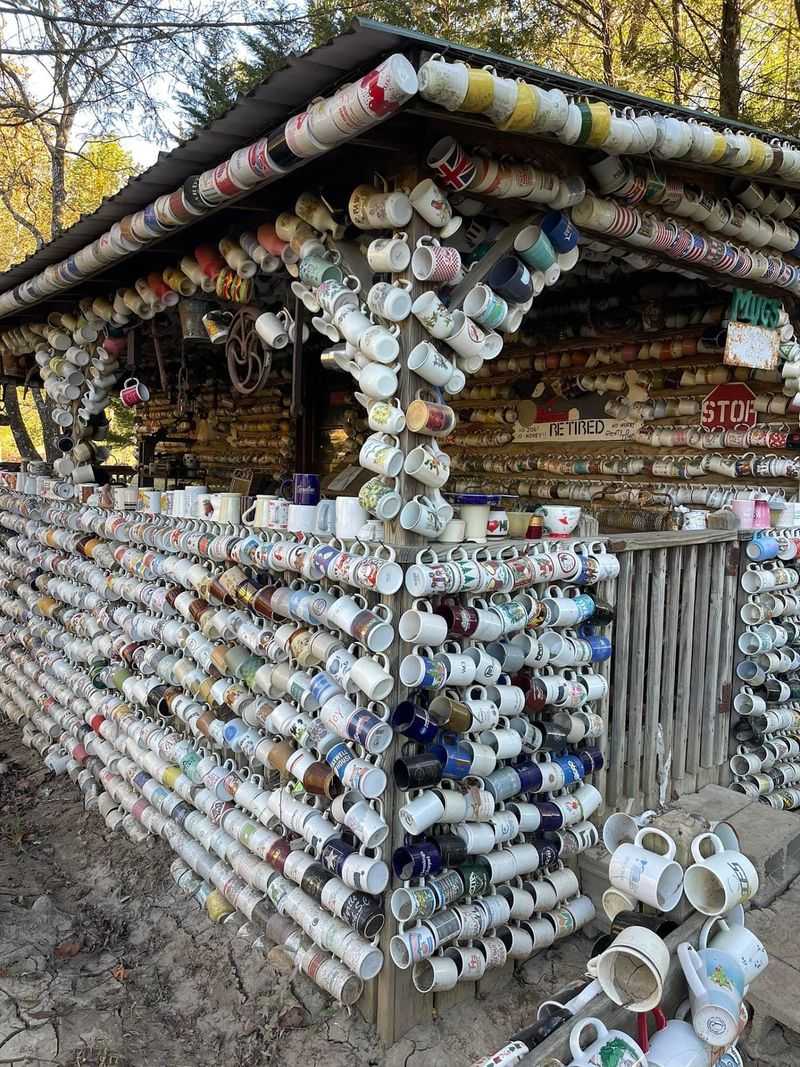
Every good story has a small beginning, and this one begins with a bargain. Avery and Doris Sisk picked up a box lot of coffee mugs at a flea market in the summer of 2000, paying about fifteen dollars for the whole batch.
They hung those first mugs on the front porch simply because they liked how the handles looked in a row. There was no plan, no blueprint, no goal of building a landmark.
What I love about that origin is how ordinary it feels. Plenty of us buy something odd at a yard sale and forget about it in the garage.
The Sisks kept going instead. One porch rail led to another wall, then a gate, then a fence line, then branches.
Estimates now range widely, with reports mentioning twenty thousand, twenty-five thousand, and as many as thirty thousand or more.
Avery once said he figured the number sat around thirty thousand, and honestly, nobody is out there counting twice.
Standing in the yard, you can still spot the older, sun-faded cups near the porch, the ones that came first. They look softer than the newer arrivals, glazes dulled by two decades of weather.
It is a reminder that big, strange, wonderful things sometimes start with a fifteen dollar impulse buy.
Getting There Along Old Johns River Road
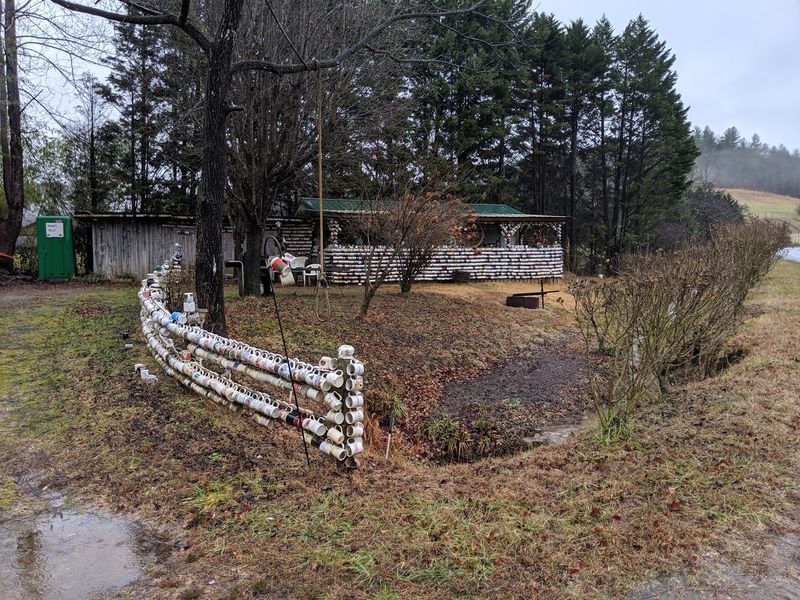
The drive is half the reason to come, which I did not expect. From Lenoir, North Carolina you head roughly twelve miles west, and the pavement gradually gives up on you.
Old Johns River Road turns to gravel, hugs the water, and squeezes across a series of one lane bridges that make you slow down and pay attention.
I rolled the windows down for that stretch. You can hear the river over the tires, and the air smells like wet stone and pine.
A few practical notes worth knowing before you go. The road is narrow with plenty of curves, and it carries local traffic plus tree farm trucks, so leaving room and driving gently matters more than making good time.
Dry weather makes the trip far easier. After rain, the gravel gets messy, and dust kicks up badly in dry spells, so a car wash afterward is likely.
Some visitors have mentioned that mapping apps can put the destination slightly short of the actual spot, so if you think you have arrived and see no mugs, keep rolling a little farther.
Neighbors live along this road and look after it themselves, clearing fallen trees and picking up litter. Carrying your trash out is the least any of us can do.
The Cabin Wearing Its Ceramic Coat
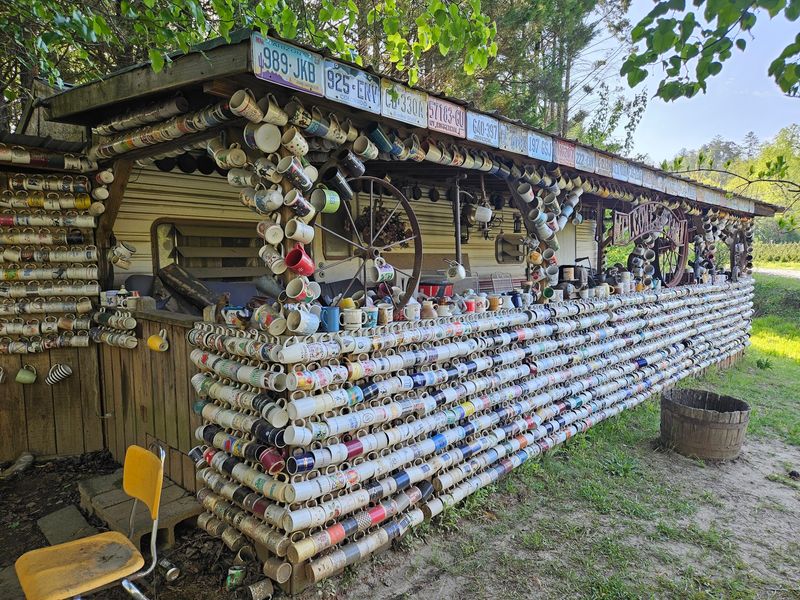
Nothing quite prepares you for the moment the cabin comes into view. Wood siding disappears under layer upon layer of mugs, hung so close together that the wall reads as texture rather than individual cups.
Avery Sisk built the little house himself in 1996 on a house trailer frame at their main residence in Lincolnton, then towed it up to this riverside spot.
Knowing that changed how I looked at it. The structure was handmade first, then decorated into something entirely different.
Front, sides, back, the coverage keeps going around the whole building. There is no showcase side and hidden side, which somehow feels honest.
The cabin has no electricity and no heat, so the Sisks spent time there mainly when weather was pleasant. That detail explains its slightly seasonal, cabin-in-the-woods mood.
Colors are the first thing your eye grabs. Cream diner mugs, navy souvenir cups, pastel florals, chunky novelty designs with cartoon handles.
Then you notice the sounds. A breeze moves through and the ceramic taps together in a soft, uneven rhythm that is oddly soothing.
I circled the place three times and kept spotting cups I had missed. It rewards slow looking more than quick photos, though the photos come out great too.
Fences, Gates, and the Entry Arch
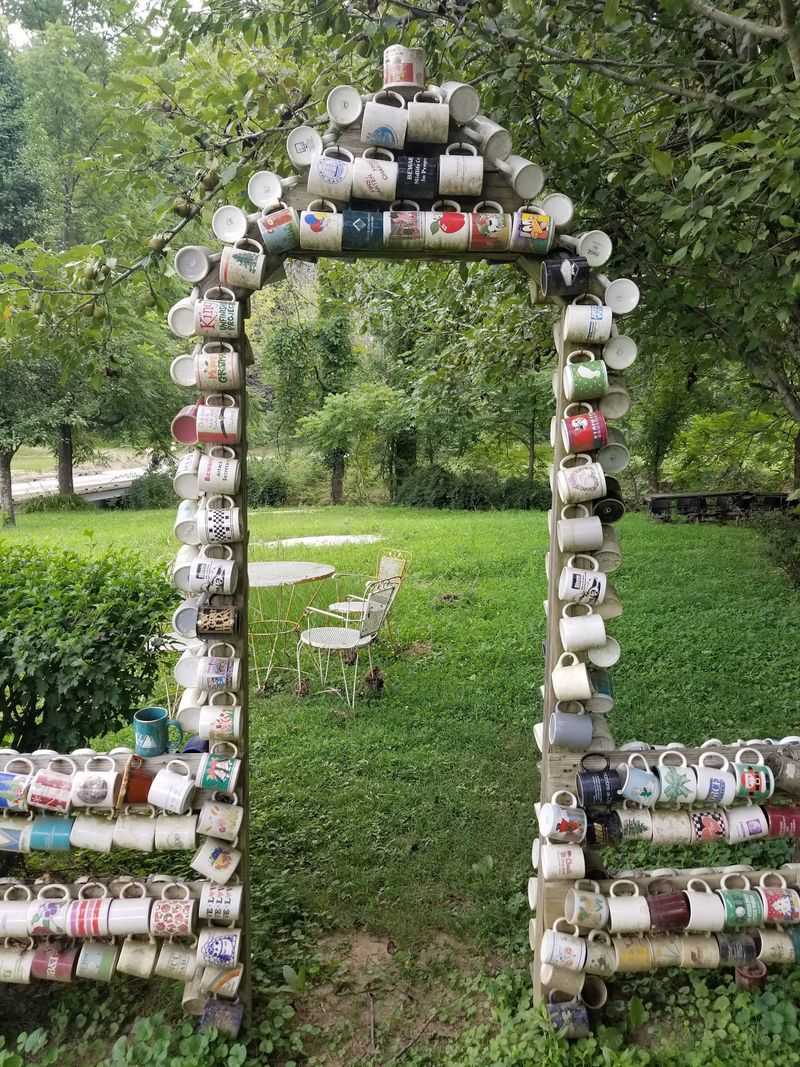
Mugs escaped the house long ago and colonized the yard. The split rail fence around the property carries row after row of them, hung on nails driven along the top and sides.
An arch marks the entry, and it too is loaded with cups, forming a kind of ceramic welcome sign that clinks when the wind picks up.
Gates got the same treatment. Opening one means gently nudging a dozen mugs, which feels a little like handling someone else’s china cabinet.
Fence-level viewing turned out to be my favorite part, because everything sits at eye height. That is where I read the most slogans, from state fairs and church picnics to hardware stores and family reunions.
Some cups list places thousands of miles away. Others clearly came from towns nearby, which makes the collection feel like a map of everyone who has ever passed through.
Weather takes its toll out here. The river floods, and high water has swept cups off the fence and sometimes off the house, scattering them downstream where people later find them along the banks.
The family has replaced them again and again over the years. Seeing that persistence stitched into a fence line is quietly moving, and it makes the whole yard feel alive rather than staged.
Mugs Hanging From the Trees
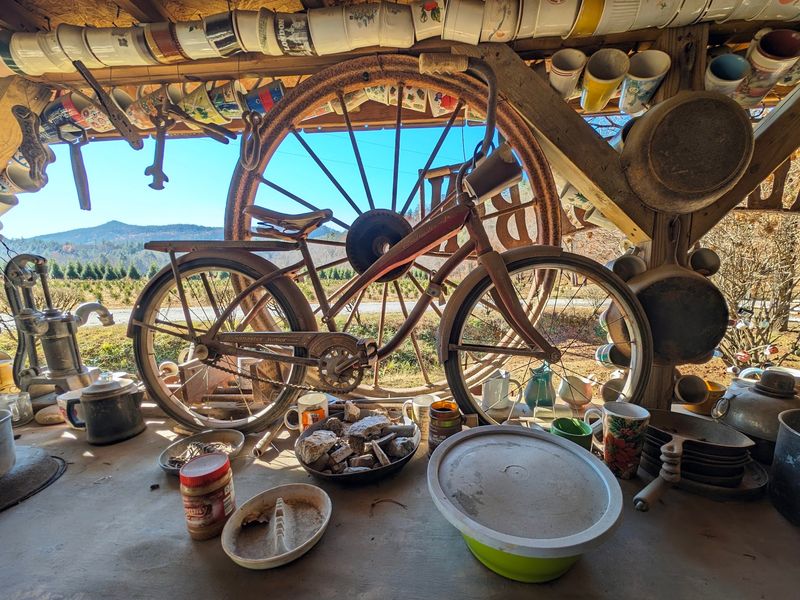
Look up. That is the tip nobody gave me, and I nearly missed one of the best parts of the property.
Cups hang from branches around the yard, dangling by their handles and turning slowly whenever air moves through the trees. In dappled light they look almost like ornaments left over from a holiday nobody named.
The effect is playful rather than tidy. Some branches hold two or three, others carry a whole cluster that clusters together like fruit.
I noticed that the tree mugs weather differently than the wall ones. Rain collects inside them, leaves settle at the bottom, and moss creeps along a few of the older glazes.
One detail struck me as genuinely fascinating. Visitors have pointed out sediment lines inside cups left from flooding, a natural measuring stick showing how high the water climbed during heavy storms in recent years.
Nature keeps editing this artwork, in other words. Wind rearranges it, water marks it, and sunlight bleaches the brightest colors into softer versions of themselves.
Bring a camera with a decent zoom if you have one, because the tree shots are the ones friends will not believe. And if you visit on a still afternoon, stand quietly for a minute and wait for the breeze.
Bring Your Own Mug and Find a Nail
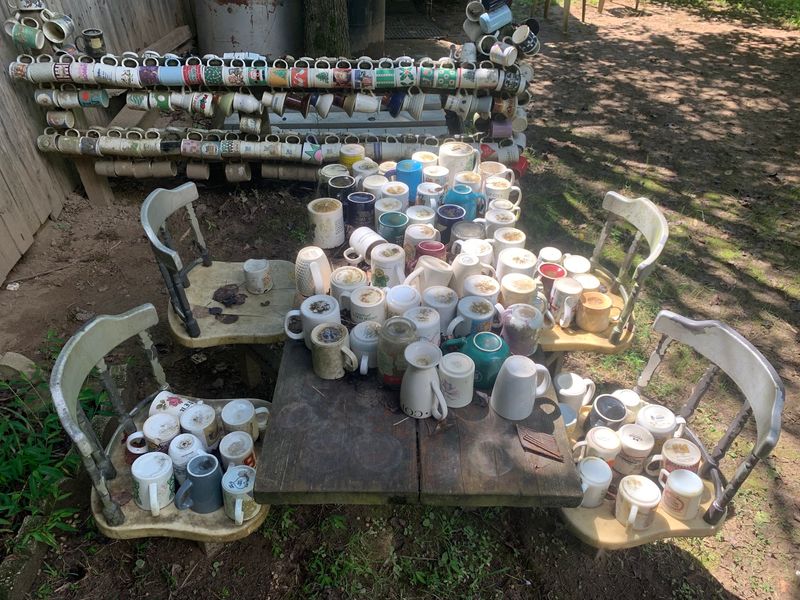
Here is the part that turns a photo stop into something you actually take part in. Visitors are welcome to bring a mug and add it to the collection, as long as they can find an open nail.
The fence around the yard is the usual spot, since empty nails still wait there for new arrivals. A cup with a solid handle works best, because that handle does all the hanging.
Choose something with meaning if you can. A mug from your hometown, your college, a diner you love, or a place you drove through on the way to Collettsville.
Those are the ones I enjoyed reading most, the cups that clearly meant something to whoever carried them up that gravel road. Future visitors will read yours the same way.
In earlier years, Avery would hand people a hammer and a nail so they could pick their own spot, assuming one could be found. That small ritual is a big reason the place feels communal instead of curated.
There is no admission charge to walk around and look, though donations are accepted, and a guest register has traditionally been there to sign.
Adding one cup takes about thirty seconds. Knowing it is still out there years later lasts a lot longer.
A Riverside Yard Worth Lingering In
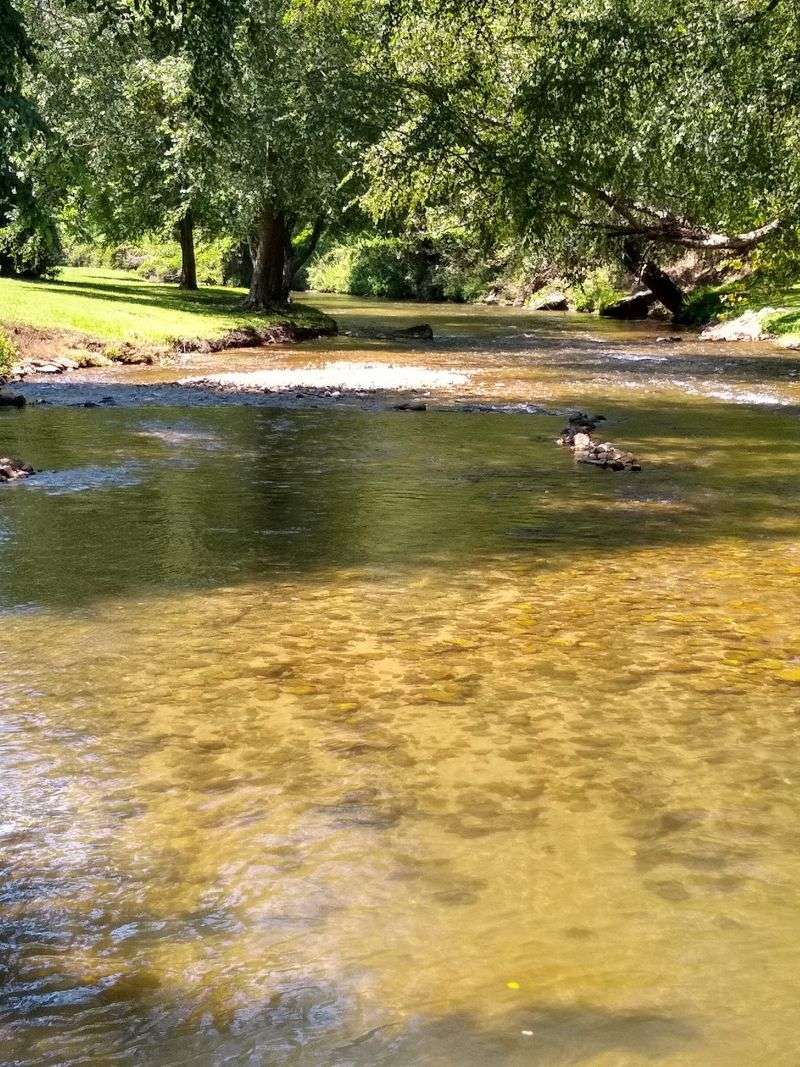
Most roadside oddities take five minutes. This one earned an hour from me, largely because of the water.
Johns River runs right beside the property, shallow and clear over rounded stones, with Reid Creek joining the scene nearby. Seating sits around the yard so you can sit and watch it move.
I ate a sandwich there and listened to the river instead of my phone. It was the calmest twenty minutes of that whole trip.
The sound combination is what makes it memorable. Water over rocks in one ear, ceramic tapping together in the other, and birds somewhere in the trees above the mugs.
Sunlight helps enormously here. On a bright afternoon the glazes practically glow, and the river throws reflections onto the lower rows of cups.
A resident cat has been known to patrol the grounds and accept attention from strangers, which several visitors mention fondly. If it shows up, consider yourself lucky.
Pack water, snacks, and bug spray in warm months, since there are no shops out this way. Shoes with decent grip help too, because the ground near the bank is uneven and rocky.
Then just sit. The whole point of a place like this is that nobody is rushing you anywhere.
Why This Little Landmark Still Matters
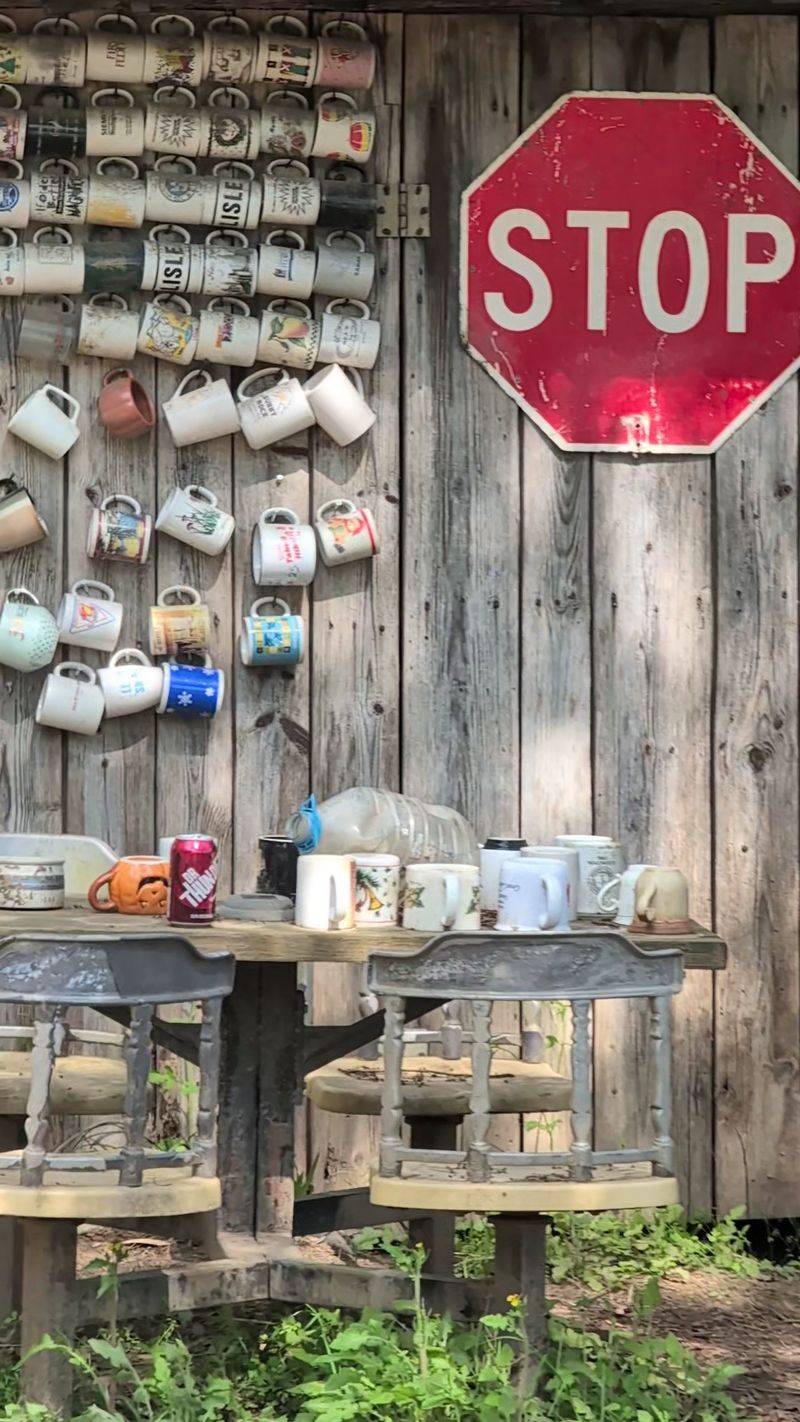
Word about this cabin has traveled remarkably far. Guests have come from Iceland, Germany, France, and Poland to see a hand-built house wrapped in flea market ceramics on a gravel road in Caldwell County.
That still amazes me. No marketing budget, no ticket booth, just a couple who kept hanging cups until strangers started showing up.
Inside, the Sisks also gathered other collections over the years, including dolls and police memorabilia, and lucky visitors were sometimes invited to look. Cast iron pans and various gadgets have turned up around the property too.
Avery Sisk passed away in 2023. Doris has continued welcoming people to the property, carrying on something the two of them built together over more than twenty years.
Visiting felt less like sightseeing and more like being trusted with someone’s front yard. That deserves respect, so keep noise down, take only photos, and leave the collection exactly as you found it.
If the family happens to be around, a simple hello goes a long way. If nobody is home, you are still free to wander, look, and add your cup.
Of all the stops on that trip, this is the one I keep describing to friends. Thirty thousand mugs, one gravel road, zero regrets.
Address: 2490 Old Johns River Rd, Collettsville, North Carolina 28611
