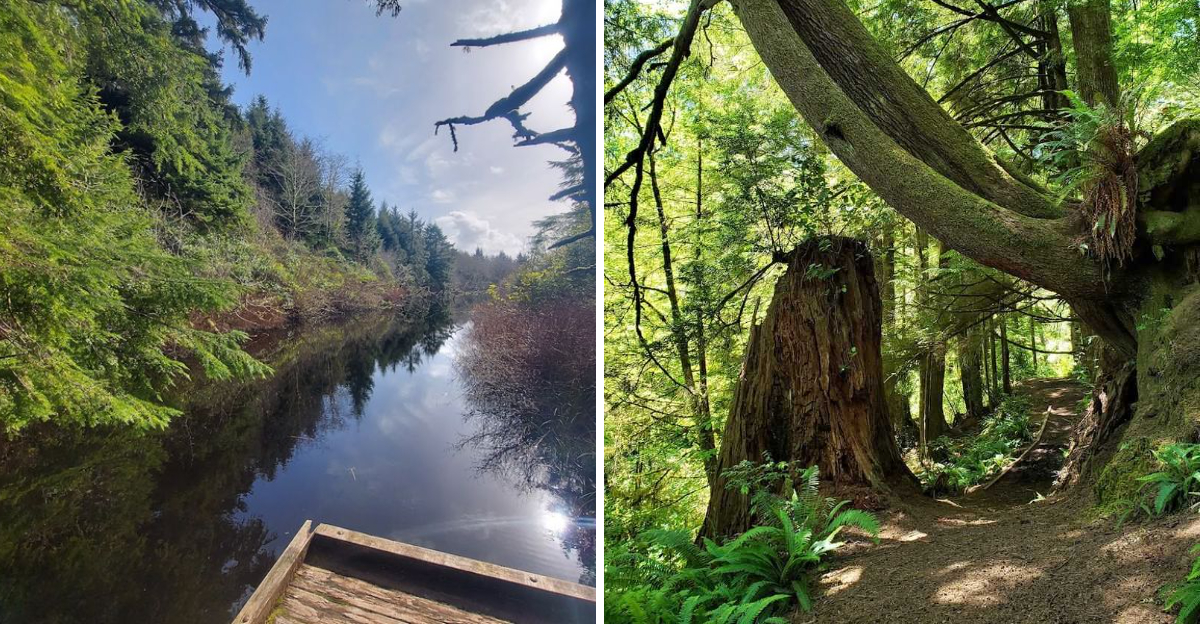
A short stroll is all it takes to trade the hum of town for the whisper of towering firs. This 1.6-mile Oregon trail is the perfect quick escape from pavement to pine needles. The path winds gently through moss-draped trees, with ferns unfurling at your feet and birds calling from the canopy above.
The air cools as you step deeper into the shade, and the salty coastal breeze filters through the branches. It is an easy walk, but it feels like a world away. You can do it in under an hour, but you will want to linger.
Locals use it as their daily reset button. Visitors find it a delightful surprise. Oregon has a way of hiding these pocket wildernesses near town, and this little gem is no exception. It proves that you do not need a long hike to reconnect with nature.
Where the Trail Begins, Right in the Heart of Town
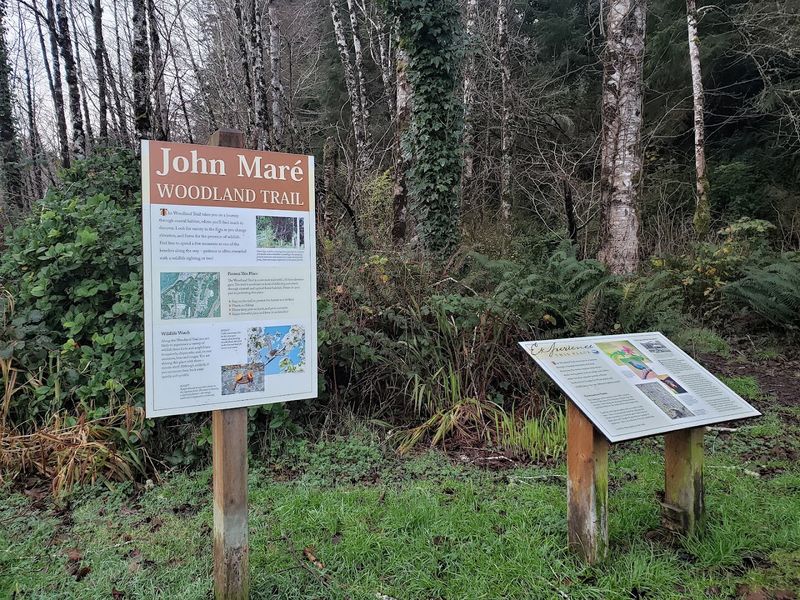
Most trails require a drive down a winding forest road before you even get to the good part. Not this one. The Woodland Trail starts right behind the post office, off SW Starr Street, in the middle of Waldport. You park near the softball fields, walk west, and suddenly the town just stops and the trees begin.
The trailhead has a small informational sign, and to the left of it, a gated road offers an alternate, flatter entry. Most people follow the wooden post markers, which lead you into the forest proper. It is a surprisingly clean handoff from pavement to nature.
One thing to keep in mind: there is no trail map posted at the head, so a quick screenshot of the route before you arrive is a smart move. The transition from neighborhood to forest happens fast. One moment you are in a parking lot, and the next, the canopy closes over you.
The Forest Canopy That Changes Everything
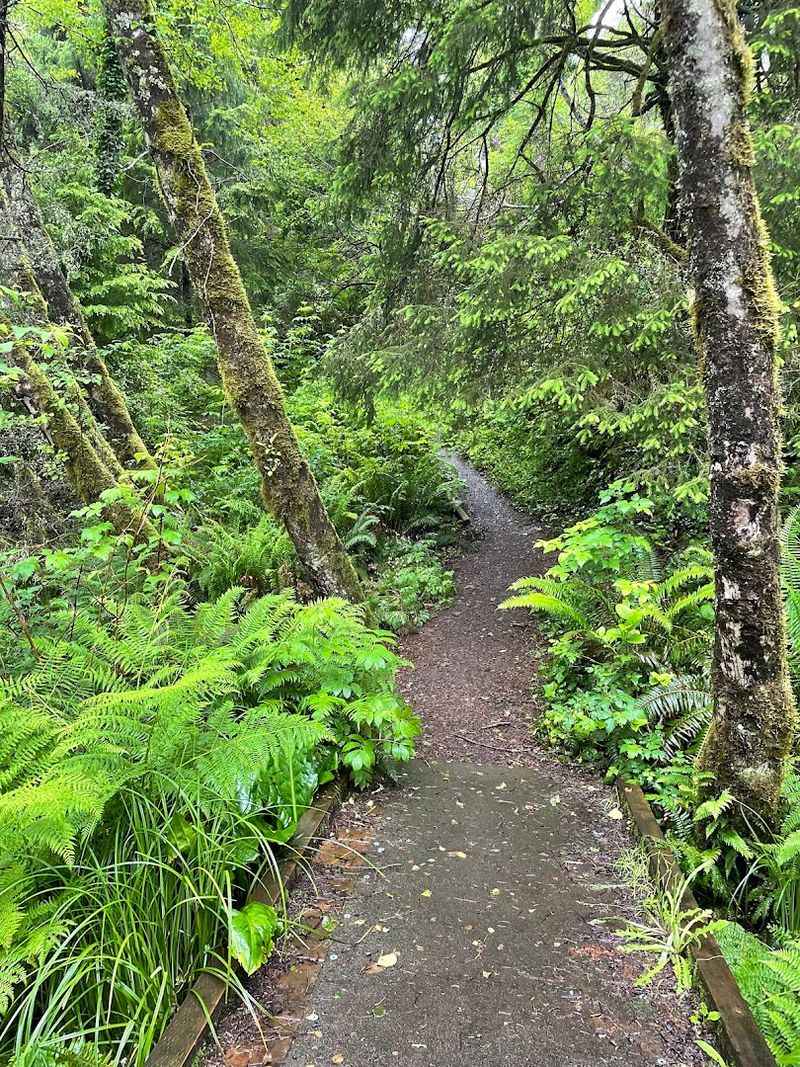
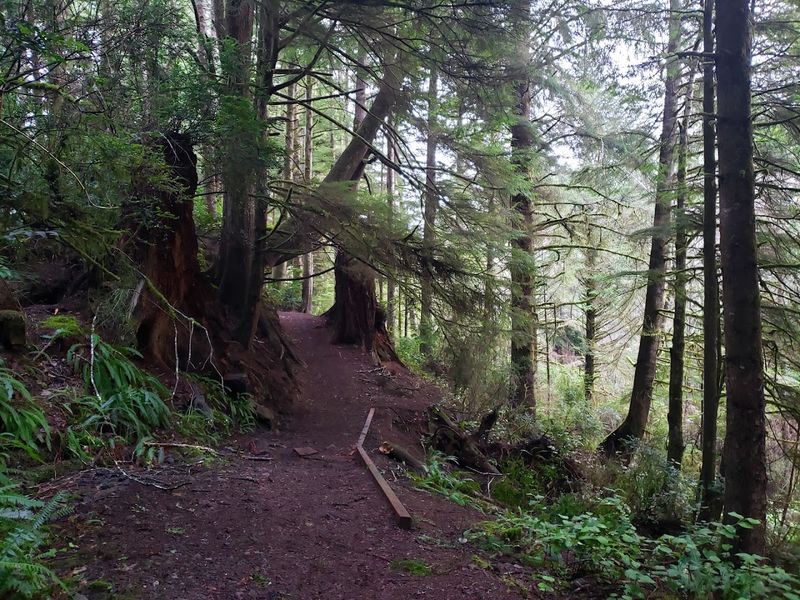
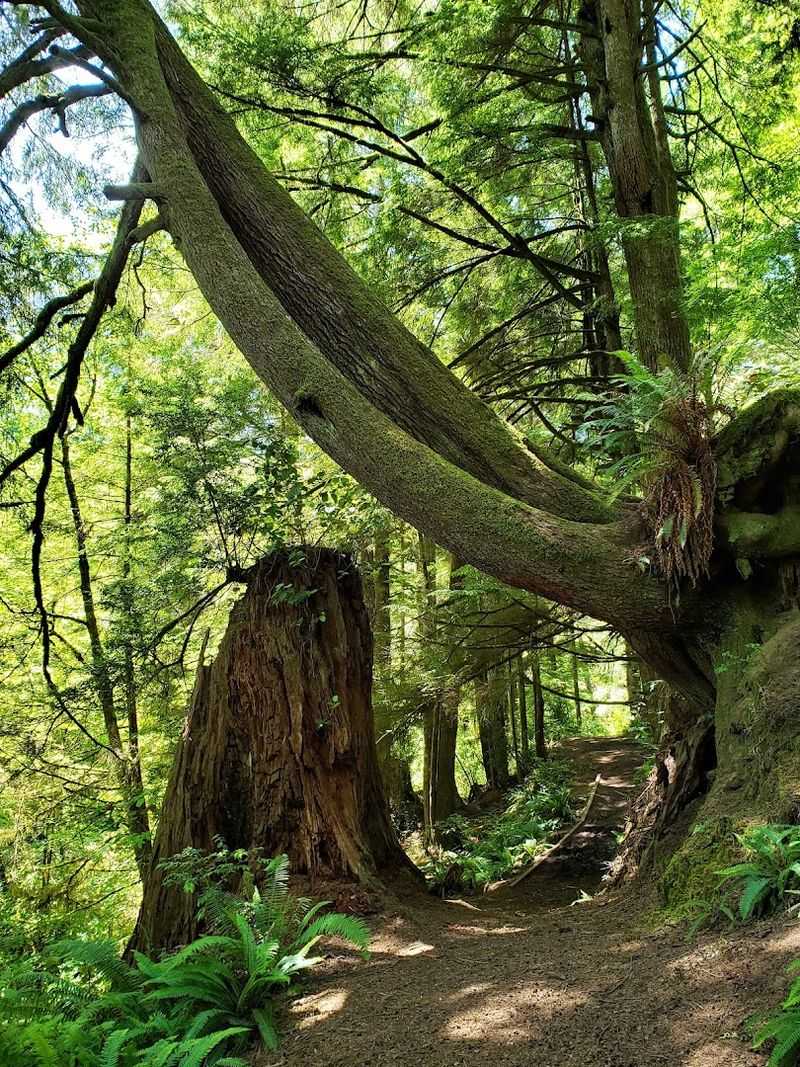
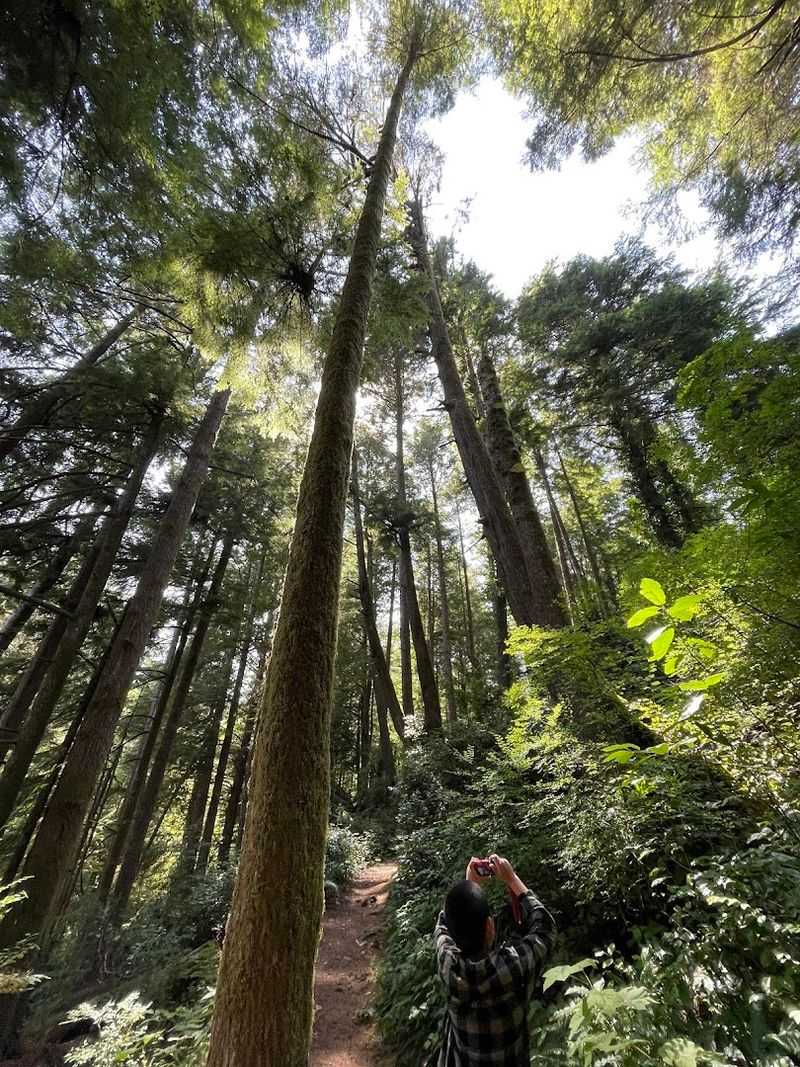
The moment you step under the canopy on this trail, the whole mood shifts. The light goes soft and green. The temperature drops just enough to feel refreshing. Old-growth trees rise on either side, their trunks wrapped in thick coats of moss that seem almost impossibly lush.
Douglas firs and Sitka spruce dominate the scene, and their roots have pushed up through the soil in dramatic, twisting shapes. Ferns carpet the ground beneath them. It looks like the kind of forest you would expect to see in a fantasy novel, not five minutes from a small-town post office.
What really gets me about this section of the trail is how complete the transformation feels. The coastal wind disappears. The sound of traffic is completely gone. You are just in the trees, and the trees are very much alive.
Mushrooms cling to fallen logs. Birds move through the branches above. It is quiet in the best possible way, and that quietness feels earned.
A Creek That Runs Alongside You the Whole Way
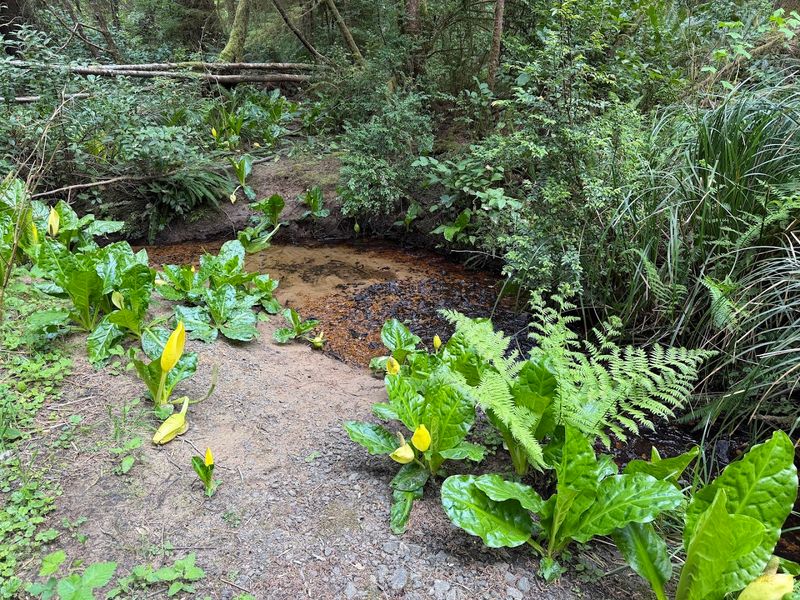
One of the trail’s most pleasant surprises is the stream that runs alongside much of the path. It is not dramatic or roaring. It is gentle and steady, the kind of water sound that you feel in your shoulders before you even realize you have been tense.
The creek meanders through the undergrowth, crossing under the path in a couple of places, and creating small pockets of extra-green vegetation wherever it lingers. Wild skunk cabbage grows in the wetter areas, its big waxy leaves catching whatever light filters through the canopy.
Hikers with kids tend to love this section because the stream is accessible and interesting without being dangerous. Adults slow down here too. There is something about moving water in a quiet forest that makes people stop checking their phones and just look around for a minute.
The creek is not the main attraction, but it becomes the thing you keep coming back to mentally long after the hike is done. Small and unhurried, it sets the whole tone.
Wild Plants and Fungi That Line the Path
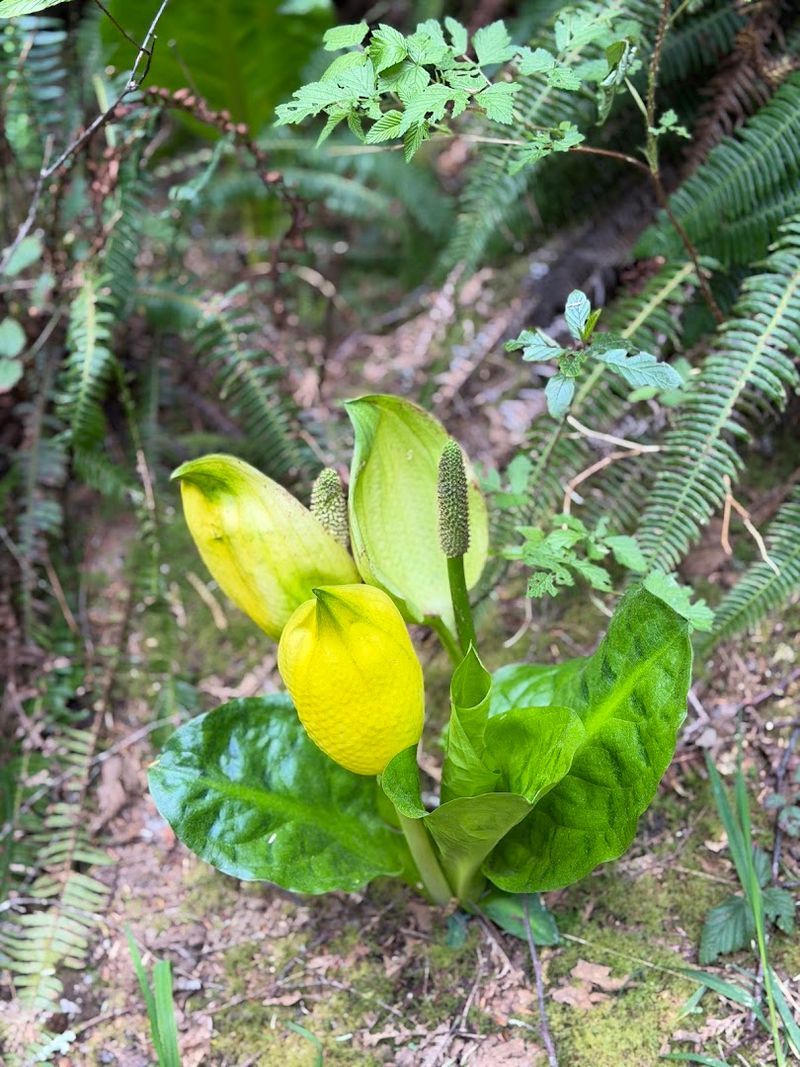
Botanical curiosity is well rewarded on this trail. The forest floor is a layered mix of ferns, wildflowers, and fungi that changes depending on the season and how much rain has fallen recently. Mushrooms of all shapes appear on fallen logs and damp soil, some tiny and delicate, others surprisingly large.
Wild skunk cabbage is one of the more memorable plants along the wetter stretches. Its leaves are enormous and almost tropical-looking, which feels oddly out of place and completely at home at the same time. Flowers pop up in the clearings, adding unexpected color to all that green.
For anyone who enjoys identifying plants or just appreciating them without needing to know their names, this trail delivers. It is the kind of walk where you find yourself crouching down to look at something every few minutes.
A field guide or a plant ID app would make a genuinely useful trail companion here. The biodiversity is real, and it rewards slow walkers more than fast ones.
The Branching Side Trails That Add Depth to the Hike
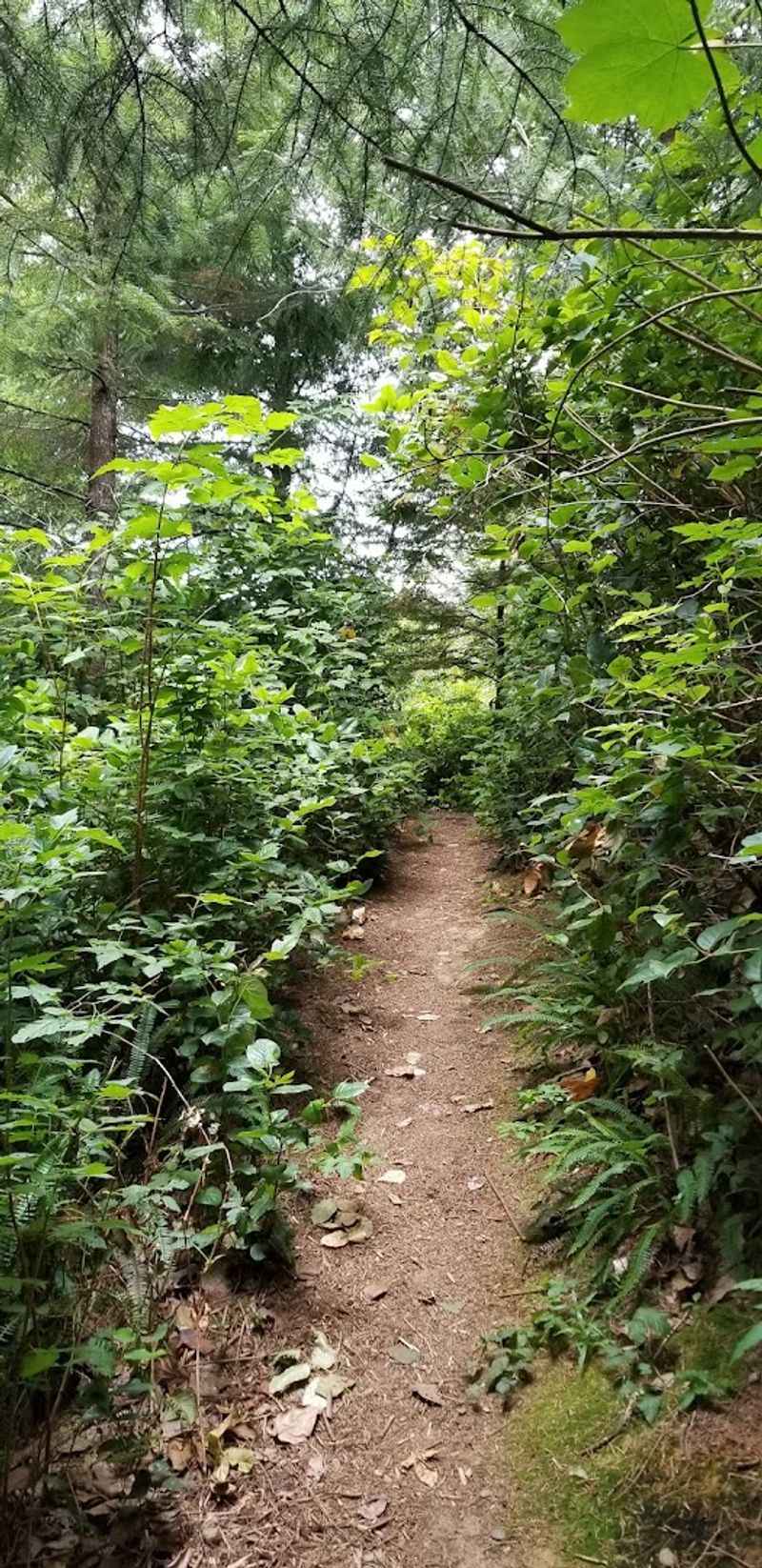
The Woodland Trail is not a single straight line from point A to point B. It branches. Side paths peel off the main route and disappear into denser sections of forest, inviting you to explore or ignore them depending on your mood and your energy level.
These offshoots are part of what makes the trail feel like a different experience each time. Some add elevation. Some lead to quieter, more overgrown pockets of the forest. Others seem to loop back around to the main path.
Following the wooden post markers keeps you on the primary route if you want a more predictable outing. For families with curious kids, the branching trails are a genuine highlight. They turn the hike into something more like an adventure and less like a chore.
For solo hikers or couples who want a mellow walk, staying on the main trail is perfectly satisfying. The flexibility is a quiet feature of this place that does not get talked about enough. You get to choose your own version of the trail.
Where the Trail Meets the Disc Golf Course
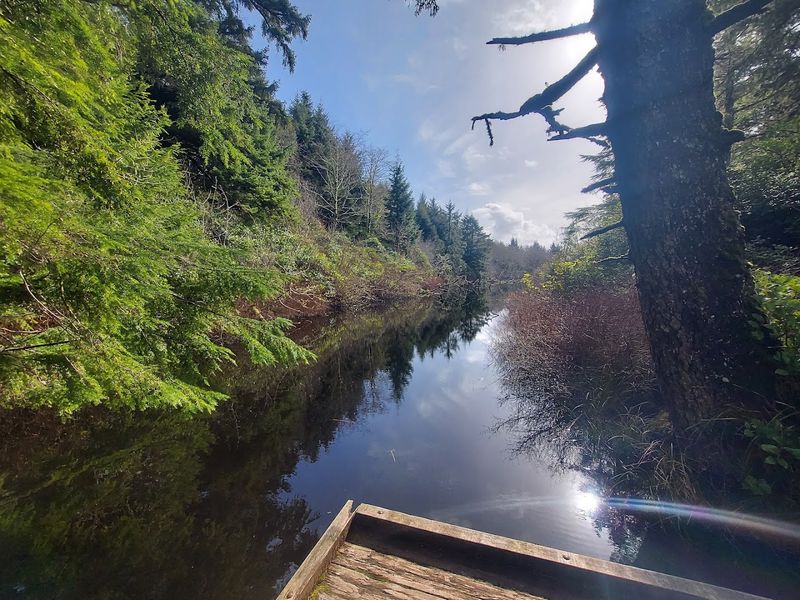
About halfway through the hike, the forest opens up and you find yourself walking alongside a disc golf course. It is one of those unexpected trail details that either delights you or catches you completely off guard.
The course winds through the same trees as the trail, using the natural terrain for elevation changes. Even if you have never thrown a disc in your life, watching the course interact with the landscape is interesting. The baskets appear between trees, and the fairways are shaped by the forest itself.
Visitors have called it the nicest disc golf course on the Oregon coast, and the setting makes that easy to believe. The trail and the course share the same green, mossy world, and they coexist without one overwhelming the other.
Dogs on leashes are welcome on the trail, which means you might see a very happy pup trotting alongside their owner through the disc golf section.
How Steep Is It Really, and Who Can Handle It
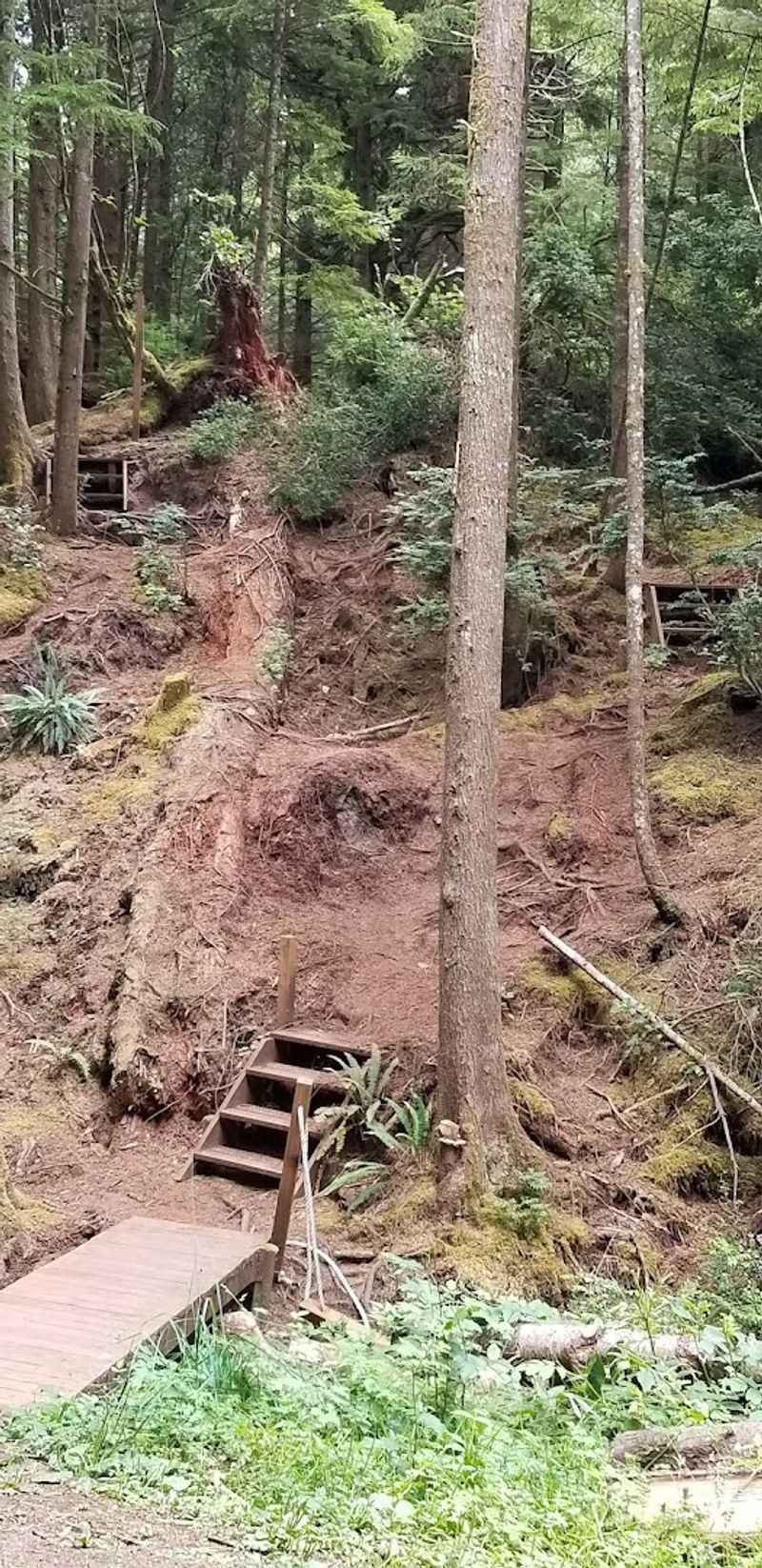
The Woodland Trail has a reputation for being accessible, and for the most part, that reputation holds. The first half is genuinely easy. The path is wide enough, the incline is gentle, and the footing is manageable even on damp days.
That said, the trail does get more interesting in the second half. Some sections become steeper, muddier, and a bit more rugged.
The wooden post markers guide you through, but the terrain asks for a little more attention. Wearing shoes with some grip is a good idea, and trekking poles would not be overkill for anyone who prefers extra stability on uneven ground.
The full loop takes around 20 to 30 minutes at a relaxed pace, though side trail exploration can stretch that considerably. It is not a physically demanding hike by any measure. But it is not entirely flat either, and that mix of easy and moderate keeps it from feeling too simple.
There is just enough challenge to make finishing it feel satisfying.
Morning Light and the Best Time to Visit
The trail opens at 5:30 AM every day, which is genuinely early and genuinely worth it if you are someone who likes the forest before the rest of the world wakes up.
Morning on this trail has a different quality to it. The light comes through the canopy in long, low angles. The air is cool and carries that particular coastal dampness that makes everything smell incredibly alive.
Mist sometimes settles between the trees in the early hours, especially after a night of rain. It is the kind of detail that makes you feel like you have wandered into a nature documentary. I went mid-morning on my visit and it was already beautiful. I can only imagine what it looks like at first light.
The trail closes at 10 PM, which means evening visits are also possible during longer summer days. The forest takes on a different mood as the light fades, quieter and a bit more dramatic.
Whatever time you choose, arriving during the week tends to mean fewer people on the path, which makes the whole experience feel more personal and unhurried.
Practical Things to Know Before You Go
A few practical details make the difference between a smooth visit and a frustrating one. There are no restrooms, no trash cans, and no water fountains at the Woodland Trail. Pack out everything you bring in. Bring your own water. Use the restroom before you leave wherever you are staying.
Parking is at the softball field lot off SW Starr Street, behind the post office. The trailhead signs are visible from the western end of the lot. Pets are welcome but must be kept on a leash, which is standard and reasonable given the wildlife and the shared use of the space with disc golfers.
The trail has no official map posted at the entrance, so downloading one or screenshotting a route image before you arrive is genuinely helpful. Cell service can be spotty in the forest.
Going with a companion is a good call, both for safety and for the simple reason that shared experiences on a trail like this tend to stick with you longer. Come prepared and the trail rewards you generously.
Why This Small Trail Deserves a Spot on Your Oregon Coast Itinerary
The Oregon coast is famous for its dramatic cliffs, wide beaches, and crashing waves. The Woodland Trail offers something different. It is quiet, green, and unhurried, a short forest walk that asks nothing of you except your attention.
For travelers passing through Waldport on a road trip up or down Highway 101, this trail is a perfect 30-minute detour that resets the brain after hours in the car. For those staying in the area, it is the kind of place you return to on multiple mornings without getting bored of it.
At just 1.6 miles, it is not going to challenge seasoned hikers looking for elevation gain and sweeping views. But that is not what it is trying to be. The Woodland Trail is a neighborhood forest escape that happens to be genuinely beautiful.
