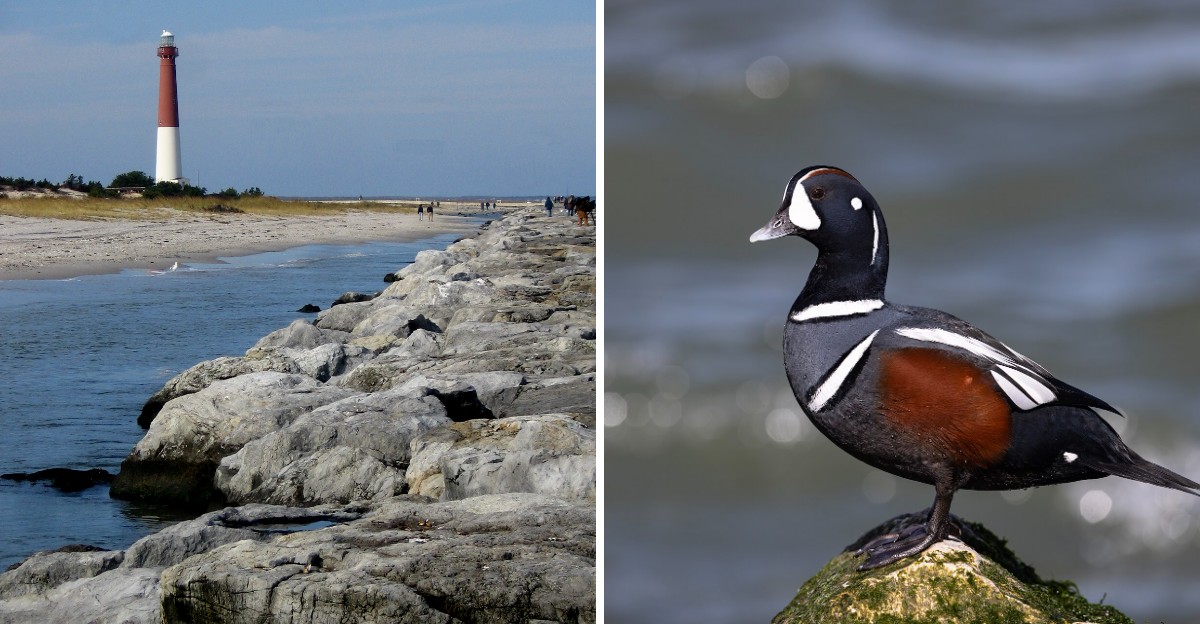
Harlequin ducks show up here every winter, bobbing beside a rocky jetty that runs nearly a mile into the Atlantic. Yeah, I’m definitely looking twice at that.
A duck that looks hand-painted, chilling at the Jersey Shore in January?
Then there’s the tower itself. It was designed by George G.
Meade, the same Meade who later led Union troops at Gettysburg. Its red and white paint glows under floodlights after dark.
What gets me is the timing. This New Jersey landmark was first lit on New Year’s Day, so winter is basically its birthday season.
Summer crowds are long gone by then. The wind is sharp, the sky is huge, and the old tower feels like it has the whole coast to itself.
Winter Is Basically This Old Tower’s Birthday Party
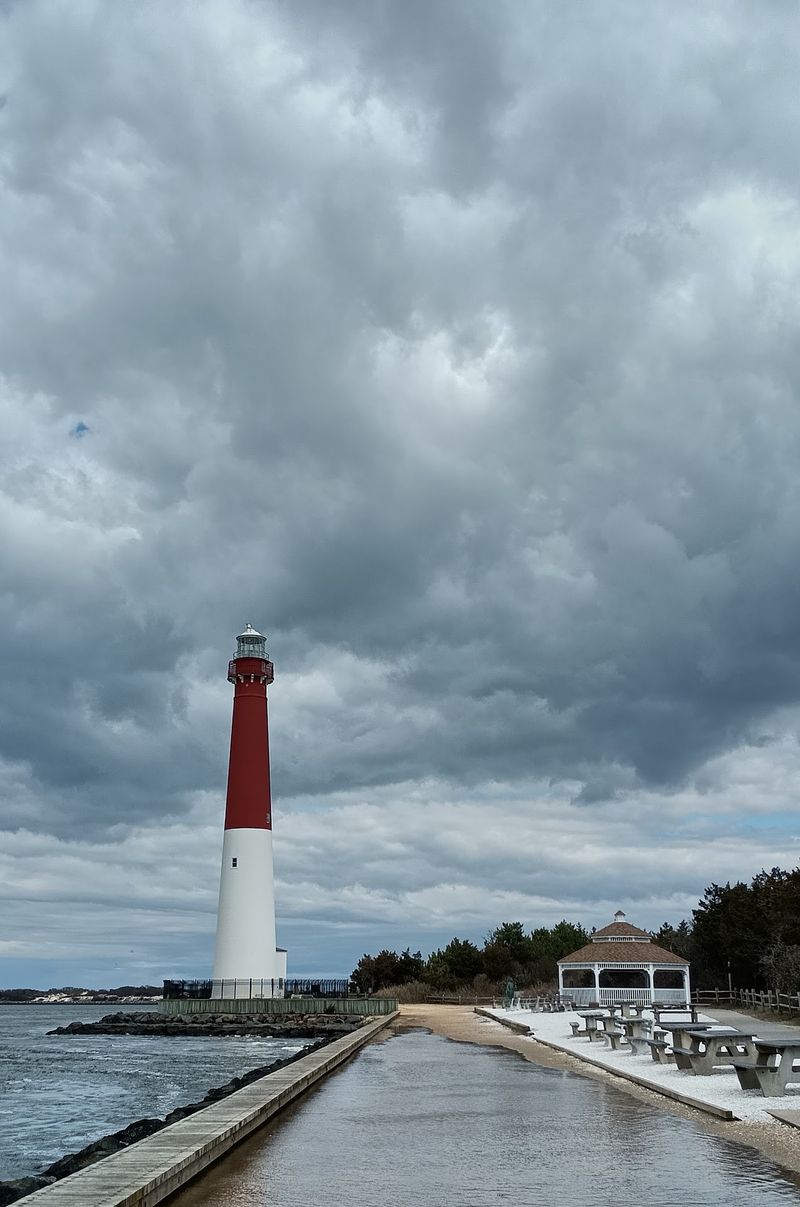
January 1, 1859 is the date that started it all. That’s when Barnegat Lighthouse first sent its beam across the dark Atlantic.
Barnegat Lighthouse State Park now surrounds the tower at the northern tip of Long Beach Island. Everyone around here calls the lighthouse Old Barney, which feels about right for something 167 years old.
The New Year’s connection didn’t stop in 1859. After going dark in 1944, the light was relit on January 1, 2009, right on its 150th anniversary.
A community group called the Friends of Barnegat Lighthouse pushed hard to make that happen.
So a winter visit carries a little extra meaning. You’re showing up during the same season this beacon first woke up and later came back to life.
The tower also looks sharp right now. A restoration that ran from March to October 2022 brought exterior masonry work, roof repairs, and new windows.
Old Barney basically got a spa treatment before turning 165.
Bundle up, because the wind off the inlet doesn’t mess around. Still, standing beneath a tower this old on a crisp January morning feels like attending a very quiet birthday party.
Cake not included.
A Civil War General Drew Up These Plans
Lieutenant George G. Meade had an engineering job long before he became famous at Gettysburg.
He designed this lighthouse while working on coastal projects for the government.
His tower replaced an earlier lighthouse built in 1835. That first one just wasn’t strong enough for the job.
The waters around Barnegat Inlet were tricky, and ships needed a brighter, taller guide.
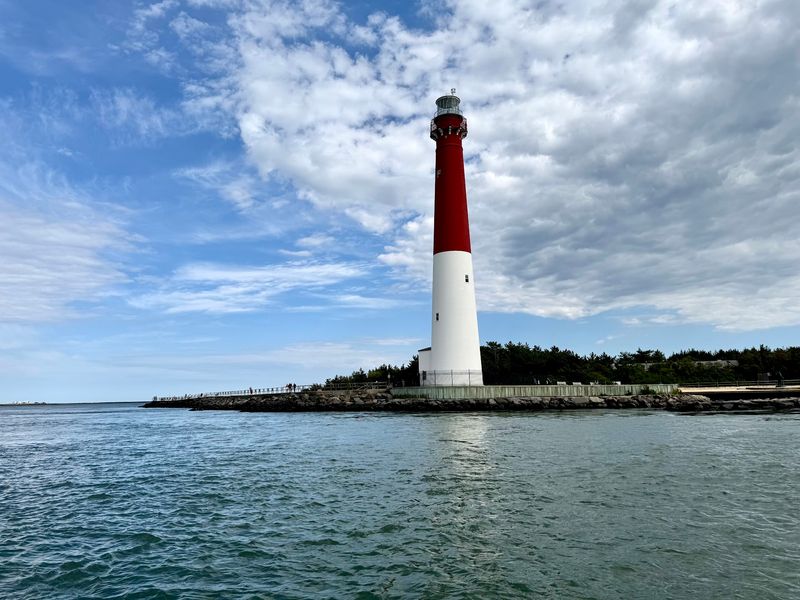
Meade delivered. The current tower stands roughly 163 to 166 feet tall, making it one of the tallest lighthouses in New Jersey.
Its red upper half and white lower half make it easy to spot from far away.
Inside, the original light came from a first-order Fresnel lens built in 1856 by Henri LePaute of Paris. Those lenses are the giants of the lighthouse world, packed with glass prisms that bend light into a powerful beam.
Here’s the fun part. History fans can stand at the base of a structure tied to one of the best-known names of the Civil War era.
Few people expect a general’s fingerprints on a beach landmark. Honestly, it’s a great piece of trivia to drop on the drive home.
Count On Your Legs For 217 Steps
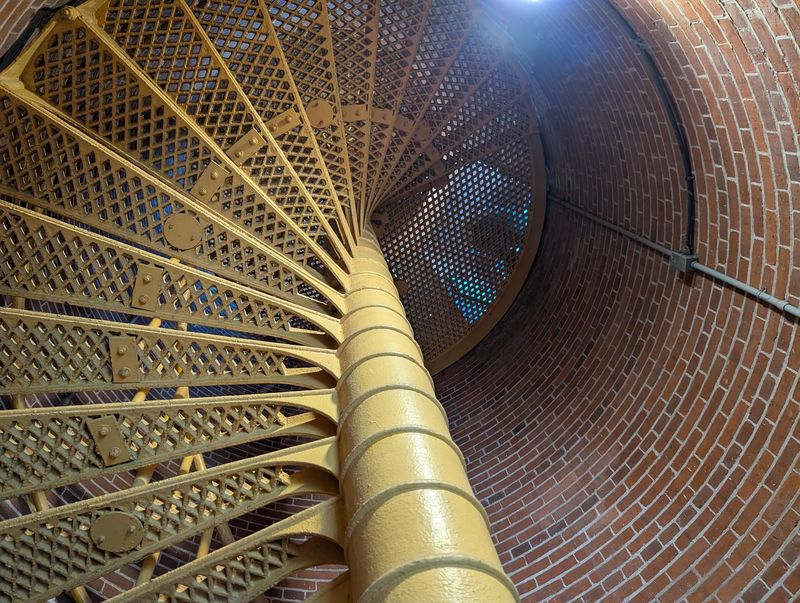
Two hundred and seventeen steps. That’s the full trip from the base of Old Barney to the top, and every single one spirals upward.
In winter, the tower usually opens for climbing on weekends from 9 AM to 3 PM. Summer brings longer access, roughly Memorial Day through Labor Day.
Hours can shift with weather, so calling the park before you drive makes good sense.
A small fee covers the climb. Walking the grounds and snapping photos costs nothing.
The stairs are narrow and winding, so take your time. Comfortable shoes help a lot.
So does a pace that lets you breathe instead of racing the person behind you.
The reward is big. From the top, you can see the Atlantic Ocean, Barnegat Bay, and Island Beach State Park across the inlet.
On a clear winter day, the cold air can make everything look extra crisp.
Fair warning, the wind up there might rearrange your hairstyle. Consider it part of the experience.
You climbed a 167-year-old tower, and a little messy hair is a fair trade for a view that wide.
Skip The Stairs And Still Catch The View
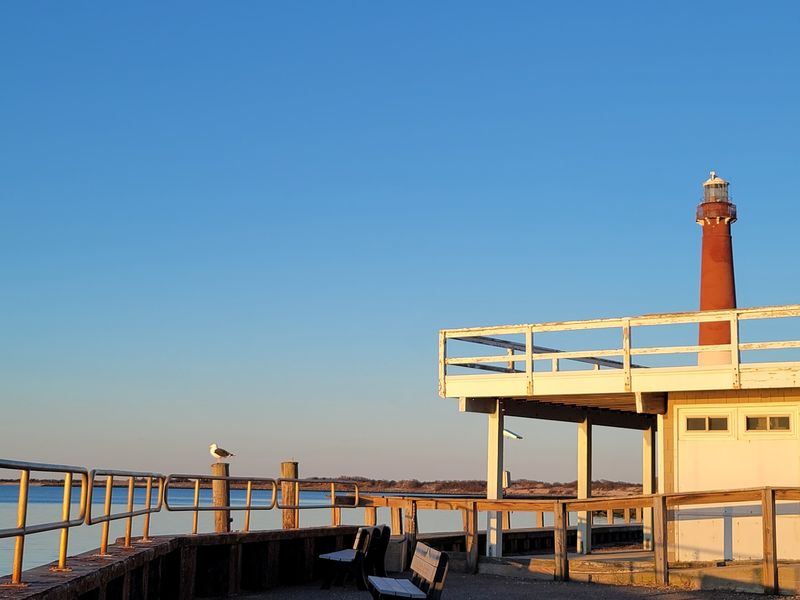
Not everyone wants to tackle a spiral staircase in a puffy coat. Good news, the park has a backup plan that doesn’t involve a single step.
The Interpretive Center sits on the grounds and stays part of the year-round park. Inside, exhibits explain the lighthouse’s history and its job guiding ships along this stretch of coast.
The best feature might be the live camera feed from the top of the tower. You can see what climbers see while staying warm on the ground.
That’s a pretty clever trade on a blustery February afternoon.
The building also connects with winter programming. The Friends of Barnegat Lighthouse State Park host a winter lecture series here, covering maritime and natural history topics.
Those talks make a cold-weather trip feel richer. You get the scenery outside, then a bit of the story behind it indoors.
It’s a nice rhythm for families or anyone who enjoys learning a few fun facts.
Restrooms sit near the parking area too. Small detail, sure, but it matters when you’ve been standing on a windy jetty for an hour looking for ducks.
The Ducks Look Like Somebody Painted Them By Hand
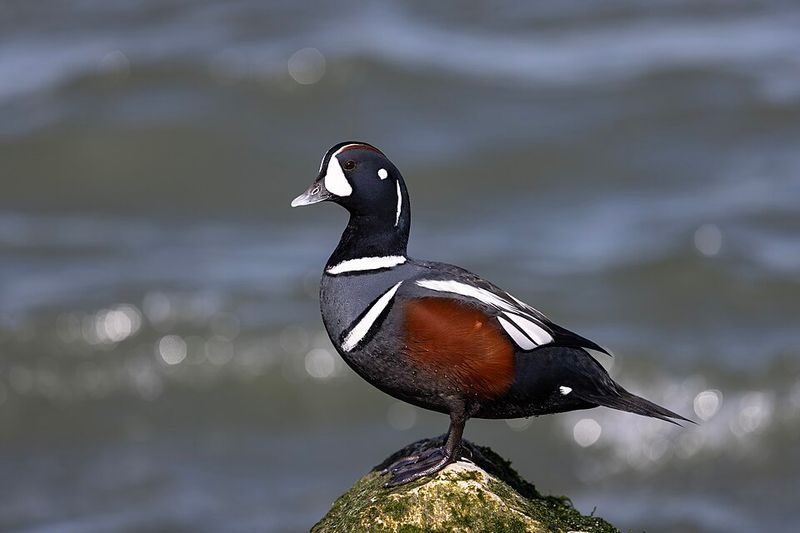
Harlequin ducks are the winter celebrities here. Males wear slate blue feathers with white stripes and rusty patches, like they dressed for a costume party.
The rocky jetty at Barnegat Lighthouse State Park stretches nearly a mile into the Atlantic. It’s one of the best-known winter birding spots in New Jersey.
The list of possible sightings is long. Common Eiders, Long-tailed Ducks, Common Loons, Red-throated Loons, scoters, and mergansers all show up in colder months.
Smaller birds join in too. Purple Sandpipers, Ruddy Turnstones, Black-bellied Plovers, Horned Larks, and Snow Buntings also visit the area.
Winter also means fewer people. Summer brings beach crowds, but colder months feel calmer for anyone holding binoculars.
Bring a pair if you have them. A field guide or bird app helps too, since some of these species look similar from a distance.
The park often hosts waterfowl viewing programs in winter as well. Joining one is a smart move for beginners.
Having someone point out a loon beats guessing whether that dark blob is a bird or a floating glove.
Walk The Inlet Path Where The Fishing Never Really Stops
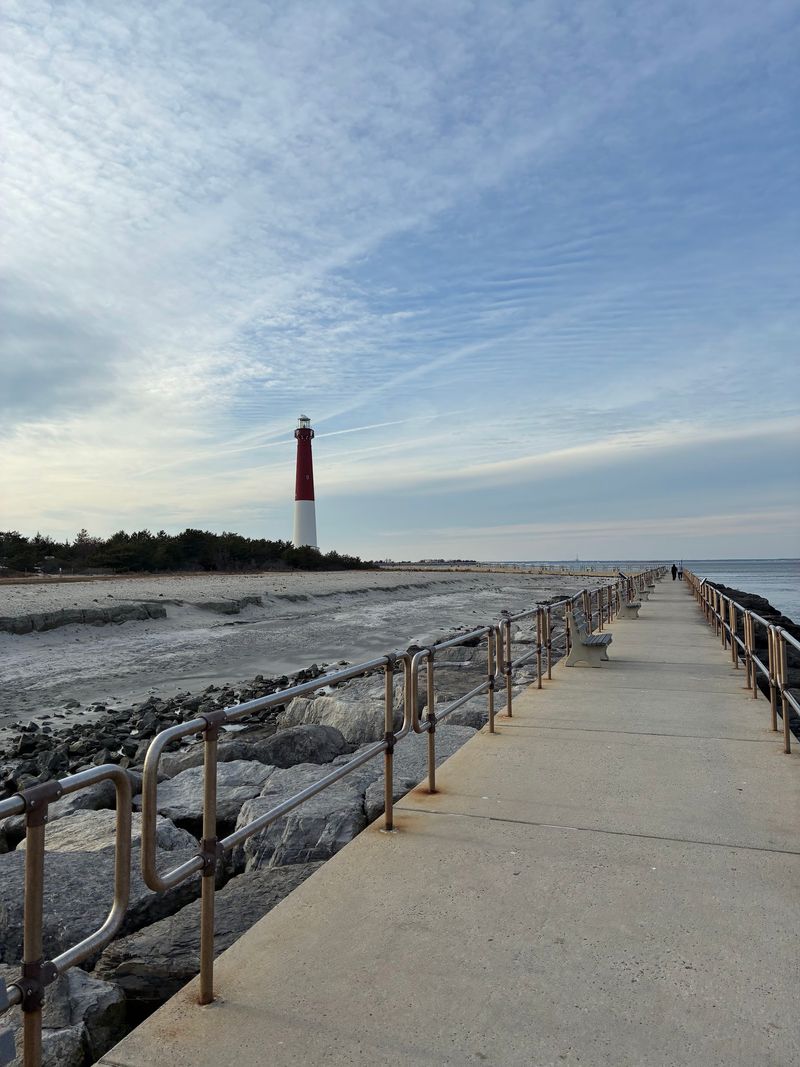
Along the edge of Barnegat Inlet, a fisherman’s walkway runs beside the water. It stays open year-round, so winter visitors get full access.
Fishing is a big deal here. Anglers use the walkway and the jetty, casting into the moving water near the inlet.
Even if you never touch a rod, the path is worth a stroll. Benches line parts of the walkway, and the views of the inlet and Old Barney are hard to beat.
Boats come and go through Barnegat Inlet too. Watching them pass the tower connects the scene to the lighthouse’s original purpose.
A fenced walkway leads out toward the rest of the jetty. Farther out, the rocks get rougher, so watch your footing.
Wet, icy stones in winter deserve real respect.
Dress in layers and bring gloves. The breeze off the water can feel much colder than the forecast suggests.
Still, there’s a calm charm to this spot in the off-season. The ocean keeps moving, the gulls keep circling, and that red and white tower stands guard behind you the whole time.
A Tiny Twisted Forest Hides Behind The Lighthouse
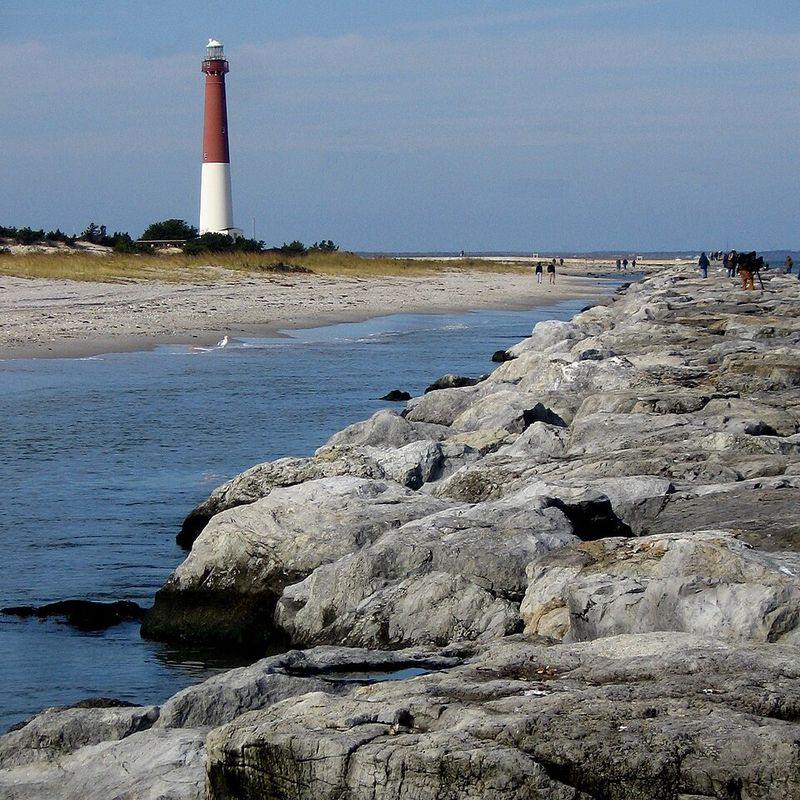
Most people come for the tower and never notice the woods. That’s a shame, because the park protects a small maritime forest right beside the lighthouse.
Coastal forests like this grow in tough conditions. Salt spray and steady wind keep the trees short and twisted, giving the whole area a storybook feel.
Short trail loops wind through this patch of greenery. Informational signs along the way explain the plants and the coastal environment.
Another trail heads through the dunes. It offers a different look at the landscape, with sand, grasses, and open sky.
Winter is a great time to explore these paths. Bare branches open up sightlines, and the quiet makes it easier to spot birds moving through the trees.
The loops are short, so they fit easily into a visit. Kids can handle them without much complaining, which is a small miracle in cold weather.
Wildlife sightings are possible too, though never guaranteed. Keep your eyes open and your voice low.
A shy critter might peek out while you’re admiring trees that look shaped by a very stubborn breeze.
After Dark, The Tower Turns Into A Glowing Postcard
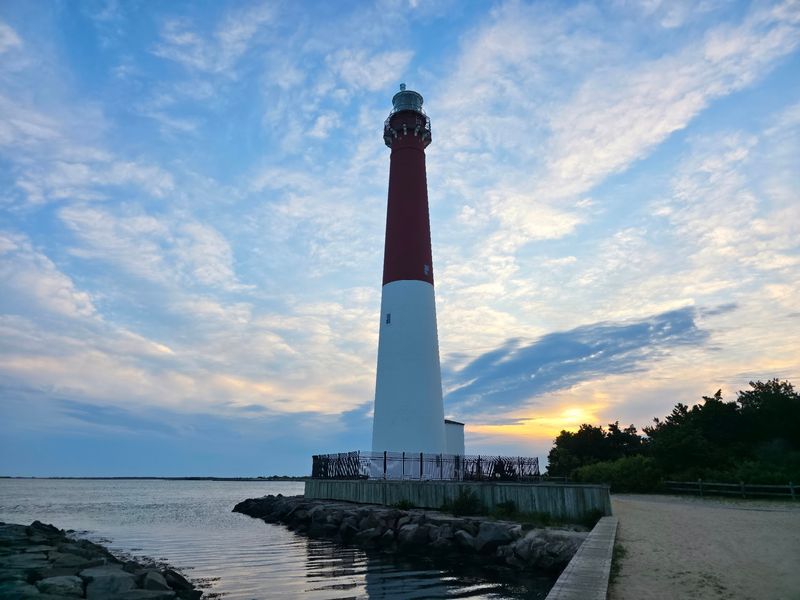
Sunset comes early in winter, and that works in your favor here. The tower is floodlit at night, so Old Barney glows against the dark sky.
The light at the top is active too. A modern lens approved by the U.S.
Coast Guard sends out a single white flash every ten seconds.
That beam reaches up to 22 nautical miles. Sailors far offshore can still spot it, just like generations of mariners before them.
For photographers, this is prime time. Red and white brick under floodlights, a deep blue winter sky, and that steady flash make a striking picture.
Sunset views from the park are popular as well. Arriving late in the afternoon lets you catch the changing colors, then stay for the lights.
Keep an eye on park timing, though. Grounds and parking have set closing hours, so plan your evening shots carefully.
A tripod helps for sharp night photos. So do warm boots, because standing still in coastal wind gets chilly fast.
Trust the glowing tower to make the cold feel worth it.
Finish Your Trip With The Lighthouse’s Original Glass
Old Barney’s original lens didn’t go far. The first-order Fresnel lens now sits at the Barnegat Light Historical Society’s Schoolhouse Museum, close to the park.
Seeing it up close completes the story. Those rings of glass prisms once sat at the top of the tower, focusing light out over the Atlantic.
Getting to the park is simple. Barnegat Lighthouse State Park is at 208 Broadway, Barnegat Light, NJ 08006, at the northern tip of Long Beach Island.
Many drivers take Route 72 east onto the island. From there, the road runs north through Harvey Cedars and Loveladies before reaching the lighthouse.
Parking at the park is free. Winter traffic on Long Beach Island is usually far lighter than the summer rush, which makes the drive more relaxing.
The grounds themselves are open year-round, though tower climbing hours shrink in colder months. Calling ahead helps you avoid disappointment.
Put it all together and you get a full New Jersey winter day. Climb, stroll, spot ducks, then admire the giant lens that started this whole glowing legacy.
