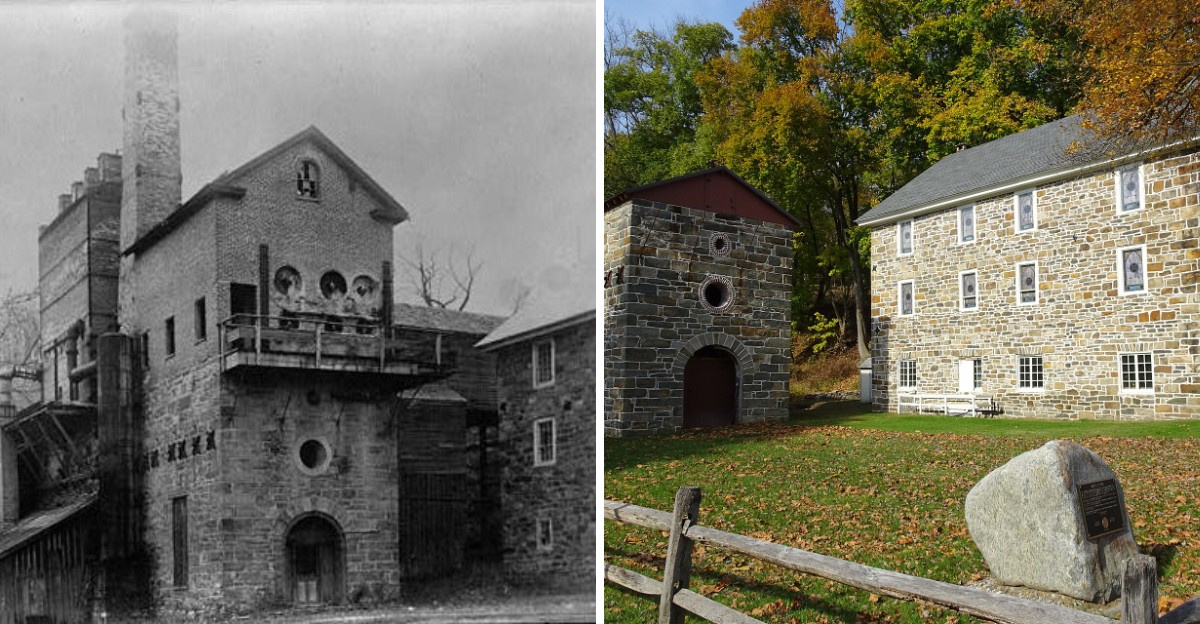
Before factories became enormous buildings filled with machinery, industrial progress sometimes started with a furnace, raw materials, and an astonishing amount of hard labor.
One historic ironmaking site has been standing since 1741, back when producing iron was a major undertaking and the surrounding community depended heavily on the industry.
New Jersey’s early industrial history comes into focus here through an impressive stone structure that has survived centuries of change.
It’s not exactly the sort of landmark that screams for attention with bright signs and souvenir stands.
Its appeal is much quieter, and arguably more interesting. Those weathered stones once played a role in an economy that helped build a growing region.
That’s quite a résumé for something that hasn’t fired up in generations.
A Stone Tower With Deep Roots
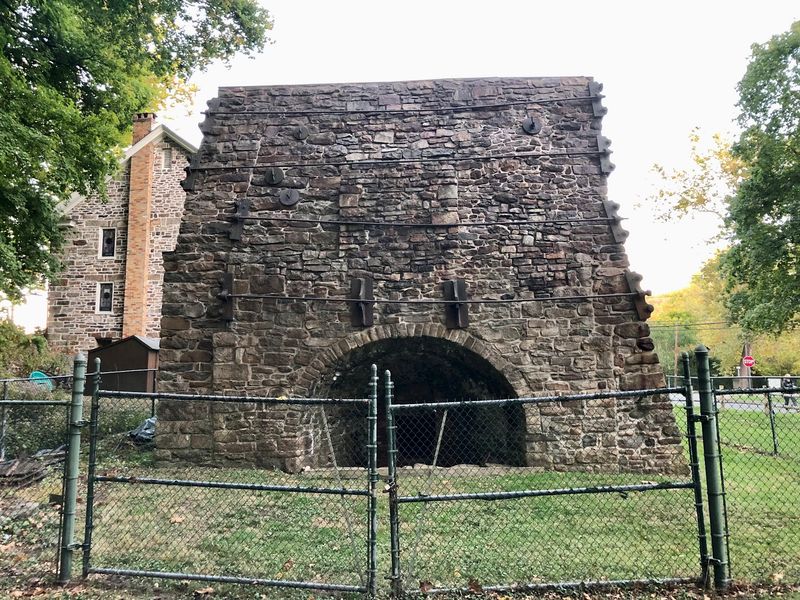
My first reaction was simple. It looked smaller than I expected, and then I learned why.
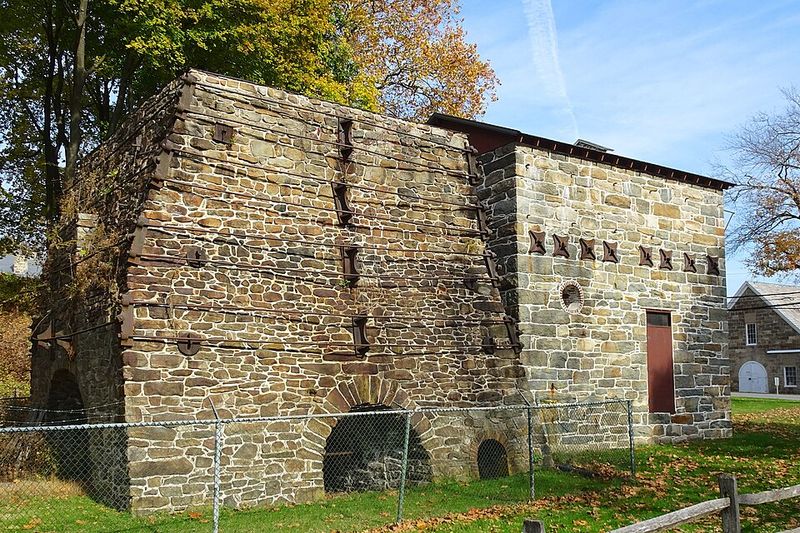
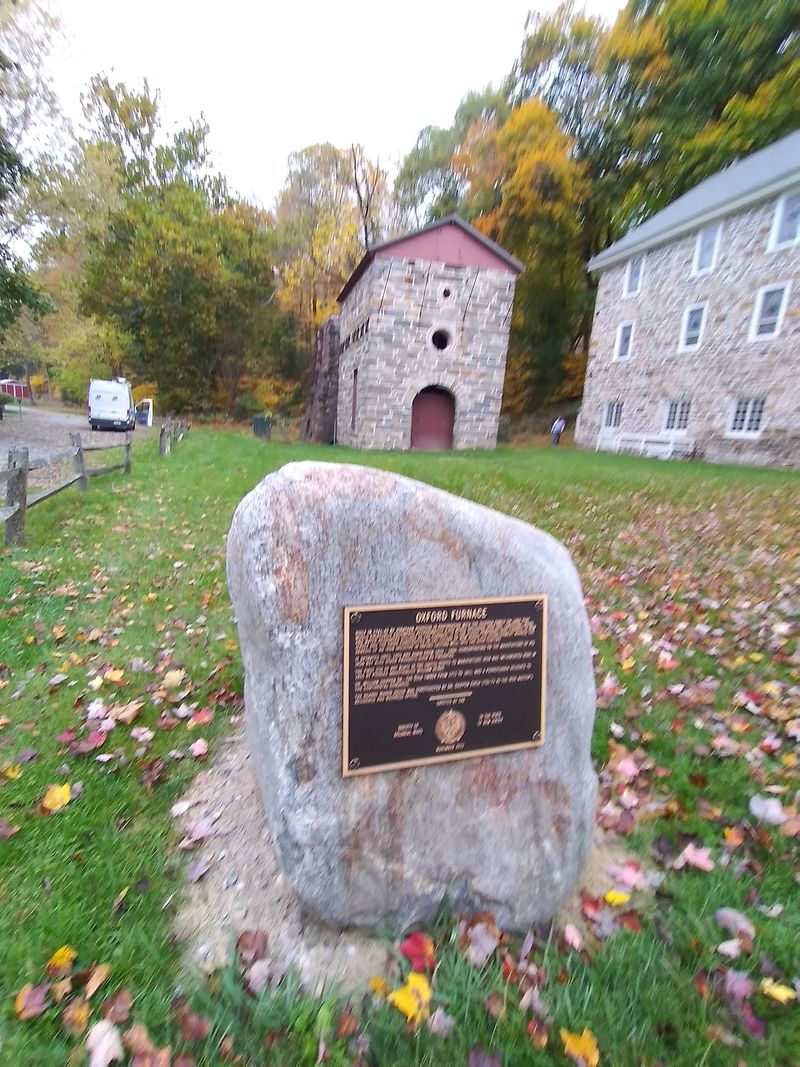
Oxford Furnace once stood 31 feet tall, but about nine feet of fill now covers its base, so roughly 22 feet rise above the ground today.
Construction began around 1741, and the furnace made its first pig iron on March 9, 1743. That makes it one of the oldest industrial sites you can visit in the region.
It was also the third furnace built in Colonial New Jersey, which gives it a special spot in the history books.
The main stone structure is mostly intact. Think about that for a second.
These walls have survived storms, freezing winters, and well over two centuries of change in the town around them.
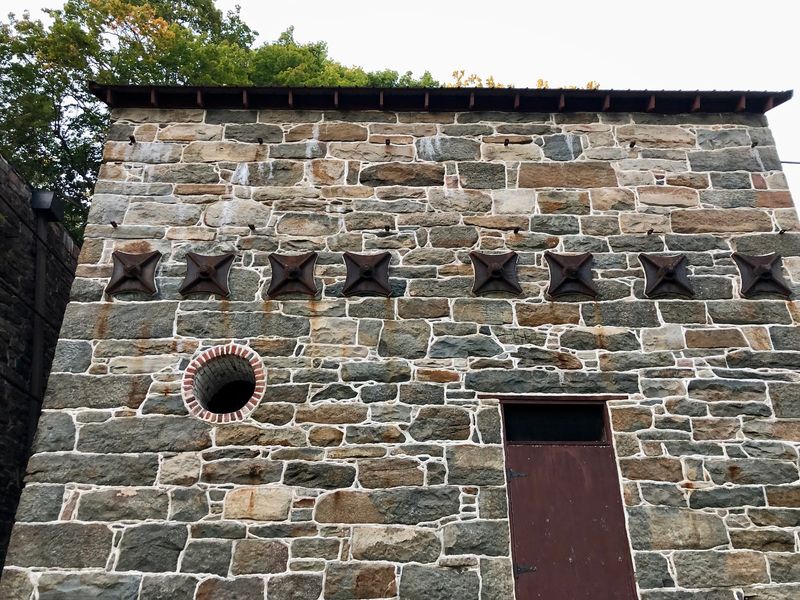
Take a slow lap around the whole tower before reading any signs. Notice how the stones fit together without fancy tools or machines.
Builders back then worked mostly by hand, using muscle, patience, and smart planning. Seeing it in person helps you understand how hard early American industry really was.
Iron Pulled Straight From the Earth
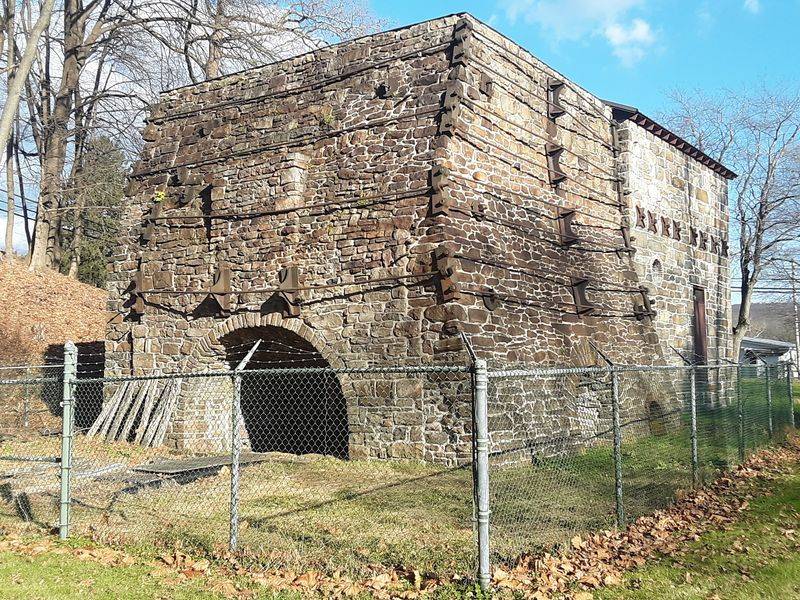
Here is a fun fact that surprised me. Earlier colonial furnaces often used something called bog iron, which was scooped out of swamps and wet ground.
Oxford Furnace did things differently.
It was the first furnace where iron ore was mined directly from the ground. That might sound like a small detail, but it was a big step.
Mined ore gave workers a steadier supply, and a steady supply meant the fire could keep burning.
Picture miners digging into the hillsides, loading heavy rock, and hauling it toward the furnace. Every chunk of ore had a job to do.
Once it reached the top of the stack, it joined fuel and other materials inside the hot belly of the tower.
When you visit, look at the land around you. Those rolling hills were part of the reason this spot was chosen.
Rich ground, flowing water, and plenty of trees for charcoal made the area perfect for ironmaking. Nature basically handed early builders a recipe, and they used it well.
Peeking Through the Old Arches
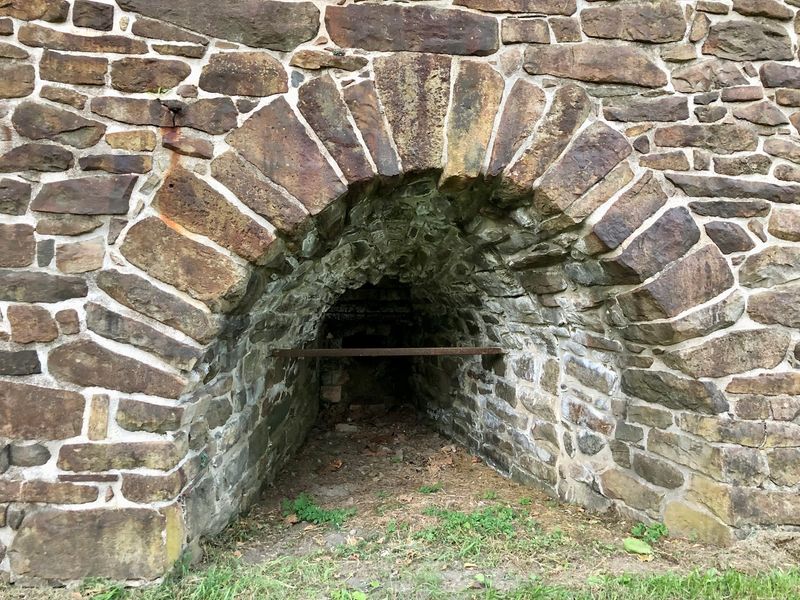
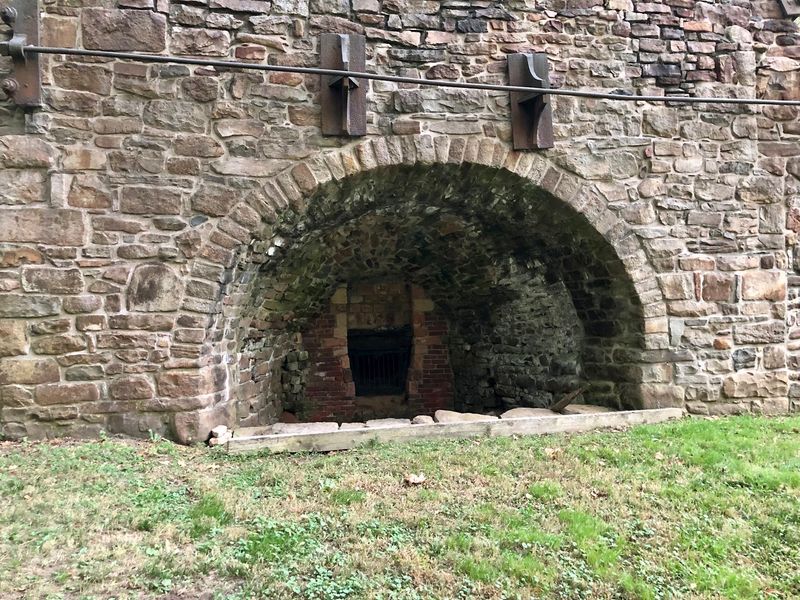
Those arched openings caught my eye immediately. They look almost like doorways into a castle, but their purpose was much hotter.
The arches are called tuyeres, and you can spot them on three sides of the furnace. Air was blown in through these openings to make the fire burn hotter and stronger.
A fourth opening was where workers removed the molten iron once it was ready.
Inside, the bottom area has stayed untouched since the furnace last operated in 1884. That detail gave me chills.
It is like a time capsule sitting right in front of you, frozen at the moment the last fire went out.
Bring a phone or camera and step back to capture the arches in good light. Morning and late afternoon tend to bring out the texture in the stone.
Kids usually love guessing what each opening was for before reading the answer. It turns a quick stop into a little detective game, and honestly, adults enjoy it too.
Hot Air That Changed Everything
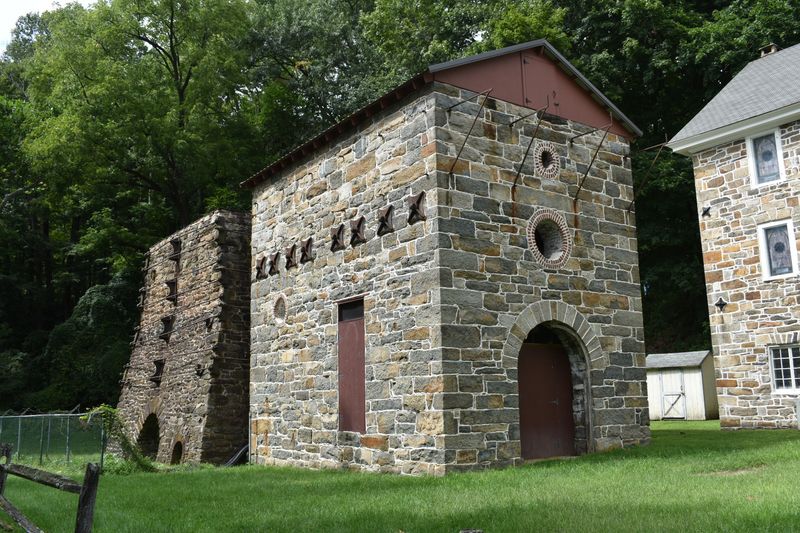
Science nerds, this part is for you. In 1834, the furnace became the site of America’s first practical use of hot blast technology.
So what does that mean? Instead of blowing cold air into the fire, workers blew in air that had already been heated.
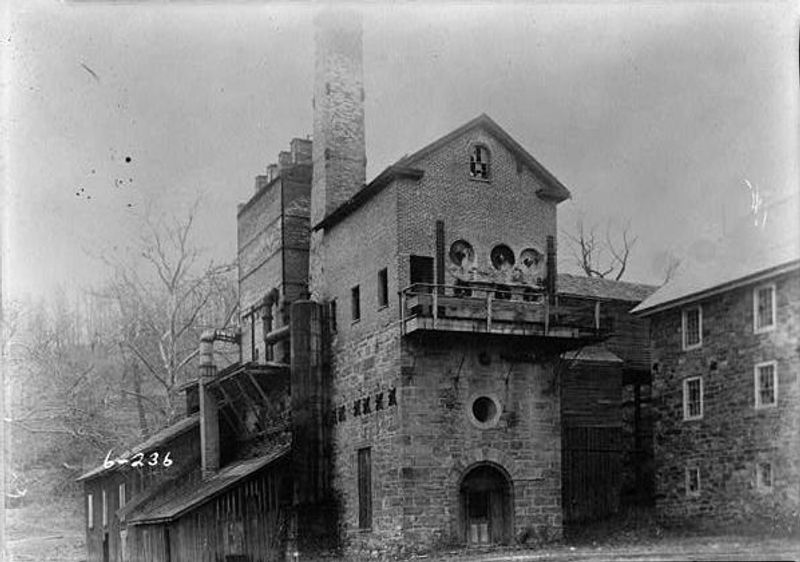
Warmer air helped the fire burn more efficiently, which meant more iron with less effort. A year later, in 1835, a hot blast oven was added on top of the stack to boost output even further.
That idea spread and helped shape ironmaking across the country. A small town furnace quietly pushed American industry forward.
Pretty impressive for a pile of stones in the countryside.
Stand near the tower and imagine the top glowing with that extra oven. The heat would have been intense, and the sound must have been constant.
Thinking about it makes modern kitchens feel downright peaceful. This chapter is the reason many history fans make the trip, and it is easy to see why.
From Charcoal to Coal by Canal
Fuel is never glamorous, but here it tells a great story. For many years, the furnace burned charcoal made from local wood.
Later, it switched to anthracite coal.
That coal came from Pennsylvania, and the Morris Canal helped make the change possible. Boats moved heavy loads across the land in a way wagons simply could not match.
Easier access to coal helped the furnace keep running as times changed.
The switch tied this quiet valley to a much bigger network. Canals, coal fields, and ironworks all depended on each other.
One link helped the next, almost like a chain made of the very iron the furnace produced.
If you enjoy transportation history, this connection is worth exploring further. The Morris Canal shaped many towns across the state, and learning about it adds depth to your visit.
Picture slow boats gliding along water while the furnace kept roaring in the distance. Two kinds of power, one floating and one burning, working side by side.
Firebacks, Stoves, and Wheels
Ever wonder what people actually made here? The answer is a pretty useful list.
The furnace produced pig iron, nails, stoves, and iron pots. It also made firebacks, which are heavy iron plates placed at the back of a fireplace to protect the wall and reflect heat into the room.
Some of those firebacks were decorated with the royal coat of arms. Fancy.
Later on, the works also turned out railroad car wheels. That shows how the operation grew with the times, moving from household goods to parts for a fast changing country.
One myth deserves a quick fix. Many people believe the furnace made cannonballs for American wars, but there is no verified evidence for that claim.
The real list is impressive enough without the legend.
Next time you see an old iron pot at a museum or antique shop, look closely. Pieces like that once came from furnaces just like this one, poured by hand and built to last for generations.
A Town Built Around the Fire
Oxford did not just have a furnace. It grew because of one.
The ironworks created a busy company town, and the community formed around the industry. Workers needed homes, food, supplies, and places to gather.
Over time, the town filled in with buildings that all connected back to the fire burning in that stone tower.
Today, the Oxford Industrial Historic District includes 385 buildings left from this factory town. That number blew my mind.
Rows of workers’ homes still line the streets, giving you a real sense of how families lived close to their jobs.
A slow stroll is the best way to soak it in. Look at rooflines, porches, and stone walls as you go.
Small details hint at a time when the whistle and the furnace set the rhythm of daily life.
Please remember that many of these homes are private residences today. Enjoy them from the sidewalk and keep voices friendly.
Respect helps keep these streets charming for everyone.
Neighbors With Stories of Their Own
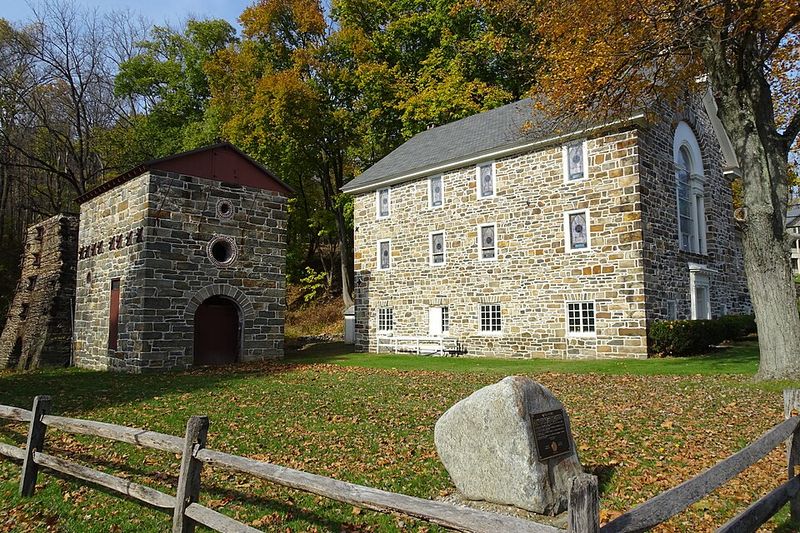
Turn around after seeing the furnace, because the neighbors are just as interesting. Several historic buildings still stand nearby.
The Engine House dates from around 1850. You can also spot the Company Store, where workers once picked up supplies, and the Car Wheel Factory, tied to those railroad wheels made here.
A building that started life as a grist mill now serves as the Methodist Church.
I love how each structure fills in a missing puzzle piece. The furnace made iron, the store supplied families, the mill handled grain, and the factory shaped wheels.
Together, they paint a full picture of a working town.
Give yourself time to wander from building to building. A short loop can easily turn into an hour without you noticing.
Comfortable shoes help, and so does a curious attitude.
Try reading the town like a book. Every building is a chapter, and the furnace is the opening line that started the whole story.
The Ironmaster’s Elegant Home
Up the hill sits a house that feels worlds away from the hot furnace floor. Shippen Manor is a Georgian style stone home built in 1753.
It served as the residence of the ironmaster, the person in charge of running the ironworks. The building has balanced windows, solid stone walls, and a calm, stately look.
It is the kind of house that makes you stand a little straighter.
Compare it with the workers’ homes in town. The difference tells you a lot about how life was organized in an industrial community.
Some people managed the business while others did the hard, hot labor below.
Shippen Manor pairs nicely with a trip to the furnace. Seeing both gives you a fuller view of the people who lived and worked here.
One is all fire and muscle, the other quiet and refined.
Bring a jacket on cool days, since the hillside can catch a breeze. The view and the history are worth the short climb.
Following the Old Rail Path
Something about the path itself made me smile. It is easy to walk right over history without realizing it.
The trail visitors use today was once the roadbed of the Warren Railroad. Trains once rumbled along here, carrying goods tied to the busy ironworks.
Now it is calm, green, and perfect for a peaceful stroll.
The furnace ran longer than any other colonial furnace, finally blowing out in 1884. That long run left a lasting mark on the area.
The whole district is now listed on both the State and National Registers of Historic Places, which helps protect it for future visitors.
Plan for a relaxed visit rather than a rushed one. Pack water, take photos, and read the signs along the way.
Fall leaves and spring blooms make the walk especially pretty.
If New Jersey history ever felt dusty to you, this spot might change your mind. You can find Oxford Furnace at 35 Washington Ave, Oxford, NJ 07863.
