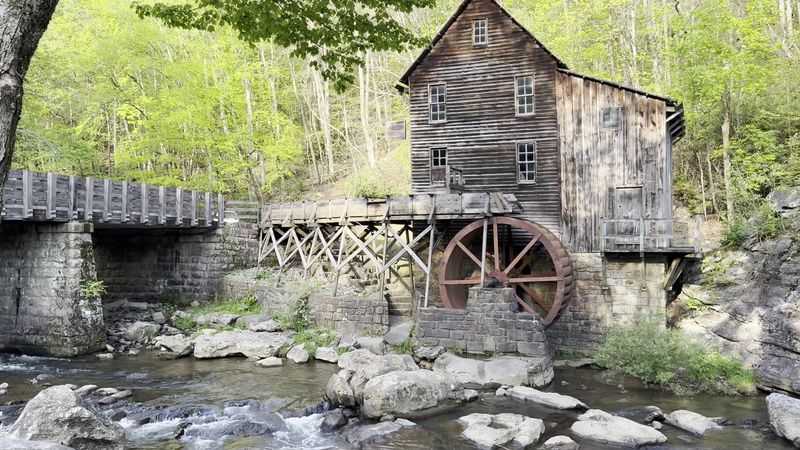
A water wheel rescued from one old mill now turns beside a building pieced together from several others. Somehow, that patchwork still grinds real cornmeal, and you can carry a bag of it home.
The whole thing perches beside a rocky, rushing creek inside a West Virginia state park. It’s often called one of the most photographed spots in the state, and honestly, I understand the fuss.
I like how this place refuses to be just a pretty picture on a calendar. The millstones still do honest work, and the meal ends up in a small gift shop a few steps away.
That’s my favorite kind of souvenir, because it turns into supper later.
I can’t imagine a better excuse to heat up a cast-iron skillet. So how did a mill built from rescued parts become a Mountain State icon?
The Mill Everyone Points A Camera At Sits Inside A Free State Park
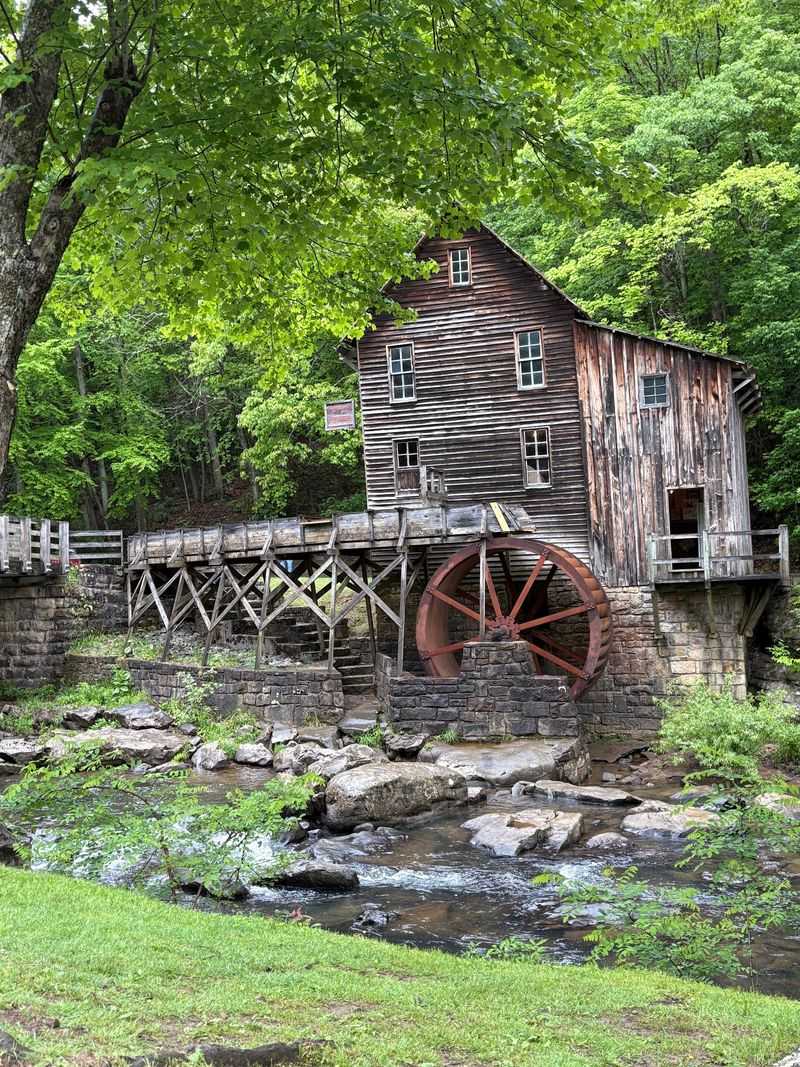
Meet the star of Babcock State Park, the Glade Creek Grist Mill. It stands beside Glade Creek in Fayette County, West Virginia, surrounded by hemlocks, hardwoods, and big mossy boulders.
Here’s the part that makes budget-minded travelers smile. Babcock reportedly charges no state park entry fee, so seeing the mill costs you nothing but gas.
The mill is a working tribute to the hundreds of grist mills that once served West Virginia communities. Back then, nearly every farming valley needed one to turn corn and grain into something you could bake.
Families hauled sacks of corn by wagon and waited their turn at the stones. The miller often kept a share of the grain as payment, a system called a toll.
Today the setting feels peaceful, even when the parking area fills up. A wooden mill, a tumbling creek, and wooded hillsides make an easy scene to love.
Plenty of folks stop here on the way to the New River Gorge area. Others plan a whole weekend around it, and the park gives them good reasons to stay.
Either way, the mill is the anchor. Everything else in this story ripples out from that old water wheel.
A Building Stitched Together From Three Old Mountain Mills
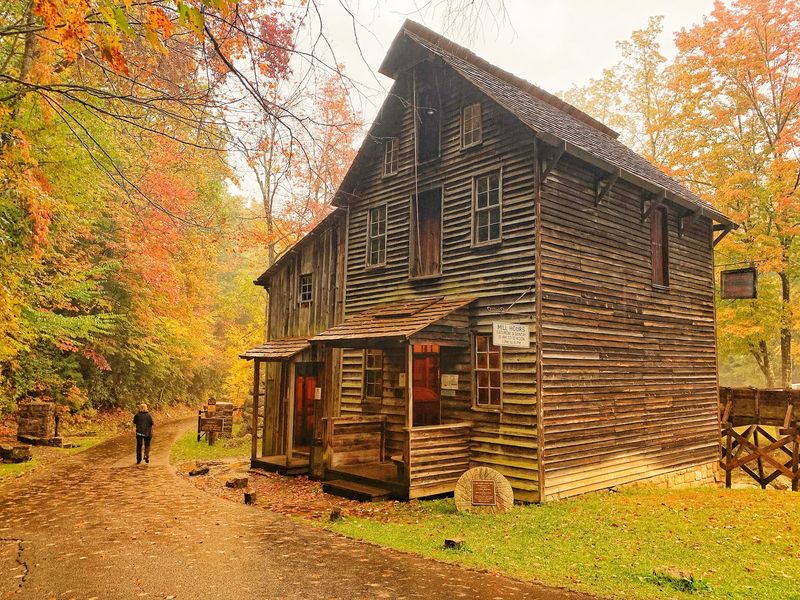
Surprise number one: the mill was finished in 1976, not in the 1800s. It was built to recreate the look and work of an 1800s mill, using real pieces from older ones.
West Virginia State Parks describes it as a combination of parts from several historic mills. Think of it as a quilt, except made of timber, gears, and stone.
The main structure came from the Stoney Creek Grist Mill in Pocahontas County. That mill reportedly dated to the late 1800s, so the bones here have serious age.
Other components were gathered from mills in Pendleton County, near Seneca Rocks. Builders salvaged what they could and gave the old parts a second career.
I love that approach. Instead of letting worn mills vanish, someone pieced their best bits into one working landmark.
The result honors a whole era of Appalachian life rather than one single family business. It feels like a museum, except the exhibits still move.
So when you look at the weathered siding, you’re really seeing several hometowns at once. That’s a lot of mountain history packed into one modest building.
That Big Overshot Wheel Has A Comeback Story
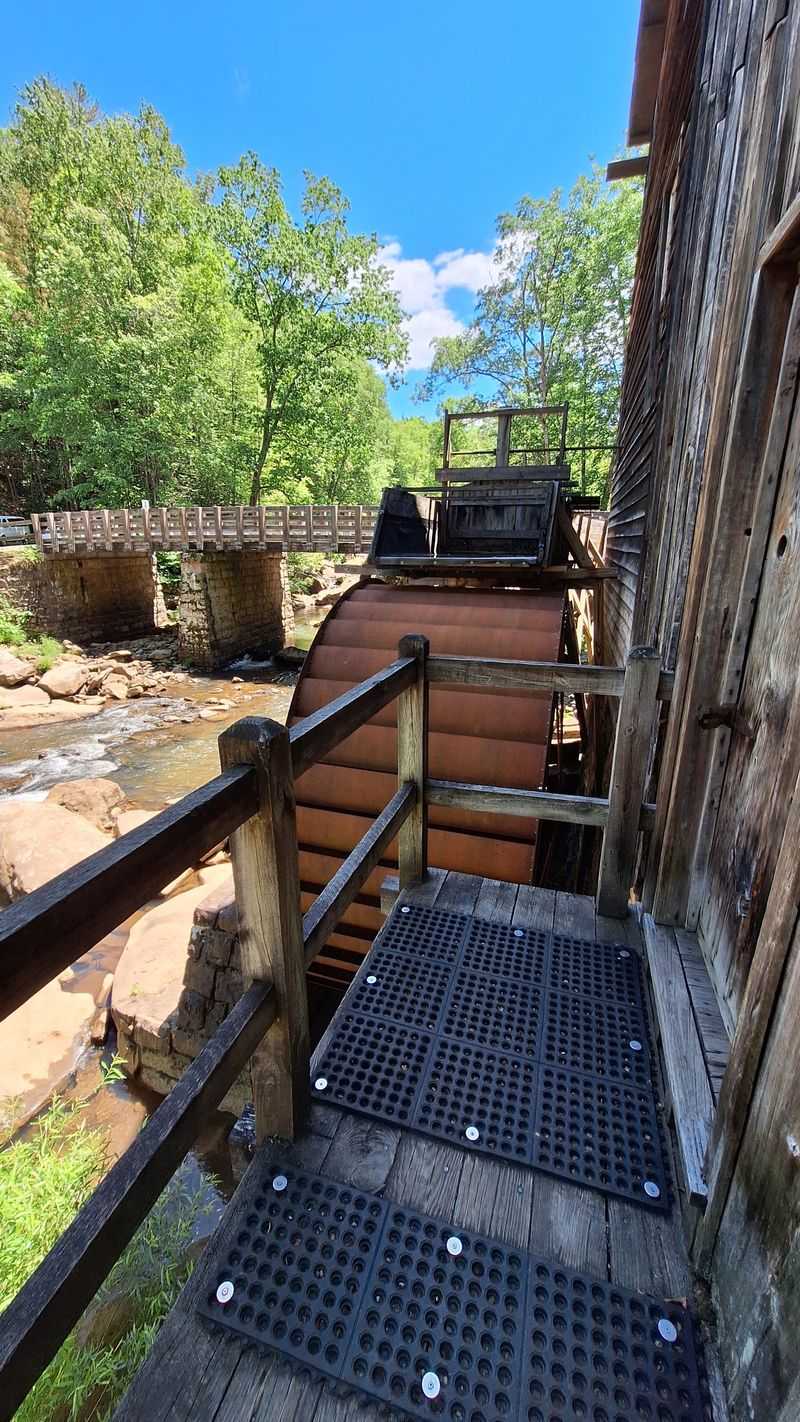
Water pours over the top of the wheel, fills its buckets, and gravity does the rest. That design is called an overshot wheel, and it’s the mill’s most famous feature.
According to park history, the wheel came from the Spring Run Grist Mill in Grant County. It was reportedly salvaged after that mill was lost, then given a fresh start here.
Overshot wheels were prized in hilly country. Mountain streams drop quickly, and that drop gives the water plenty of push.
The turning wheel drives the gears inside, and the gears spin the millstones. No electricity required, just a creek and some clever engineering.
Of course, the wheel only works when it’s running. Some days it sits still, depending on the season, staffing, and water levels.
If you catch it turning, take a minute and just watch. The slow, steady motion is oddly calming, like a clock that keeps time with the forest.
Even standing still, the wheel steals the show in photos. It gives the whole mill that storybook shape people recognize from postcards and calendars.
Real Cornmeal You Can Carry Home In A Bag
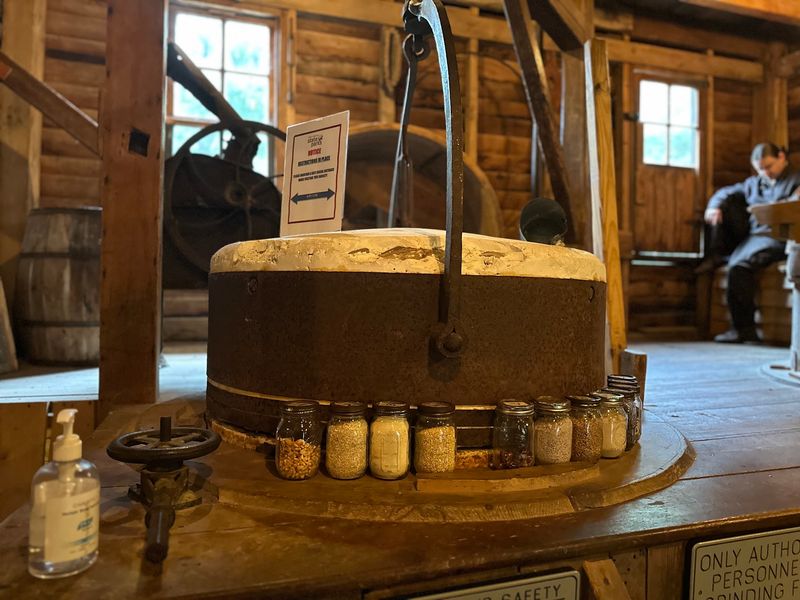
Cornbread fans, this is your moment. The mill still produces stone-ground cornmeal, and bags are sold in the gift shop near the mill.
Park sources note the mill has ground yellow and white corn, plus buckwheat and wheat. Cornmeal is the headliner, though, and it’s the thing most people come looking for.
One honest heads-up keeps expectations friendly. Supplies can run out, and fresh meal depends on when the mill has been grinding.
So treat a bag as a happy bonus rather than a guarantee. If the shelf is empty, the scenery still makes the trip worthwhile.
Why does stone-ground matter? The old-style process typically keeps more of the corn’s character than mass-produced meal.
For many West Virginia kitchens, that means skillet cornbread, fried mush, or a pan of cornmeal-crusted fish. Grandma’s recipe card finally gets the ingredient it deserves.
It also makes a thoughtful gift for folks back home. A bag of meal from a working mountain mill beats another keychain any day.
Step Inside And See How Grain Becomes Meal
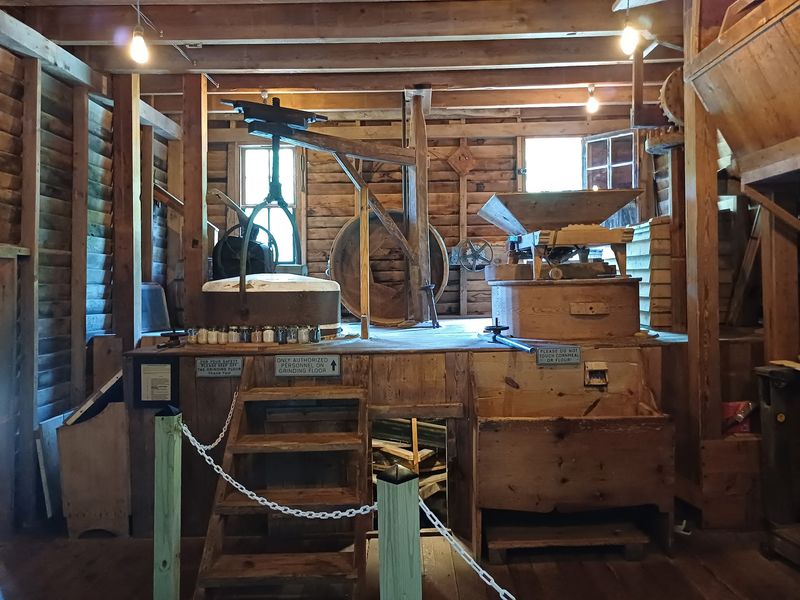
Curious how a pile of dried corn turns into flour-fine meal? The mill building opens for touring during its operating season, so you can peek at the machinery.
Self-guided looks are common, and the inside feels refreshingly hands-on in spirit. Wooden chutes, gears, and stones show how the whole system once fed a community.
Timing matters if you want the full show. Grinding demonstrations happen on certain days, often weekends during the warmer months and fall.
When the miller is at work, you may see corn fed into the stones the traditional way. That’s living history, not a recording or a diorama.
A side deck and the nearby bridge also give good views of the wheel in motion. You don’t have to squeeze inside to enjoy the action.
Kids usually get the concept fast, which is part of the fun. Adults often walk away with new respect for how much work one loaf of bread used to take.
Check with the park before a long drive if demonstrations are your main goal. Schedules can shift with the season and the water.
Glade Creek Puts On Its Own Splashy Performance
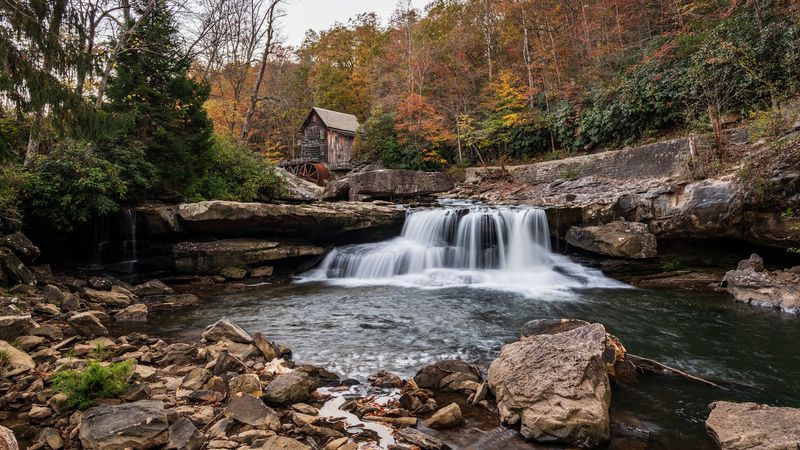
Honestly, the creek nearly upstages the mill. Glade Creek tumbles over boulders right beside the building, forming small falls and frothy rapids.
The water sound alone sets the mood. It’s steady, cool, and loud enough to drown out the car doors in the lot.
Rocks along the bank are easy to hop for better angles, at least when water levels cooperate. Wear shoes with grip, because wet stone is slippery business.
Down near the visitor center, you can reach the creek for a clearer look at the falls. Many people end up spending more time there than they planned.
On a warm day, dipping your toes in feels like a small reward. Keep an eye on kids, though, since currents can be stronger than they look.
The creek is also the mill’s engine, which makes it more than background scenery. Without that rushing water, the wheel and stones would just be decoration.
I like that connection a lot. The prettiest part of the view is also the hardest-working part of the whole operation.
Fall Foliage Turns The Scene Into A Painting
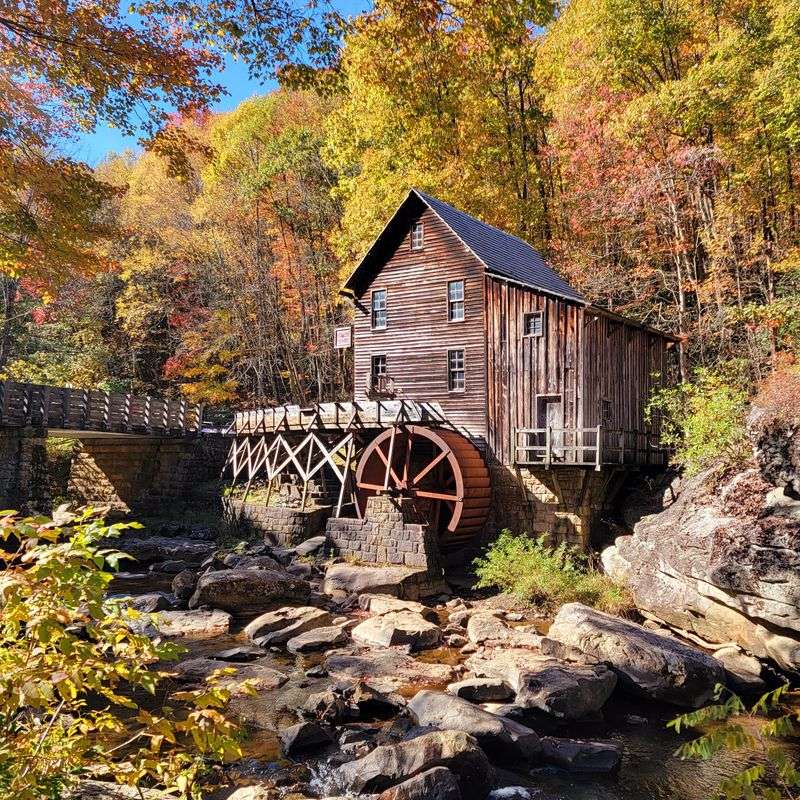
October is when this place really shows off. Red, orange, and gold leaves frame the gray wooden mill like somebody planned it.
The mill is widely described as one of the most photographed places in West Virginia. During peak color, it’s easy to see where that reputation came from.
Peak timing can be tricky, so flexibility helps. Some trees, like blackgum, reportedly turn early, while others hang on a little longer.
Missing the exact peak still isn’t a disaster. A week early or late usually leaves plenty of color in the hills and on the water.
Fall also brings the biggest crowds of the year. Weekends can get busy, and evenings during leaf season fill up fast.
Bridge Day at the nearby New River Gorge Bridge adds even more traffic in mid-October. Plan around it if you’d rather have elbow room.
Spring and summer have their own charm, with deep green forest and lush banks. Winter is quieter still, and a dusting of snow suits that old roofline nicely.
Photographers Have A Sunrise Secret Worth Stealing
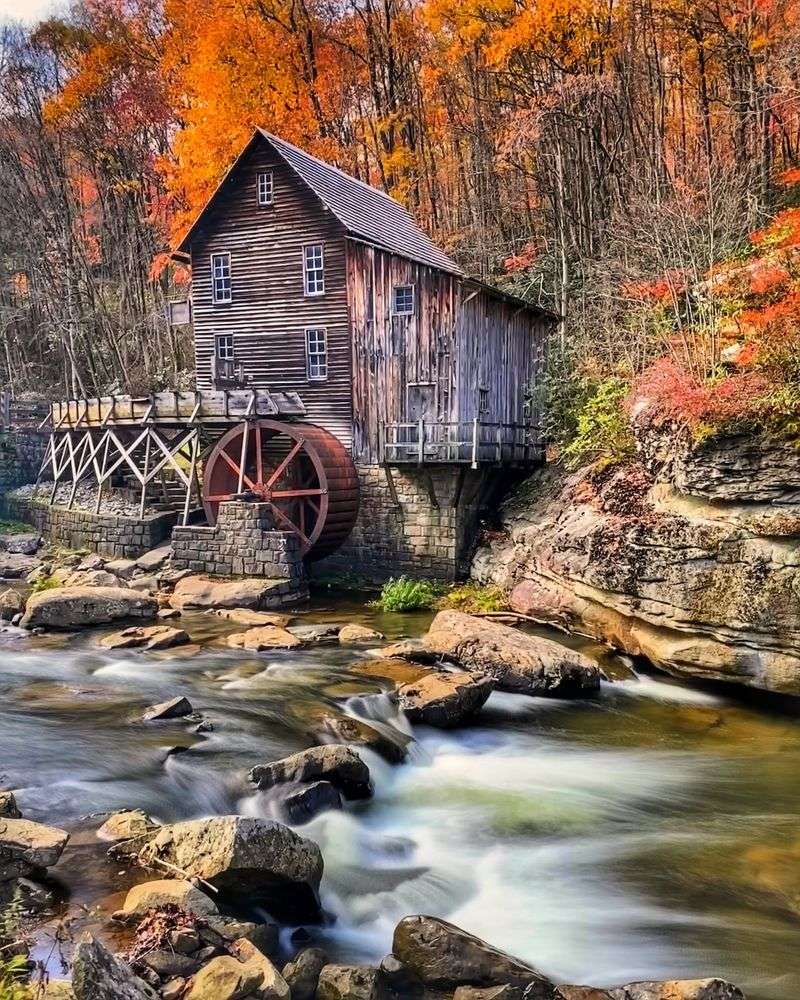
Sunrise is the quiet trick here. Early light brings soft color and far fewer people in your frame.
The grounds open early, around 6 a.m., according to the park’s posted hours. That gives camera lovers a head start before tour buses and families roll in.
Walk around before you set up. There are several good viewpoints, including the bridge, the banks, and spots down by the water.
Bright midday sun can create harsh shadows on the creek. Overcast skies or late light behind the hills often make the scene easier to capture.
Serious shooters often bring neutral density filters for silky water effects. A phone can do surprisingly well too, especially with long-exposure or motion settings.
Tripods help, but keep them out of walkways. Everyone wants that clean shot, and courtesy goes a long way on a crowded deck.
Bug spray is smart in warmer months. Nobody wants a mosquito bite ruining a perfectly timed shutter click.
Even if you’re not a camera person, an early visit feels calmer. Coffee, mist, and a turning wheel make a pretty great start to any day.
A Gift Shop That Treats Your Wallet Kindly
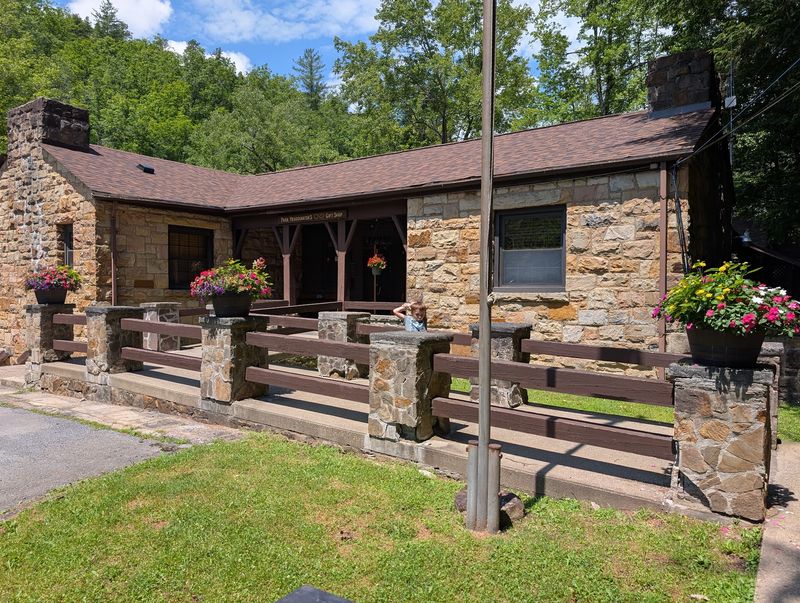
Souvenir shopping usually stings a bit. Here, it tends to feel more reasonable than you’d expect at a famous landmark.
The gift shop sits close to the mill, so you won’t have to hike for a bag of cornmeal. It’s an easy stop before or after your photos.
Along with mill products when available, you’ll find the kind of keepsakes park shops are known for. Trail maps are handy here too if you’re planning a hike.
Below the shop are restrooms and a small room with historic photos explaining the building. It’s a nice spot for a quick history fix out of the weather.
One practical note for anyone with mobility concerns. The lower level may not be easy for everyone to reach, so plan accordingly.
Hours for the shop can vary with the season. It often opens mid-morning, while the grounds themselves open much earlier.
For parents on a budget, this is a welcome detail. You can grab a meaningful memento without feeling like the mountain charged admission through the back door.
Swing On The Famous WV Swing Out Front
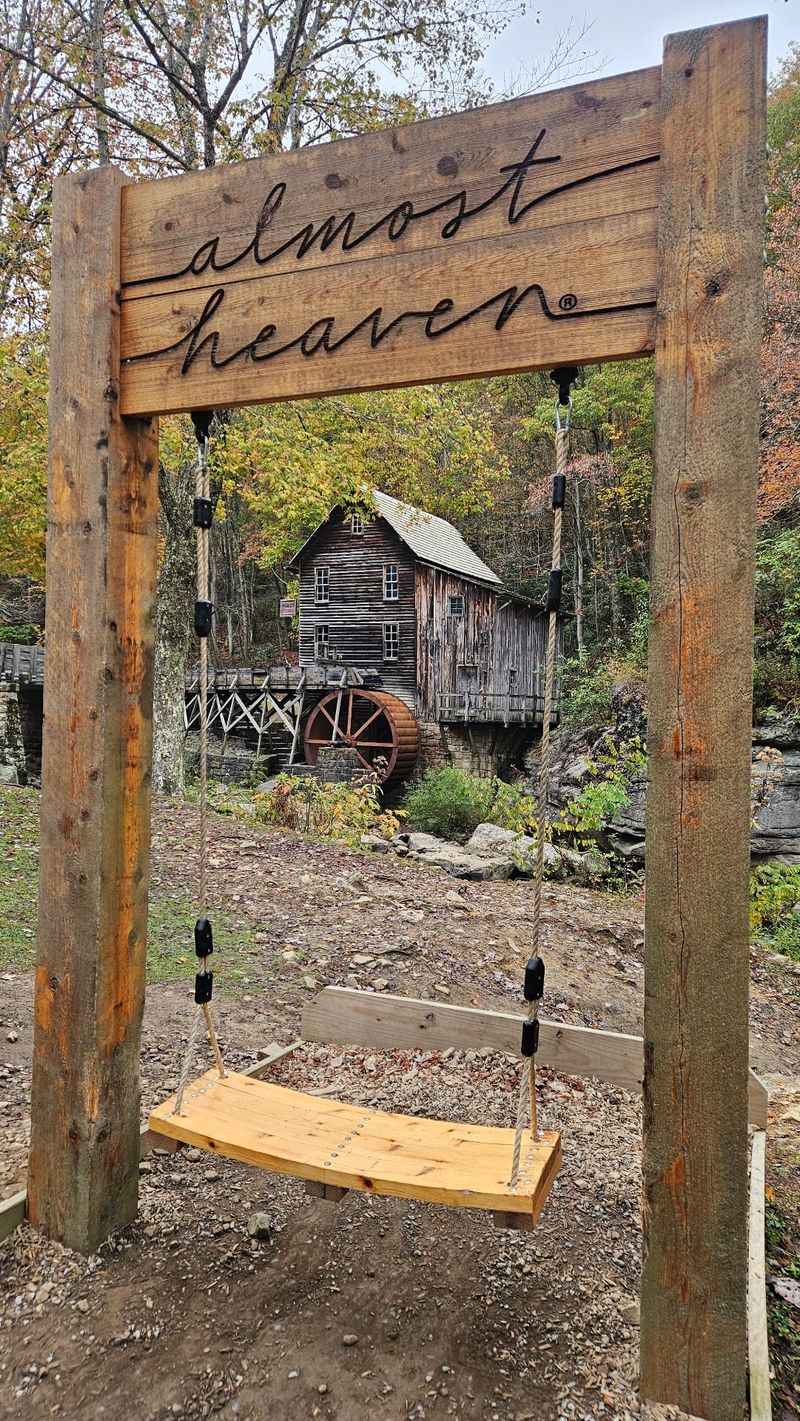
Not every landmark comes with a built-in photo prop. This one has a West Virginia swing right in front of the mill.
Couples, grandparents, and families all seem to love it. It’s a simple, sweet way to capture a hometown-proud picture with the mill behind you.
Some people even come mainly for the swing, then fall for the mill. That’s a pretty good bait-and-switch, if you ask me.
Expect a short wait on busy days. Everyone wants their turn, so snap your shot and keep things moving.
The swing also gives tired legs a break. After hopping creek rocks or exploring trails, a seat with a view feels like a small luxury.
It’s a smart spot for older visitors too. Grandparents can rest while the younger crew scrambles around for better angles.
I think it captures the spirit of the place nicely. A little playful, a little sentimental, and proudly Mountain State from top to bottom.
Bring someone you like sitting beside. The mill handles the scenery, and the swing handles the memories.
Trails, A Swinging Bridge, And A Quiet Lake
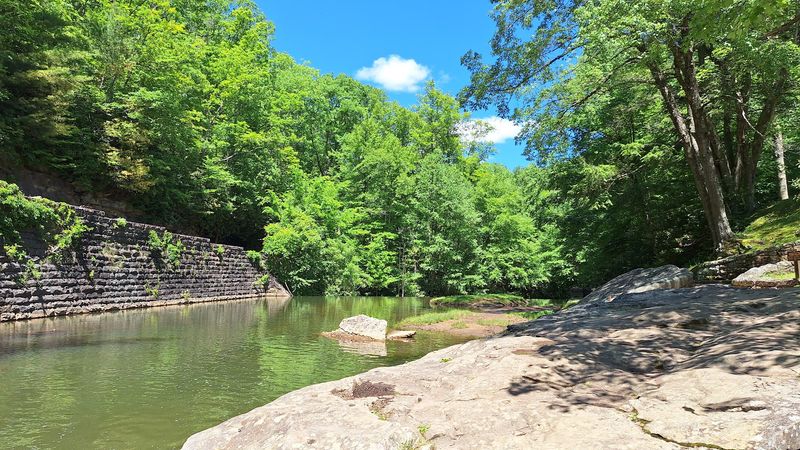
Once the photos are done, the rest of Babcock State Park waits. The park covers roughly 4,000 acres of woods, overlooks, and streams.
Trails range from easy strolls to tougher climbs. Island in the Sky is a well-known name among them, and rangers can help you pick a fit.
A trail behind the mill leads toward the cabins and a swinging bridge. That short walk makes a fun add-on, especially with kids in tow.
Boley Lake offers a calmer side of the park. Fishing and non-motorized boating are popular there, and the shoreline makes a pleasant walk.
Many people turn a quick mill stop into a full morning. Others wish they’d planned extra time after seeing how much there is.
Pack water, snacks, and good shoes. The terrain is classic West Virginia, which means hills show up whether you invited them or not.
A trail map from the gift shop or visitor center makes planning easy. Ask questions, too, since park staff know the routes far better than any phone app.
Cabins Built By The CCC Make It An Overnight Trip
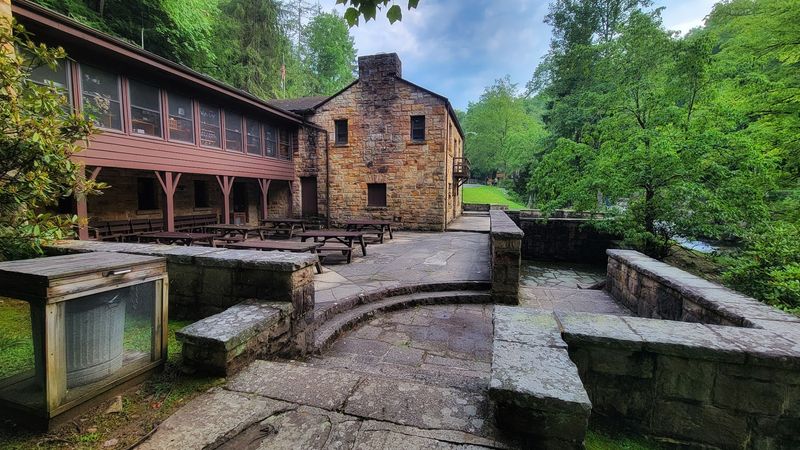
Staying the night changes the whole experience. You can catch the mill at dawn without a long drive in the dark.
Babcock offers rental cabins, and many date to the 1930s Civilian Conservation Corps era. Those young CCC crews built sturdy stone and timber structures that still stand today.
Several cabins sit near Glade Creek, which means the sound of water might lull you to sleep. That’s a hard amenity to put a price on.
Many units include kitchens and fireplaces, so bringing home cornmeal and baking right there is tempting. Amenities vary by cabin, so check details when booking.
The park also has a campground for folks who prefer tents or campers. It’s a more rustic option with the same easy access to the mill.
For retirees and couples, a midweek cabin stay can be especially relaxing. Fewer crowds, quieter trails, and slow mornings by the creek sound pretty dreamy.
Fall dates tend to book early. If leaf season is your target, reserve well ahead and keep your dates a little flexible.
Getting There Without Ending Up On A Gravel Detour
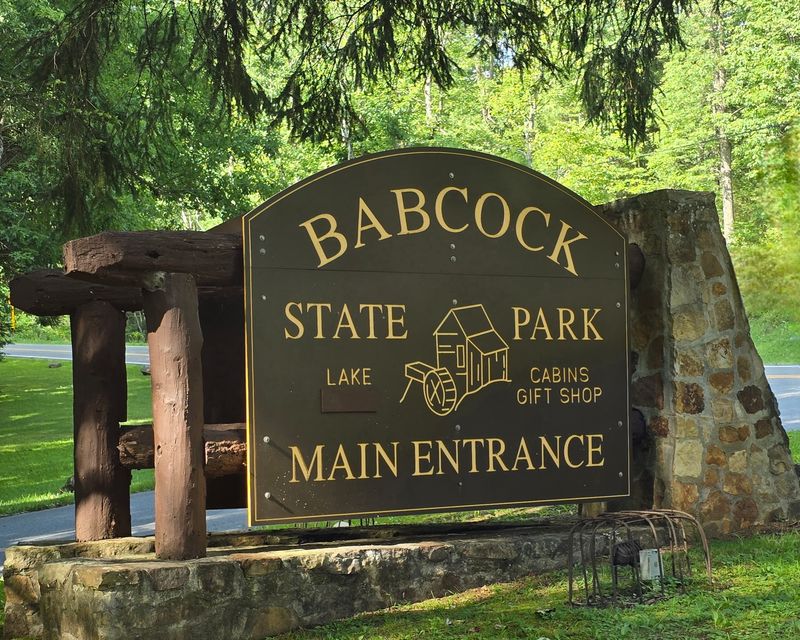
GPS can get creative out here. Some map apps have sent drivers to a gravel road south of the main entrance that’s blocked to vehicles.
Use the main park entrance and follow the park signs instead. You’ll save yourself a puzzled turnaround on a narrow lane.
The mill’s listed address is Park Forest 802, Danese, WV 25831. It sits within Babcock State Park in Fayette County, West Virginia.
The grounds are open daily from 6 a.m. to 10 p.m., based on posted hours. The mill building and grinding are seasonal, generally from spring through fall.
Parking sits right next to the mill, which makes this an easy stop. On busy fall weekends, though, spots can fill up quickly.
Weekdays are calmer if your schedule allows. Early mornings help too, especially when the leaves are blazing.
The park’s visitor center is worth a stop for a short history film in the basement. It adds helpful context before you wander down to the wheel.
The New River Gorge area is close by, so the mill pairs nicely with a bigger trip.
Why This Old-Style Mill Earns A Spot On Your List
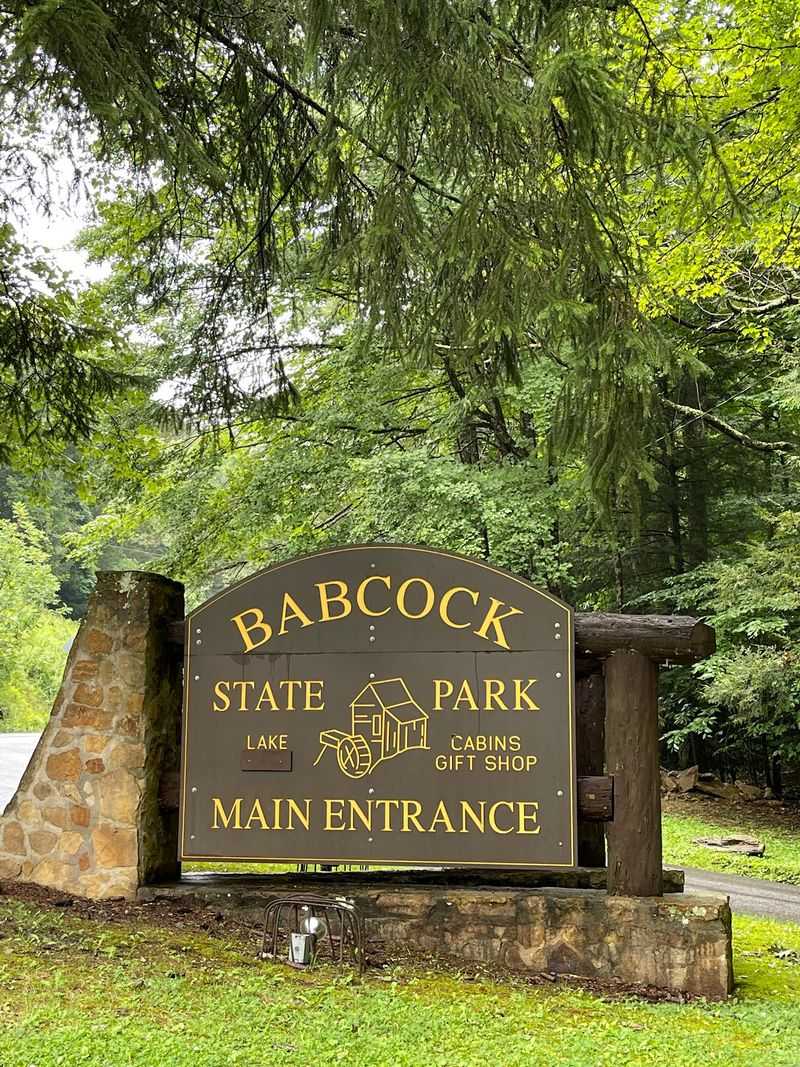
Free entry, fresh cornmeal, and one of the prettiest scenes in the Mountain State. That’s a tough combination to argue with.
The Glade Creek Grist Mill blends history, scenery, and a practical souvenir you’ll actually use. Few landmarks send you home with breakfast.
It suits photographers chasing sunrise and families wanting an easy outing. Retirees looking for a calm, affordable day trip will feel right at home too.
Go in fall for color, or in summer to see the mill in action. Either way, the creek keeps singing its same old tune.
Keep expectations relaxed about the wheel and the cornmeal. Both depend on seasons, staffing, and water, which is part of the old-time charm.
I believe the best visits leave room to wander. Walk the creek, sit on the swing, and maybe take a short trail before heading home.
Then do the most West Virginia thing possible. Bake a pan of cornbread with that stone-ground meal and tell the story behind it.
Does anybody have an old family recipe that deserves the honor?
