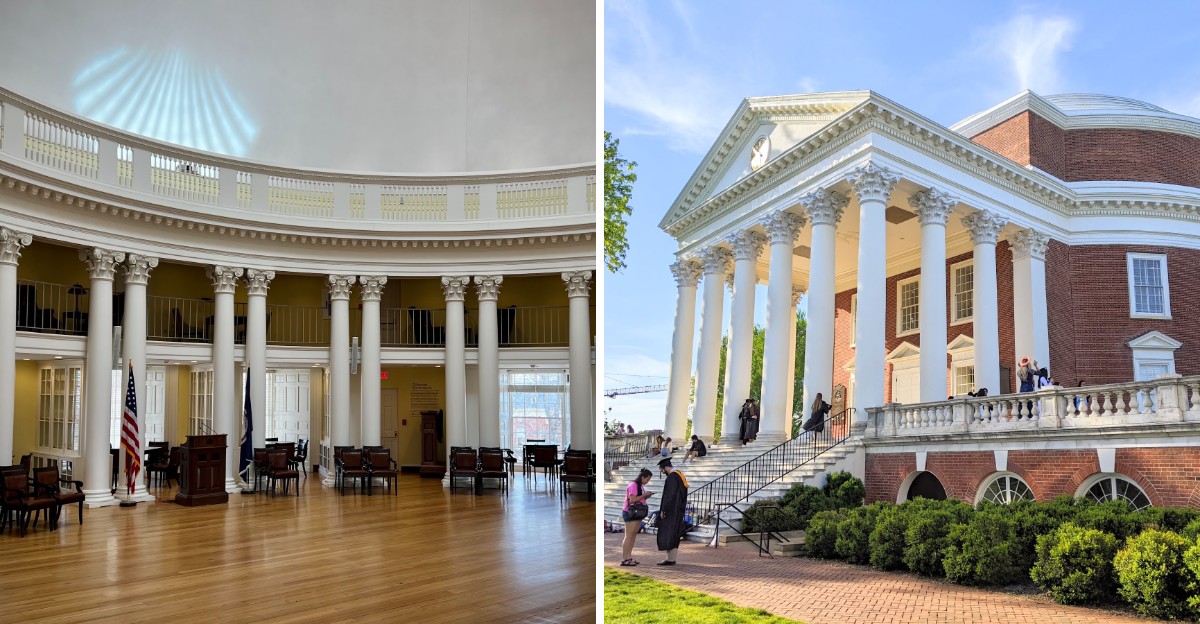
Dancing skeletons, a haunted house, and purple skulls get projected across a building designed by a Founding Father. Yes, really.
Every Halloween, a famous dome in Virginia turns into a glowing movie screen.
The show uses projection mapping, animation, and music. A local artist builds the whole spooky display.
Best of all, it costs nothing to watch.
I love how a serious piece of history gets to loosen up for a few nights. The same columns that inspire students all year suddenly host ghoulish pumpkins and bubbling cauldrons.
That mix feels playful and smart at the same time.
I can’t imagine a better excuse for a fall road trip. You get world-famous architecture by day and a grinning, glowing spectacle after dark.
So which version would you want to see first? Honestly, why choose?
The Pumpkin Has A Name, And It Is Gloriously Silly
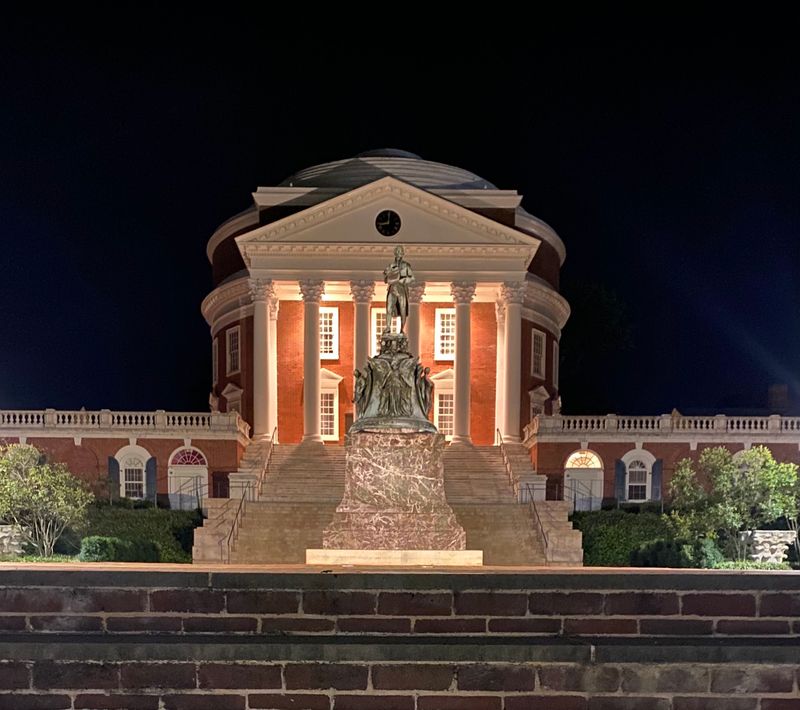
Locals call it The Great Rotumpkin, and the name alone deserves a round of applause. Every Halloween, the University of Virginia Rotunda in Charlottesville becomes the canvas for a massive light show.
Projection mapping does the heavy lifting here. That means images get shaped to fit the building, so columns, steps, and dome all play a part.
Animation and music join the party too. The result feels less like a slideshow and more like the building itself is performing.
The show usually runs for a few nights around October 31. It typically goes from about 7 p.m. to 11 p.m., giving you plenty of time to stop by.
Timing matters, so check the university’s announcements before you go. Dates shift a little each year depending on the calendar.
Free admission makes this an easy yes for nearly any budget. You don’t need tickets, costumes, or a fancy plan to join in.
Bring a jacket, though, because Virginia nights in late fall can turn chilly fast. A warm layer keeps you happily watching through several loops of the show.
Once you see a Founding Father’s library wearing a pumpkin grin, ordinary Halloween decorations at home may feel a little underpowered.
Skeletons Dance And Skulls Glow Purple On Those Famous Columns
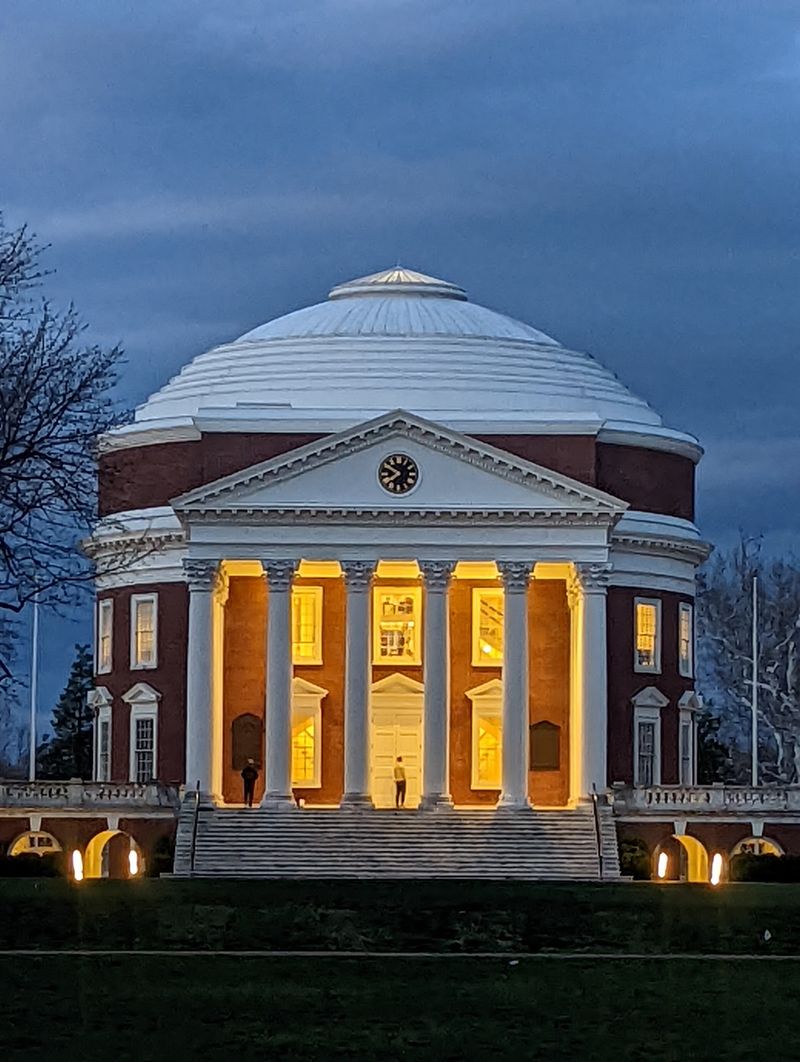
Picture-perfect spookiness arrives in short scenes called vignettes. Each one tells a quick little story across the face of the building.
One past scene showed dancing skeletons in a graveyard. Another turned the Rotunda into a haunted house, which feels fitting for something this old.
A favorite design featured an animated Halloween music box. Ghoulish pumpkins, cauldrons, and purple skulls all spun into the act.
The scenes change, so each visit can bring something new. That variety keeps the show fresh for people who come back year after year.
Kids tend to love the cartoon energy of it all. The animation stays fun and goofy rather than truly scary, which makes it friendly for families.
Grown-ups get their own treat in the clever way the art fits the architecture. Watching a skull line up perfectly with a column is oddly satisfying.
Give yourself time to watch the full sequence at least once. Short glances can miss the best moments, especially when the music builds.
Try viewing from a few different spots on the Lawn too. Moving back a bit lets you see how the whole building becomes one giant spooky stage.
Meet The Local Artist Who Turns A Landmark Into A Haunted House
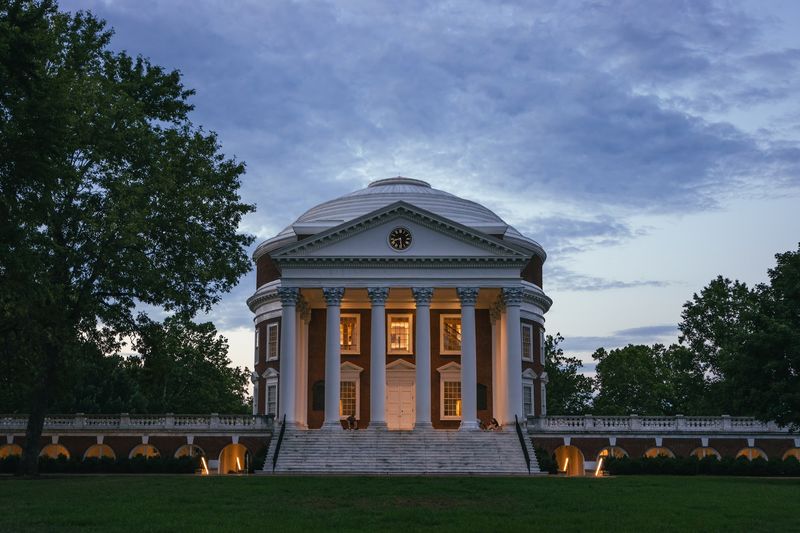
Behind all that glowing mischief stands Jeff Dobrow, a multimedia artist from the Charlottesville area. He creates the light show that brings The Great Rotumpkin to life.
Projection mapping takes serious planning. Every image has to match the shape of the building, or the effect falls apart.
Think about the challenge for a second. The Rotunda has curved surfaces, tall columns, deep shadows, and a big round dome.
Getting cartoon pumpkins to sit neatly on all that takes skill and patience. Music and animation then need to sync up so the show flows smoothly.
I like that this tradition comes from a local creative mind. It gives the event a hometown feel instead of a corporate one.
That community spirit fits Charlottesville well. Students, families, and neighbors all share the same view on the same chilly October nights.
Art lovers should watch with an eye for the details. Notice how the designs use the windows, steps, and roofline as part of the joke.
Once you spot those choices, the show becomes even more fun. It turns from a pretty display into a clever puzzle you can solve in real time.
Thomas Jefferson Basically Borrowed This Design From Ancient Rome
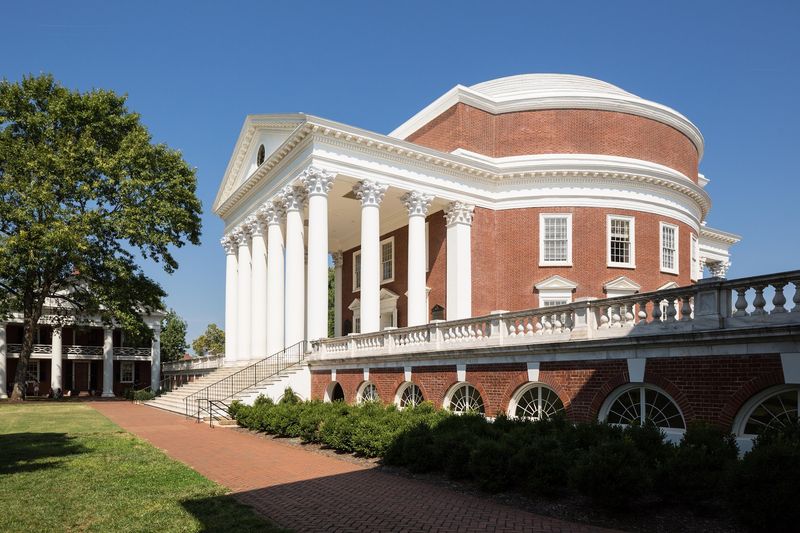
Ancient Rome gave Thomas Jefferson his big idea. He modeled the Rotunda after the Pantheon, one of history’s most famous domed buildings.
Construction began in 1822 and wrapped up in 1826, though some sources say 1828. That timeline is why people now celebrate it as a 200-year-old landmark.
Jefferson made a bold choice for his university. Most schools of that era centered on a church, but he placed a library at the heart of campus.
That decision says a lot about his values. Learning and books took the spotlight, quite literally, at the top of the Lawn.
The building was designed as the centerpiece of his Academical Village. Student rooms and faculty pavilions stretch out in front of it in neat rows.
Jefferson passed away on July 4, 1826, shortly after the building was completed. He never got to see his university fully grow around it.
Stand on the Lawn and look up at the dome during daylight. The clean lines and balanced shape make it easy to see why architects still study it.
Then come back after dark in late October. Same building, very different mood.
A Fire, A Makeover, And A Comeback Worth Knowing
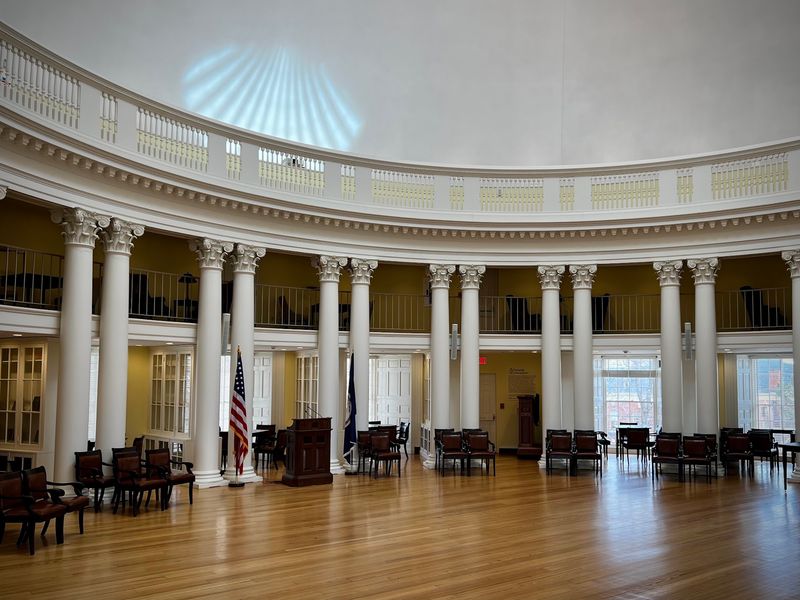
In 1895, a fire gutted the Rotunda. It was a huge blow to the university and to the building Jefferson had designed so carefully.
Architect Stanford White led the rebuilding effort afterward. His redesign changed the interior and gave the building a different look inside.
The story didn’t end there. In the mid-1970s, the interior was restored to better match Jefferson’s original plans.
So the Rotunda you can tour today reflects a long journey. It survived disaster, changed shape, and then came back closer to its first vision.
Recognition followed too. The Rotunda became a National Historic Landmark in 1966.
Later, it earned an even bigger honor. The Rotunda and the Academical Village share UNESCO World Heritage status with Jefferson’s home, Monticello.
That puts this Virginia building on a global list of treasured places. Not bad for a campus library.
Knowing this history makes the Halloween show feel even sweeter. A building that bounced back from flames now glows with playful pumpkins and music each fall.
Honestly, it has earned the right to have a little fun.
Look Up In The Dome Room, Because The Stars Finally Showed Up
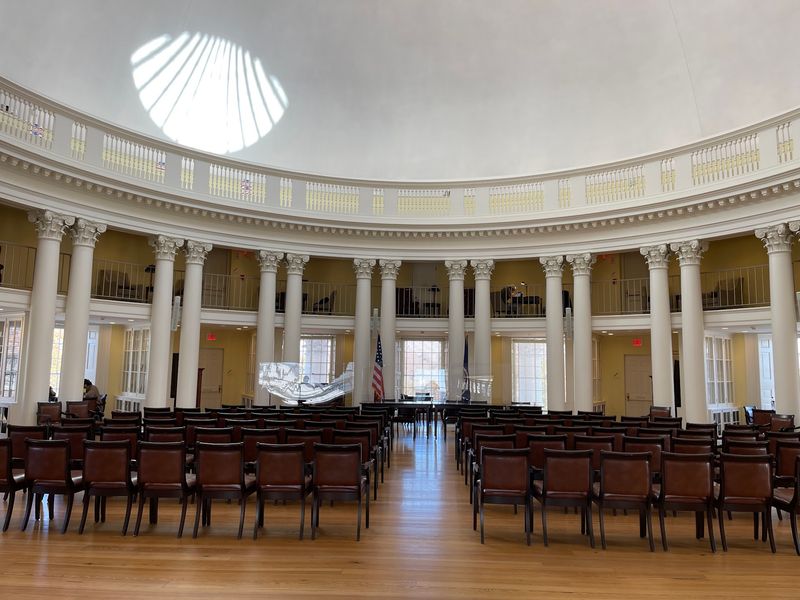
Jefferson dreamed of constellations on the Dome Room ceiling. For nearly two centuries, that idea stayed on paper.
Then 2019 arrived with modern projection technology. The university finally brought his starry plan to life inside the dome.
That’s a fun connection to the Halloween show outside. Light and projection now shape the Rotunda’s story both indoors and out.
The Dome Room sits on the top floor, ringed by columns. It’s a striking round space that feels calm and grand at once.
Head to the balcony level if you can. From up there, the room spreads out beneath you in a perfect circle.
Windows also give you views across the Lawn. On a clear day, the sight down that long green stretch feels pretty special.
Students use this room for study hours during the fall and spring semesters. Those hours run in the evening, after public visiting time ends.
So plan your visit during the day if you want to explore. Be respectful of quiet spaces, since this is still a working university building.
Jefferson would probably approve of people studying under his stars.
Daytime Visits Cost Nothing And Run Every Single Day
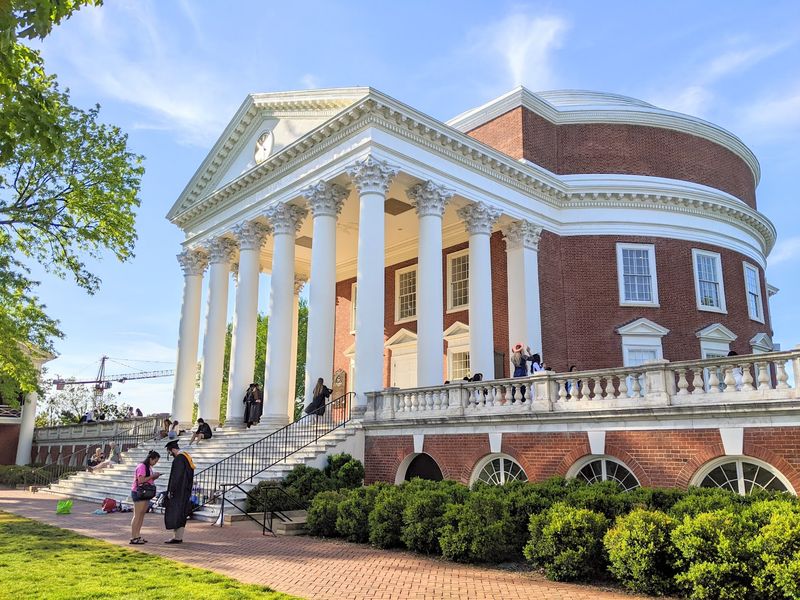
Good news for planners: the Rotunda opens daily from 9 a.m. to 5 p.m. You’ll find it at 1826 University Avenue, Charlottesville, VA 22904.
Visits are self-guided right now. Staff members are on hand to help and answer questions, though historical tours aren’t currently offered.
That freedom lets you move at your own pace. Linger where you like and skip what you don’t.
Watch for the life-size marble statue of Thomas Jefferson. It’s a popular stop and a great spot for a quick photo.
The building also houses the Jefferson Library. Book lovers will appreciate that the Rotunda still honors its original purpose.
Here’s a smart combo for Halloween weekend. Tour the inside during the day, then return after dark for The Great Rotumpkin.
Seeing both sides gives you the full picture. One shows the history and craft, while the other shows pure seasonal joy.
Wear comfy shoes, since stairs connect the different floors. You’ll also want energy left for strolling the grounds afterward.
A Virginia day trip rarely gets this easy. Free entry, flexible timing, and a world-famous building make it a simple win.
Little Ghosts And Goblins Get Their Own Lawn Party
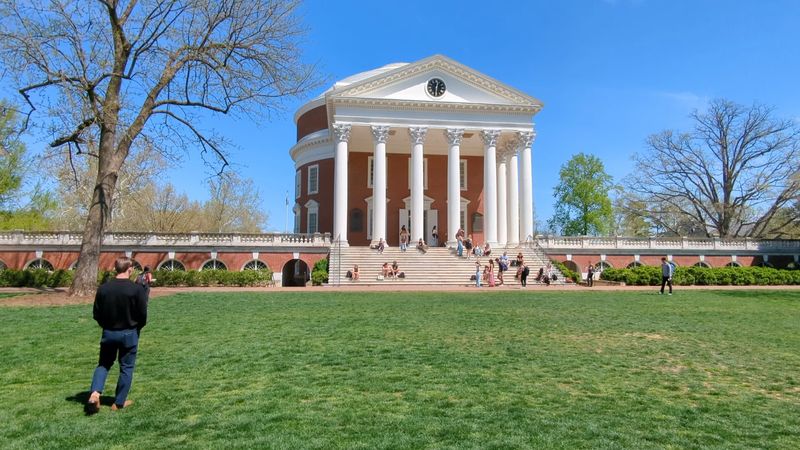
Candy and colonnades make a surprisingly great pair. Around Halloween, Trick-or-Treating on the Lawn welcomes local children and families.
The Lawn stretches out right in front of the Rotunda. Its rows of pavilions and student rooms create a charming backdrop for tiny superheroes and witches.
Families can pair the candy hunt with the light show. That makes one memorable evening out of two fun traditions.
Check the university’s event schedule ahead of time. Dates and details can vary from year to year.
Costumes add to the fun at The Great Rotumpkin too. Watching a projected skeleton dance while dressed as a pirate just feels right.
Little ones may love sitting on someone’s shoulders for a better view. The building is big, so even small viewers can follow along easily.
Pack snacks and a small blanket if your crew gets restless. The show loops, so you can step away and come back.
Plan for cooler evening temperatures in late fall. Mittens and a warm hat help keep the excitement from turning into shivers.
Kids will likely remember this one long after the candy runs out.
Make A Whole Weekend Of Jefferson’s Charlottesville
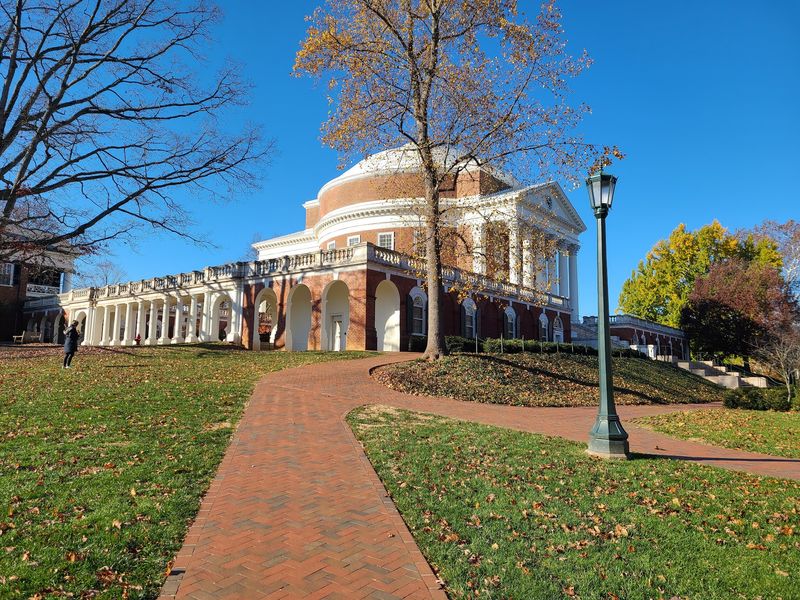
One building rarely fills a whole trip, but this one sits inside a much bigger story. The Academical Village surrounds the University of Virginia Rotunda.
Wander past the pavilions and peek into the gardens between the Lawn and the outer ranges. Many of these gardens are open to the public.
Fall color makes the walk even prettier. Brick walls, white trim, and autumn leaves create easy photo spots everywhere.
Monticello, Jefferson’s home, shares the UNESCO World Heritage listing. It makes a natural companion stop during your Virginia getaway.
Seeing both places shows Jefferson’s design ideas side by side. You’ll notice how much he loved domes, columns, and careful balance.
Time your visit for Halloween weekend if you can. You’ll get history by day and glowing pumpkins by night.
Arrive a little early for the evening show. Finding a comfortable viewing spot on the Lawn is easier before things get busy.
Then let the building do what it does best. Two centuries old, and still ready to put on a show.
Few landmarks manage to be this important and this much fun in the same week.
