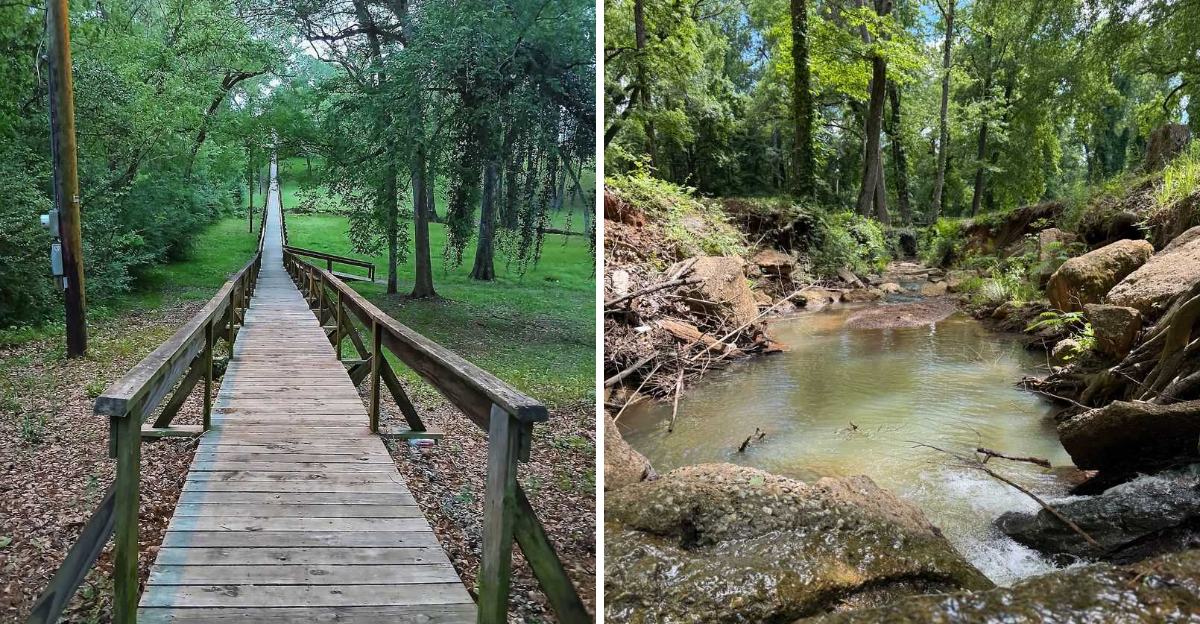
A 546-foot pedestrian bridge is already unusual, but surrounding it with thick East Texas greenery makes the whole walk feel even less like an ordinary stroll.
This historic Texas footbridge once connected residential neighborhoods with the downtown business district, giving locals a practical way across terrain that was far less convenient before modern roads took over.
Today, the bridge stretches through the Piney Woods as a scenic pedestrian landmark, and local tourism officials describe it as the second-longest footbridge in America. There is no mountain summit or brutal mileage required, which is part of the charm: the bridge itself is the attraction.
Texas is packed with trails where the payoff waits at the end, but here the interesting part starts almost immediately, with every step carrying you farther above the green landscape below.
A Wooden Walkway With Roots In 1861
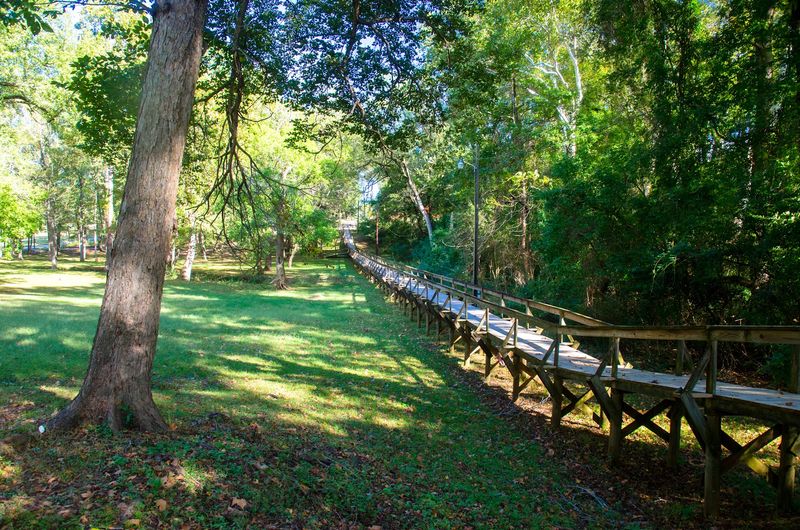
History here is not hidden behind glass. The original crossing went up in 1861, built for a very practical reason.
Residents living east of the valley needed a way to reach town during the rainy season, when low ground turned soggy and roads became a mess. A wooden walkway solved the problem without waiting for the water to drop.
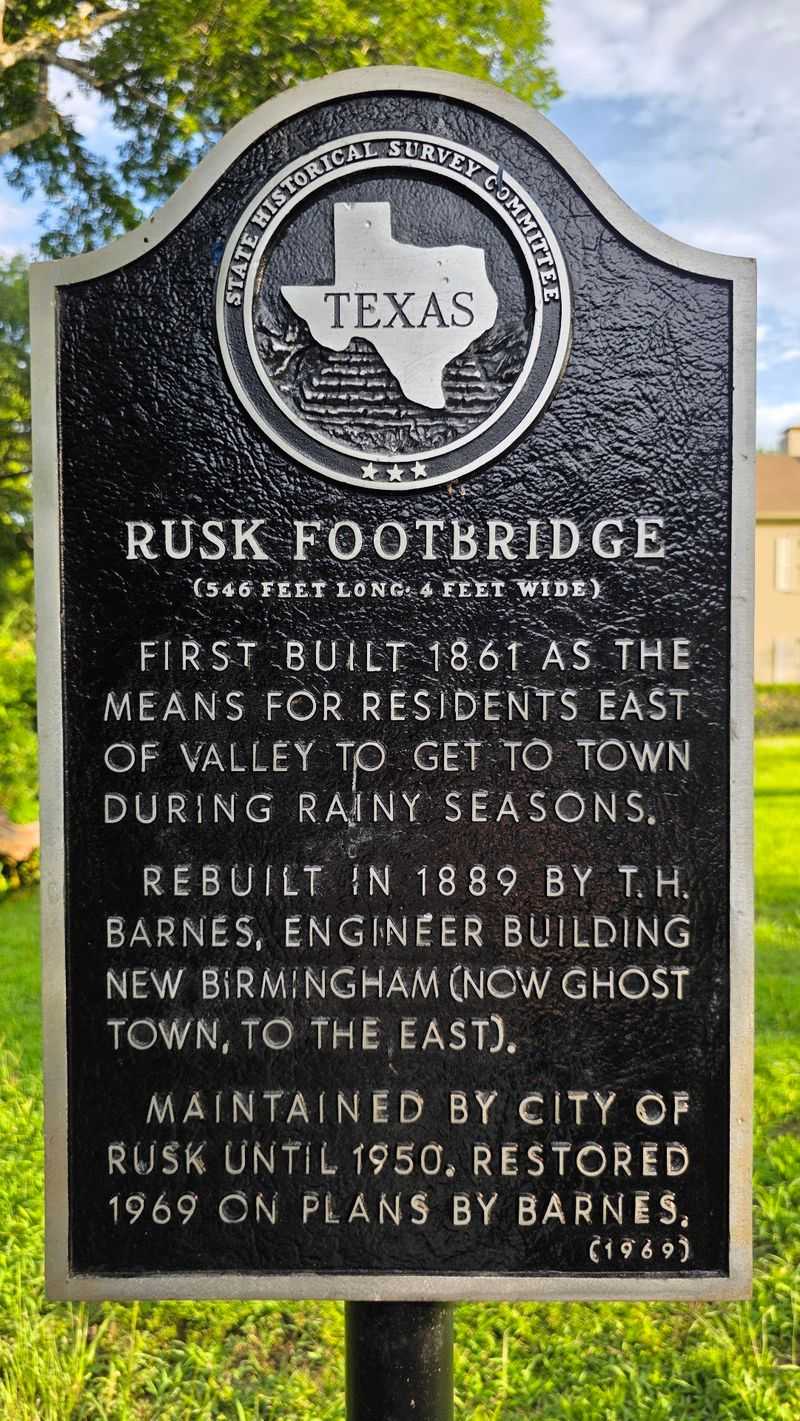
By 1889 the structure needed serious attention, and engineer T.H. Barnes oversaw a full rebuilding.
Barnes also worked on the development of nearby New Birmingham, a town that eventually faded into ghost town status, which adds an interesting twist to his legacy.
The city of Rusk maintained the bridge until 1950. A restoration in 1969 leaned on Barnes’s original plans, keeping the proportions, materials, and basic structure faithful to the earlier design.
That detail matters more than it sounds. Because the rebuild followed the old drawings, the handrails, the width, and the general feel are close to what earlier generations experienced on foot.
Running a hand along the railing while walking gives a strange sense of connection to people who crossed here with muddy boots and no cameras. No reenactors, no gift shop, just wood and trees.
Read the historical marker near the bridge before you start walking. Small pieces of context, like the flooding problem and the engineer’s role, turn a pretty stroll into something with real weight behind it.
Why 546 Feet Feels So Much Longer
Numbers rarely tell the truth about a walk. On paper, 546 feet sounds like nothing, barely a lap around a track.
In practice, the bridge seems to keep unrolling ahead of you. Part of that is the width, just 4 feet, which means the forest presses in close on both sides and there is nowhere to wander.
Your eyes end up locked on the vanishing point where the planks disappear into green shade. Some sources call it the longest footbridge in America, others rank it second, and the debate says plenty about how unusual the structure really is.
The pace slows naturally. Two people passing each other have to negotiate a little, usually with a nod and a sidestep, and that tiny bit of coordination becomes part of the charm.
Sound plays tricks too. Footsteps thump and echo faintly against the boards while leaves shuffle overhead, so you hear yourself moving through the valley rather than simply looking at it.
Walking across and back typically takes under 30 minutes, even with plenty of stopping to stare. The surface stays flat and solid, so there is no climbing, no scrambling, no need for hiking boots.
Still, plan to linger. Rushing the crossing wastes the best part, which is the slow realization that a short distance can hold a surprising amount of atmosphere when the surroundings do the heavy lifting.
Piney Woods Greenery That Borders On Tropical
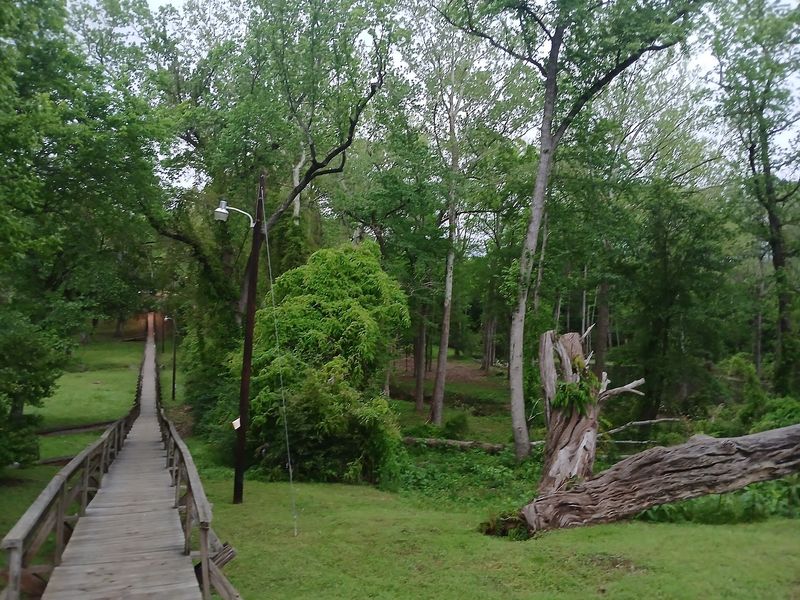
Green is the dominant color, and it comes in layers. Tall pines and hardwoods build a thick canopy overhead, while shrubs and tangled growth fill the valley floor below the boards.
The light changes once you are underneath all of it. Sunlight filters down softened and slightly tinted, the kind of glow that makes phone cameras struggle in the best way.
East Texas air does its part too, thick and humid through much of the year. Combine that heaviness with the vine-draped understory and the jungle comparison starts making perfect sense.
Several descriptions liken the setting to something out of an animated Tarzan story, and honestly the resemblance holds up. It is the kind of place where you half expect a rope swing.
Native trees and shrubs line the pathway, so casual plant spotting becomes an easy side activity. Spring brings fresh growth and bright new leaves, while autumn shifts the hardwoods toward warmer shades.
Rain adds another dimension. Wet foliage looks glossier, the smell of damp pine sharpens, and the valley below often holds pockets of mist in cooler months.
Bring water in summer. Shade helps considerably, but humidity in this region does not negotiate, and the walk feels more pleasant with something cold in hand.
For anyone who pictures Texas as flat and dusty, this corner of the state offers a firm correction.
Birds, Squirrels And The Occasional Deer
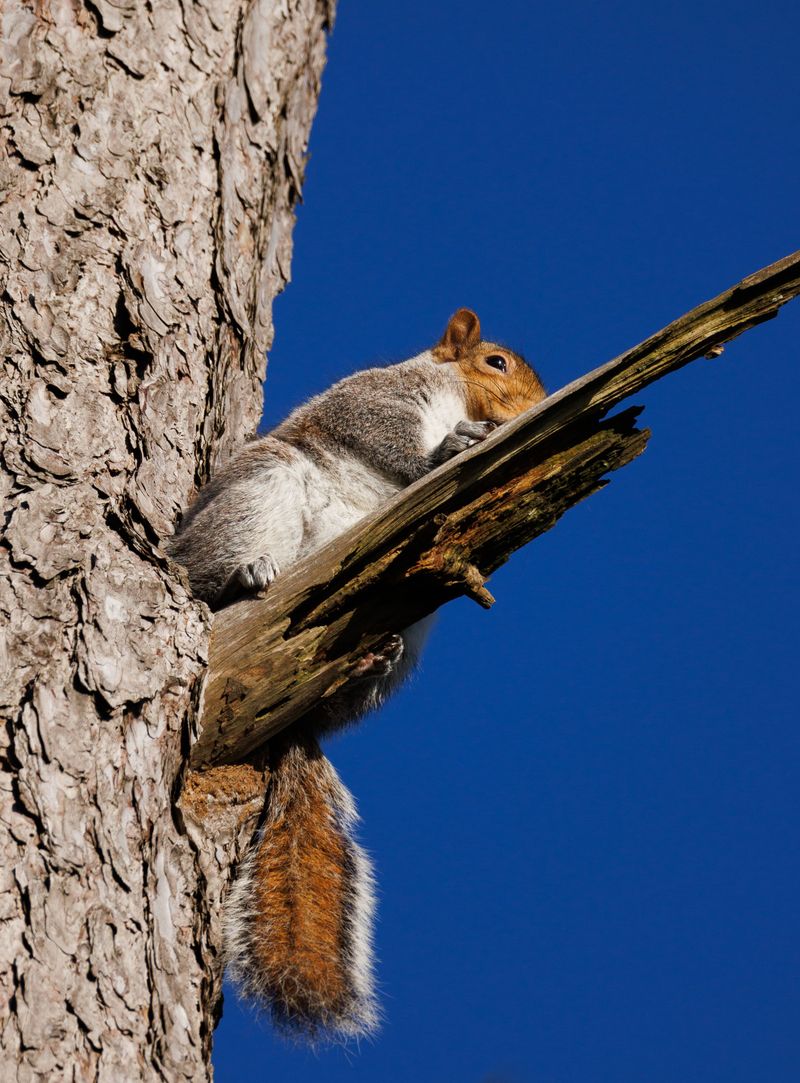
Stand still for two minutes and the soundtrack takes over. Birdsong comes from several directions at once, layered and constant, echoing through the valley.
Squirrels treat the area like their personal obstacle course. They race along branches, pause to size you up, then vanish into the leaves without much concern for visitors.
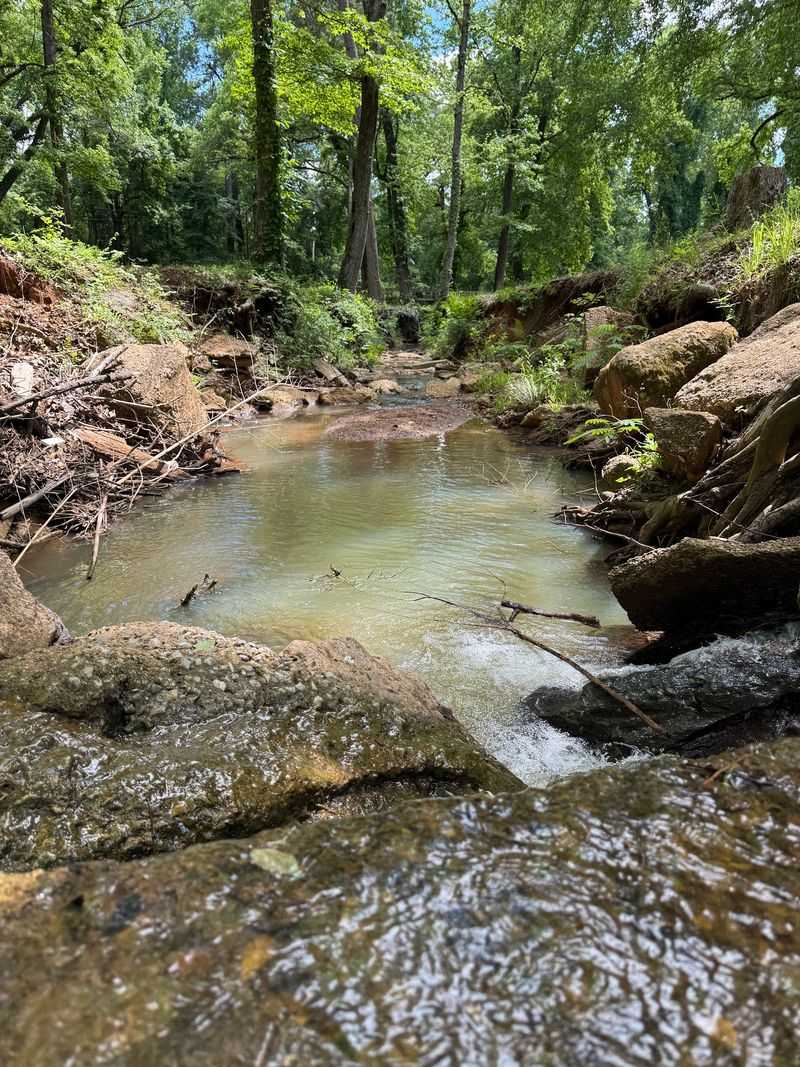
Deer show up sometimes, usually below the bridge or off among the trees, moving quietly through the underbrush. Sightings are never guaranteed, which makes them feel like a small reward.
Early morning gives the best odds. Cooler temperatures and fewer people mean more movement in the greenery, and the light at that hour is genuinely lovely.
Patience helps more than expensive gear. Leaning on the railing and simply watching one section of forest often reveals more than pacing back and forth.
Keep voices low if wildlife is the goal. Sound carries easily in a narrow wooded valley, and a loud group tends to clear the immediate area fast.
Insects are part of the deal in warmer months, so a little repellent goes a long way toward keeping the experience pleasant. Long sleeves work too, depending on your tolerance.
Kids often spot creatures first. Something about being closer to railing height, or just paying different attention, gives them an edge that adults rarely match.
Leave everything where you find it, wildlife included.
Late Afternoon Light Turns The Planks Into Art
Photographers, take note of the clock. Late afternoon transforms the bridge as low sun slips sideways through the trees and throws long shadows across the boards.
Those shadows create striped patterns that follow the railings and planks, adding strong lines to any composition. The effect changes minute by minute as the sun drops.
Portraits work beautifully here because the canopy softens harsh light. Standing subjects mid-bridge, with the walkway stretching behind them, produces natural depth without any tricks.
Try shooting low. Crouching near the deck exaggerates the length of the crossing and turns 546 feet into something that looks endless.
Wide shots capture the tunnel of greenery, while close-ups reward attention to detail, weathered wood grain, old nail heads, and the texture of handrails smoothed by decades of hands.
Overcast days deserve credit too. Flat light brings out the saturated greens and makes the whole scene feel cool and cinematic rather than sun-bleached.
Morning offers a different mood entirely, quieter and hazier, especially when humidity hangs in the valley. Both ends of the day beat harsh midday glare.
Watch your footing while framing shots. The bridge is narrow, and walking backward for a better angle is a rookie mistake worth avoiding.
Video works surprisingly well here, with the rhythmic creak of footsteps providing built-in sound design that no editing app could fake.
A Free Little Library Waiting Nearby
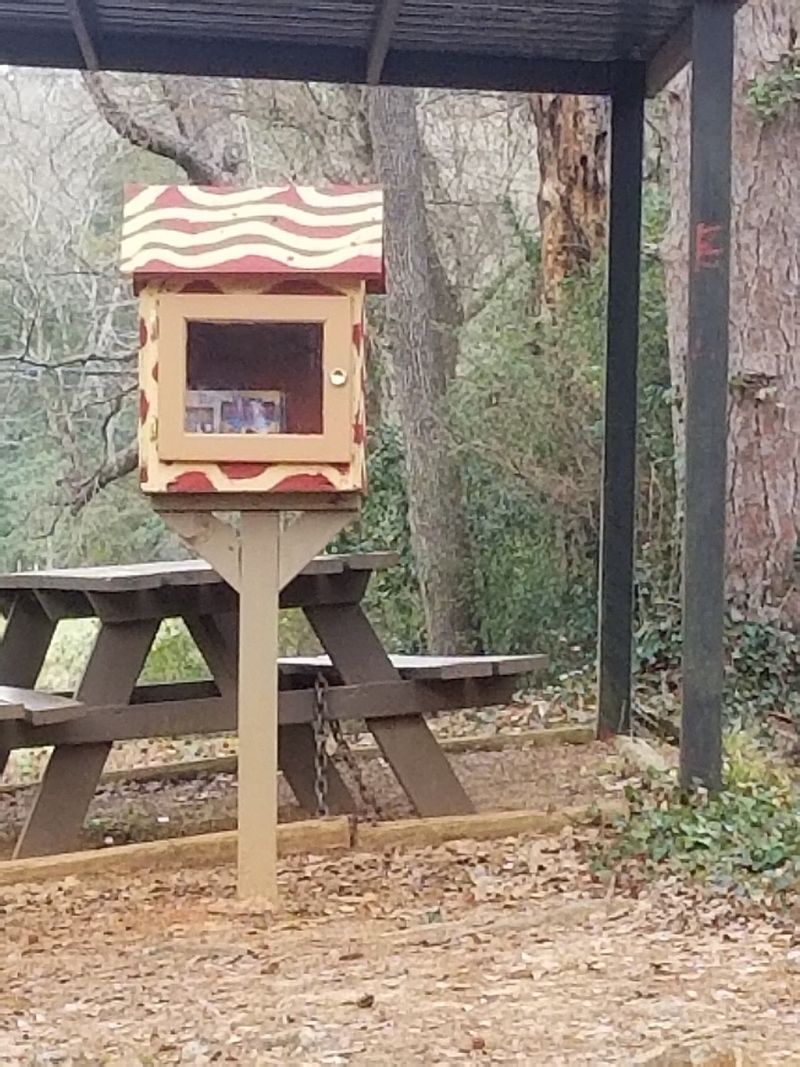
Small surprises make places memorable. Near the bridge sits a little library stocked with free books, an unexpected touch that fits the setting perfectly.
Take one, leave one, or just browse the spines. There is something charming about finding a shelf of paperbacks at the edge of a wooded valley.
Families seem to love it. Kids who might rush across the planks suddenly slow down when there is a book box to investigate first.
Bringing a title to donate is an easy way to add something to the site rather than only taking photos away from it. Paperbacks handle humidity better than hardcovers, for what it is worth.
The whole area stays well maintained, which shows in details like this. Trimmed edges, solid boards, and a tidy approach path all suggest people locally care about the landmark.
Visiting the footbridge costs nothing, and access runs from early morning to late evening, generally during daylight hours year-round. No tickets, no gates, no schedule to work around.
Pair the library with a bench break and the visit stretches comfortably. Read a chapter, listen to the birds, then walk the crossing again in different light.
Little extras like this shift a stop from quick photo op to genuine pause. That shift is exactly what makes small-town landmarks worth the detour.
Easy Enough For Almost Any Visitor
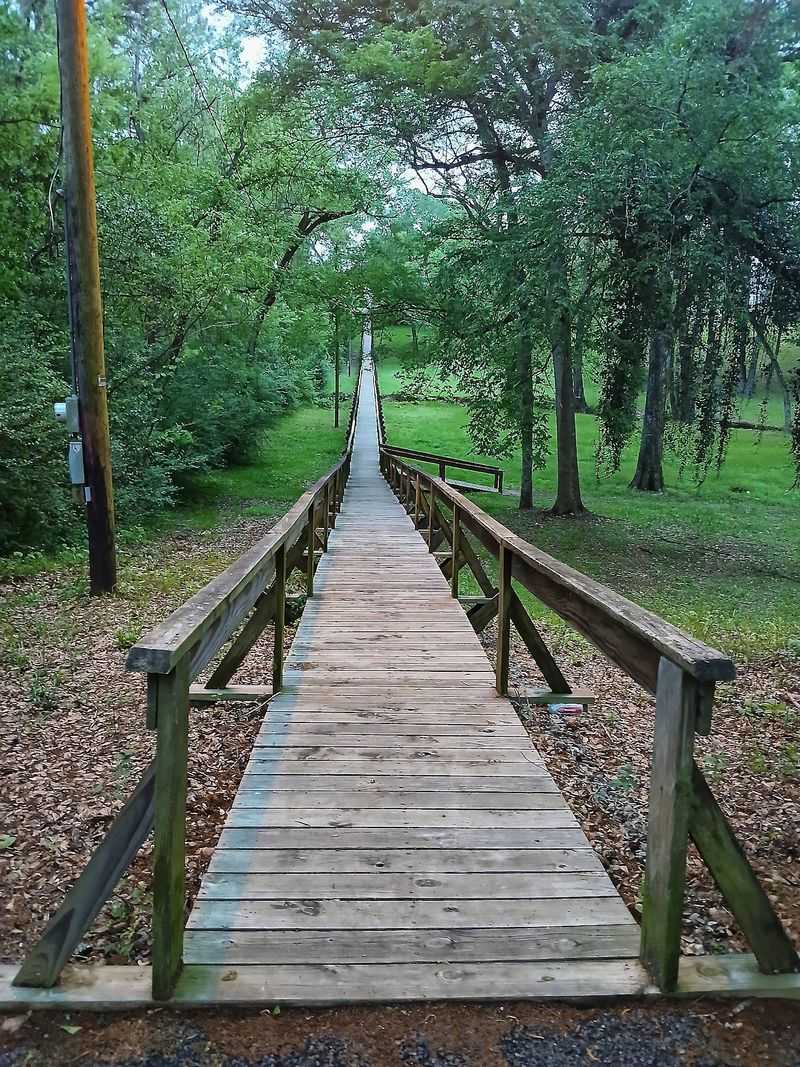
No hiking experience required. The surface stays flat and solid the whole way, with no stairs to climb and no rough trail to negotiate.
That makes the crossing friendly for older visitors, young children, and anyone who wants scenery without a workout. Comfortable shoes are plenty.
Because the walkway measures 4 feet across, groups naturally fall into single file. Strollers and wide gear can feel awkward, so pack light and keep hands free.
Time-wise, budget half an hour for a there-and-back walk, longer if photos and wildlife watching enter the picture. It slots neatly into a morning of small-town exploring.
Weather is the main variable. Wooden planks get slick after rain, so slow steps and a hand on the railing make sense on damp days.
Summer visits reward early starts. Heat and humidity build quickly in this part of Texas, and the canopy shade helps without eliminating the problem entirely.
Cooler months might be the sweet spot. Crisp air, thinner foliage, and clearer views down into the valley change the character of the walk completely.
Restroom stops and snacks are best handled in town beforehand. The site itself is simple by design, which is part of its appeal.
Quiet contemplation comes easily out here, especially if you arrive before the day gets busy and just let the forest do the talking.
Building A Full Day Around Rusk
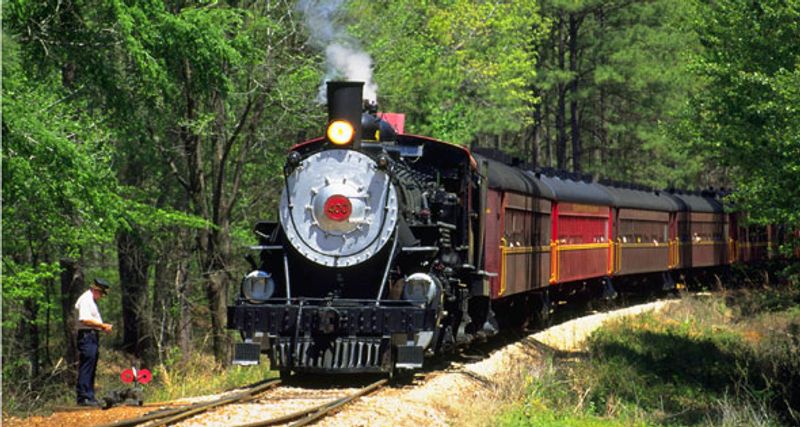
Rusk rewards visitors who stick around. The Texas State Railroad operates from the Rusk Depot, running historic steam and vintage diesel excursions through the countryside between Rusk and Palestine.
Train travel at that pace pairs nicely with a slow walk across old planks. Both move at roughly the speed of paying attention.
Jim Hogg Park, also known as the Jim Hogg State Historic Site, honors James Stephen Hogg, the first native-born governor of Texas. Hiking trails and historical details fill out the visit.
For deeper local context, the Heritage Center of Cherokee County Museum preserves regional history and helps connect the dots between the town, the railroad, and vanished places like New Birmingham.
Golfers can check out Birmingham Forest Golf Club, while Fairchild State Forest opens up more hiking, horseback riding, and picnicking space among the pines.
Cherokee Trace Drive-thru Safari offers a different kind of wildlife encounter, this time from the comfort of a vehicle. Kids tend to rank it high.
Stacking two or three of these stops turns the footbridge from a quick curiosity into the centerpiece of a solid day trip. Start early, walk the bridge in soft morning light, then let the rest of the afternoon unfold.
East Texas moves gently, and this corner of it makes a strong case for slowing down.
Address: 326 E 5th St, Rusk, TX 75785
