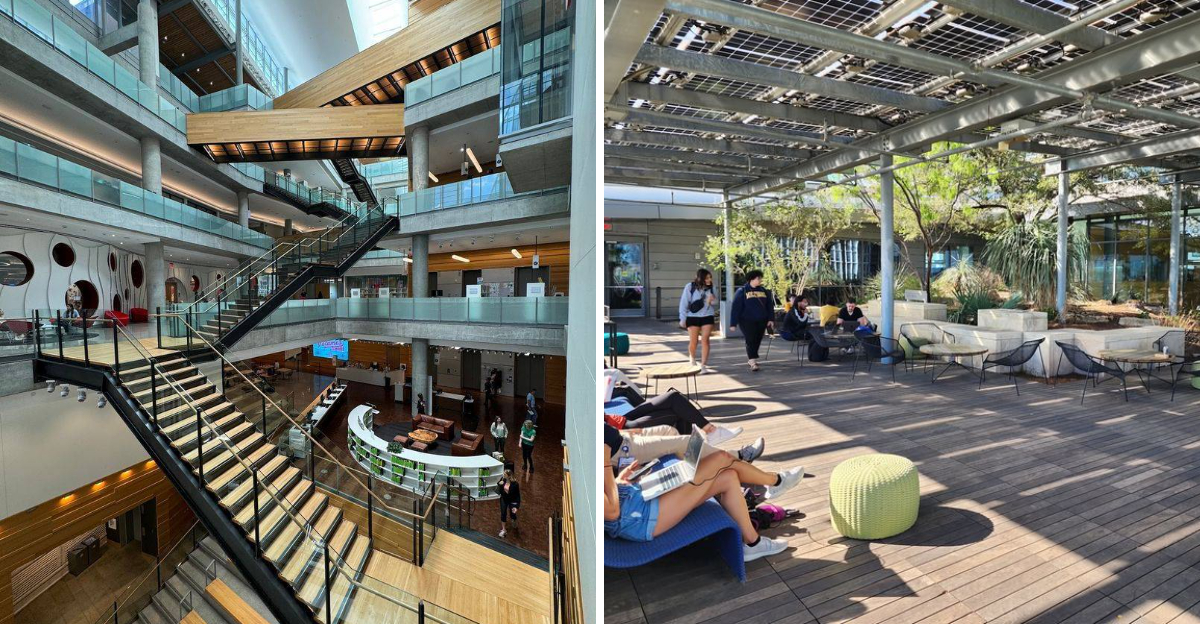
A library with six floors, a rooftop garden, and a café that actually serves good coffee. This is not your average quiet study spot.
This Texas library is a modern masterpiece, with stunning design that makes you want to explore every corner. The rooftop garden is the highlight, offering green space, fresh air, and a view that makes you forget you are in the middle of the city.
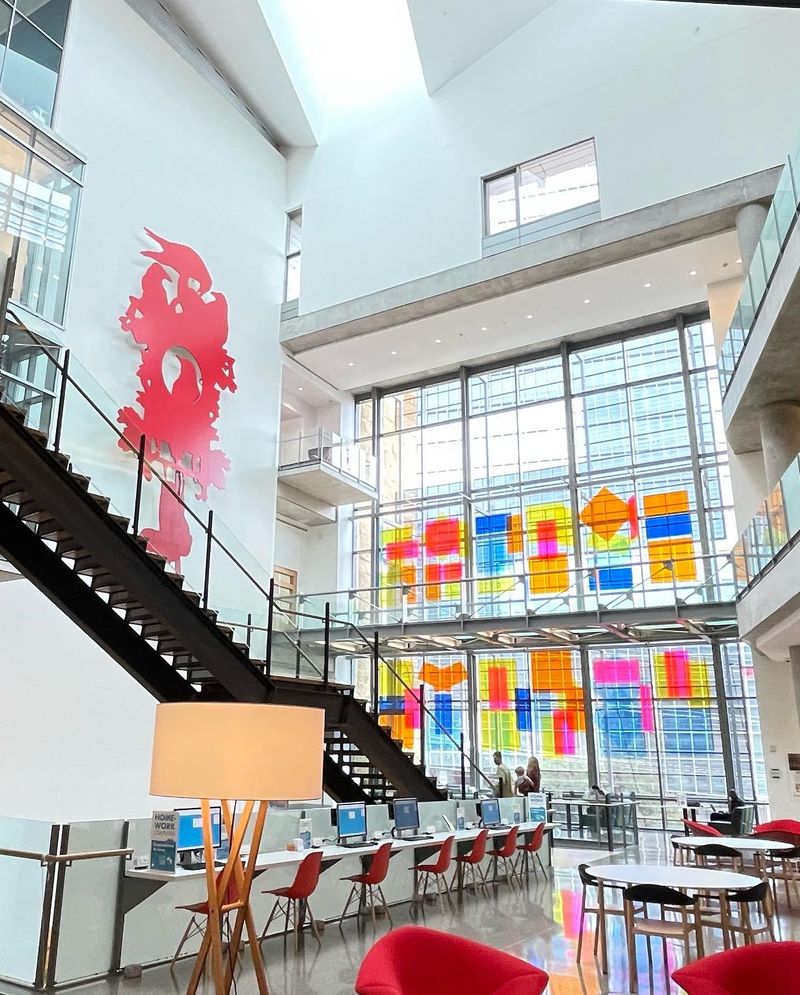
Inside, the windows are floor-to-ceiling, flooding the space with natural light. The café is perfect for a break between browsing, and the architecture alone is worth the trip.
It is a place where you can read, work, relax, and admire the building all at once. A library that feels more like a destination than a study hall.
And that is exactly what makes it special.
A Six-Story Atrium That Floods the Building with Natural Light
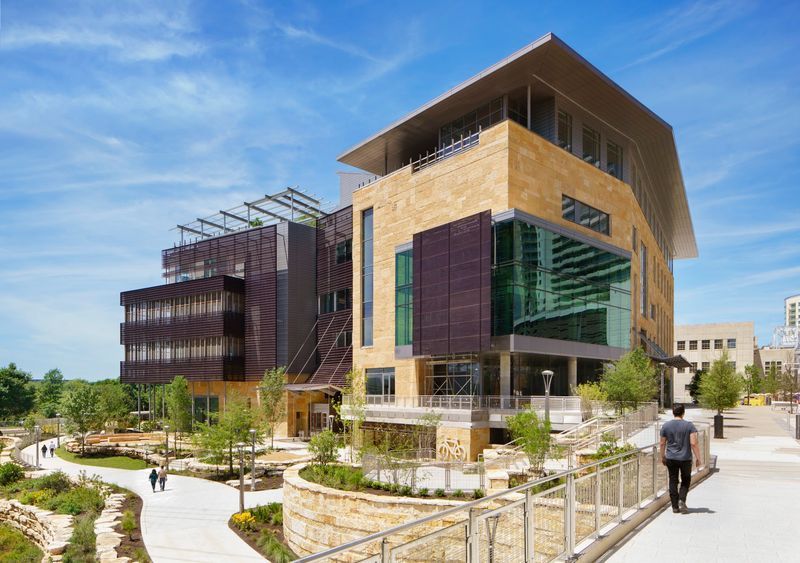
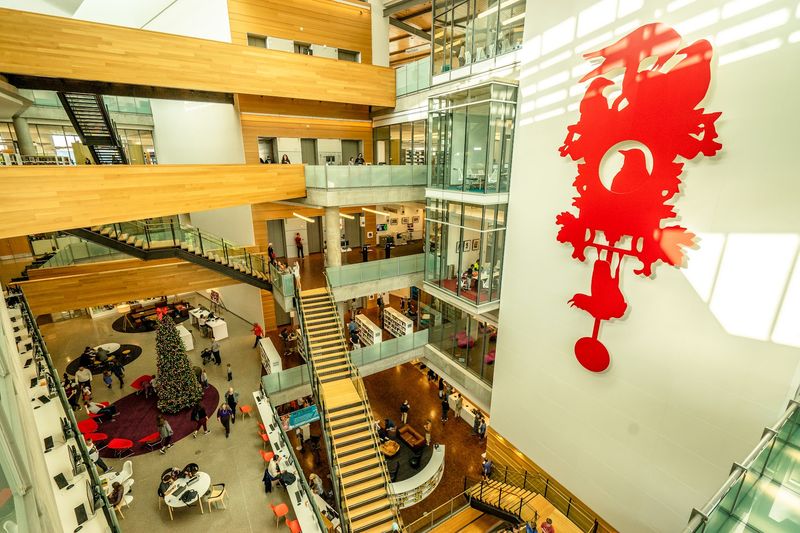
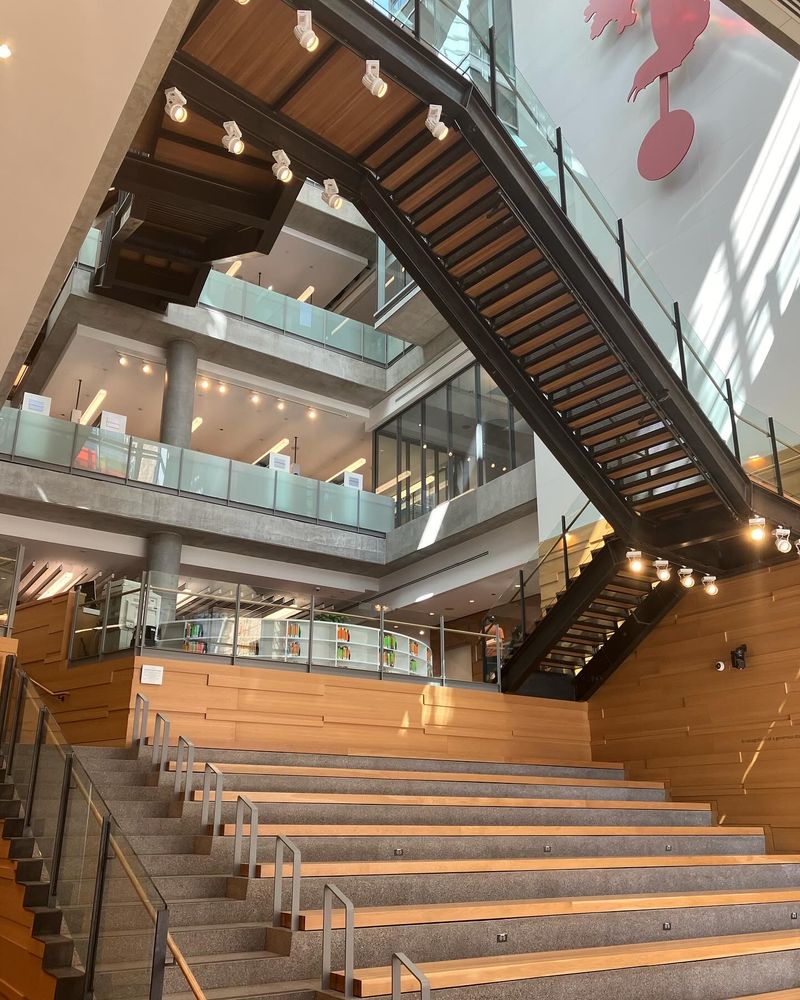
The moment you step through the front doors of the Austin Central Library, the atrium hits you before anything else does. It rises six full stories, and the light inside feels less like something that came through a window and more like something the building was built around.
That is not far from the truth.
Architects from Lake Flato and Shepley Bulfinch designed the space with the specific goal of making it one of the most daylit public libraries in the country.
More than 80% of the regularly occupied spaces receive natural light, which gives the whole building a calm, open energy that is hard to find in most public buildings.
The warmth of mesquite and oak wood panels alongside limestone surfaces adds a texture that keeps the space from ever feeling cold or corporate.
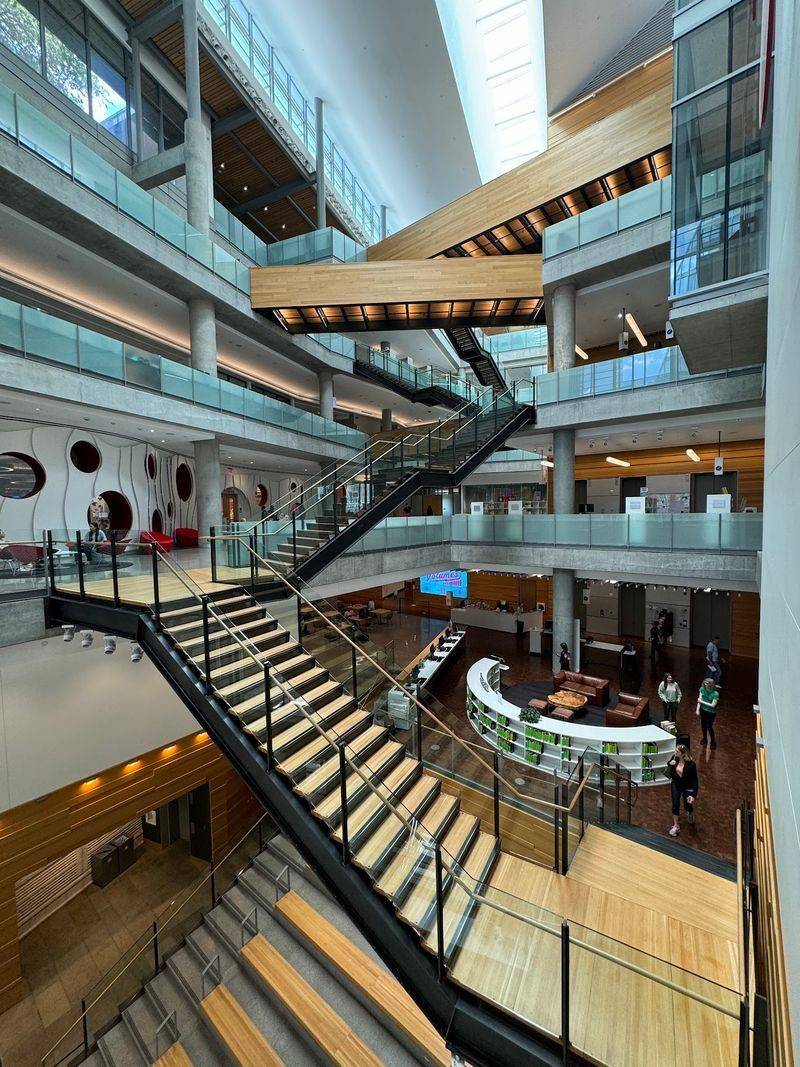
Intersecting bridges and open staircases cut across the atrium at different levels, creating unexpected sightlines from floor to floor. You might be browsing on the third level and suddenly catch a glimpse of someone reading two floors below, or spot the rooftop through a gap above.
It creates this sense of the whole building being alive and connected.
The high-performance glazing controls heat gain, which matters a lot in a Texas summer. So the light you get is generous without turning the space into a greenhouse.
It is the kind of thoughtful design detail that you feel rather than notice, making every visit feel comfortable and genuinely pleasant from the moment you arrive.
The Rooftop Garden and Reading Deck with Panoramic City Views
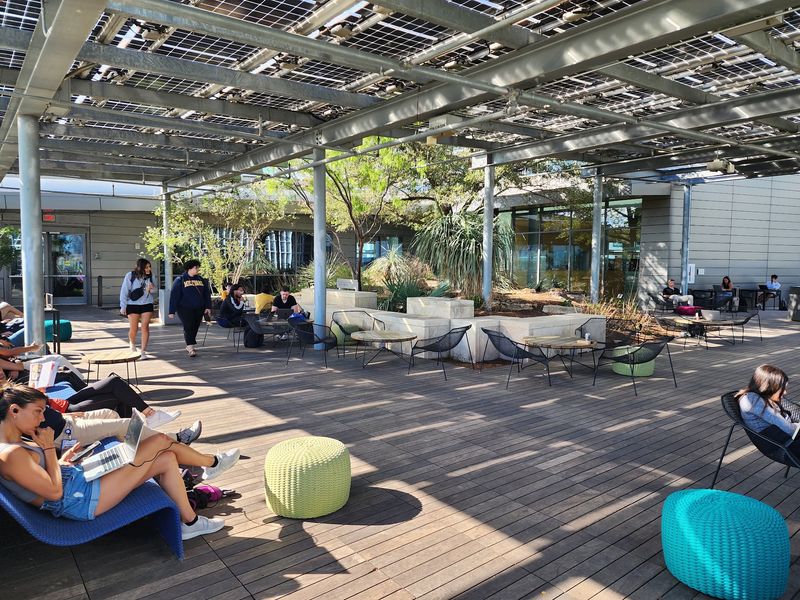
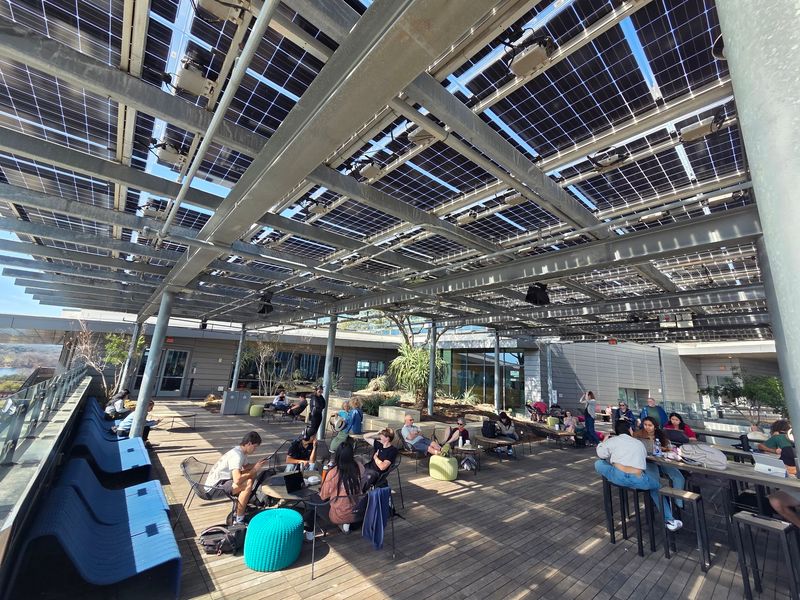
There is something quietly magical about finding a garden on the sixth floor of a public building in the middle of a major city. The rooftop at Austin Central Library is landscaped with native Texas plants, including a live oak tree that draws local butterflies on sunny days.
It does not feel like an afterthought. It feels like a destination.
From up here, the views stretch out over Lady Bird Lake, the Seaholm District, and the full sweep of the downtown Austin skyline. On a clear afternoon, the light on the water is genuinely beautiful.
Shaded seating areas sit beneath a solar panel arbor, which does double duty by generating roughly 13% of the building’s electricity while keeping visitors cool.
The photovoltaic array is part of a broader sustainability system that also includes rainwater harvesting and an in-ground cistern. Together, these features help the library use about 40% less energy than a comparable building.
That kind of environmental commitment is built right into the landscape you are sitting in, which makes relaxing up there feel a little more meaningful.
Bring a book, or just sit and watch the city move below you. The rooftop is open to the public and free to access during library hours.
It tends to be quieter than the floors below, which makes it a genuinely good spot for reading, thinking, or just taking a long, unhurried breath above the noise of downtown Austin.
Reading Porches Overlooking Shoal Creek and Lady Bird Lake
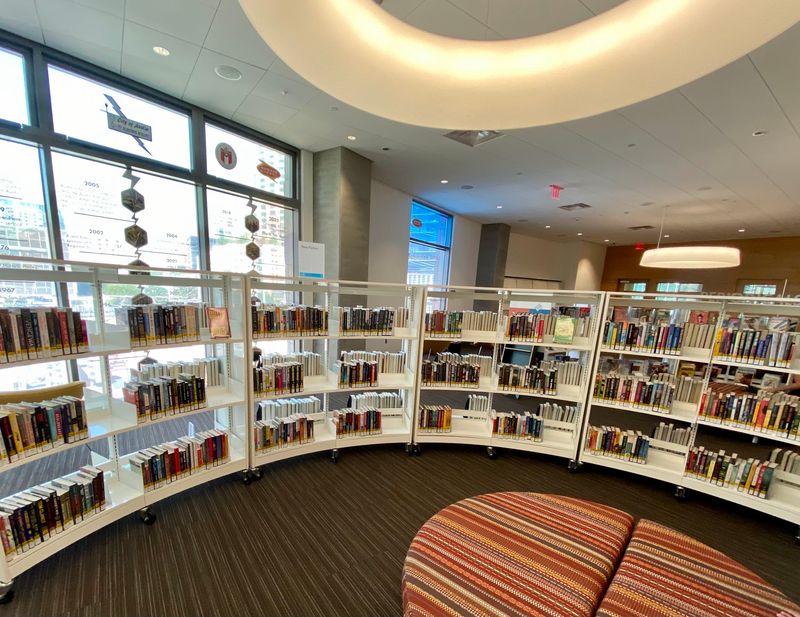
Some of the best seats in the entire building are not inside it, technically speaking. The reading porches at Austin Central Library are screened outdoor spaces that wrap around portions of the building, designed to let you enjoy the Austin outdoors without the full intensity of the Texas sun.
They overlook Shoal Creek and Lady Bird Lake, and the view is genuinely calming.
Each porch can seat more than 60 people, so there is usually room even on busier days. The seating wraps around the perimeter in a way that feels generous rather than cramped.
Hikers and cyclists moving along the trails below become a kind of slow, peaceful backdrop to whatever you happen to be reading.
The design of these spaces is directly tied to Austin’s climate. Architects thought carefully about how outdoor areas could function comfortably for much of the year, and the screened porches are the answer they landed on.
It is a practical solution that also happens to be a lovely one.
Personally, I find the porches to be the most underrated feature of the whole building. Most visitors head straight for the rooftop, which is fair, but the porches have a quieter, more intimate quality.
There is something about sitting at the edge of a building, with air moving around you and water visible in the distance, that makes reading feel less like a task and more like a genuine pleasure. It is worth seeking out, especially in the late afternoon when the light gets soft and golden.
Café Crème, the French-Vietnamese Coffee Shop Inside the Library
Café Crème earns its own paragraph, honestly. Hidden along the West Second Street side of the building, this local, family-owned café brings a genuinely unexpected combination of French and Vietnamese culinary heritage to a public library setting.
The menu is the kind that makes you second-guess your order three times before committing.
Savory and sweet crepes are a highlight, and the espresso drinks are crafted with real care. The Café Crème Brûlée latte has become something of a signature, and the authentic Vietnamese iced coffee is exactly as good as it sounds on a warm Austin afternoon.
Cold brew options round out the drink menu nicely for those who prefer something a little less fussy.
Beyond drinks, the food selection covers a solid range. Breakfast tacos, fresh sandwiches, hearty salads, and a rotating selection of pastries make it easy to turn a library visit into a proper morning or midday outing.
The café serves students, professionals, and families with equal ease.
The atmosphere inside is bright and relaxed, with comfortable seating and a large outdoor patio that spills into the fresh air. It has the kind of energy where you could sit for two hours without feeling rushed or out of place.
For anyone visiting the library, skipping Café Crème would be a real missed opportunity. It is the kind of neighborhood spot that happens to live inside one of the most impressive public buildings in Texas.
The Innovation Lab, Where Creativity Meets Cutting-Edge Technology
Not many public libraries let you walk in off the street and use a laser cutter. The Innovation Lab at Austin Central Library does exactly that, and it is one of the more surprising and genuinely exciting features of the building.
It reflects Austin’s culture of creativity and its long-standing reputation as a hub for technology and independent thinking.
The lab gives public access to 3D printers, laser cutters, digital media tools, and design software. Fabrication and prototyping resources are available alongside skill-building workshops that rotate throughout the year.
Whether you are a hobbyist, a student working on a project, or someone curious about a tool you have never touched before, the space is set up to welcome you.
This kind of resource matters more than it might seem at first glance. Access to fabrication technology is often expensive and exclusive, tied to universities or private studios.
Placing it inside a free public library removes that barrier entirely. Anyone with a library card can show up and make something.
The lab sits within a broader context of over 500 individual seats and 140 public-use computers spread across the building, plus 13 shared learning rooms available for clubs, private events, and group activities.
The library has clearly been designed to function as a true community resource rather than just a place to borrow books.
The Innovation Lab is probably the most vivid expression of that philosophy, a space where the future feels genuinely accessible.
LEED Platinum Design and the Sustainability Features Built Into Every Floor
Austin Central Library holds LEED Platinum certification, which is the highest environmental rating a building can receive. That distinction is not just a plaque on the wall.
It represents a genuine, building-wide commitment to responsible design that shows up in dozens of specific ways throughout the structure.
The vegetated roof reduces heat absorption and supports native plant life. The rainwater harvesting system collects and stores water in an in-ground cistern for reuse throughout the building.
High-performance glazing controls how much heat enters through the windows, which is a significant consideration in a city where summer temperatures regularly climb past 100 degrees Fahrenheit.
The photovoltaic solar array on the rooftop generates about 13% of the building’s total power. Combined with the other efficiency systems, the library uses roughly 40% less energy than a comparable building of the same size.
That is a meaningful reduction, and it was achieved without sacrificing any of the comfort or aesthetic quality that makes the building so enjoyable to spend time in.
Native and adaptive landscaping surrounds the building, reducing the need for supplemental irrigation and providing habitat for local wildlife. The 2020 Texas Rain Catcher Award recognized the library’s rainwater system specifically, adding to a growing list of environmental accolades.
Materials like mesquite, oak, and limestone were chosen for their connection to Central Texas geology as much as for their durability. The result is a building that feels rooted in its place, both physically and ecologically, in a way that is rare and genuinely worth appreciating.
Gallery Spaces, Events, and Community Programming Throughout the Year
On any given weekday at the Austin Central Library, something is probably happening that you did not expect. The building hosts a rich and constantly rotating calendar of events, exhibitions, and programs that make it feel less like a repository and more like a living, breathing community center.
That is very much the point.
Gallery spaces throughout the building showcase local Austin artists, with exhibitions that change regularly and are free to browse. The work tends to reflect the diversity and creativity of the city itself, ranging from photography to mixed media to works by emerging local talent.
Spending a few minutes moving through a current exhibition is a natural part of any visit.
A 350-seat event forum hosts talks, performances, and public programs that draw audiences from across the city.
The demonstration kitchen is one of the more unexpected amenities, used for culinary events and educational programming that connects food, culture, and community in a genuinely fun way.
There is also a gift shop for those who want to take a little piece of the library home.
Dedicated spaces for children and teens are thoughtfully designed to match the energy and interests of those age groups specifically. Toddler storytime, crafting classes, Spanish conversation practice groups, and free health screenings are just a few examples of what fills the weekly schedule.
The library’s programming philosophy is clearly built around the idea that a public space should serve everyone, at every stage of life, and it pulls that off remarkably well.
International Recognition and Why This Library Belongs on Every Austin Itinerary
TIME Magazine named Austin Central Library one of the greatest places in the world shortly after it opened, and later included it in a feature on 25 buildings that define America. That kind of recognition is not handed out lightly.
It reflects something real about what this building does and what it represents for the city of Austin.
The library has also received the AIA/ALA Library Building Award and the AIA COTE Top Ten Award, both of which celebrate buildings that achieve something meaningful at the intersection of design, sustainability, and community function.
These are peer-reviewed architectural honors, and earning them confirms that what you experience inside the building is genuinely special and not just well-marketed.
For anyone visiting Austin, the library deserves a spot on the itinerary alongside the music venues, the food scene, and the outdoor spaces along Lady Bird Lake. It is free to enter, open to everyone, and packed with things to see and do across all six floors.
A few hours here gives you a surprisingly full picture of what the city values and how it thinks about public life.
What stays with me most is not any single feature but the overall feeling of the place. It is welcoming without being overwhelming, ambitious without being cold, and deeply connected to the landscape and culture around it.
Few public buildings anywhere manage to pull all of that off at once.
Address: 710 W Cesar Chavez St, Austin, TX
