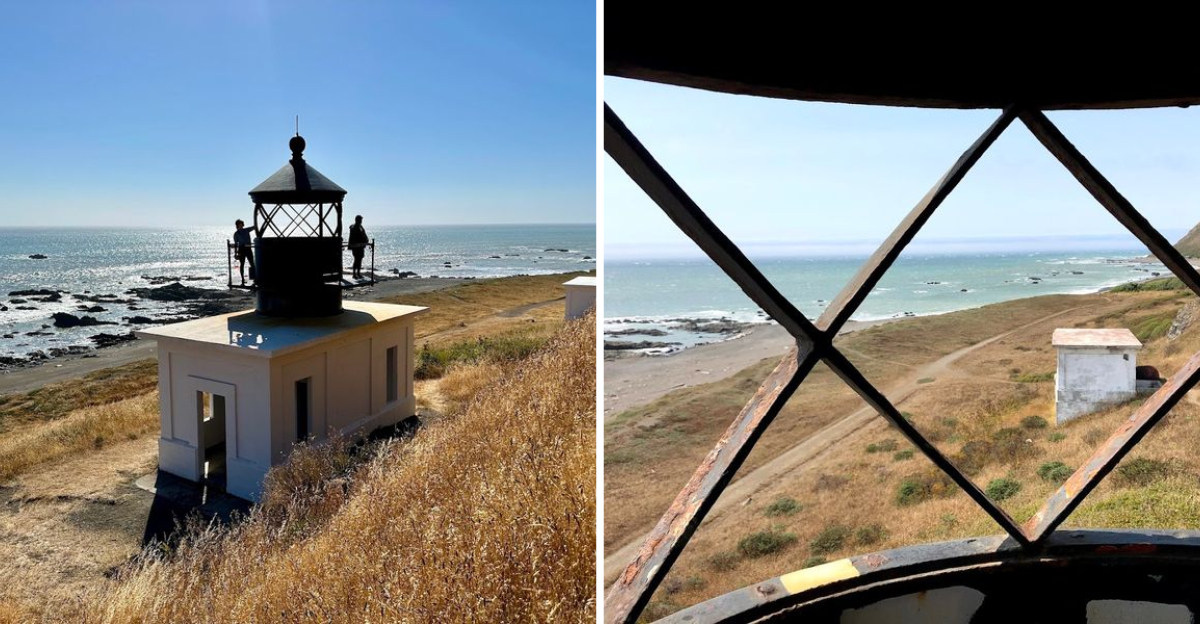
California has plenty of coastal spots that remind you just how wild the shoreline can be.
Beyond crowded beaches and busy boardwalks, there are places where crashing waves, open skies, and rugged landscapes create a completely different kind of adventure.
This remote coastal landmark offers a chance to slow down and experience nature without distractions.
The journey takes effort, but the reward is a peaceful setting filled with history, ocean views, and the feeling of discovering a place that time has barely touched.
It is the kind of destination that makes the trip itself part of the memory.
The Lost Coast Setting That Makes This Lighthouse Feel Like Another World
Most lighthouses are easy to visit. You drive up, snap a photo, and head back for lunch.
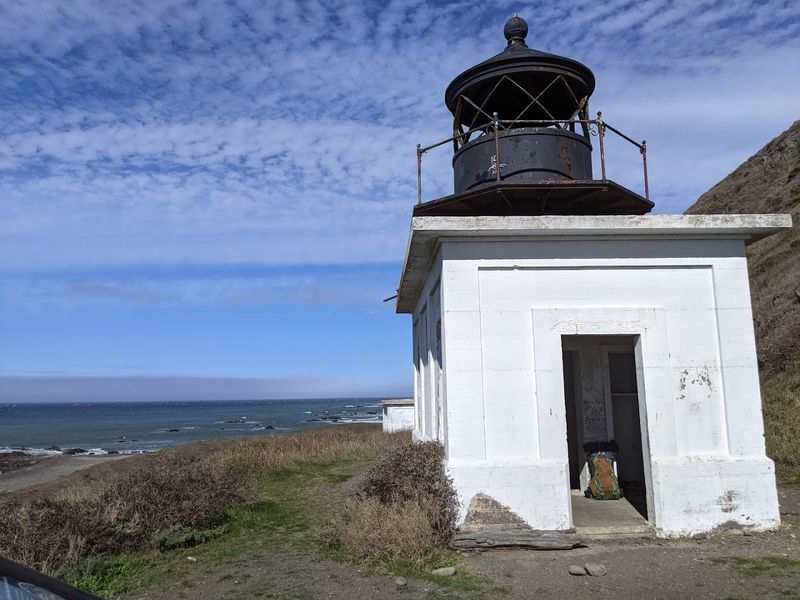
Punta Gorda is not that kind of place. The moment you pull up to the Mattole Beach parking area at the end of Lighthouse Road near Petrolia, you already feel the isolation pressing in around you.
The Lost Coast earned its nickname because this stretch of California was simply too rugged for a coastal highway. The King Range mountains drop almost straight into the Pacific here, leaving no room for roads.
That geographical reality is exactly why the landscape looks the way it does today: wild, raw, and almost completely unchanged.
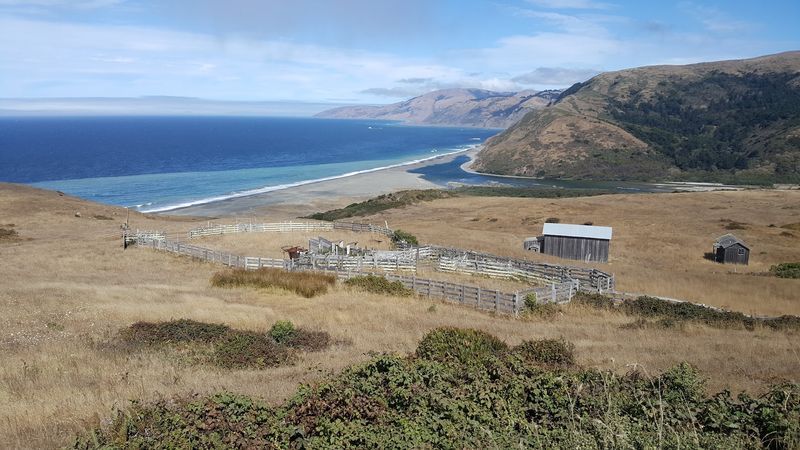
The beach itself is covered in smooth rocks and chunks of driftwood the size of small cars. Seabirds cut across the grey sky above you.
There is no cell signal, no coffee shop nearby, and no other sound but the ocean. That combination of remoteness and natural beauty is what makes this lighthouse feel less like a tourist stop and more like a genuine discovery.
The Lost Coast wraps around you in a way that very few places in California still can.
A History Built on Hardship and Isolation
Construction on the Punta Gorda Lighthouse began in 1911, and its light first shone on January 15, 1912. From the very beginning, life here was not easy.
The original station spread across 22 acres and included the concrete lighthouse, an oil house, three keeper dwellings, a fog signal building, a blacksmith shop, storage sheds, and even a barn.
Getting supplies in required horses and horse-drawn wagons. There was no electricity, even into the 1940s.
A Coast Guard horse named Old Bill became a beloved fixture at the station, serving for 30 years right up until the lighthouse was decommissioned in 1951.
The decision to close the station came down to cost. Its extreme remoteness made maintenance too expensive, and an offshore lighted buoy took over its role.
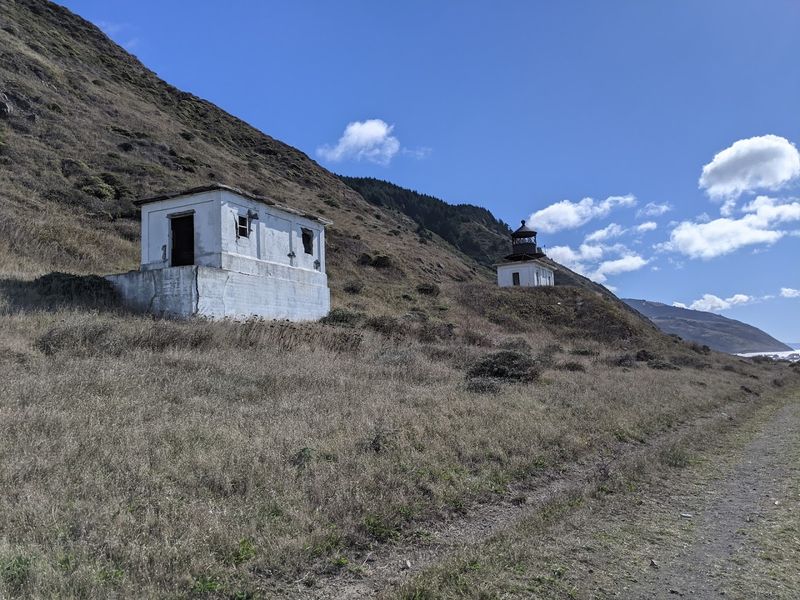
After it was abandoned, a group moved into the vacant keeper’s quarters in the late 1960s. Following their eviction, the Bureau of Land Management burned all the wooden structures in 1970, leaving only the concrete lighthouse and oil house standing.
That history of hard lives, slow decay, and deliberate destruction gives the place a weight that you genuinely feel when you are standing there.
The Haunted Atmosphere That Greets You at the Tower
Calling a place haunted is easy. Actually feeling it is something different.
The first time you get close enough to really look at the Punta Gorda Lighthouse, the word that comes to mind is not spooky, it is lonely. The small concrete tower stands there completely exposed to the elements, surrounded by nothing but beach and sky.
Where the keeper dwellings once stood, there is nothing but flat ground and the ghost of a foundation. The wooden structures that gave this station its life were burned away decades ago.
What remains feels like a place that lost something it can never get back.
Even after the recent 2022 to 2023 restoration work, which included repairs to the concrete walls and a new circular staircase inside the tower, the atmosphere has not softened much. The fresh paint makes the lighthouse look cared for, but the emptiness around it only sharpens the contrast.
On an overcast afternoon, with fog creeping in off the water and no other hikers in sight, the silence here has a texture to it. It presses against your ears.
That feeling, quiet and a little unsettling, is what people remember most.
The Hike In: Three Miles of Wild Beach That Prepares You for What Awaits
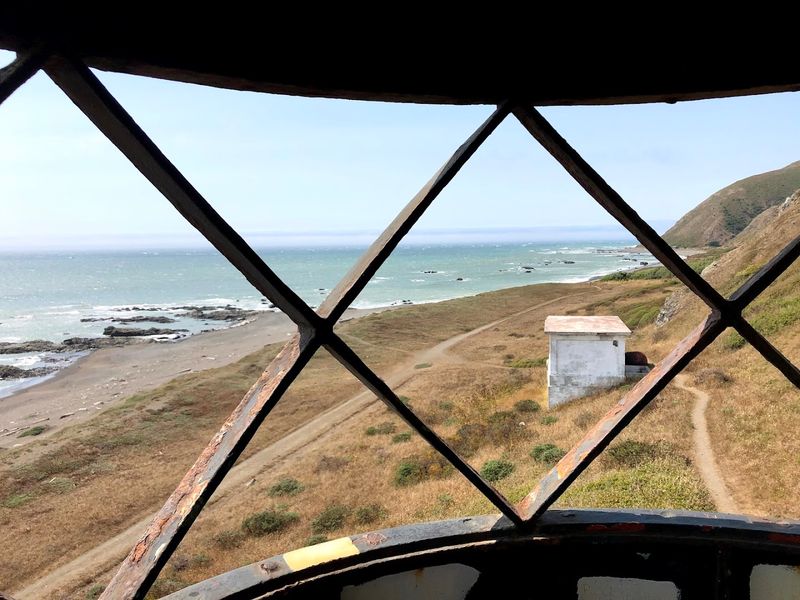
The most common way to reach Punta Gorda Lighthouse is a three to four mile hike south from the Mattole Beach parking area, located at 3750 Lighthouse Road in Petrolia. It sounds straightforward, but the terrain keeps you honest the whole way.
Much of the route crosses loose sand or beds of small round rocks that shift under every step.
Tide tables are not optional reading here. Sections of the route can go underwater during high tide, cutting off access entirely.
Winter hikers also face creek crossings that can run surprisingly deep after rain. Checking conditions before you leave is genuinely important, not just a suggestion on a trailhead sign.
For those with a 4WD high-clearance vehicle, Prosper Ridge Road offers an alternative approach that cuts some distance, though a hike is still required at the end. The effort involved in either route changes how you feel when you arrive.
By the time the lighthouse comes into view, you have already earned it. Your legs are tired, the wind has been pushing at you for an hour, and the sight of that small white tower feels like a real reward rather than just another photo opportunity.
Elephant Seals and Wildlife That Share This Remote Shore
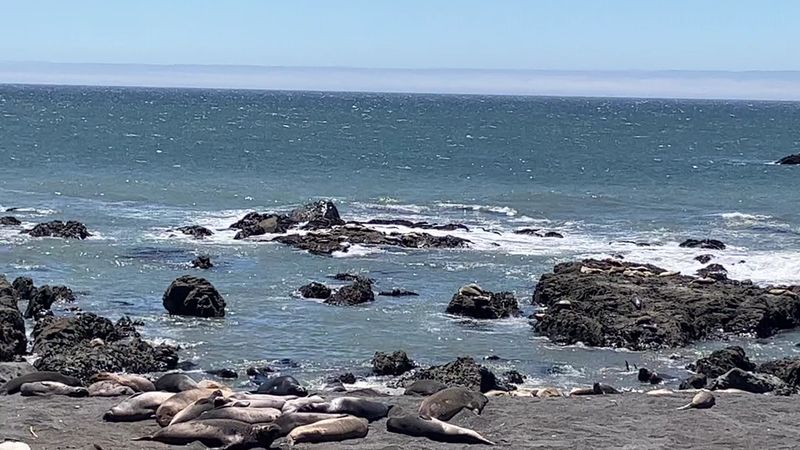
One of the unexpected highlights of visiting Punta Gorda is the wildlife. Northern elephant seals frequently haul themselves out of the surf and congregate on the shore near the lighthouse.
Seeing them up close, or as close as you should safely get, is one of those experiences that genuinely stops you mid-step.
These are large animals, and they make their presence known. The sounds they produce, low rumbling grunts and occasional splashing, carry across the beach in a way that feels prehistoric.
Giving them plenty of space is important both for your safety and for theirs. Seabirds are plentiful here too, riding the coastal updrafts above the cliffs and picking through the tidepools that dot the shoreline.
The tidepools themselves are worth slowing down for. Small crabs, anemones, and other creatures fill the rocky pools left behind by retreating waves.
The entire ecosystem along this stretch of coast feels undisturbed in a way that is increasingly rare. Nature here does not feel like a backdrop to the lighthouse visit.
It feels like the main event, with the lighthouse serving as a fascinating footnote in the middle of a living, breathing coastal wilderness.
The 1923 Earthquake and the Fresnel Lens That No Longer Shines Here
On January 22, 1923, a 7.2-magnitude earthquake with its epicenter off Cape Mendocino rattled the Punta Gorda station hard enough to crack the foundation of the head keeper’s dwelling. Mercury escaped from the lighthouse lens mechanism during the shaking, a detail that makes the event feel startlingly vivid even a century later.
The lighthouse had been equipped with a fourth-order Fresnel lens that emitted a double flash every fifteen seconds. That lens, along with the station’s flagpole, was removed after the lighthouse was decommissioned in 1951.
Both are now on display at the Humboldt Bay Maritime Museum, where visitors can see the lens up close in a way that was never possible when it was mounted high in the tower.
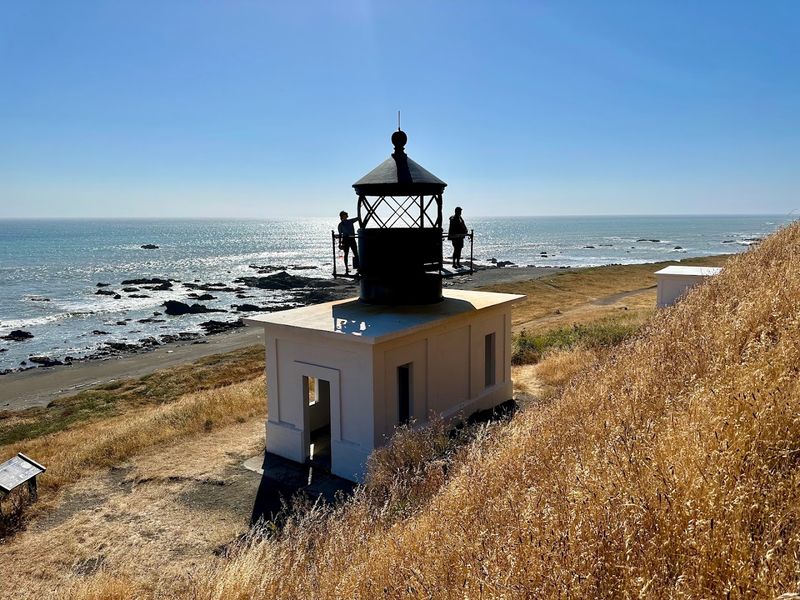
Knowing that the lens is gone makes standing inside the restored lighthouse feel slightly bittersweet. The new circular staircase installed during the 2022 to 2023 rehabilitation lets you climb up into the lantern room, but the heart of the original light is elsewhere.
The lighthouse was listed on the National Register of Historic Places in 1976, a recognition that came long after its working life had ended. That gap between usefulness and historical status says something quiet and honest about how we treat the things we once needed.
Planning Your Visit: What to Know Before You Make the Trip
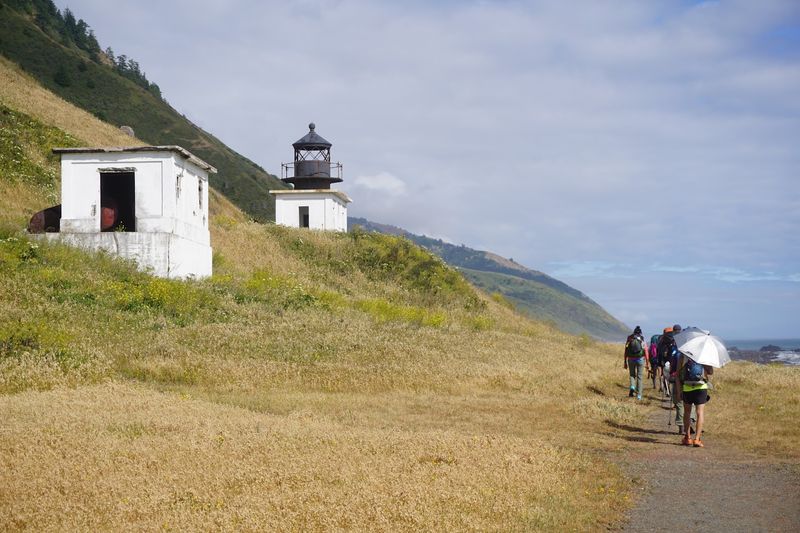
A trip to Punta Gorda Lighthouse requires more preparation than most day hikes. The starting point is the Mattole Beach parking area at 3750 Lighthouse Road, Petrolia, CA 95558.
Getting there from Highway 101 takes roughly two and a half hours of driving on winding roads. If you plan to use Prosper Ridge Road as your approach, a 4WD high-clearance vehicle is required, and that route is not recommended in wet conditions.
Layering your clothing is genuinely smart here. The coast can be warm and sunny one hour and cold and foggy the next.
Wind is almost always present. Bringing enough water and food matters too, since there are no services anywhere near the trailhead.
The lighthouse interior is accessible to visitors after the recent restoration work. The hike itself is part of the longer Lost Coast Trail backpacking route, so the area draws serious outdoor enthusiasts who come prepared.
If you are planning a day trip, starting early gives you the best chance of good light and manageable tide conditions. Checking tide tables before you leave is non-negotiable.
The Bureau of Land Management manages the property, and their website has current trail condition information worth reading before you pack your bag.
Address: 3750 Lighthouse Rd, Petrolia, CA 95558
