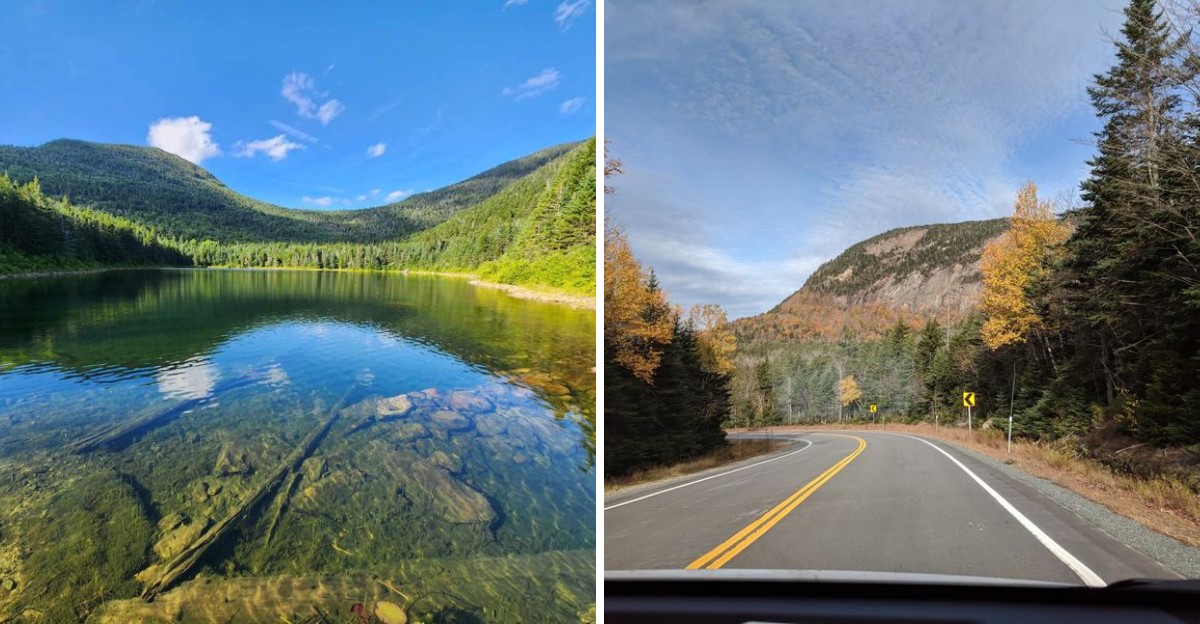
The buildings are empty and the streets are silent. The forest is slowly reclaiming the land.
This abandoned New Hampshire town still draws more visitors than you would expect, and it is easy to understand why. The ruins are hauntingly beautiful, and the history is fascinating.
The town was once a thriving community, with homes, a school, and a church. Then the industry left, and the people followed.
Now only the foundations remain, scattered through the woods. I walked through the site and imagined what life must have been like.
The children playing in the streets. The families gathering for Sunday services.
That is the thing about this New Hampshire ghost town. It is a reminder that nothing lasts forever, and that even abandoned places have stories worth telling.
A Gravel Road That Doubles as a Time Machine
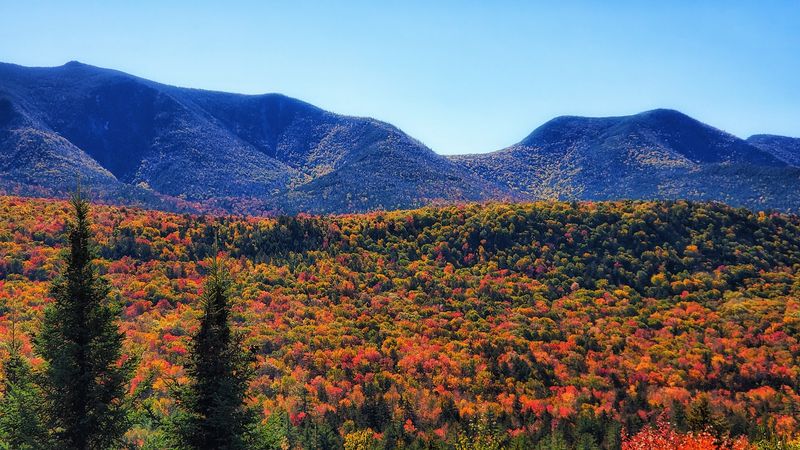
Turn off US Route 302 and the pavement quits almost immediately. Sawyer River Road takes over, a gravel ribbon that rattles your suspension and your sense of time.
I rolled the windows down and let the sound of the river do the talking. Hardwoods lean in from both sides.
The forest closes ranks behind you.
Cars can travel a few miles in before a gate stops everyone, and that gate is where Livermore, NH really begins. Park, lace up, and keep walking.
Snow and mud season shut the road entirely, so late spring through late fall is your window. Potholes come standard, so take it slow.
What makes the drive special is the anticipation. Every bend hints at something older than the trees around it, and the woods here regrew over an entire working village.
Cell service fades fast. Download your map before you leave Bartlett or Lincoln, because guessing your way around the White Mountains is a rookie move.
Bring water, bug spray in June, and shoes you do not mind soaking. The road may look tame, but New Hampshire weather writes its own schedule.
Pack out whatever you carry in, since there are no bins waiting at the end.
Foundations Wearing a Blanket of Moss
Walk far enough along the old grade and the forest starts showing its hand. Rectangles of mortared stone rise from the ferns, low walls that once braced houses and sheds.
Rusted metal pieces sit half swallowed by soil. Brick and boiler fragments mark spots where heat, steam and noise once ruled the valley.
The sawmill was the heart of everything here, and its remains are the most photogenic pieces left. Water still runs beside the ruins, exactly as the mill builders wanted.
I found the scale surprising. This was no lonely cabin in the woods but a company village with a store, a school and a boarding house.
Look, photograph, and then leave everything precisely where it sits. The ruins stand on national forest land, and removing artifacts is illegal.
Footing gets tricky around loose stone, so watch your ankles. Wet moss turns rock into a slip and slide.
Autumn strips the leaves and reveals far more structure than summer allows. Spring hides much of it under green.
Winter buries the entire story beneath deep snow.
Livermore, NH rewards slow eyes. Rush through and you will miss the corner of a cellar hole two steps off the path.
Pedal Power on an Old Logging Grade
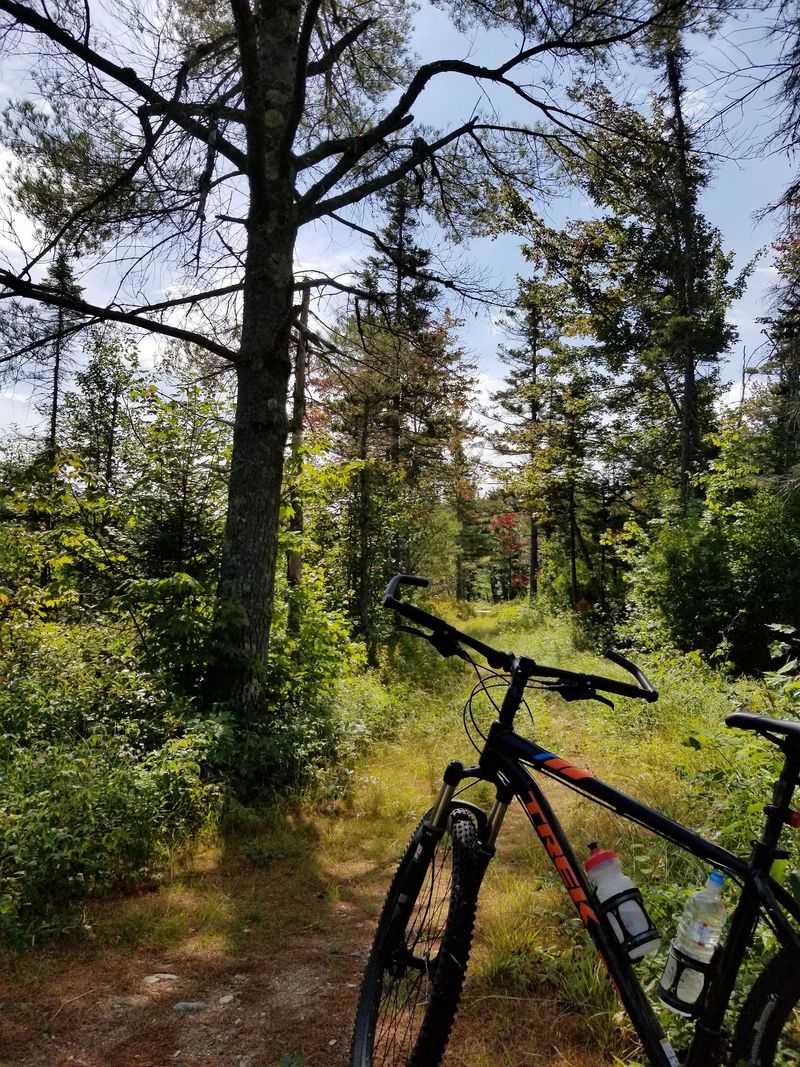
Mountain bikers have a soft spot for this valley, and the reason is simple physics. Old railroad grades were built gentle, and gentle grades make happy legs.
The Sawyer River Trail runs between Sawyer River Road and the Kancamagus Highway, mixing smooth stretches with roots and rocks. A river crossing keeps things honest.
I would not call it beginner terrain. Wet stone, sudden mud and a ford that swells after rain demand respect.
Hikers use the same route, so a bell or a friendly shout goes a long way. Courtesy travels faster than any bike.
Water levels dictate everything. After heavy storms the crossing can become a hard no, and turning around beats getting swept.
Autumn riding here is ridiculous in the best way, with yellow birch light filtering through every corner. Summer brings green tunnels and cool river air.
Livermore, NH may have lost its residents, but its transportation network never quit working. Loggers built these lines for timber, and now they carry knobby tires.
Bring a repair kit. Pack a spare tube, a pump and more snacks than you think you need.
Signal here is a rumor.
Signal Ridge and the Best Seat in the White Mountains
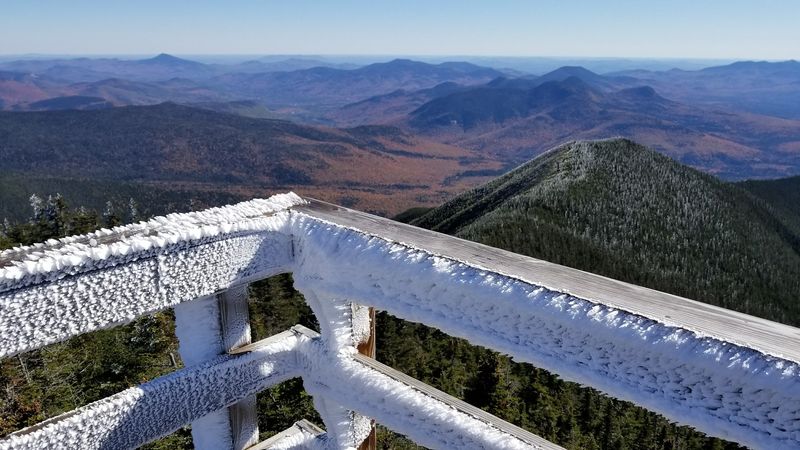
Few summits in New Hampshire earn the hype that Mount Carrigain does. Its observation tower serves up a sweeping view that circles the entire horizon.
The Signal Ridge Trail starts along Sawyer River Road, deep inside the old township. Climbing takes real effort, and the final ridge walk delivers the payoff early.
Standing on that open shoulder, I could pick out the Presidentials, the Pemigewasset Wilderness and ridge after ridge stacking into blue. On a clear morning the layers seem to go on forever.
Plan a full day. This is a long push with steady elevation gain, not a quick stroll.
Weather flips fast up high, even in July. Carry layers, a headlamp and food you actually want to eat.
Snow lingers on the upper sections well into spring, so traction devices earn their keep. Ice on the ridge is no joke.
The mountain sits within the boundaries of Livermore, NH, which means this ghost town technically contains one of the state’s most celebrated viewpoints. Not bad for a place with no mailboxes.
Start early. Parking fills, and afternoon storms have terrible manners.
Pack a paper map as backup, since batteries fade in cold air. Descending in daylight beats fumbling down by feel.
A Quiet Pond With a Backcountry Bed
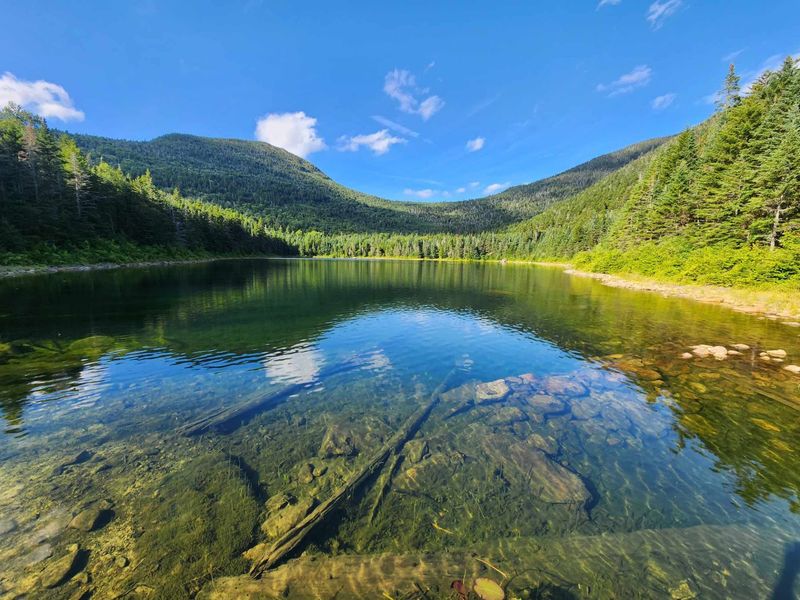
Framed by wooded slopes and the rocky brow of Owl’s Cliff, Sawyer Pond holds its reflection like a held breath. Reaching it takes a walk, which is exactly the point.
The Sawyer Pond Trail leaves from Sawyer River Road and climbs modestly before dropping to the shoreline. Loons, moose tracks and deep quiet are on the menu.
A shelter and tent sites sit near the water for anyone who wants to sleep out here. First come, first served, so arriving early matters on summer weekends.
I sat on a rock and listened to nothing at all for ten minutes. That kind of silence is rare in New Hampshire’s busier notches.
Anglers find brook trout water here, and state regulations apply, so check current rules before casting.
Bring a filter or purifier if you plan to camp. Backcountry rules limit group size and fires, and following them keeps the place worth protecting.
Mosquitoes run the show in early summer. September trades bugs for crisp air and color.
Pack a headlamp even for day trips, because dusk arrives quickly in the valley.
The pond belongs to the sprawling township of Livermore, NH, proof that a town without people can still own a spectacular backyard.
How a Sawmill Family Built a Village From Scratch
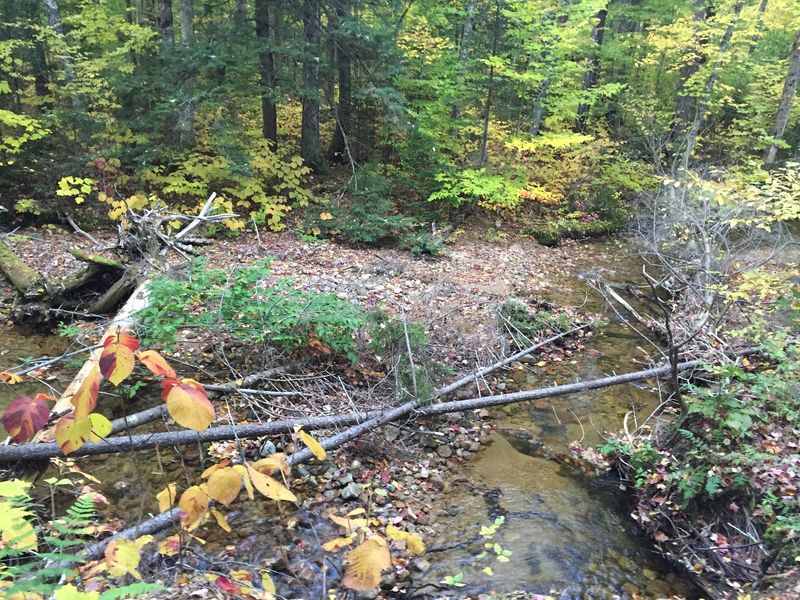
A logging outfit run by the Saunders family carved this settlement out of the wilderness in the late nineteenth century. Timber was the currency and the sawmill was the bank.
Named for Samuel Livermore, a prominent New Hampshire statesman, the township earned a formal charter and a working post office. Workers arrived with families in tow.
Homes, a schoolhouse, a company store and a boarding house filled the valley floor. Population never grew huge, but the place hummed.
Ordinary routines unfolded in a spot now marked only by stone.
Life ran on the mill whistle. Paychecks, groceries and housing all traced back to the same employer.
Snowbound months tightened the community’s rhythm.
Fires, floods and shrinking timber supplies eventually broke the model. Once the forests thinned out, the economics collapsed.
Families drifted away, buildings sagged, and the state formally dissolved the town’s charter in the twentieth century. Nature moved in without asking permission.
Standing among the foundations, I kept thinking about how quickly a whole community can dissolve. One industry leaves and a map entry disappears.
The story of Livermore, NH is really the story of the White Mountains, a landscape logged hard and then handed back to the forest.
Tracing the Ghost of a Logging Railroad
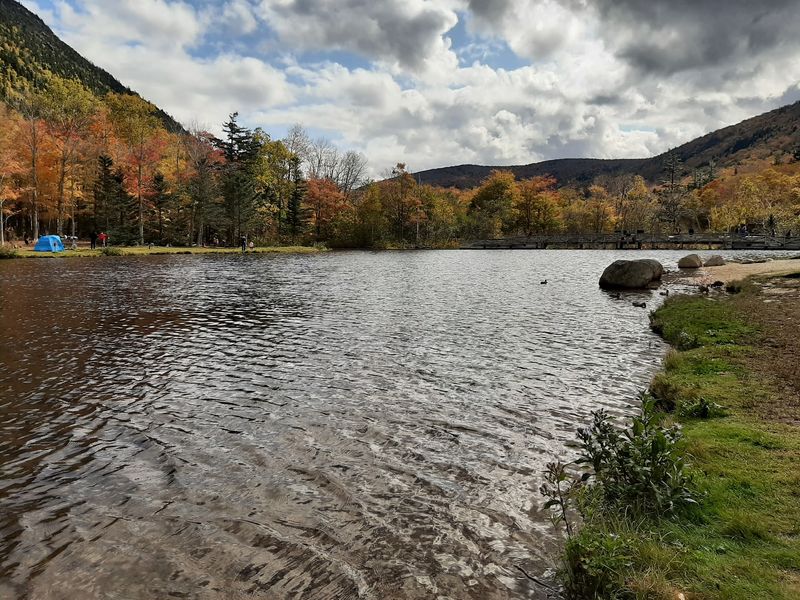
Long before hiking boots showed up, steam engines hauled logs down this valley on the Sawyer River Railroad. The line connected the mill to the main route near the Saco River valley.
Rails and ties vanished long ago, but the grade endures. Flat, straight sections through uneven forest are dead giveaways.
I like spotting the clues: cuts through banks, built up embankments, and the occasional rusted spike resting where it fell. Each detail is a small handwritten note from the logging era.
Old rail beds make the finest walking surfaces in the mountains, since engineers hated steep climbs as much as your knees do.
Washouts have rearranged parts of the route over the decades. Rivers here rewrite the map whenever they feel like it.
Trail signage exists, though it can be sparse, so a current map beats guesswork. Downloaded offline maps save the day when the trees swallow your signal.
Livermore, NH owes its short life to this railroad, and its afterlife as a recreation corridor to the very same grade. Few ghost towns leave behind such a useful souvenir.
Snap photos of the cuts and embankments, but keep the spikes and hardware in place for the next curious walker.
Leaf Season Turns the Valley Loud
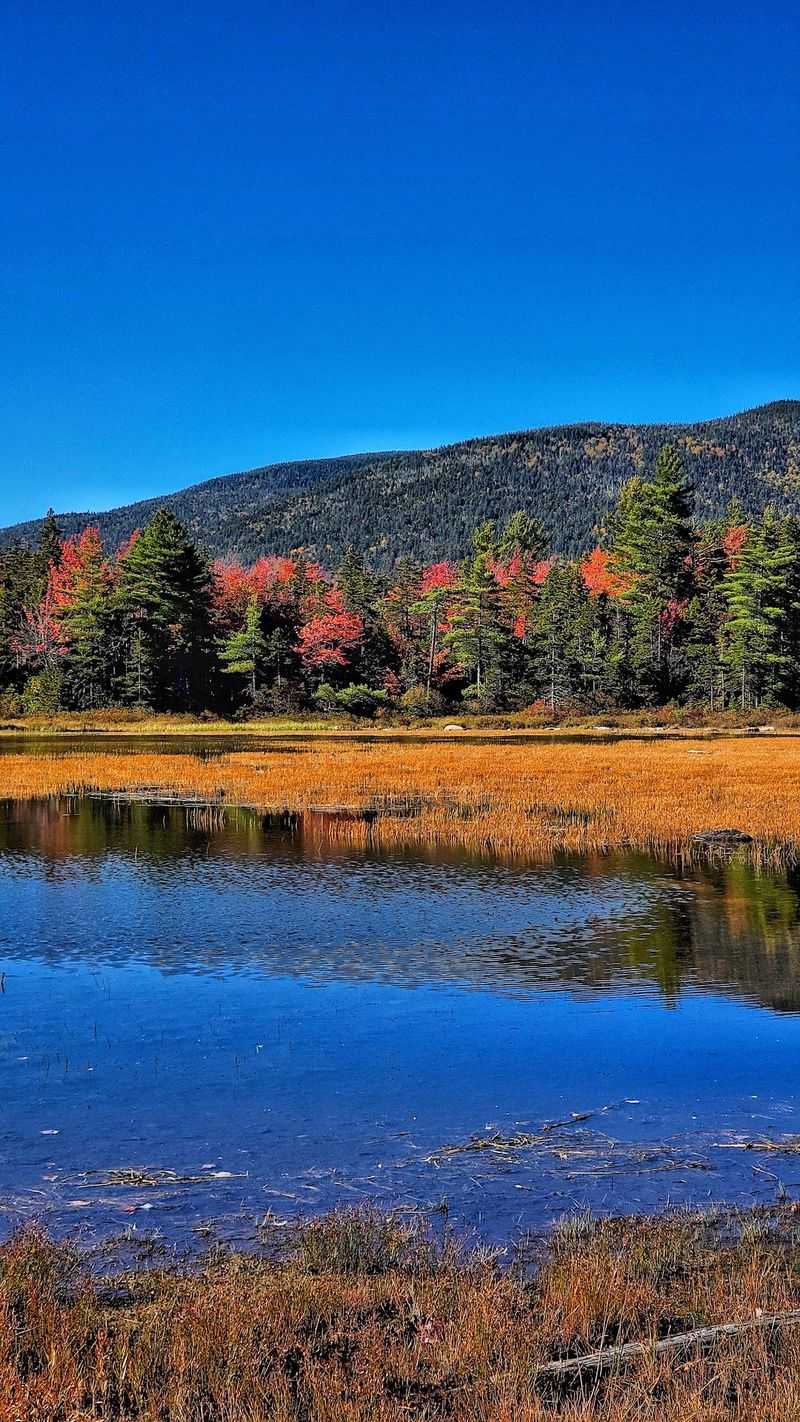
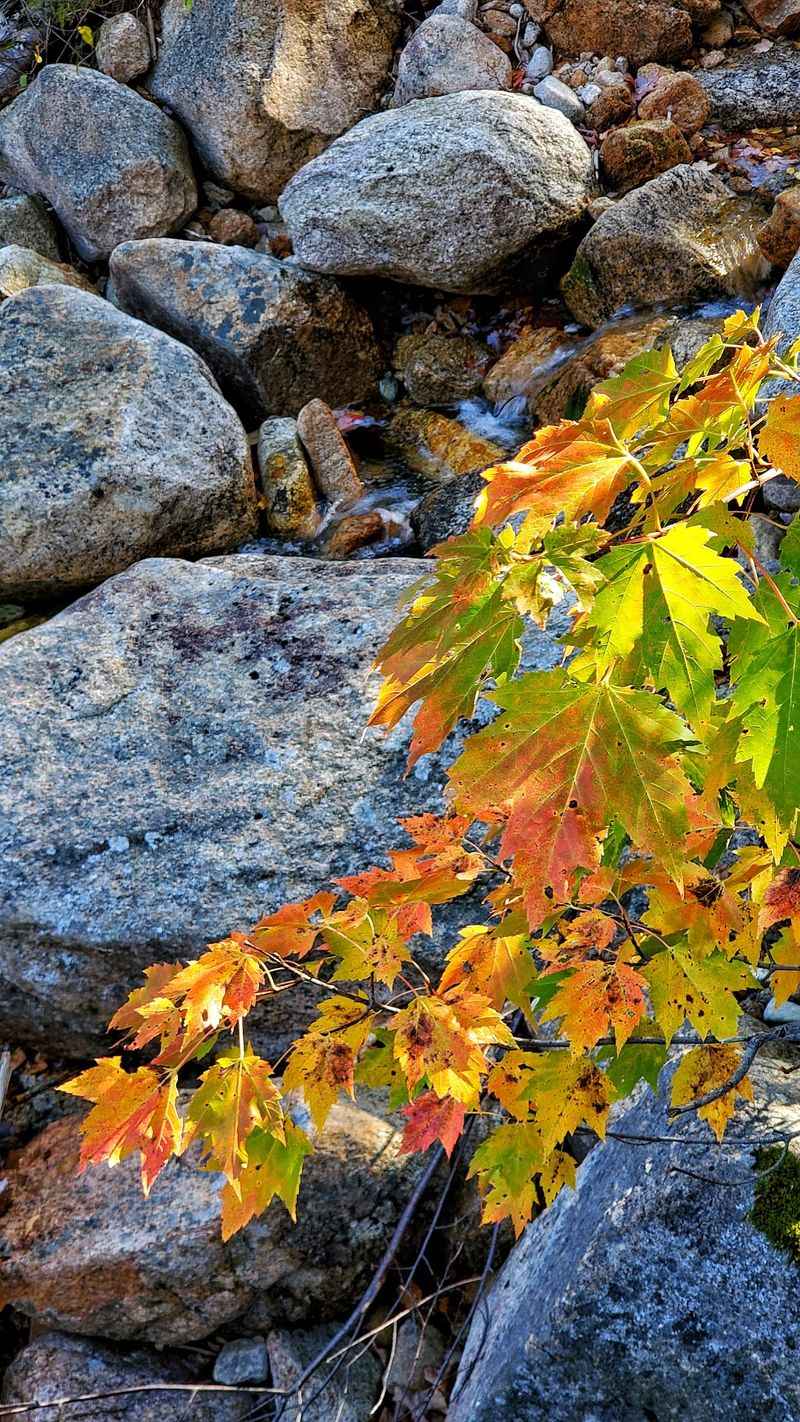
Come late September, the hardwoods around here throw a color party that borders on absurd. Maples flare red, birches glow gold, and the river reflects all of it.
The Kancamagus Highway runs along the southern edge of this township, which explains the seasonal traffic. Pull offs fill quickly on October weekends.
My advice is simple. Get on the trail before breakfast and let everyone else fight for parking at midday.
Morning mist over the water is worth the early alarm.
Foliage timing shifts each year with temperature and rainfall. Higher elevations turn first, valleys follow.
Checking a foliage tracker before driving north saves disappointment.
Photographers do well on overcast days, when soft light saturates color instead of blowing it out. Bright noon sun flattens everything.
Ruins photograph beautifully in autumn, with fallen leaves piling into old cellar holes. Contrast between stone and color is hard to beat.
Weekdays feel like a different planet compared to the October holiday weekend. If flexibility exists in your schedule, use it.
Livermore, NH may be empty on paper, yet during peak color this corner of New Hampshire feels genuinely popular. That contradiction is half the fun.
Pack patience along with your camera.
Snow Season Locks the Gate and Opens the Fun
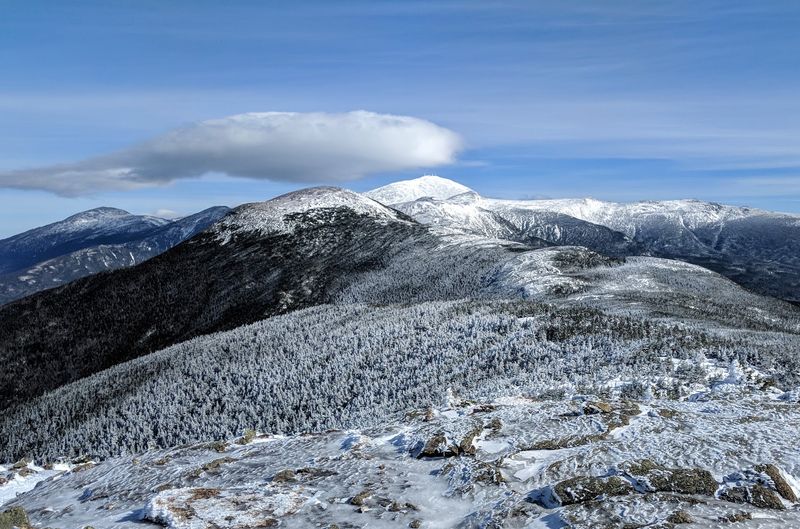
Once snow settles in, the road closes to cars and turns into a corridor for skis, snowshoes and snowmobiles. Silence gets thicker.
Cross country skiers love the gentle grade, which behaves itself even when legs are tired. Gliding beside a frozen river is its own reward.
Tracks from foxes and snowshoe hares often cross the route ahead of you.
I would treat winter here as a serious undertaking. Distances stretch, daylight shrinks and help is not around the corner.
Telling someone your plan before heading out is basic mountain sense.
Snowmobile clubs maintain trails in parts of the region, so expect shared use and stay alert. Sharing works when everyone pays attention.
Layers, traction, a map and extra food belong in every pack. Cotton belongs at home.
A thermos of something hot changes the entire mood of a cold day.
Ruins hide beneath snowpack in deep winter, so history hunters should aim for shoulder seasons instead. Late April often reveals more than February.
Frozen brooks make dramatic photos, though thin ice deserves a wide berth. Never test a crossing on a hunch.
New Hampshire winters bite hard and beautifully. Prepared, you will remember it.
Unprepared, you will regret it.
Getting There and Doing It Right
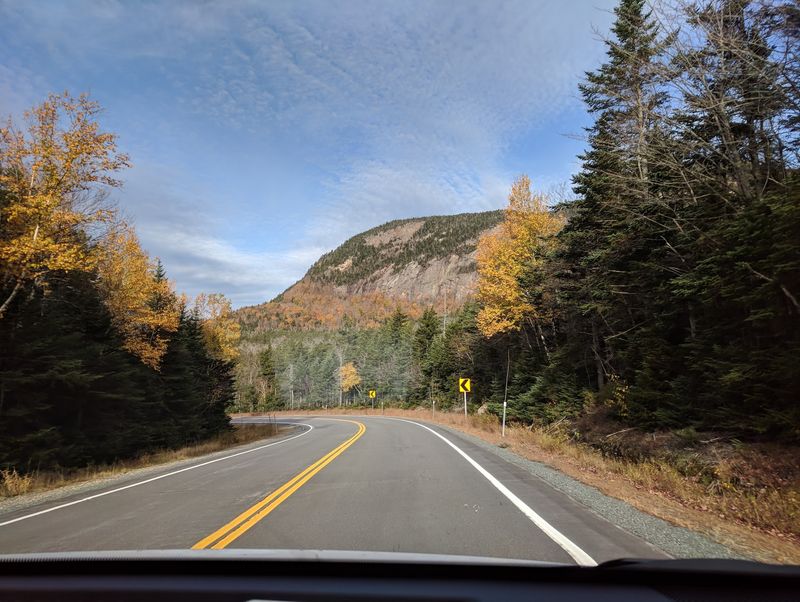
Planning takes a bit of homework, and it starts with a location, not a street number. Livermore, NH sits in Grafton County within the White Mountain National Forest.
Access comes from Sawyer River Road, which leaves US Route 302 between Bartlett and Crawford Notch. Parking sits near the gate, and a national forest recreation pass is required for the lot.
Bartlett, Glen and North Conway offer food, fuel and beds on the eastern side. Lincoln covers the western approach.
Trailhead facilities are minimal, so handle supplies before turning onto the gravel.
Leave the artifacts. Federal law protects historic objects, and a photograph lasts longer than a pocketed spike anyway.
Cell coverage is patchy, so tell someone your route and expected return. Old fashioned planning still works.
Weather forecasts for the valley and the summits rarely match, so check both.
Dogs do well on these trails when leashed and mannerly. River crossings can be tough for small pups.
Address wise, aim for Sawyer River Road, Livermore, New Hampshire, and let the White Mountains handle the rest.
Grab your boots, fill the tank, and go meet the town that refused to disappear quietly. Your camera roll will thank you later.
