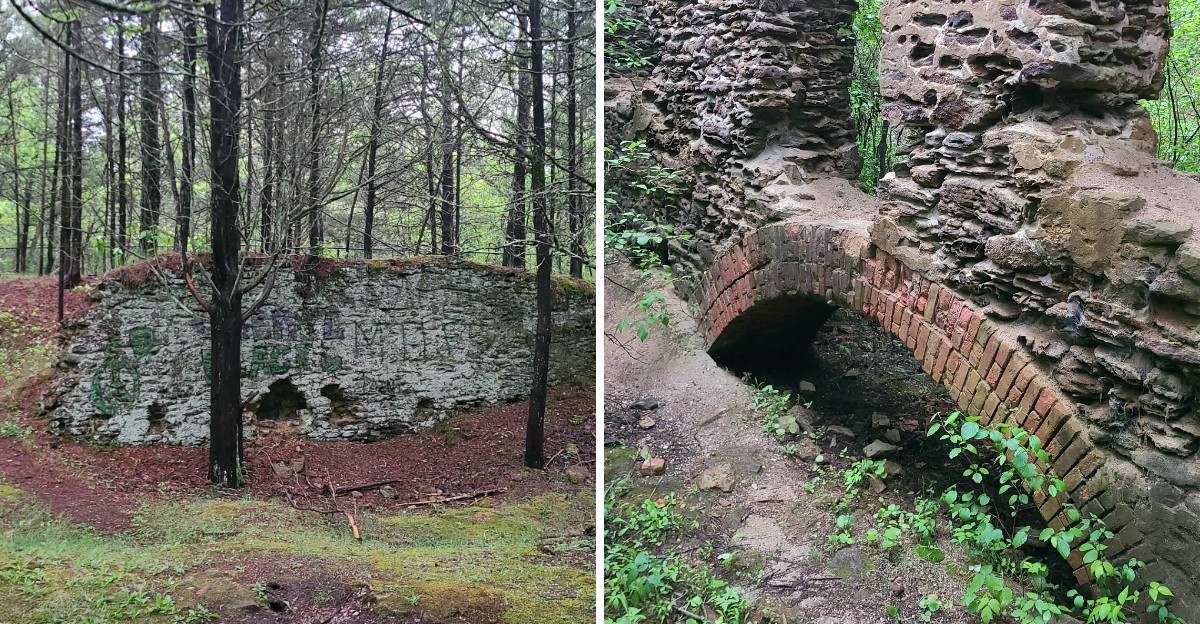
The forest won this one.
Deep in the New Jersey Pine Barrens, brick walls, foundations, and other remnants mark the place where a once-busy industrial settlement slowly disappeared.
The town grew around manufacturing in the 19th century, but changing industries and economic troubles eventually brought its working days to an end.
Nature has spent the decades since reclaiming what people left behind. Trees rise around crumbling masonry.
Leaves collect where workers once moved through buildings. Sections of old structures remain visible enough to hint at what stood here without giving away the whole picture.
That is what makes the ruins so compelling. They are neither a polished museum nor a reconstructed village.
They are simply pieces of another New Jersey, sitting quietly in the woods while the Pine Barrens keep closing in.
A Village Hiding in the Pines
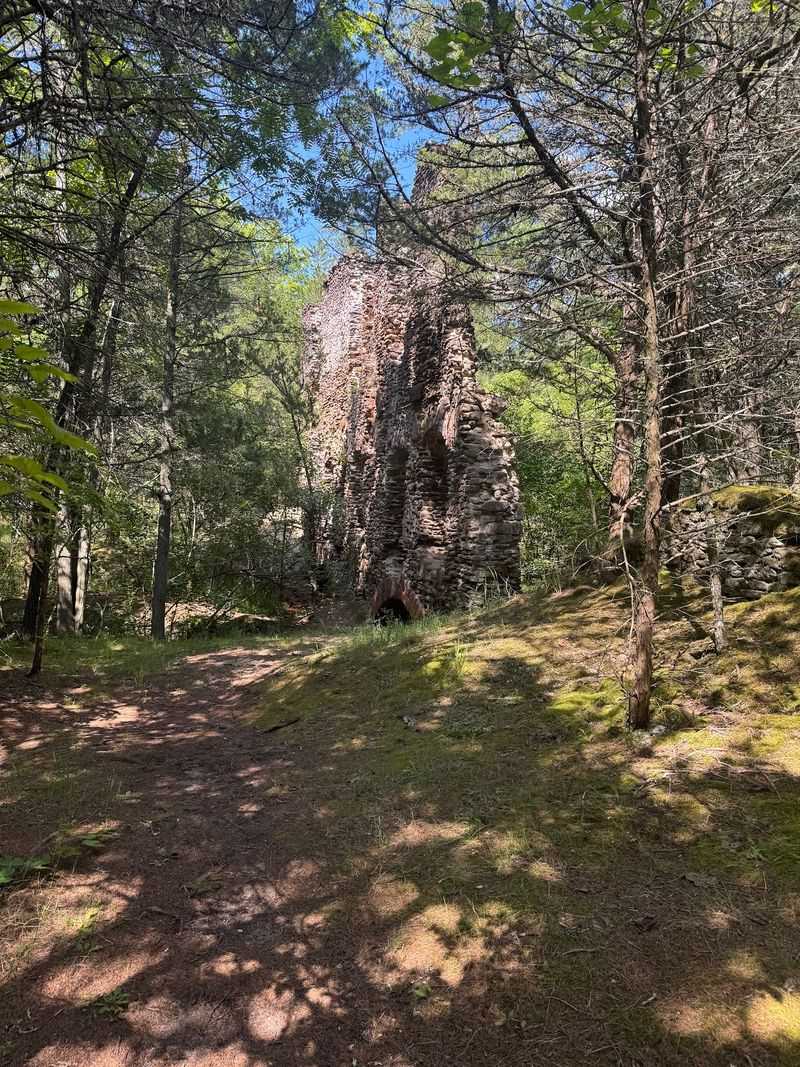
Nothing about the drive hints at what waits in the trees. Pine after pine rolls past, and then rough stone walls pop up behind a fence just off the road.
That first glimpse of Harrisville Ruins is the kind of surprise that makes you pull over fast.
What you are seeing are the leftover bones of Harrisville, a mill town that once had homes, a general store, a school, a post office, and a busy paper factory. The site sits inside Wharton State Forest, which is part of the huge Pinelands National Reserve in southern New Jersey.
The village faded in the late 1800s, and a forest fire in 1914 swept through what remained. Nobody ever came back to rebuild.
For more than a century, the pines have been quietly filling in the gaps.
Give yourself time here, because the ruins are not huge, but they reward slow, careful looking. Bring curiosity, sturdy shoes, bug spray, and a charged phone for photos.
Early morning light through the trees is especially lovely.
Saws, Iron, and Early Beginnings
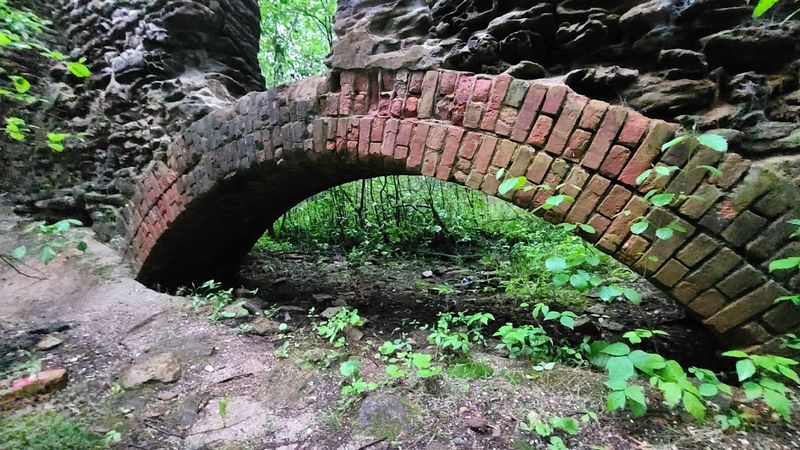
Here is a fun twist. Long before paper ever rolled out of this spot, the first industry on the site was a sawmill, built around 1760.
Workers dammed the Oswego River so moving water could power blades through fresh timber.
Picture the scene for a second. Back then, this corner of the Pine Barrens was mostly wild woods, and the whine of saws must have carried a long way.
Later, in the 1790s, a slitting mill took over, cutting iron sheets into thin strips that could be made into nails.
Around 1815, the site changed jobs again and became a paper mill. The small settlement growing around it was called McCartyville back then, named after the owner at the time.
It would take a new family and a new name before the town really came alive.
I find it amazing how many lives one river bend can have. Keep that timeline in mind as you look around, since each layer helped shape the walls still standing today.
Sawdust, iron, and paper all passed through this same patch of sandy ground.
The Salt Hay Paper Boom
Salt hay might sound like something you would feed a horse at the beach. In the 1800s, though, this tough marsh grass became the secret ingredient that turned Harrisville into a paper-making powerhouse.
The town took its new name in the 1850s, when the Harris family bought the mill and the land around it. They poured money into better machinery and grew the operation into the economic heart of the whole village.
Salt hay was plentiful along the nearby coastal marshes, which made it a handy raw material.
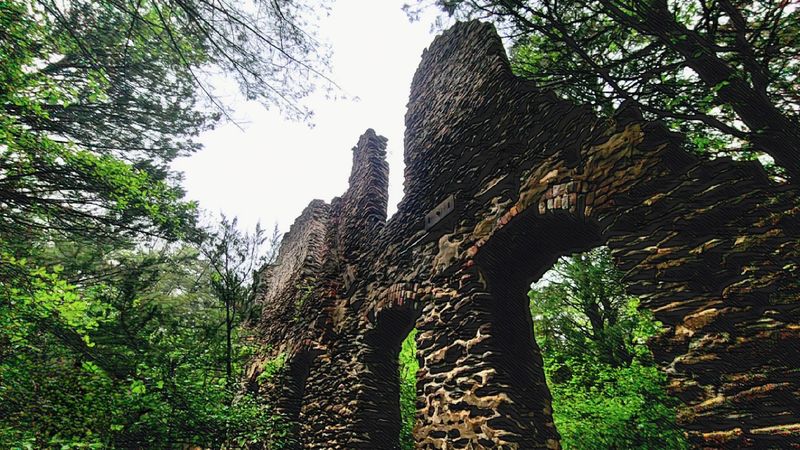
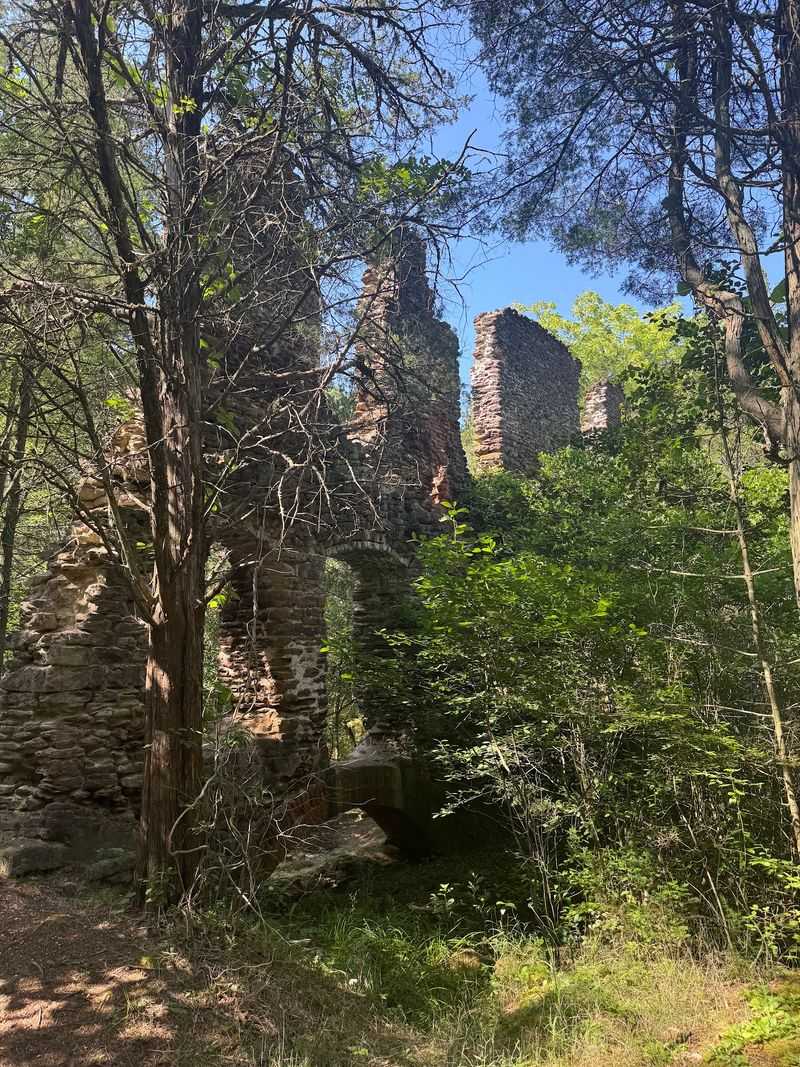
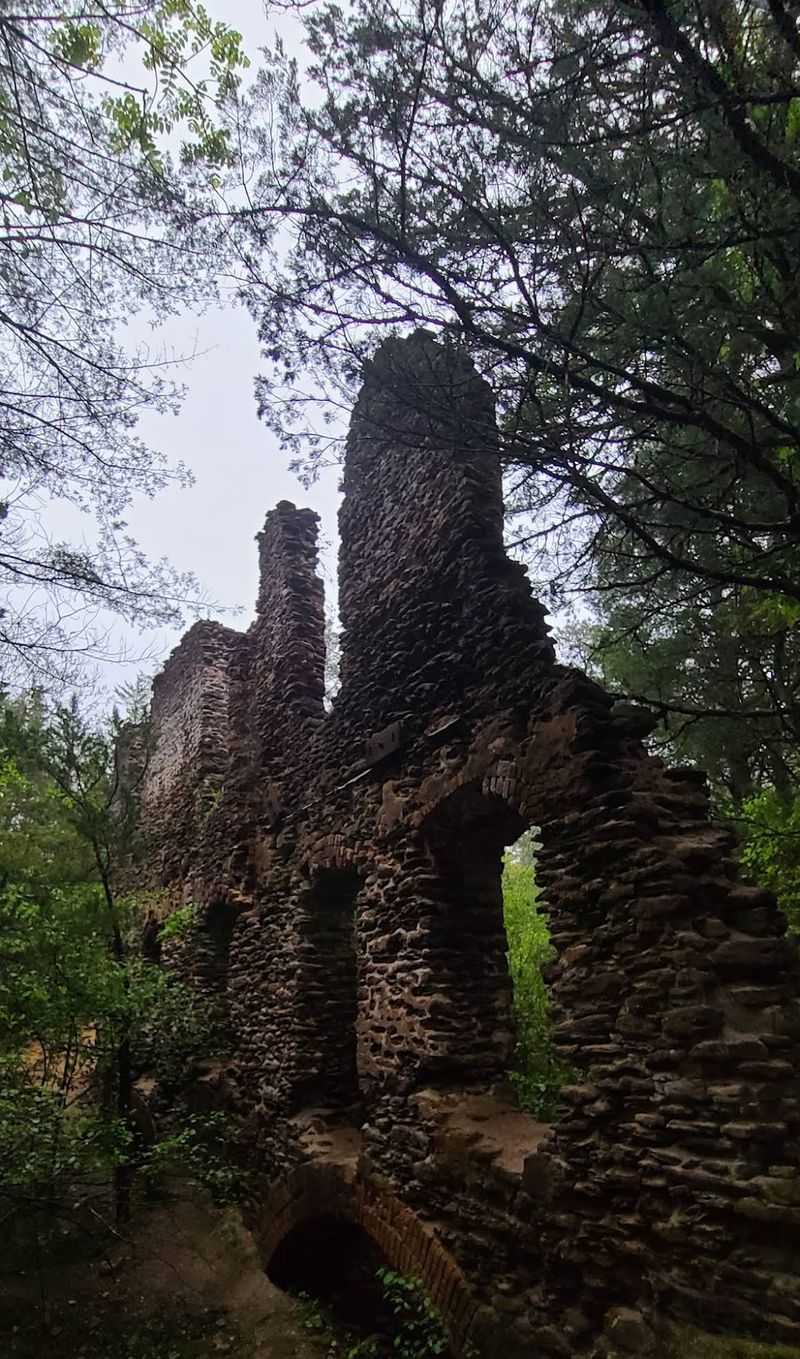
The mill building itself was a giant. Its thick stone walls are the tallest pieces still standing, and they give a real sense of how big this business once was.
Tree trunks now crowd right up against the old stonework.
When you study the ruins, look for the long, straight lines of the factory walls. Try to imagine machines rumbling inside and wagons of grass rolling up to the doors.
It is a strange and wonderful thought that a marsh weed built an entire town.
Gaslights Glowing in the Wilderness
Streetlights in the middle of the pines? Yes, really.
Harrisville had them, powered by a gas generator the Harris family installed, which was a bold upgrade for such a remote spot in that era.
Main Street glowed at night while much of the surrounding forest sat in total darkness. Honestly, that image sticks with me more than almost any other detail about this place.
Families strolling home under soft lamplight, with owls calling from the trees, sounds like something out of a storybook.
The upgrade showed how much the owners believed in their village. They did not treat it as a rough work camp, since they wanted a real town with comforts that bigger places enjoyed.
That kind of pride still shows in how solidly the stone buildings were made.
Nothing of the lamps survives today, so this part of the visit relies on your imagination. Try coming close to sunset, when golden light slips between the trunks and warms the old stone.
It is not gaslight, but it gets you surprisingly close to that same cozy feeling.
Life in a Busy Company Town
Everything a family needed was once within walking distance. Harrisville was a true company town, where the mill provided jobs and the village provided nearly everything else.
There was a grist mill for grinding grain, tenant homes for workers, and a general store stocked with goods. A post office kept folks connected to the outside world.
A public school served the children during the week and doubled as a church on Sundays.
Across from the mill stood grand stone mansions built for the owners. White picket fences lined the streets, which paints a pretty, tidy picture that is hard to match with the quiet woods you see now.
Here is a tip. Keep your eyes low as you wander the edges of the site.
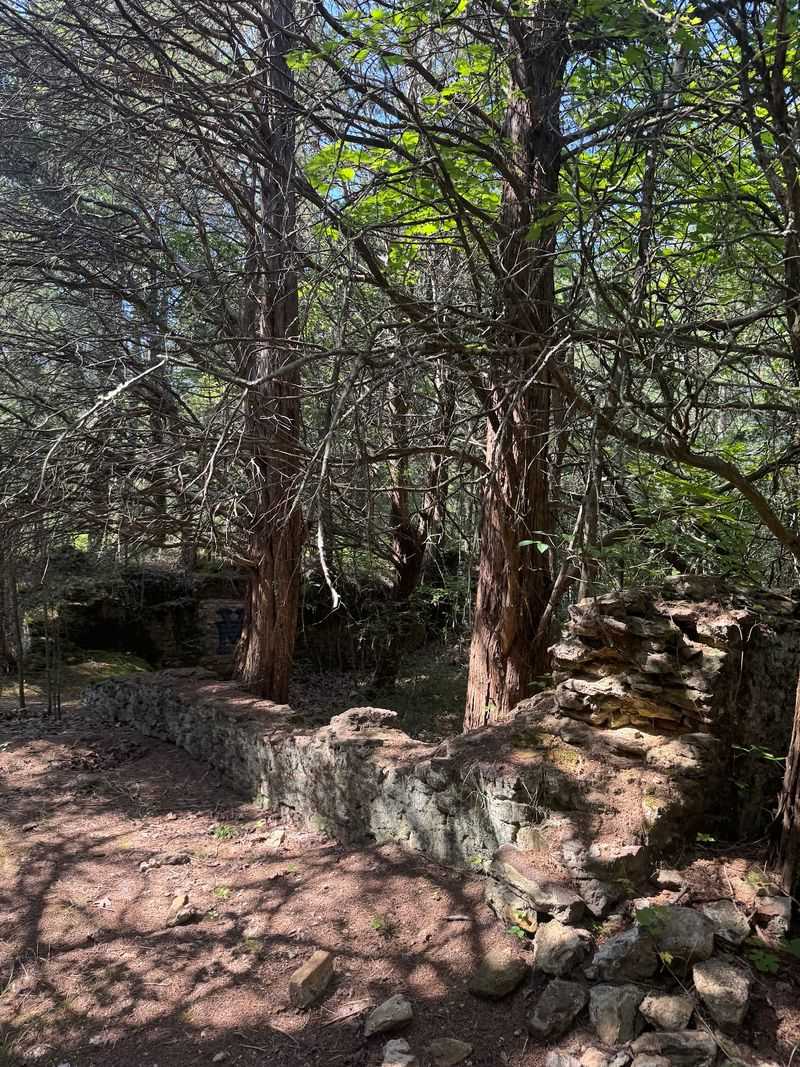
Outlines of old foundations still show up in the surrounding ground, hinting at where houses and shops once stood.
Finding one feels a bit like a treasure hunt. It is a small thrill, and it makes the whole community suddenly feel real and close.
Kids especially seem to love spotting these faint rectangles in the brush.
When the Good Times Slipped Away
Every boomtown story has a turning point, and here it arrived in the late 1870s. Newer paper mills were popping up elsewhere with faster machines and, just as important, easy access to railroads.
Harrisville, tucked deep in the pines, simply could not keep up. Shipping was harder, costs were higher, and profits kept sliding.
The owners took out mortgages to keep things going, but the money problems only grew, and foreclosure followed.
By the 1890s, the paper mill had shut down for good. With the main employer gone, families packed up and moved on to find work in other places.
Homes that once held dinners, chores, and laughter went quiet one by one.
It is a bittersweet chapter. I think it reminds us how much a single industry can shape, and then unshape, an entire community.
In 1896 the nearly empty town was sold, and its land eventually became part of the forest that surrounds it now.
Pause by the mill walls and let that history sink in for a moment. The silence feels different once you know the story.
Fire in the Pines, 1914
Flames did the rest. In 1914, a major forest fire tore through this part of the Pine Barrens and burned much of what remained of the already abandoned town.
Some accounts suggest the fire may have been set on purpose, though that has never been fully confirmed. Either way, the blaze destroyed most of the buildings and their contents, including the heart of the old paper mill.
After that, nobody tried to rebuild. What survived the fire was slowly carried off over the years, as people hauled away stones, lumber, and fixtures.
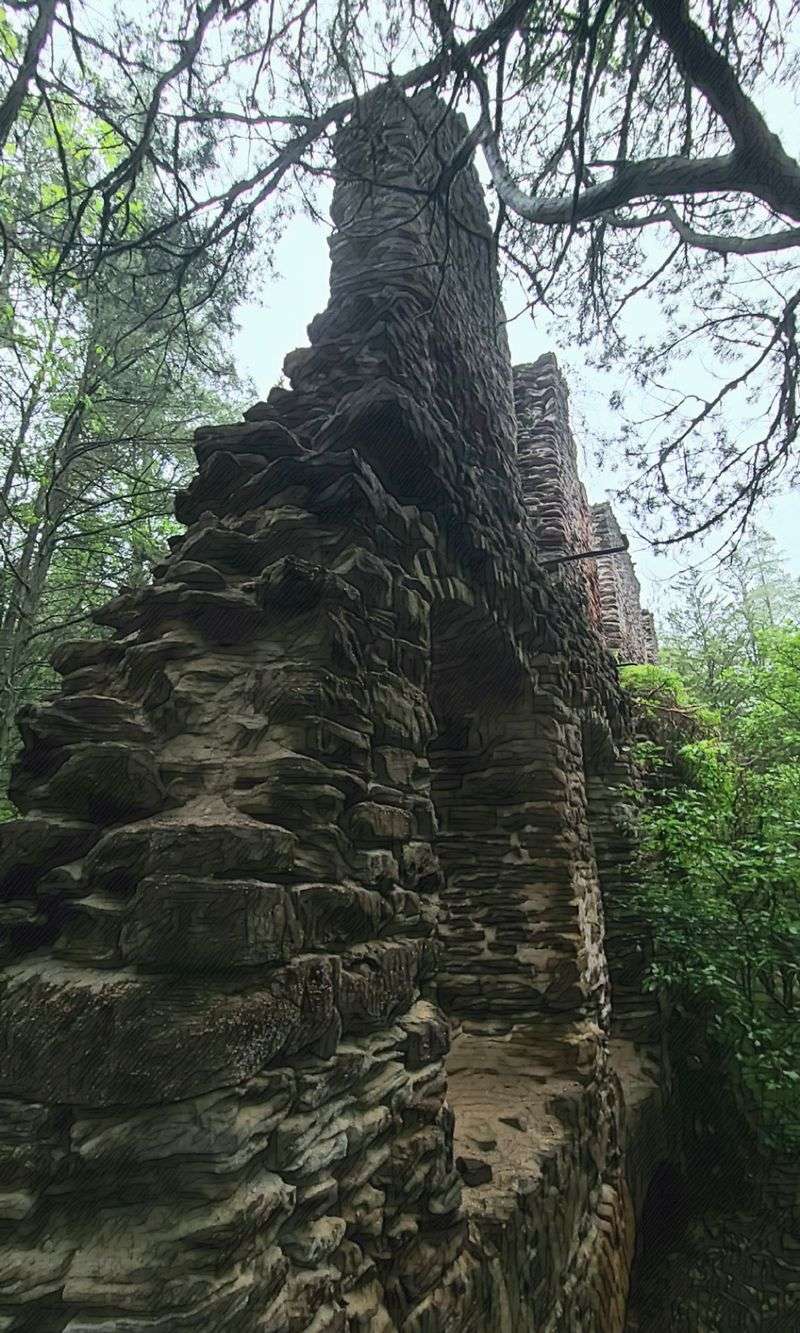
Piece by piece, the village thinned out until mostly the stubborn stone walls were left.
The Pine Barrens are actually shaped by fire, and many of the local pines are built to bounce back after a burn. So while the town could not recover, the forest around it certainly did.
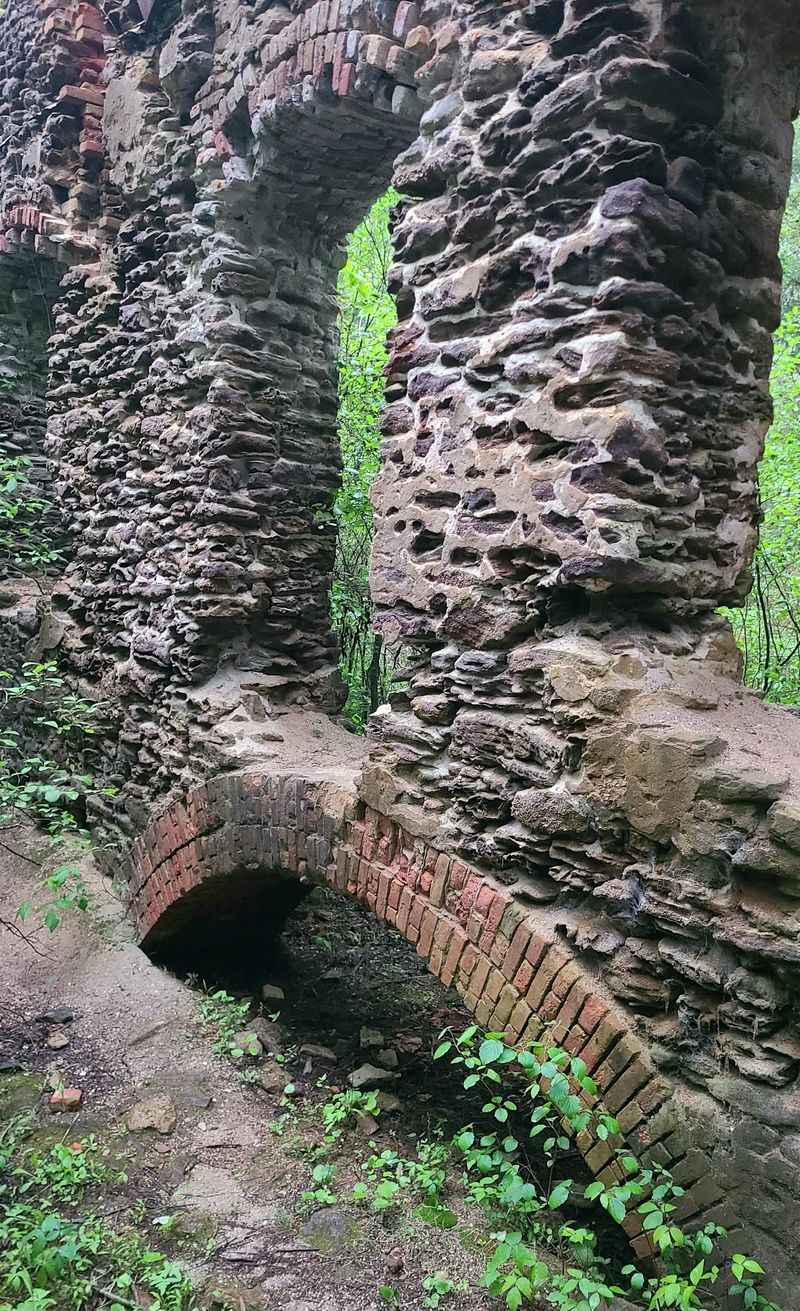
Look closely at the stonework and you might notice darkened patches and rough edges. That mix of scars and survival is part of what makes the site so gripping.
It is history you can see without reading a single sign.
Respecting the Fence and the Forest
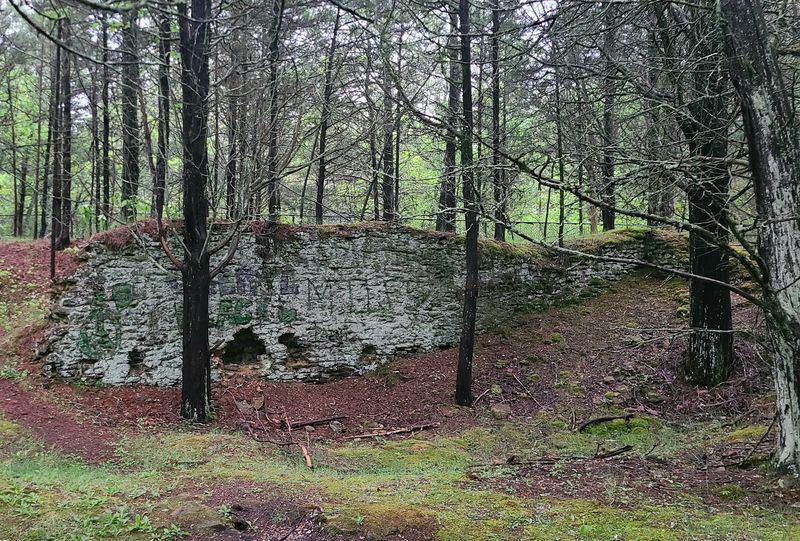
A chain-link fence wraps around the main ruins, and that is a good thing. The walls are fragile, and the fence helps protect them from vandalism and further damage.
You can still get a decent view of the stone remains from outside the barrier. Photographers will find plenty of angles, especially when morning or late afternoon light rakes across the old walls.
Zoom lenses come in handy here.
Signs and markers are limited, so plan ahead before you go. Save a map on your phone, since cell service in the Pine Barrens can be spotty.
Park safely along the road and watch for traffic on Chatsworth Road.
The area is part of a state forest, and it is patrolled. Treat it like an outdoor museum, so take photos, not souvenirs, and never climb on the ruins.
Every stone left in place helps tell the story.
Ticks are common in these woods during warmer months, so long pants and a quick check afterward are smart moves. A little care goes a long way toward keeping this place standing for the next hundred years.
Mystery, Legends, and One Last Look
Ghost towns and the Pine Barrens go together like pinecones and sand. This protected forest is famous for its wild beauty and for folklore, including the legendary Jersey Devil said to roam these woods.
Harrisville adds its own quiet mystery to that reputation. There are no costumed guides or gift shops here, just stone, water, and trees.
For me, that simplicity is exactly the charm.
Nearby, the rest of Wharton State Forest offers trails, rivers, and more historic spots, so it is easy to turn a stop here into a full day outdoors. Batsto Village, another historic site in the forest, makes a great pairing if you want more history.
Canoeing and hiking are popular ways to explore the area.
Before leaving, take one last look at those crumbling walls. They have stood through closures, fire, and more than a hundred years of weather, and they still have stories to share.
It is humbling, in the best way.
You can find Harrisville Ruins, also listed as the Harrisville Historic Site, at Chatsworth Rd, Chatsworth, NJ 08019.
