
There is something hauntingly poetic about a place that once shouted America’s voice across the globe, now standing silent in a New Jersey marsh.
This massive shortwave transmitting station played a critical role during World War II, relaying programming to Europe, South America, and the South Pacific.
It was a secret weapon in the fight against tyranny, beaming truth across the ocean when the world desperately needed it.
The station finally fell silent decades ago, rendered obsolete by satellites and changing technology.
Today, the antennas are gone and the building sits abandoned, slowly being reclaimed by nature.
It is a forgotten monument to a time when New Jersey helped shape global history, a quiet reminder of a powerful past.
How It All Began at Good Luck Point
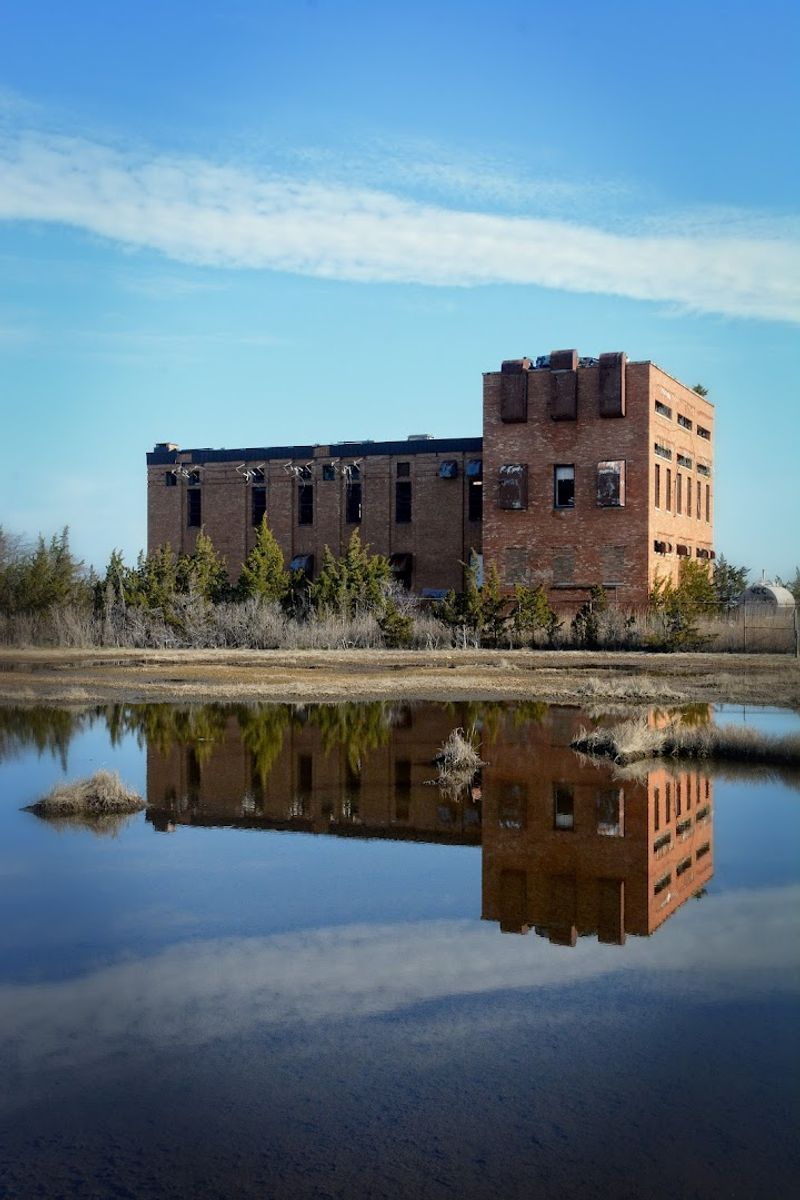
Back in 1929, AT&T made a very deliberate choice when it purchased 175 acres of salt marshland at a place called Good Luck Point in Berkeley Township, New Jersey. The name sounds almost too perfect for a communications outpost, right?
The location was carefully selected because its proximity to the open ocean meant radio signals could travel with minimal interference over land.
By 1930, the station was officially commissioned and assigned the call sign WOO, transferred from an earlier AT&T shortwave facility at nearby Deal Beach. That simple three-letter code would go on to carry enormous historical weight over the following decades.
The initial setup was relatively modest by later standards. A 15 kW shortwave transmitter powered the whole operation, supported by two seventy-foot-high curtain antennas.
The station’s primary mission was providing high-frequency radio telephone communications with Atlantic shipping lanes and land-based stations across Europe and South America. It was the beginning of something much bigger than anyone initially imagined.
Voice of America Finds Its Signal Here
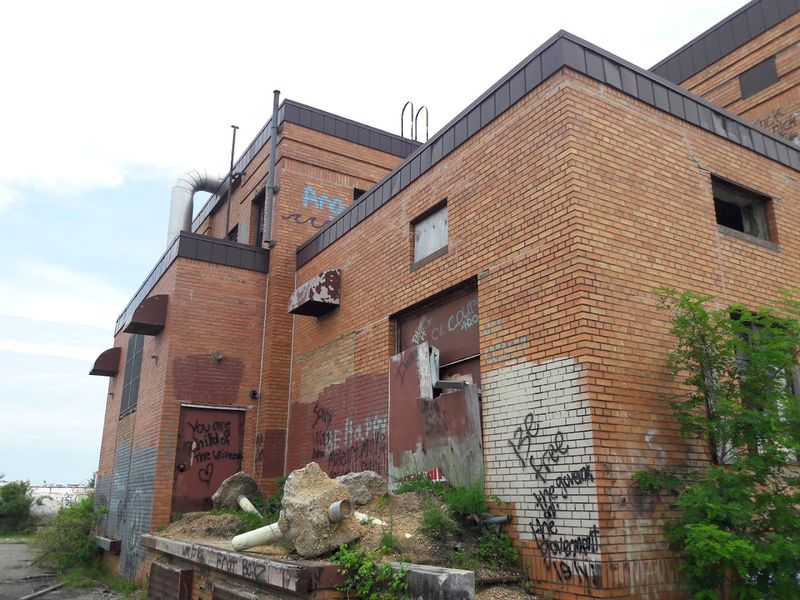
Few stories from World War II carry quite the quiet power of what happened at this New Jersey marsh station.
When the Office of War Information needed to reach occupied Europe, South America, and the South Pacific with news and truthful information, WOO became one of its most essential tools.
Starting in May 1942, a daily four-hour Voice of America broadcast targeting Australia and the South Pacific was launched from here, using the channel call signs WOJ and WOK. Foreign language programming followed quickly.
Spanish broadcasts went out on WOK at 10555 kHz, while French transmissions carried on WOO4 at 8760 kHz.
News bulletins in multiple languages were transmitted under the call sign WDL on 9750 kHz, reaching listeners in places where accurate information was desperately needed. The final documented VOA broadcasts from Ocean Gate occurred in January 1944, under call sign WDI on 5052 kHz.
For those years, this modest marshland building was a genuine lifeline connecting the free world to those living under occupation.
The Engineering That Stretched for Miles
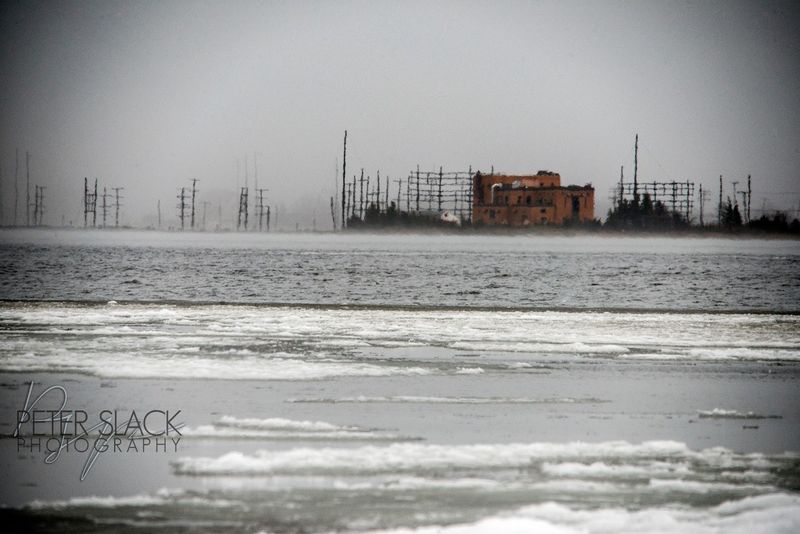
By the mid-1950s, the original curtain antennas were replaced with something far more impressive.
Engineers installed an array of twenty-nine rhombic antennas, some stretching well over 700 feet in length, spreading across the vast salt marsh like a geometric spiderweb drawn by a giant hand.
These were not ordinary antennas. Rhombic designs are highly directional, meaning they could focus radio energy in a specific direction with remarkable efficiency.
The goal was to punch signals thousands of miles across the Atlantic Ocean, reaching cities like Buenos Aires, San Juan, Panama, Bermuda, and Rio de Janeiro with reliable clarity.
Standing at this site today, it is genuinely difficult to picture what that antenna farm must have looked like in its prime. Poles and wires stretched across acres of marshland in configurations that resembled something between an art installation and a military operation.
The engineering ambition behind the whole setup was staggering, and it quietly transformed this small New Jersey coastal location into one of the most powerful communication nodes in the Western Hemisphere.
The Brick Building That Housed Extraordinary Power
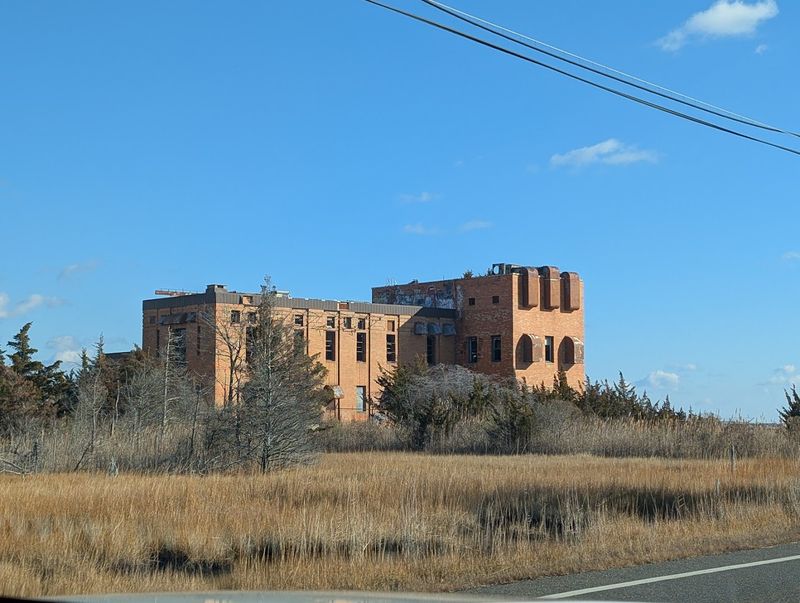
The transmitter building itself was not built casually. AT&T designed it as a robust, purpose-built structure specifically engineered to house powerful radio transmitters that generated enormous amounts of heat and electrical energy.
Thick brick walls and reinforced concrete floors were not just architectural choices; they were engineering necessities.
Walking past this building today, you can still sense the deliberate weight of its construction. The walls are massive.
The footprint is large. Even in its current deteriorated state, the sheer solidity of the structure communicates something about the seriousness with which it was originally built.
Transmitters of that era were enormous machines, nothing like the compact electronics we carry in our pockets today. They generated heat comparable to industrial furnaces, and the building had to be designed around managing that energy safely.
The brick shell that remains standing on the Berkeley Township marshland is essentially a monument to mid-century industrial engineering, a physical record of a time when global communication required massive infrastructure and an equally massive commitment to building it right.
Destinations That Received the Signal
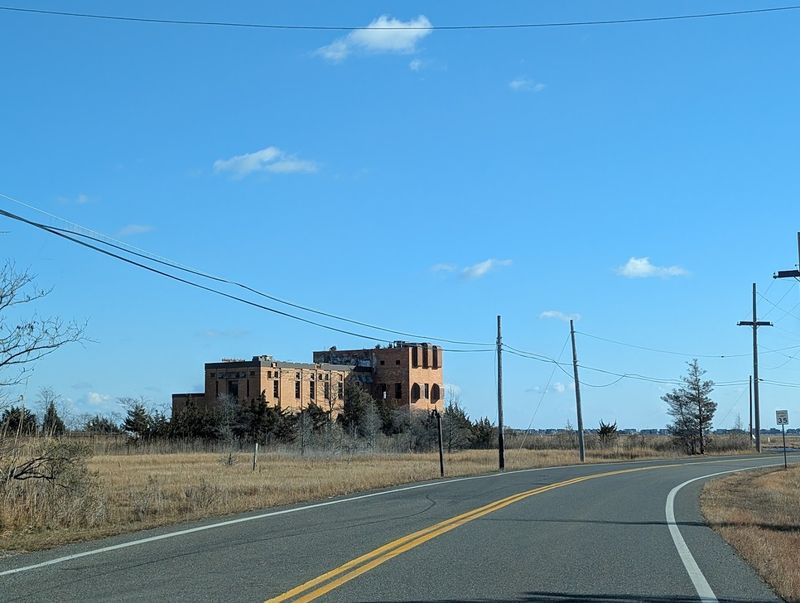
The reach of this station was genuinely global. From a strip of New Jersey marshland, signals traveled thousands of miles to cities and ports that most people in Berkeley Township probably never visited.
Buenos Aires, Rio de Janeiro, Bermuda, Panama, San Juan, and stations across Europe all received transmissions originating from this exact location.
During the war years, that reach carried enormous strategic importance. Broadcasting news in Spanish, French, and other languages meant that people in occupied and neutral territories could tune in and hear something other than Axis propaganda.
That is a remarkable thing to consider when looking at a crumbling building surrounded by cattails and osprey nests.
The technical challenge of reliably sending a clear signal across thousands of miles of open ocean was not trivial. The choice of Good Luck Point as the station’s location was directly tied to minimizing the land-based signal attenuation that would have weakened transmissions.
Every design decision, from the antenna orientation to the transmitter power levels, was made with those distant destinations in mind.
From Telephone Poles to Osprey Platforms
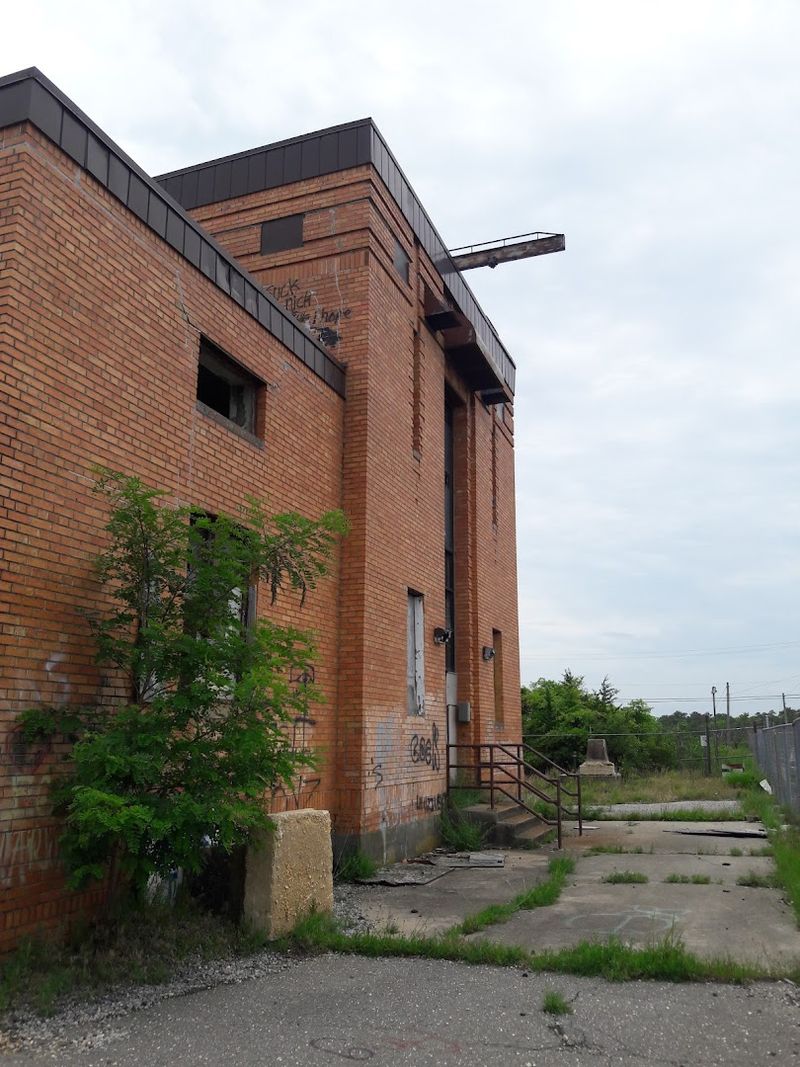
There is something genuinely charming about what happened to the antenna poles after the station closed. Most of the wooden poles that once supported the massive rhombic antenna arrays were removed between 2016 and 2017.
But not all of them. Some were deliberately left standing, repurposed as nesting platforms for ospreys.
Those same structures that once carried radio signals to South America now support the nests of migratory birds in a federally managed wildlife refuge.
The United States Fish and Wildlife Service acquired the property through the Trust for Public Land in 2003, and the transformation from communications infrastructure to ecological habitat has been remarkable.
Egrets, herons, bald eagles, and ospreys now call this place home. The salt marshes that AT&T chose for their low signal interference are, it turns out, exceptional wildlife habitat.
Standing at the edge of the refuge and watching an osprey circle above a pole that once anchored a wartime broadcast antenna is one of those quietly surreal experiences that stays with you long after you have driven home.
Why the Station Finally Went Silent
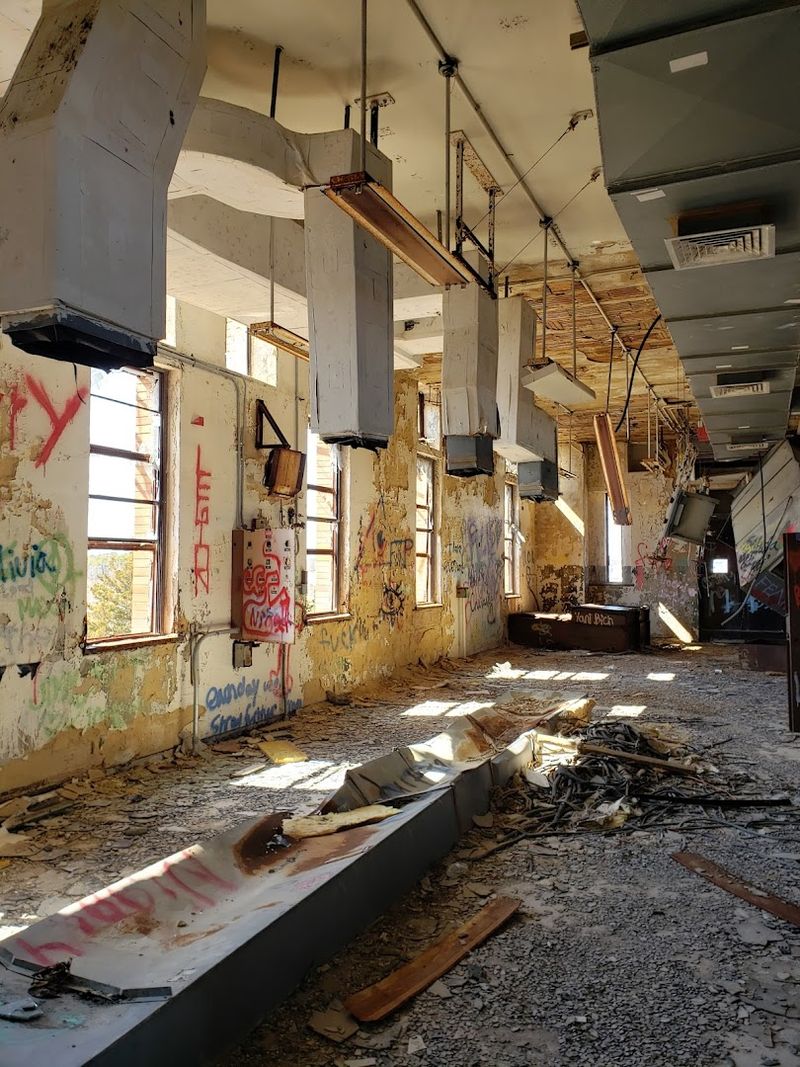
For nearly seventy years, the Ocean Gate station transmitted signals reliably across the Atlantic. Then the world changed around it.
Undersea fiber optic cables and satellite communication systems gradually made shortwave radio telephone service commercially obsolete, and the economics of maintaining a large antenna farm on the New Jersey coast stopped making sense.
AT&T announced the end of its high seas service in February 1999. On November 9, 1999, the Ocean Gate station officially went silent, along with its sister stations.
The Federal Communications Commission authorized the discontinuation that year, marking a genuinely historic moment. It was the first time since the Great Depression that no signals had left those antenna fields.
There is something poignant about that specific detail. Through World War II, through the Cold War, through decades of technological change, this station kept transmitting.
The fact that it finally fell silent not because of enemy action or catastrophic failure but simply because newer technology made it unnecessary feels like a fitting, if quiet, ending for a facility that had served so faithfully for so long.
Why This Marshland Landmark Deserves to Be Remembered

It would be easy to drive past Bayview Avenue and never give the crumbling brick building a second thought. Most people probably do exactly that.
But the story embedded in that structure connects directly to some of the most consequential moments in twentieth-century history.
This was a place where technology and human urgency came together during a global crisis. Voice of America broadcasts carried from here reached people in occupied territories who had no other access to free information.
That is not a small thing. That is the kind of history that deserves a marker, a museum, a restored building, something more than graffiti and broken glass.
The surrounding wildlife refuge is genuinely beautiful and worth visiting on its own terms. Migratory birds fill the marsh with movement and sound throughout the year, and the landscape has a peaceful, unhurried quality that feels miles away from the intensity of what once happened here.
The contrast between past purpose and present quiet is, in its own way, the most compelling thing about the whole site.
Address: 66-98 Bayview Ave, Bayville, NJ
