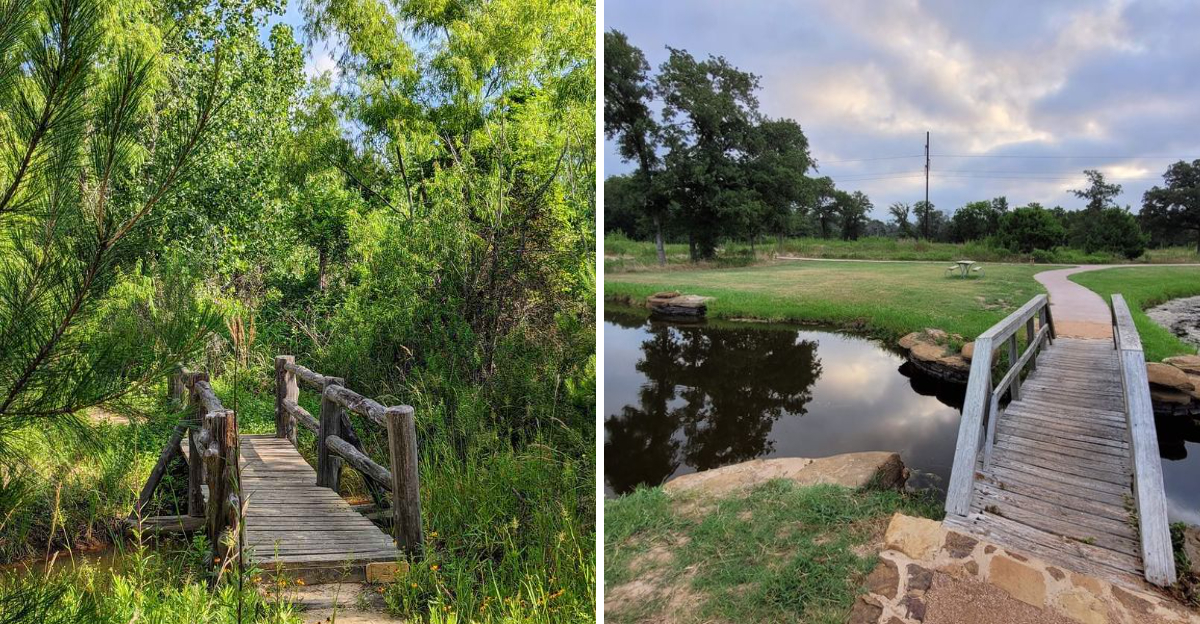
Five dollars barely covers a fancy coffee anymore, so getting an entire Texas state park for that adult entrance fee feels refreshingly reasonable.
The park offers about seven miles of hiking trails through the distinctive Lost Pines landscape, including routes around a small lake and through recovering loblolly pine forest shaped by major wildfires in recent years.
Kids 12 and younger currently enter free, and visitors can also fish, camp, bike, geocache, and explore historic structures built by the Civilian Conservation Corps.
The hiking is varied enough to fill a solid outing without requiring expedition-level planning.
That makes this Texas escape especially appealing when the goal is simply to spend a few hours outside, get properly dusty, and return home without discovering that nature somehow charged admission like a theme park.
The Lost Pines, A Forest That Shouldn’t Be Here
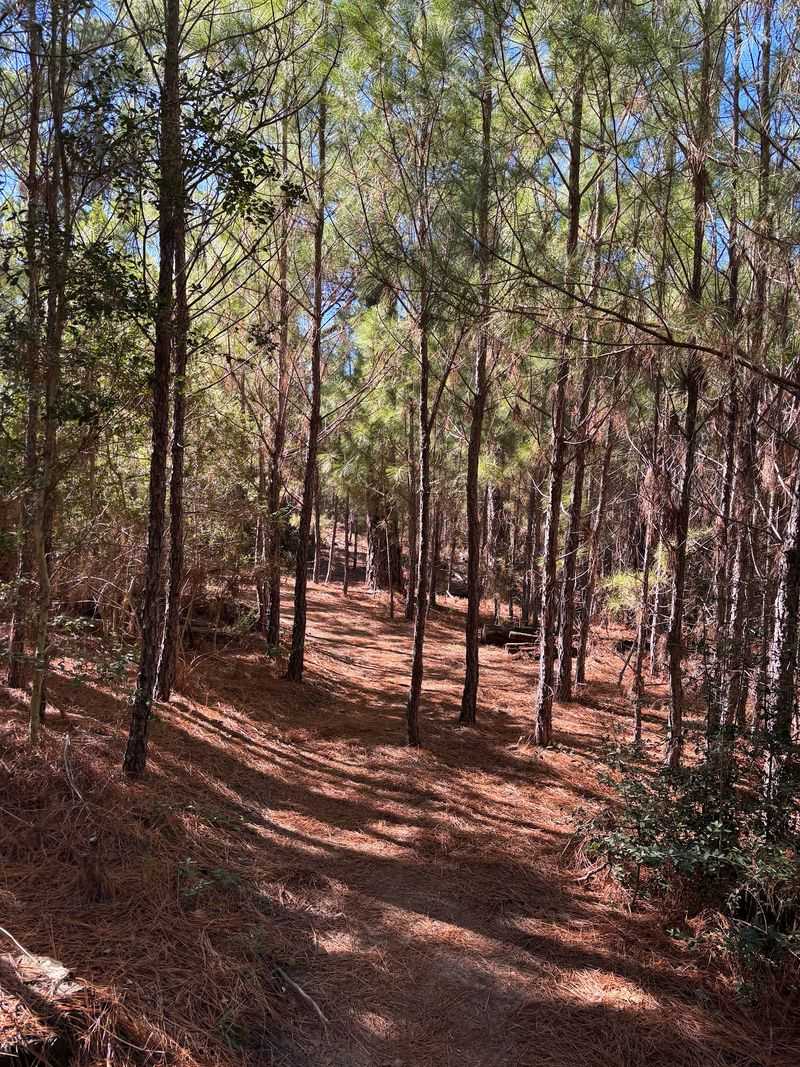
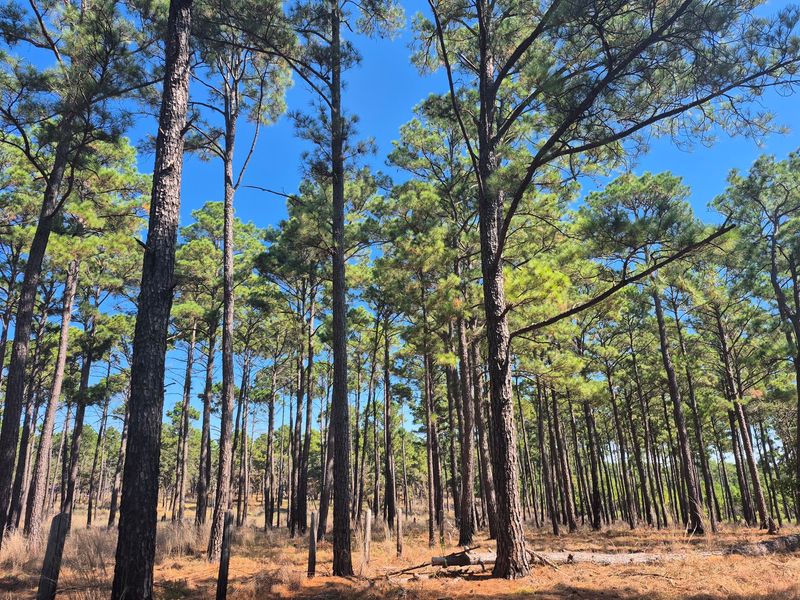
Pine forests in Texas usually mean the eastern part of the state, somewhere near Louisiana. Bastrop breaks that rule by about 100 miles.
The loblolly pines here are the westernmost stand of their species in the country, cut off from their eastern cousins and left to figure things out alone.
Over generations they adapted, and researchers have found these trees can survive on roughly 30 percent less rainfall than loblollies growing in East Texas.
That is a quiet kind of toughness, and it shows in the way the trunks lean and stretch toward light.
The park sits inside the Post Oak Savannah region, which explains the mixed feel of the place. Pines rise overhead while post oaks, shrubs, native grasses and wildflowers fill in the gaps below.
Underfoot the soil turns sandy and gravelly, with a clay layer hidden below that traps water and keeps the pines alive through dry stretches. Walking the trails, I kept noticing how the ground shifted from soft sand to loose gravel within a few steps.
Sunlight behaves differently here too. Instead of the wide-open glare of a Hill Country trail, light arrives in patches and stripes.
Bring a camera if you like texture more than sweeping views. The best photos in this park tend to be small ones, a cluster of pine cones or a shaft of light on a sandstone outcrop, rather than a panorama.
Lost Pines Loop, The 8.4-Mile Test
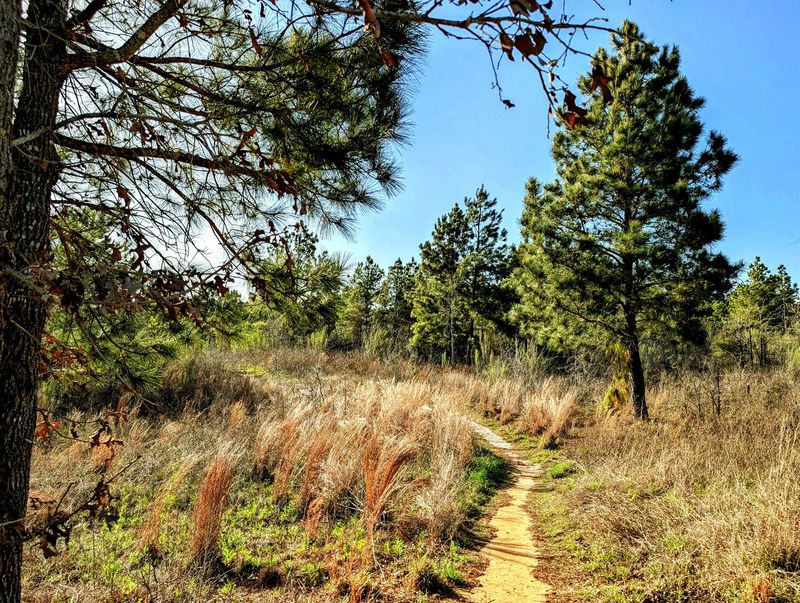
Anyone who thinks Central Texas is flat has not hiked the Lost Pines Loop. At 8.4 miles, it is the park’s signature route and the one that earns bragging rights.
The trail rolls through changing terrain, climbing steep pitches and then easing into long, gradual descents. Nothing about it is technical, but the repetition of up and down adds up faster than expected.
Start early, especially between May and September. Shade helps, though the pine canopy has thinned in places and the sun finds its way through.
Water is the main thing to plan for. There are no reliable refill points once you are deep in the loop, so carrying at least two liters per person is sensible, and more in summer heat.
Trail blazes painted on tree trunks mark the way, and following them carefully matters because side spurs branch off in several spots. A paper map from park headquarters is worth grabbing since phone signal wanders in and out.
Footing varies between packed dirt, loose sand and exposed rock. Trail runners work fine, though hiking shoes with a bit of grip handle the sandy descents better.
Budget three to four hours at a relaxed pace with breaks. Honestly, the breaks are half the fun.
Sitting on a log listening to woodpeckers hammer away somewhere overhead is the sort of thing that makes the mileage feel shorter than it is.
Scenic Overlook Trail And A CCC Picnic Spot Frozen In Time
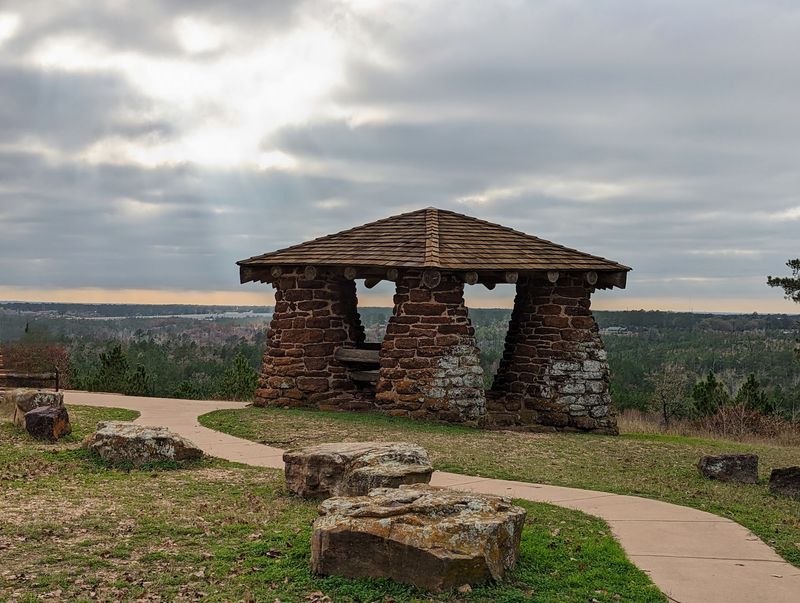
Some trails reward you with a view. Others hand you a piece of history, and the Scenic Overlook Trail does both.
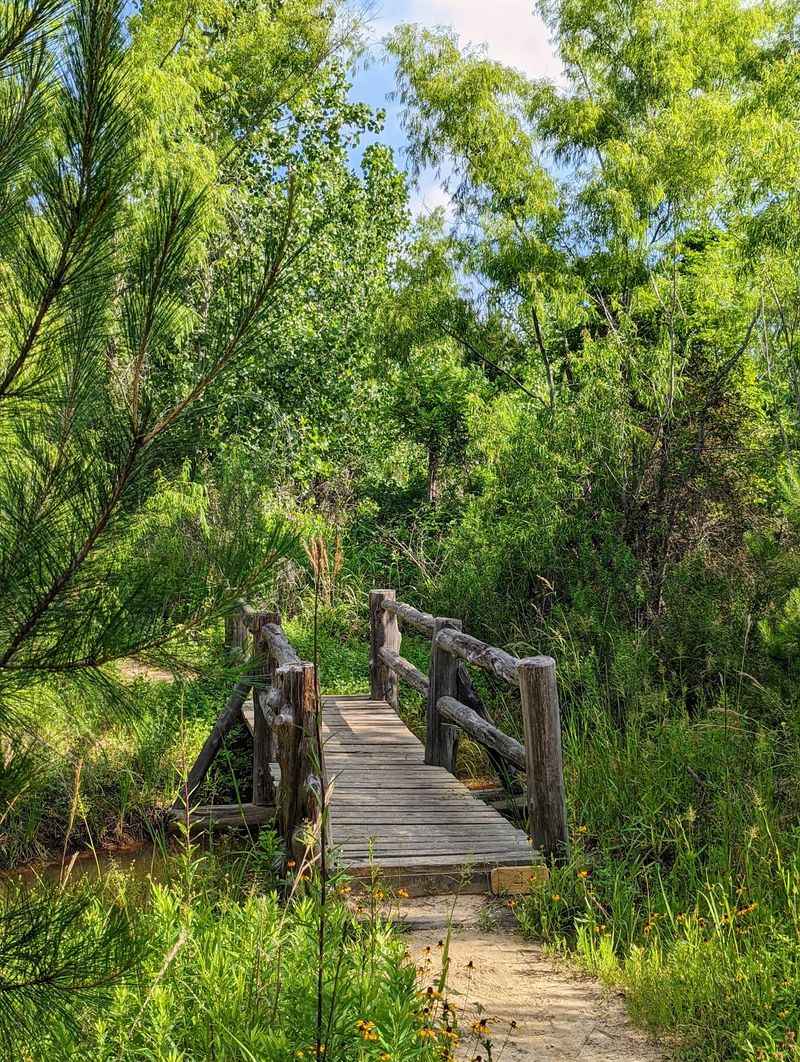
Covering about 1.7 moderate miles, the path links up with the inner loop trails that follow Copperas Creek. Along the way it passes an original hike-in picnic area built by the Civilian Conservation Corps, which is easy to walk past if you are not paying attention.
The stonework is the giveaway. Local rock, stacked and shaped by hand, sitting exactly where crews left it in the 1930s.
There is something grounding about resting at a table that has been holding up sandwiches for nearly a century. The CCC crews who built it were young men working through the Great Depression, and their attention to detail still holds.
Creek sections of the trail feel cooler and greener than the ridges above. After rain, the water actually runs, and the sound follows you for a stretch.
Elevation change is gentle enough for most fitness levels, though a few short climbs will get your breath going. Kids around eight and up usually handle it fine.
Late afternoon light works well here, filtering low through the trunks. Bring a snack and plan to stop.
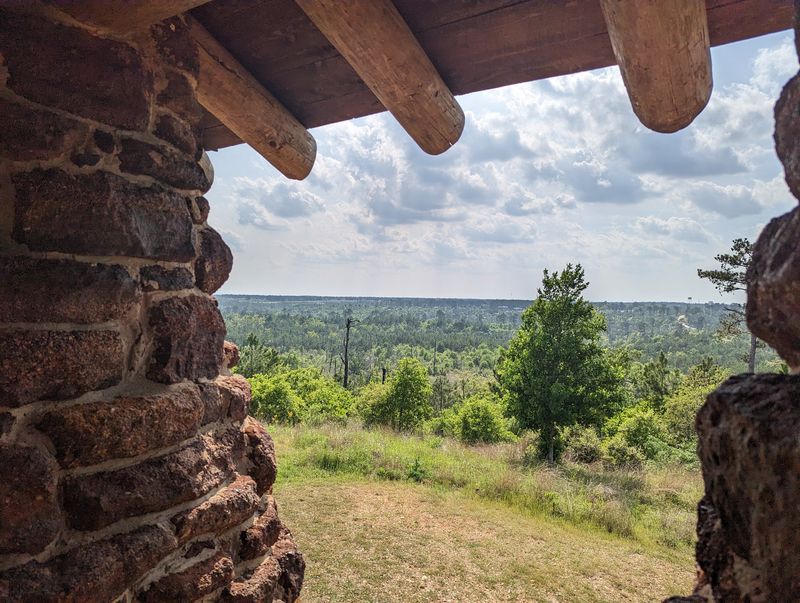
The overlook itself is not a dramatic cliff, so adjust expectations. What you get instead is a long, layered view across recovering forest, which tells its own quieter story.
Heron Hideaway And The Rocky Walk Around Little Alum Creek Lake
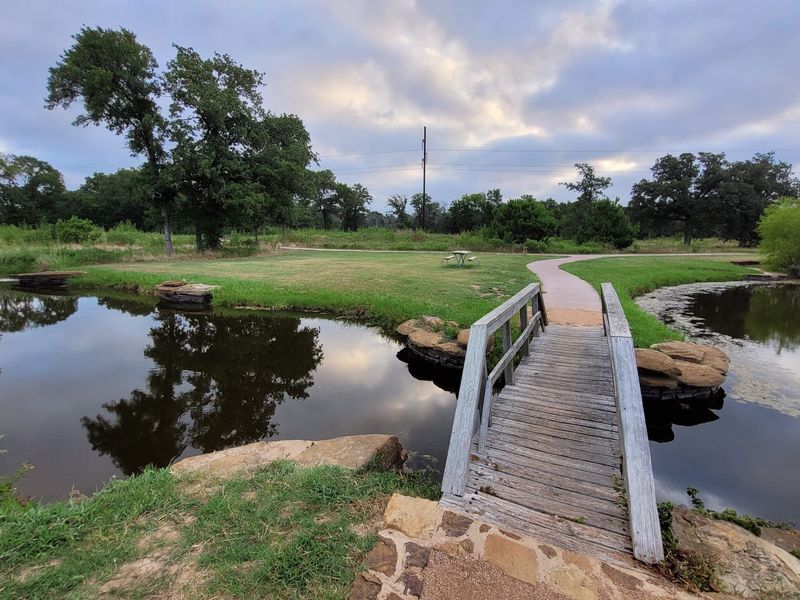
Water changes the mood of a hike, and Heron Hideaway proves it. The 1.4-mile route wraps around Little Alum Creek Lake on rocky ground that keeps your eyes on your feet more than you would like.
Take the trade-off anyway. The payoff is a shoreline circuit where wildlife shows up regularly and the pace naturally slows.
Birders do well here. Herons, of course, but also flycatchers, warblers and raptors circling above the treeline.
Fishing is popular along the banks, and shore fishing inside Texas state parks does not require a license. Loaner gear is available through the park, which makes it easy to try without hauling equipment from home.
Sturdy shoes matter on this one. The rocks are uneven and a few sections tilt toward the water, so flip-flops are a bad idea.
Morning is the golden window. Wildlife is active, the light sits low on the water, and the trail stays comparatively cool.
Sit still for ten minutes on the far side of the lake and things start happening. Turtles surface, dragonflies patrol the shallows, and something rustles in the grass behind you.
Distance-wise it is short enough to pair with another trail the same day. Combining it with a spur or two makes a satisfying half-day without much driving between trailheads.
Binoculars earn their space in the pack here more than anywhere else in the park.
Short Spurs For Beginners, Kids And Slow Mornings
Not every hike needs to be an event. Bastrop keeps a handful of short spurs that work beautifully for little legs, tired legs or mornings when ambition is low.
Piney Hill Spur runs just 0.3 miles and shows off exposed Carrizo sandstone, the same stone the CCC used across the park. Touching it makes the connection between landscape and architecture click.
Pine Warbler Trail is another 0.3-mile stretch, threading through native grasses near Copperas Creek. Animal tracks turn up in the soft ground, which turns the walk into a guessing game for kids.
Post Oak Spur adds half a mile with plenty of shade from the oaks that give it its name. On a hot day, that shade is the whole point.
Farkleberry Spur covers 0.4 miles on a gentle slope and is often recommended for beginners. Bird watching is especially good along it, partly because the pace stays slow.
Trails on the south side of the park road near Lake Mina are wheelchair accessible, which makes the park genuinely usable for more visitors. Worth knowing if someone in your group needs firmer, flatter ground.
Stack two or three spurs together and you get a full outing without a big commitment. That flexibility is one of the park’s best features.
The name Farkleberry alone is worth the trip. It refers to a real native shrub, and yes, saying it out loud is fun.
A Forest Rebuilding Itself After The 2011 Fire
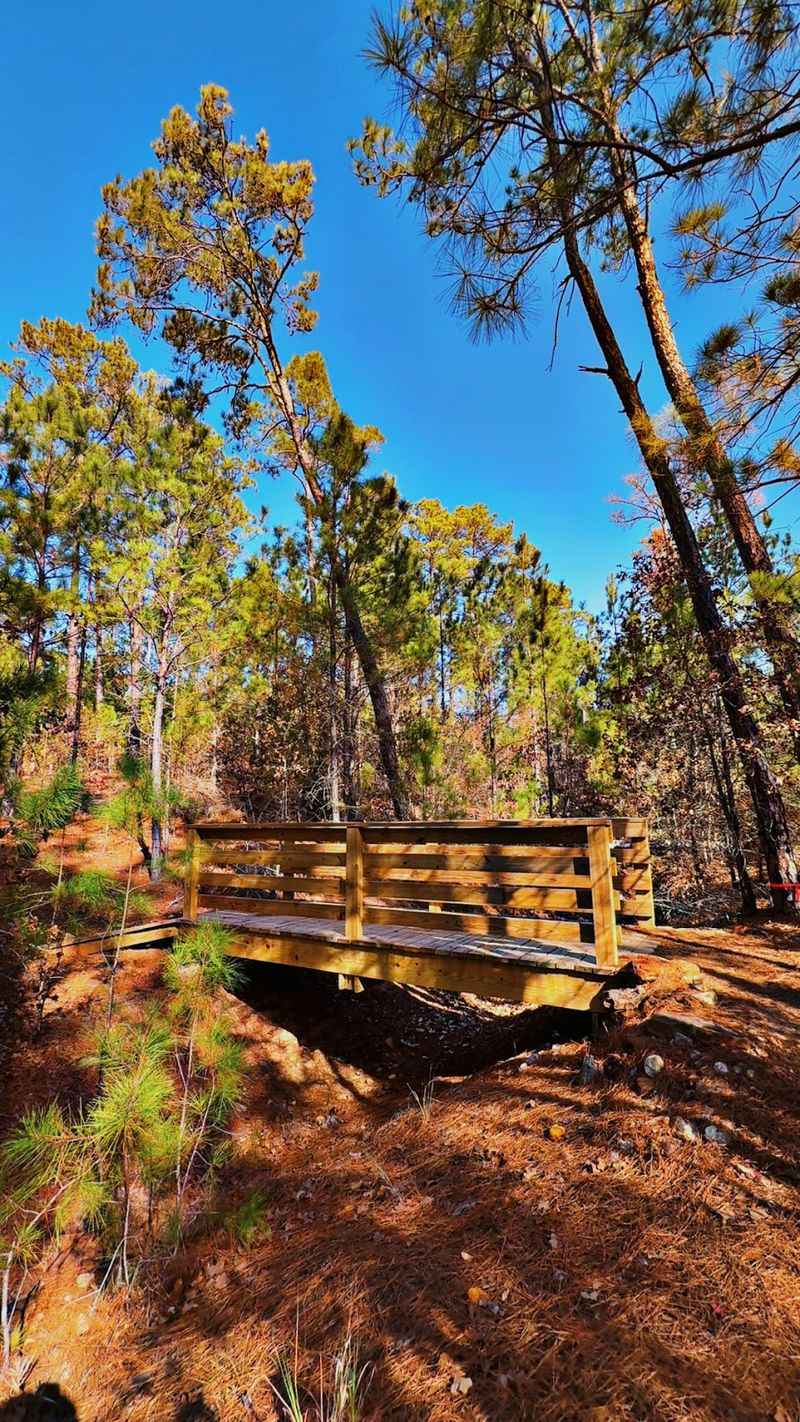
The 2011 Bastrop County Complex wildfire hit hard. Roughly 96 percent of the park’s pine forest was affected, and the scars are still visible in places.
What surprised me most was how green it looks now. Young pines crowd the slopes, grasses fill the open ground, and wildflowers take advantage of sunlight that never used to reach the forest floor.
Standing burned trunks rise between the new growth like pale posts. They are stark, but they also give the landscape a layered, honest look you rarely see in parks.
Recovery here has involved years of replanting and monitoring. Loblolly seedlings grown from local seed stock were planted across the burned areas so the genetic adaptations of the Lost Pines carry forward.
Walking through it is a lesson in patience. Pines take decades to reach full height, so what visitors see today is a forest in its early chapters.
Photographers should look for contrast between the dark charred bark and bright new needles. It photographs better than it sounds.
The interpretive center explains the fire, the ecosystem and the recovery work with displays that are easy to follow. Fifteen minutes inside makes the trails outside read differently.
Understanding what happened here changes the whole visit. Instead of noticing what was lost, most people end up noticing how stubbornly things grow back.
Sleeping In A 1930s Stone Cabin Or Under The Pines
Renting a cabin built during the Great Depression is not something most state parks can offer. Bastrop can.
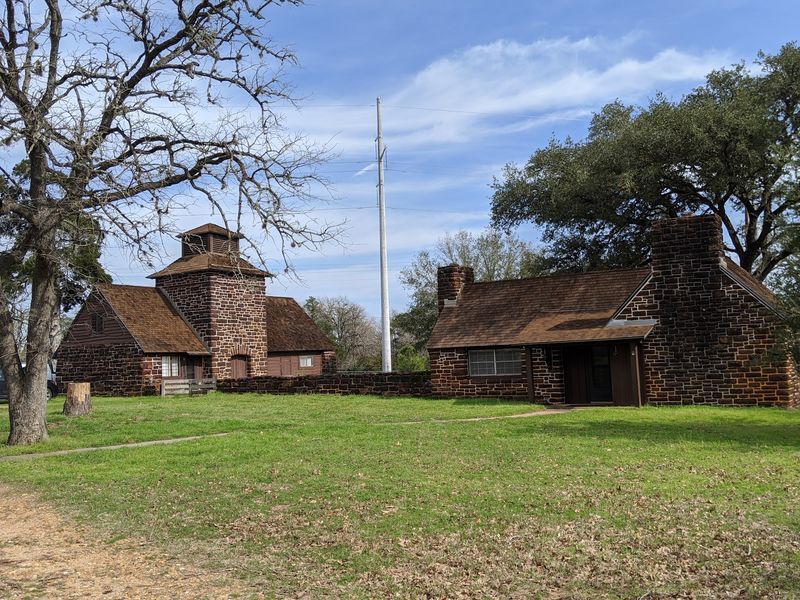
The historic cabins date to the 1930s and were designed by architect Arthur Fehr in the National Park style, using local stone so the buildings blend into the woods rather than stand out. The park earned National Historic Landmark status in 1997, largely thanks to this architecture.
Thick stone walls keep interiors cool. Fireplaces, wood detailing and small windows give the rooms a lived-in warmth that no modern build quite copies.
Camping options run wider than the cabins alone. Walk-in tent sites suit people who want quiet, full hookup sites handle RVs, and group barracks work for larger gatherings.
Nights get dark and surprisingly loud. Owls, insects and the occasional rustle of an armadillo keep the soundtrack going.
Reservations are strongly recommended, particularly in spring and fall when the weather is at its friendliest. Cabins book out well ahead, so planning weeks in advance is realistic.
Waking up inside the park means hitting the trails before the day heats up. That head start alone justifies staying overnight.
Pack layers regardless of season, because temperatures under the pines drop more than expected after sunset. A light jacket in October is not overkill.
Morning coffee on a stone porch, with pine needles underfoot, is a small pleasure that sticks with you.
Birds, Toads And Everything Else Living Out There
With 224 bird species recorded, this park is a serious birding destination. It also holds certification as a Bird City Texas community, which is not handed out casually.
Pileated woodpeckers are the showstoppers. Their calls carry, and spotting one working a trunk is a genuine thrill.
Flycatchers, warblers and raptors round out the list depending on season. Spring migration brings the biggest variety, though winter has its own regulars.
Mammals are easy to find without trying. White-tailed deer drift across the road at dusk, and rabbits, squirrels, opossums and armadillos turn up along trail edges.
The park also shelters the endangered Houston toad, which depends on the Lost Pines ecosystem to survive. Ponds scattered through the park serve as breeding grounds, which is why staying on marked trails matters here more than usual.
Listening beats looking in many cases. Stop walking, stand still, and the woods fill in with sound you had been drowning out with your own footsteps.
Nature programs run regularly and cover topics from wildlife to park history. Checking the schedule before a visit is a good move.
Geocaching adds another layer for anyone traveling with restless kids. So does orienteering, since the park is a recognized site for it and maps are available at headquarters.
Dawn and dusk remain the best hours for wildlife. Set the alarm early and the park feels almost private.
Planning A Cheap, Easy Visit From Austin
Value is a big part of the appeal here. Daily entry runs five dollars for anyone 13 and older, and children 12 and under enter free.
A Texas State Parks Pass covers unlimited entry across many parks for an annual fee, plus discounts on camping and rentals. Frequent visitors do the math quickly.
Discounted rates apply for Texas residents 65 and older, permanently disabled individuals, active-duty military, veterans and Gold Star family members. Worth asking about at the gate.
Reservations for day use and camping are highly recommended, especially during busy seasons. Parks in this region can reach capacity, and a reservation removes the risk of a wasted drive.
Getting there takes roughly 32 miles of driving east from Austin. That makes it an easy day trip or an overnight without much fuss.
Park Road 1C connects Bastrop State Park with neighboring Buescher State Park and is a favorite among cyclists for its curves and tree cover. Biking is also allowed on surfaced roads and designated trails.
Extras include picnic areas, a seasonal swimming pool that requires a ticket, an 18-hole golf course and a park store with gifts and souvenirs. Fishing at Lake Mina rounds out the list.
Spring and fall bring the most comfortable hiking weather. Summer works if you start at sunrise and treat afternoons as pool time.
Address: 100 Park Road 1A, Bastrop, TX 78602
