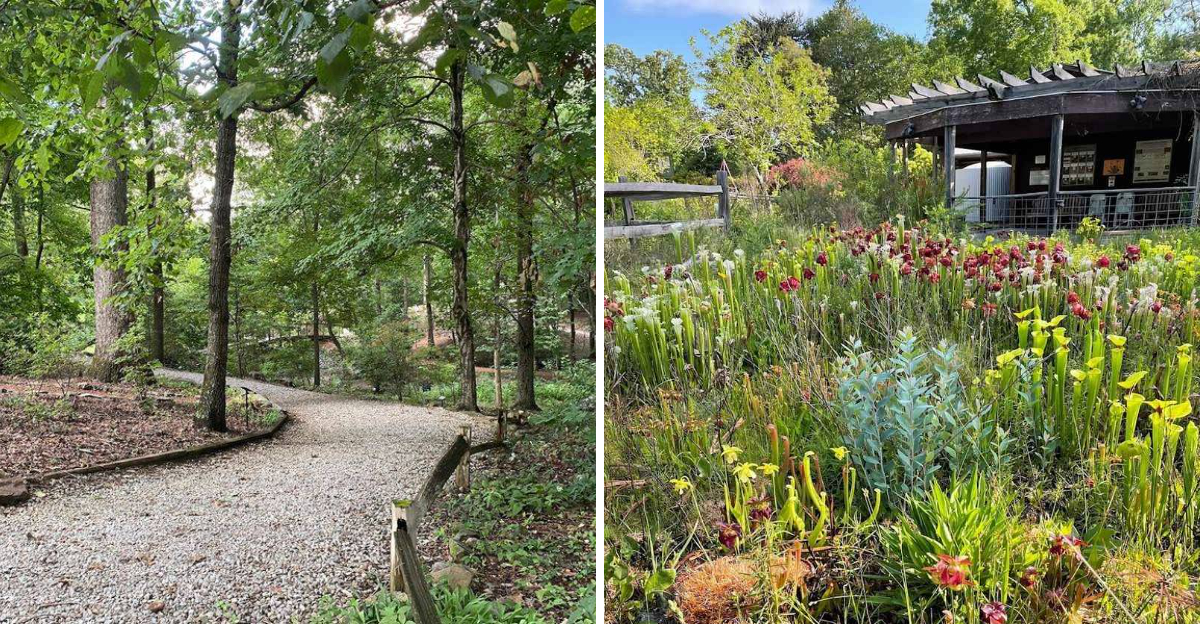
What if one of your next outdoor adventures did not require a ticket, a reservation, or a big travel plan?
This Alabama arboretum gives visitors the chance to wander through 14 acres of natural scenery, explore miles of trails, and enjoy a peaceful break from the usual routine whenever they want.
The experience is less about rushing from one attraction to another and more about taking time to notice the plants, landscapes, and quiet moments along the way.
Whether you are looking for a relaxing walk, a place to spend a few hours outside, or a new spot to explore throughout the seasons, this destination makes enjoying nature simple.
Sometimes the best escapes are the ones that are easy to visit and leave plenty of room to slow down.
A Gateway to Alabama’s Natural Heartbeat
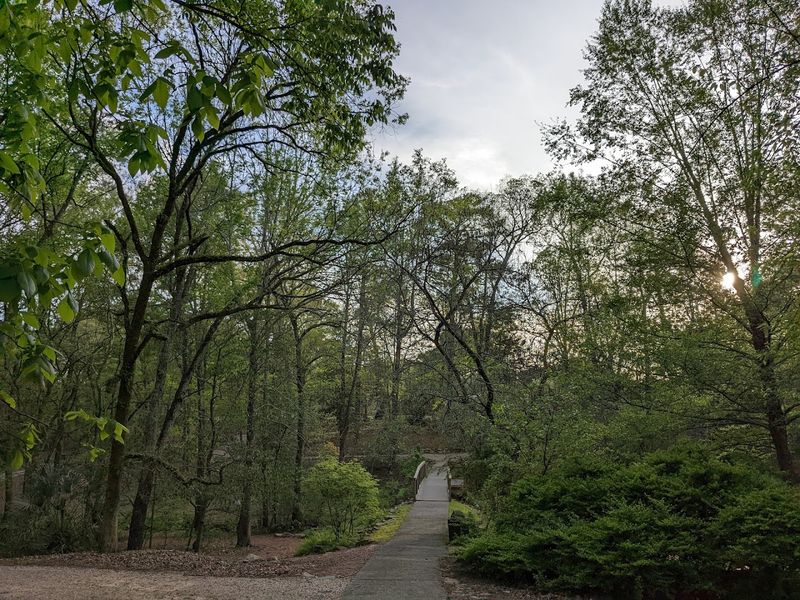
Not every green space earns the word “living museum,” but the Donald E. Davis Arboretum genuinely does.
Spread across 13.5 carefully cultivated acres on the Auburn University campus, this place was designed to showcase the full spectrum of Alabama’s native plant ecosystems in one walkable, accessible location.
What makes it feel different from a typical park is the intentionality behind every section. Each area represents a distinct natural habitat found across the state, from the sandy coastal dunes of south Alabama to the rich, dark soils of the blackbelt prairie region.
Moving from one zone to the next, you get a real sense of how dramatically the landscape of Alabama shifts from one corner to another.
The arboretum is named in honor of Donald E. Davis, a longtime Auburn University faculty member whose passion for native plants shaped its identity and mission.
That legacy is visible everywhere, in the careful labeling of species, the preservation of natural features, and the overall commitment to authenticity. I found myself reading nearly every interpretive sign, genuinely absorbed by the stories each plant section had to tell.
It is not a manicured garden in the traditional sense. It feels wilder, more honest, and more connected to the actual landscape of the South.
That realness is exactly what makes it worth visiting.
You’ll Find Hidden Views, Quiet Corners, And Plenty To Explore
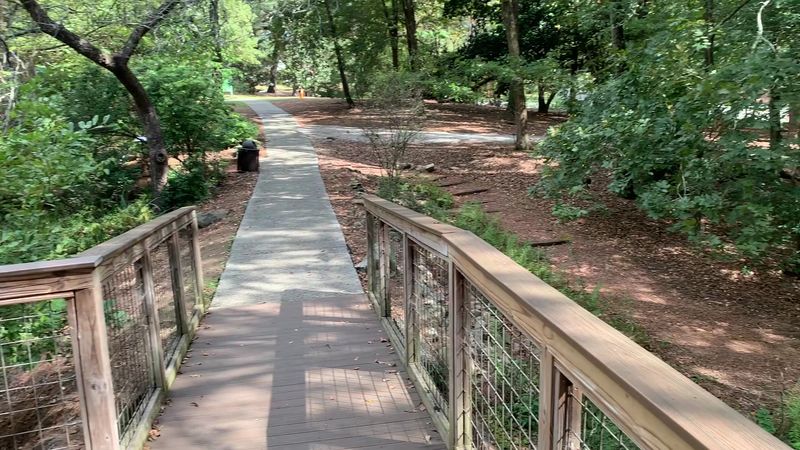
The trail network at the Donald E. Davis Arboretum is one of its most underrated features.
What looks modest on a map turns into something genuinely expansive once you are on the ground, with paths branching off in multiple directions and inviting you to keep going just a little further.
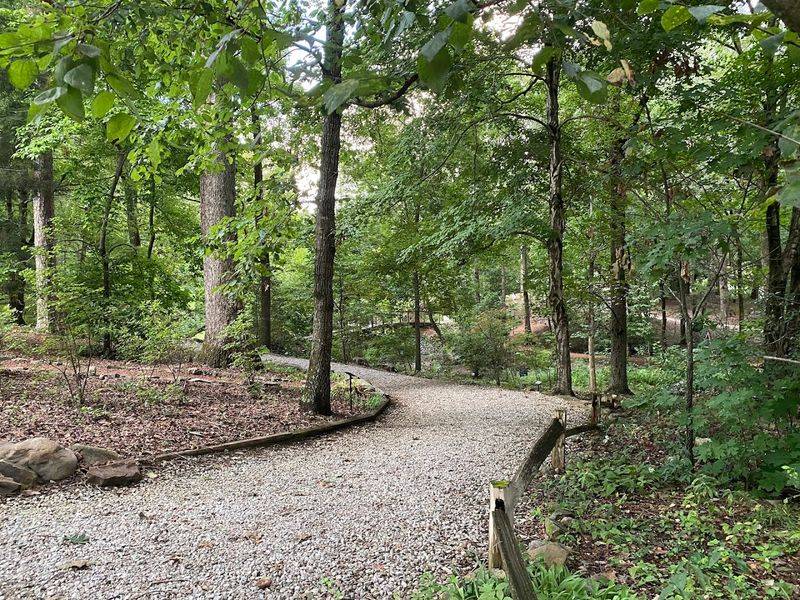
Some routes form easy loops that are perfect for a quick lunchtime walk. Others extend outward through denser sections of the arboretum, where the canopy thickens and the light filters through in long, golden shafts.
The variety means you can tailor your visit to however much time and energy you have.
Accessibility matters here too. The renovated walkways are wide and smooth, offering solid footing with very few steep sections, which makes the trails genuinely welcoming for older adults, young children, and people with mobility needs.
I noticed a family navigating a stroller without any struggle at all, and a group of older visitors moving comfortably at their own pace.
Small interpretive signs appear throughout the trails, each one offering a quick burst of information about the surrounding plants, birds, or ecological features. Bring binoculars if birdwatching is your thing, because the arboretum hosts a surprising variety of bird species.
The QR codes on some signs even let you listen to native bird calls right there on the path, which is a genuinely fun touch.
Free Entry Every Day, No Permit Needed on Weekends
Free admission to a place this well-maintained feels almost too good to be true, but the Donald E. Davis Arboretum genuinely welcomes visitors at no charge every single day of the week.
The arboretum opens at 6 AM and stays open until 7 PM, giving early risers and afternoon wanderers plenty of time to explore.
The parking situation is where things get especially visitor-friendly. On weekends and holidays, the Auburn University parking regulations relax, meaning anyone can pull in and park without needing a special university permit.
That removes a real friction point that often makes campus-based attractions feel uninviting to outsiders.
Public restrooms are available on the east side of the pavilion, which is a practical detail that makes longer visits much more comfortable.
There is also a shaded pavilion that can be reserved for private events, making the arboretum a genuinely versatile space for everything from casual strolls to outdoor gatherings.
I pulled into a convenient parking spot on a Saturday morning, grabbed my bag, and was on the trail within minutes. No ticket booth, no app, no fee.
Just a gate and a pathway waiting. That kind of frictionless access changes how you feel about a place before you have even seen a single tree.
It signals that this space belongs to everyone, and that welcome feels genuine from the moment you arrive.
Are You Ready To Discover the Oak Collection That Sets This Place Apart
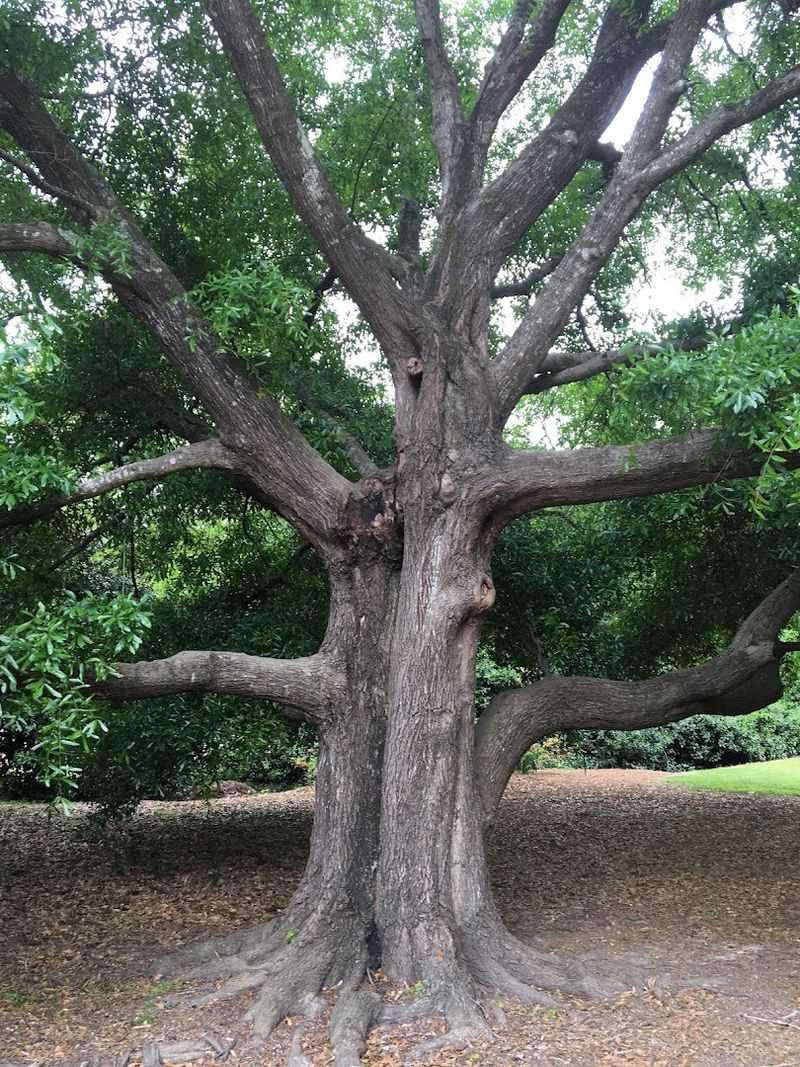
There is something quietly humbling about standing beneath a tree that has been growing for longer than you have been alive. The Donald E.
Davis Arboretum holds a nationally accredited collection of oaks that represents all 39 species native to the Southeastern United States, a feat that puts this small Auburn campus gem on the map for serious botanists and casual nature lovers alike.
Walking through the oak section feels like moving through a living catalog of the South’s most iconic trees. Each species is labeled and placed thoughtfully, so you can observe the differences in bark texture, leaf shape, and canopy structure as you move from one tree to the next.
It is the kind of hands-on education that no textbook can replicate.
One of the most meaningful trees on the property is a massive specimen connected to the arboretum’s founder, sometimes referred to as the founder’s tree.
It has been growing on this land for roughly 200 years, and its presence adds a layer of history that makes the whole visit feel more grounded.
The oak collection is not just visually impressive. It serves as a vital resource for Auburn University researchers studying native tree genetics, conservation, and ecological resilience.
Knowing that the trees around you are part of something larger, a genuine conservation mission, makes every moment spent beneath them feel a little more meaningful.
You Need To Spend Time in the Azalea Garden and Carnivorous Plant Bog
Spring at the Donald E. Davis Arboretum is something else entirely.
The nationally accredited native azalea collection bursts into bloom with colors that feel almost impossible, vivid oranges, soft pinks, bright yellows, deep reds, and crisp whites layered together across the landscape.
Visitors who time their trip for peak bloom get one of the most visually rewarding experiences the arboretum offers.
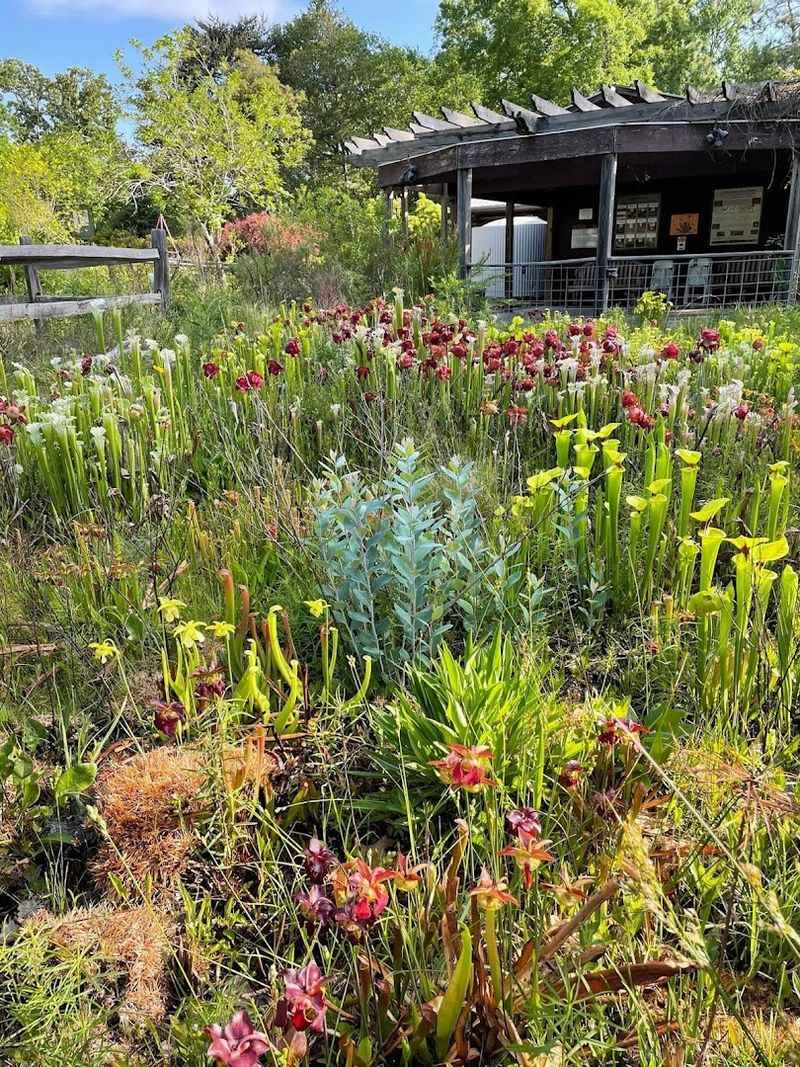
But the plant surprises do not stop at azaleas. Tucked into one section of the grounds is a carnivorous plant bog that genuinely stops people in their tracks.
Pitcher plants rise from the bog in clusters, their elegant tubular leaves quietly luring insects into their depths. It is one of the more unusual things you will encounter in any public green space, and the covered patio nearby gives you a comfortable spot to sit and take it all in.
Interpretive panels near the bog explain how these plants evolved to thrive in nutrient-poor soils by supplementing their diet with insects. Once you understand the mechanics, watching them becomes oddly fascinating, like observing a slow-motion drama playing out in the undergrowth.
Even kids who have little patience for typical plant exhibits tend to linger here.
If you visit in the evening, the frog calls from the nearby ponds add an atmospheric soundtrack to the whole experience. It is the kind of detail that makes the arboretum feel alive in the most literal sense.
Water Features That Turn a Simple Walk Into Something Special
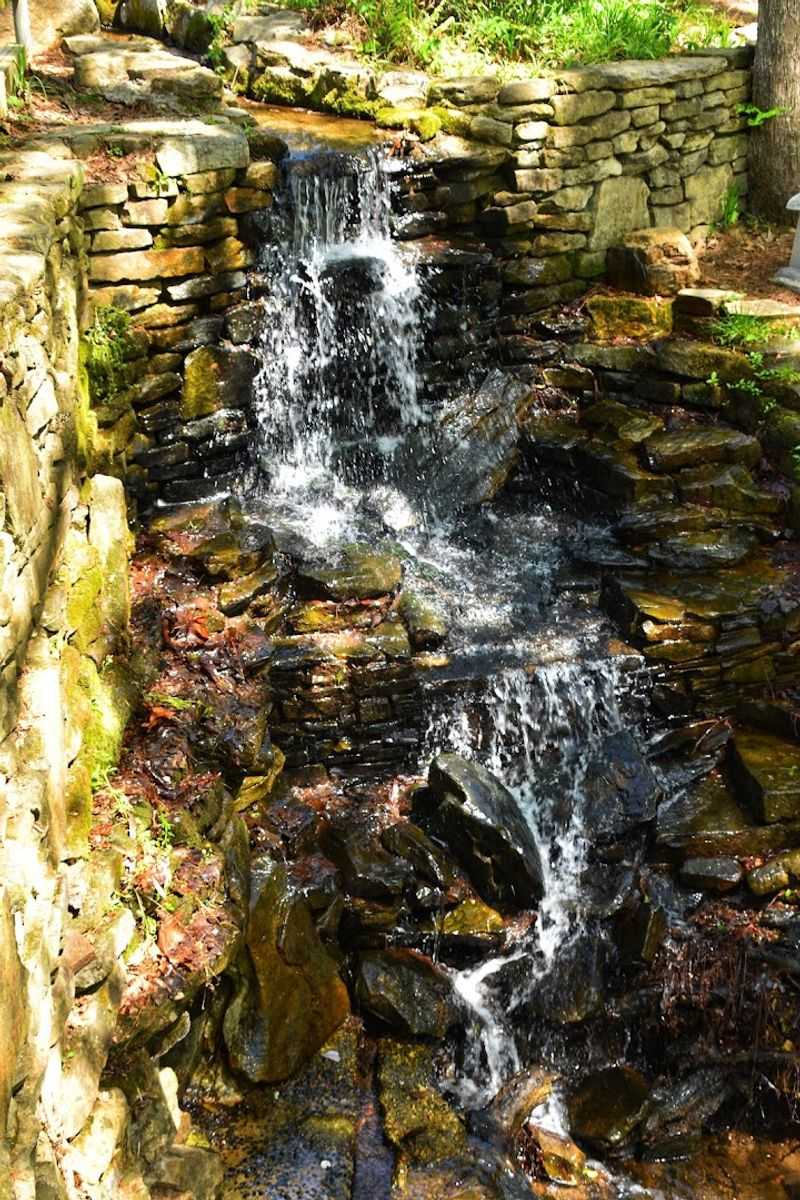
Water has a way of transforming any outdoor space, and the Donald E. Davis Arboretum uses it beautifully.
A calm pond sits near the heart of the grounds, its surface reflecting the surrounding canopy in a way that makes it look like a painting. Turtles sun themselves along the edges, and fish move slowly through the water below, making the pond a natural gathering point for visitors of all ages.
A branch of Town Creek winds through the arboretum, adding gentle movement and sound to the landscape. The creek is not dramatic, but its quiet presence keeps the air feeling fresh and connects the arboretum to the broader watershed that the site is partly dedicated to studying and protecting.
The small waterfall is probably the most delightful surprise on the property. It is not enormous, but the sound of water moving over rocks in a shaded, green setting creates a genuinely calming effect that is hard to replicate indoors.
I stood near it for longer than I expected, simply listening.
A couple of quaint footbridges cross the water at different points, adding a charming, storybook quality to the walk. The arboretum also uses its water features as part of its stormwater management education programs, demonstrating how natural systems can manage runoff in sustainable ways.
Beauty and purpose working together in the same space is exactly what makes this place memorable.
A Living Classroom That Connects the Community to Nature
The Donald E. Davis Arboretum is not just a pretty place to take a walk.
It functions as an active outdoor classroom for Auburn University students, a hands-on laboratory where botany, ecology, and environmental science come to life in ways that no lecture hall can fully replicate.
That academic energy gives the whole space a sense of purpose that you can actually feel as you move through it.
Local school groups and community organizations also use the arboretum regularly, taking advantage of its educational programming and the incredible variety of plant life on display.
The QR code signs scattered throughout the trails are a clever touch, letting visitors access audio recordings of native bird calls and additional plant information right from their phones.
Throughout the year, the arboretum hosts events that bring the broader Auburn community into the space, from plant sales to seasonal festivals. These gatherings reinforce the idea that this is a shared resource, not just a university facility.
It belongs to the neighborhood in a real and generous way.
The pavilion on the grounds is available for private events, and it has hosted everything from engagement parties to family celebrations. Its setting, surrounded by mature trees and overlooking the pond, makes it one of the more scenic event spaces in the area.
Whether you come to learn, celebrate, or simply breathe, the arboretum has a place for you.
Address: 181 Garden Dr, Auburn, Alabama
