Someone hands you a history book. It tells you what happened.
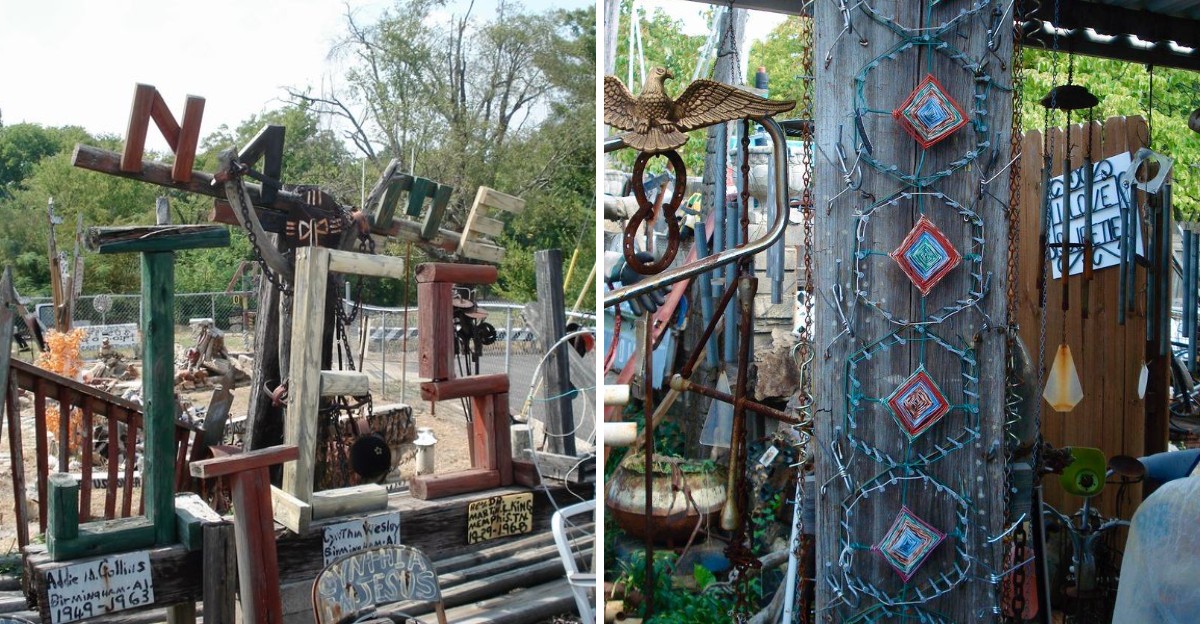
This backyard asks a different question: What did it feel like? The answer comes through rusted chains, tools, painted signs, scraps of metal, and handmade sculptures assembled over decades by Joe Minter.
Since 1989, the self-taught Alabama artist has filled a quarter-acre residential yard with an intensely personal account of Black history, from African ancestry and the Middle Passage to segregation and the Civil Rights era. Nothing looks standardized.
That is deliberate. The materials themselves become part of the story, creating a place where history is not arranged neatly on a timeline.
It is sitting in the yard waiting to be noticed.
A Yard That Doubles as a Living History Museum
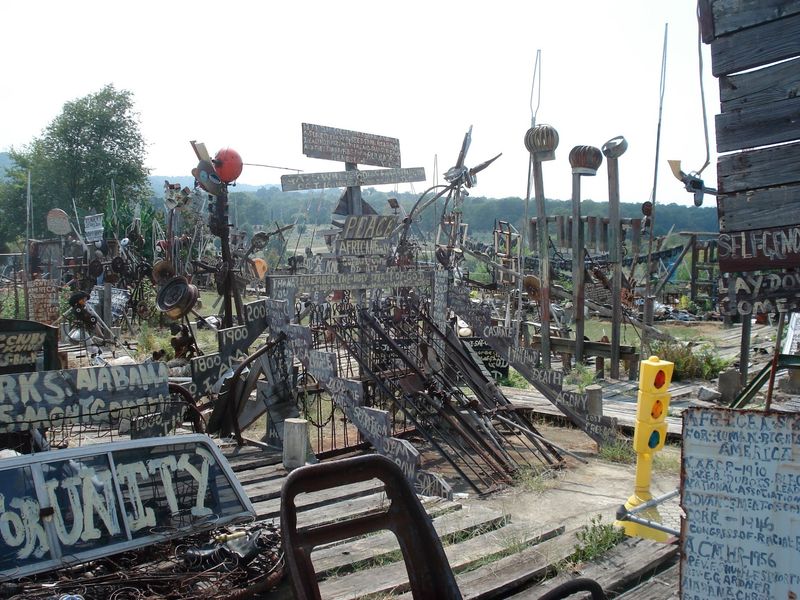
Most house-and-yard combinations in south Birmingham look pretty ordinary. Then there is 931 Nassau Avenue Southwest, Birmingham, Alabama, 35211, where the fence line disappears behind welded figures, painted plywood, and towers of salvaged steel.
The African Village in America spreads across Joe Minter’s yard and several neighboring lots, forming a quarter-acre environment that has been growing since 1989. It is not arranged like a gallery with tidy placards and climate control.
Instead, the layout works more like a path through time, with sections devoted to African origins, enslavement, segregation, and the struggle for voting rights. Sculptures lean into each other, and hand-lettered signs fill the gaps with context, names, and challenges to the viewer.
What makes it register so deeply is the density. There is no blank wall to give the eye a rest, no gentle pacing between hard subjects.
History arrives all at once, the way it often does in real life. Plan on moving slowly and reading, because the written signs carry as much meaning as the metal does.
Daylight hours work best for a visit, and there is no admission cost, which keeps the site open to students, families, and travelers alike. Comfortable shoes help, since the ground is uneven and packed with things worth stopping for.
Scrap Metal With Something to Say
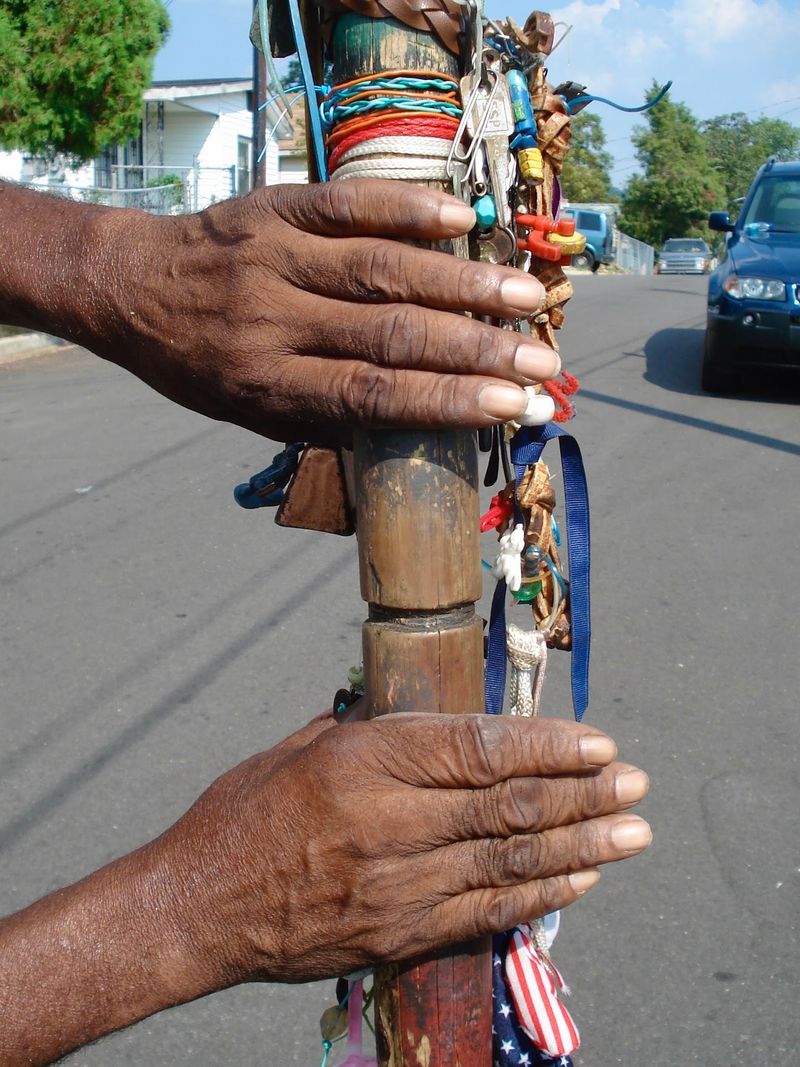
Rust is the dominant color here, and that choice carries meaning. Minter builds almost everything from discarded material, including old tools, chains, worn shoes, broken lawn ornaments, toys, and baking pans picked up cheap.
The reasoning behind the salvage is direct. He has spoken about African Americans being treated as discarded and invisible throughout American history, so the art itself is assembled from things society threw away.
Objects carry traces of everyone who handled them, according to his thinking, which means even a bent wrench holds a kind of spirit. Once that idea clicks, the yard stops looking cluttered and starts looking deliberate.
Certain shapes repeat. Chains appear again and again, marking both the arrival of enslaved Africans and forms of bondage that never fully disappeared.
Spears show up just as often, standing for strength, protection, and the responsibility to provide for family. Look closely and small details emerge, like a shoe welded at an angle or a pair of scissors turned into wings.
Photographers tend to love this section because the textures are unbelievable in raking light. Morning and late afternoon bring out the depth of the corrosion and the shadows between pieces.
Bring curiosity rather than a checklist, since the meaning here rewards patience more than speed.
Where the Story Starts, Ancestral Africa and the Middle Passage
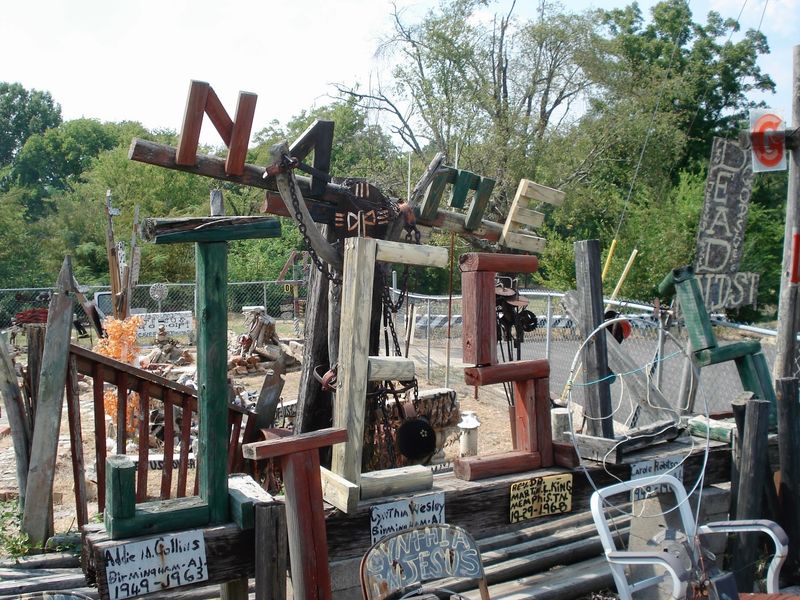
Toward the back of the property, the ground slopes toward Shadow Lawn Memorial Gardens, a historically Black cemetery. Right at that edge, a cluster of figures gathers around a large tree stump.
That grouping represents an ancestral African village, the homeland and culture stripped away by force. Placing it beside a burial ground gives the whole arrangement an extra layer of gravity, connecting living memory to those already gone.
From that starting point, the path shifts to one of the most sobering works on the site, an installation invoking a slave ship. The Middle Passage is not softened here.
Roughly eleven million Africans were carried across the Atlantic in conditions almost impossible to picture, and the sculpture asks visitors to try anyway. Rough edges, tight spaces, and heavy materials do the work that a museum caption never quite manages.
Standing near it tends to quiet people down. Conversations drop off, and the traffic sounds from the neighborhood suddenly feel very far away.
For anyone traveling with older children or students, this is a strong place to pause and talk. The visual language is clear enough that explanations come easily, without needing a lecture.
Give this corner more time than it seems to need, because the details keep revealing themselves the longer the eye lingers.
The Birmingham Jail Room You Can Actually Step Into
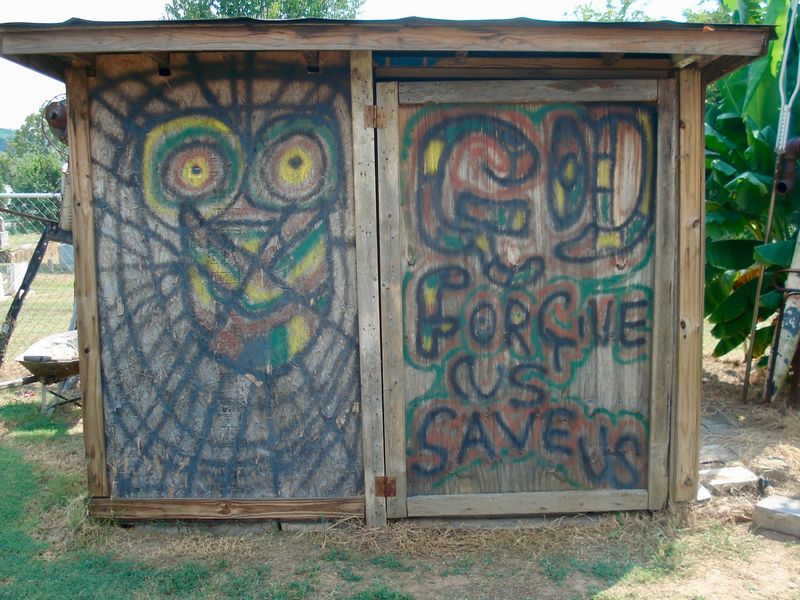
One structure on the property stops nearly everyone who walks past it. Built like a small room, it recreates the experience of Dr. Martin Luther King Jr.’s imprisonment in the Birmingham Jail.
Heavy iron doors guard the entrance, covered in Bible verses and the names of civil rights figures. The effect lands somewhere between a chapel and a cell, which seems to be exactly the intent.
Inside sits a slumped human form dressed in black and white stripes, wrapped in chains. A toilet, a rusty sink, and a bare bed frame complete the scene with unsettling accuracy.
Minter lived in Birmingham through the 1960s, so this is not history borrowed from a book. He watched the city’s struggle unfold from inside it, and the sculpture reflects that firsthand memory.
Reading the actual Letter from Birmingham Jail before or after a visit turns the whole thing into something far more powerful. The words and the room feed each other.
Give yourself a minute in there. It is small, dim, and heavier than expected.
Visitors often note that the jail piece is the moment the whole village clicks into place, shifting from a yard full of art into a testimony. Afterward, the surrounding sculptures start reading differently, more like witnesses than decoration.
Foot Soldiers Finally Get Their Monument
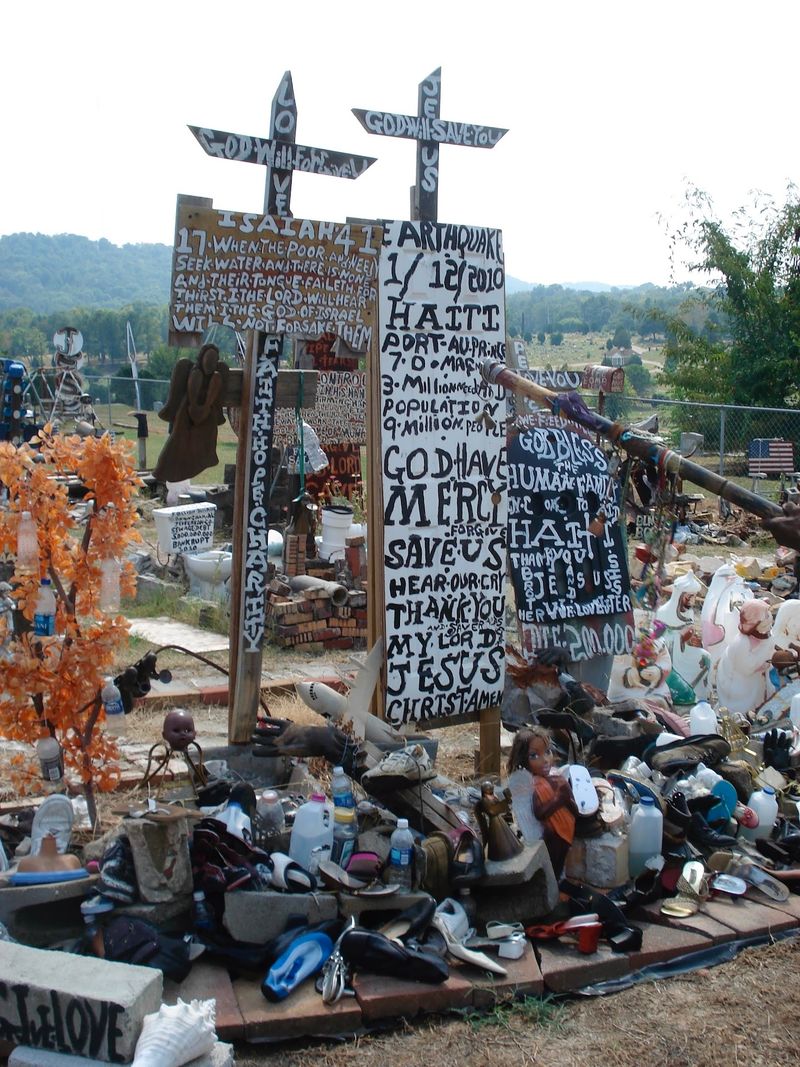
Here is the spark behind the entire project. When Birmingham planned an official civil rights museum, Minter worried that everyday participants would be left out of the story, so he built a place where they could not be.
The village honors what he calls the foot soldiers, the thousands of ordinary people who marched, boycotted, organized, and endured without ever landing in a history book index.
Sculptures reference the Montgomery bus boycott, the freedom riders and their buses, and the Selma march across the Edmund Pettus Bridge. Each one carries painted text identifying who and what is being remembered.
A dedicated memorial recalls the 1963 bombing of the 16th Street Baptist Church and the four girls killed that Sunday morning. Their presence in the yard feels personal rather than ceremonial.
What separates this from a formal monument is the absence of hierarchy. Famous names share space with anonymous ones, and nobody gets a bigger pedestal.
That approach fits the movement itself, which ran on collective effort rather than a handful of leaders. Reading the signs slowly is worth the effort, since many mention people rarely commemorated anywhere else.
Pair this stop with the 16th Street Baptist Church downtown for a fuller picture of the city. The two sites speak to each other across just a few miles.
History That Refuses to Stop at 1968
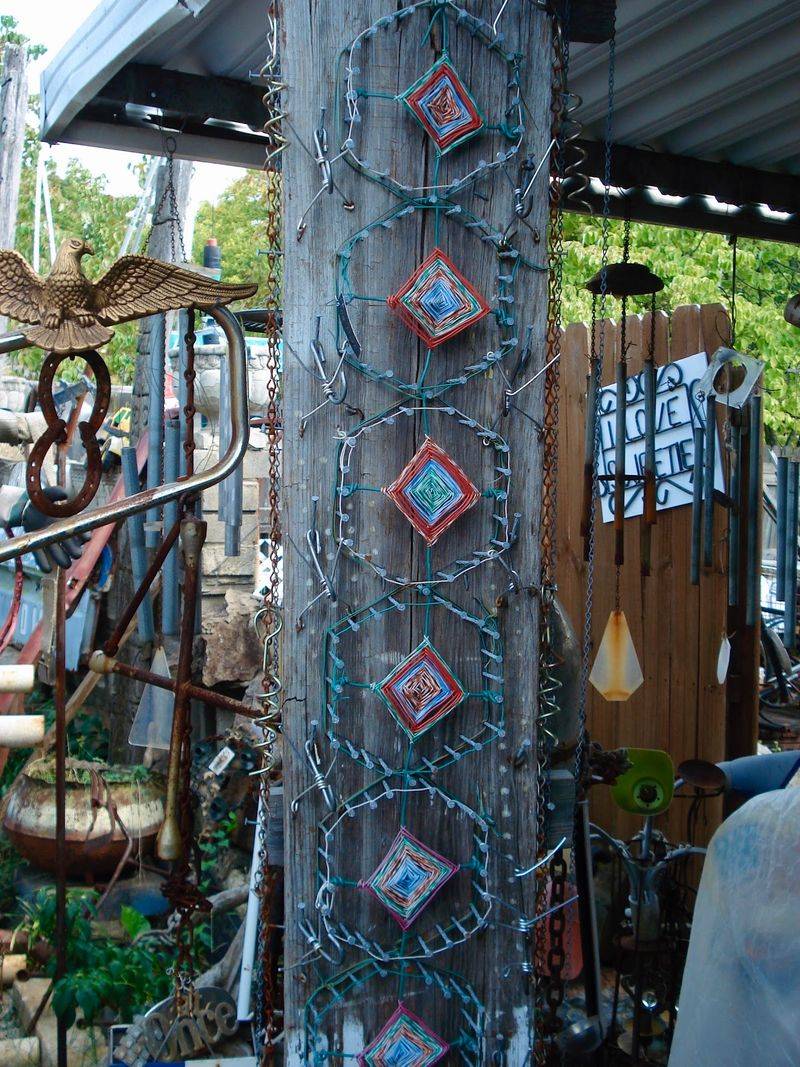
Plenty of civil rights sites treat the movement as something that ended decades ago. Minter’s yard does the opposite by adding new work as new events happen.
Installations commemorate victims of Hurricane Katrina, the Sandy Hook Elementary School shooting, and the September 11 attacks on the World Trade Center. Other pieces address police brutality directly.
The timeline simply keeps running, which makes the site feel alive rather than preserved. Return visits can reveal sculptures that were not there before.
Faith threads through everything. Christian themes of mercy, forgiveness, and humility appear on painted signs throughout the property, offering a note of hope alongside the accounting of suffering.
The tone is not bitter. Minter’s work criticizes the country while also holding it to the ideals written into its founding documents, which is a harder and more generous position than pure condemnation.
Signs pose questions to visitors instead of handing over easy answers. Some are blunt, some are scriptural, and a few are surprisingly funny in a dry sort of way.
That mixture keeps the experience from feeling like a lecture. It reads more like a conversation with someone who has been thinking about these subjects for a very long time.
Anyone interested in how memory and current events collide will find plenty to consider on the walk back out.
A Backyard With Work Hanging in the Met

Driving past, an unsuspecting eye might mistake the whole thing for a scrap heap. That first impression fades fast, and the art world figured it out long ago.
Minter’s sculptures sit in the permanent collections of the Metropolitan Museum of Art, the Smithsonian American Art Museum, the National Gallery of Art, and the High Museum of Art in Atlanta. His work also appeared in the 2019 Whitney Biennial.
Scholars describe the village as a spatialization of history, a rare constructed art environment where an entire narrative is laid out in physical space. Preservation efforts are underway, including virtual reality documentation meant to keep the site accessible even as the materials weather.
Knowing the credentials changes how a visit feels. What looks improvised turns out to be the product of decades of deliberate building by an artist who served in the military and worked in metal construction before health issues pushed him toward sculpture.
Visitors do not have to step onto the property to be moved. A great deal of the work is visible and powerful from just outside the gate.
Being respectful matters, since this remains a private home in a residential neighborhood. Keep voices low, watch where feet land, and treat the yard the way any significant historic place deserves.
