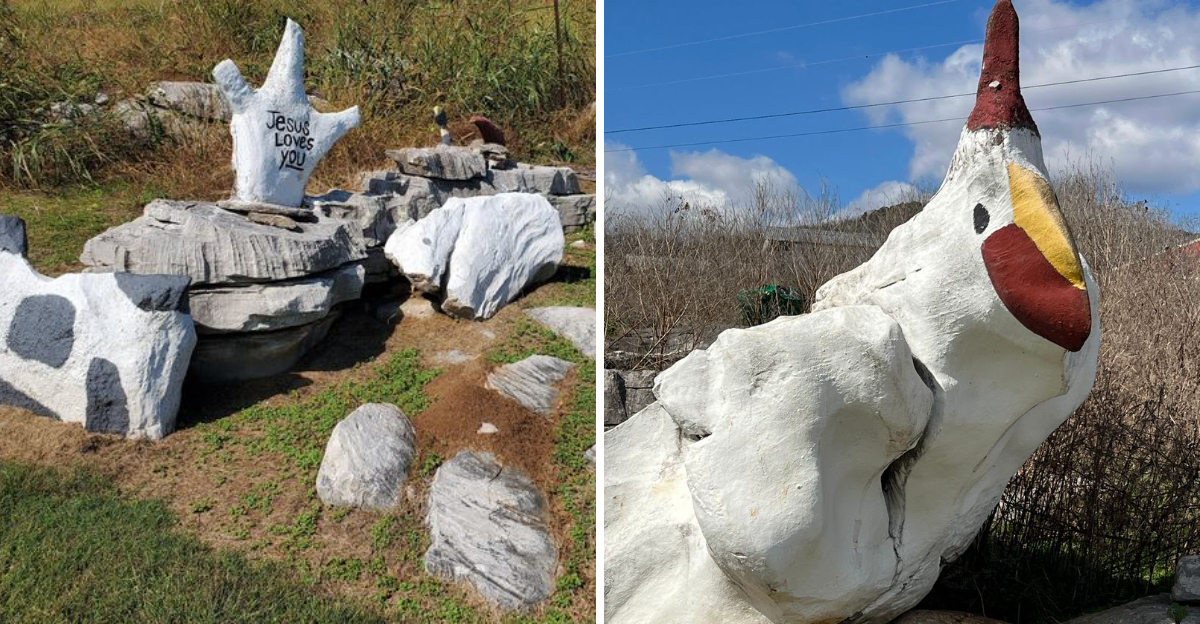
The first time I saw the giraffe, I honestly had to look twice. It was standing in the middle of a pasture, perfectly still, with an elephant, turtle, rooster, and even a shark hanging out nearby.
Then I realized none of them were real. They were rocks.
Brightly painted rocks, to be exact, and somehow they looked convincing enough to make an ordinary country drive feel like a trip to the strangest zoo imaginable.
The whole thing started back in the 1970s, when a farmer looked at two boulders pushed onto his property and saw animals instead of rubble.
Three generations later, the family is still painting them, and visitors can wander through the pasture for free. Alabama has plenty of roadside surprises, but this one might be the most cheerful.
Just bring a camera, because explaining that you stopped to see a herd of rock animals sounds much stranger without pictures.
Two Boulders, One Farmer, And An Idea That Stuck
Everything traces back to a road project. When crews were building County Road 32 in the 1970s, two hefty boulders ended up shoved onto land belonging to Leonard Dawson of Fackler.
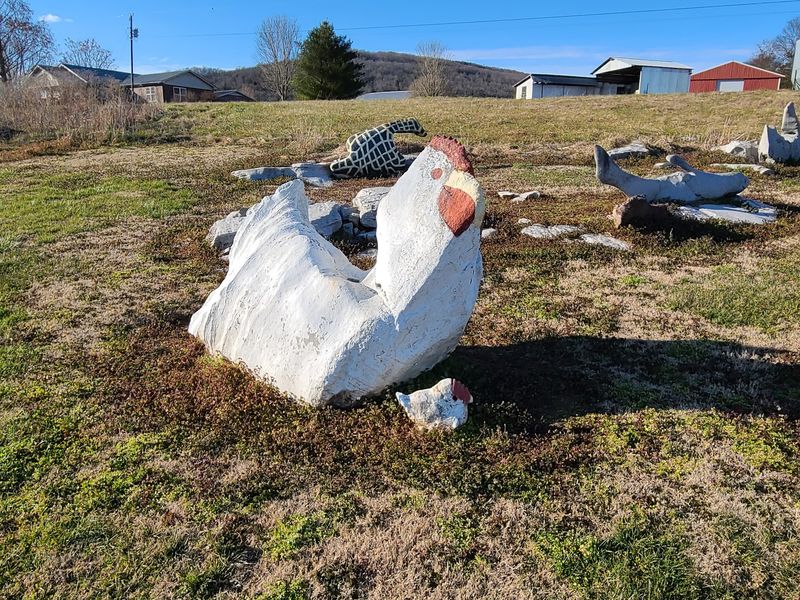
Most folks would have hauled them off or mowed around them. Dawson looked closer and saw a bull in one and a rooster in the other.
He got practical about it, too. Cement held two curved rocks in place to serve as the bull’s horns, and a cardboard mold filled with cement became the rooster’s comb.
Finding a local artist to finish the job did not work out, so Dawson picked up a brush and painted the animals himself. That decision is really the whole reason the place exists.
After he passed away in 2003 at age 90, his son Larry took over as the next keeper of the herd. Today Leonard’s granddaughter, Tammy Murphey, and her family look after it as the third generation.
Knowing that backstory changes how the boulders look. The bull and the rooster still sit exactly where the road crew dropped them more than fifty years ago, unmoved and unbothered.
They remain the two largest sculptures on the property, anchoring the rest of the collection. Standing near them, the scale is surprising.
A visit becomes less about painted rocks and more about one person’s stubborn, cheerful imagination taking root in a pasture and refusing to leave.
A Stone Safari Where Giraffes Share Grass With A Shark
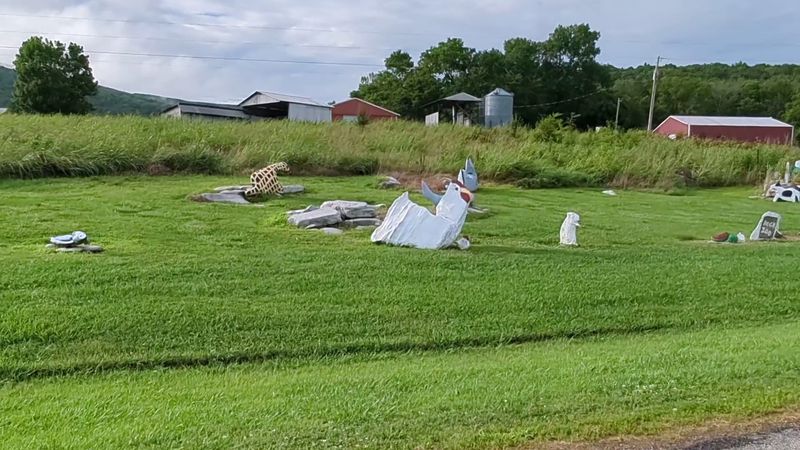
The lineup here refuses to make sense, and that is exactly the fun of it. Land animals, farm animals, and one very landlocked shark all share the same patch of grass.
Giraffes stretch upward in painted spots. Nearby, goats hold their ground while beavers and raccoons look busy doing absolutely nothing.
Turtles show up more than any other creature, their shells done in greens that range from soft and mossy to loud enough to spot from the road. A skunk, a calf, an elephant, and a bullfrog fill in the gaps.
Part of the entertainment comes from guessing. Some shapes announce themselves immediately, while others take a second look and a little debate before the animal clicks into place.
Kids tend to get it faster than adults, which is worth noting.
The collection is not all animals, either. Near the entrance, sliced stone watermelons show off painted rinds and bright red centers, adding a homey, farmstand feel to the display.
An American flag rendered in stone and paint stands as a quiet tribute. Two rock figures honor Leonard and Geneva Dawson, keeping the founders present among their own creations.
Stretching roughly 100 yards along the roadside, the whole menagerie reads like a sketchbook someone decided to build in three dimensions, one boulder at a time, across five decades of steady effort.
Free To Wander, Open Whenever You Show Up
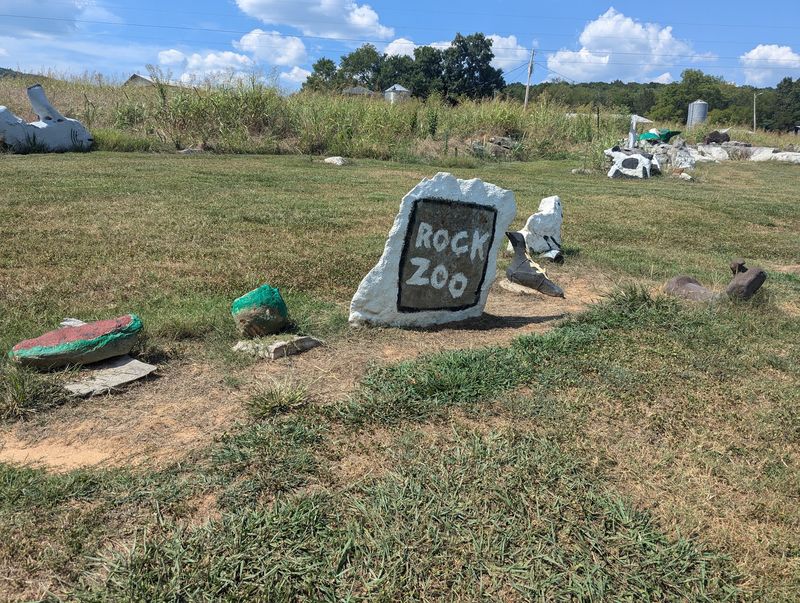
No ticket booth, no gate, no gift shop. Admission at the Rock Zoo costs nothing, which fits a place that grew out of one man’s hobby rather than any business plan.
That single detail makes it easy to fold into a road trip without much planning.
The grounds stay open around the clock, and because the display sits right along the roadside, daylight is really the only thing that limits a visit. Morning light works well for photos, and late afternoon softens the colors nicely.
Some visitors treat it as a fifteen-minute leg stretch. Others linger far longer than expected.
Getting there is straightforward once the county road is found, though the setting is genuinely rural. There is no parking lot, so pulling onto the shoulder is the standard approach.
Traffic on this stretch is light, but the animals sit close to the pavement, so keeping small children in hand matters more than usual here.
Families often report that the stop outlasts their expectations, with kids inventing games among the boulders for half an hour or more. The rooster and the bull draw the most attention thanks to sheer size.
Climbing on many of the sculptures is allowed, which turns a photo op into something closer to a playground. Bring water in summer, since shade is limited.
The Kind Of Roadside Stop That Makes You Hit The Brakes
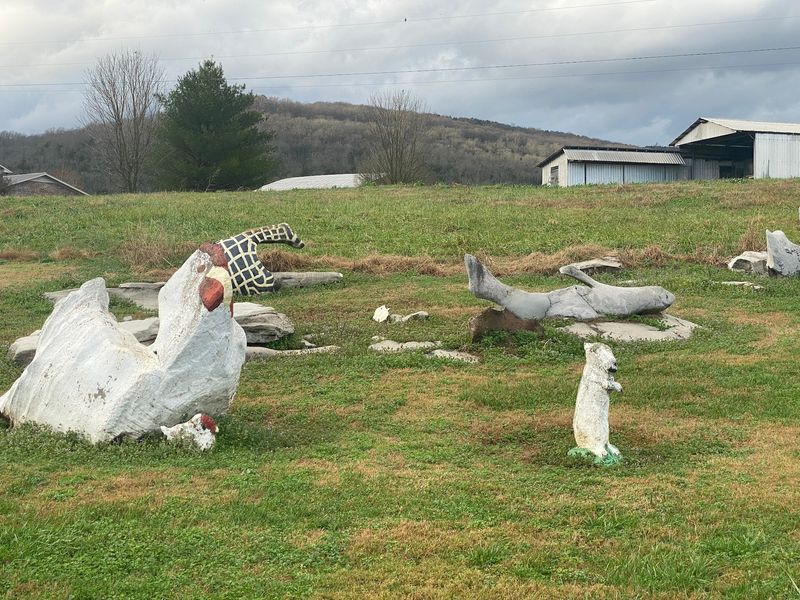
Plenty of people arrive here entirely by accident. One minute the drive is nothing but fields and fence posts, the next there is a painted giraffe staring out from the grass.
Brakes get tapped. Phones come out.
Others plan the trip on purpose after hearing about it from friends or spotting it in a list of oddball Southern stops. The Murphey family has noted that somewhere between 800 and 1,000 people a month ask for directions, which is a lot of curiosity for a pasture in Fackler.
The drive itself deserves credit. Winding county roads through this corner of Jackson County offer rolling farmland and long views, especially pretty when autumn leaves turn.
Motorcycle groups seem to enjoy the route as much as the destination.
What keeps the place feeling honest is how little it tries. There are no interpretive signs telling anyone what to think, no soundtrack, no staged photo frames.
Just boulders, paint, mowed grass, and a whole lot of personality sitting out in the open air.
Some visitors pair it with a hike to nearby Neversink Pit, a dramatic sinkhole in the same general area, turning a quick novelty stop into a proper day of exploring. Others simply appreciate that Alabama’s back roads still hide surprises like this one.
Visitors Keep Adding Their Own Painted Rocks
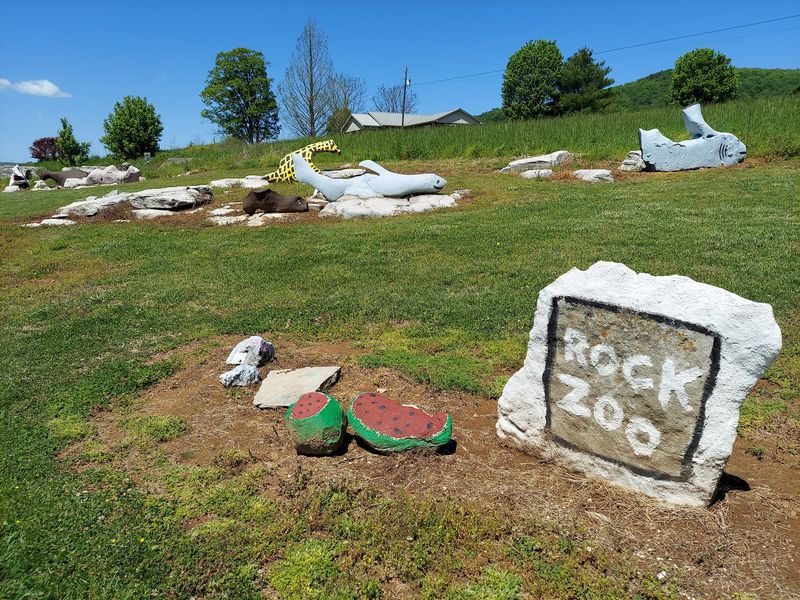
Here is a detail that surprises first-timers. The collection is not finished, and it never really will be, because guests keep adding to it.
Inspired by what they see, some visitors bring painted stones from home and leave them behind in the grass.
These contributions run small and personal. A hand-painted possum might appear next to a boulder turtle, or a tiny critter with a message written on the underside.
Occasionally the artists share photos online afterward, which quietly extends the story of the place well past the property line.
The caretakers welcome it. Encouraging people to come back and bring their own painted rock has become part of the culture here, turning spectators into participants without any formal program or sign-up sheet.
That openness explains why repeat visits feel worthwhile. A family that stopped three years ago may find new faces scattered among the old favorites, which gives the pasture a living, shifting quality most attractions cannot match.
Children especially love the idea. Painting a rock at home, then driving out to place it among giraffes and roosters, gives a kid a real stake in something bigger than a souvenir.
If planning to contribute, keep it weather-friendly and modest in size. The grounds stay tidy, and leaving them that way is part of the unspoken deal.
Fresh Paint, Hard Winters, And A Family With Brushes
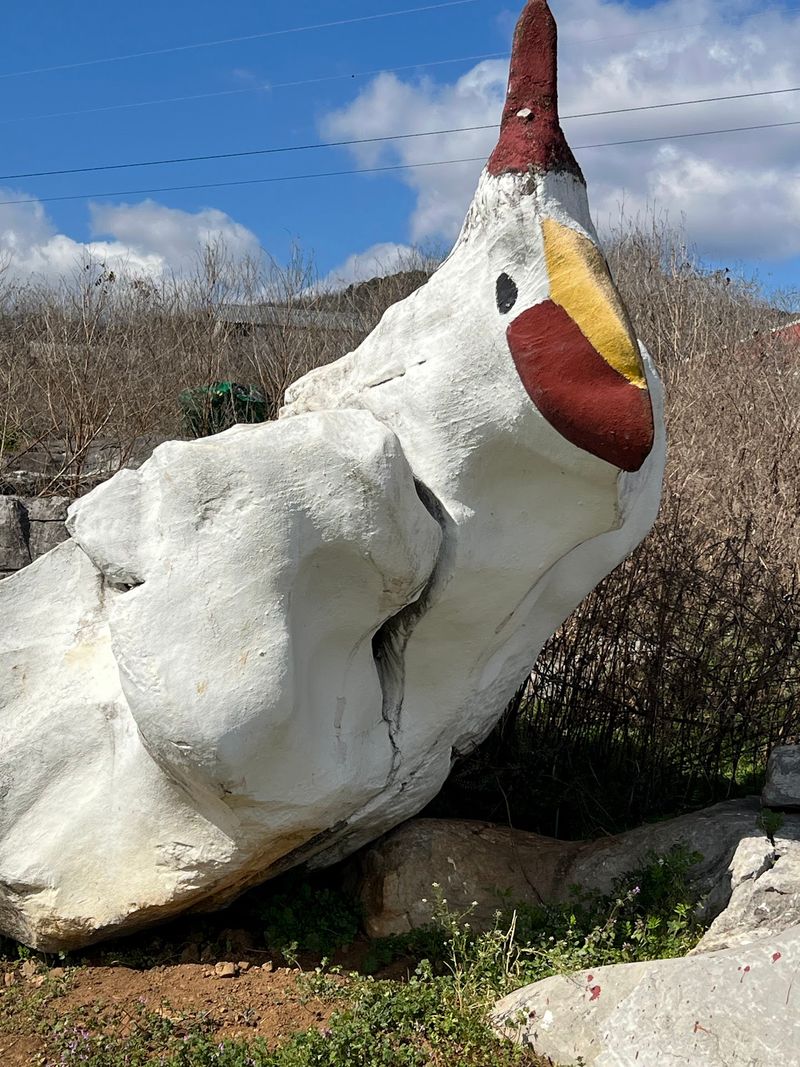
Limestone and Alabama winters do not exactly get along. The stone is porous, so paint chips and peels after enough cold snaps and rainy stretches, meaning the animals need regular touch-ups to stay bright.
Nobody gets paid to do it. The family handles it because the alternative is watching Leonard Dawson’s work fade away.
Oil-based paint is the preferred choice, valued for durability against swinging temperatures and humid summers. That practical decision helps each figure hold its color far longer than ordinary paint would manage on rough stone.
The community lends a hand, too. In 2022, a local 4-H group joined a large repainting push, helping refresh every animal on the property and adding a brand-new seahawk to the roster.
Projects like that do more than tidy up appearances. They pass the tradition along to younger hands, which is arguably how a place like this survives fifty years and counting.
Returning guests sometimes notice the difference right away, since a freshly coated turtle or giraffe practically glows against the green pasture. Others catch the sculptures mid-cycle, a little weathered, a little worn, which has its own charm.
Either way, the upkeep is the reason anything remains to see. Fifty years of paintbrushes, one family, and a stubborn refusal to let a good idea crumble into gray rock.
Why This Pasture Sticks With People Long After The Drive Home
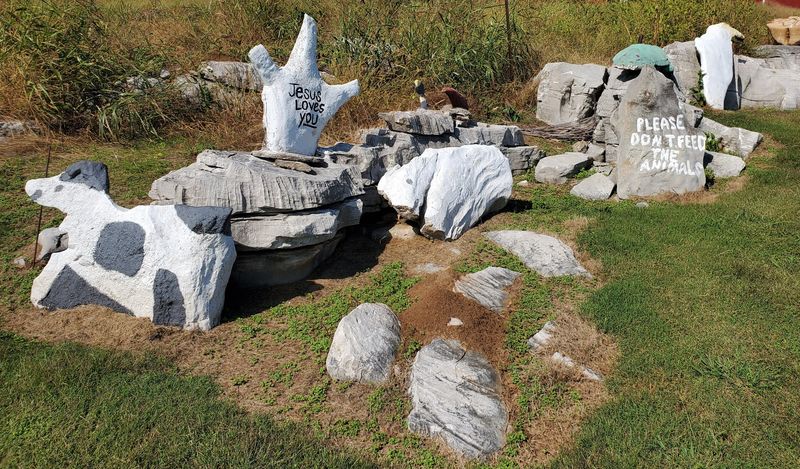
Small places sometimes leave the biggest impression. The Rock Zoo is not large, and walking the whole stretch takes no great effort, yet people talk about it for years afterward.
Part of that comes from the surprise. Part comes from the warmth behind it.
Every boulder here represents a choice someone made to bother. To haul cement, to mix paint, to mow around a stone shark instead of removing it.
Multiply that by decades and three generations, and the pasture starts to feel like a gift left out for strangers.
Kids get the pure version of the experience, climbing on a rooster and arguing over whether that green lump is a turtle or a frog. Adults tend to appreciate a different layer, the folk art angle, the family history, the sheer oddness of it all.
For anyone mapping a route through northern Alabama, the stop fits easily between bigger destinations while offering something none of them can. Genuine local invention, unpolished and unhurried.
The lesson travels well beyond Jackson County. Detours off the interstate often hold the stories worth retelling, and a pasture full of painted boulders proves it better than most.
Pack a camera, watch for traffic, and give the animals a proper look. Maybe bring a painted rock along, too.
Address: 3215 County Road 32, Fackler, Alabama 35746
