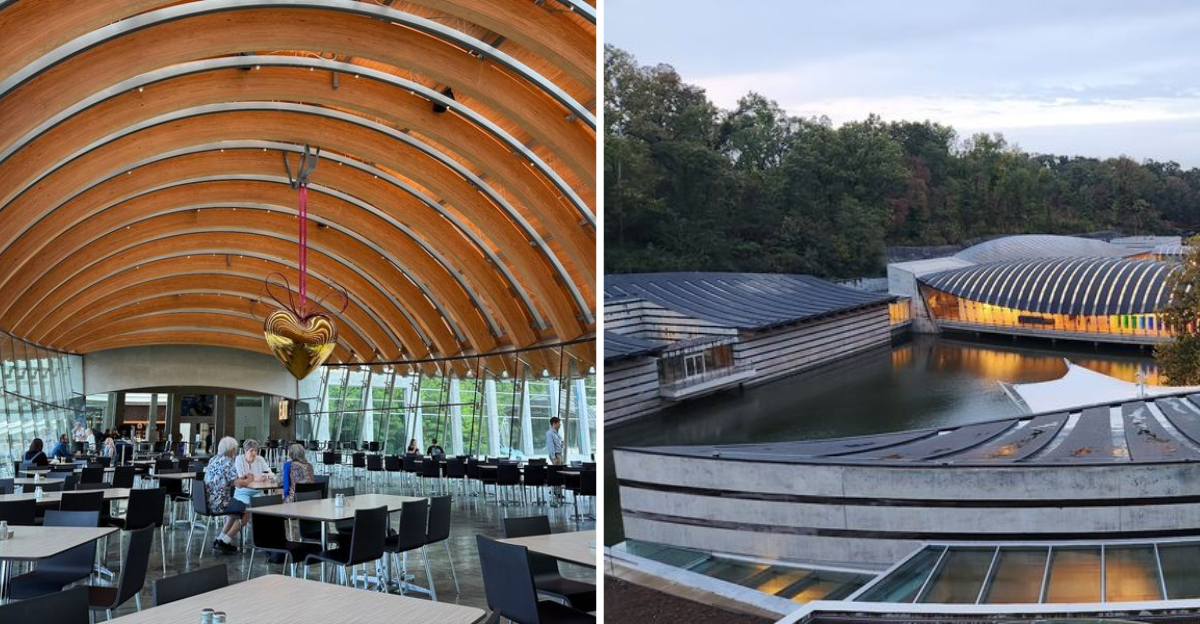
I pulled into the Arkansas museum expecting a quick stop and stayed until my legs quietly begged me to sit down. A place where art and forest lean into each other, the new expansion changes the whole rhythm of a visit.
Designed by the same firm behind the original building, the addition opened to the public in early June 2026, growing the campus by roughly half. New galleries, new studios, fresh landscape, more outdoor sculpture, and an elevated cafe with tree views made me forget I had a schedule.
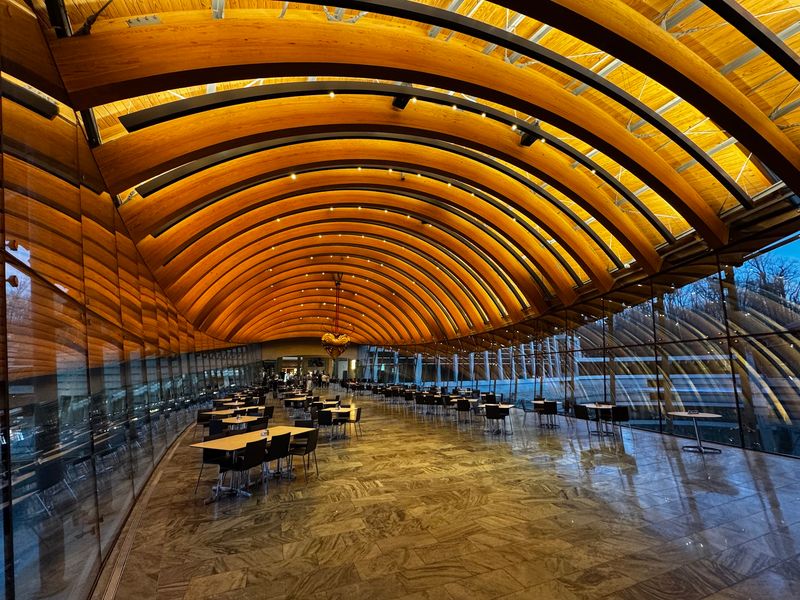
The expansion adds 114,000 square feet of new space, including two collection galleries, a temporary exhibition gallery, and a 14,000-square-foot learning and engagement hub. The new cafe, with its floor-to-ceiling windows overlooking the wooded grounds, serves as a quiet pause point before diving back into the galleries.
What surprised me most was how natural it all felt, like the museum simply grew another ring, the way a tree does. A visit before this expansion was already memorable; now it feels like a different place entirely.
Arkansas has built something that rewards a full day of wandering, and I left already planning my next trip back.
The New Wings Feel Like the Building Grew Another Chapter
My first reaction, before I even reached a door, was that I could not tell exactly where the old museum stopped and the new part started. That is a compliment.
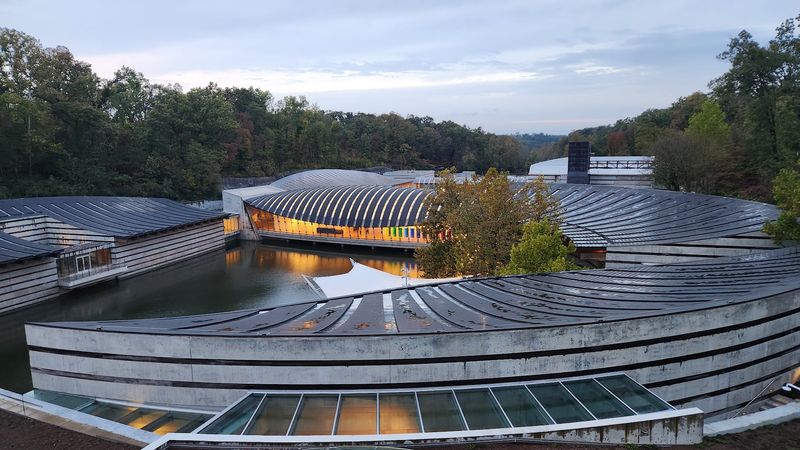
The expansion adds 114,000 square feet, and Safdie Architects clearly wanted continuity instead of contrast. Copper cladding, sweeping roof shapes, and those exposed southern yellow pine beams all reappear, aged and warm against the trees.
Glass does most of the emotional work here. Floor-to-ceiling windows pull the woods inside, so the light shifts as clouds move, and the art seems to change mood with it.
Something I found genuinely clever is how the circulation works now. The original building looped around its ponds, and the new pavilions extend that loop into a figure-eight across two stream-fed ponds, which means you rarely double back on yourself.
Practical tip from someone who wandered too fast at first: slow down on the connecting bridges and hallways. They frame views you will want to photograph, and the reflections off the water are strongest in the late afternoon.
Total campus size sits at about 120 acres, so the buildings never feel crowded by parking lots or fences. Trees press right up to the glass.
If architecture is your thing, give yourself thirty minutes outside before you go in. Circle the ponds, look up at the roof curves, and notice how the copper catches color differently depending on where the sun sits.
It sets the tone for everything that follows inside.
Galleries That Finally Have Room to Breathe
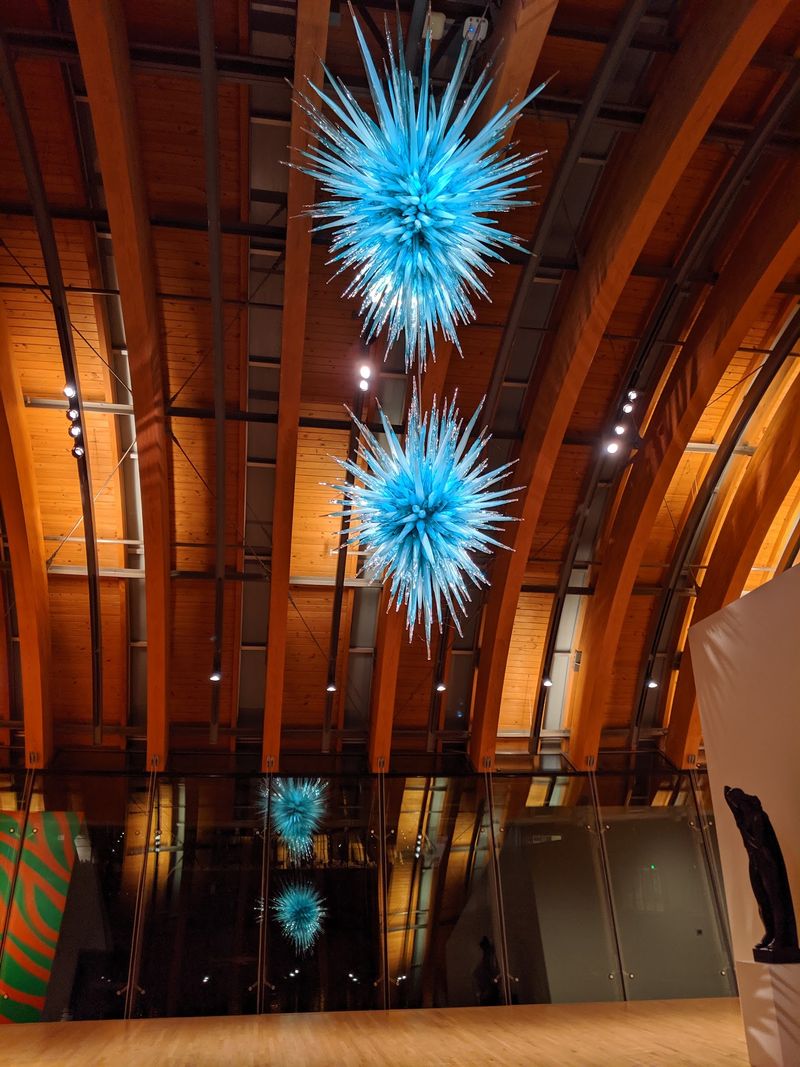
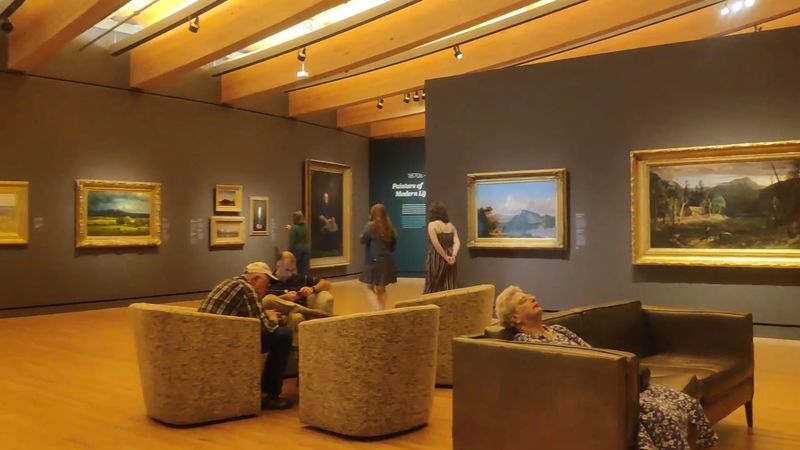
Roughly 29,000 square feet of the expansion went straight into exhibition space, and you feel that generosity the moment you step through the first doorway.
There is a brand-new contemporary gallery plus a second, larger gallery for temporary exhibitions. That second room matters more than it sounds, because it lets big traveling shows arrive without pushing the permanent collection into storage.
What thrilled me most was reading that more than 200 works from the permanent collection had never been displayed publicly before. Paintings, sculpture, and works on paper that lived in storage now hang where people can actually stand in front of them.
New acquisitions fill out the story too. Over 200 artworks from the Candace and Michael Humphreys collection came in as the largest gift in the museum’s history, covering painting, textiles, and other media.
Textiles, in particular, caught me off guard. I do not usually linger on fabric-based work, and yet I spent a solid stretch studying stitching patterns and color choices up close.
A visiting suggestion: pick two galleries to study carefully rather than skimming all of them. The collection now spans so much ground that trying to absorb everything in one pass leaves you fuzzy rather than moved.
Benches and seating appear in most rooms, which sounds minor until hour three. Sit down, look at one painting for five full minutes, and see what surfaces.
That habit turned an ordinary afternoon into something I still think about.
Studios, Workshops, and a Hub Built for Making Things
Art museums sometimes treat hands-on space as an afterthought. Not here.
A dedicated 14,000-square-foot Learning and Engagement Hub anchors this part of the expansion, built for classes, workshops, and community gatherings. It has the busy, slightly messy energy of a place where people actually make things.
New studio spaces sit nearby, open to visitors of all ages. I watched a few families settling in with supplies, and the mood was closer to a friendly art class than a formal museum program.
Digital-art studios were the part that surprised me. Screens, tablets, and tools for work that lives online reflect how many artists create now, and teenagers seemed drawn to that corner immediately.
There is also a lounge designed to feel home-like, meant for gathering with family, friends, or neighbors. Comfortable seating, soft light, no pressure to keep moving.
Here is my honest advice for parents: build a studio stop into the middle of your visit, not the end. Kids hit a wall after too many quiet galleries, and twenty minutes of drawing resets everyone’s patience.
Programming schedules change, so a quick look at the museum website before you drive over helps you catch whatever workshop is running that day. Some fill up.
What struck me overall was the message underneath all this square footage. The museum is not just showing art, it is inviting you to try making some, which is a very different kind of welcome.
Five New Acres Where Sculpture Hides Among the Trees
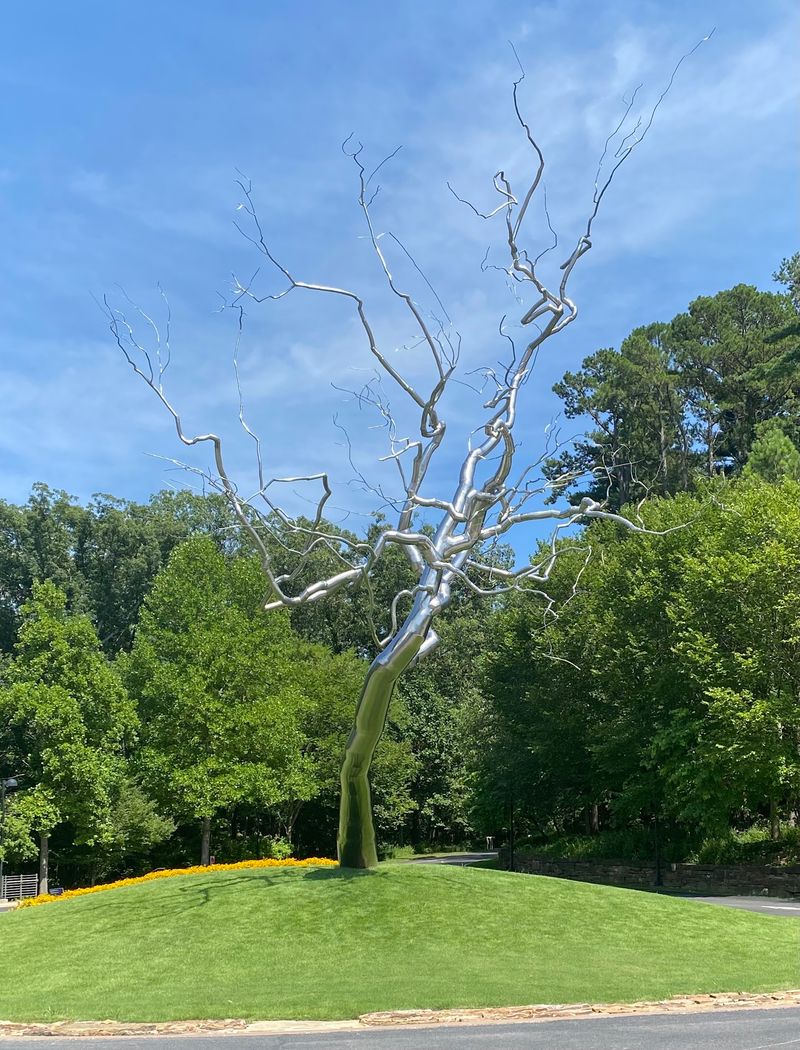
Some of my favorite minutes had nothing to do with being indoors.
The expansion added about five acres of new landscape, with streams, gardens, and wooded trails wrapping around a new 15,000-square-foot pond. Water shows up constantly on this campus, and it changes how sound carries.
Sculpture appears along the paths without much warning. Works by Claes Oldenburg and Coosje van Bruggen, Tom Otterness including his playful piece Carousel, and Jaune Quick-to-See Smith now form part of the outdoor collection.
Otterness sculptures have a way of making adults grin. The scale and the rounded shapes read as friendly, almost cartoonish, tucked into very serious woodland.
Families get something new too. The Ozark Discovery Canopy is a playscape built for kids, so running and climbing are officially encouraged instead of tolerated.
Trails here connect outward into Bentonville’s broader path network, which means walkers, strollers, and cyclists all share the corridors on nice days. I passed several people clearly just out for exercise rather than art.
Wear real shoes. Some sections roll and dip, and gravel shows up where you least expect it.
Morning light through the canopy is worth setting an alarm for, and the trails feel quieter before the galleries open at 10 AM. Bring water in summer, since Arkansas humidity does not negotiate.
Honestly, the outdoor half deserves as much of your day as the indoor half. I nearly made the mistake of skipping it.
An Elevated Cafe With Nothing But Treetops Out the Window
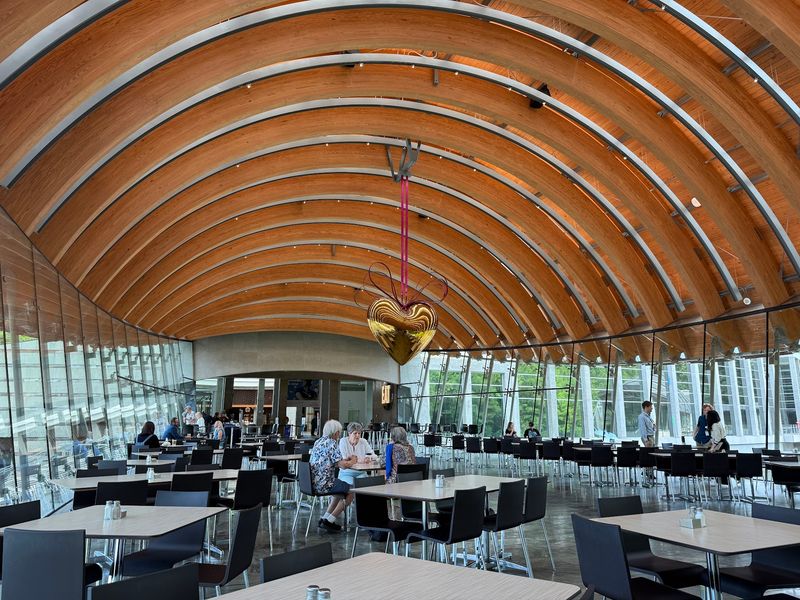
By early afternoon my brain was full, and the new elevated cafe rescued me.
Perched with unobstructed views of the surrounding woods, it sits high enough that you look out into branches rather than at them. Green fills the windows.
Below, a family-friendly splashpad keeps younger visitors happily occupied, with more outdoor art scattered in view. Watching kids sprint through water while I sat with a coffee felt like a nice trade.
Food at Crystal Bridges has a reputation for being better than typical museum fare, and the campus also has the restaurant Eleven plus a coffee spot inside the original building. Between those options, nobody has to leave hungry.
What I appreciated most was permission to slow down. Museums often push you forward in one long march, but having a genuinely pleasant place to stop mid-visit changes the pacing completely.
My suggestion: treat the cafe as your halfway marker. Galleries first, break here, then trails and outdoor sculpture with fresh legs.
Thursday and Friday hours run until 8 PM, which makes for a lovely late-day stop when the light goes golden across the treetops. Other days close at 6 PM, and the museum is shut on Tuesdays.
Vegan and vegetarian options exist, so mixed groups tend to sort themselves out fine. I overheard more than one person say they would come back just for the food, and after sitting up there for a while, I understood the sentiment.
How to Plan a Day That Actually Works
Fair warning from experience: this campus is bigger than it looks on a map, and the expansion made it bigger still.
Admission to the museum is free thanks to an endowment, though special exhibitions may carry a fee. That alone makes a full day here an easy decision.
Parking is the one genuine headache. There is a self-parking garage plus adjacent lots and a shuttle, but spaces fill quickly on weekends and holidays, so arriving near opening at 10 AM saves real frustration.
Some visitors park downtown and walk in through Compton Gardens, which turns the approach into a pleasant stroll instead of a circling contest. Free public buses also connect from downtown Bentonville to the museum shuttle.
Grab a map in the lobby right away. The new figure-eight layout is intuitive once you understand it, but wandering blind wastes energy you would rather spend on art.
Book your Frank Lloyd Wright Bachman-Wilson House visit in advance if you want to see it. Tickets are free but timed, and it is easily one of the most memorable stops on the grounds.
Wheelchairs are available on site, and most indoor routes are smooth and level.
Plan on four hours minimum, and a full day if you want the trails, the studios, and a real meal. I left after most of a day and still had not seen everything, which mostly just means I am going back.
Address: 600 Museum Way, Bentonville, AR 72712
