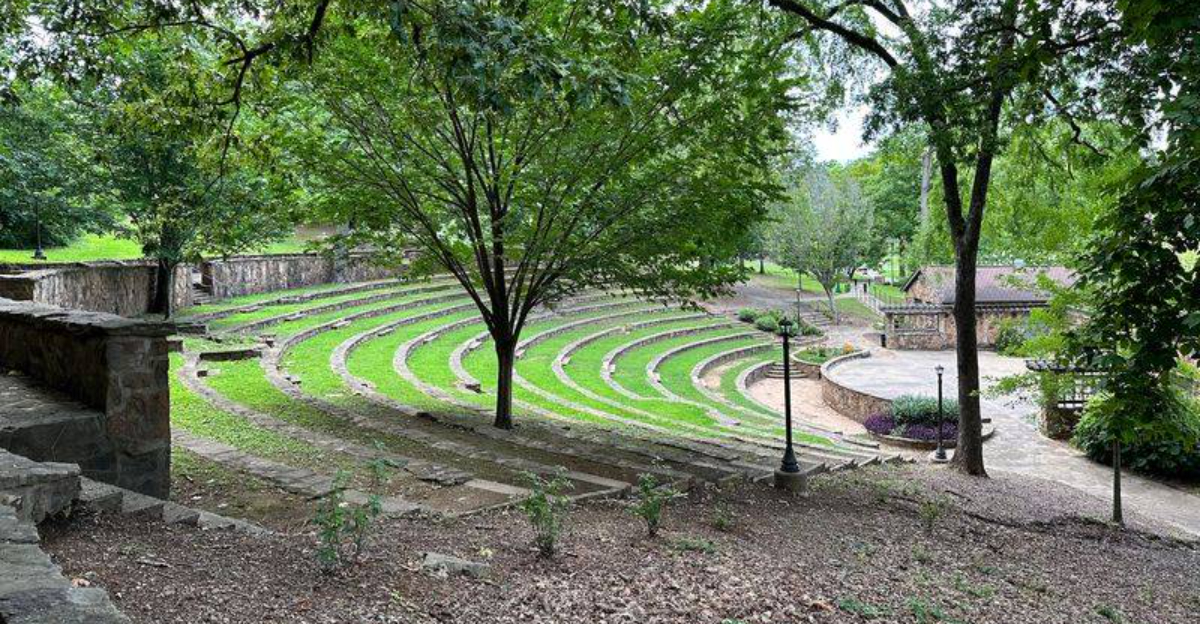
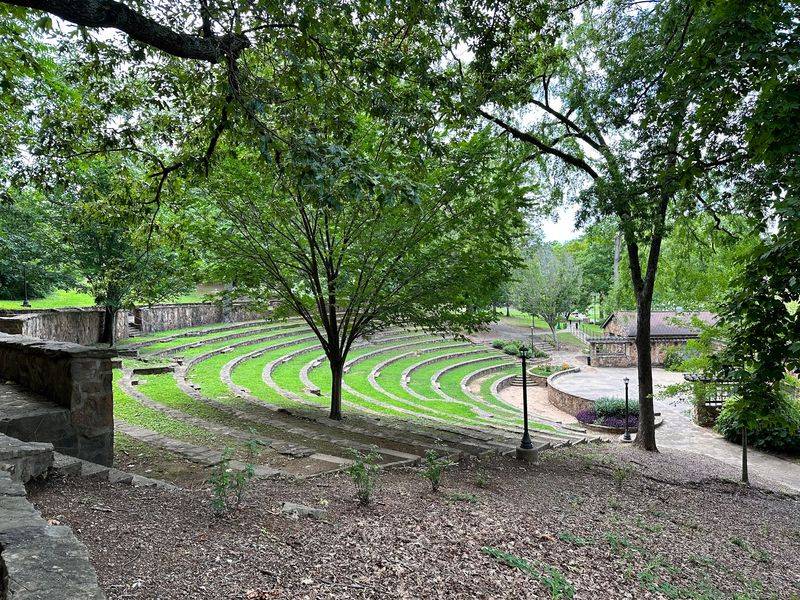
Picture a theater without walls, surrounded by towering trees instead of city lights. That is the setting at this historic Alabama park, where a 1930s amphitheater sits against a hillside with sandstone retaining walls, grass-covered seating, and stone pavilions framing the stage.
The design was part of a Depression-era improvement project and has remained a defining feature of the park ever since. Over the decades, the space has welcomed concerts, plays, festivals, and other performances.
Even without an event taking place, the architecture makes the amphitheater worth seeing, especially alongside the park’s rose garden, pond, historic villa, and mature landscaping.
The Amphitheater Carved Into a Hillside
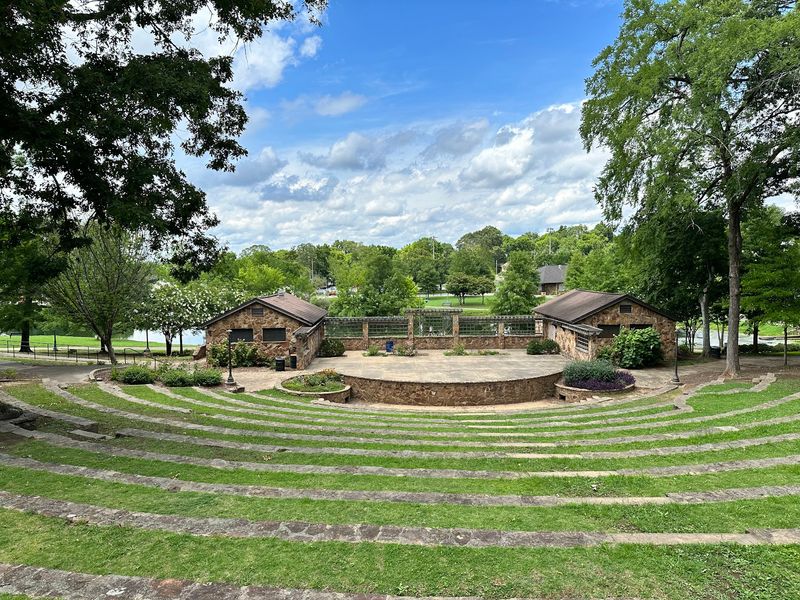
My favorite discovery here sits on the north slope of Park Mountain, the park’s highest ground. The Garden Theater, as it is also known, was built around 1931 through a municipal works program that gave local people jobs during the Great Depression.
Landscape architect Rubee Pearse designed it, and the layout still makes sense almost a century later. The seating is a gentle series of low stone risers with grass-covered steps, all held in place by thick native sandstone retaining walls.
The stage sits raised, propped up by a curving scrolling sandstone wall, with twin stone pavilions standing guard on either side. Sit near the back and you can see how the walls quietly funnel sound toward you.
It earned a spot on the National Register of Historic Places in 1998, which felt right to me once I ran my hand along that rough stone. Restoration work in 2009 and 2011 added arbors, festoon lights, and planting beds, so it looks cared for rather than frozen.
Music history happened here too. The Allman Brothers played their first sell-out concert on this stage back in 1969, and concerts, theater, and cultural events have cycled through for decades.
Come on a quiet weekday and you may have the whole bowl to yourself. Bring a blanket, because grass steps are charming but not exactly cushioned.
Big Spring and the Grotto Pond
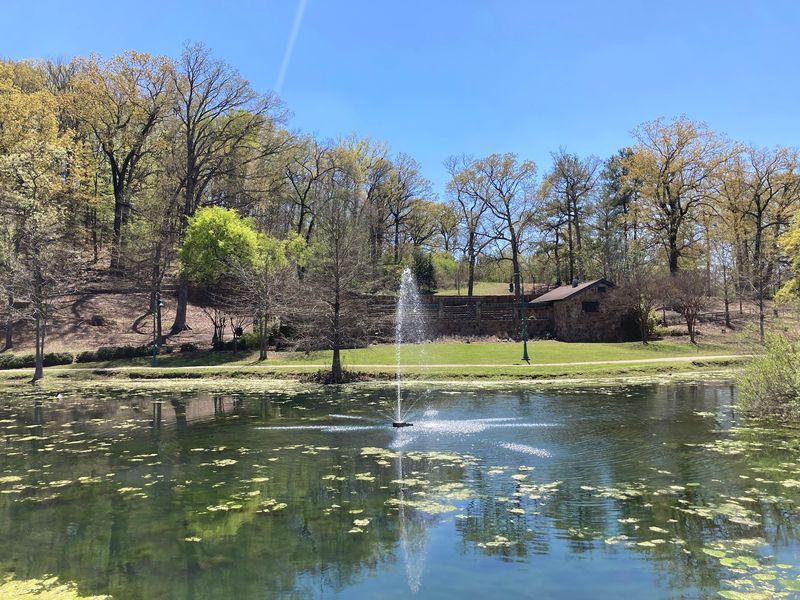
Water is the reason this park exists at all. When Avondale was dedicated in 1886 as one of Birmingham’s earliest parks, the deciding factor was a strong natural spring bubbling right out of the ground.
Locals have called it the Big Spring, King’s Spring, and Cave Spring over the years. A grotto and small pond formed around it, and that little pocket of shade and moving water became one of the park’s signatures.
For years the original spring and grotto were hidden away, and I find that detail oddly touching. The 2011 renovation uncovered it again, adding a fresh waterfall and pool so visitors could actually see where the story began.
Now it is one of the calmest corners in the whole place. Sit for a few minutes and the traffic noise from the surrounding streets fades behind the trickling sound.
The pond nearby is the social hub, mostly because of the ducks and geese. Fair warning from experience: they are bold, they travel in crowds, and they will assume you brought snacks.
A flat paved path loops around the water, easy to walk and easy to roll a stroller or wheelchair along. Birders do well here too, with herons and the occasional unusual visitor showing up among the reeds.
A Rose Garden With Its Own Octagonal Arbor
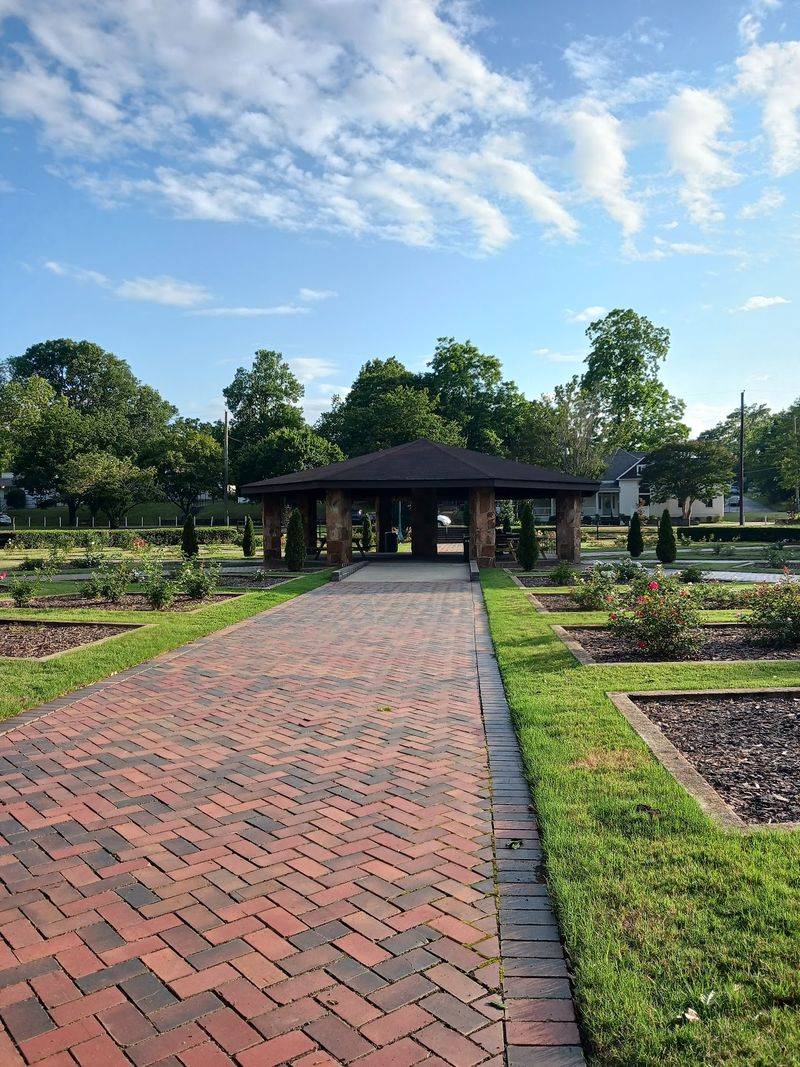
Roses have been growing in this park since 1915, which is longer than most Birmingham businesses have existed. The garden was laid out formally, with triangular flowerbeds fanning out from a central lattice gazebo like slices of a pie.
That first gazebo eventually gave way to an octagonal arbor set on local sandstone piers. Same stone as the amphitheater walls, which ties the whole park together visually in a way I only noticed on a second lap.
Late spring is when it really performs. The color pops against all that gray stone, and the smell hits before you reach the beds.
It is a small garden, not a sprawling botanical showpiece, and that is part of the charm. You can take it in slowly without feeling like you are missing a wing somewhere.
Photographers seem to love the arbor, and I understand the appeal. The geometry of the beds gives you natural lines to work with, and the stonework adds texture that flowers alone cannot.
Benches sit close by under mature trees, so this makes a solid pause point if you have been climbing toward Park Mountain. I ate a takeout lunch here once and considered it a very good decision.
Morning light is softest, before the Alabama heat settles in for the day.
The French Norman Villa Sitting at the Top
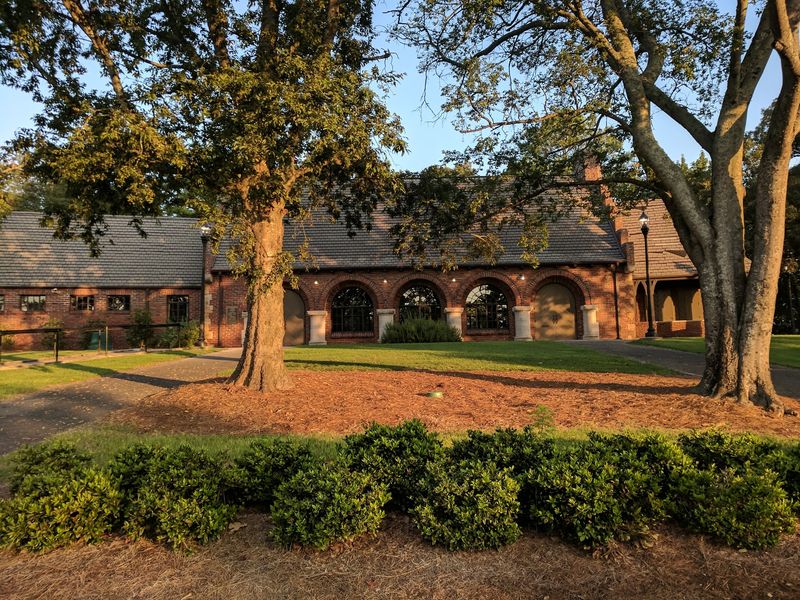
Climb to the park’s highest point and you find something that looks borrowed from the French countryside. The Villa is an open-air structure in French Norman style, perched on Park Mountain above everything else.
Burnham and Greer designed it, and like the amphitheater it went up around 1931 as part of the same municipal works effort. Two very different buildings, same era, same civic ambition.
I did not expect architecture like this in a neighborhood park. The rooflines and arched openings give it a storybook quality that feels wonderfully out of place next to a ballfield.
It has been renovated over the years and now serves as a venue for special events and family reunions. If you stumble onto a gathering happening inside, just admire it from the path and keep walking.
The walk uphill is short but real, so take your time. Trees close in around the route, and the temperature drops noticeably under that canopy in summer.
Views back down through the trees give you a sense of how the park is layered, with the amphitheater bowl below and rooftops of the historic district beyond.
Those surrounding homes are worth a look too, full of Queen Anne detailing and Craftsman bungalow porches from the late 1800s onward.
Ballfields, Courts, and Paths for Anyone Who Cannot Sit Still
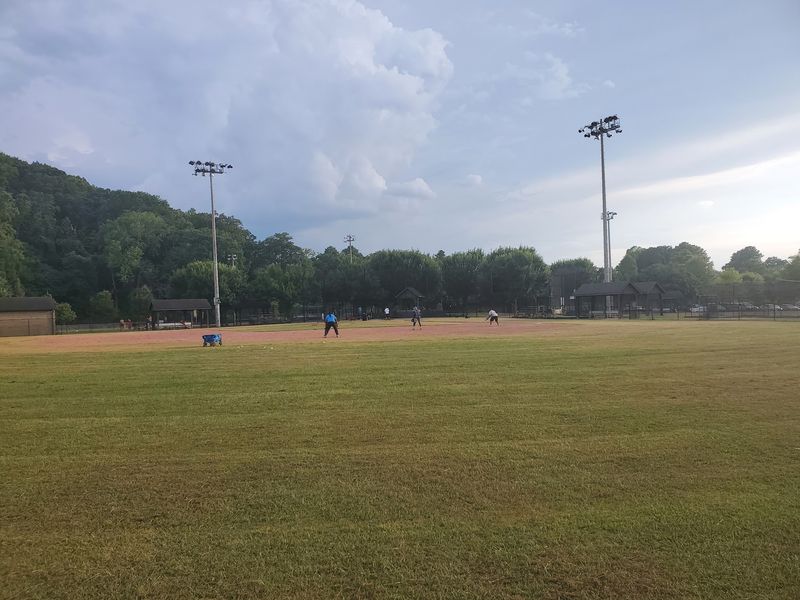
Not every visit needs to be a history lesson. Spread across roughly 37 acres, this park gives you plenty of ways to burn energy instead.
Three youth baseball and softball fields anchor one section, and on game days the whole corner buzzes with parents, coolers, and dugout chatter. Tennis courts and basketball courts sit within easy reach.
Running and walking routes thread through the grounds, and most of them are flat and paved. That makes the loop around the pond friendly for beginners, stroller pushers, and anyone using a wheelchair.
Picnic areas come equipped with tables, and several pavilions offer roofs for shade or surprise rain. Alabama weather does like a surprise.
Playgrounds tuck in beneath existing trees, with equipment aimed at different age groups so younger kids are not competing with bigger ones. The shade is a genuine gift in July.
One practical note worth knowing before you arrive: public restrooms have limited hours and are often tied to baseball season weekends. Plan accordingly, especially with kids in tow.
Parking is reasonably plentiful, and the park has multiple entrances, so you can slip in near whichever section you want. I usually park closer to the fields and walk uphill from there.
Miss Fancy, a Zoo, and a Little League Championship
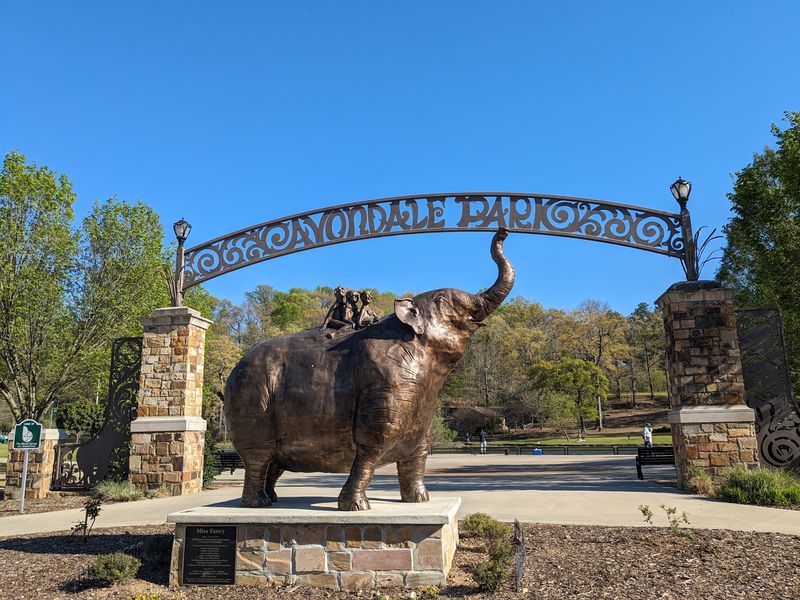
Here is the fact that made me stop and reread a plaque twice. Birmingham’s very first zoo lived in this park from 1913 until 1934.
Its biggest star was Miss Fancy, an easygoing Indian elephant who became something of a city celebrity. Today a bronze statue of her stands in the park, doubling as a playful fountain that kids treat as a splash target.
History keeps stacking up in unexpected places here. Near the ballfields, a plaque honors the Birmingham All-Stars, who won the Little League World Series in 1953.
Even older events touched this ground. A Civil War skirmish took place near the original spring, long before anyone laid out flowerbeds or poured a concrete stage.
The park has stayed relevant rather than becoming a museum piece. In 2022 it hosted the archery competition for the World Games, which brought international athletes to a neighborhood green space.
I like walking the grounds with these stories in my head. The same slope where an elephant once drew crowds now hosts picnics and pickup games.
Scattered historical markers make a decent scavenger hunt if you are visiting with older kids. Read a few, and the ordinary lawns start looking a lot less ordinary.
A Neighborhood Living Room With Serious Shade
What sticks with me most is not any single structure. Avondale Park functions as a shared living room for the neighborhood, and you feel that within about ten minutes of arriving.
Families set up chairs near the playground. Friends walk laps around the pond.
Someone always seems to be reading on a bench under a big tree.
Mature deciduous trees shade a huge share of the grounds, which turns hot afternoons into something manageable. Benches sit both in that shade and along the water, so you have options depending on your mood.
Leashed dogs are welcome, and plenty of them show up. Watch for goslings and nests near the pond in spring, and give the birds room.
Festivals and music events fill the grounds during the year, from folk festivals with food trucks to blues gatherings with family activities. Those days feel completely different from a quiet Tuesday morning, and both versions are worth experiencing.
The 2011 renovation, unveiled in 2013, is widely credited with helping revitalize the Avondale business district just outside the gates. Restaurants sit within walking distance, which makes a takeout picnic here almost too easy.
Gates open at 6 a.m. and close at 11 p.m. daily, though daylight hours suit exploring best.
Address: 4101 5th Ave S, Birmingham, Alabama
