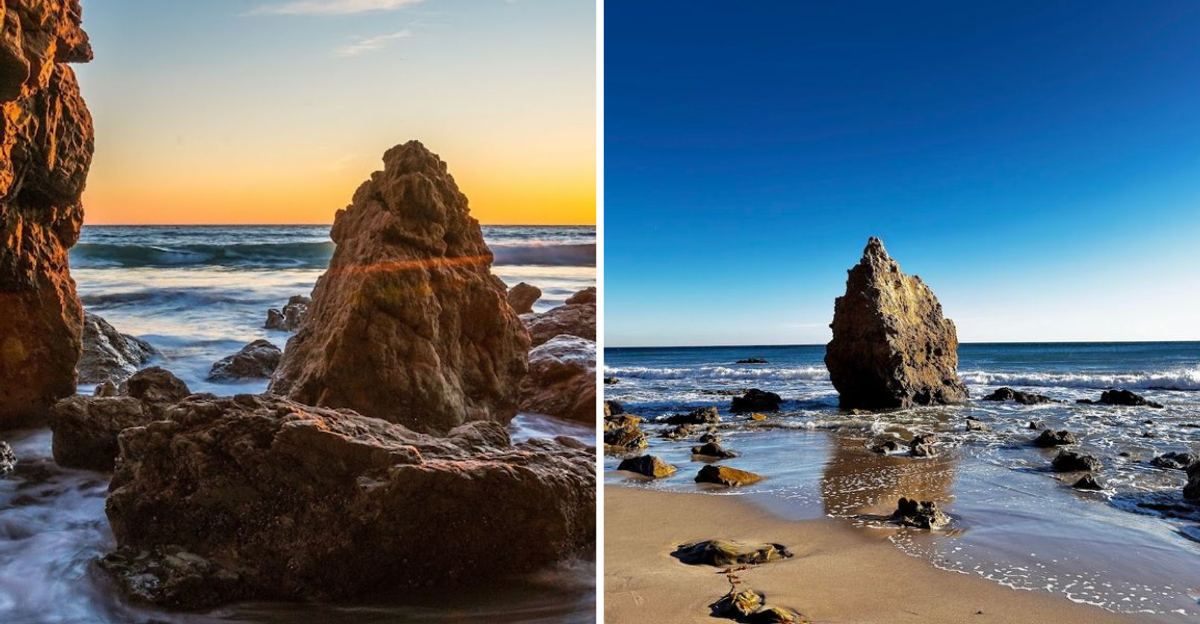
Sea caves and rock arches rise from the sand, framed by towering sandstone bluffs and the sparkle of blue water below. That is what greets you at this California beach, a place most people drive right past without a second glance.
I peered over the edge of those cliffs and my jaw genuinely dropped. It felt less like a public beach and more like a secret the ocean had been keeping.
The stairs down are carved into the bluffs, and with each step, the noise of the highway fades, replaced by the crash of waves and the cry of gulls. The formations look almost cinematic, the kind of scenery you would expect from a movie set rather than a roadside pullout.
I found a spot on the sand and watched the light shift across the arches, the tide creeping in, and realized I had stumbled onto something rare. Even on a busy weekend, this place holds onto a quiet, unhurried energy that is hard to find along the coast.
Descending to a Hidden World, The Trail Down to the Sand
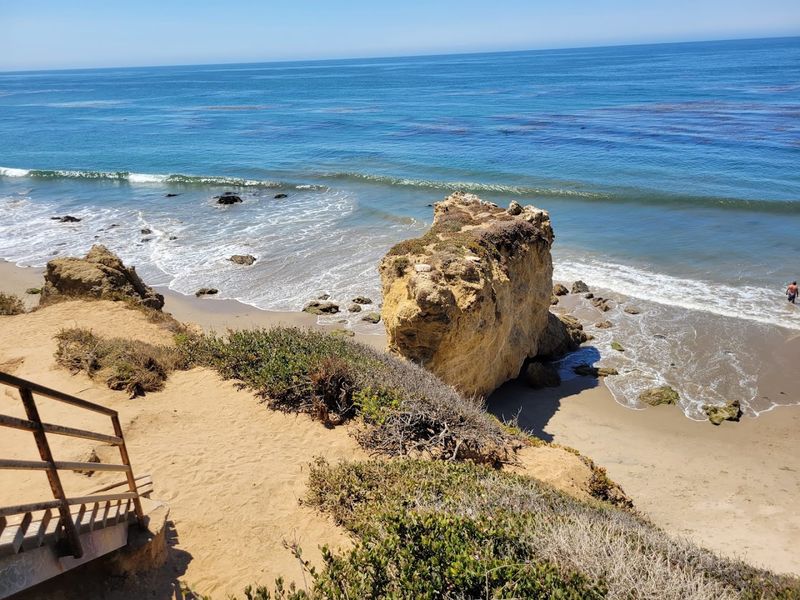
The very first step down from the parking lot at El Matador sets the tone for everything that follows. You begin on a narrow dirt trail that angles sharply toward the ocean, loose sand crunching underfoot, the highway noise already fading behind you.
It feels less like a beach access path and more like the opening of a small adventure.
The trail transitions into a wooden staircase that clings to the bluff face, giving you a bird’s-eye preview of the beach below. Each step brings the sound of the surf closer, and the salty air gets noticeably cooler as you descend.
If you have kids with you, hold their hands on the steeper sections because the steps can be sandy and slippery.
Wearing proper shoes makes a real difference here. Flip-flops are a gamble on the way back up, especially when your legs are tired from a full afternoon of exploring.
Sneakers or sturdy sandals with grip are the practical choice.
The descent takes only a few minutes, but the payoff feels wildly disproportionate to the effort. The moment the full beach comes into view, with its massive rock formations and churning surf, is genuinely exciting.
Portable toilets are available near the parking lot, and picnic tables at the top offer sweeping ocean views if you want to take a breath before heading down. The whole experience of arriving here builds a sense of anticipation that most easily accessible beaches simply cannot match.
An Explorer’s Dream, Sea Caves, Arches, and Rock Formations
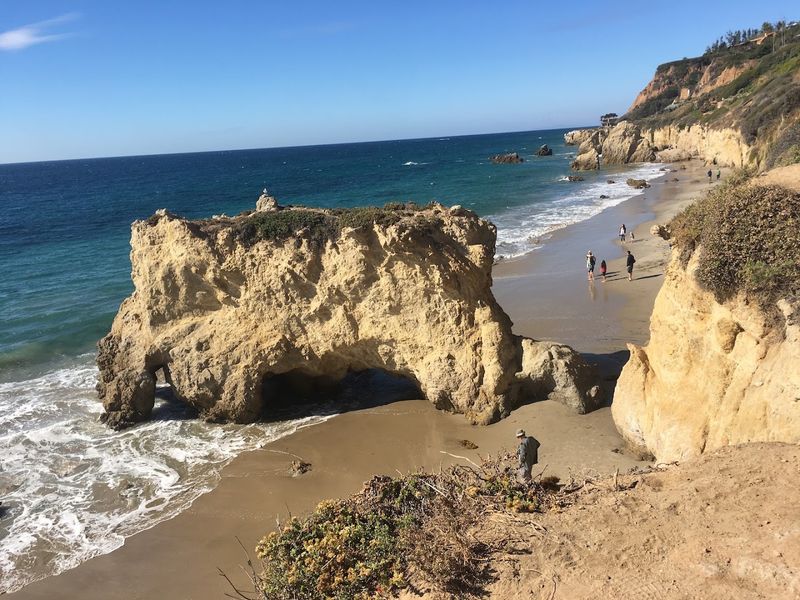
Nothing quite prepares you for the scale of the rock formations at El Matador. The sea stacks rise directly from the sand like ancient columns, and the arches carved through them create natural frames for the Pacific stretching out beyond.
I remember pressing my hand against the cool, rough sandstone and feeling genuinely small in the best possible way.
The largest sea cave faces the ocean and connects directly to the base of the bluff. At low tide, you can walk inside and hear the echo of waves bouncing off the walls in a way that feels almost theatrical.
Narrow passages wind between the formations, and each one opens into a slightly different view of the coastline.
Timing your visit around low tide is the single most important piece of practical advice for this beach. The California Coastal Commission website and various free tide chart apps make it easy to check conditions before you leave home.
Arriving even an hour before low tide gives you maximum access to the caves and arches.
These formations have been shaped over thousands of years by wind and wave action working on soft sandstone, and they are still slowly changing with every storm season. That constant evolution means no two visits are quite the same.
Photographers absolutely love this spot for the way the rocks create natural compositional layers. The rugged, almost prehistoric feel of the landscape is unlike anything else along the Southern California coastline.
Tide Pool Treasures, The Marine Life Hidden in Plain Sight
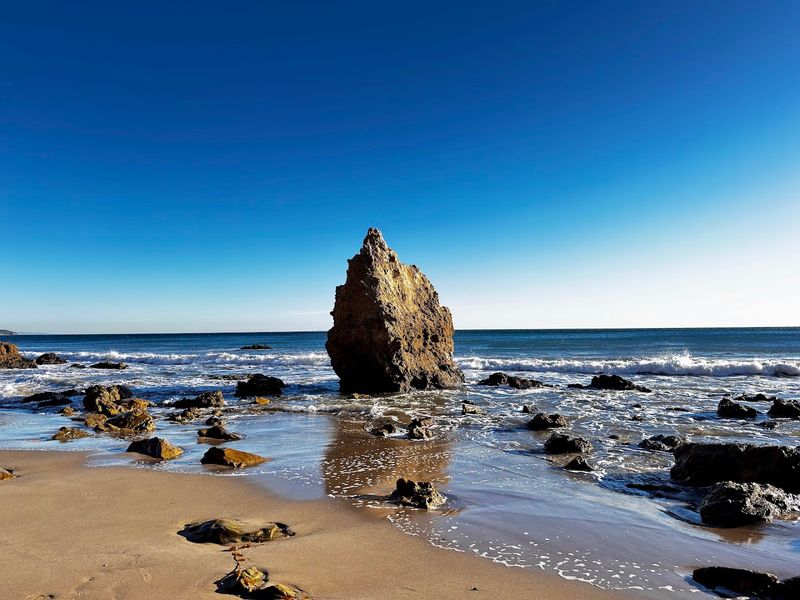
Crouching down beside a tide pool at El Matador feels like borrowing a window into a completely different world. The water is clear enough to see every detail, and the variety of creatures packed into each small pool is genuinely surprising.
California mussels cluster in dense blue-black mats, while aggregating anemones wave their tentacles in slow, hypnotic pulses.
Hermit crabs are especially entertaining to watch because they are constantly on the move, dragging their borrowed shells across the rock surface with surprising speed. Limpets and chitons cling to the stone in patient stillness, and if you look carefully along the edges of the pools, you might spot a small sea hare or a cluster of acorn barnacles.
Red and brown algae add rich color to the whole scene.
The path leading to the tide pools involves some careful footwork because the rocks can be slippery with algae and sea spray. Wearing shoes with good grip is a smart call, and moving slowly and deliberately protects both you and the marine life.
The recommended window for exploration is roughly one hour before to one hour after low tide.
For families with curious kids, this section of the beach turns into an impromptu science lesson that nobody actually planned. Bringing a simple field guide or downloading a marine identification app adds a layer of engagement that makes the experience stick.
The tide pools are located around the base of the sea stacks, making them easy to find once you are on the sand.
Golden Hour Magic, Why Sunset Here Hits Different
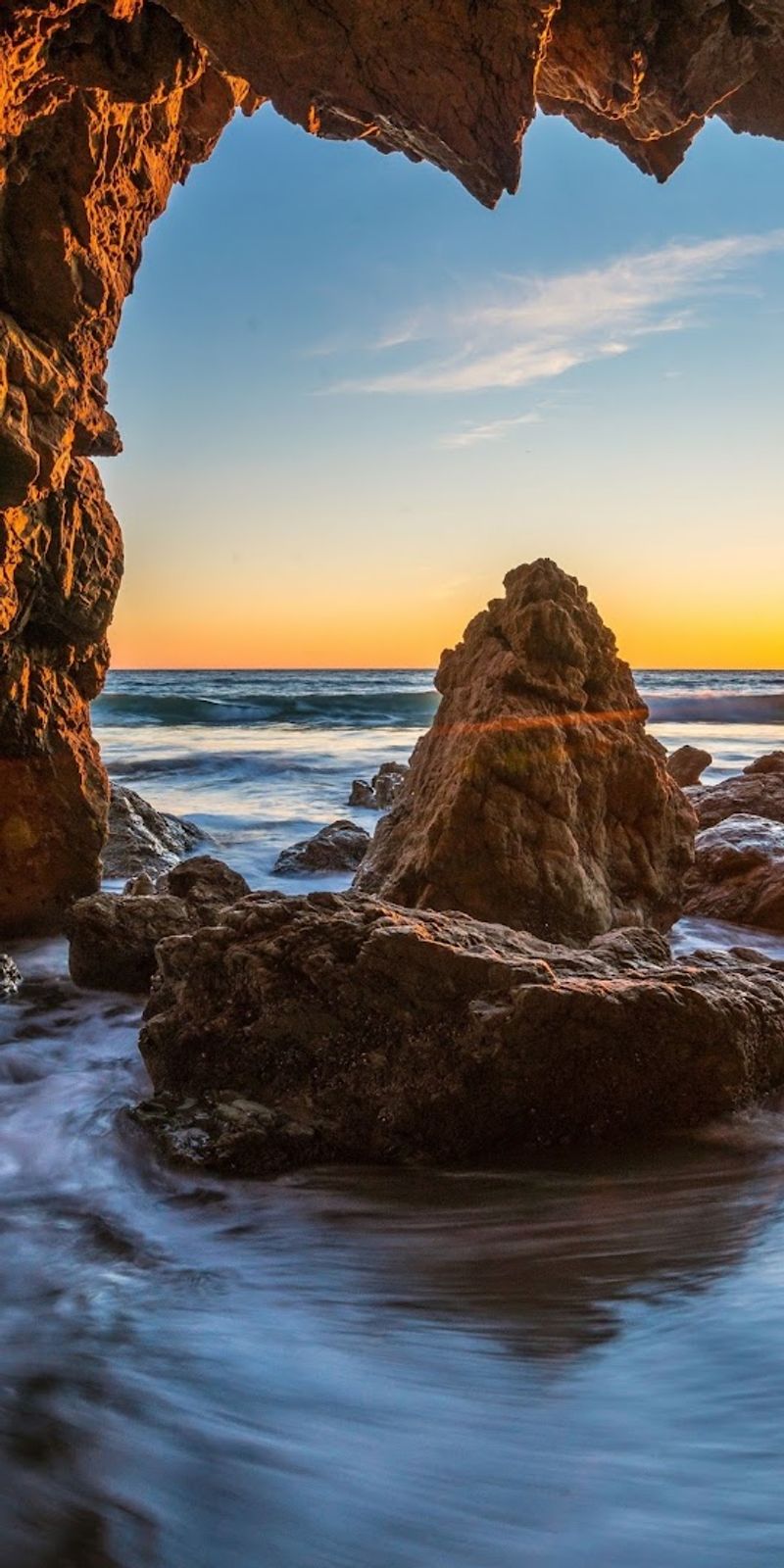
Late afternoon light does something extraordinary to El Matador. The sun drops toward the Pacific at an angle that turns the sandstone bluffs a deep amber, and the water shifts from blue to a shimmering mix of gold and copper.
It is the kind of light that makes even a mediocre photograph look intentional and beautiful.
Photographers start arriving in the final hour before sunset, setting up tripods along the shoreline and jostling for the best angle between the rock formations. The arches and sea stacks act as natural framing devices, and the reflections in the wet sand during low tide create mirror-like effects that double the visual impact.
Even without a camera, simply sitting and watching this unfold is deeply satisfying.
The color show typically lasts about twenty to thirty minutes from the first warm blush until the sun disappears below the horizon. After that, a softer blue twilight settles over the beach, and the crowds thin out quickly.
If you time it right, you can have the last of the light almost entirely to yourself.
One practical note: the parking lot officially closes at sunset, so plan your exit accordingly. Arriving at least ninety minutes before sunset gives you enough time to explore and still catch the full display without rushing.
The combination of dramatic geology and exceptional coastal light makes this one of the most photogenic moments available anywhere along the Pacific Coast Highway. It is a memory that tends to outlast everything else from a Malibu day trip.
The Quiet Factor, Why This Beach Stays Peaceful on Busy Weekends
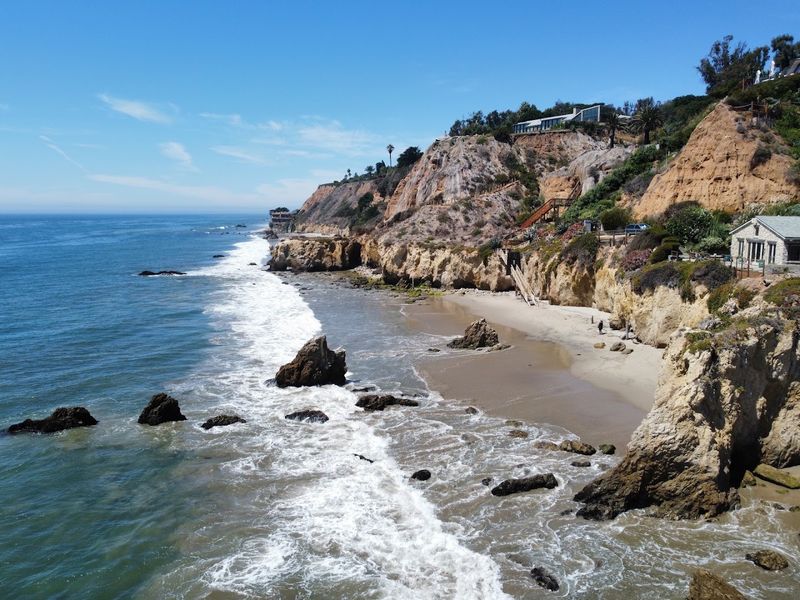
There is something quietly remarkable about finding a beach in Malibu that does not feel like a parking lot on a July Saturday. El Matador pulls this off through a combination of geography and logistics that naturally limits the crowd size without any posted signs telling people to stay away.
The parking lot holds only about thirty to thirty-five vehicles, and it fills up fast on weekends. Once those spots are gone, most people simply move on.
The steep descent also filters out visitors who are not prepared for a bit of physical effort, which means the people who do make it down tend to be genuinely invested in the experience rather than just passing through.
Weekday visits are noticeably quieter, and arriving before 10 in the morning on weekends dramatically improves your chances of finding both parking and a peaceful stretch of sand. The off-season months from October through March offer an even more solitary experience, with cooler temperatures but often spectacular light and dramatic wave conditions.
The beach is part of Robert H. Meyer Memorial State Beach, a designation that helps preserve its natural character and keeps commercial development off the shoreline entirely.
That protection is visible in how untouched the landscape feels compared to more developed coastal areas nearby. The rocks shelter the cove from wind, making it noticeably warmer than open beaches like Santa Monica even on cooler days.
That combination of shelter, beauty, and manageable crowd levels is genuinely rare, and it is the main reason people keep coming back here year after year.
Planning Your Visit, Practical Tips for Getting the Most Out of El Matador
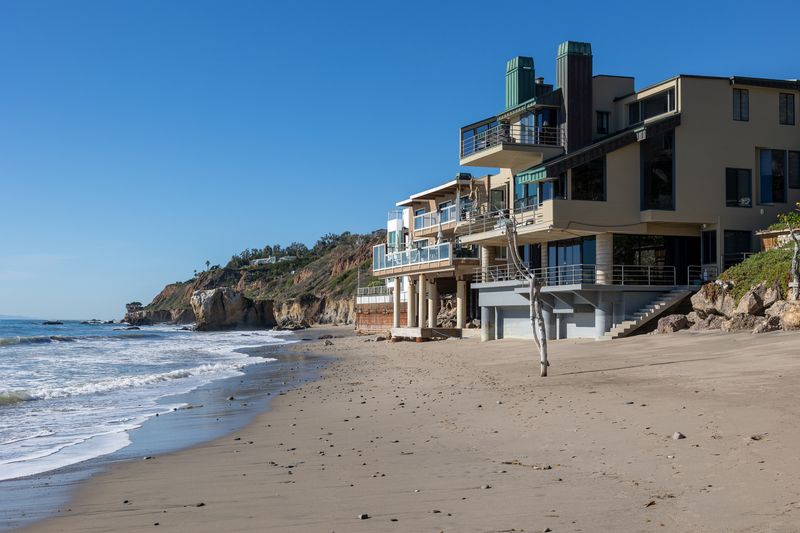
Getting the most out of El Matador comes down to a few simple decisions made before you even leave your driveway. Checking the tide chart is the single biggest factor because low tide transforms the beach from a beautiful cove into a fully explorable landscape of caves, arches, and pools.
High tide can reduce the usable beach significantly and cut off access to many of the formations entirely.
Parking costs a small fee, with options for one hour or a full day. The lot is unpaved and can feel chaotic when it is full, but a pay station on site accepts card payments.
Taking a photo of your license plate before you head down is a tip that saves time at the machine. Street parking along the Pacific Coast Highway is sometimes available but requires a longer walk and careful attention to posted signs.
Wearing closed-toe shoes with grip is strongly recommended for both the descent and the rock exploration. Bringing snacks, water, and a blanket makes the visit much more comfortable, especially if you plan to stay for sunset.
A light jacket is worth packing because the marine layer can roll in quickly even on warm afternoons.
Swimming is possible but requires caution because rocks are present in the water and wave conditions vary. The beach is not ideal for traditional sunbathing in some areas due to the rocky shoreline, but finding a sandy pocket between the formations is very doable.
Address: 32350 Pacific Coast Hwy, Malibu, CA 90265.
