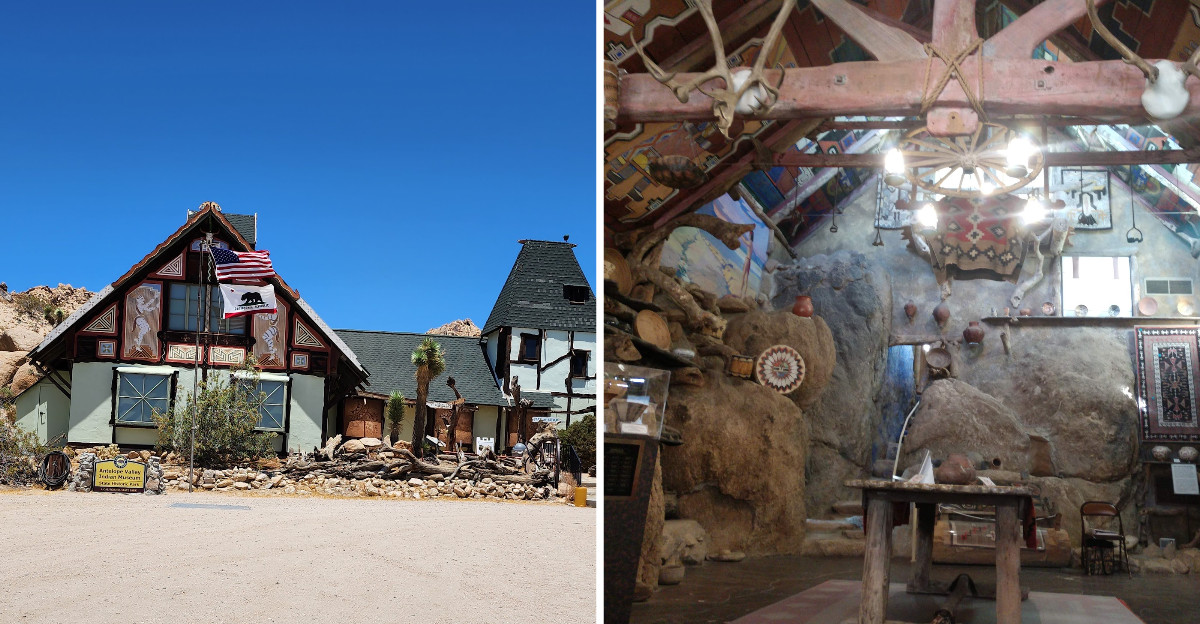
Wooden Swiss chalets perched on giant granite boulders in the Mojave Desert are not something you see every day. The car slowed before the brain caught up, because this building looked like it had wandered off a storybook page and decided to stay.
Joshua trees and wide open dirt stretch for miles in every direction, which makes the sudden appearance of a chalet feel like a mirage. Over almost a hundred years, this one house has been a homestead, a theater, a dude ranch, a Hollywood set, and finally a museum.
Inside, more than 3,000 Native American objects fill the rooms, some of them thousands of years old. Dusty shoes and a full camera roll came home from the visit, along with a head buzzing with stories.
California hides its strangest treasures in the most unexpected places, and this one sits right out in the open, waiting for someone to slow down and notice.
A Homestead Built Right Into the Rocks
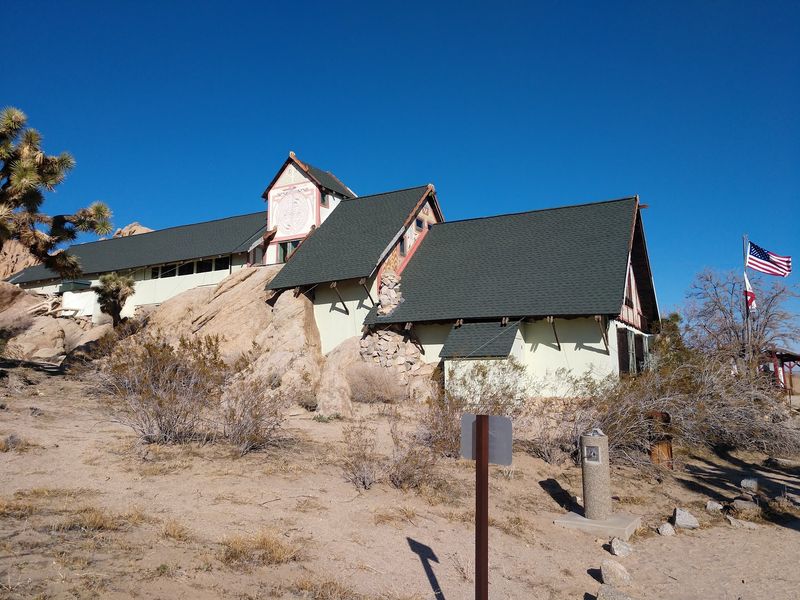
Rocks were the first thing that caught my eye, and I mean huge ones. The house does not just sit near the boulders of Piute Butte, it grabs onto them and grows around them like a vine.
Back in 1928, a self-taught artist named Howard Arden Edwards built this 40-by-60-foot wood-framed home to meet the rules of the Homestead Act. That law let people claim land if they lived on it and improved it.
Edwards took that challenge and ran with it, working alongside his son and other helpers to raise the walls by hand.
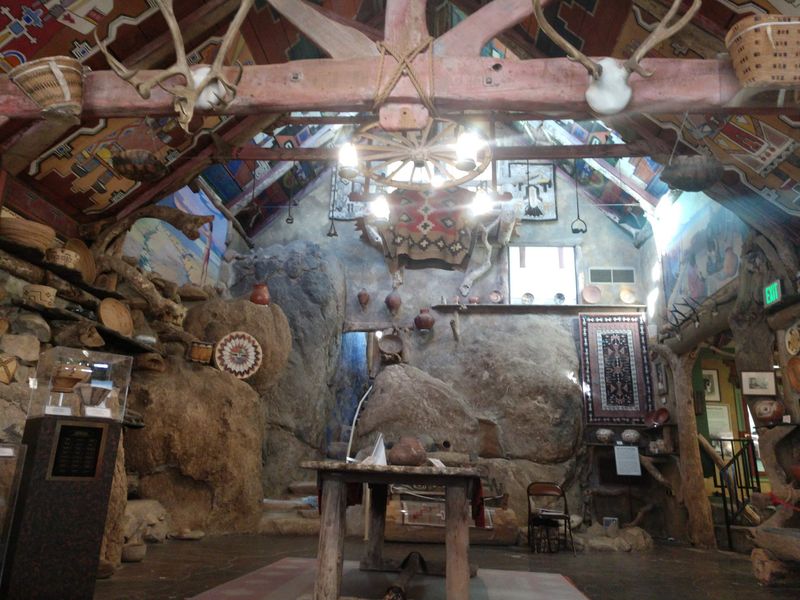
Some of the granite boulders poke straight through into the rooms. I spotted rock surfaces acting like natural walls, and the house even works stone into features like the chimney and a water fountain.
It is clever and a little wild at the same time.
Picture living out here in the late 1920s. There was no air conditioning, the wind could howl, and the nearest neighbor was far away.
Building on a rock outcrop gave Edwards a solid base and a great view across the valley floor.
My tip is to walk slowly around the outside before heading in. Look at where the wood meets the stone, because those joints tell you how much planning went into this odd and wonderful home.
Hollywood Scraps Turned Into Walls
Here is a fun secret that made me grin. Parts of this house were built from salvaged plywood that once belonged to Hollywood theater and movie sets.
Edwards was not only an artist, he also worked as a set designer and screenwriter. When sets were torn down, he saw treasure where others saw trash.
He hauled that material out to the desert and gave it a second life as walls and ceilings.
Knowing this changes the way you look at the rooms. Every painted panel might have once stood behind actors on a stage, which is a pretty cool thought when you are standing in a quiet desert museum.
It feels like the house carries a little bit of old Hollywood inside its bones.
The building itself has also served as a Hollywood set at points in its history. That makes sense, because it already looks like a movie location with its dramatic rocks and storybook roof.
If you enjoy recycling or crafting, this part of the story is inspiring. Edwards proved you can build something beautiful from leftovers if you have imagination and patience.
Look closely at the ceilings and walls as you explore. The texture of the old set board is part of the history, and spotting it feels a bit like a treasure hunt.
Swiss Chalet Charm in the Mojave
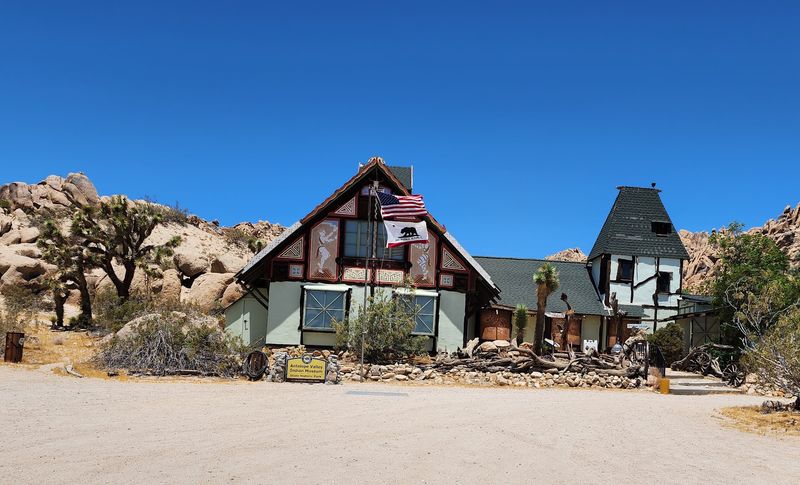
Honestly, a Swiss chalet was the last thing I expected to find in a desert full of creosote bushes. Yet there it was, with its peaked roof and wooden trim, looking like it wandered down from the Alps and decided to stay.
Edwards chose this style on purpose, and it gives the building a cozy, fairy tale mood. One visitor online compared it to a mix of the Swiss Family Robinson treehouse and an old West trading post, and I think that nails it.
The shape feels playful, but it also fits the rugged hill in a strange way.
The building is several levels tall because it follows the rise of the boulders. Ramps and outside walkways connect most areas, so you can move between floors without too much trouble.
I liked stepping outside between rooms and catching a breeze along with a new view.
Photographers, this is your moment. Morning and late afternoon light make the wood glow warm against the gray granite, and the blue desert sky frames everything nicely.
The architecture is a big reason the site is on the National Register of Historic Places. It is rare to find a building this personal and this quirky that has survived for nearly a century.
Take a few minutes just to enjoy the shape of it before you go inside.
A Stage for Stories and Imagination
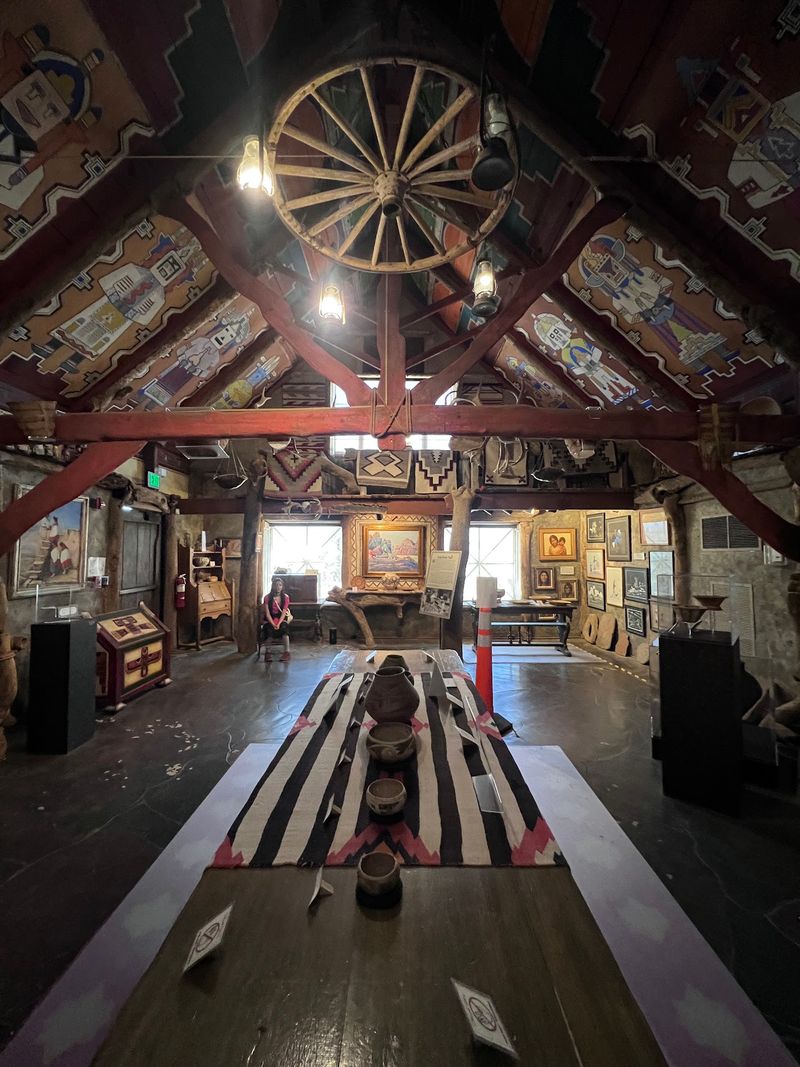
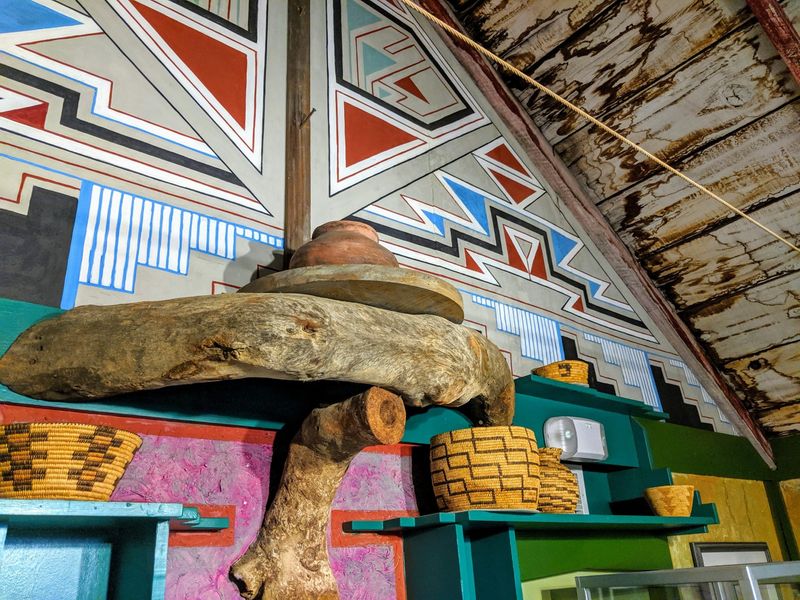
My neck got a little sore in the main room, and it was totally worth it. The ceiling is covered in stylized Kachina designs painted on theatrical set board, and I kept tilting my head back to take it all in.
Along with being a home and museum, this building has worked as a theater at different times. You can feel that dramatic energy in the space.
The bold Southwestern colors, reds, yellows, and deep blues, make the room feel like a stage waiting for a show.
Edwards painted the interior himself. The original murals have held their color remarkably well, and they still look bright after all these decades.
It is rare to see artwork like this in the exact spot where the artist created it.
The room mixes painted panels, wooden beams, and real granite boulders all in one place. Nothing about it feels plain or ordinary.
Kids tend to love this room because there is so much to point at.
Give yourself time here instead of rushing to the next exhibit. Sit quietly for a minute if you can and notice the small details, such as repeating patterns and how the light from the windows hits the painted shapes.
The room rewards anyone who slows down and looks twice.
Grace Wilcox Oliver and the Growing Collection
Every great museum needs a champion, and this one found hers in the early 1940s. Grace Wilcox Oliver, an anthropology student, bought the property and brought her own large collection of Native American artifacts with her.
Before her arrival, Edwards had already opened one room to the public in 1932. He called it the Antelope Valley Indian Research Museum.
Oliver took that start and turned the house into a more formal museum, running it for over three decades.
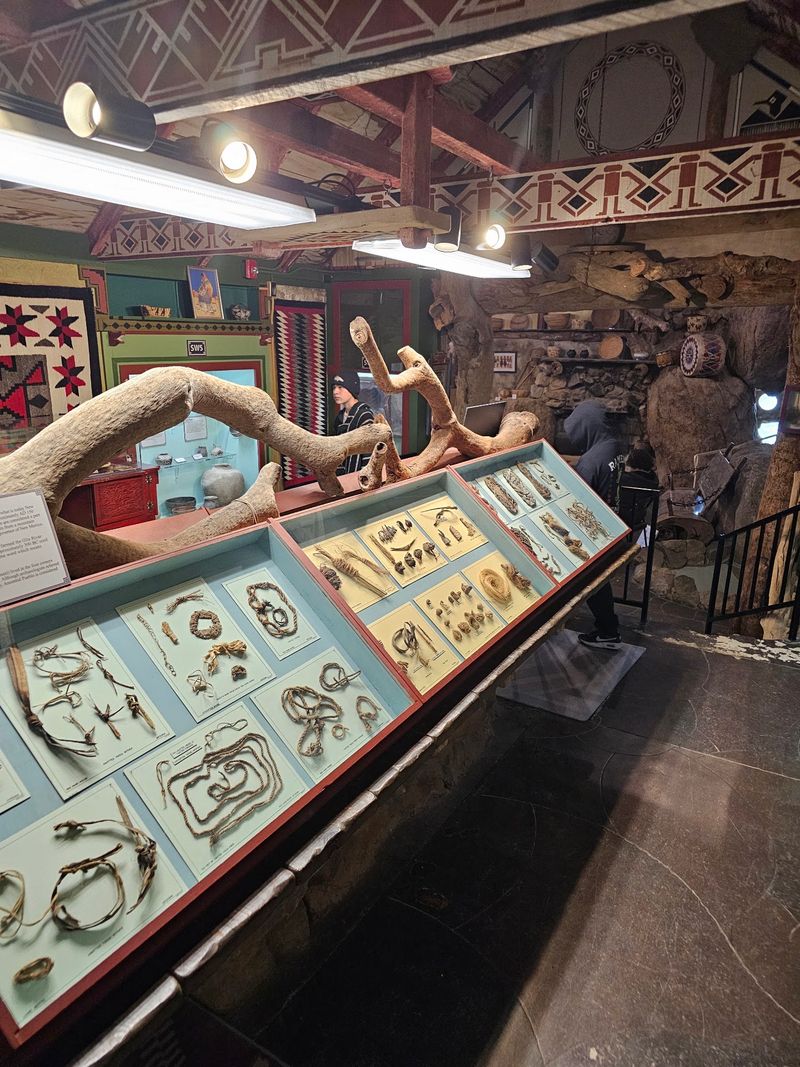
Her dedication is a big reason so many objects are here today. Together, the Edwards and Oliver collections add up to more than 3,000 items, many of them rare and distinctive.
Some pieces are thousands of years old.
You will see baskets, tools, pottery, and spiritual objects in careful displays. The cases are thoughtfully arranged, so it never feels like a cluttered attic.
Think about how much time it takes to gather, study, and care for this many items. Oliver spent a huge part of her life doing just that, and visitors still benefit from her hard work.
Read the labels as you go, because they explain where items came from and how they were used. That little extra reading turns a pretty object into a real story.
Cultures of the Great Basin, Southwest, and California
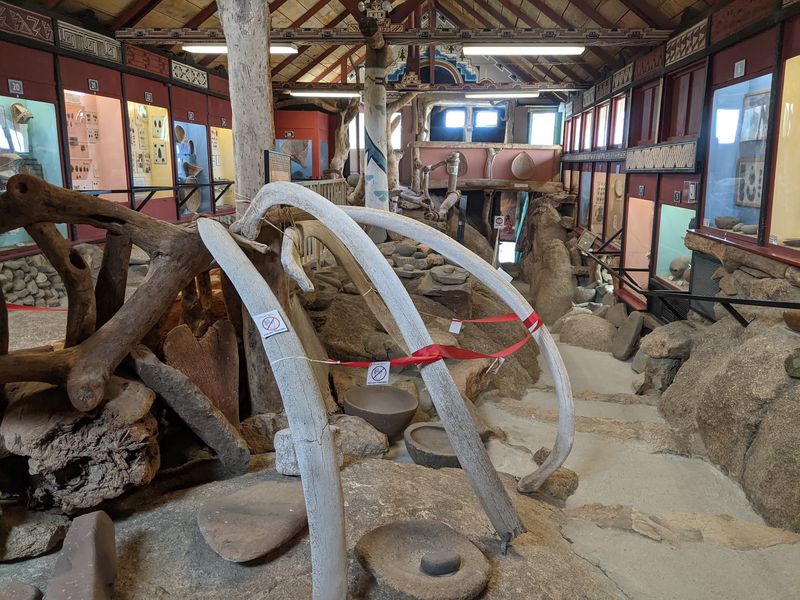
Three regions, one building, and a whole lot to learn. The museum shares the cultures of Native American groups from the Great Basin, the Southwest, and California, and each area has its own space and flavor.
Walking through these rooms, I noticed how much people adapted to their surroundings. Desert communities used local plants, stone, and fibers to make everything they needed.
Some displays show how native trees became household items, which I thought was incredibly smart.
Piute Butte itself matters to this story. It sat along a significant four-way trade route, and it was a sacred landscape for Native peoples.
Goods and ideas once traveled through this very area, some reaching as far as the coast.
The dioramas are a highlight, especially for younger visitors. They show daily life in a way that is easy to understand, with scenes you can study up close.
Interactive exhibits add a hands-on feel too.
One tip is to start downstairs if you want the most accurate information. The main floor presents the factual narrative, while upstairs keeps a different kind of history, which I will explain next.
Take notes or snap photos of labels you find interesting. You may want to look up more later.
Upstairs Tales From a Screenwriter
Did you know a museum can keep its own made-up stories on purpose? That is exactly what happens on the second floor here, and I found it one of the most interesting parts of my visit.
Edwards had a screenwriter’s mind. Sometimes he created fictional stories for some of his artifacts, giving them dramatic backgrounds that were not always true.
It was part of his flair for storytelling.
Rather than erase those tales, the museum preserves his original storytelling upstairs. Downstairs, you get the factual history based on research.
It is like reading two books about the same subject, one written by a showman and one by a scholar.
I liked comparing the two. It made me think about how history gets told and who gets to tell it.
It is a great lesson for students, too, because it shows why checking facts really matters.
The upstairs rooms also give you a peek at what the museum felt like in its early days. The mood is old-fashioned and personal, almost like visiting a collector’s private den.
Bring a curious attitude and maybe a friend to chat with. Talking about which stories seem believable, and why, turns the visit into a fun little puzzle you solve together.
A State Historic Park With Trails and Views
Fresh desert air hit me the moment I stepped back outside, and I was ready to explore more. The State of California bought the museum and surrounding land in 1979, turning it into a state historic park.
A restoration project later earned a Conservancy Preservation Award in 2011. Thanks to that care, the building looks well loved rather than worn out.
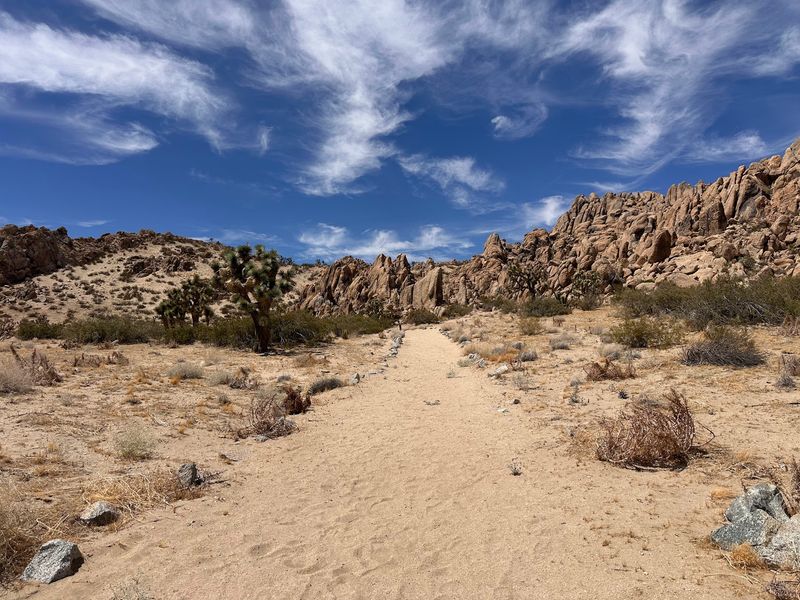
The grounds include a short self-guided nature trail, roughly a quarter mile, looping around the rocks. Signs along the way share details about plants and history.
The views stretch wide across the valley, calm and quiet.
There is also a picnic area, so pack a lunch and snacks. Bring water and a hat or umbrella, because shade is limited and the sun gets strong.
If the lot is full, you may need to walk uphill a bit.
Plan ahead, since hours are short. The museum opens Saturdays and Sundays from 11 AM to 4 PM.
Dogs are not allowed in the museum or on the trails, so leave pets at home.
Most people spend about an hour or two here, which makes it an easy day trip stop.
Address: 15701 East Avenue M, Lancaster, CA 93535
