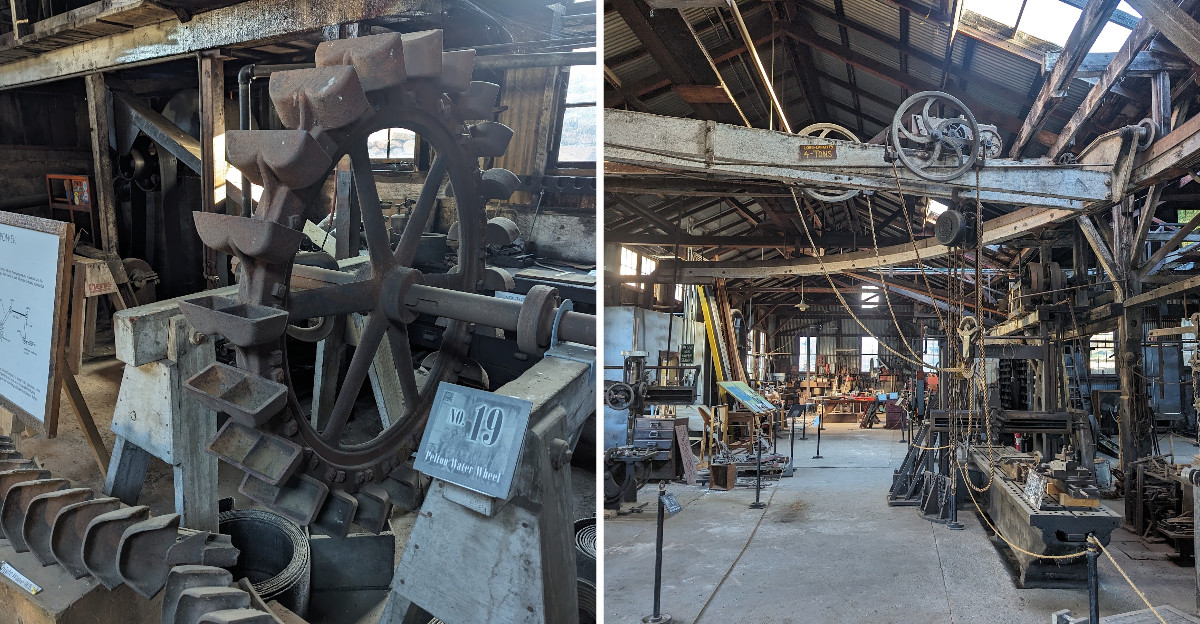
Iron dust in the air, sand on the floor, and leather belts slapping overhead are not what a California gold country drive usually delivers. Running machinery greets visitors instead of a display model with a plaque, and the factory still operates on water power after more than a century.
Water piped down the mountain spins a cast iron wheel, the wheel turns a shaft, and that shaft drives lathes older than most visitors’ great-grandparents. Volunteers light up when asked how any of it works.
Walking through the door, the sound hits first, then the smell of oil and hot metal. The whole building hums with the rhythm of moving parts and running water, unchanged since the 1800s.
It turned out to be the most surprising stop of the trip, and it keeps coming up in conversation.
Finding the Foundry Tucked Behind Sutter Creek’s Main Street
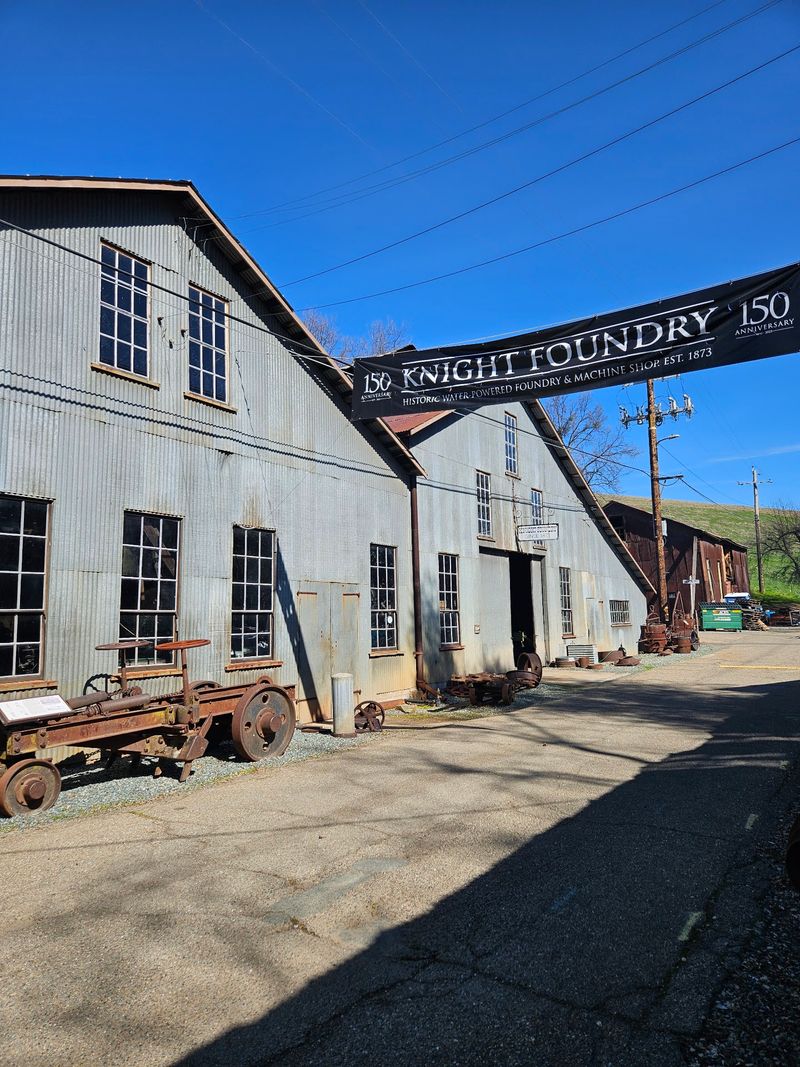
Sutter Creek pulled me in first with its wooden balconies and narrow sidewalks, the kind of downtown where you park once and wander for hours. Knight Foundry sits just a short walk off the main drag on Eureka Street, and it does not announce itself.
No grand entrance. No polished signage.
Just solid, dark buildings that look like they belong to a working town rather than a tourist stop.
That plainness is exactly why it landed for me. Plenty of Gold Country sites have been tidied up until they feel like film sets, but here the clutter is real and the wear is earned.
Parking takes a little patience since the street is narrow and the lot is small, so I ended up leaving my car closer to downtown and strolling over. Honestly, that walk helped.
By the time I reached the gate, I had already passed old storefronts and a creek running below the road.
Founded in 1873 to build and repair heavy equipment for the Mother Lode’s gold mines and timber operations, the foundry has been part of this neighborhood longer than almost anything else standing.
Water From 45 Miles Away Still Turns the Main Wheel
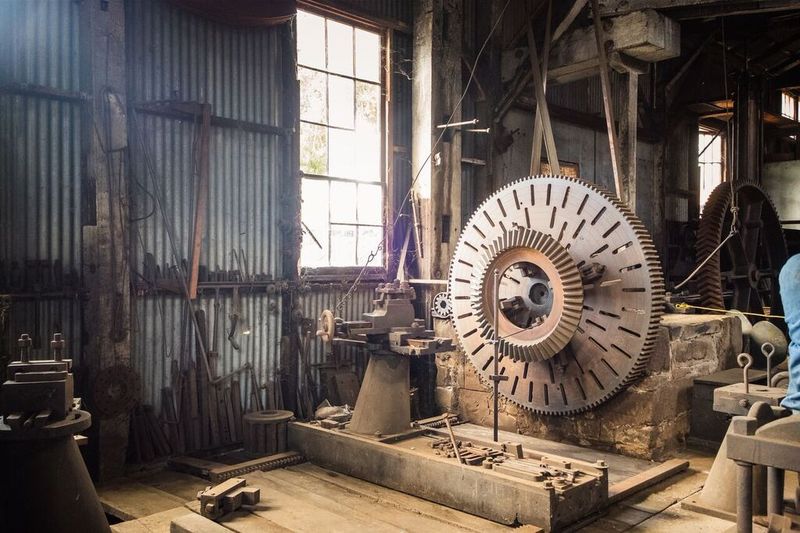
Here is the part that genuinely stopped me. The power running this whole shop is not electricity.
It is water, and it travels roughly 45 miles from the mountains through a canal system before dropping nearly 500 feet into the pipes here.
That drop builds around 120 pounds per square inch of pressure. Aimed at a cast iron wheel, it produces enough force to drive the main line shaft that stretches across the ceiling.
A 42-inch Knight Wheel handles the heavy lifting, while smaller water motors power individual machines around the floor. Belts connect everything, looping from the shaft down to lathes, drills, and shapers.
Watching it start up felt oddly gentle. There is no roar or engine rumble, just a rising hum and the soft slap of leather as the belts take hold.
I stood there doing math in my head and failing. A system designed in the 1870s, using nothing but falling water and clever geometry, still turns machines that weigh as much as a car.
Look up while you are inside. The overhead hoists still glide along their tracks, moving heavy castings wherever they need to go.
Samuel Knight’s Wheel Beat the Pelton to the Punch
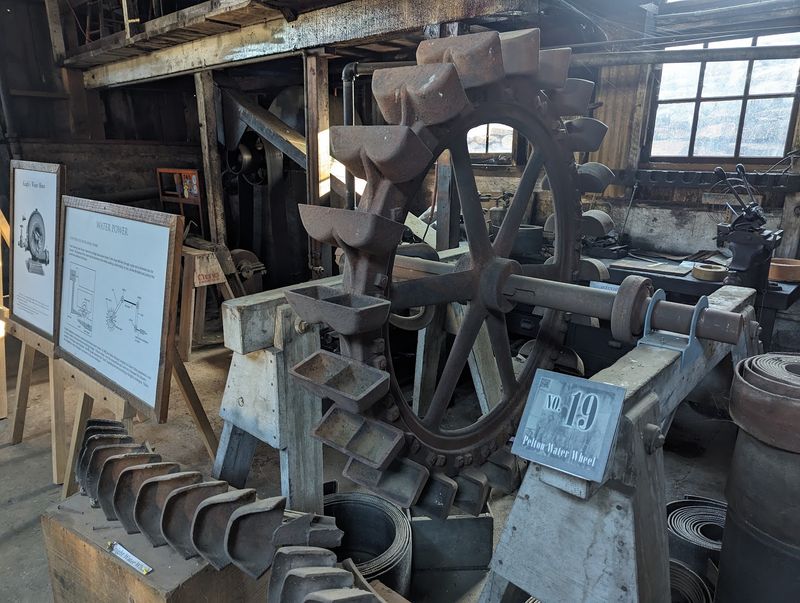
Most people have heard of the Pelton wheel. Fewer know that Samuel N.
Knight, the man who started this place, developed a high-speed cast iron impulse turbine that came first.
He patented his design and began casting the wheels from single pieces of iron in 1875. They worked so well that Knight Wheels ended up in some of the earliest hydroelectric plants in California, Utah, and Oregon.
Think about that for a second. Technology invented in a small Amador County workshop helped bring electric light to parts of the American West.
The foundry’s output went far beyond turbines, though. Crews here produced mine hoists, stamp mill parts, gears, and even street lights for towns that were growing faster than anyone planned for.
I came in curious about old machines and left more impressed by the people. Knight and his machinists were solving hard engineering problems without computers, calculators, or any of the shortcuts we take for granted.
Pencil, paper, ruler, and a lot of hard-won experience. That was the toolkit.
Products from this shop traveled locally, across the country, and overseas, which still seems remarkable for a shop this size.
Sand, Wood Patterns, and Molten Iron, How a Casting Gets Made
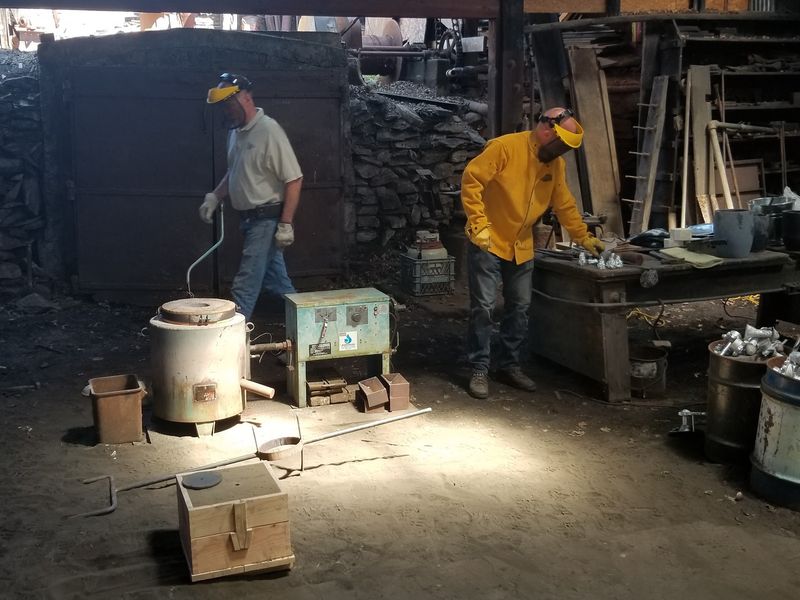
The casting process turned out to be my favorite thing to learn about, mostly because it starts with wood rather than metal. Skilled pattern makers carved hardwood models of whatever part was needed, from tiny gears to enormous mine machinery.
Those wooden patterns were the blueprints. Every single piece produced here began as a shape someone shaped by hand.
Next came the sand. A pattern went into a box called a flask, and a special sand mixture containing seacoal, bentonite clay, and pitch was packed tightly around it.
Once the sand held its form, the flask was split open and the wooden pattern lifted out. What remained was a perfect hollow impression, waiting for iron hot enough to glow white.
Seeing the rough casting stage next to a finished, precision-machined part made the whole thing click for me. One is lumpy and gray.
The other looks like it came off a modern assembly line.
Preserving these nearly forgotten skills is now a core part of the foundry’s mission, and the folks demonstrating them clearly love passing the knowledge along to anyone willing to listen.
From Dormant Workshop to Living Museum
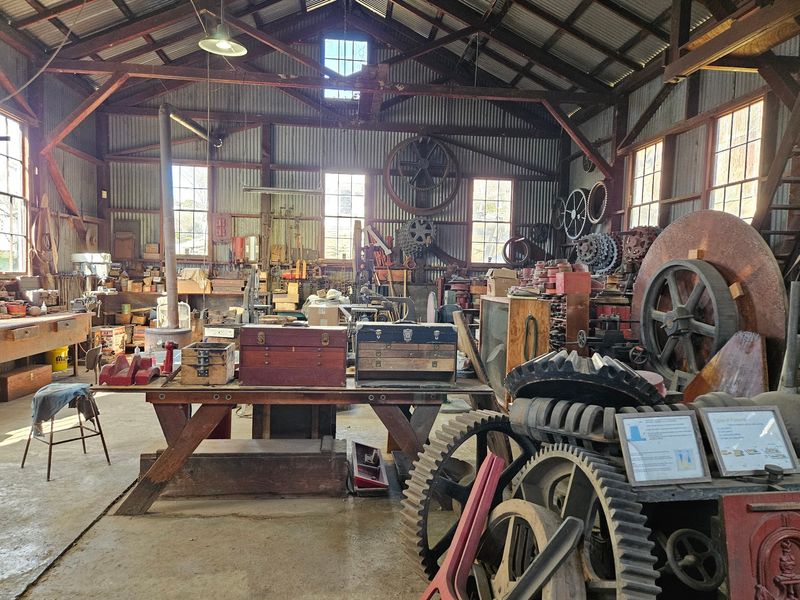
Commercial work here wound down in 1991, and the last hot iron pour happened in July 1996. After 123 continuous years, the machines went quiet.
For nearly two decades the site sat idle, gathering dust but staying remarkably intact. Nothing was stripped out or sold off, which is the only reason any of this still exists today.
The risk was real, though. The National Trust for Historic Preservation named it one of America’s most endangered historic sites, a warning that the whole thing could vanish.
Then came the turning point. On December 31, 2016, the land and buildings were donated to the City of Sutter Creek, opening the door to a second life as a museum and skills center.
Doors reopened to the public on March 4, 2017, and close to 1,200 people showed up that single day. I love that detail.
It tells you how much this place means to the region.
Today the Knight Foundry Alliance, a nonprofit staffed largely by volunteers, keeps the wheels turning. Public tours run on the second and fourth Saturdays of each month, and checking their schedule before you drive up is smart.
Demonstration Days Are When the Place Really Wakes Up
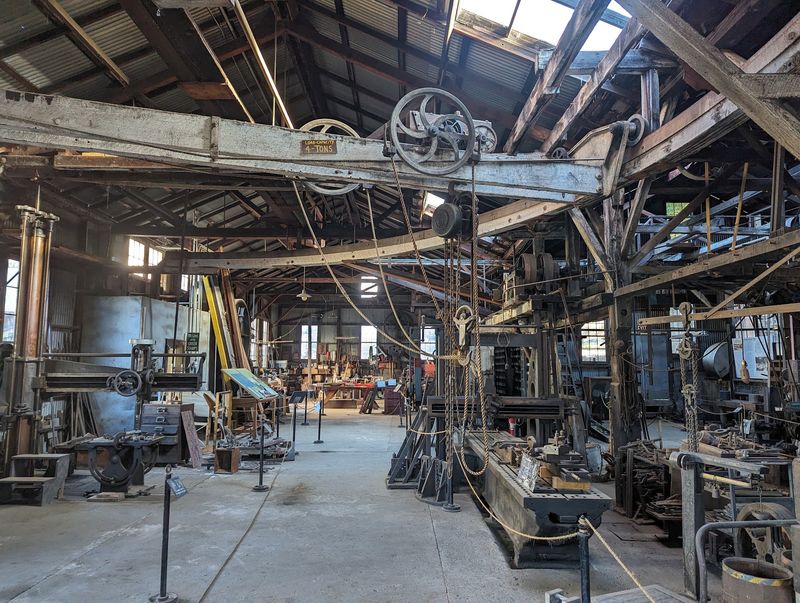
Timing your visit matters more here than at most museums. On demonstration days, volunteers fire up the antique lathes, shapers, cranes, and water motors, and the difference between a silent shop and a running one is enormous.
Aluminum and bronze pours happen regularly too, and blacksmithing demonstrations draw their own crowd. There is something hypnotic about watching metal go soft under a hammer.
The docents made the experience for me. Several tour guides work the floor at once, which means you get explanations when you want them and quiet time to wander when you do not.
Nobody rushed us. Questions were welcomed, even the basic ones, and I asked plenty.
Do not skip the enormous lathe. It is the kind of machine that makes you step back instinctively, and it still does exactly what it was built to do.
Families seem to do well here, since kids can watch real things move rather than read wall panels. Blacksmithing classes and memberships are available for anyone who catches the bug.
The gift shop sells items actually cast on site, plus local history books you will not easily find elsewhere.
National Landmark Status and Why Engineers Make the Trip
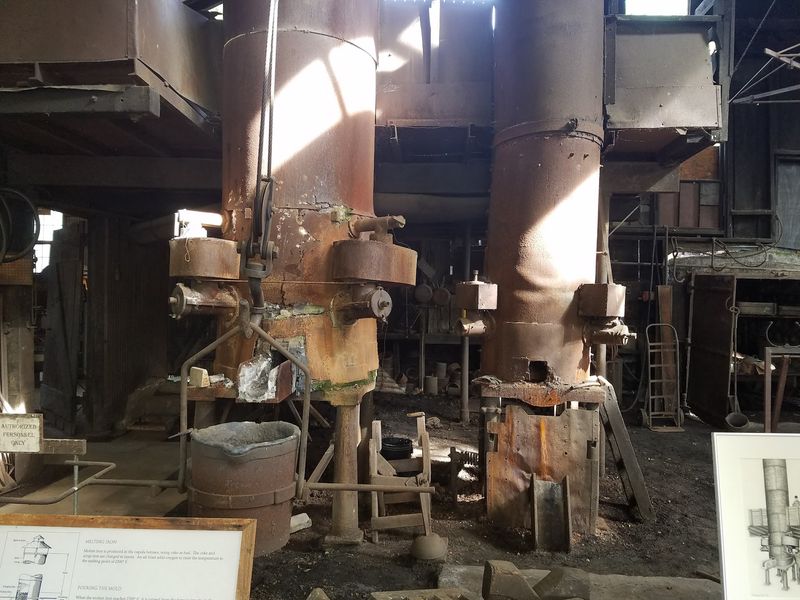
Recognition has piled up over the years, and it is well deserved. The site appears on the National Register of Historic Places and carries designation as a California Historical Landmark.
The American Society of Mechanical Engineers also named it a Mechanical Engineering Historic Site, which says a lot about the engineering that happened inside these walls.
Titles aside, what makes the place matter is that you can see 19th century industrial technology as it was actually used, not reconstructed from guesses.
It stands as the last water-powered foundry and machine shop in the United States. That is not a small claim, and it holds up once you are standing under those spinning shafts.
I met visitors who had driven hours specifically for this, some with engineering backgrounds, others just curious about how things used to get built. Both groups seemed equally happy.
Photographs cannot quite capture it. The vibration through the floor, the smell of sand and oil, the rhythm of belts overhead, those need to be experienced in person.
Pair it with a stroll through downtown Sutter Creek afterward and you have a genuinely great day.
Address: 81 Eureka St, Sutter Creek, CA 95685
