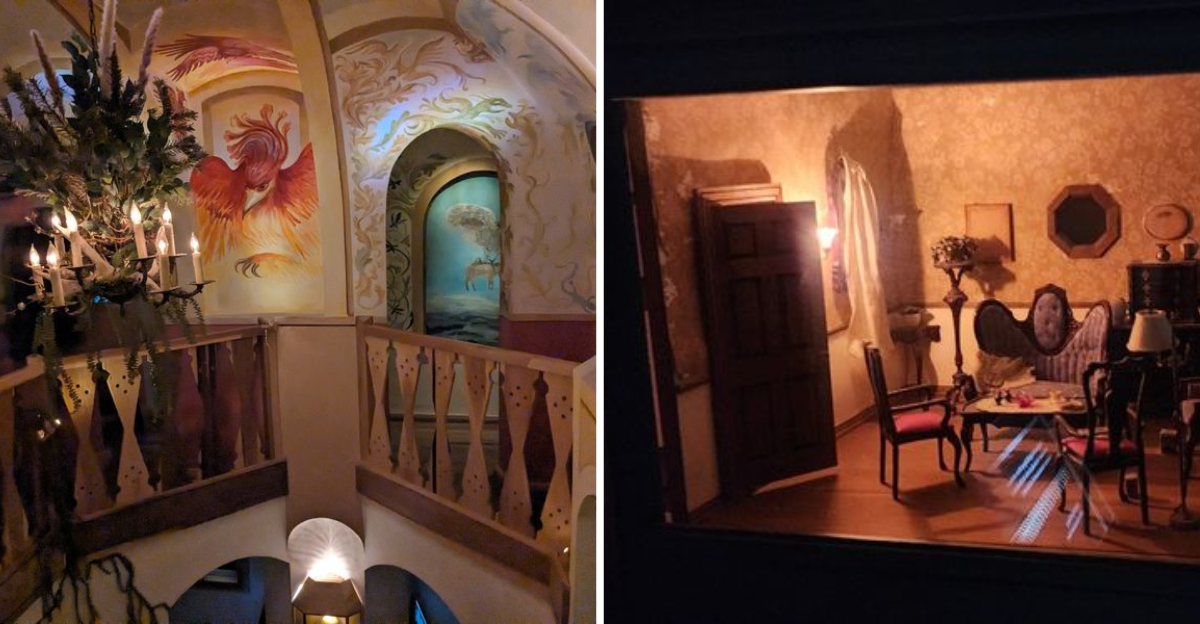
That museum behind a plain storefront in California hums with crickets, glows in low amber light, and asks you to lean in close to things you cannot quite explain. I drove past the place twice before I found the door, which honestly feels like the right way to start.
I went in expecting a quick hour of curiosities and came out two hours later, quietly rearranged, holding a warm cup of tea on a rooftop full of cooing doves. Phones stay in your pocket here, which sounds strange until you realize how much sharper your eyes get.
The place was founded in the late 1980s, a collection built around the old cabinets of curiosities, where fact, art, and folklore share the same glass case. There is a room of tiny portraits painted on seeds, a gallery of cat dioramas, and a theater that shows a film about a man who trained flies to walk on leashes.
Each exhibit feels like a question rather than an answer, and the space itself is as much a part of the experience as the objects on display.
Places that refuse to explain themselves tend to stay with you for weeks, and this one certainly does.
Finding the Door on Venice Boulevard
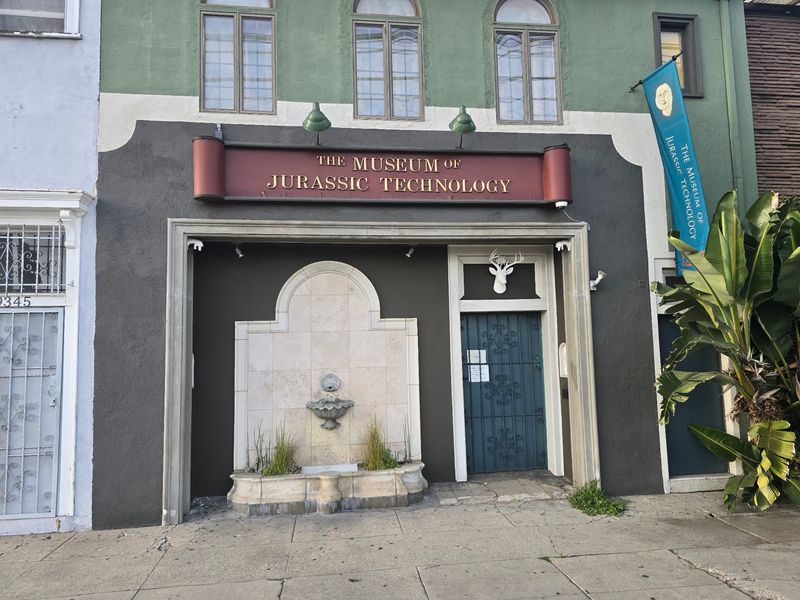
The entrance nearly fooled me. On a boulevard packed with auto shops and taco spots, the museum keeps a flat, quiet facade that gives away almost nothing.
Street parking was my solution after circling the small lot, and plenty of visitors do the same. Meters along Venice tend to have short limits, so I fed mine and made peace with a brisk walk.
Pushing through the door felt like a temperature change. The California glare vanished, replaced by dim golden light, dark wood, and a hush that made me lower my voice without being asked.
A small gift shop sits right inside, and someone checks your timed ticket, which you book online ahead of your visit. Doors open in the afternoon Thursday through Sunday, so morning plans will not work here.
My tip: grab one of the handheld fans offered near the front. The rooms are compact and can warm up quickly, and returning the fan on your way out takes two seconds.
Photography is not allowed anywhere inside, and I ended up grateful for it. Without a screen between me and the cases, I noticed details I would have otherwise scrolled right past.
A Cabinet of Curiosities, Reborn in Dark Wood
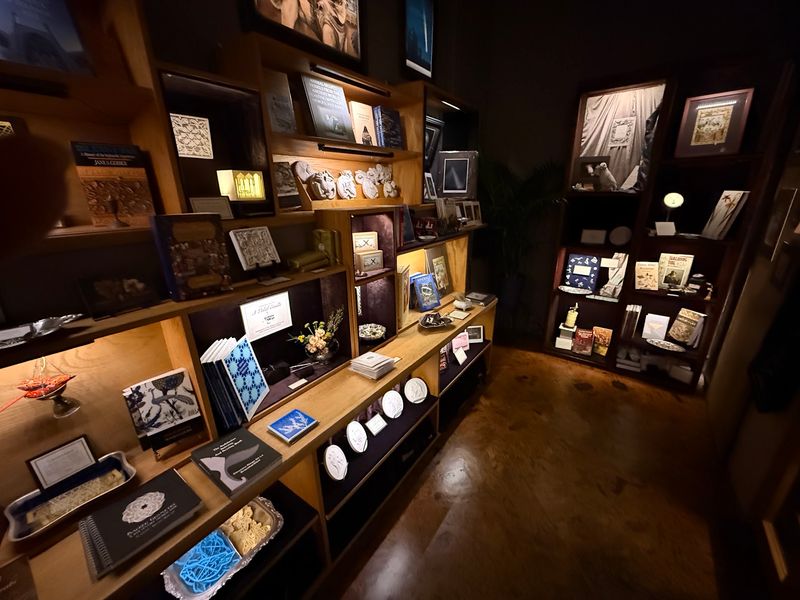
Old European collectors used to fill private rooms with shells, bones, oddities, and rumors, calling them cabinets of curiosities. That tradition is alive here, only reimagined with theatrical lighting and a straight face.
Cases are built from wood and glass, lit from within, and arranged so you have to bend forward to see anything properly. That physical act of leaning in changes how you look.
What surprised me most was the mix. Natural history sits beside folklore, technology shares a wall with art, and none of it announces which category it belongs to.
There is no clear route, no numbered path, no arrows telling you where to go next. You wander, backtrack, and stumble into rooms you missed the first time.
Some visitors find the sparse labeling frustrating, and I understand why. Reading the text that is provided makes an enormous difference, so slow down and actually read rather than skim.
My honest advice is to treat the whole building as one artwork instead of a series of separate facts. Once I stopped trying to sort the real from the invented, the place became far more fun.
Two hours barely covered it, and I still left with rooms unexplored.
Sculptures So Small You Need a Microscope
Nothing prepared me for the microminiatures. Hagop Sandaldjian carved tiny figures that sit inside the eye of a needle, and you view them through magnifying optics mounted on the display.
You look, you blink, you look again. At first there is only a needle, then suddenly a shape resolves into something recognizable and impossibly small.
Sandaldjian was a violinist by training, and the exhibit explains how he worked between heartbeats to keep his hands steady enough for the task. That detail rattled around in my head for days.
Be patient with the eyepieces. Adjusting your position takes a moment, and if someone is ahead of you, waiting your turn is part of the etiquette in these tight rooms.
Nearby, other displays play with scale in different ways, including mosaics assembled from butterfly wing scales viewed under microscopes. Small things get enormous attention here.
The lesson I took away had nothing to do with technique. It was about how much beauty hides at a scale we never bother to check.
If you visit with a friend, take turns and compare notes afterward. Everyone seems to see something slightly different.
Stories That Blur Fact and Fiction
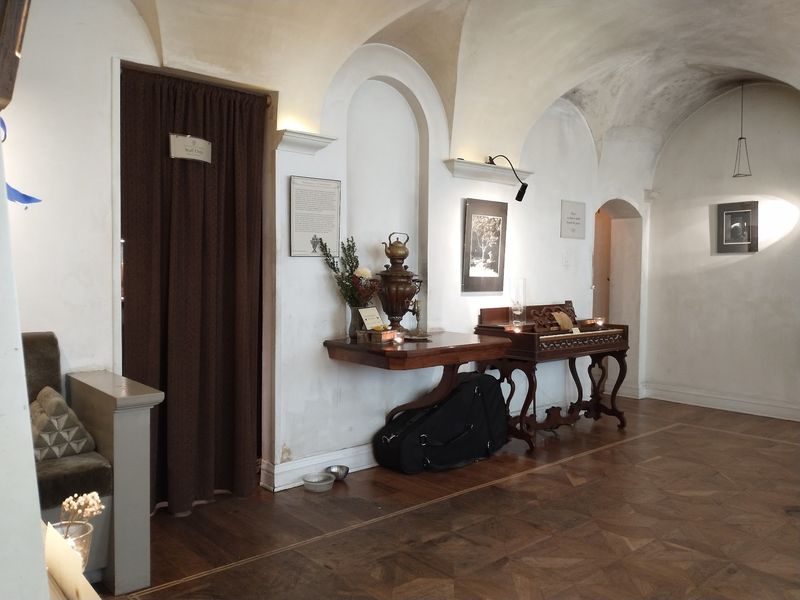
Somewhere on the ground floor, the museum stops showing objects and starts telling stories. The Delani/Sonnabend Halls trace two lives that seem to brush against each other: an opera singer named Madalena Delani and a memory theoretician named Geoffrey Sonnabend.
Diagrams, models, and long panels of text lay out Sonnabend’s ideas about forgetting with the confidence of a university lecture.
I read every word, then stood there wondering how much of it I could verify. That uncertainty is not an accident, it is the point.
Elsewhere, the exhibit called Tell the Bees gathers pre-scientific cures and remedies, including the old belief that mice on toast could cure bedwetting. Strange, yes, but also a real window into how people once chased health without science to guide them.
The trick to enjoying these halls is dropping the need for a verdict. Let the narrative work on you the way a good short story does.
Bring reading glasses if you use them, because much of the text is small and the light is deliberately low.
Afterward, I found myself questioning how confidently museums usually speak, which felt like the best possible souvenir.
Space Dogs, Diatoms, and Other Delightful Detours
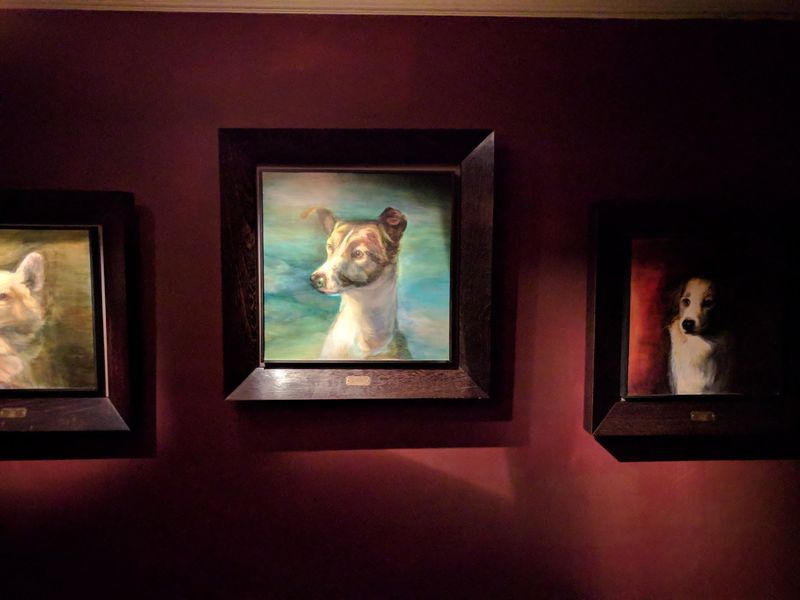
A wall of dog portraits stopped me cold. The Lives of Perfect Creatures honors the canine cosmonauts of the Soviet space program, presented with the dignity usually reserved for admirals and heads of state.
It is touching and a little surreal at once, and the room stayed quiet while I was in it.
Other detours arrive without warning. There are diatoms arranged into patterns, a Tsiolkovsky display nodding to early rocket theory, geometric designs drawn from Islamic architecture, and a section on the history of cat’s cradle string games.
None of these subjects would fill a mainstream museum, which is exactly why they land so well here.
One small room hands you 3D glasses, and I will not spoil what happens next. Just take the glasses.
What ties the collection together is not a theme but an attitude: overlooked topics deserve reverence too. I walked out with a mental list of things to look up later, which rarely happens to me at bigger institutions.
If a display is not working when you arrive, move on and circle back. Part of the charm is accepting the building on its own terms.
Corridors That Chirp, Drip, and Sing
Sound does half the work in this building. Crickets chirp from somewhere unseen, water trickles behind a wall, and every so often an operatic voice drifts out of a chamber you cannot locate.
Combined with the faint scent of old wood and dust, it convinces your senses that you have left Los Angeles entirely.
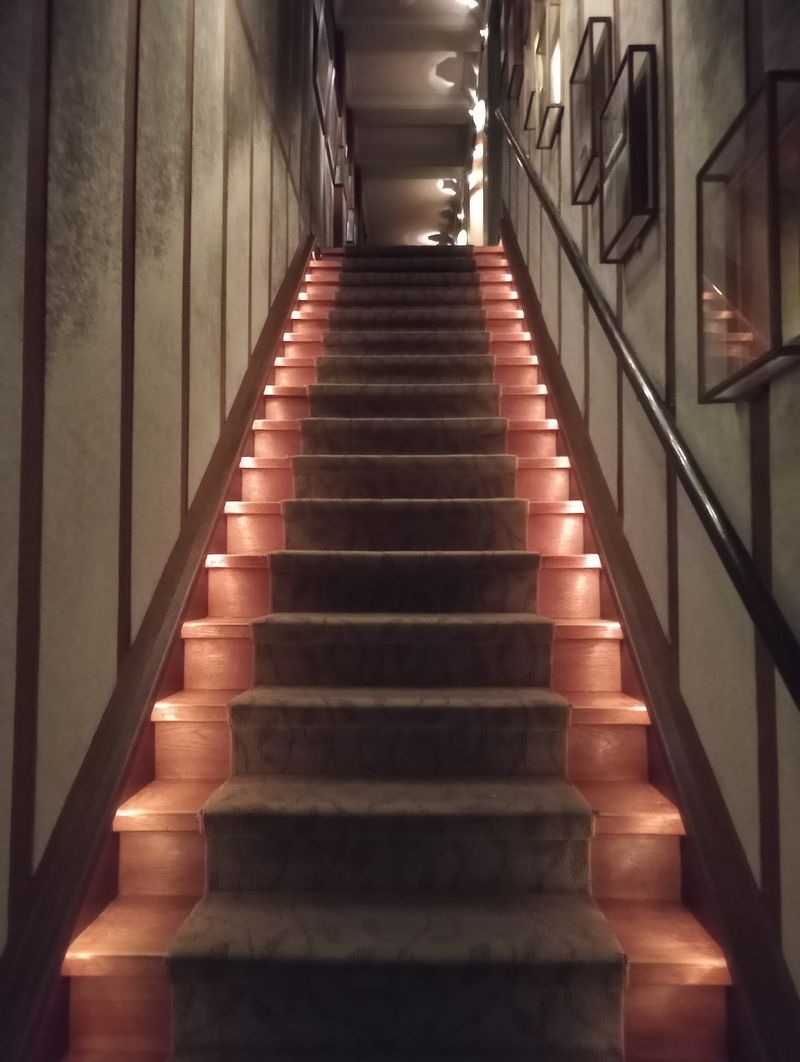
Hallways twist and narrow, stairs appear where you do not expect them, and three floors unfold with no obvious logic. Several visitors describe it as a dark maze, and that is fair.
Old telephone handsets hang beside many cases, waiting for you to pick them up and listen to a recorded narration. Some listening nooks seat exactly two people, which makes this a better outing for a pair than a large group.
Practical notes worth knowing: the stairs mean the layout is not flat, the rooms get cozy when busy, and rushing simply does not work here.
Give your eyes a minute to adjust when you enter each space. Details emerge slowly, and the reward goes to whoever stands still longest.
I found myself whispering the entire time without ever deciding to.
Tea and Doves on the Roof
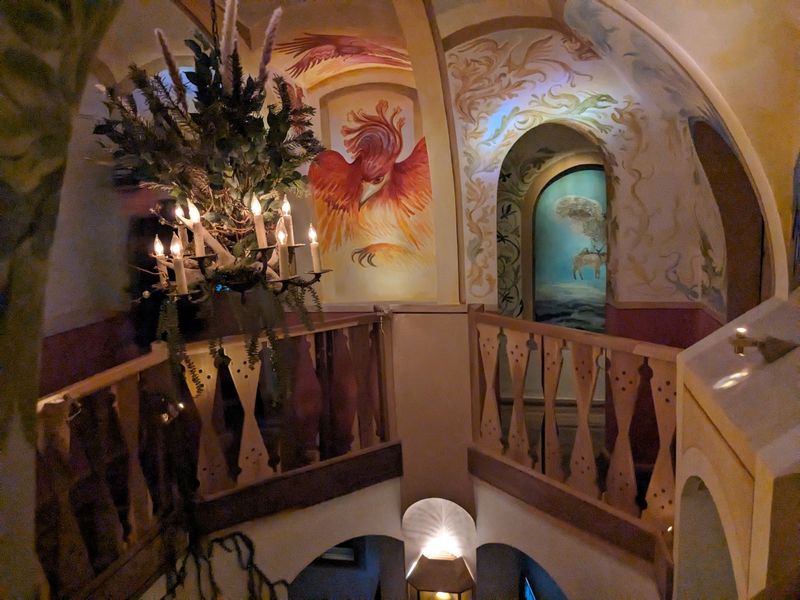
The best ending is upstairs, and it takes a bit of hunting to find. The Tula Tea Room sits on an upper floor, styled after Russian tea culture, complete with a miniature reconstruction of Tsar Nicholas II’s study.
Georgian tea and cookies are served, and sitting down with a warm cup after all that strangeness felt like coming up for air.
Step through to the open-air rooftop and everything softens. Plants spill over railings, a temple-style aviary houses ringneck doves, and their cooing fills the space like background music.
I stayed maybe twenty minutes, replaying exhibits in my head and comparing thoughts with the person I came with. Several visitors call this the spot where the whole experience finally clicks.
Timing matters. Arrive with at least two hours before closing, because the tea service starts winding down near the end of the day and you do not want to miss it.
Bringing a little cash is a good idea if you want to tip whoever serves you.
Then head back down the stairs, blink at the daylight, and let Venice Boulevard slowly return.
Address: 9341 Venice Blvd, Culver City, California 90232
