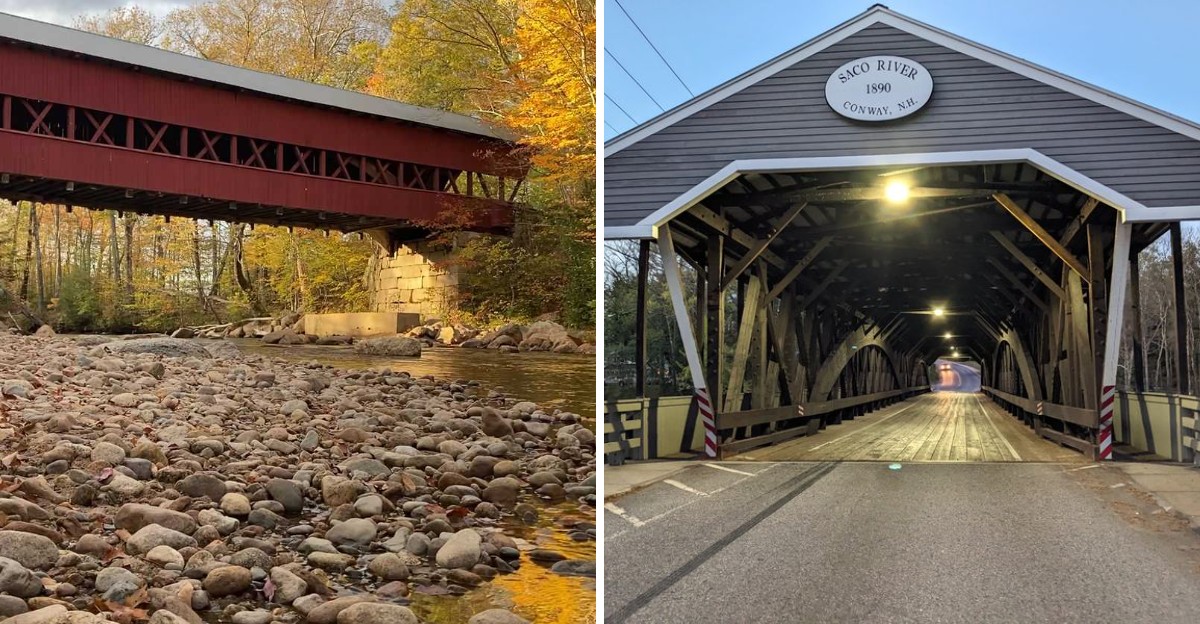
The wooden structure spans the river, and the water rushes beneath it. The surrounding trees frame the scene perfectly.
This charming covered bridge in New Hampshire is worth adding to your White Mountains road trip. The bridge has been standing for well over a century, and it has survived floods, fires, and the passage of time.
I stopped to take photos and ended up staying for a while, just watching the river and enjoying the peace. The bridge is still open to traffic, so you can drive across it and feel the history beneath your wheels.
That is the thing about this New Hampshire covered bridge. It is a piece of history that is still very much alive.
A Wooden Time Machine Straddling The Saco
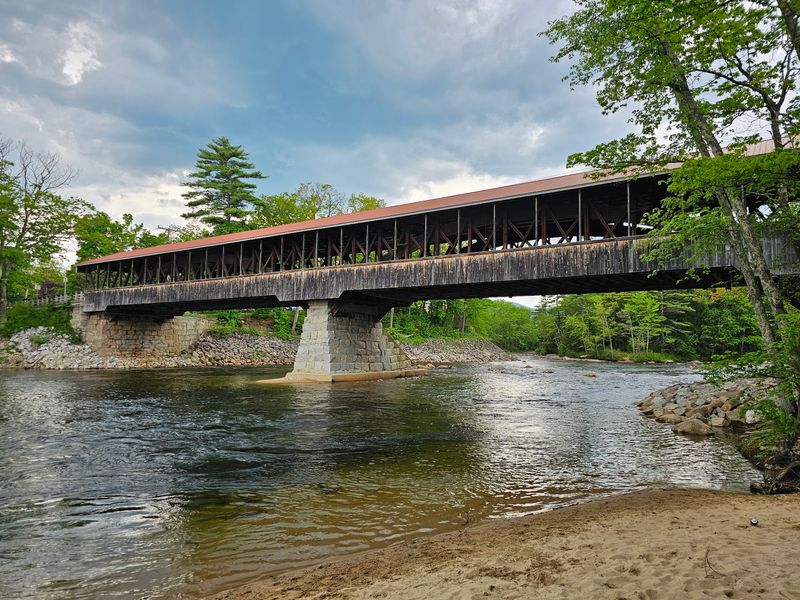
Rolling into Conway, I spotted it before I saw any sign. A long, barn red tunnel of timber, planted across the water like it had grown there.
The Saco River Covered Bridge was raised in the 1890s and uses a Paddleford truss, a New England design known for its tight diagonal bracing. Carpenters figured out long ago that a roof keeps a wooden deck from rotting, which is the whole reason these bridges wear hats.
Third time was the charm at this crossing. Earlier structures stood here before this one took over the job, and it has been handling traffic ever since.
A restoration in the late 1980s tightened everything up without stripping the character. The beams still show tool marks.
The floorboards still rumble.
Walking through, I kept looking up at the joinery, where huge timbers lock together with pegs and precision instead of steel and shortcuts.
It stretches a couple hundred feet across the Saco, and the river below is anything but shy. Spring runoff turns it into a growling, foam-flecked show.
New Hampshire has plenty of covered bridges. This one just happens to sit where the mountains, the water, and the road all agree to meet.
Yes, You Can Actually Drive Through It
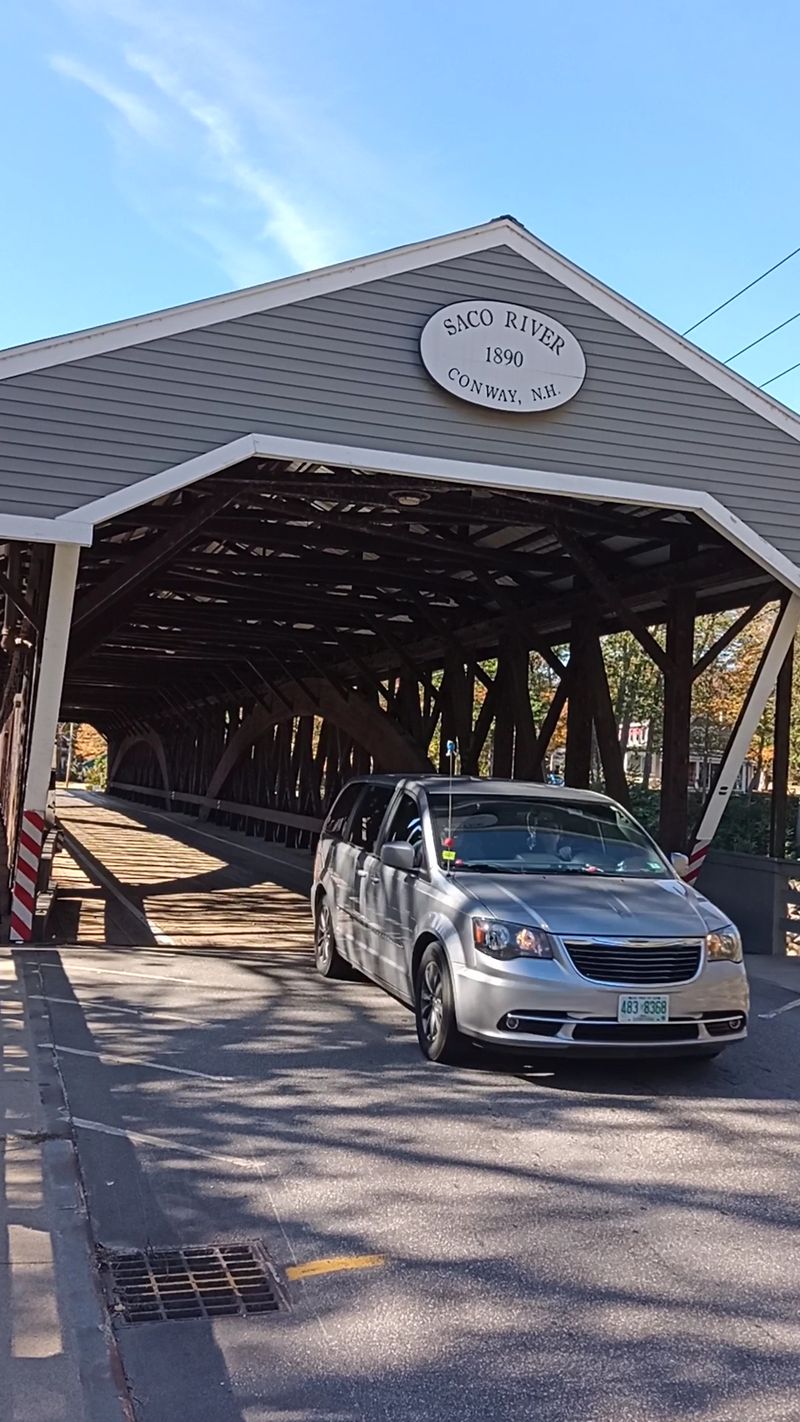
Plenty of old bridges are museum pieces. Not this one.
Cars still roll across it, one at a time, like a polite line at a very narrow doorway.
The deck fits a single vehicle width, so the unwritten rule is simple. Look ahead, wait your turn, and wave at whoever yields.
Inside, the light drops, the tires drum on planks, and the temperature dips a few degrees. Ten seconds of pure New England theater.
I drove it twice. Once each direction, because turning around felt like cheating myself out of the encore.
Go slow. The posted crawl speed is not a suggestion, and the timbers appreciate the courtesy.
Height and weight limits apply, so oversized rigs and tall campers need to take the modern route nearby instead of testing physics.
Pedestrian walkways run along both sides, tucked outside the truss line, which means you can stroll while traffic creeps past without playing chicken.
Those walkways are the sleeper attraction. Halfway across, I leaned on the rail and watched the current chew through boulders below.
Few working antiques in New Hampshire let you participate this directly. Drive it, walk it, then do it again.
Autumn Turns The Whole Scene Into A Postcard
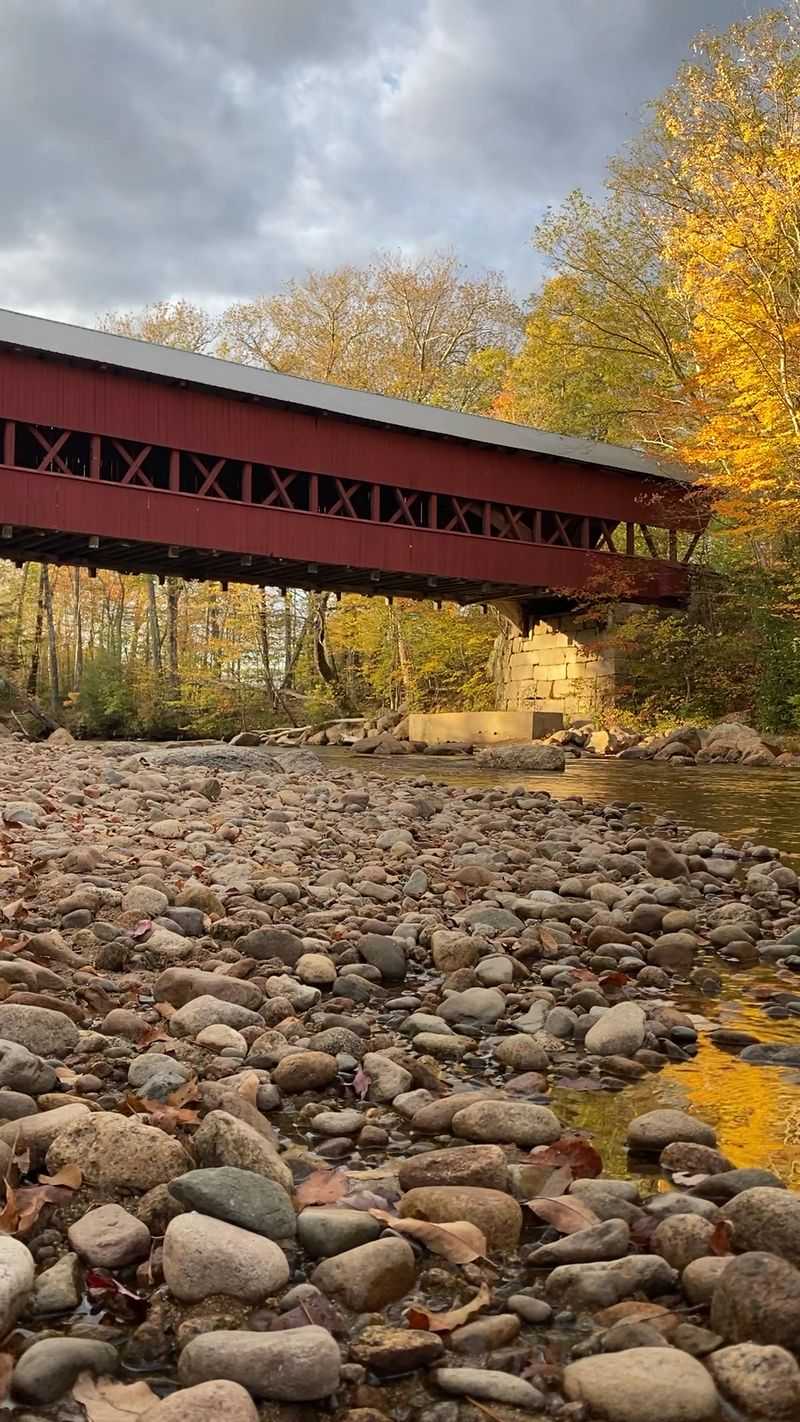
Fall is when the Mount Washington Valley shows off, and this crossing sits right in the front row.
Maples along the riverbank flip to scarlet, birches go butter yellow, and that red siding suddenly has serious competition.
Peak color usually lands somewhere in early to mid October around Conway, though elevation and weather shuffle the schedule every year.
Morning is my pick. Mist hangs over the Saco, the light stays soft, and the crowds have not caffeinated yet.
Bring a wide lens if you have one. The bridge, the water, and the ridgeline all want to be in the same frame.
Late afternoon works too, when low sun rakes across the timbers and makes the grain glow like embers.
Parking gets competitive during foliage weekends, so arriving early is less strategy and more survival instinct.
Rainy days deserve respect as well. Wet leaves saturate in color, and the river runs louder, which makes the whole place feel wilder.
Winter has its own case to argue. I have seen the Saco half frozen, black water sliding under white shelves of ice, and the scene turns absolutely silent.
Tubing The Saco Is A Summer Rite Of Passage
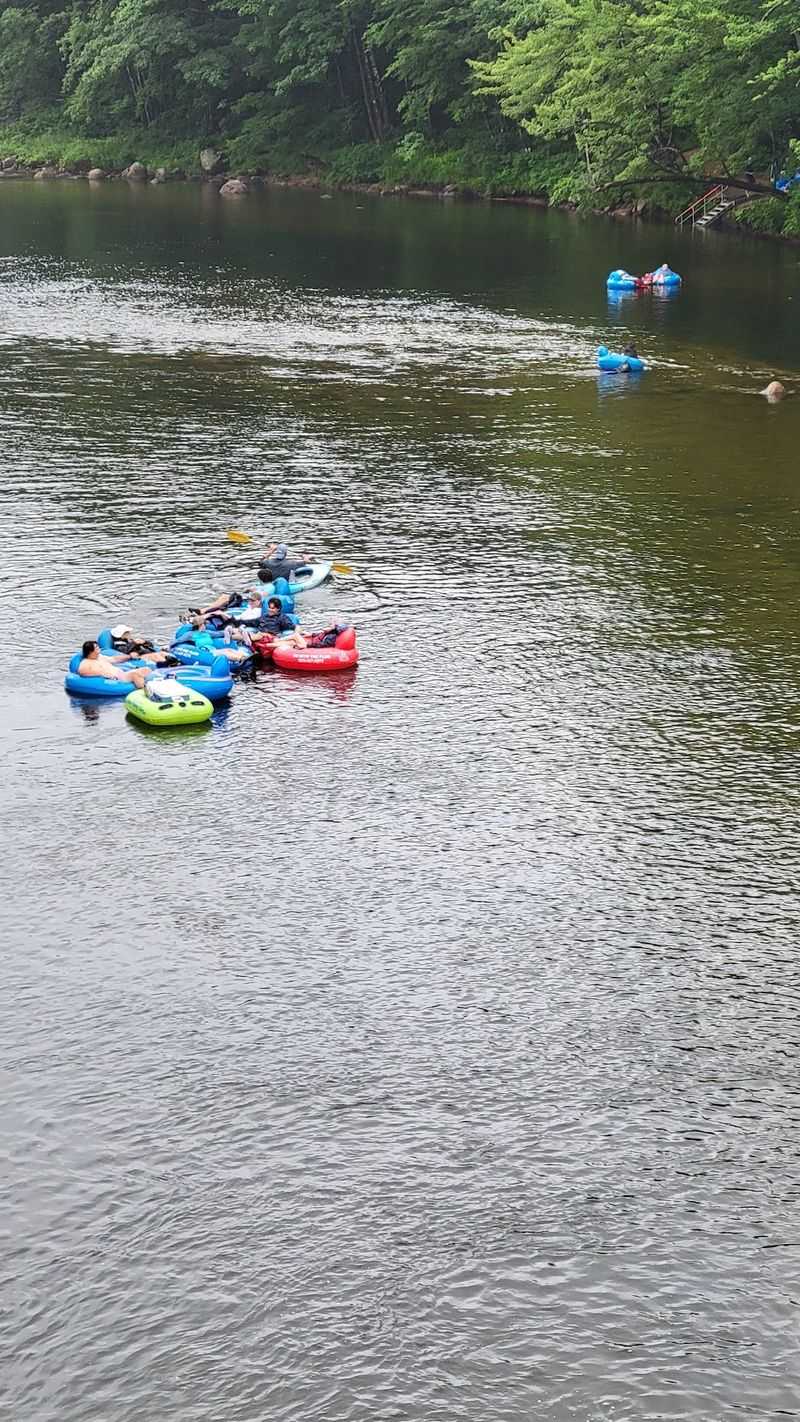
Come July, the Saco stops being scenery and starts being a lazy river with better views.
Outfitters in the Conway area run tube rentals with shuttle service, and the classic float lasts around three miles before it wraps up.
Kids adore it. The current does most of the work, the water runs clear over sandy bottoms, and there are stretches shallow enough to stand up and stretch.
Two things to know. Rocky patches show up here and there, especially when the water level drops, so shoes with grip beat flip flops every single time.
Life jackets matter for little ones, and roping tubes together keeps a group from scattering downstream like escaped balloons.
Water levels swing with rainfall. After a heavy storm the river turns pushy, and that is the day to skip the float and just admire it.
Some folks bring a long rope to tie off near the bank, then park in the current and let the afternoon dissolve.
Dogs are welcome on many trips, which explains the number of very smug retrievers I saw riding shotgun.
Nothing beats drifting toward that wooden silhouette on a hot New Hampshire afternoon.
The Little Sandy Beach Nobody Expects
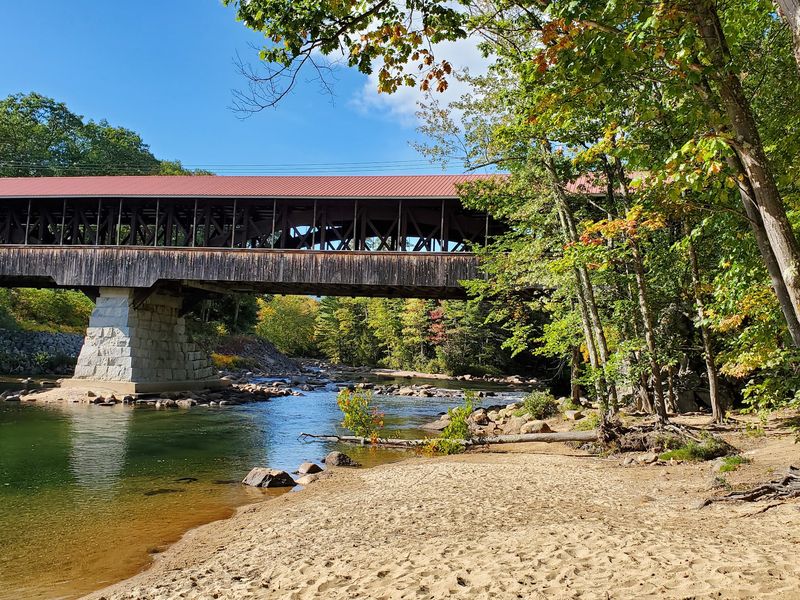
Here is the twist that catches people off guard. Steps from the parking area, a patch of soft sand slopes right into the Saco.
It is small, not some coastal expanse, but it does the job beautifully.
Shallow edges make it friendly for wading, and the view back toward the bridge from water level is the angle most photographers miss entirely.
I set up a towel, waded in ankle deep, and understood immediately why families claim spots early on hot days.
Bring water shoes. River stones are smooth but slick, and the bottom shifts from sand to cobble without warning.
Shade is limited along the sand itself, so a hat or an umbrella earns its keep by midday.
Currents pick up away from the bank, particularly after rain, so keep young swimmers close and read the water before wading deep.
Pack out whatever you carry in. The place stays lovely because people bother to keep it that way.
Late afternoon delivers the best light here, when the sun drops behind the trees and the water turns the color of weak tea with gold flecks.
Picnic Tables, Courts, And A Park Worth Lingering In
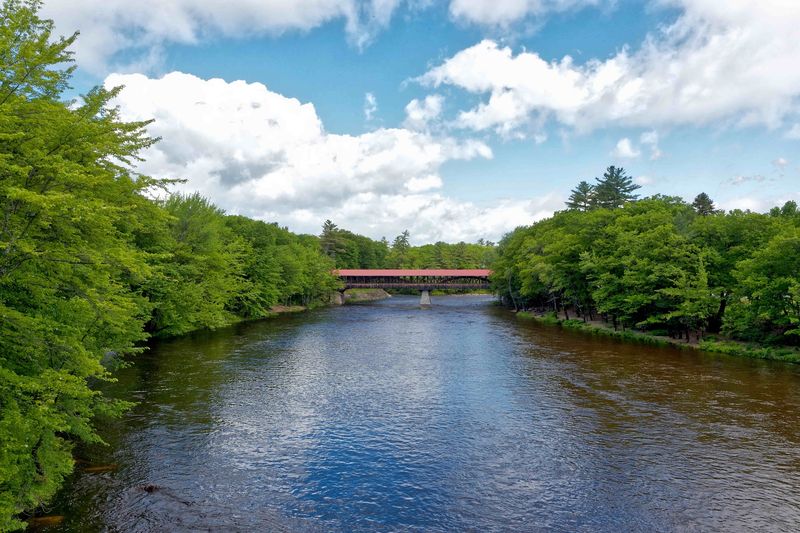
Most stops along a mountain drive last ten minutes. Davis Park, sitting right beside the bridge, quietly convinces you to stay for hours.
Picnic tables sit under pines with the river murmuring nearby, which beats eating in the car by roughly a thousand percent.
There is a basketball court and tennis courts too, so restless teenagers have somewhere to burn energy while everyone else naps in a camp chair.
Vault toilets on site handle the practical stuff, a genuine luxury at a rural pull-off.
The lawn is generous enough for a blanket, a frisbee, and a dog who thinks both belong to him.
I appreciated how easy the walk is from the lot down to the water. No scramble, no sketchy footing, just a short stroll and you are river level.
Parking charges apply seasonally, and the lot is modest, holding only a couple dozen cars when things are tight.
Arrive before mid morning in summer and you will glide right in. Show up at noon on a Saturday and you will circle like a hawk.
Shoulder seasons are gloriously empty by comparison.
A Second Covered Bridge Hiding Around The Corner
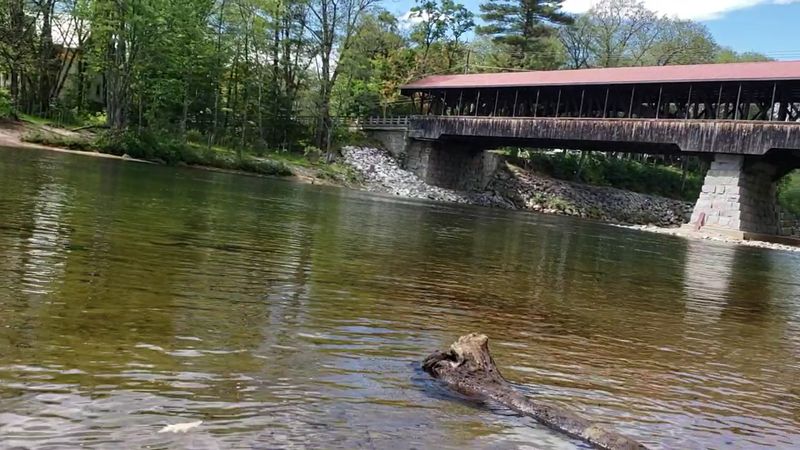
Two for the price of one. Just a short hop away, the Swift River Covered Bridge stands over its namesake stream, and the two make a natural pairing.
That one no longer carries cars, so you can wander through it at your own pace without listening for engines.
The Swift River tumbles beneath in ledges and pools, greener and rockier than the wide Saco.
Walking between the two took me only minutes, and the contrast is genuinely fun. Different rivers, different truss work, same stubborn Yankee craftsmanship.
Photographers love this combo because the light behaves differently at each spot depending on the hour.
Making a covered bridge checklist is a legitimate New Hampshire hobby, and the Conway area is where plenty of people accidentally start theirs.
The Kancamagus Highway begins nearby too, which means you can knock out both bridges and then point the car west into serious mountain country.
Albany Covered Bridge waits along that route, tucked beside another stretch of the Swift River.
Three historic crossings within one easy loop. That is a strong return on a single tank of gas.
Photography Angles That Actually Deliver
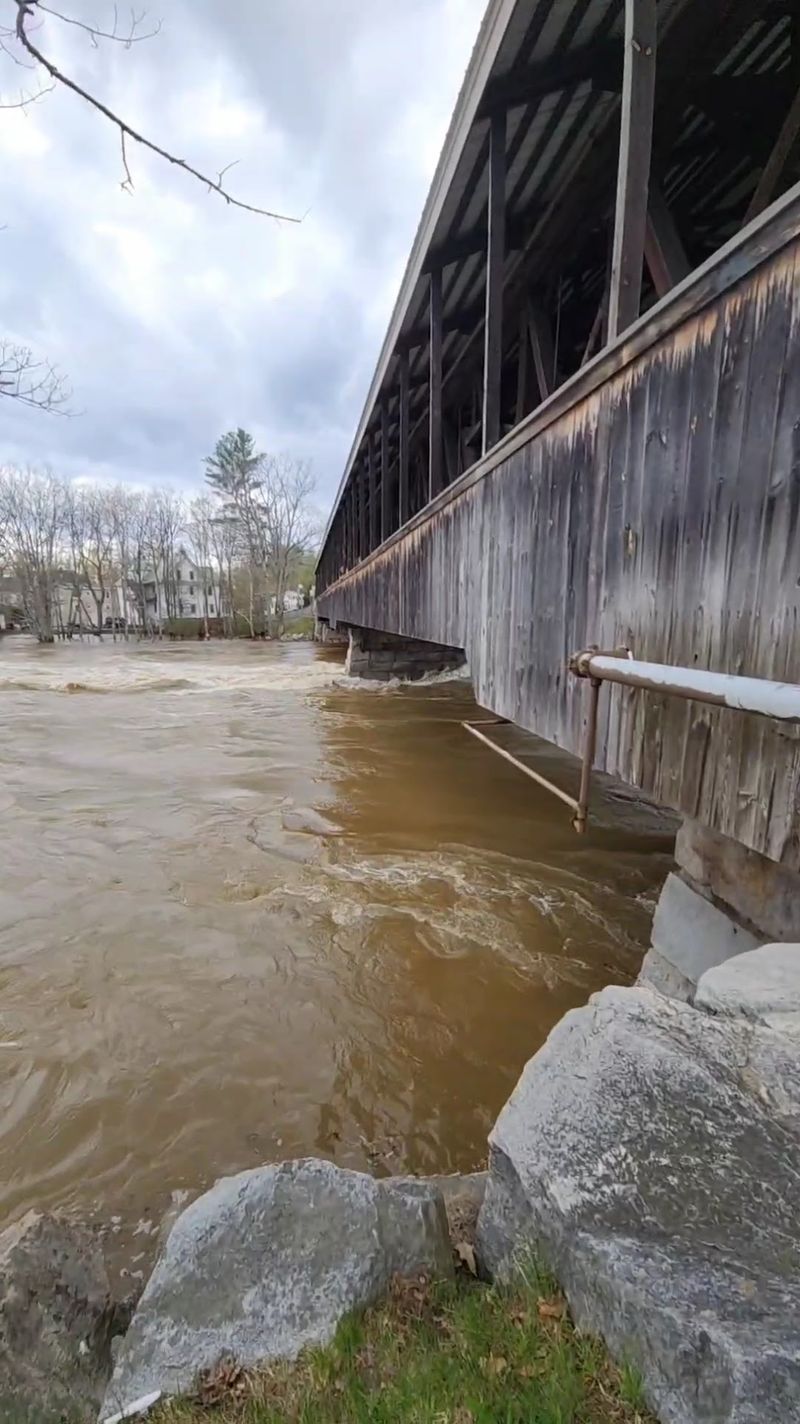
Anyone can shoot a covered bridge head on. Getting a great frame here takes about three minutes of walking.
My favorite viewpoint sits down on the riverbank, low and close, where the arch of the portal lines up with the water and the trees stack behind it.
The portal shot works too. Stand at one end, let the tunnel pull your eye toward the bright opening, and the trusses frame everything for you.
Reflections show up on calm mornings when the Saco settles down, doubling the whole scene.
From the pedestrian walkway, look straight down through the rails at the current for a moody detail shot.
Underneath the deck is another option, where light bounces off the water onto old timbers and creates ripples of glow.
Golden hour is the obvious winner, but overcast skies flatter the red siding by killing harsh shadows.
Phone cameras handle this scene fine. The composition does the heavy lifting.
One courtesy worth remembering. Traffic still uses the crossing, so step aside for vehicles rather than staging your shot in the middle of the lane.
Timing Your Visit Without The Headache
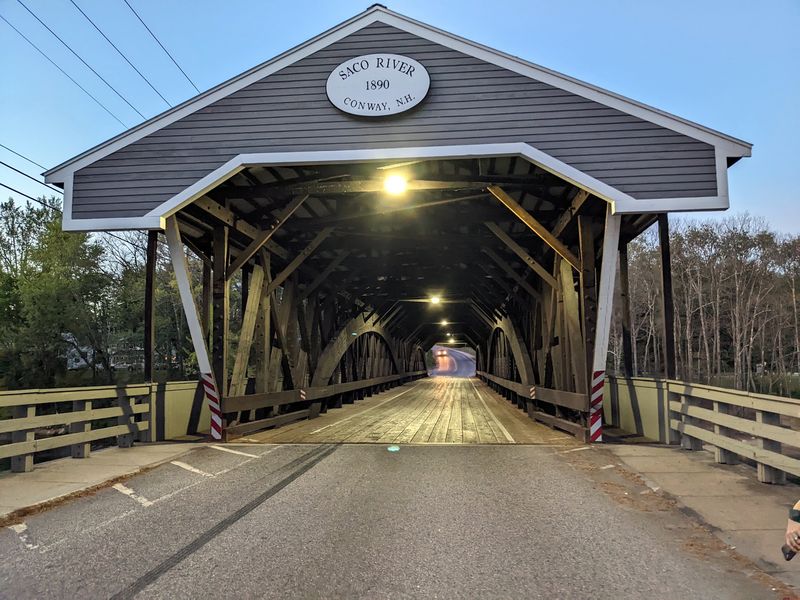
Strategy beats luck here, especially in peak months.
Early birds win. Before nine in the morning, the lot has space, the light is gorgeous, and the beach belongs to whoever showed up first.
Summer afternoons and October weekends are the busiest windows, when Route 16 traffic through the valley thickens considerably.
Weekdays are noticeably calmer, and shoulder seasons like late spring or early November feel almost private.
Winter visits require care. The lot may be plowed only partially, and icy planks demand slow steps.
Cell service in the valley is decent but not flawless, so downloading directions before you head out saves frustration.
Plan on thirty minutes if you just want photos and a stroll. Budget half a day if swimming, tubing, or a picnic is on the agenda.
Bug spray earns a spot in the bag during early summer, because riverside greenery comes with company.
Layers help year round. Mountain weather in this corner of New Hampshire changes its mind constantly, and the shade near the water runs cooler than the parking lot suggests.
Leave the tight schedule behind. The river sets the pace here.
How To Find It And What Sits Nearby
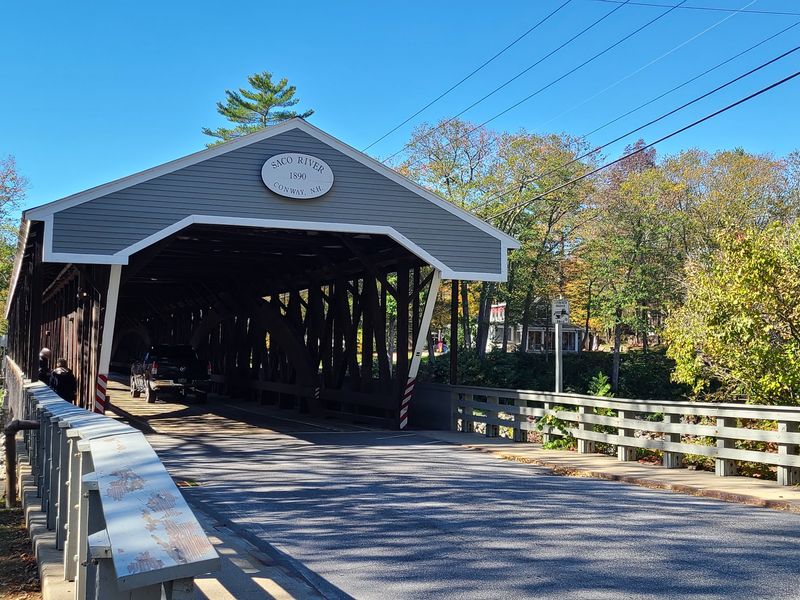
Ready for the practical bit? The Saco River Covered Bridge sits on East Side Road in Conway, NH 03818, just off Route 16 in the heart of the Mount Washington Valley.
Signs point the way, and the turn comes up quickly, so ease off the gas as you approach.
North Conway is minutes north, loaded with shops, outfitters, and enough lodging to suit any budget.
Story Land in Glen makes an easy add-on for families, and Echo Lake State Park offers swimming with a cliff backdrop.
Cathedral Ledge delivers a drive-up viewpoint over the whole valley, which pairs nicely with a morning at the bridge.
The Kancamagus Highway starts nearby and runs west through some of the most photographed forest in New England.
Hikers have Mount Willard, Diana’s Baths, and countless trailheads within a short drive.
My advice is simple. Slot this stop into the middle of your White Mountains loop rather than treating it as an afterthought.
Pack a towel, charge the camera, and point the car toward New Hampshire. That old wooden tunnel has been waiting patiently, and it does not disappoint.
