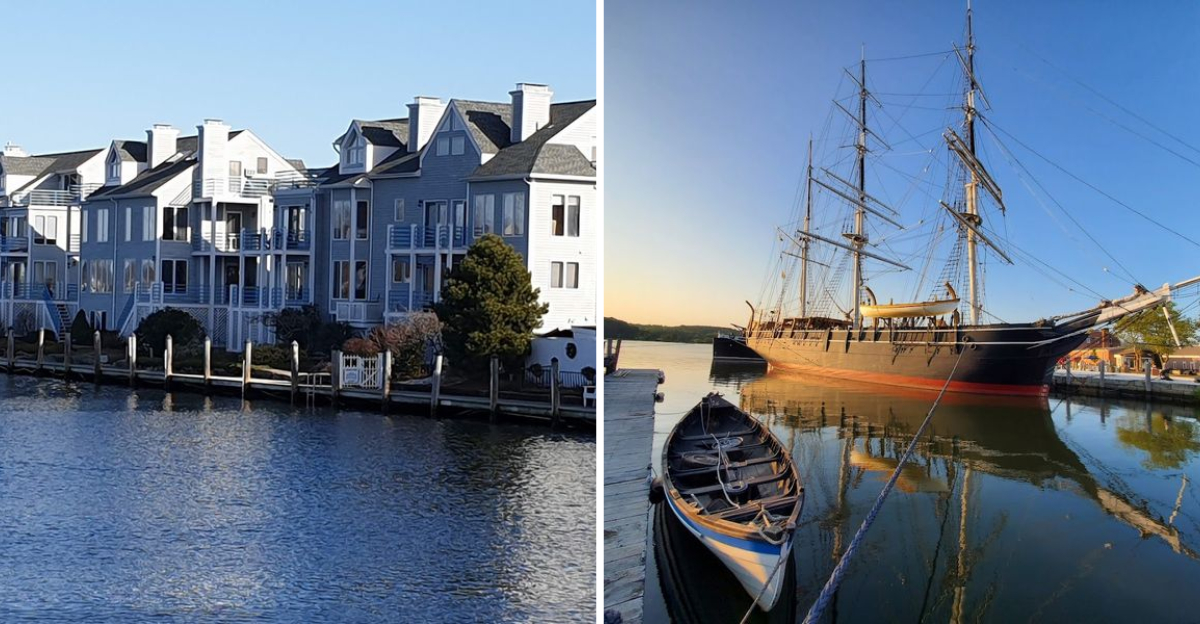
Connecticut has a harbor village where the modern world quietly fades into the background the moment you arrive. Sitting right where a river meets the sound, I was genuinely surprised by how different it felt from the city I had just left behind. Cobblestone alleys, tall-masted ships, and the sound of a drawbridge rising for passing boats made it feel like a scene from another era entirely.
The first time I visited, I found myself lingering on a bench by the water, watching the boats drift by and wondering why I had not come sooner. It is only about two hours from New York City, yet the atmosphere here belongs to a completely different world. If you have ever wanted to step back into the 1800s without actually leaving the present, this might just be the most satisfying trip you ever take.
The Mystic River and Its Famous Drawbridge
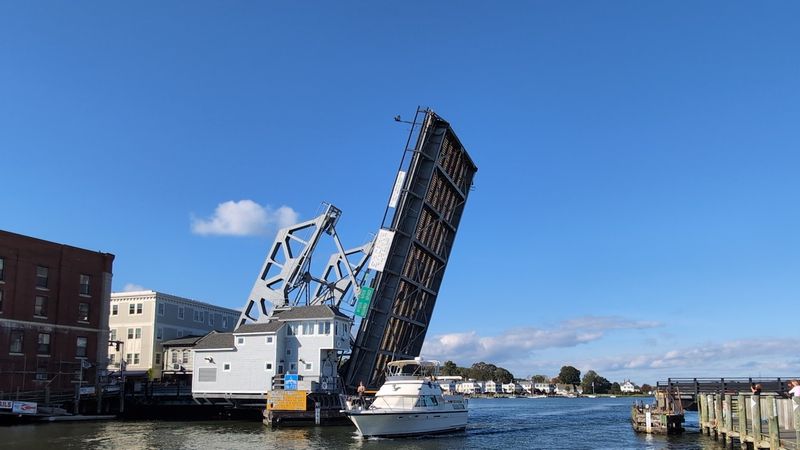
The Mystic River, Connecticut is the kind of place that makes you stop mid-sentence just to stare at the water. It runs right through the heart of the village, dividing the neighborhoods of Groton and Stonington before flowing out toward Fishers Island Sound.
The river has been central to life here since the 1700s, when shipbuilders launched vessel after vessel from its banks.
Right in the middle of downtown sits the Mystic River Bascule Bridge, built in 1922 and still in active use today. What makes it special is that it opens regularly throughout the day to let boat traffic pass through.
Watching that old bridge slowly rise while cars wait on either side is a genuinely charming moment that feels completely out of step with modern life, in the best possible way.
The riverbanks are lined with benches, small docks, and winding paths that make it easy to spend an hour just watching the water move. Kayakers paddle past sailboats while seabirds circle overhead.
It is simple, quiet, and oddly beautiful. The river is not just scenery here; it is the pulse of the whole village.
Mystic Seaport Museum and the Charles W. Morgan
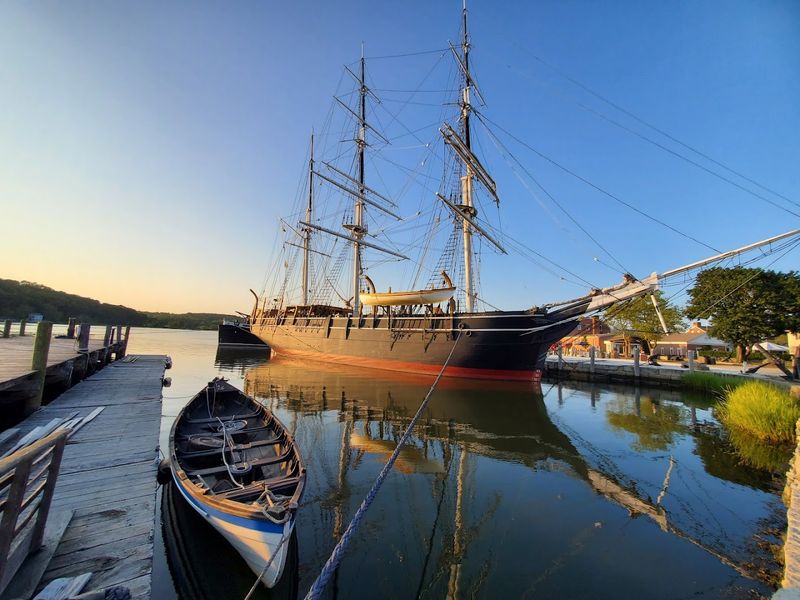
Some museums make history feel distant and dusty. Mystic Seaport Museum does the opposite, pulling you right into the middle of it.
Spread across 19 acres along the Mystic River, this is one of the most immersive living history experiences in the entire country. Founded in 1929, the museum has spent nearly a century collecting, preserving, and bringing to life the story of American seafaring.
The undisputed centerpiece is the Charles W. Morgan, an 1841 whaleship that holds the title of America’s oldest commercial vessel still in existence.
It is a National Historic Landmark, and standing on its worn wooden deck gives you a visceral sense of what life at sea actually looked like for the people who built this region. The ship is massive, creaky, and absolutely magnificent.
Beyond the Morgan, the museum contains more than 60 historic buildings arranged into a recreated 19th-century seaport village. There are working craftspeople, period-accurate shops, and interactive exhibits throughout.
You can spend an entire day here without running out of things to see. Families, history lovers, and curious wanderers all find something that genuinely surprises them.
Address: 75 Greenmanville Ave, Mystic, CT
Downtown Mystic and Its Colonial Architecture
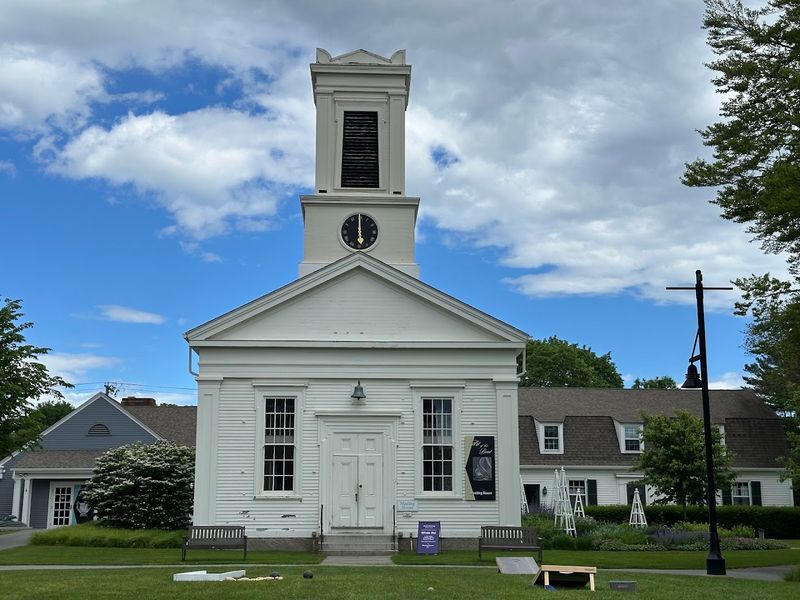
Downtown Mystic has a texture that newer towns simply cannot replicate. The buildings are old, the alleys are narrow, and there is a kind of lived-in warmth that comes from a place with real history behind it.
Brick storefronts with hand-painted signs sit beside Federal-style buildings that have been standing since before the Civil War.
The cobblestone alleys are one of those details that catch you off guard. They weave between buildings and lead to small courtyards, local boutiques, and tucked-away cafes.
Wandering without a specific destination is genuinely one of the best ways to experience this part of town. You never quite know what is around the next corner.
Local shops here lean heavily independent. There are bookstores, nautical antique dealers, clothing boutiques, and art galleries scattered throughout.
The energy is relaxed but lively, the kind of place where shopkeepers actually talk to you rather than glancing up from a screen. It does not feel like a tourist trap, even though visitors clearly love it.
The architecture alone is worth a slow afternoon stroll. Looking up at the rooflines and window details of buildings that have survived two centuries gives you a quiet appreciation for how much this small village has endured and preserved.
The Shipbuilding Legacy That Built a Village
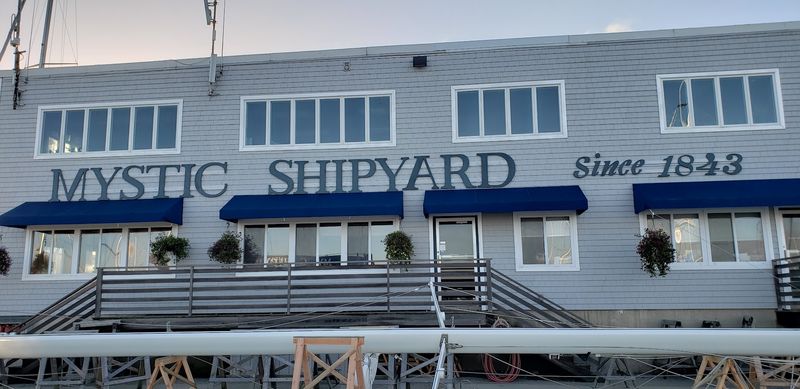
Between 1784 and 1919, more than 600 vessels were built along the banks of the Mystic River. That is a staggering number for a village this size, and it explains almost everything about the character of the place.
Mystic was not just a pretty harbor town; it was an industrial powerhouse that helped supply ships to a growing nation.
The shipbuilding era shaped the layout of the streets, the style of the homes, and the identity of the people who settled here. Wealthy ship captains built grand houses on the hillsides above the river, many of which still stand today.
The prosperity of that period left behind an architectural legacy that the village has worked hard to protect.
Learning about this history adds a completely different layer to a visit. Suddenly the old warehouses near the waterfront make sense.
The wide streets near the docks were designed for hauling timber and rigging, not for strolling tourists. Context transforms a beautiful place into a meaningful one.
The Mystic Seaport Museum does the best job of explaining this legacy in depth, but even a casual walk through town reveals its echoes. History here is not behind glass.
It is in the ground beneath your feet and the buildings around every corner.
Local Food Scene Along the Harbor
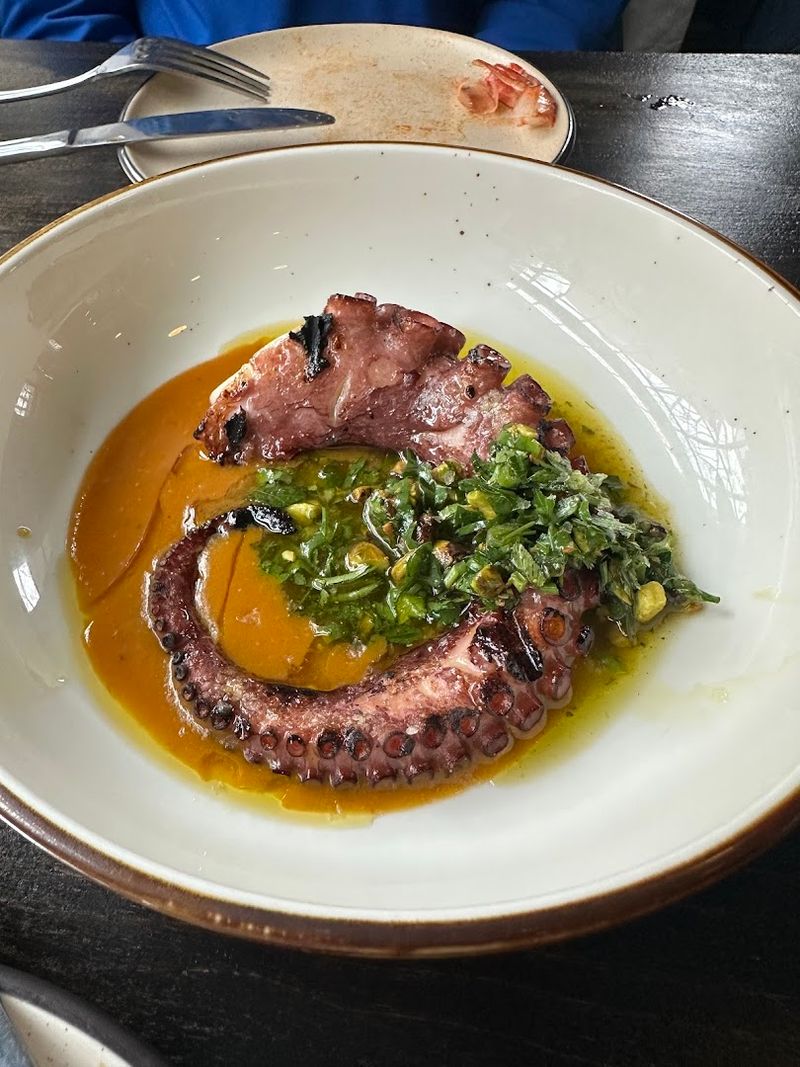
Eating in Mystic feels like part of the experience rather than just a break between sightseeing. The food scene here leans heavily on the sea, which makes perfect sense given everything the harbor represents.
Fresh clam chowder, lobster rolls, and grilled fish show up on menus throughout the village, and the quality is consistently high.
One of the most beloved spots is S&P Oyster Restaurant, which sits right on the water with views of the river and the drawbridge. The setting alone makes a meal here memorable, but the seafood backs it up.
Watching boats drift past while eating a bowl of chowder is a very specific kind of happiness.
Beyond seafood, the town has a solid range of casual eateries, bakeries, and coffee shops. Mystic Market, located at 375 Noank Rd, Mystic, CT, is a popular stop for sandwiches and fresh provisions.
The food culture here feels genuinely local rather than manufactured for tourists.
Breakfast spots tend to fill up on weekend mornings, so arriving a little early pays off. The portions are generous, the service is friendly, and the pace is unhurried.
Meals in Mystic feel like they belong to a slower, more deliberate way of living.
Boating, Kayaking, and Life on the Water

Mystic is the kind of place where being on the water feels completely natural, not like an activity you scheduled in advance. The Mystic River and the surrounding waterways invite exploration at whatever pace suits you.
Kayak rentals are available for those who want to get close to the surface of the river and experience the village from a completely different angle.
Seeing the historic waterfront from a kayak is genuinely unforgettable. The old buildings, the moored sailboats, and the occasional sight of the drawbridge lifting above you create a perspective that no walking tour can replicate.
The water is calm enough for beginners, which makes it accessible even if you have never paddled before.
Sailing is also deeply woven into the culture here. Local sailing clubs and charter services operate out of the harbor, and the sight of tall-masted vessels moving through the sound is a regular part of the scenery.
Even watching from shore feels like participation.
For those who prefer to stay dry, the walking paths along the riverbanks offer excellent views of all the activity on the water. There is something quietly joyful about watching other people sail and paddle while the afternoon light shifts across the river.
The water here is never just background; it is the main event.
Why Mystic Feels Like a Different Century
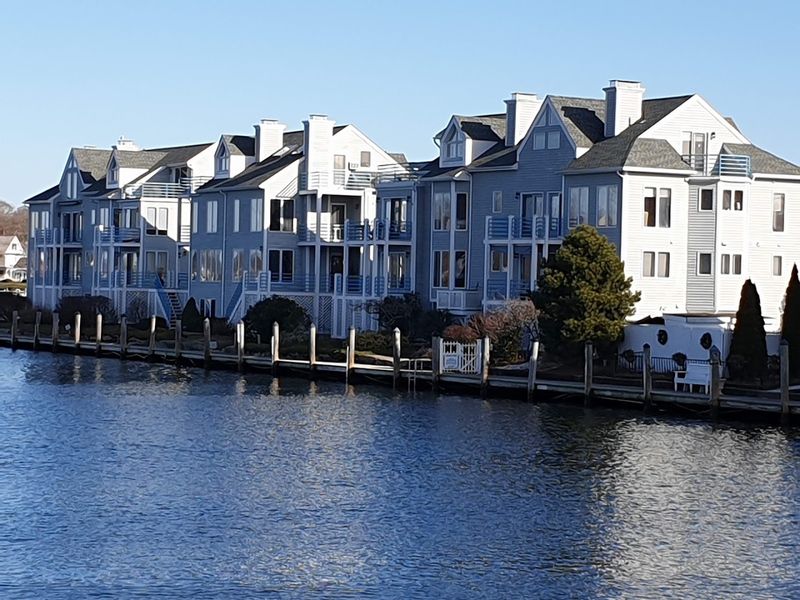
There is something specific about Mystic that is hard to name but easy to feel. It is not just the old buildings or the tall ships.
It is the combination of all of it together, the pace, the scale, the way the town has resisted being swallowed by modernity without becoming a theme park version of itself. That balance is genuinely rare.
The village is small enough that you can walk nearly everywhere, which automatically slows you down. Without the need to hail a cab or navigate a subway, the rhythm of your day shifts.
You notice more. The smell of the river, the sound of rigging in the wind, and the feel of old brick under your hand all become part of the experience.
Two hours from New York, the contrast could not be sharper. The city hums with urgency and noise.
Mystic operates on a completely different frequency. That gap is exactly what makes it so appealing to people who need a genuine reset rather than just a change of scenery.
Returning home after a weekend here feels different too. The quiet follows you a little.
Mystic has a way of reminding you that slower, older, and simpler are not lesser things. They are sometimes exactly what you needed all along.
Address: Stonington, Connecticut
