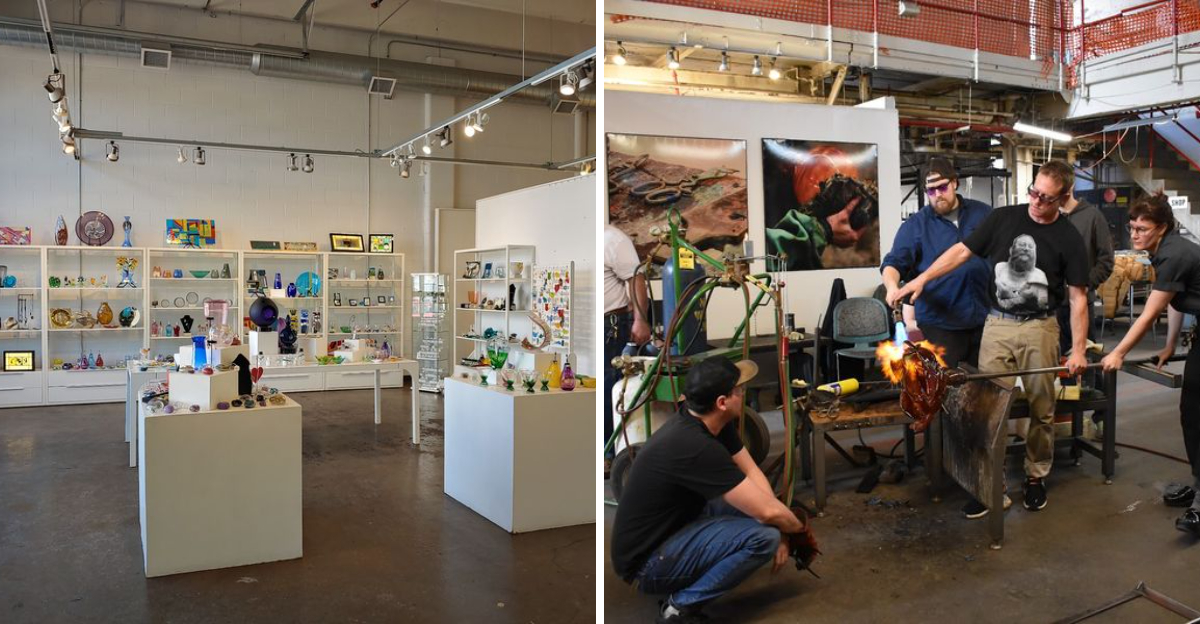
You know those rare creative experiences that feel nothing like the everyday grind? This cozy Minnesota studio offers exactly that – a place where you can shape molten glass into something uniquely yours, all in a warm and welcoming atmosphere.
The center is Minnesota’s only non-profit public-access glass studio, welcoming everyone from complete beginners to seasoned artists. Patient instructors guide you through every step of the process, and you’ll leave with a beautiful piece that surprises you with its own beauty.
Book a class, roll up your sleeves, and get your hands warm. Minnesota’s hidden glass studio is a creative adventure waiting to be discovered.
The Furnace Room And Its Constant Golden Glow
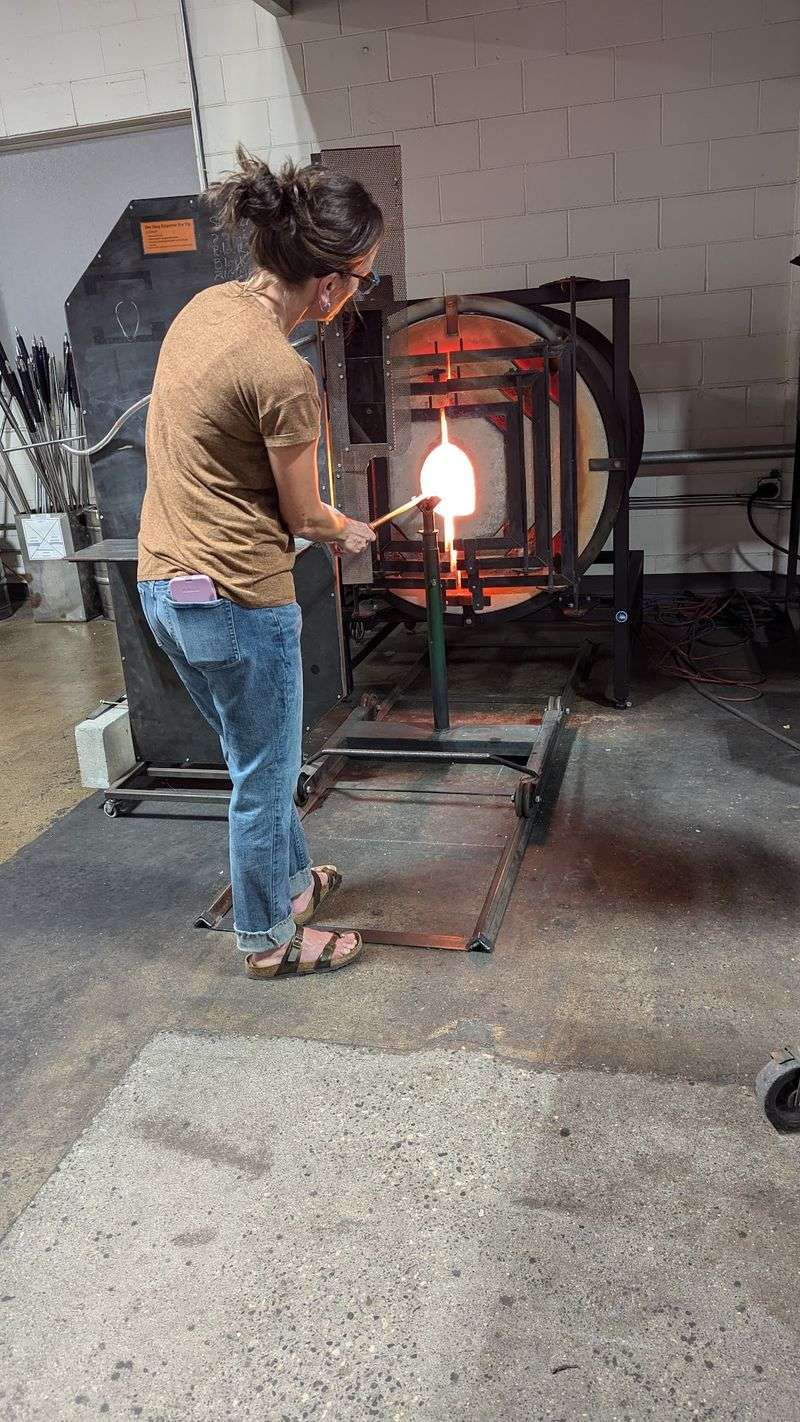
Heat arrives before anything else. The furnace holds molten glass at temperatures that turn ordinary quartz sand into something that flows like thick honey, and the glow spills across the concrete floor in a warm orange wash.
Visitors often say the hot shop is warm even in the middle of a Minnesota January, and that is completely true. Short sleeves are the smart choice, no matter what the forecast says outside.
Closed-toe shoes matter here too, since bits of glass and hot tools live at floor level. Staff hand out safety glasses and explain where to stand, where not to walk, and how to pass a pipe without bumping anyone.
What surprised me most was how organized everything felt. Tools sit in the same spots, benches are cleared between turns, and each station has a clear purpose.
Air conditioning in the surrounding rooms helps balance things out, so nobody leaves feeling wrung out. The mix of raw industrial energy and careful order makes the space feel exciting rather than intimidating.
Paperweight Class, The Best First Step
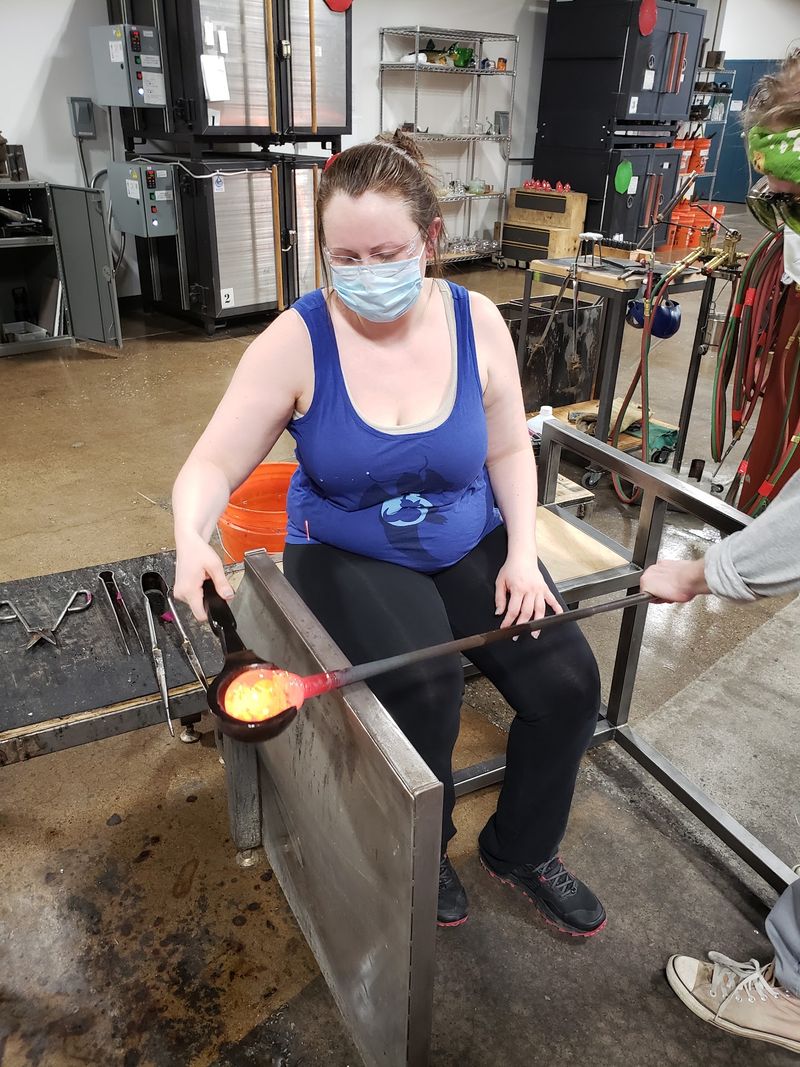
Ask around and the paperweight session comes up more than any other class here. There is a good reason for that.
The project is short enough to finish in one visit, yet it covers the core moves of hot glass work: gathering molten glass, rolling it in colored chips, shaping it with wet newspaper pads, and cooling it slowly.
Instructors walk through the whole process first, start to finish, so nothing feels like a surprise. Then each person takes a turn while the teacher stands close by, hands ready but not hovering.
Color choices happen early, and that decision shapes the whole piece. Blues and greens swirl like lake water, while warmer tones look almost like sunset caught in a marble.
Because glass has to cool slowly in an annealing oven, finished pieces get picked up several days later. Some people treat that return trip as a second little outing.
The most common complaint? Class time flies. That is the kind of complaint worth having.
Glass Discovery Sessions For Total Beginners
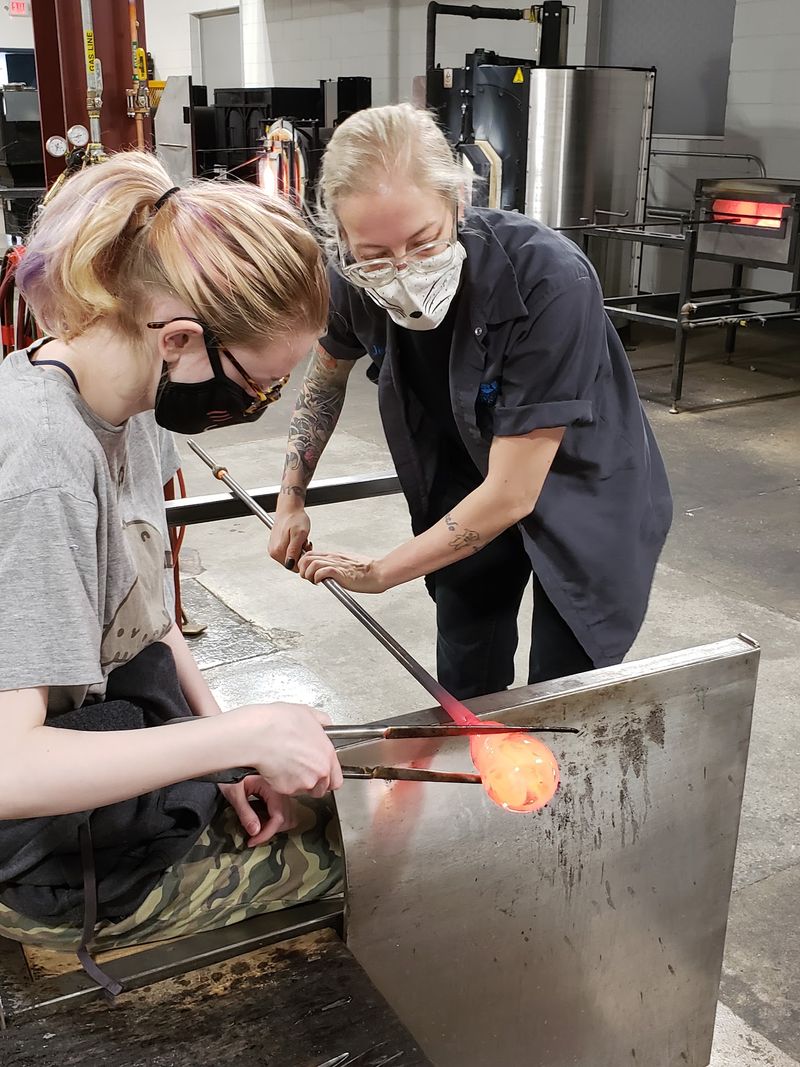
Zero experience is genuinely fine here. Discovery sessions exist for people who have never held a blowpipe and are not sure they want to commit to a full course.
Groups stay small, often just a handful of participants, which means real one-on-one attention instead of standing in line waiting for a turn.
Teachers explain what glass actually is, where it comes from, and why it behaves the way it does when hot. That little science lesson lands better than expected.
Families sign up together, couples book them as birthday gifts, and coworkers use them as a change of pace from screens and desks. Kids around eleven or twelve can take part in certain sessions with an adult.
Nerves usually fade within the first few minutes. Once the pipe is in your hands and the glass starts to move, instinct takes over.
Booking ahead is wise, since seats are limited and popular slots fill quickly, especially on weekends and around holidays.
Marble Making, A Small Project With Big Skills
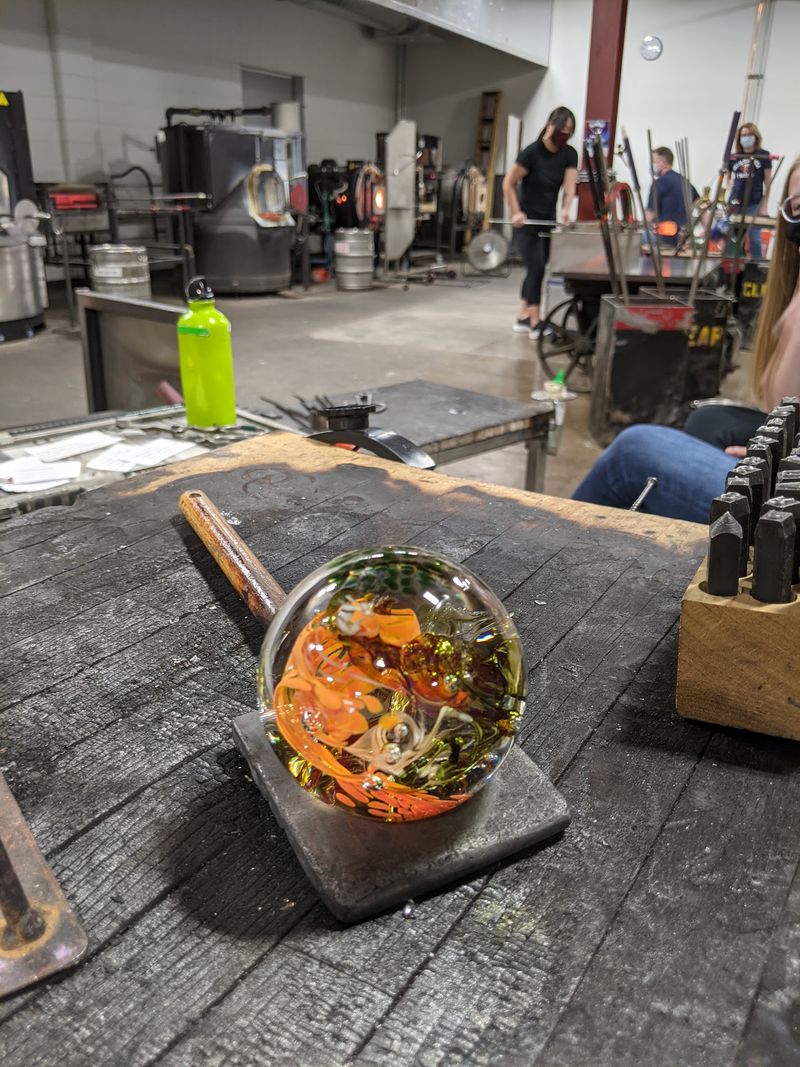
Marbles look simple. Making one is anything but.
The class breaks the process into small skills, and each gets practiced separately before moving forward. Gathering, centering, adding color, twisting a pattern, then closing the whole thing into a smooth sphere.
Younger participants tend to love this one, partly because the finished object fits in a pocket and partly because the swirls inside feel like tiny captured galaxies.
Patience gets tested in a good way. Glass does not respond to force, only to steady rotation and timing, and that lesson sinks in fast.
Everything needed comes provided, from tools to colored glass rods, so there is no shopping list to worry about beforehand.
What I appreciated watching this class is how much room instructors give people to try, mess up slightly, and try again. Nobody swoops in to fix things unless it is actually necessary.
Walking out with a handmade marble feels oddly satisfying. It is small proof that hands can still make beautiful objects.
Glass Fusing And The Fun Of Working Flat
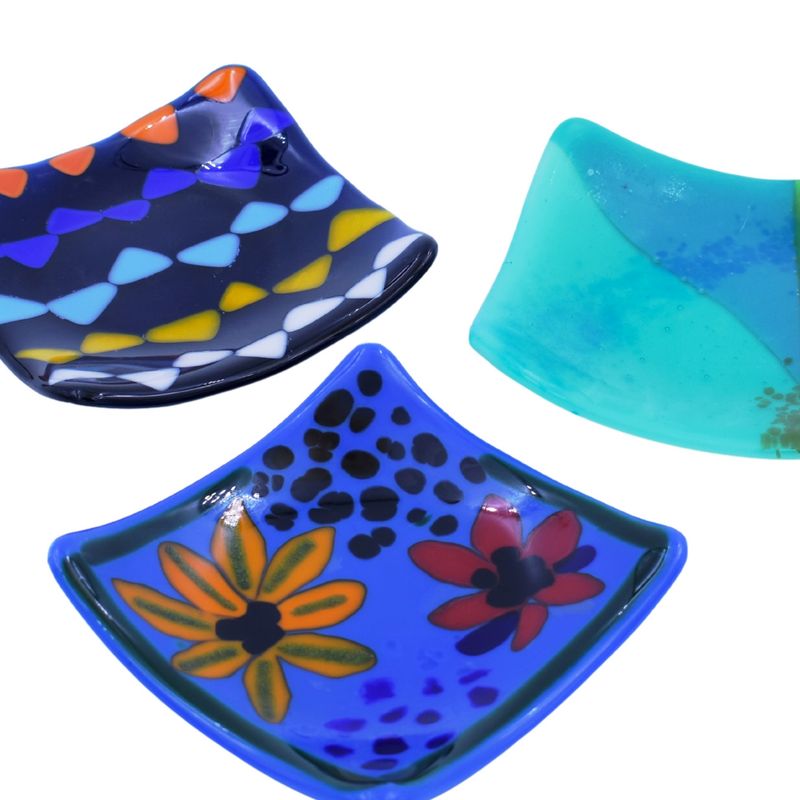
Not everything happens near the furnace. Fusing classes take place at a regular table, which makes them a great choice for anyone who would rather skip the heat entirely.
Projects often involve a small dish, roughly four inches across, built from a base sheet of glass topped with cut pieces, stringers, and frit, which is basically crushed colored glass.
Basic cutting technique comes first. Score, snap, repeat. It clicks quickly once the tool feels familiar.
Finished examples sit out on display so ideas come easier, though plenty of people end up going completely their own direction once the materials are spread out.
Then comes the kiln, where heat softens the edges and melts everything into one solid piece. Pickup happens a few days later, after a slow cool down.
The mood in these sessions is relaxed and chatty, closer to a craft afternoon than a workshop. For a rainy Saturday in Minneapolis, it is a genuinely lovely way to spend a couple of hours.
Instructors Who Actually Teach
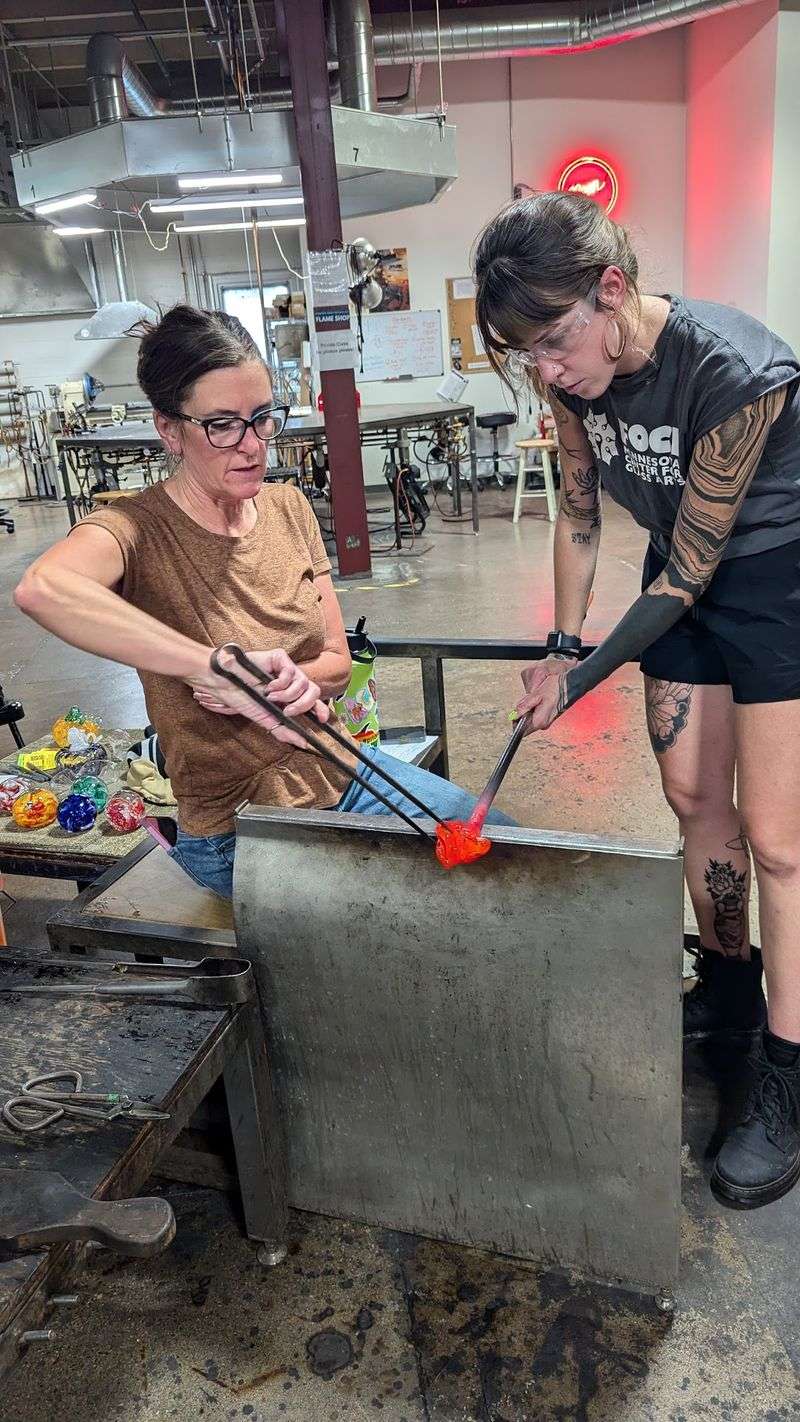
Good teaching makes or breaks a place like this, and the staff here clearly take it seriously.
Demonstrations come first, always, followed by clear explanations of what to expect and where the tricky moments hide. Then participants do the work themselves rather than watching someone else do it for them.
Visitors regularly name their instructors by name, which says something about how memorable those few hours turn out to be.
The balance is what impressed me. Enough guidance that nothing goes wrong, enough freedom that the finished piece really belongs to you.
Questions get real answers too, including the science-y ones about why glass cracks or how color reacts to heat. Nobody brushes off curiosity.
Safety instructions are delivered calmly and without drama, which keeps the mood light instead of tense.
Front desk staff have a reputation for flexibility as well, helping people sort out scheduling mix-ups without fuss. That kind of everyday kindness sticks with visitors longer than the class itself sometimes.
The Gallery That Doubles As A Small Museum
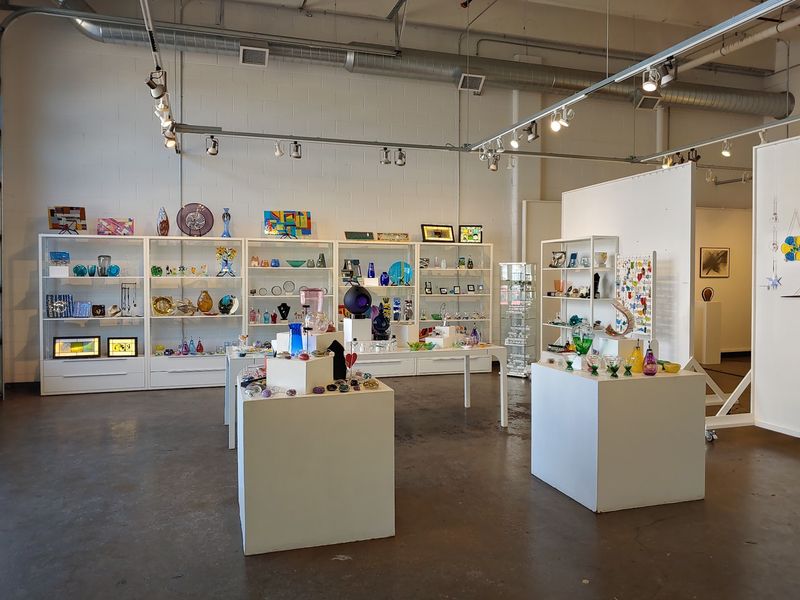
Before or after a class, the gallery deserves real time. Shelves hold everything from tiny ornaments to large sculptural work, and the range of styles is honestly surprising for such a compact space.
Local artists supply most of the pieces, and many are available to take home. Browsing feels less like shopping and more like wandering a small museum where touching is almost tempting.
Light does a lot of work in here. Colors shift depending on where you stand, and certain pieces seem to change character entirely with a few steps.
After trying hot glass yourself, the display hits differently. You start noticing the thin walls, the perfect symmetry, the little decisions that took years to master.
Everything stays tidy and well organized, with clear labels and room to move around comfortably.
Gift hunting works well here too, particularly for people who already own too much stuff and would rather receive something handmade. Ornaments in particular make easy, travel-friendly souvenirs.
Free Public Viewing Sessions Worth Planning Around
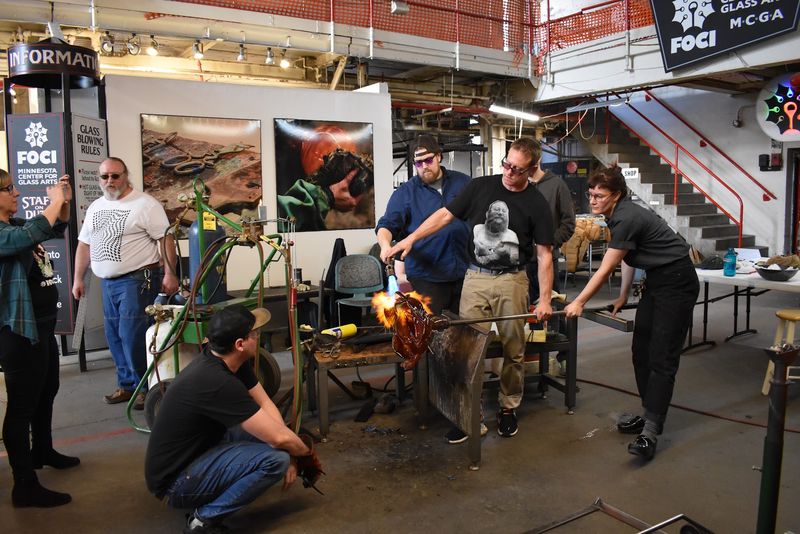
Curious but not ready to sign up? Public viewing sessions solve that problem nicely.
These open times let anyone stop by and watch glass artists work, no registration and no commitment. Just a chance to stand back and see the whole choreography unfold.
Watching is educational in a way that reading never quite manages. The rhythm of reheating, rolling, and shaping becomes obvious once you see it happen a few times.
Since schedules shift throughout the year, checking the studio website or calling ahead saves a wasted trip. Hours change seasonally and around special events.
Kids tend to be mesmerized, and honestly so are most adults. There is something hypnotic about glowing glass moving in slow motion.
The space is wheelchair accessible, and staff are happy to explain what is happening and answer questions between steps.
Plenty of people use a viewing session as a low-pressure preview, then book a class on the way out. That is exactly how it tends to go.
Private Parties, Group Outings And Gift Ideas
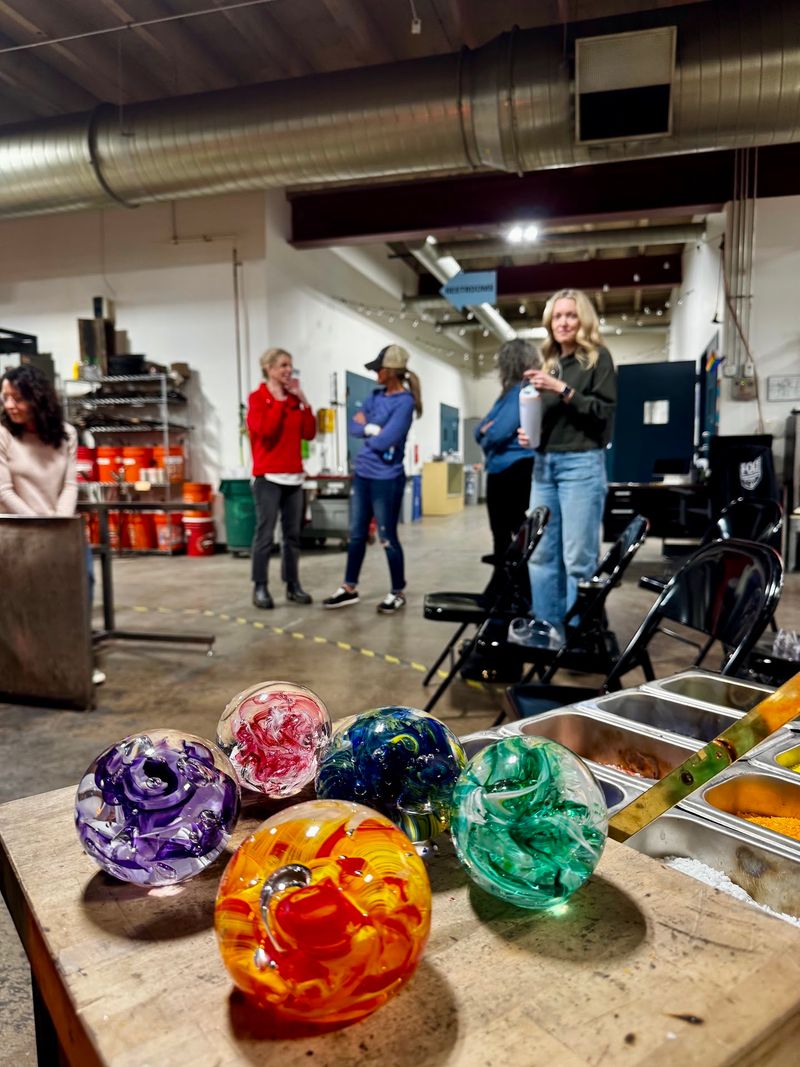
Birthdays turn up often on the booking calendar here, and it is easy to see why.
Private sessions give a group the full attention of an instructor, with enough time built in for everyone to make something rather than rushing through turns.
Coworkers looking for a team outing that is not another restaurant table find this works surprisingly well. Making something together breaks the ice faster than small talk ever does.
Gift certificates cover the classic problem of buying for someone who already has everything. An experience beats another object, especially one you get to keep.
Groups spanning wide age ranges tend to do fine, with parents, teens, and grandparents all managing the basics under supervision.
Reserve early for weekend dates, particularly during the holiday stretch when Minneapolis fills up with people hunting for indoor activities.
A tip worth remembering: build in a return visit for pickup, since hot glass pieces need days to cool properly before they can travel home safely.
Getting There, Parking And Practical Details
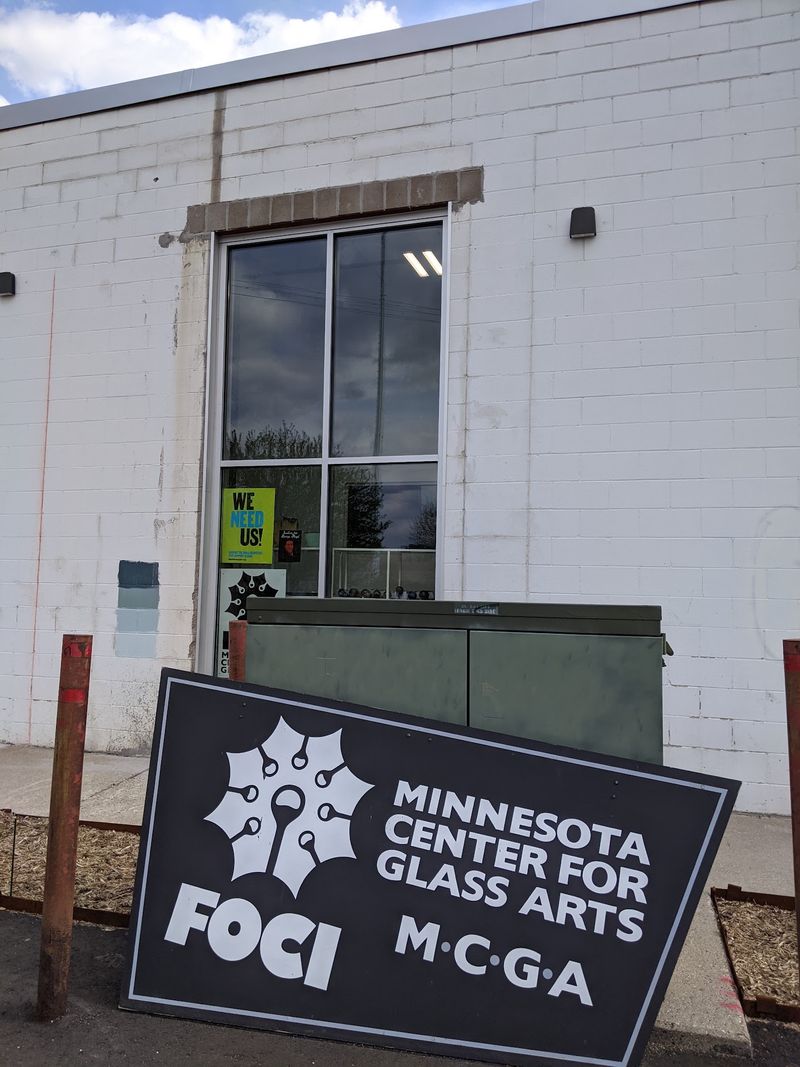
Snelling Avenue is a quiet stretch, and the studio blends into the neighborhood so well that first-timers sometimes drive right past it.
Street parking is generally straightforward, which is a small relief in a city where that is not always the case. Give yourself a few extra minutes anyway.
The building is wheelchair accessible, and the layout inside is open enough to move around without squeezing past equipment.
Dress for warmth rather than winter. Long sleeves and heavy layers become uncomfortable fast in the hot shop, so plan for short sleeves and sturdy closed shoes.
Hours vary depending on class schedules and the season, so checking the website or calling ahead is the reliable move.
As a nonprofit, the center leans on classes, memberships, and gallery sales, which means every visit supports the local glass community directly.
Arrive a little early, look around the gallery, and settle in before class starts.
Address: 2213 Snelling Ave, Minneapolis, MN 55404, United States
