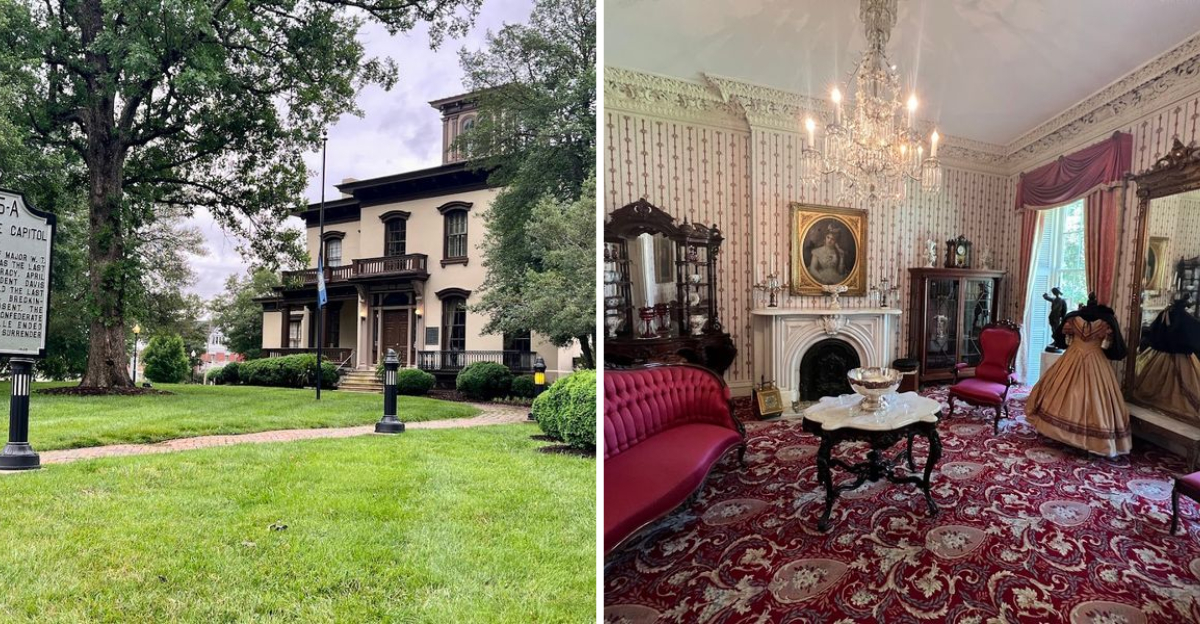
Grand Italian Villa-style homes usually make me think of wine country or coastal estates, not the raw weight of American history. Virginia proved me wrong.
I first heard about this mansion while researching offbeat landmarks, and nothing quite prepared me for how many layers of history are packed into one building.
From the final days of the Confederacy to a civil rights sit-in that changed a community forever, that mansion has witnessed moments that shaped the country.
It sits on Main Street looking elegant and composed, but behind those walls is a story Virginia has not always been eager to tell. I walked through rooms that held both grief and resilience, and felt the weight of every decision made there.
The museum now calls that mansion home, and it does a remarkable job of presenting all of it, the uncomfortable parts included. If you care about real, unfiltered American history, this is a stop you simply cannot skip.
The Mansion That Became the Last Capital of the Confederacy
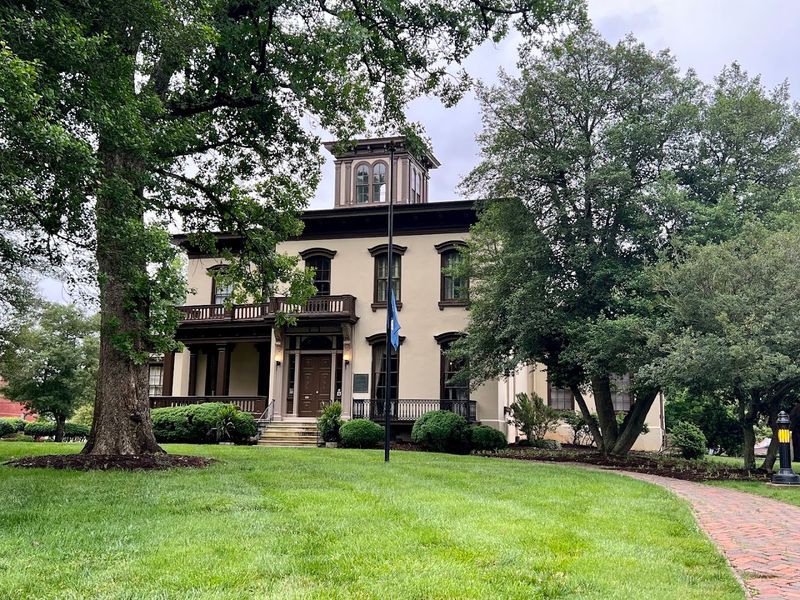
April 1865 was one of the most chaotic months in American history, and for one brief, strange week, this mansion on Main Street in Danville became the center of a crumbling government.
After Richmond fell to Union forces on April 3, Confederate President Jefferson Davis and his cabinet fled south and took refuge here at the home of Major William T.
Sutherlin. For seven days, the Sutherlin Mansion served as what historians call the Last Capital of the Confederacy.
Major Sutherlin was a prominent local businessman and the Quartermaster for Danville’s depot during the war. His home, built between 1857 and 1858, was considered the finest residence in Danville at the time.
The Italian Villa-style architecture, with its tall windows and elegant proportions, made it a natural choice for hosting a president, even one whose cause was rapidly unraveling.
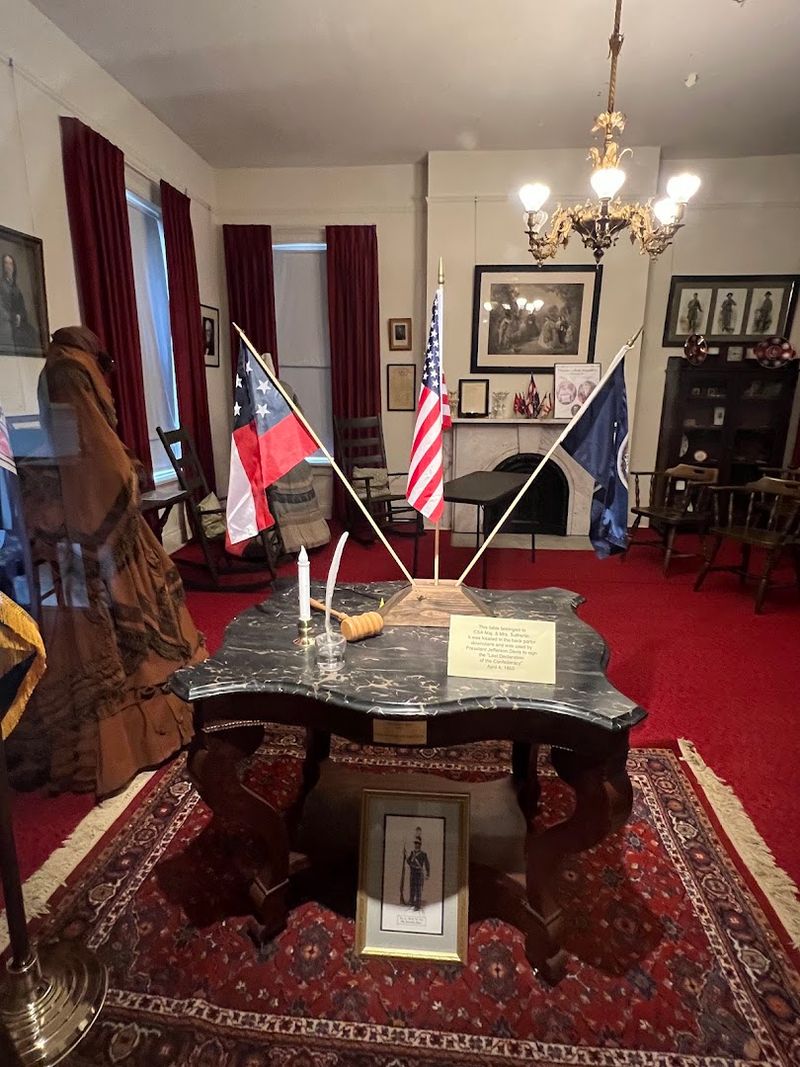
On April 4, Davis signed his final official proclamation to the Confederate States of America right here within these walls. The last official cabinet meeting of the Confederacy also took place in this house.
Then, on April 10, the news of General Robert E. Lee’s surrender at Appomattox reached Davis while he was dining at the Sutherlin table.
That dinner marked the true end of the Confederate government. Few buildings in the South carry that kind of specific, documented, world-altering weight.
Visiting feels less like a museum trip and more like standing at the exact spot where an era collapsed.
Architecture That Still Commands Attention After 160 Years
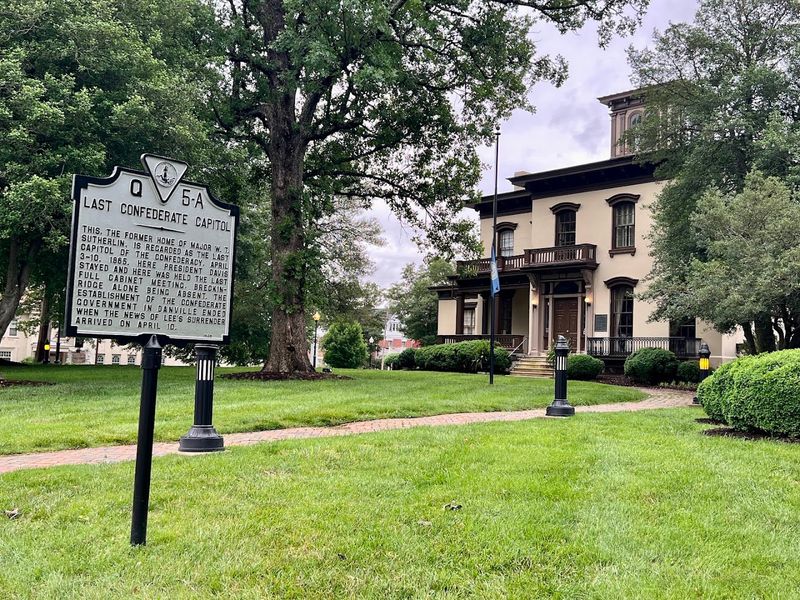
The first thing you notice about the Sutherlin Mansion is that it does not look like it belongs to the same world as a strip mall or a chain restaurant.
It rises from the streetscape of Main Street with a quiet authority that makes you slow down without really meaning to.
The Italian Villa style was a fashionable architectural choice for wealthy Americans in the mid-19th century, and Major Sutherlin clearly spared no expense when he commissioned the home in 1857.
Tall, narrow windows stretch toward high ceilings. The exterior has a stately symmetry that feels both formal and welcoming at the same time.
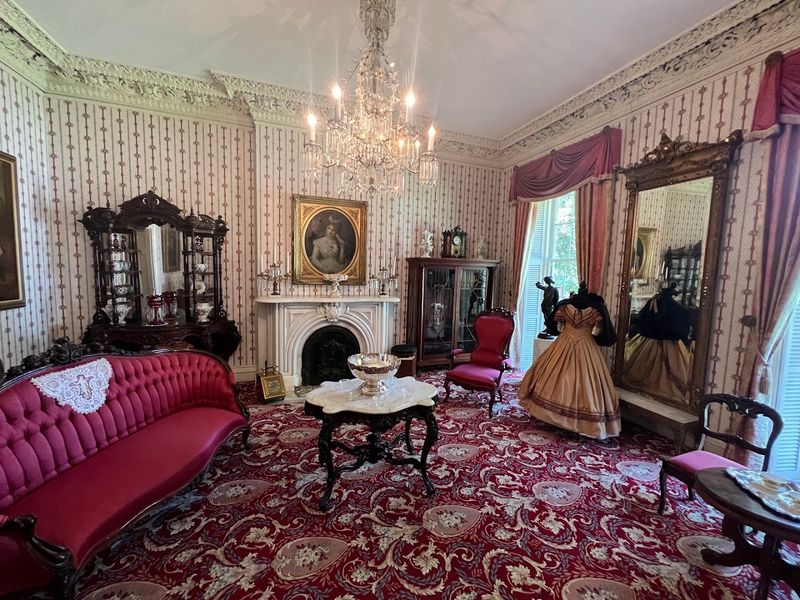
Inside, original furnishings, paintings, and personal belongings of the Sutherlin family have been carefully preserved, giving visitors a genuine sense of how prosperous Danville families lived before the Civil War turned everything upside down.
Renovations over the decades have altered some features, most notably when the building served as the Danville Public Library from 1928 to 1972 and the original staircase was moved. Even so, the essential character of the house remains intact.
The chandeliers alone are worth pausing to admire. They hang with an almost theatrical grandeur that feels entirely appropriate for a home that once hosted a sitting president.
Recognized on both the Virginia Landmarks Register and the National Register of Historic Places, this mansion is not just a pretty building. It is a carefully preserved artifact of a pivotal American era, and it wears that responsibility with genuine grace.
The Civil Rights Sit-In That Happened Right Here
Most people arrive at the Sutherlin Mansion expecting a Civil War story. What catches them off guard is the civil rights chapter, and it is every bit as significant.
In the summer of 1960, Black students staged a sit-in at the Danville Public Library, which at the time was operating out of this very building under a strict whites-only policy.
It was a direct, courageous act of protest in a city that had not yet been willing to change.
The library’s response was telling. Rather than integrate peacefully, officials closed the building and later reopened it without chairs, a deliberate tactic meant to make the space uncomfortable and discourage further demonstrations.
The message was clear, and so was the community’s response. The sit-in became a catalyst for broader civil rights activism throughout Danville, energizing a movement that would push the city toward long-overdue change.
Today, the museum’s exhibit titled “The Movement” addresses this history with the seriousness it deserves. It does not soften the edges or present a tidy resolution.
The exhibit acknowledges the ugliness of what happened here and honors the people who had the courage to challenge it. For many visitors, this section of the museum is the most emotionally affecting part of the entire experience.
It is a reminder that the same building that sheltered a Confederate president also became a battleground for human dignity a century later. History rarely arrives in neat, separate chapters.
Camilla Williams and a Legacy Reclaimed
One of the most quietly powerful moments in the Sutherlin Mansion is the gallery dedicated to Camilla Williams. Her name may not ring a bell for every visitor who walks through the door, but her story is extraordinary.
Born in Danville, Williams became the first African American woman to receive a full contract with the New York City Opera, a milestone that broke barriers in the world of classical music.
The irony embedded in this exhibit is almost too sharp to miss.
Williams, a celebrated artist who performed on some of the most prestigious stages in the world, was barred from entering this very library during the years it operated under segregation.
The building that once refused her entry now honors her legacy with its own dedicated collection. That reversal carries a weight that no placard can fully articulate.
The Camilla Williams Collection includes photographs, programs, and memorabilia that trace her remarkable career. Spending time in this room feels like a small act of restoration, a way of giving back something that should never have been taken.
Her voice reached concert halls across the globe, but Danville is where her story began, and this exhibit makes sure that origin is not forgotten.
For many visitors, especially those who arrive knowing little about her, discovering Camilla Williams here feels like one of those unexpected gifts that only the best museums manage to offer.
She deserved this recognition long before it arrived.
The Civil War Exhibit That Does Not Look Away
History museums can sometimes feel like they are trying to present the past without actually saying anything about it. That is not the experience inside the Civil War exhibit at the Danville Museum of Fine Arts and History.
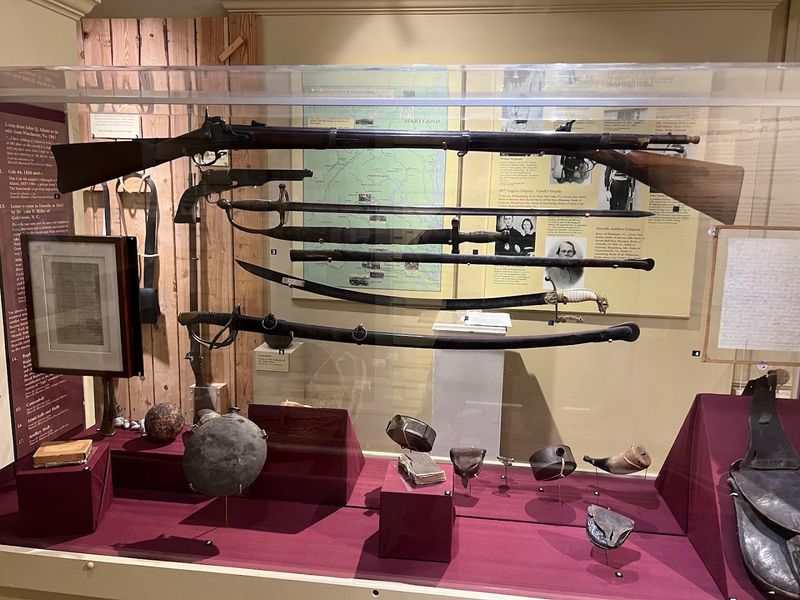
Titled “Between the Lines: Danville 1861-1865,” the exhibit pulls together artifacts, documents, and personal objects that tell the story of the war from the perspective of this specific community, not just the generals and politicians, but the ordinary people whose lives were upended by it.
Danville’s role in the conflict extended beyond hosting Jefferson Davis for a week. The city served as a significant supply depot and also held Union prisoners of war, a chapter of local history that adds considerable moral complexity to the story.
The exhibit addresses these dimensions without flinching, which makes it more compelling than a straightforward celebration of military history would be.
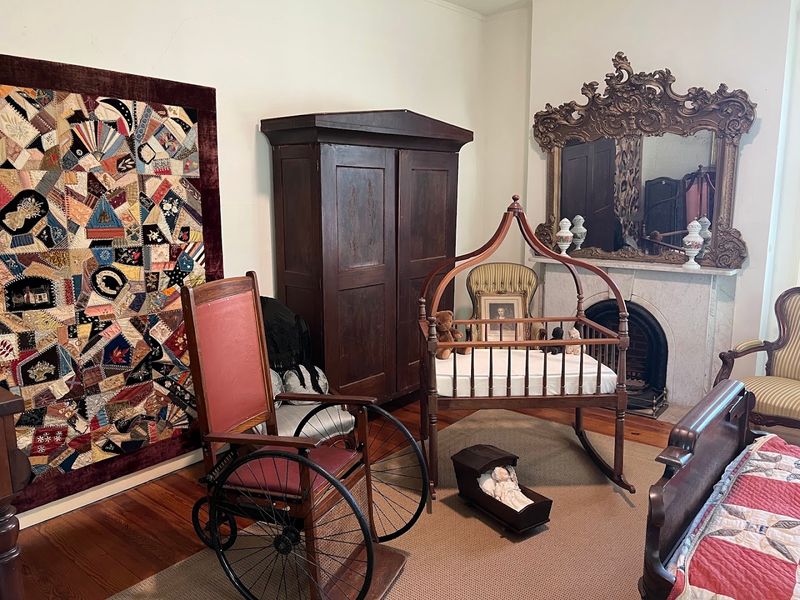
Original furnishings from the Sutherlin family are displayed throughout the house, and seeing them alongside the historical context provided by the exhibit makes the experience feel unusually grounded.
These were real objects used by real people living through an extraordinary and terrible period.
There are also rotating art exhibits throughout the mansion that add a creative dimension to the visit, keeping the space feeling alive rather than static.
Plan to spend at least an hour here, maybe more if you find yourself lingering over the details, and most visitors do.
The audio tour is particularly well done and worth the time.
Visiting the Danville Museum of Fine Arts and History Today
Getting to the Sutherlin Mansion is straightforward. It sits right on Main Street in Danville, and parking is available in the rear of the property, which takes one small logistical worry off the table before you even step inside.
The museum is open Thursday through Saturday from 10 AM to 4 PM and on Sundays from noon to 4 PM. It is closed Monday through Wednesday, so planning ahead saves disappointment.
The staff and volunteers here have a reputation for being genuinely warm and knowledgeable. Several visitors have noted that the docents bring the house’s history to life in a way that a self-guided walk simply cannot replicate.
The self-guided audio tour is also available and covers the history of the home, its role in the Civil War, and the families who shaped it. Most people find it takes about an hour to ninety minutes to move through everything comfortably.
There is a gift shop on-site that carries locally made items, including locally sourced honey that has earned some enthusiastic mentions from past visitors. It is a small but thoughtful touch that makes the place feel connected to its community rather than just its history.
The museum’s rotating art exhibitions mean that repeat visits often reveal something new.
Whether you are a history enthusiast, an architecture admirer, or someone simply curious about what really happened in this corner of Virginia, the Sutherlin Mansion rewards the trip.
It holds stories that deserve to be heard, all of them.
Address: 975 Main Street, Danville, VA 24541
