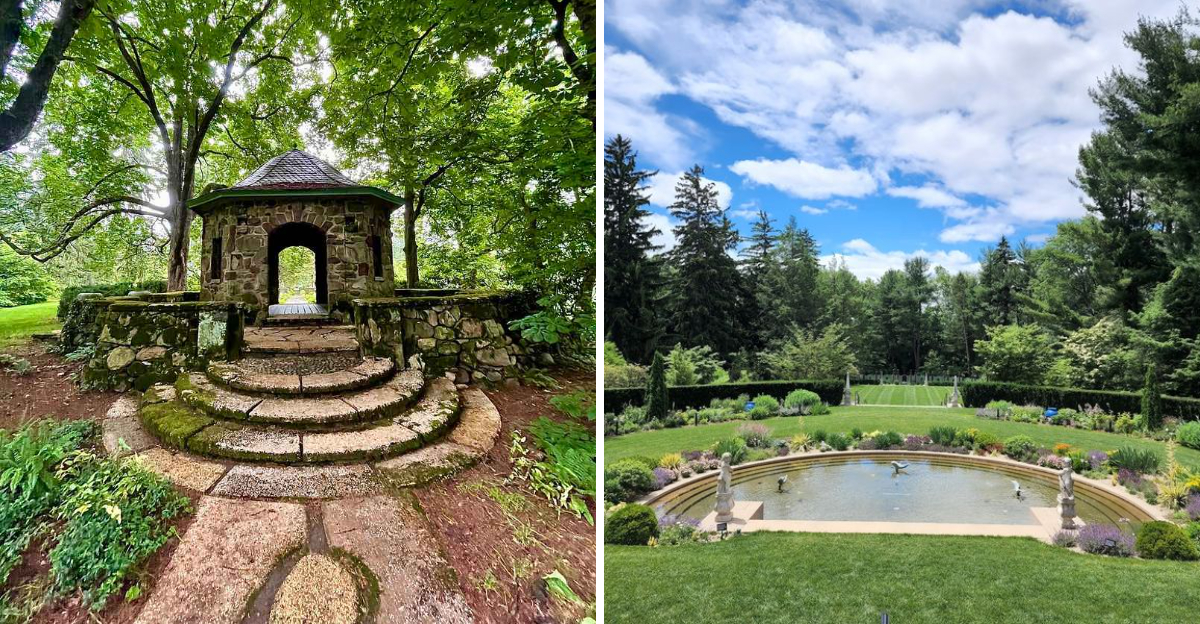
Some gardens just look pretty. This one feels enchanted.
You have probably strolled through public gardens before. Well-manicured lawns. A few flower beds.
Nice, but rarely memorable.
This New Jersey garden is different.
Meandering pathways, hidden grottoes, stone summerhouses, and a magnificent cascading fountain create the kind of peaceful escape that makes you forget where you are.
It was once a private estate, shaped by two prominent families over the course of a century.
Then the family opened its gates to the public, transforming it into a nonprofit garden that welcomes thousands of visitors each year.
Some estates are preserved behind glass. This one lives and breathes.
And it is waiting for you to discover it.
From Private Estate to Public Paradise
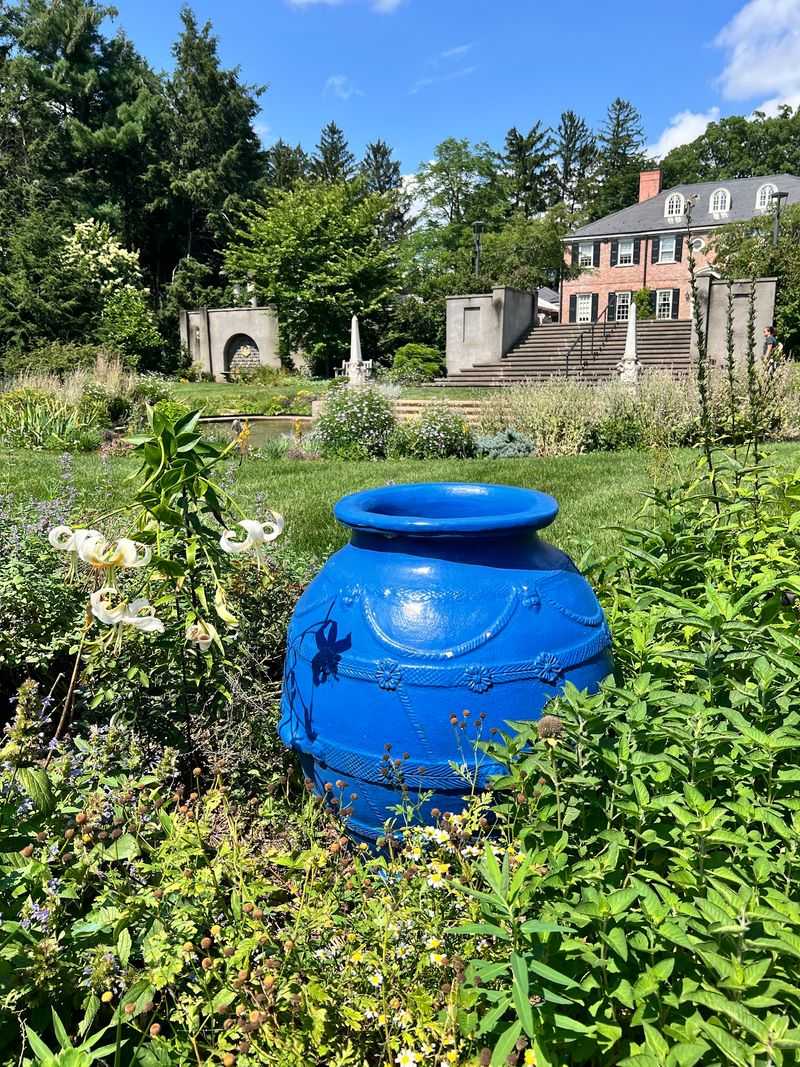
Standing at the entrance, it is hard to imagine that this whole property was once someone’s private weekend escape. The land began life in 1906 as an estate called Pleasant Days, purchased by New York City real estate auctioneer Joseph P.
Day, who wanted a grand country retreat away from the city.
Decades later, in 1949, Peter P. Blanchard, Jr. and Dr. Adelaide Childs Frick bought the heart of the estate.
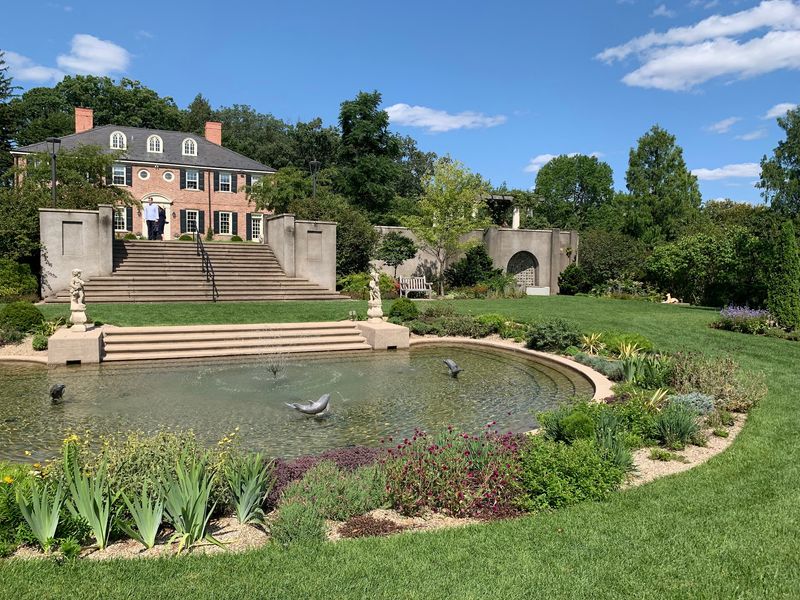
They replaced the original mansion with a Georgian brick house and renamed the place The Greenwoods, adding their own touches along the way.
The shift to a public garden came from a wish, not an accident. Peter P.
Blanchard III and his wife Sofia founded a non-profit conservation organization in 2000, then spent more than a decade planning, fundraising, and restoring.
Doors opened to visitors in 2013, and thousands now walk these paths every year. The mission today is simple and generous: connect people with nature and the arts in a setting that still hums with its own history.
28 Acres of Pure Enchantment
Twenty-eight acres sounds like a number until you start walking it, and then it becomes a series of small worlds. Terraced gardens step down gracefully, shaded woodlands offer a cool break from the sun, and open meadows sway whenever a breeze passes through.
Hidden grottos appear when least expected, tucked into stonework like little secrets. Stately fountains add a steady soundtrack of moving water that follows visitors from one level to the next.
Charming Arts and Crafts follies sit throughout the grounds, structures built purely for beauty rather than any practical purpose. Winding paths, many dating back to the early 20th century, guide the route without ever feeling rushed.
Surrounding the whole property are roughly 2,110 additional acres of preserved parkland, which explains why the modern world seems to disappear the moment the gate closes behind you.
Every turn reveals another view, another framed vista, another reason to slow down. Enchantment is a big word, but this place earns it honestly.
A Gilded Age Garden Opens to All
Grand estates of the early 1900s were built to impress, and traces of that ambition are still everywhere here. Joseph P.
Day created Pleasant Days during a period known for opulence, elaborate landscapes, and formal garden layouts designed for admiring guests.
The style borrowed from Italianate grandeur while also leaning into the detailed craftsmanship of the Arts and Crafts movement. Lavishly planted terraces and an extensive network of paths reveal just how much thought and investment went into the original vision.
What makes the story satisfying is what happened next. A collaboration with the Garden Conservancy in 2002 began the process of turning a private landscape into a public garden, protecting it while making it reachable.
Careful renovations brought the grounds back toward their early 20th-century appearance, and the garden opened officially in 2013.
Now anyone can wander terraces that were once reserved for a single family. A horticultural legacy from a very different era belongs to everyone who buys a ticket and walks through the gate.
Hidden Grottos and Cascading Fountains
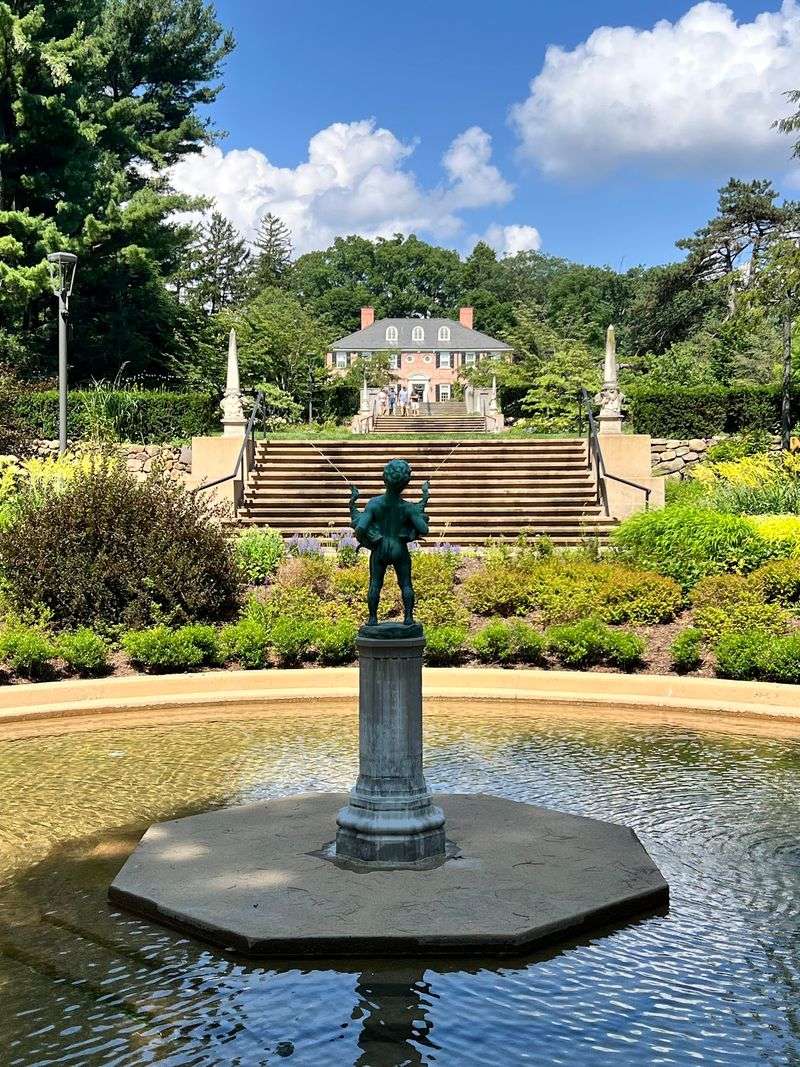
The best moments here come from wandering slightly off the obvious route. Several grottoes are built into the landscape, each offering a cool, shaded pocket and a hint of something ancient and slightly mysterious.
Look closely and colorful Rookwood tiles appear in the stonework, adding artistic flair that ties directly to the garden’s Arts and Crafts roots. These quiet spaces make a nice counterweight to the wide-open views elsewhere.
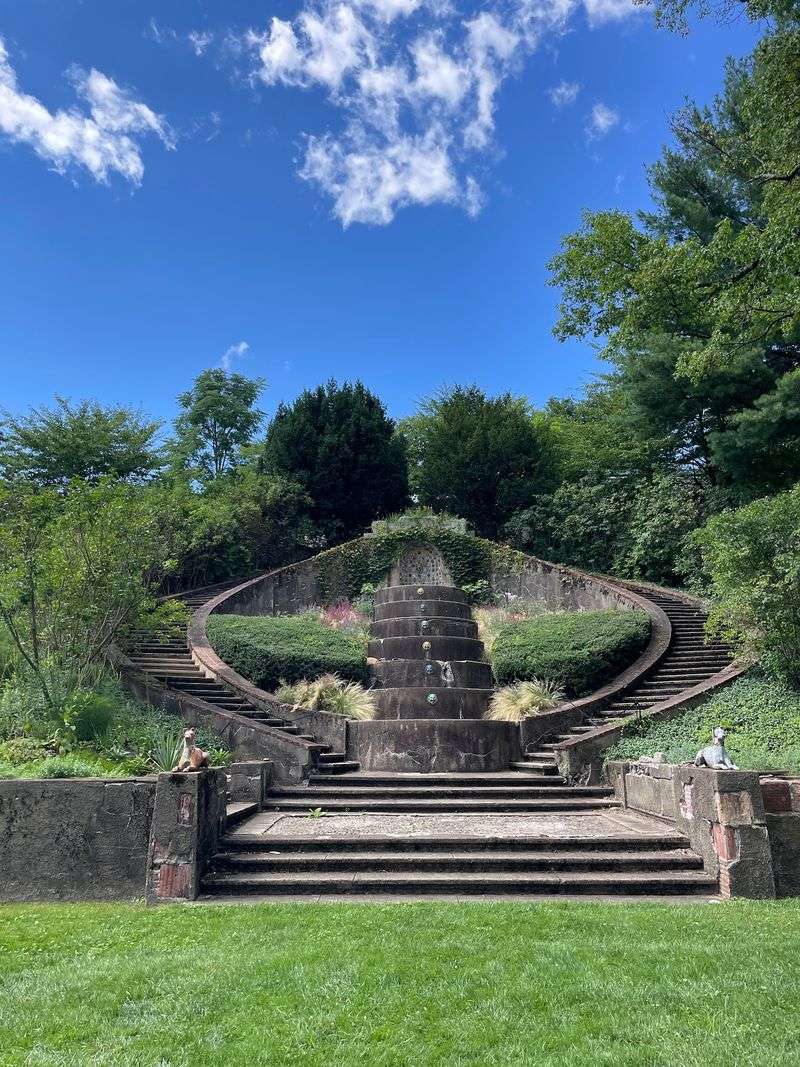
Then there is water, and plenty of it. Fountains punctuate the grounds with movement and sound, and the historic seven-tier cascading fountain from 1916 is the undisputed showstopper.
Built of tile, stucco, and stone, that monumental feature recently received an extensive restoration project valued at 2.7 million dollars.
Loosely adapted from a 17th-century Baroque design in Frascati, Italy, the Cascade was always meant to be theatrical. Water tumbles down vine-covered basins between sweeping horseshoe staircases, and the effect is exactly as dramatic as its designers intended more than a century ago.
Formal Terraces and Wildflower Meadows
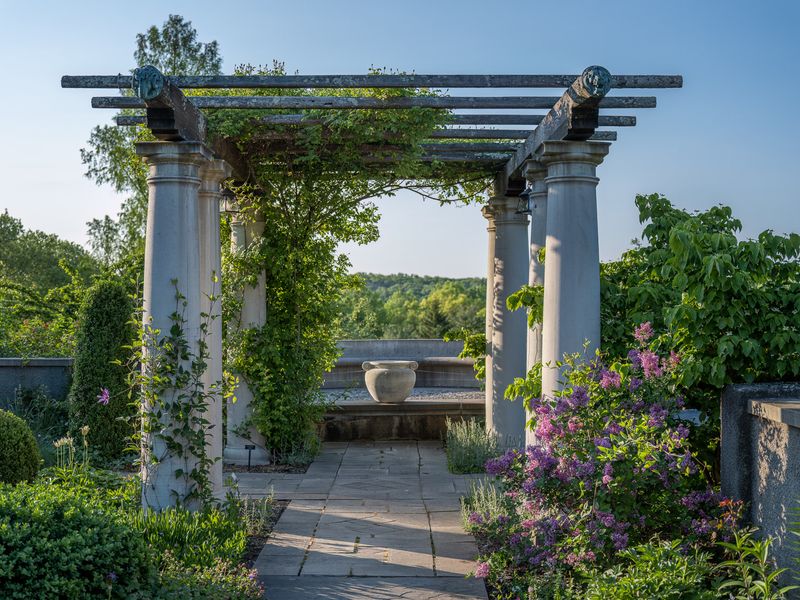
Order and wildness share the same property here, and the mix works beautifully. The Main Terrace descends from the house with a sense of classical structure, built along strong axes that frame views toward the Watchung Mountains.
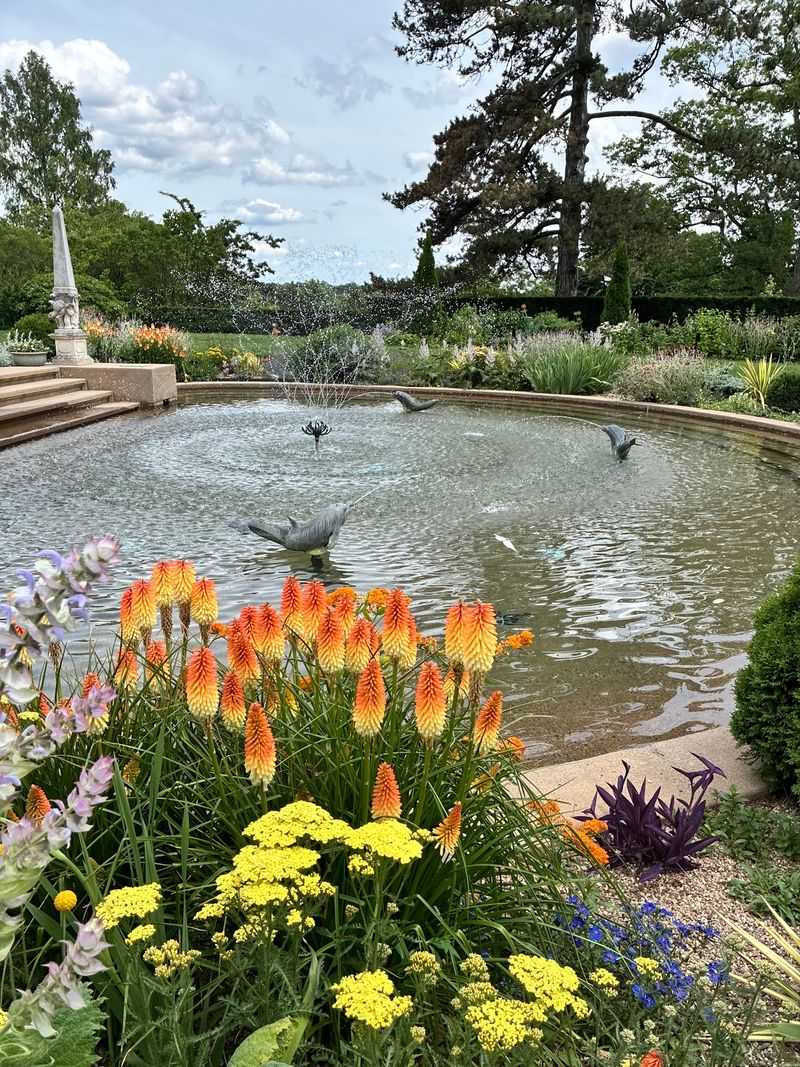
An elegant reflecting pool anchors the first terrace, catching the sky and the surrounding foliage in still water. Nearby, the Croquet Lawn hints at the leisurely afternoons once enjoyed by the estate’s residents.
Keep walking and the tidy geometry loosens into wildflower meadows. Color and texture take over, providing habitat for local wildlife and a softer, more spontaneous feeling than the sculpted areas above.
That contrast is part of the design’s charm rather than a happy accident. Italianate-inspired formality flows into open, breezy ground without any awkward seam between them.
Benches appear at useful spots, which makes lingering easy. The interplay between manicured and natural sums up the garden’s double commitment to historical preservation and caring for the living landscape across all 28 acres.
A Slice of 1920s Arts & Crafts Magic
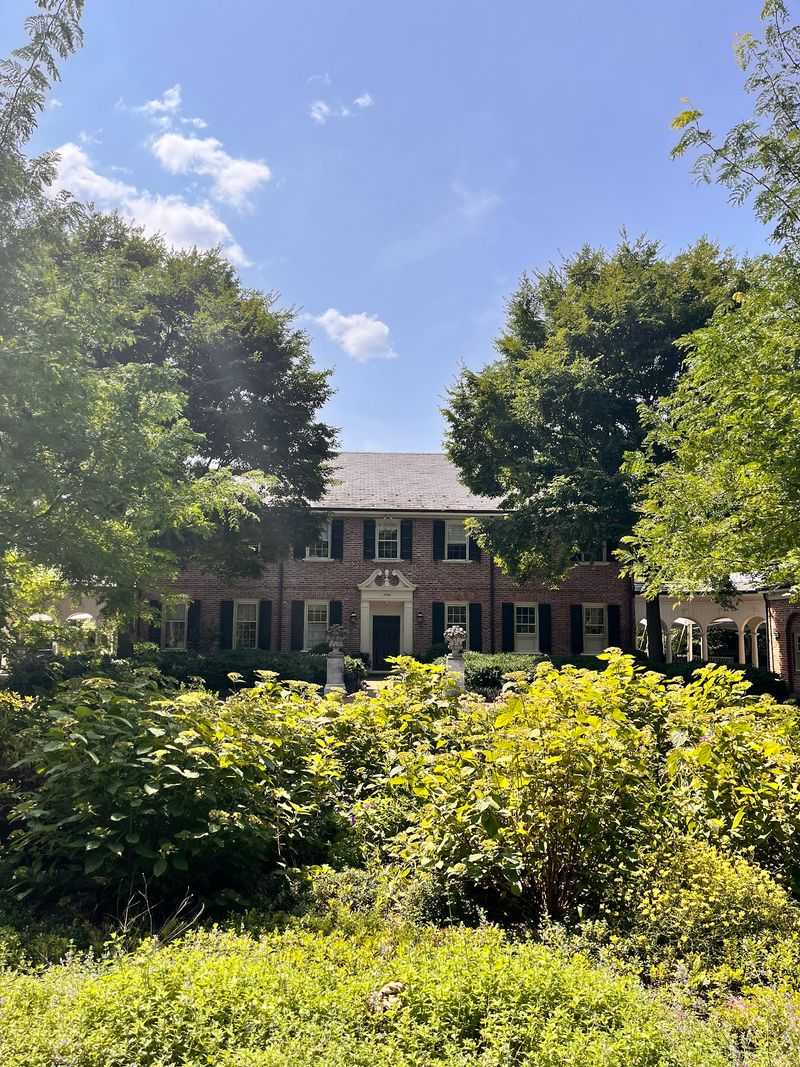
Certain corners of this garden feel like walking straight into the 1920s. Architect William Whetten Renwick shaped the original design with a blend of Italianate grandeur and the handcrafted detail that defined the Arts and Crafts movement.
Rustic stone structures carry that spirit best. Ornamental follies, built for pure visual pleasure, add a playful wink to an otherwise stately landscape.
Ornate Rookwood tiles turn up in fountains and retaining walls, bright and glazed and unmistakably handmade. Decorative pottery and wrought-iron work fill in the rest of the personality.
The Summerhouse and Teahouse, both from the 1920s, are the standouts, with stonework that seems to grow out of the hillside. Oversized chess pieces sit nearby, softening the formality with a bit of whimsy.
Plantings around these buildings include epimedium, ferns, Japanese maples, and mountain hydrangea, which gives everything a storybook mood.
Look up at the cottages near the parking area too, since their fish scale shingles and numbered ceramic tiles are quietly wonderful details.
Short Hills’ Most Magical Hidden Oasis
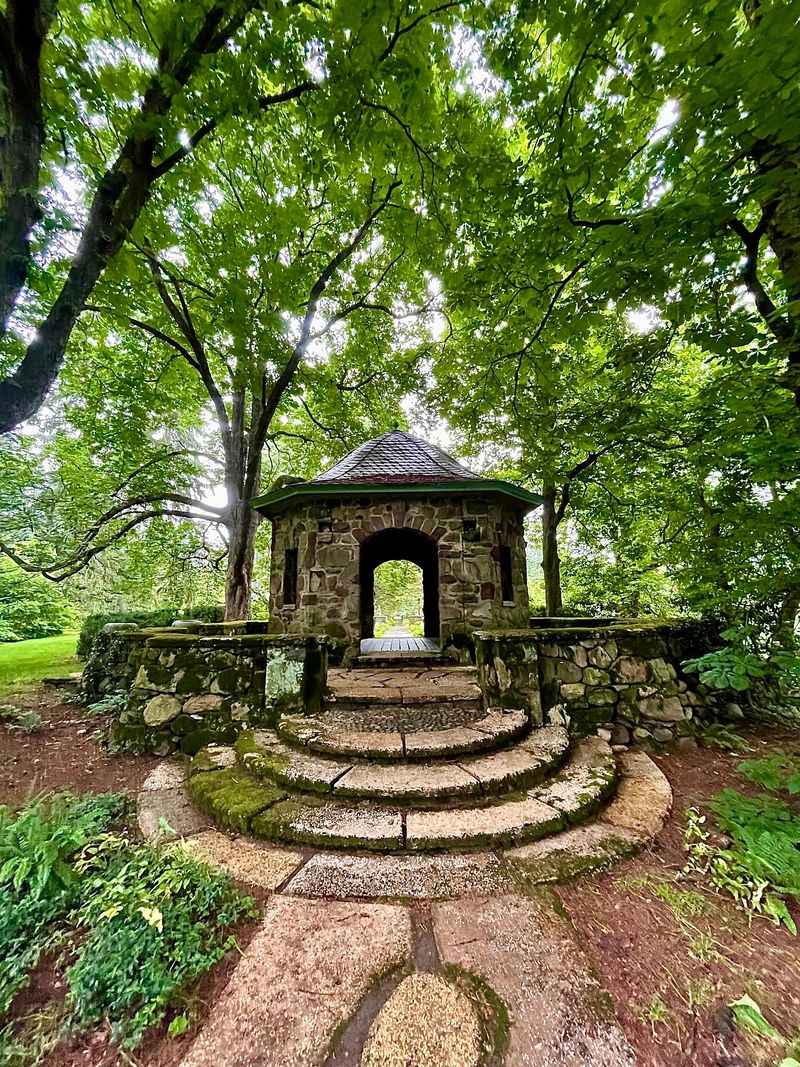
Some places feel like a secret even when they are officially open, and that describes this garden perfectly. Tucked between Old Short Hills Park and the South Mountain Reservation, the grounds sit far enough from the road that arriving feels like slipping into a separate world.
Words like enchanted hideaway and historic oasis get used often, and for once they fit. Winding paths, historic features, and thoughtful landscaping all encourage a slower pace and a deeper breath.
Layers of design history give the property its unusual personality. Formal Italianate terraces sit near moss-covered paths and rustic stone structures, and somehow the combination never feels confused.
Preserved details from the Gilded Age and Arts and Crafts periods carry much of that charm. Wrought-iron gates, decorative tiles, and whimsical sculptures keep the storybook quality alive.
Fenced chickens, geese, and beehives bring gentle motion and sound to the grounds. Visitors often leave feeling refreshed, having found beauty and history sharing the same quiet address.
Where History Blooms in Every Corner
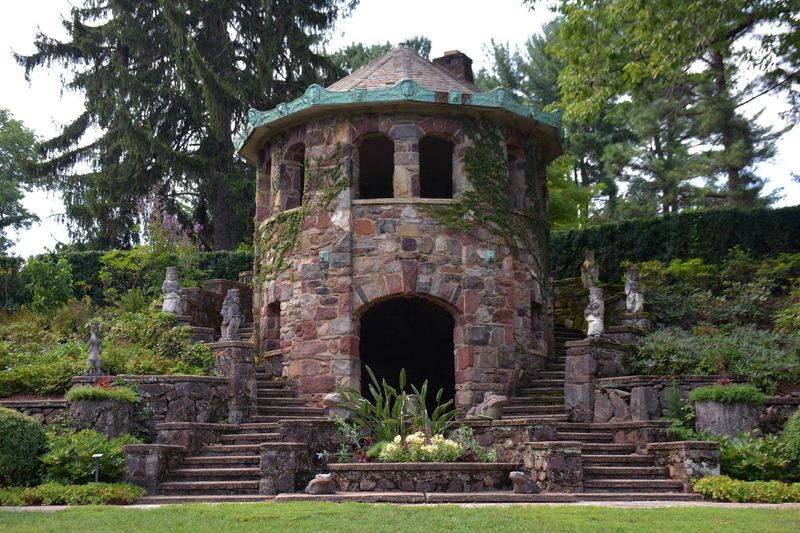
History here is not stuck behind glass, it is growing and dripping and weathering in real time. The garden traces back to the early 1900s when Joseph P.
Day built his country retreat, with the original design completed in 1911 alongside a mansion and numerous follies.
Original features from the Day era still stand. The rustic stone Teahouse and Summerhouse, majestic fountains, and wisteria-laden arbors each carry their own chapter.
Stonework in the retaining walls and pathways shows the patina of a century, evidence of skilled early 20th-century artisans. Towering London plane and spruce trees lining the allées have quietly watched every change.
Restoration work leaned on old photographs and notes to recreate plantings and repair architecture faithfully, including the multi-million dollar revival of the seven-tier Cascade.
Wandering the grounds turns up ceremonial granite hand-washing basins, oversized chess pieces, and Chinese Fu dogs.
Volunteers and staff love sharing these stories, which makes the history feel wonderfully alive rather than dusty.
One of NJ’s Must-Stroll Gardens
Recognition arrived officially in 2025, when the garden was named one of New Jersey Travel and Tourism’s One Dozen Must-Stroll Garden State Gardens. Walking the grounds makes that honor feel obvious rather than ceremonial.
The 28-acre non-profit public garden welcomes thousands of visitors a year, most drawn by the calm and the variety packed into a walkable space. Formal Italianate terraces, rustic stone grottoes, shady woodlands, and wildflower meadows keep the scenery shifting.
A self-guided garden map makes exploring easy, with numbered stops that turn a stroll into a small adventure. Staff sometimes hand younger visitors a scavenger hunt page, which reliably turns a garden walk into a treasure hunt.
Doors open Friday through Sunday from 10 AM to 5 PM, so weekend plans are the way to go. Restrooms sit near the entrance and parking is close by.
Two hours is a comfortable visit. Many people find themselves returning across seasons just to see what has changed.
Art, Nature, and a Seven-Tier Cascade
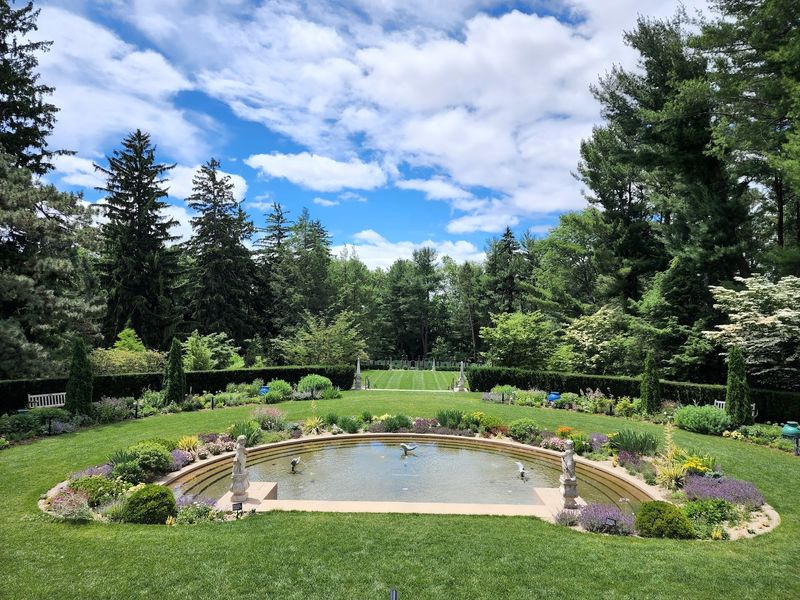
If the garden has a grand finale, the seven-tier cascade is it. Water slips down sequential basins of tile, stucco, and stone, flanked by sweeping horseshoe staircases that were clearly built for drama.
Constructed in 1916 and adapted from a 17th-century Baroque design, the Cascade was recently revitalized through a major restoration effort. Seeing it running is worth the walk downhill all by itself.
Art shows up everywhere else too. Wrought-iron gates feature ornate birds of paradise, and oversized chess pieces add a mischievous note to the formal setting.
Sculptures both classical and modern stand among the plantings like patient guardians. Custom-glazed Rookwood tiles with shell and leaf motifs decorate fountains and walls with real craftsmanship.
Together, the moving water and surrounding flora create an environment where design and nature genuinely cooperate rather than compete. The mission of connecting people with nature and the arts feels fully realized right here.
Address: 274 Old Short Hills Rd, Short Hills, NJ
