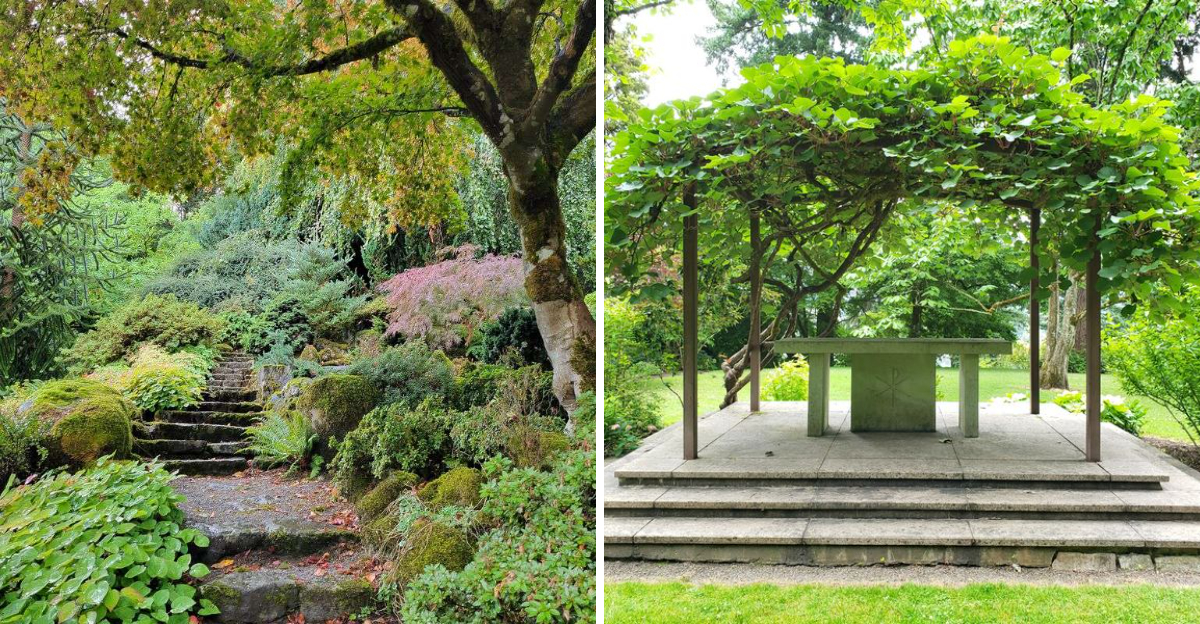
Some gardens are planted, others are built over decades by someone who couldn’t stop planting. This Oregon garden began as the private passion of one person who spent a lifetime shaping the land into what they imagined.
Now it’s open for everyone to walk through.
The paths wind along the water, past century-old trees, exotic imports, and native plants collected from travels around the world.
The manor house looks toward distant mountains, and the whole place feels like you’ve stumbled into someone’s quiet, lifelong obsession with beauty.
For decades, it belonged to a single family. Now it belongs to anyone willing to show up.
That private estate turned public garden is still free, still open, and still growing its own story. You just have to come and see it for yourself.
A Driveway That Turns Into A Garden
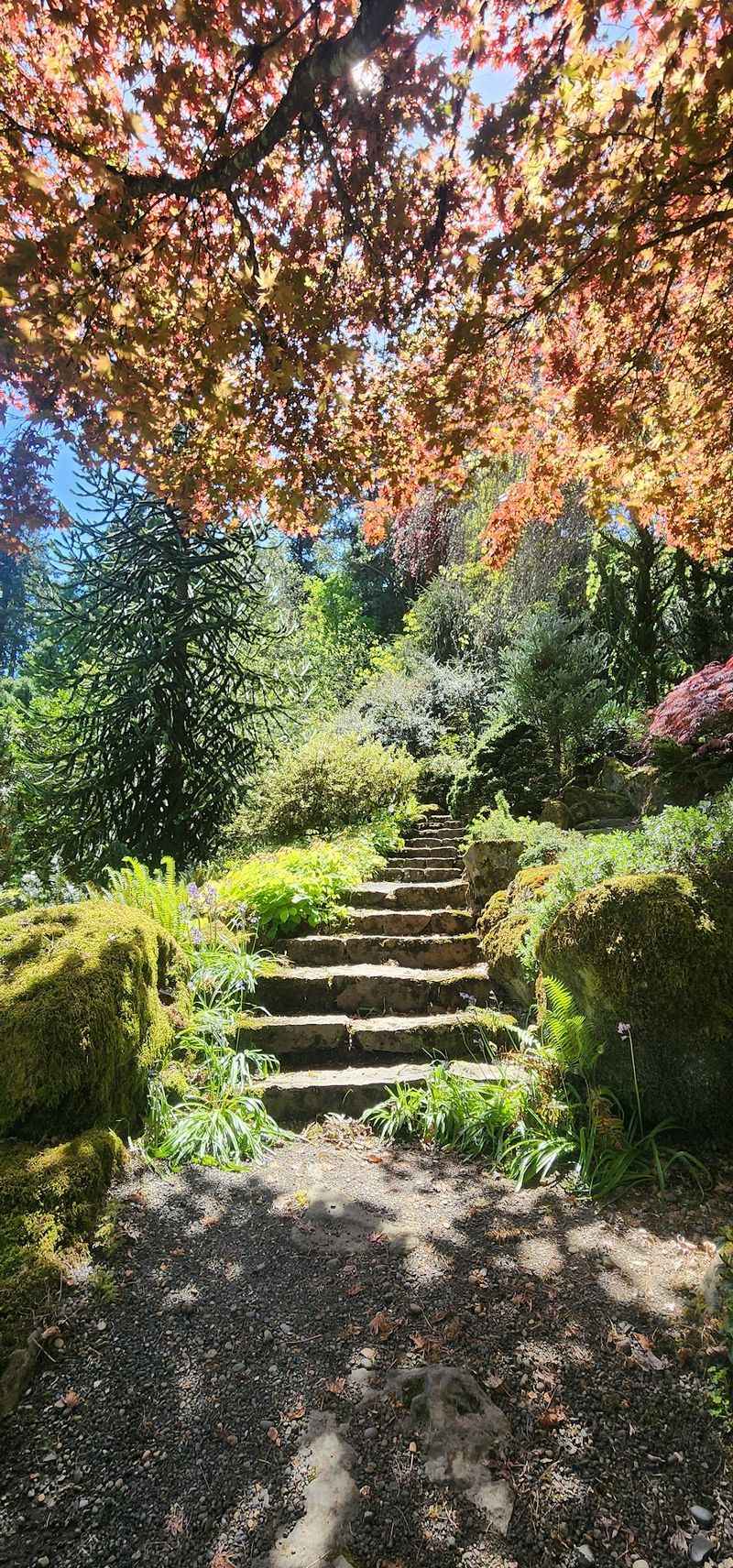
Finding the entrance is half the adventure here. The turn off Military Lane looks so residential that plenty of visitors slow down twice, convinced they have made a wrong move.
Keep going. The lane narrows, passes under big trees, and ends at a modest parking area beside the old stone house.
There is no grand gate or ticket booth, which is exactly what makes the arrival feel like a small secret being shared.
Parking is limited, so a larger vehicle can be tricky when the lot fills up. Arriving early on a weekday morning solves most of that problem, and it also means the paths are almost empty.
A small visitor area sits near the entrance, and donations help keep the grounds cared for. Worth knowing before setting out: there are no restrooms and no drinking fountains on the property.
Plan accordingly, then let the driveway do its quiet magic trick and open into thirteen acres of hillside garden.
The Stone Manor House Watching Over Everything
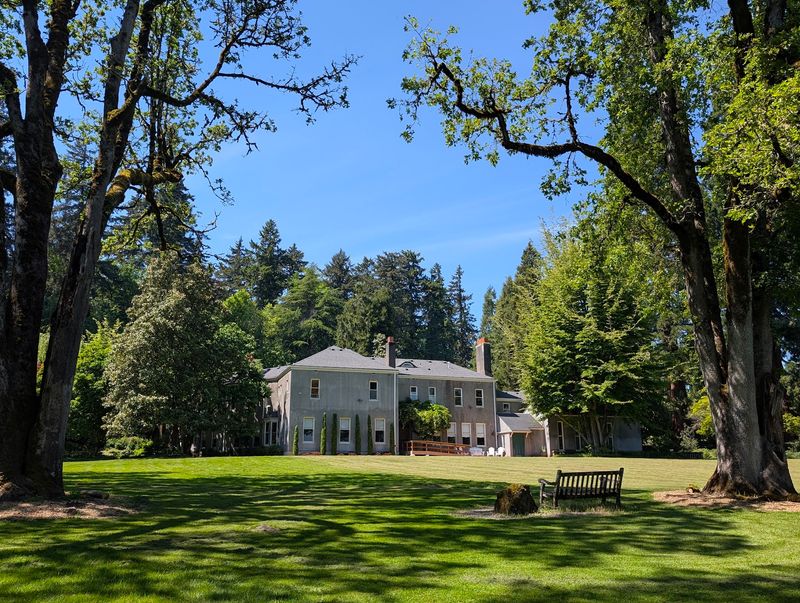
Set at the top of the slope, the old house anchors the whole property. Stone walls, steep roof lines, tall chimneys, and windows that clearly were placed to catch the river view.
The building is not open to visitors, and that is fine. Half the pleasure comes from circling the outside, peeking at the terraces, and imagining what daily life looked like when this was a working private estate rather than a public garden.
Today the grounds are cared for under the Episcopal Diocese of Oregon, which is why the atmosphere leans more contemplative than recreational. Signs make the expectations clear, and most people seem happy to follow them.
What struck me was the way the architecture and the landscape agree with each other. The stonework of the house repeats in the garden walls and steps, so nothing feels bolted on or accidental.
Start the visit here, look out toward the water, then follow the path downhill. It is the natural way in.
Willamette River Views Through The Branches
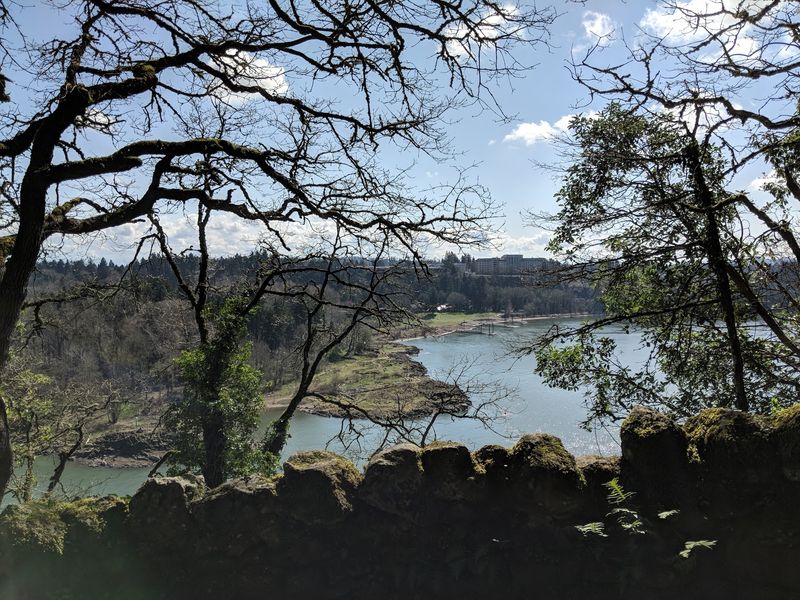
People mention the river views constantly, and once you stand on the bluff you understand why. The Willamette moves below in a wide grey-green band, half hidden by trunks and leaves, revealing itself in slices as the path bends.
Those framed glimpses are better than one big open panorama. Each opening feels earned, like the garden is deciding when to show you something.
On a clear day the far bank stacks up in layers of green, and boats occasionally slide past without much noise. In winter, with the leaves down, the water becomes a constant companion for most of the walk.
Benches sit at a few of the best spots. Sitting still for five minutes changes the whole visit, because that is when the bird sounds and the wind in the firs start registering.
Bring a light jacket even in warmer months. Wind coming up off the water has a way of finding the exposed corners of the bluff.
Meandering Paths Built For Slow Walking
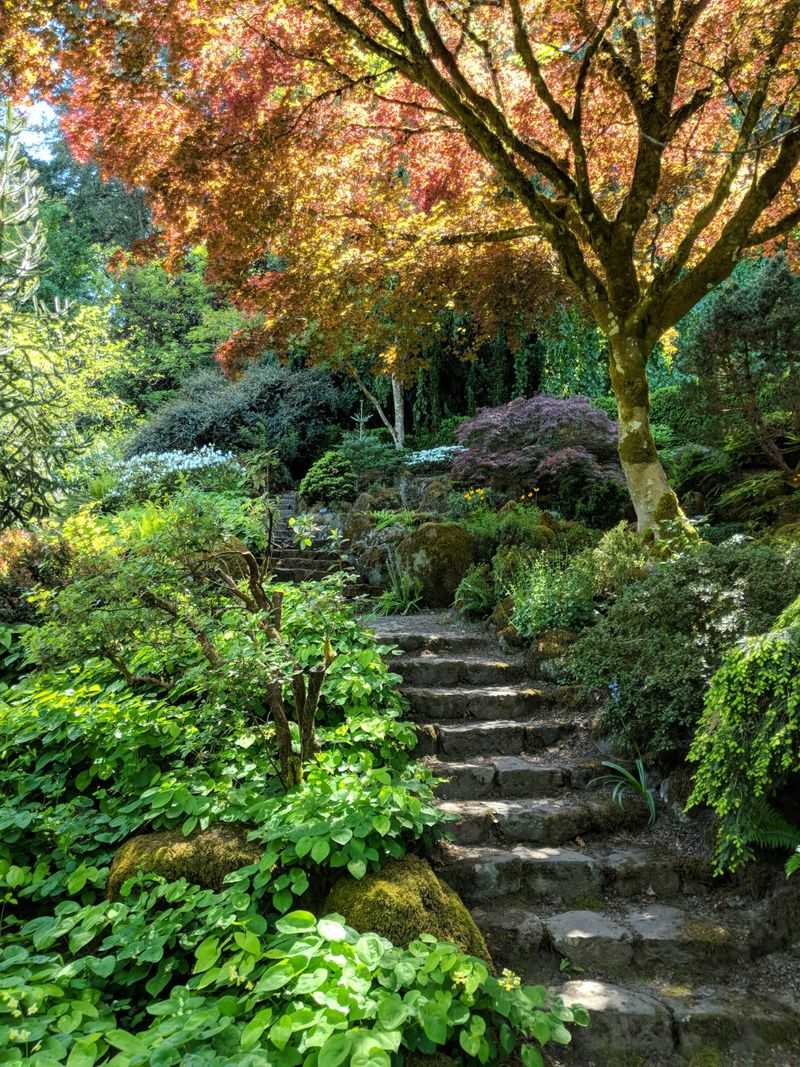
Nobody rushes through here, mostly because the layout refuses to let you. Paths loop, split, and double back across the hillside in a network that feels intricate without ever getting confusing.
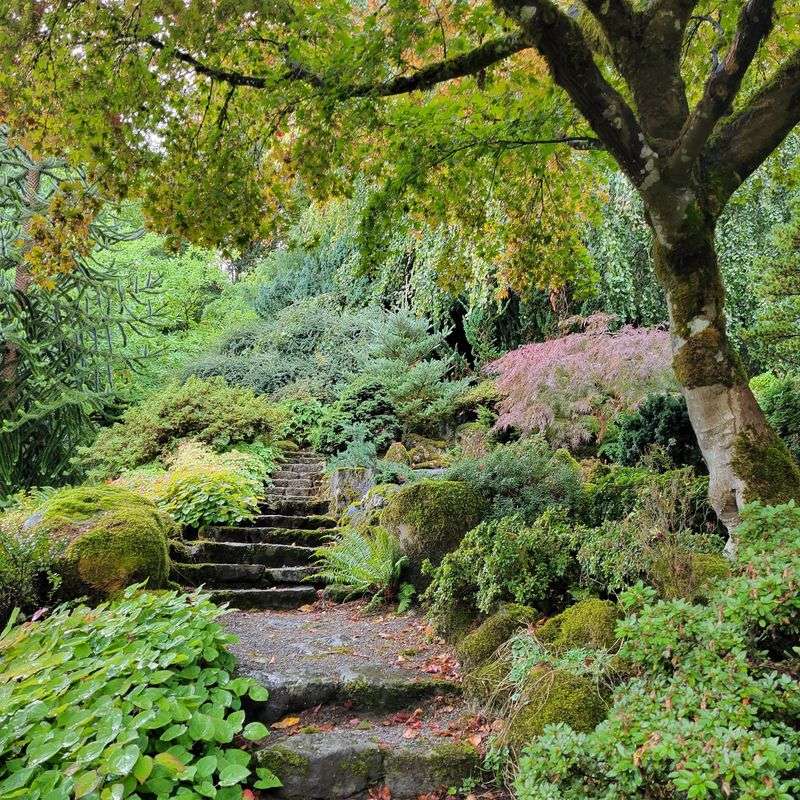
Some sections are packed gravel, others are stone steps set into the slope, occasionally slick with moss after rain. A few stairs are uneven enough that watching your footing matters more than watching the scenery.
Leave the fancy shoes at home and wear something with grip. That single choice makes the whole hour more comfortable.
The full network can be covered in about an hour at a relaxed pace, though it stretches easily if you stop often. And you will stop often.
What I liked most was how the route keeps changing elevation. One moment you are level with treetops, then a short descent puts you among ferns and shade plants with the river closer than before.
Trails stay well maintained, with the occasional patch showing its age.
Magnolias, Rhododendrons And Old Giants
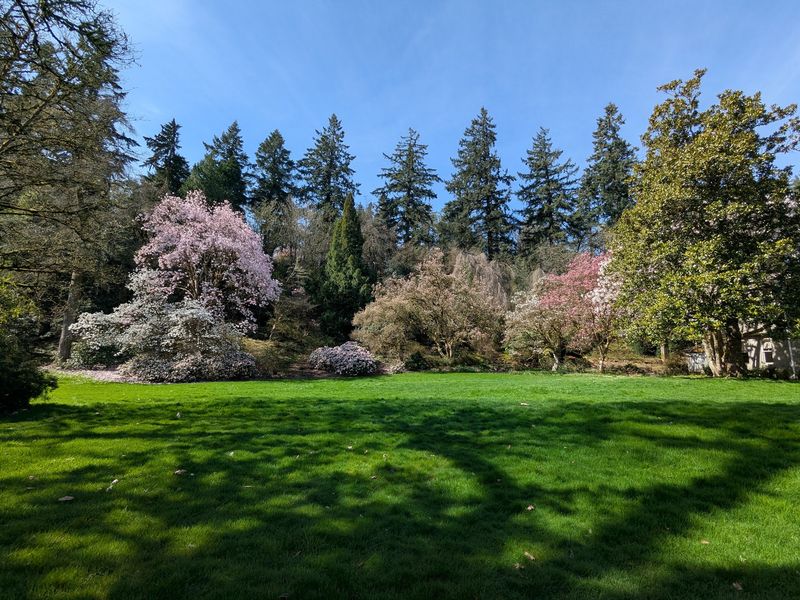
Serious plant lovers come here for the trees, and the trees deliver. Enormous magnolias spread wide over the lawns, some with trunks thick enough to make you stop and stare.
Rhododendrons are the other headline act. Heritage plantings have grown tall and slightly wild, and in spring they explode into color along the paths in pinks, reds, and creamy whites.
Beyond the famous names, there is a mix of familiar shrubs and genuinely unusual specimens. Hellebores nod near the ground in the colder months, quietly flowering when almost nothing else bothers.
The gardeners working the grounds are approachable and clearly know their collection well. A short question about a plant can turn into a small lesson if they have a moment.
Something is always coming into bloom or fading out, which means no two visits match. That unpredictability is a feature.
Repeat visitors notice shrubs they somehow missed before, purely because of timing and weather shifting the schedule each year.
Quiet Rules That Keep The Peace
A few visitors are surprised by the list of restrictions posted near the entrance. No dogs, no picnics, no games on the lawn, no weddings, and no professional photo shoots.
It clicks once you spend twenty minutes here. The whole point is a peaceful walk, and the guidelines exist to protect fragile plantings and the hush that makes the place work.
Nobody polices you aggressively. Most people simply lower their voices without being asked, the way they might inside a library.
Because it remains a privately held garden that welcomes the public, the rules also reflect the wishes of its caretakers. Respecting them keeps the gates open for everyone else.
Practical prep helps: eat before arriving, use a restroom beforehand, and leave the picnic blanket in the car. Water bottle in a bag is smart since there are no fountains.
Trading a few conveniences for near-total quiet felt like a fair deal to me, and honestly a rare one this close to the city.
Weekdays Only, And That Changes Everything
Here is the detail that trips up first-timers. The garden opens Monday through Friday from 8 AM to 5 PM and stays closed on Saturday and Sunday.
Weekend plans need rearranging, but the payoff is real. On a Monday visit it is entirely possible to pass only two or three other people the whole time.
Mornings are the sweetest window. Light comes in low across the river, dew still sits on the moss, and the birds are noticeably busier than they are by midday.
Because the schedule filters out the weekend rush, the garden never develops that busy-attraction energy. No lines, no crowd noise, no jostling for a photo spot.
Anyone working a standard week might need to use a day off or a slow afternoon. Worth it.
Checking the official garden website before driving out is a good habit, since seasonal changes and occasional closures can shift things. A quick look saves a wasted trip.
Autumn Color On The Hillside
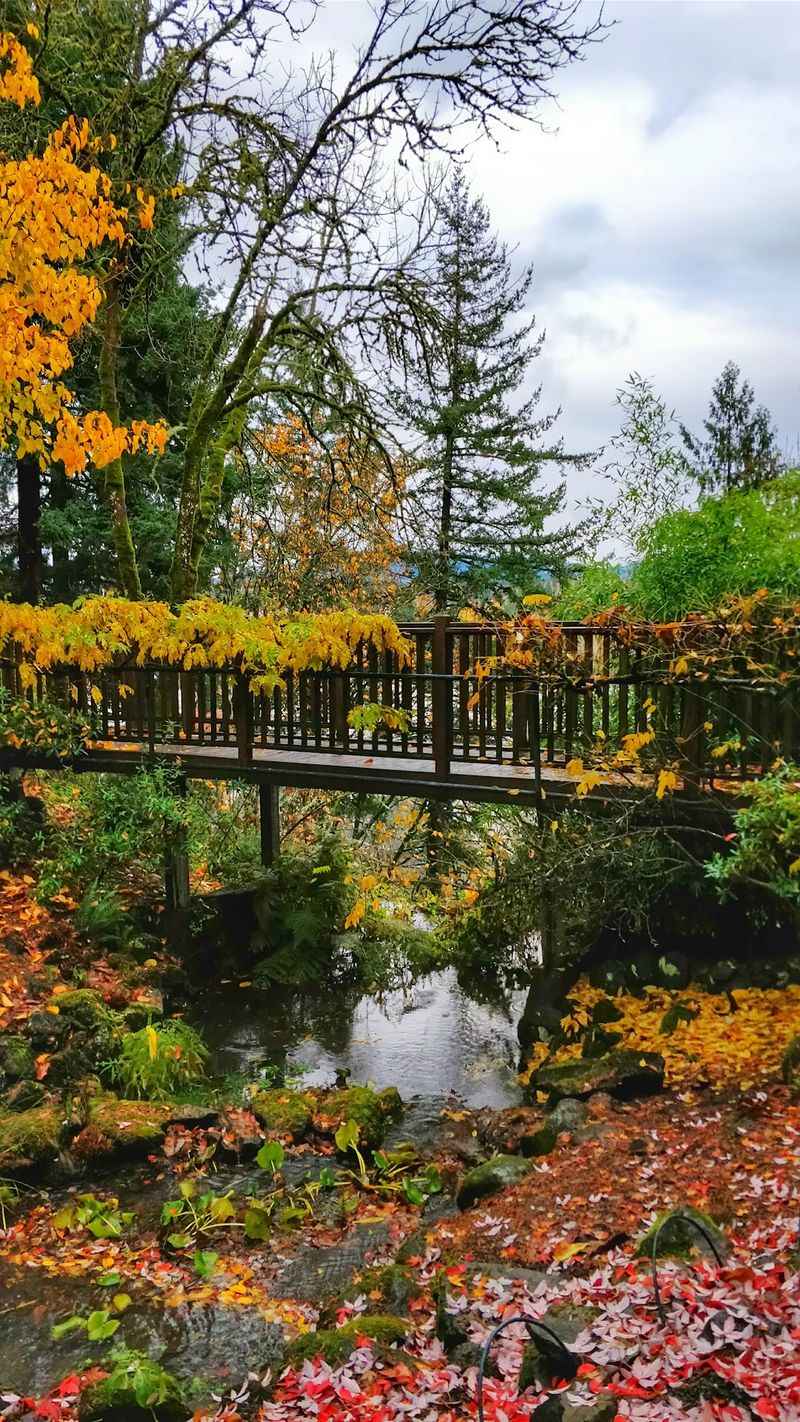
Fall might be the underrated season here. Maples and other deciduous trees turn the slope into layers of gold, rust, and deep red, all set against dark evergreens.
Flowers thin out considerably by then, so anyone arriving purely for blooms may feel a little short-changed. The trade is foliage, and it is spectacular.
Leaves collect on the stone steps and paths, softening the sound of footsteps. Rain makes them slippery, which is one more vote for shoes with decent tread.
November visits often reward you with clearer river views as the canopy thins. The Willamette becomes a steady presence rather than an occasional glimpse.
Winter has its own charm too. One visitor described a rainy holiday-season walk that ended with a rainbow over the water and a salamander crossing the trail, which sums up the offbeat magic of the place.
Cold, damp, nearly empty. Somehow that combination suits this garden better than a bright summer afternoon does.
Rock Plantings And Clever Stonework
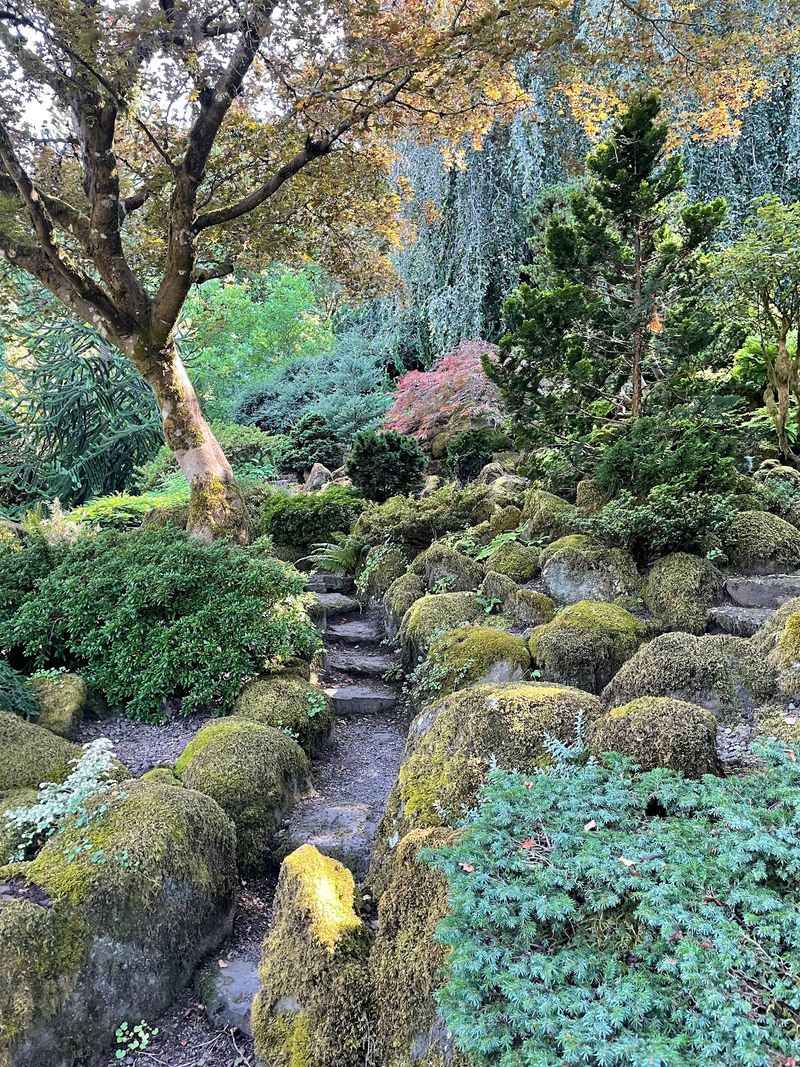
Gardeners with a design eye tend to linger over the stonework. Retaining walls, crevice plantings, and low rock beds show how the original layout worked with the natural contours of the hillside instead of fighting them.
Small alpine and rock plants tuck themselves into gaps between stones. Look closely and there are tiny leaves and blossoms surviving in cracks barely wide enough for a finger.
It is a useful place to steal ideas. Anyone dealing with a sloped yard at home will find practical examples of drainage, terracing, and plant placement.
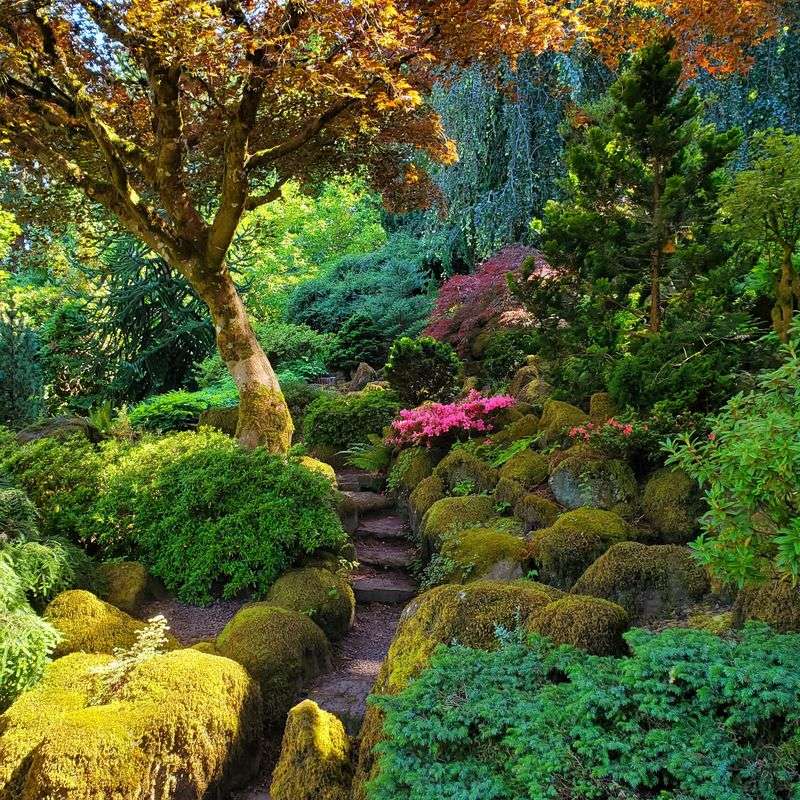
Moss covers a lot of the older stone, giving it that soft green fuzz that only decades of Oregon rain can produce. Nothing looks brand new, and that is the appeal.
Bring a notebook if you are the note-taking type. I ended up photographing wall details instead of flowers for a solid ten minutes.
The transition between built structures and wild hillside is remarkably smooth throughout.
Why Locals Call It A Hidden Gem
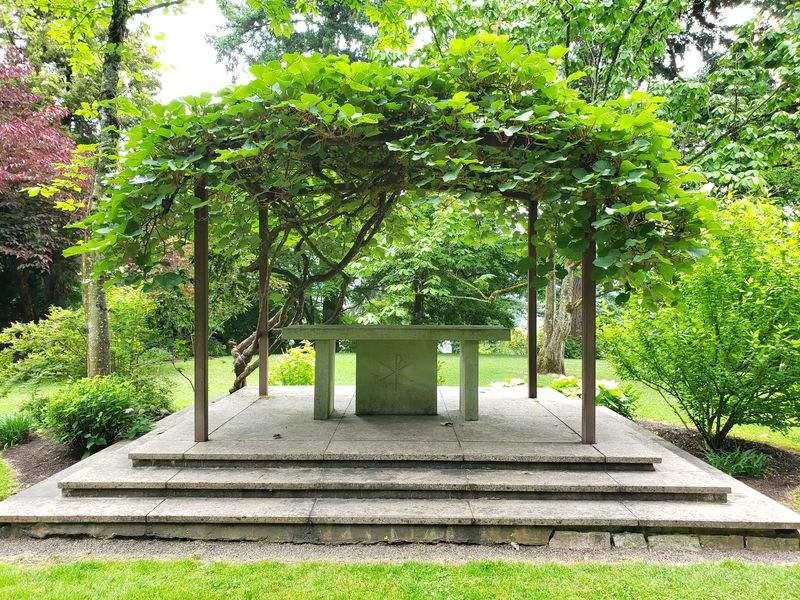
Tucked into a quiet residential pocket between Portland and Lake Oswego, this garden manages to stay off most visitor itineraries. That obscurity is precisely what keeps it lovely.
Thirteen acres sounds small until you are inside it. The grounds feel larger than expected, with enough turns and levels that an hour disappears quickly.
What keeps people returning is the sense of discovery. The plants shift week to week, the light changes with the season, and something new always turns up along a path you thought you knew.
Combine a visit with a stroll through nearby Lake Oswego or a stop in the Sellwood area afterward, since there are no food options on site. That makes an easy half-day plan.
Leaving a donation supports the ongoing care of the grounds, which is worth doing given how well maintained everything is.
Go once and you will understand the loyalty. Go twice in different seasons and you will start recommending it yourself.
Address: 11800 S Military Ln, Portland, Oregon
