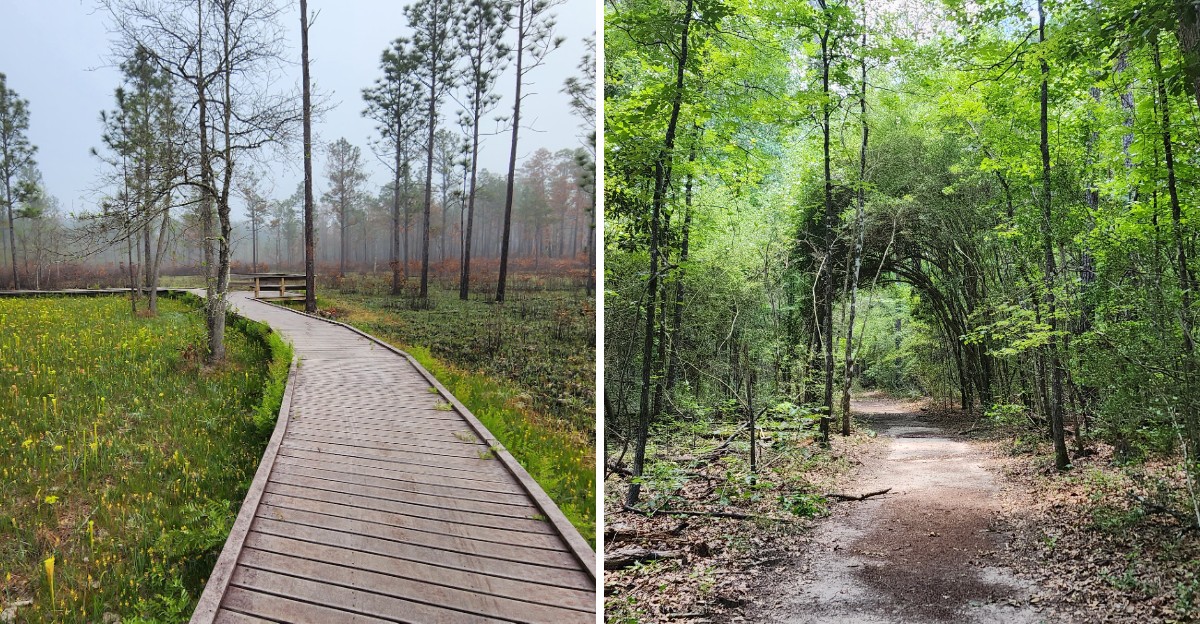
A walk through an old-growth forest feels different from a walk through just about anywhere else, because the trees are taller, the air is cooler, and the whole place carries a sense of permanence that is hard to find. This boardwalk trail delivers that experience without asking for much in return.
The path is flat, well maintained, and just one mile round trip, which means it works for grandparents, young kids, and anyone who wants the peace of a forest without the effort of a rugged hike, and the old-growth trees that line the route have been standing for longer than most of us can imagine.
It is the kind of walk that slows your breathing, clears your head, and reminds you that not every outdoor experience needs to be a challenge, because sometimes the best thing you can do is take a slow stroll and let the quiet do its work.
Bring a camera and a comfortable pair of shoes, and leave the rest behind.
A Quiet Corner of America’s Ark
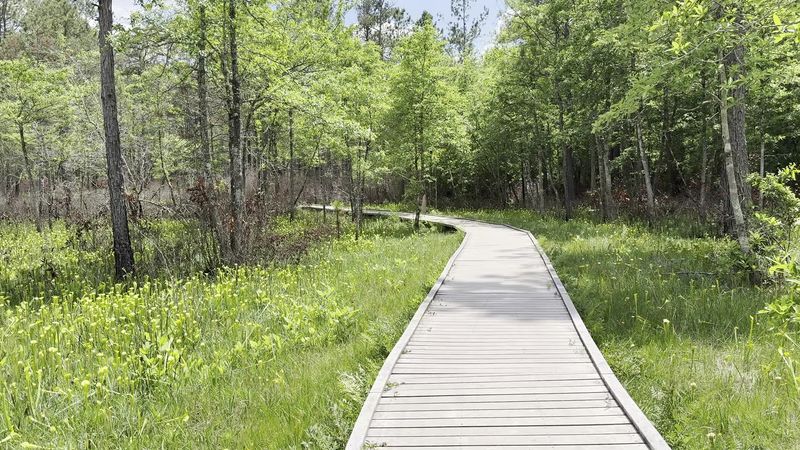
Some places earn big nicknames, and Big Thicket carries one of the best. People call it America’s Ark because so many kinds of life crowd into one region here.
Nine different ecosystems meet in this part of Southeast Texas, which is a pretty wild thing to say out loud.
Think about it for a second. Longleaf pine forests sit near cypress-lined bayous, while soggy pine savannahs share space with dry, sandy ground that almost feels like a desert.
More than 1,300 plant species grow across the preserve, along with over 300 kinds of birds, dozens of mammals, and a long list of reptiles, amphibians, and fish.
The Pitcher Plant Trail sits inside the Turkey Creek Unit. That part of the preserve is one of the most developed and easy to reach, so it makes a smart first stop for anyone new to the area.
Fans of the trail often say the best part is how much variety shows up in such a short loop. Tall pines, open bog, shady hardwoods, and busy insects all appear within about a mile.
That packs a lot of nature into a small walk.
For families, this matters. Kids who get bored on long hikes can see something new every few minutes here, and adults get a peek at a landscape that feels nothing like the rest of Texas.
Tip for first-timers. Stop by the visitor center before heading out, since the rangers share maps, trail updates, and great advice about what is blooming.
Paved Path, Then Wooden Planks
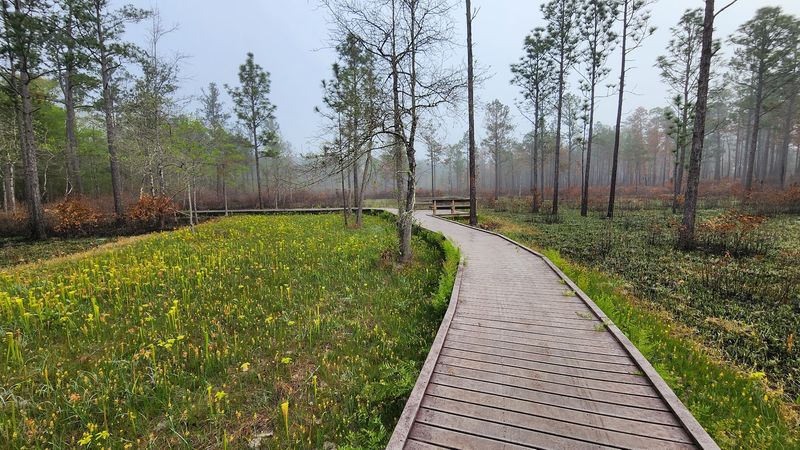
Nobody needs fancy hiking boots for the start of this trail. The first stretch is smooth pavement, and after roughly a quarter mile it turns into a sturdy wooden boardwalk raised above the wet ground.
That boardwalk is the star of the show. It keeps feet dry and protects the delicate bog plants from being stepped on, which is a win for both walkers and wildlife.
The first part of the trail, around 0.3 miles, is wheelchair and stroller friendly, so nearly everyone can reach the famous pitcher plant field.
Here is a fun surprise. The best views are not far at all, and many visitors reach the thickest patch of pitcher plants in about five minutes.
Short walk, big reward.
Past the boardwalk, the trail changes its mood. It becomes a dirt path covered in leaves and pine needles, with a few tree roots poking up here and there.
After rain, this section can get muddy and slippery in spots, so shoes with a good grip help a lot.
The full loop runs about one mile, though some measurements stretch it a touch longer to around 1.05 miles. The ground stays flat the whole time, with very little climbing.
Getting there takes a little planning. The trailhead sits at Co Rd 4850, Warren, TX 77664, reached by a well-kept dirt road that a regular car can handle.
Heavy rain can turn that road sloppy, so check the weather first and drive carefully.
Scorched Bark and Tall Survivors
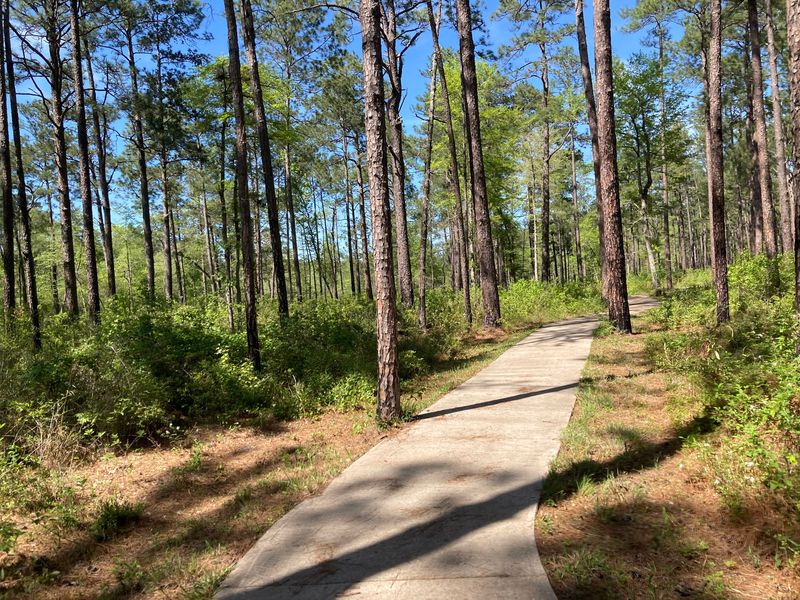
Black marks on tree trunks might look alarming at first. Along this trail, though, those scorch lines tell a hopeful story about how the forest stays healthy.
Longleaf pines tower over the paved section, and many wear dark burn scars near their bases. Park staff set careful, planned fires here every few years, called prescribed burns.
These low fires clear away dead leaves and thick brush from the forest floor, which gives new plants room and sunlight to grow.
Longleaf pines are tough customers. Their thick bark lets them shrug off these gentle fires, and the whole ecosystem actually depends on flames showing up now and then.
Long before people arrived, lightning did the same job naturally.
Right after a burn, the trail can look a little rough and bare. Give it a few weeks.
Ferns spring back, grasses turn bright green, and pitcher plants often burst into bloom even after a March fire, which feels like watching the forest hit a reset button.
Walking under these giants is its own treat. The back half of the loop holds some especially grand pines, with trunks that shoot straight up and needles that whisper when the breeze moves through.
Look up. Then look up some more.
For curious minds, this spot is a living science lesson. Point out the scars to kids and explain that fire here works more like a gardener than a villain.
It is a simple way to show how nature cares for itself.
Plants With an Appetite for Bugs
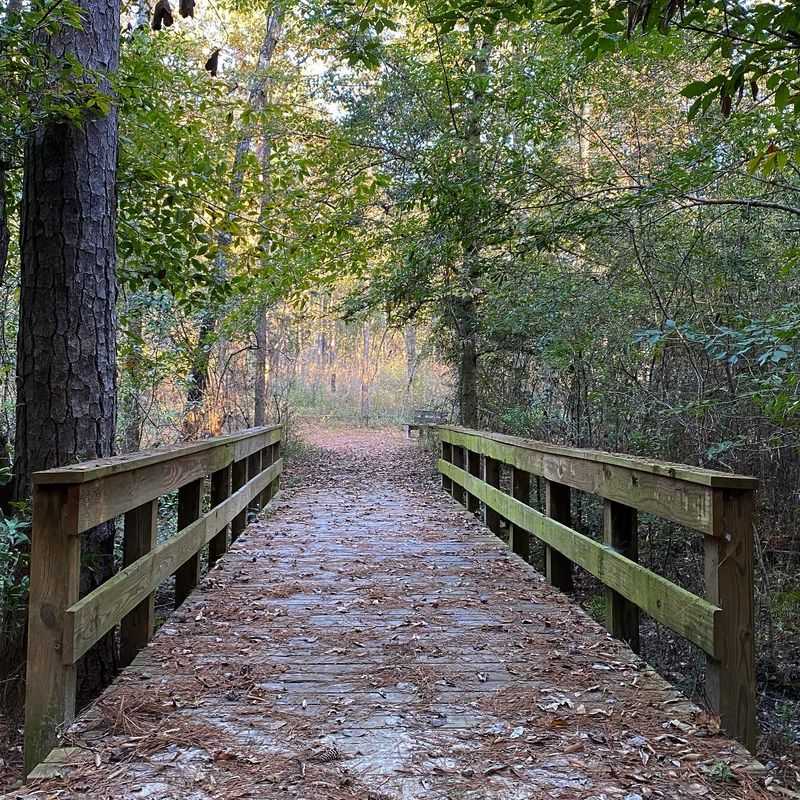
Plants that eat insects sound like something from a movie. Here, they are real, and they grow by the hundreds right beside the boardwalk.
The pale pitcher plant is the main attraction. Its leaves form tall, vase-shaped tubes that lure bugs with bright color, sweet nectar, and a tempting smell.
Once an insect lands on the rim, a slick waxy surface and downward hairs send it sliding into the pitcher, where digestive juices break it down.
Why go to all that trouble? The soggy, acidic soil here holds very few nutrients, so these plants get what they need by catching dinner instead.
Clever, and a little creepy.
Pitcher plants are only part of the lineup. Big Thicket is home to four of the six types of carnivorous plants found in North America, including sundews, butterworts, and bladderworts.
Sundews are tiny rosettes covered in shiny, sticky drops that look like morning dew, and they are easy to miss without a slow, careful look.
Butterworts use greasy, sticky leaves to trap small insects. Bladderworts often live in water and use tiny trapdoors that suck in swimming prey faster than the eye can follow.
A good way to enjoy this part is to play a little game. Challenge everyone in the group to find a sundew first, since spotting one feels like winning a prize.
Just remember to look without touching, because these plants are protected and fragile.
Benches Made for Doing Nothing

Every good walk deserves a place to sit, and this boardwalk delivers. A small patio area with benches waits along the route, perfect for a pause that has no schedule at all.
Sitting still here brings out details that are easy to miss while moving. The rustle of pine needles, the buzz of insects over the bog, and the chirps of cardinals start to blend into a soft background hum.
Butterflies drift by like they have nowhere to be, which is exactly the right attitude.
This is a great spot for quiet hobbies. A journal, a sketchbook, or a camera with a zoom lens fits right in.
The pitcher plants grow close to the boardwalk, so their veined tubes and curved hoods make excellent subjects for drawings or photos.
Birdwatchers enjoy this trail too. Many birds can be heard even when they stay hidden in the trees, so a pair of binoculars and a little patience go a long way.
Try closing both eyes for a minute and counting how many different calls come through.
Peace does come with a small catch. Mosquitoes love this wet habitat, and some visitors report them biting right through clothing.
Bug spray is not optional here, so pack it and use it before leaving the car.
A trailhead area also offers a simple restroom, a trail map, and a picnic table. That makes it easy to turn a short walk into a slow, relaxing half day outdoors.
Yellow Blooms and Changing Seasons
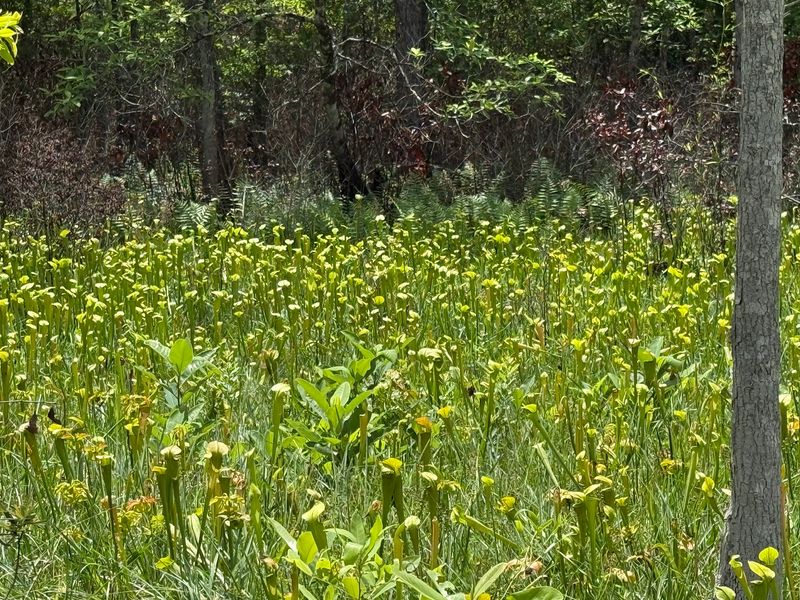
Timing a visit can change the whole experience. Spring is the showstopper, especially from late March through April, when the pale pitcher plants send up big yellow flowers above the bog.
Those blooms look almost like little lanterns nodding over the green. In early spring the pitchers themselves are still fairly small, but they keep growing and reach full size by summer and early fall.
Late spring can bring thousands of plants spreading in every direction, a sight that tends to leave people grinning.
Spring also means more wildflowers and the return of migrating birds. The forest wakes up fast, and the trail gets noisy in a cheerful way.
Summer brings tall, dramatic pitchers, but it also brings heavy heat and humidity. Most of the trail has shade from tall trees, yet a July walk can still wear people out quickly.
Go early in the morning, carry plenty of water, and wear sunscreen.
Autumn feels cooler and more relaxed, with October and November offering comfortable walking weather. The pitcher plants start to dry and fade as they get ready to rest for winter.
Winter itself is quiet and mild, a nice time for peaceful strolls and easy birding.
No single season is wrong. Each one shows a different side of the same small bog, so returning at different times of year feels like visiting a brand new place.
Where the Loop Keeps Going
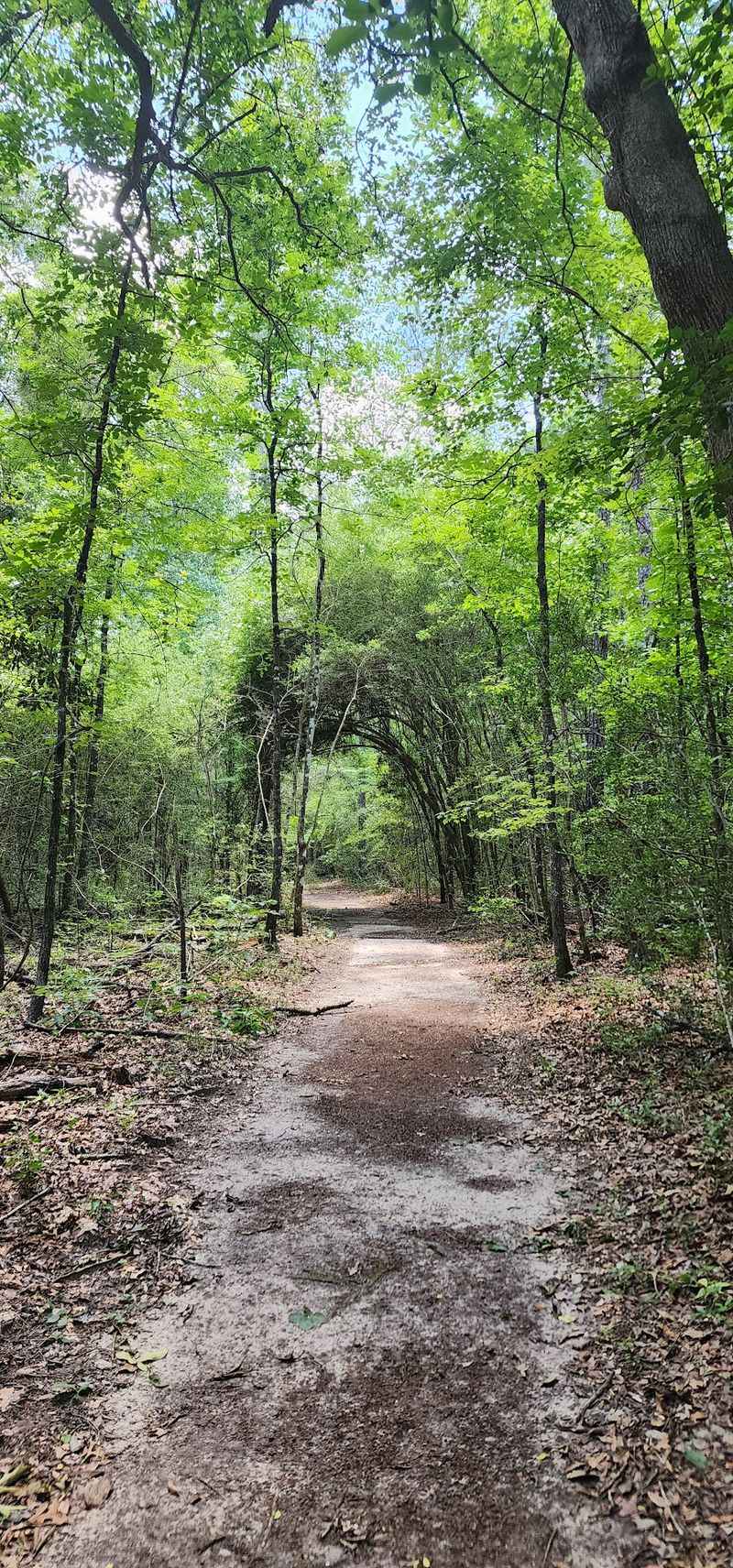
Once the boardwalk ends, the adventure does not. The path drops back to earth and winds through a shadier forest of mixed hardwoods and pines, giving the walk a wilder, woodsy feel.
This section is where small surprises pop up. Visitors have spotted busy colonies of leaf cutter ants carrying bits of green along the ground, which is oddly fun to watch.
Native ferns, mushrooms, and wildflowers line the edges.
A friendly warning belongs here too. Snakes live in this forest, including copperheads, so keep eyes on the trail and stay on the path.
Watching the ground is simply part of the deal.
For bigger plans, the trail links up with the longer Turkey Creek Trail. The Turkey Creek Unit holds more than 20 miles of trails, so hikers can stretch a morning stroll into a full day.
Two loop options branch into the surrounding woods, and one heads all the way back to Turkey Creek itself.
The wider preserve offers even more. Paddling on calm waterways, birding, and ranger-led programs all add fresh ways to explore.
Backcountry camping is possible as well, though campers must set up well away from the trail, so research the rules first.
Dogs are welcome too. Keep them on a leash no longer than six feet at all times, both for their safety and for the wildlife.
A happy pup sniffing pine needles is a pretty great sight.
A Legacy Worth Protecting
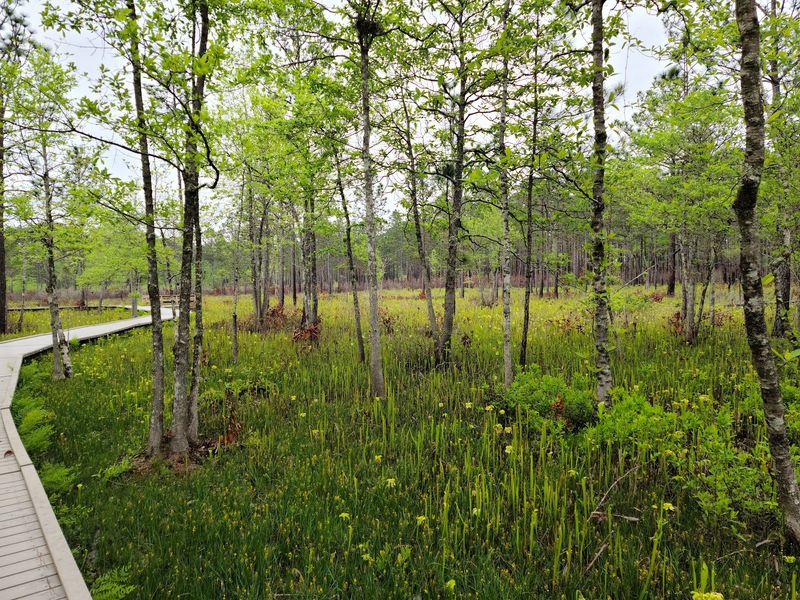
Back in 1974, Big Thicket became one of the very first national preserves in the United States. That was a bold move at the time, a way of saying this tangled, bug-filled, beautiful forest deserved protection.
The world noticed. In 1981, UNESCO named Big Thicket a Biosphere Reserve, which recognizes places with special biodiversity and a strong link between people and nature.
Not bad for a patch of Texas woods.
History adds weight to every step. The Big Thicket once covered millions of acres, and today the preserve protects only a fraction of that original wilderness.
Every pitcher plant along the boardwalk is part of what survived.
Visiting here does not require a ticket, since the preserve has no entrance fee and the parking is free too. The trail area stays open all day, every day, though daylight is the safest and most enjoyable time to go.
Being a good guest keeps this place special. Stay on the boardwalk and marked paths, pack out all trash, and leave the plants exactly where they grow.
Small choices add up in a fragile bog.
For anyone searching for a calm, easy walk that still feels meaningful, this trail fits beautifully. It offers flat ground, fresh air, strange and wonderful plants, and a real sense of how precious wild places can be.
One mile, round trip, and it might just become a favorite tradition.
