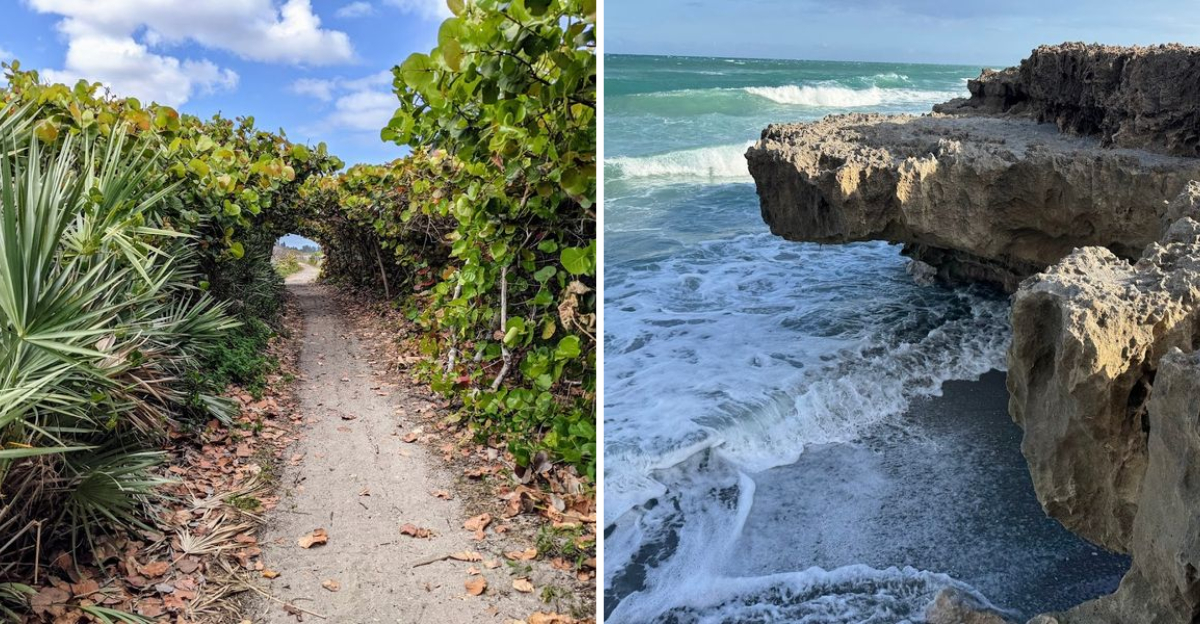
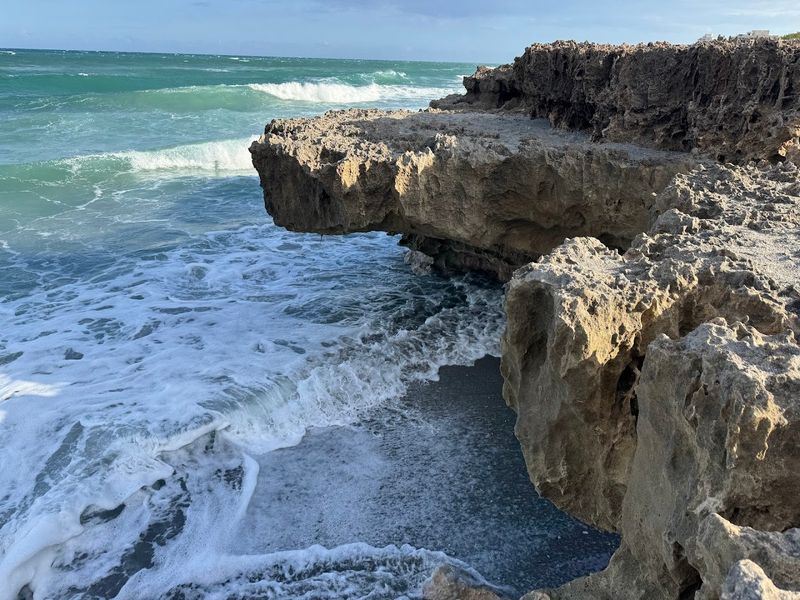
Jagged limestone shoreline stretches out like something from another world, raw and ancient against the vivid teal water crashing at its edges. That is what greets you at this Florida preserve, a place where the sound alone stops you mid-step.
That deep, hollow boom when a wave forces itself through a crack in the rock and shoots saltwater high into the air feels dramatic, almost theatrical, like nature decided this stretch of coastline deserved its own show.
I stood at the edge and watched the spray catch the sunlight, the water exploding upward with every wave, and I forgot I was still in Florida.
The preserve sits along the Atlantic coast, managed with care across acres of ecologically rich land, and the whole place has a raw, untamed energy that is hard to find on this coast. If you have never seen a beach that looks nothing like the postcard version, this is the one to put on your list.
The Anastasia Limestone Shoreline That Rewrites What a Florida Beach Looks Like
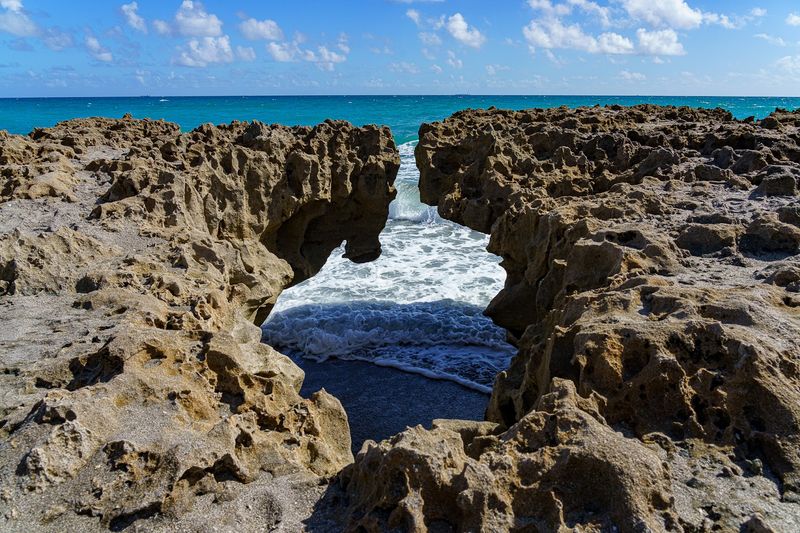
Most people picture powdery white sand when they think of a Florida beach. Blowing Rocks Preserve throws that image out completely.
The shoreline here is dominated by Anastasia limestone, also called coquina, a sedimentary rock packed with ancient shell fragments, bits of coral, and tiny marine fossils formed during the Pleistocene Epoch roughly 125,000 years ago.
This is the largest exposed section of Anastasia limestone on the entire Atlantic coast of the United States. That fact alone makes it worth the drive.
The rock surface is pitted and textured, full of small burrows, ledges, tide pools, and caves carved out by centuries of wave action.
Look closely and you can spot fossilized clam and oyster shells embedded right in the stone beneath your feet. It is genuinely like reading a page from Earth’s geological diary.
Scientists still debate exactly why such a massive outcropping of this rock is exposed here and not buried beneath sand like most of the coast. The mystery adds something to the experience, a sense that this place is still revealing its secrets.
No other beach in Florida quite matches this raw, prehistoric energy.
The Natural Fountain Phenomenon That Can Shoot Water 50 Feet Into the Air
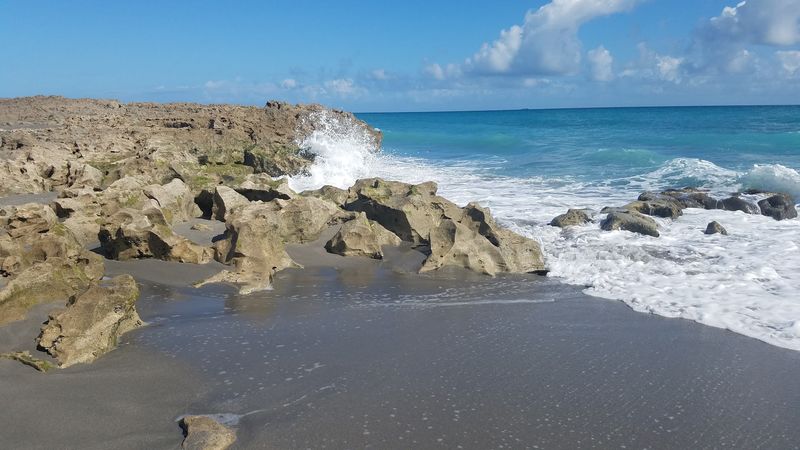
The preserve did not get its name by accident. When rough ocean swells roll in at high tide, something extraordinary happens along this rocky shoreline.
Waves slam into the jagged limestone, compress through narrow crevices and blowholes, and send columns of saltwater erupting upward, sometimes reaching heights of up to 50 feet.
The mechanics are understood well enough: pressure builds, water finds the path of least resistance, and the rock acts like a natural nozzle. What scientists have not fully explained is why such a significant limestone outcropping exists here in the first place, making the whole spectacle feel just a little bit unexplained.
Winter months are the best time to witness this, when Atlantic swells are bigger and the ocean is more restless.
Timing your visit around high tide is key. Check a tide chart before you go, because on a calm summer afternoon the rocks simply sit there looking dramatic but quiet.
On the right day, though, the blowing rocks effect is genuinely jaw-dropping. The sound alone, that hollow crack followed by a rushing hiss of spray, is something you feel in your chest.
Plan ahead and the payoff is unforgettable.
The Teal and Turquoise Water That Does Not Belong in Florida
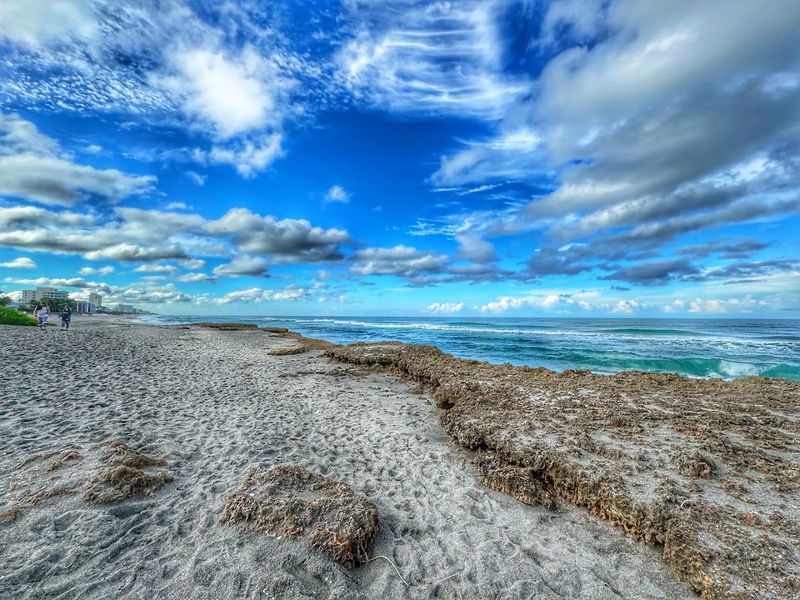
One of the most common reactions from first-time visitors is pure disbelief at the color of the water. The ocean here runs in shades of deep teal and turquoise that feel more Caribbean than Atlantic Florida.
On a clear day, the contrast between the dark limestone and that luminous blue-green water is almost surreal.
The clarity has a lot to do with the rocky bottom and the relatively undisturbed nature of the preserve. There are no large resort developments nearby, no heavy boat traffic churning up sediment.
The water stays remarkably clear, especially during calmer conditions when you can see straight down through it from the rock ledges above.
Photographers absolutely love this spot, and honestly it is easy to understand why. The combination of ancient black rock, white sea spray, and vivid teal water creates a scene that needs very little editing.
Several visitors have compared the color to Turks and Caicos, which is a bold comparison, but not entirely wrong on the right day. If you come expecting the murky greenish water typical of much of Florida’s east coast, prepare to be genuinely surprised by what you find here.
The Four Sea Turtle Species That Call This Coastline Home
Beneath all the geological drama, Blowing Rocks Preserve is quietly one of the most important sea turtle nesting sites on Florida’s Atlantic coast. Four species use this shoreline: Loggerhead, Green, Leatherback, and Hawksbill sea turtles.
That variety in one relatively small stretch of beach is genuinely rare.
The preserve’s protected status means the beach stays dark at night during nesting season, which runs from spring through early fall. Artificial light disorients nesting females and hatchlings, so the absence of resort lighting here makes a real difference for survival rates.
The Nature Conservancy actively monitors nests throughout the season.
Even if you visit during daylight hours outside nesting season, the knowledge that this beach doubles as a nursery for ancient reptiles adds a layer of meaning to every step you take on the sand. It is a good reminder that places like this do not just look beautiful, they function as critical habitat.
The preserve protects something much bigger than a scenic view. If you happen to visit during an organized turtle walk event, the experience of watching a Loggerhead return to the sea at dawn is one of those moments that stays with you for a long time.
The Mangrove Trails and Sea Grape Tunnels Worth Exploring on Foot
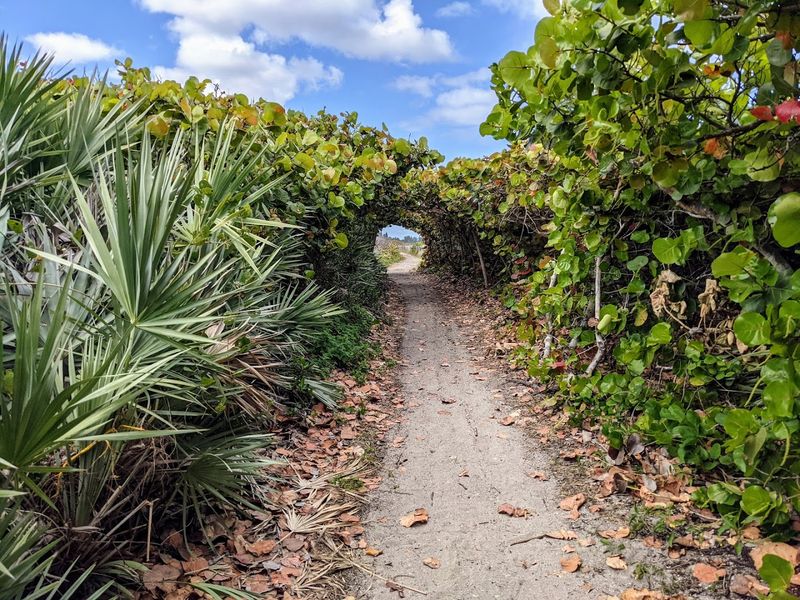
The beach gets most of the attention, but the inland trails at Blowing Rocks Preserve are genuinely worth your time. A long, shaded path winds through a canopy of sea grape trees so dense it forms a natural tunnel overhead.
The light filters through in patches, and the whole corridor feels cool and quiet compared to the open shoreline.
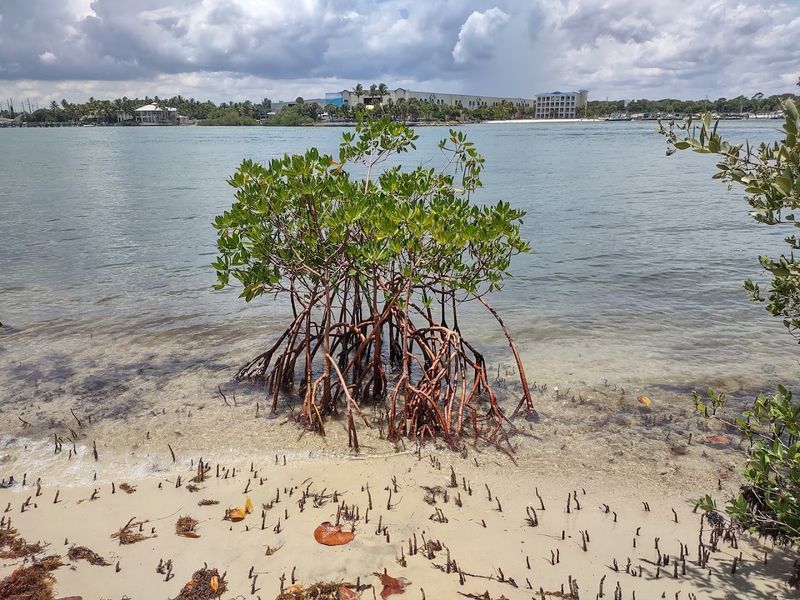
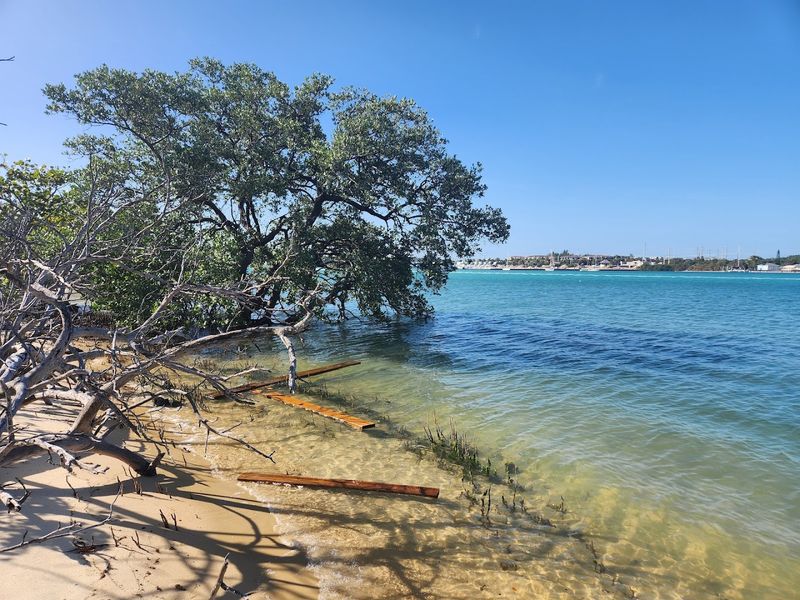
There is also a boardwalk trail through the mangrove wetlands on the estuary side of the preserve, which feels like a completely different world from the crashing ocean just across the road. The mangroves here are thick and layered, full of small crabs, birds, and the kind of brackish ecosystem that supports an enormous amount of coastal wildlife.
It is slower-paced, more contemplative.
The education center near the parking area has informative displays about the preserve’s ecosystems, geology, and wildlife, and it is worth a quick look before or after your walk. Showers and restrooms are available near the entrance, which is a practical detail that matters after a long walk on a hot Florida day.
The trails are not strenuous, but wear comfortable shoes since some sections are sandy and uneven underfoot.
The Practical Details That Make or Break Your Visit
Blowing Rocks Preserve is free to visit, though a small donation is encouraged and genuinely appreciated since it helps fund the conservation work happening here. The preserve is open daily from 9 AM to 4:30 PM, which gives you a solid window to explore without feeling rushed, as long as you plan accordingly.
Parking is the one real challenge. The lot is small and fills up fast, especially on weekends and holidays.
Arriving right at opening time is the smartest move. If you find the lot full, some visitors park at Coral Cove Park about a mile south and walk up along the beach or the sidewalk, which is a perfectly reasonable option.
There are no lifeguards on duty at the beach, so swimming is at your own risk. The rocky shoreline means entry into the water requires some care and solid footing.
Rinse stations are available near the entrance, which is a welcome detail after walking through sand and saltwater spray for a couple of hours. Weekdays are noticeably quieter than weekends, so if your schedule allows flexibility, a Tuesday or Wednesday morning visit gives you the best chance of having the place feel like it belongs just to you.
Why This Preserve Feels Unlike Anything Else on Florida’s East Coast
Florida has hundreds of miles of coastline, and most of it is beautiful in a familiar, predictable way. Blowing Rocks Preserve is different in a way that is hard to fully articulate until you are actually there.
The combination of ancient geology, dramatic water behavior, vivid ocean color, and dense natural habitat creates something that feels genuinely singular.
It is the kind of place that makes you slow down. There is no boardwalk lined with shops, no umbrella rentals, no background noise beyond waves and wind.
Just 73 acres of preserved coastline doing what it has been doing for thousands of years, largely undisturbed. That stillness is rare in a state as developed as Florida, and it hits differently than you expect.
People who have lived in Florida for over a decade describe this beach as unlike anything else they have encountered along the state’s coast. That reaction makes sense when you see it.
The rocky feel, the dark sand mixed with shell fragments, the sheer geological age of the place, it all adds up to something that rewards curiosity and patience. Go at high tide if you can, stay longer than you planned, and bring a camera.
You will not run out of things worth photographing.
Address: 574 S Beach Rd, Hobe Sound, FL 33455
