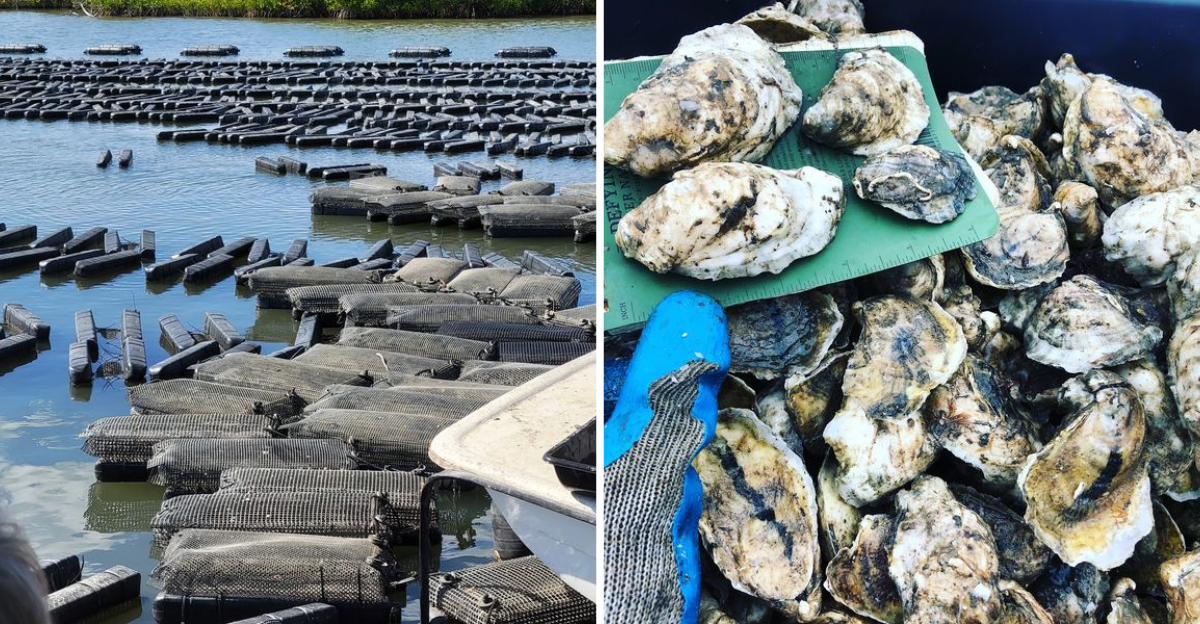
That water was so flat it looked like poured glass, and the salt air hit me before the boat even pushed off. Within minutes we were gliding through mangrove forests and shallow lagoons, birds lifting off the water like they had somewhere better to be.
Tucked in floating mesh bags and cages across the lagoon, thousands of oysters were quietly filtering saltwater and turning it into flavor, one shell at a time. I came for the oysters and left with a lesson I actually wanted to sit through, watching a shucking knife crack open shells that had been growing in these waters for months.
By the time the boat turned back toward the dock, I had stopped thinking of this as a food tour and started thinking of it as a front-row seat to something this state does better than most people realize.
Florida has a way of surprising you when you least expect it, and this afternoon on the water turned into one of those meals I still bring up at dinner tables months later.
Boarding the Narwhal and Easing into Mosquito Lagoon
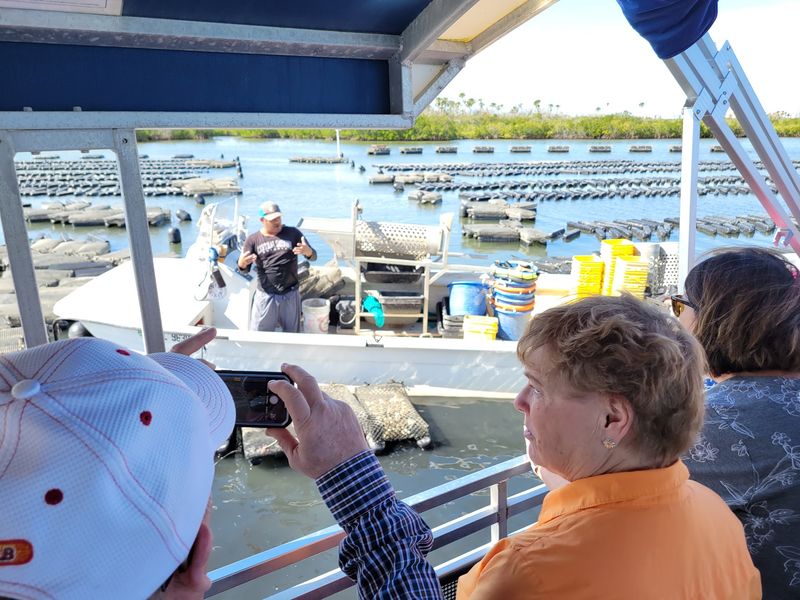
The boat is the first surprise of the day. Called the Narwhal, it is a restored Maine lobster boat, and it looks completely out of place in Florida in the best possible way.
Wooden trim, working deck, low rumble from the engine. I expected a plain pontoon and got something with real character instead.
Once we cleared the dock area, the pace slowed down to something almost lazy. Mosquito Lagoon is shallow and quiet, so the ride feels less like a boat trip and more like drifting through a wide, sunlit backyard.
Dolphins showed up not far from the channel, rolling along in that unhurried way they have. Manatees are a regular sighting here too, usually appearing as a rounded shadow just under the surface before they surface for air.
Birds are everywhere. Herons stalk the shallows, pelicans crash down after bait, and ospreys sit on channel markers like they paid for the seat.
What struck me most was how little development you see. Long stretches of shoreline are just mangrove and sand, which is rare in Florida and worth appreciating while it lasts.
Bring sunglasses and a hat, because the glare off that water is no joke. A light long-sleeve shirt helped me more than sunscreen did.
The ride out to the farm takes a while, and honestly that is part of the value. By the time the oyster cages come into view, you already feel connected to the water they grow in.
How a Marine Biologist Built a Farm in the Lagoon
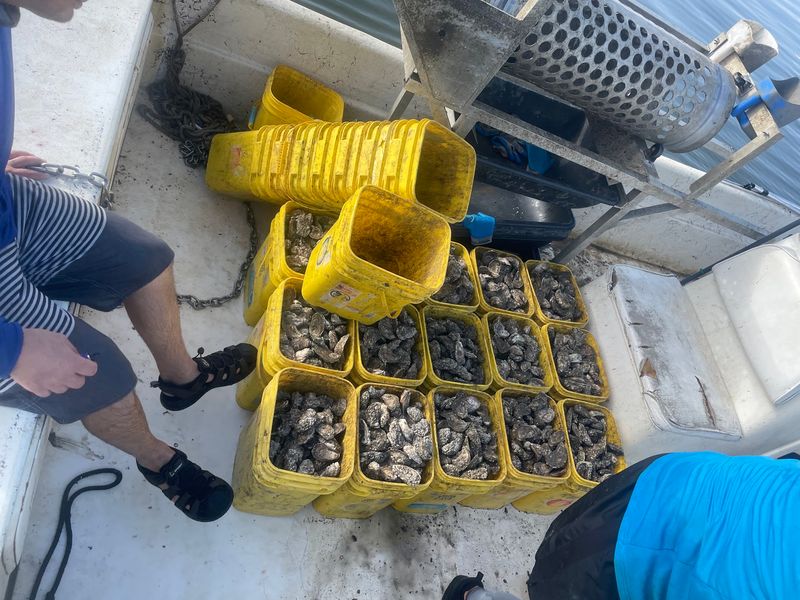
Every good food place has a reason it exists, and SharkBite has a clear one. Sam Walsh, a Florida native, grew up fishing the mangroves of the Keys and spent time around the Chesapeake Bay, so water was never a hobby for him.
It was the whole point.
That pull led him into marine biology, then into aquaculture, where he spent years farming different aquatic animals in various parts of the world.
Oysters ended up being the thing that stuck. Part of the appeal, as he explains it, is beautifully simple: oysters do not need to be fed.
The lagoon handles that job on its own, filtering nutrients right into the shell.
He founded SharkBite Oysters in New Smyrna Beach in 2022 with about a decade of aquaculture experience behind him. The goal was two-sided from day one, growing premium oysters while leaving the surrounding water better than he found it.
Hearing the reasoning behind the farm changed how I tasted everything later. It stops being a novelty snack and starts being the result of someone’s very specific set of choices.
I appreciated that none of it came across as a sales pitch. The explanations lean scientific, with talk of salinity, tides, and growth rates rather than buzzwords.
If you like knowing exactly where your food comes from and who is responsible for it, this part of the tour delivers more than most farm visits ever manage to.
Rows of Floating Bags and the Work Behind Them
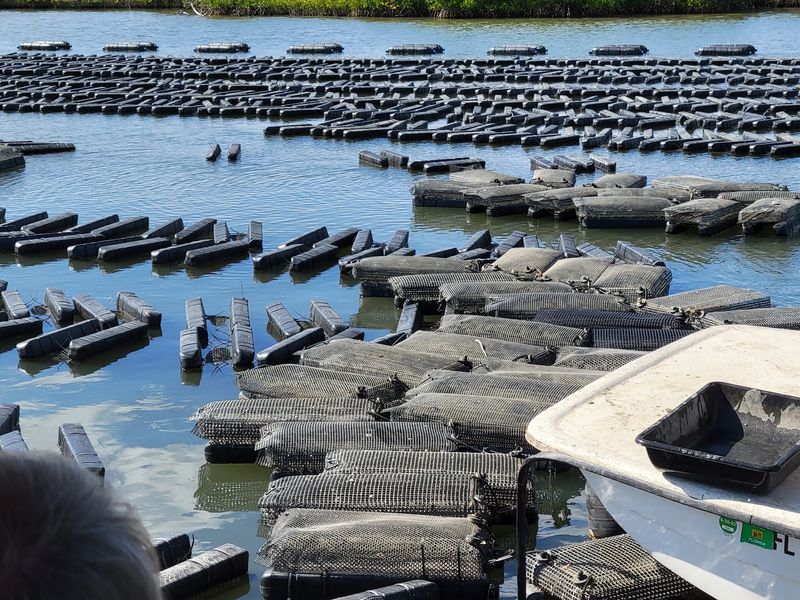
Up close, the farm looks nothing like farmland. Hundreds of cages and mesh bags float at the surface in tidy rows, bobbing with the current, and the whole setup reads more like a floating neighborhood than a crop field.
The technique here borrows from Canadian oyster farming, which was not what I expected to hear in Florida.
Those bags get flipped and rotated on a schedule. When one side sits exposed to the sun, the heat and light discourage barnacles and algae from taking hold, so the shells stay clean without chemicals or scrubbing.
All that tumbling does something else too. It chips the shell edges and pushes the oyster to grow deeper and rounder, which is why these have such a pronounced cup.
Seeing the size range was the fun part. Baby oysters, called spat, arrive no bigger than a lentil, and it takes somewhere between six months and a year and a half before they are ready to harvest.
That timeline puts things in perspective. The oyster you slurp in ten seconds spent well over a year growing in that exact stretch of water.
Handling a bag yourself gives you a quick appreciation for the labor involved. They are heavy, wet, and covered in lagoon life, and there are hundreds of them.
Wear shoes you do not mind getting soaked, and expect your hands to smell like salt water for a while afterward. Both are worth it.
Nature’s Water Filters Doing Overtime
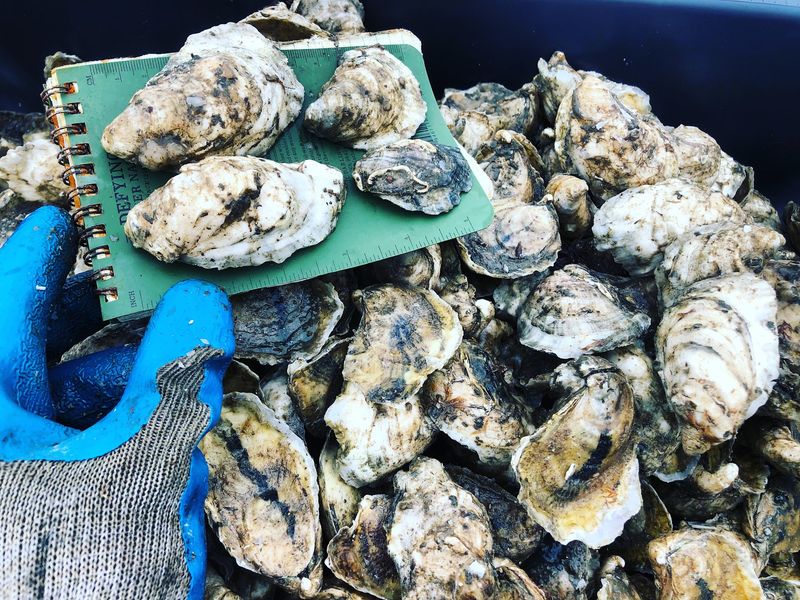
Here is the statistic that stuck with me: a single oyster can filter a remarkable amount of seawater in a day, and a farm’s worth of them cleans millions of gallons. That is not marketing.
That is just what oysters do while they sit there.
Water clarity in the Indian River Lagoon has been a real concern for years, so this matters locally.
Cleaner water means more sunlight reaching the bottom, which helps seagrass, which in turn shelters fish, crabs, and everything that eats them. One quiet bivalve ends up propping up an entire food chain.
Oysters also pull nitrogen and carbon out of the system and lock it away in their shells and tissue. Excess nitrogen is one of the lagoon’s biggest headaches, so removing it by the ton is genuinely useful work.
Learning all this reframed lunch for me. Eating something that improved its habitat while growing is a rare thing in the food world.
Oyster aquaculture regularly gets described as one of the most sustainable forms of farming there is, and floating in the middle of it, that claim felt easy to believe.
Kids on the tour seemed to catch on fast, probably because the concept is visual. You can literally see the difference between murky open water and the water around the cages.
If you care about conservation at all, this section alone justifies the trip out here.
Learning to Shuck Without Losing a Finger
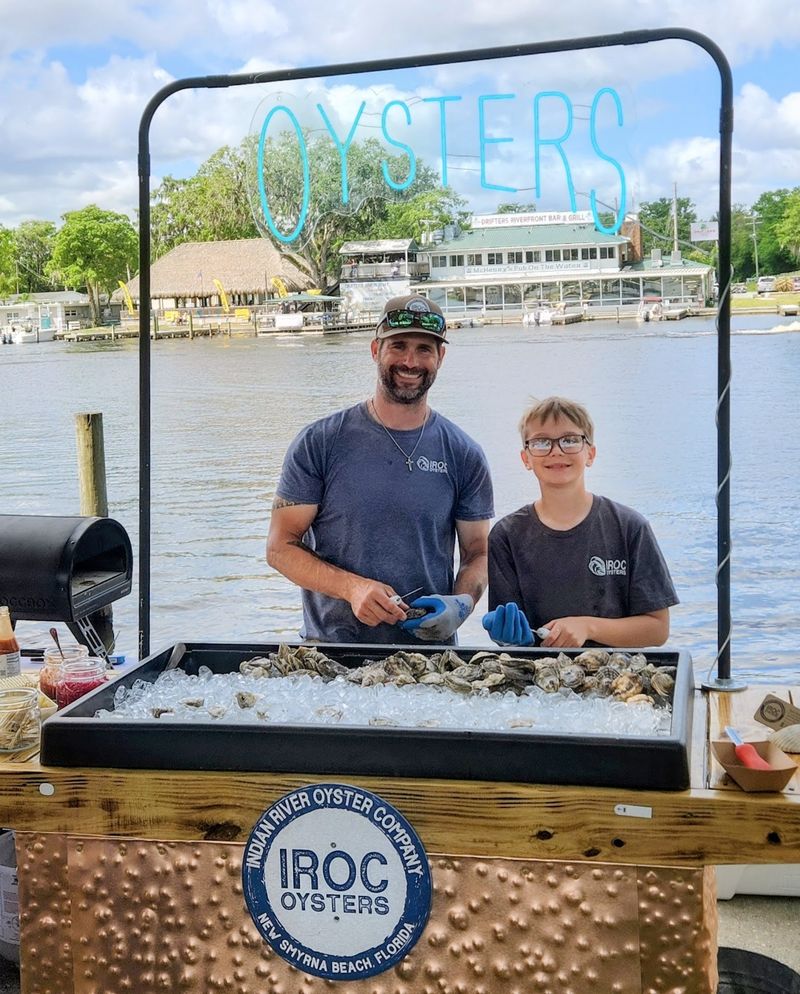
I had never shucked an oyster before this trip. My assumption was that it required brute strength, and I was wrong about that in a way I found kind of satisfying.
The trick is the hinge. Find it, work the knife tip in at an angle, twist rather than shove.
Our guide ran through the technique slowly, with an emphasis on hand placement so nobody turned lunch into a first aid situation. A folded towel does most of the protective work.
Then came that little pop when the shell gave up. I actually laughed out loud the first time, because it felt like solving something.
My first attempt was messy, the second was better, and by the fourth I felt unreasonably proud of myself. That progression is a big part of why the tour is fun.
Slurping one straight off the shell, still cold from the lagoon, was a completely different experience than eating oysters on a restaurant plate. There is no ice, no lemon wedge parade, no delay.
Clean, crisp, briny, and gone in one motion.
Practical tip: skip anything you would hate to splash. Oyster liquor sprays farther than you would think, and I sacrificed a decent shirt to the cause.
The skill also travels well. I have used it at home twice since, which makes the whole afternoon feel like a souvenir you cannot lose.
Why These Taste Nothing Like You Expect
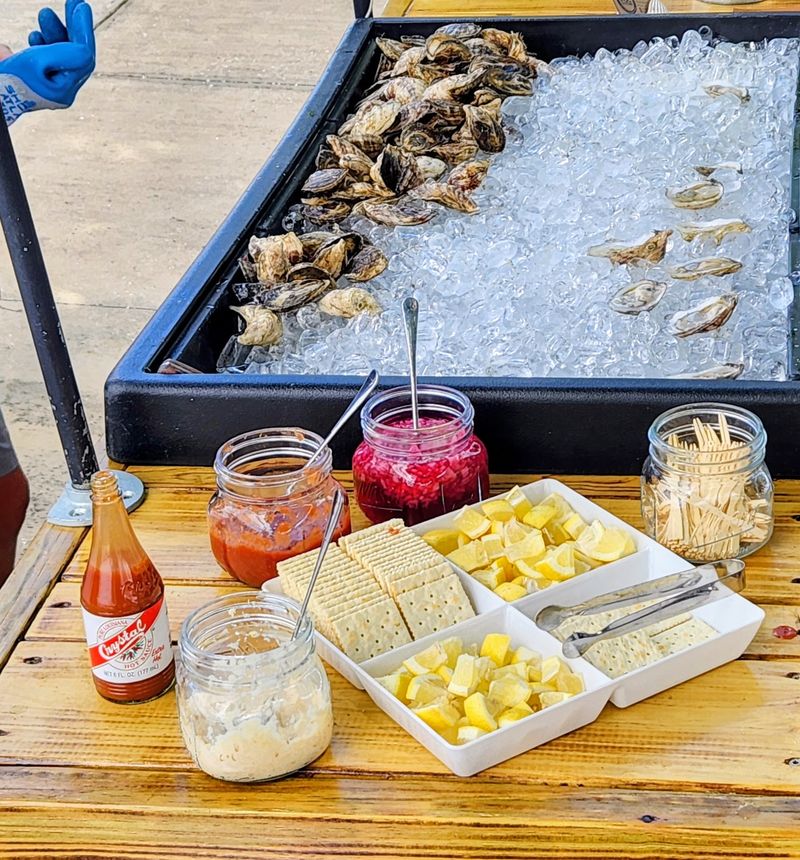
Florida oysters carry a reputation problem, and SharkBite quietly dismantles it. Anyone expecting something flat, warm, or muddy is in for a genuine surprise.
The flavor lands sweet up front, then finishes with a subtle earthy note that people often compare to white truffle. That comparison sounded like a stretch until I tasted it.
Brininess is present but restrained. It never bulldozes the rest of the flavor, which makes eating several in a row very easy to justify.
Credit goes largely to the water itself. Where salty Atlantic water meets the Indian River Lagoon, you get a specific mix of salinity and nutrients that shapes the oyster’s character, the shellfish equivalent of terroir.
Consistency is another thing worth mentioning. Every one I opened had a plump, full body sitting in a deep cup, with no shriveled disappointments in the batch.
These oysters have built a following well beyond New Smyrna Beach, reaching kitchens from Key West up to Chicago. Chef Henry Salgado, who cooks in New Smyrna Beach, has praised them as among the cleanest oysters with a delicious brininess.
What I found funniest is how often cold-water loyalists get converted. People who swear by northeastern oysters tend to go quiet after the first one here.
Eat them plain first before reaching for any topping. The flavor is doing enough on its own, and covering it up would be a small tragedy.
Any Month Works, Including the Ones Without an R
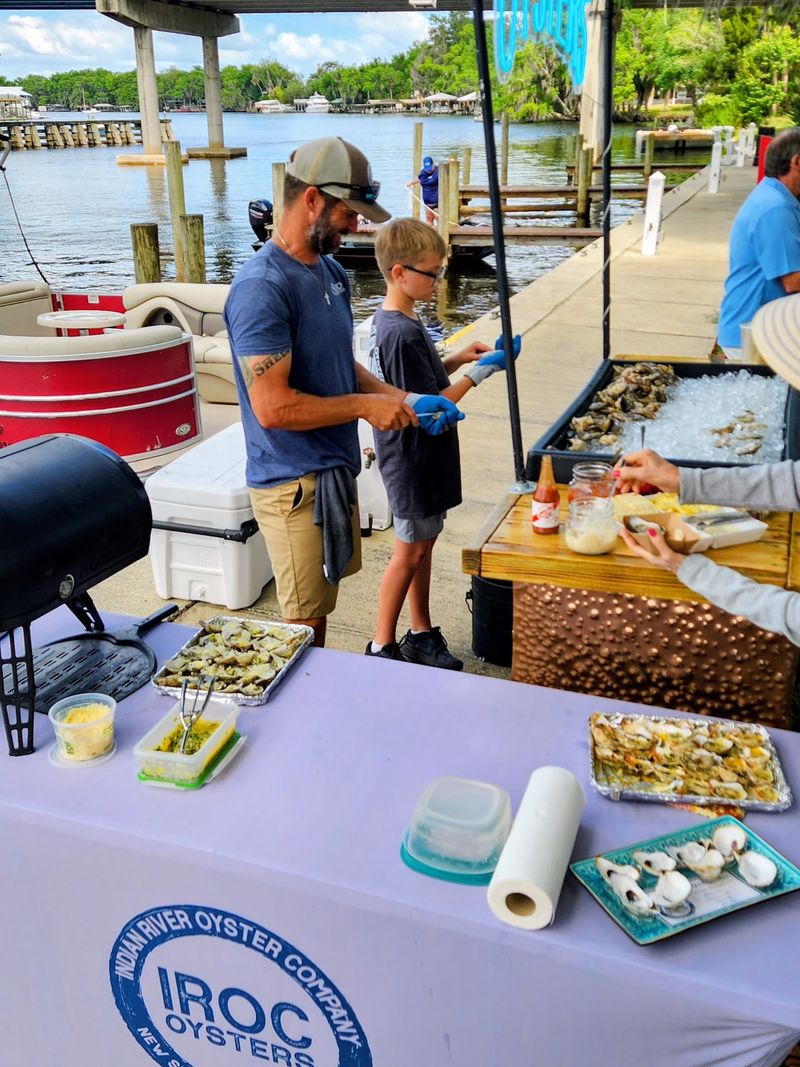
The old rule says eat oysters only in months containing the letter R. Turns out that guideline retired a long time ago, and finding that out was one of my favorite takeaways from the day.
That saying dates back to a time before refrigeration and before anyone monitored harvest waters. It made sense then.
It does not now.
Modern aquaculture handles this with strict regulation, regular water testing, and cold chain handling from the moment oysters leave the lagoon. SharkBite operates within all of it, which means their oysters are safe and delicious in July just as much as in December.
For travelers, that flexibility matters. A summer beach trip to New Smyrna Beach does not have to mean skipping the thing you came for.
Because harvest runs year-round, the crop is always at some stage of growth out there. Something is always ready.
Planning-wise, tours fill up, so it pays to book ahead rather than hoping for a walk-on spot. Mornings tend to be calmer on the water if you are sensitive to chop.
Bring water, sun protection, and a towel. Leave the fancy outfit at the hotel.
Of everything I did in New Smyrna Beach, this was the trip that felt like it belonged to the place and nowhere else. Boat ride, science lesson, hands-on shucking, and the freshest oysters I have eaten anywhere.
Address: 200 Bay St, New Smyrna Beach, FL
