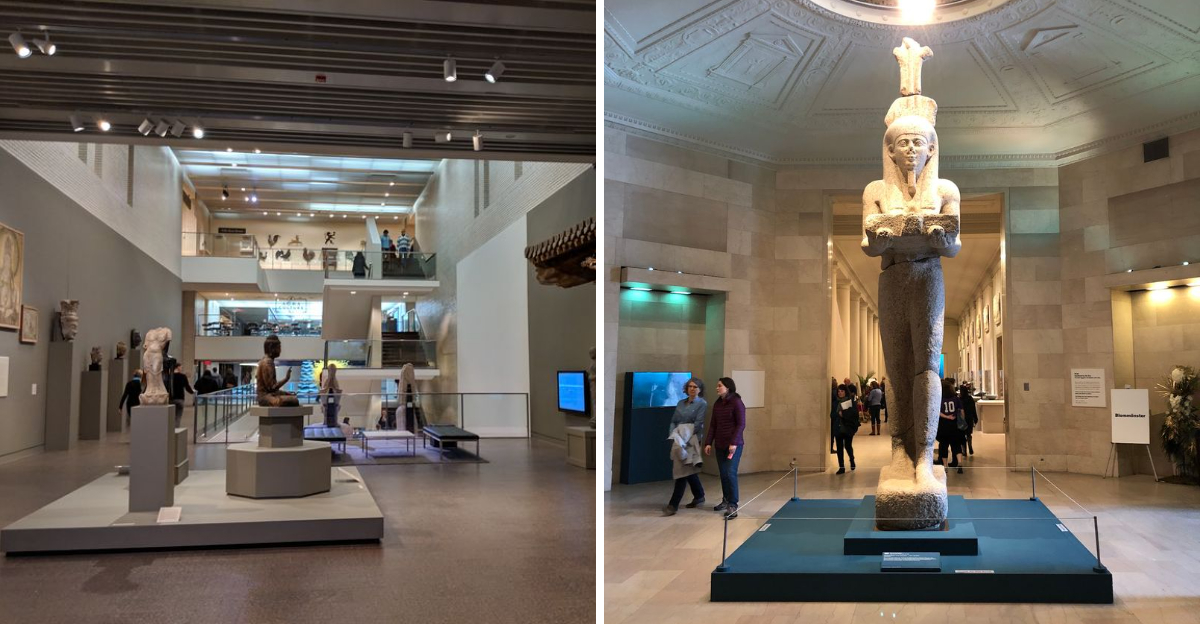
You know the best things in life are free – and that’s certainly true here. Hiding in plain sight in Minnesota is one of the oldest and most intriguing museums you can visit without spending a dime. And it’s full of treasures that will stop you in your tracks.
The collection is vast, spanning millennia and continents, but the real showstopper is the ancient Egyptian mummy. This isn’t just a replica; it’s a real, genuine artifact, a physical connection to a world thousands of years old.
The story of how this mummy and others came to the American Midwest is almost as fascinating as the artifacts themselves.
This place isn’t just a dusty museum; it’s a Minnesota landmark that has been quietly inspiring curiosity for generations. The best part? It all remains free for everyone.
Free Admission That Never Feels Like a Catch
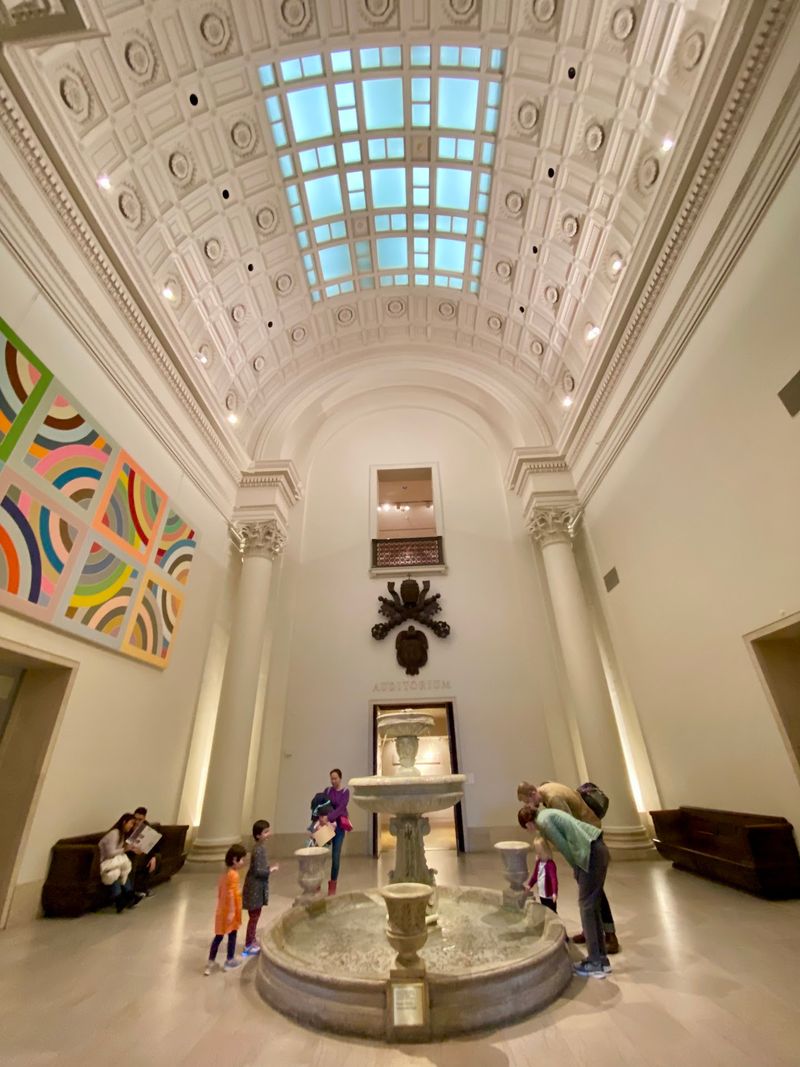
Free museums often come with fine print. The main galleries here stay open to everyone, with a donation box waiting near the entrance for anyone who wants to contribute. That one detail changes the whole rhythm of a visit. Nobody has to race through forty galleries to feel like the trip was worth it.
Skipping half the building is fine, since returning tomorrow costs nothing. Families with tired kids can head out after an hour without guilt. Students wander in between classes just to sit with one painting.
Special ticketed exhibitions are the exception, so glance at the website before planning a trip around a headline show. Donations still matter here. Staff, conservation, school programs and gallery lighting all cost money, and the free door only stays open because people give.
Long winters make that access feel even more valuable, since a warm afternoon surrounded by art beats scrolling on a couch. Anyone visiting Minneapolis on a tight budget should put it near the top of the list, right beside the lakes and the riverfront.
Period Rooms You Almost Want to Move Into
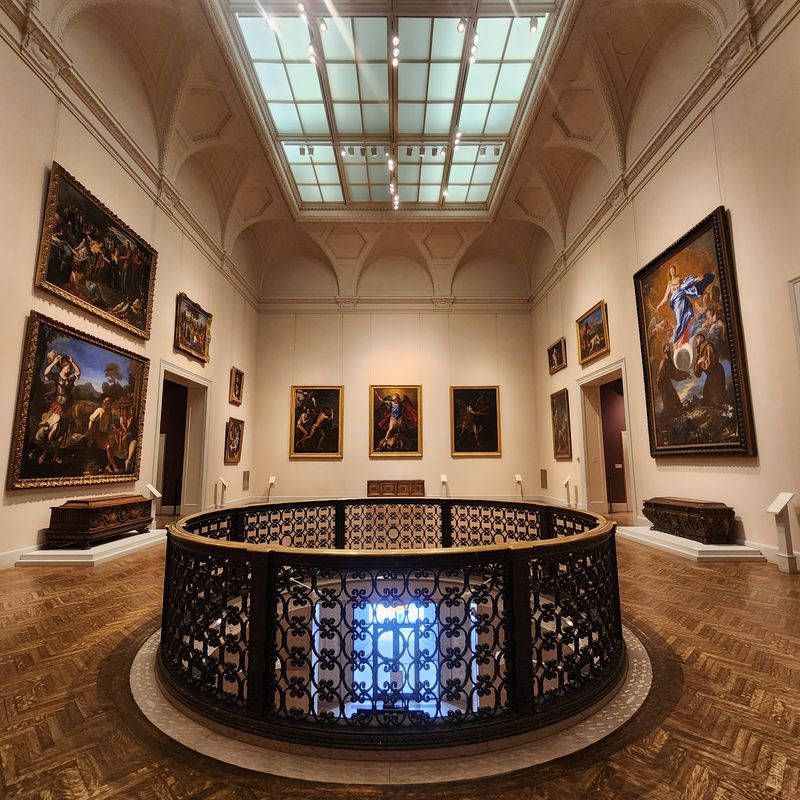
Nothing prepares first-timers for the period rooms, entire interiors lifted from old houses and rebuilt inside the museum. An English drawing room, a Georgian dining room and a Frank Lloyd Wright designed living room all wait behind low barriers.
Furniture, wallpaper, ceilings and light fixtures arrive together, so the effect lands as a room rather than a display. Guards usually let visitors stand at the threshold and look their fill.
Small details make them work: door hardware, mirror frames, the pattern in a rug worn thin by feet long gone. The Wright room in particular shows how radical his low ceilings and horizontal lines must have felt.
Design lovers should budget extra time. Anyone who watches historical dramas will recognize the furniture instantly. Rooms like these also explain how people actually lived with art, since paintings once hung above real fireplaces in real houses.
Signs explain where each interior came from and how it arrived, which is its own kind of story. Kids often like these more than paintings, maybe because a room feels like somewhere you could sneak into.
The Egyptian Mummy Everyone Comes Looking For
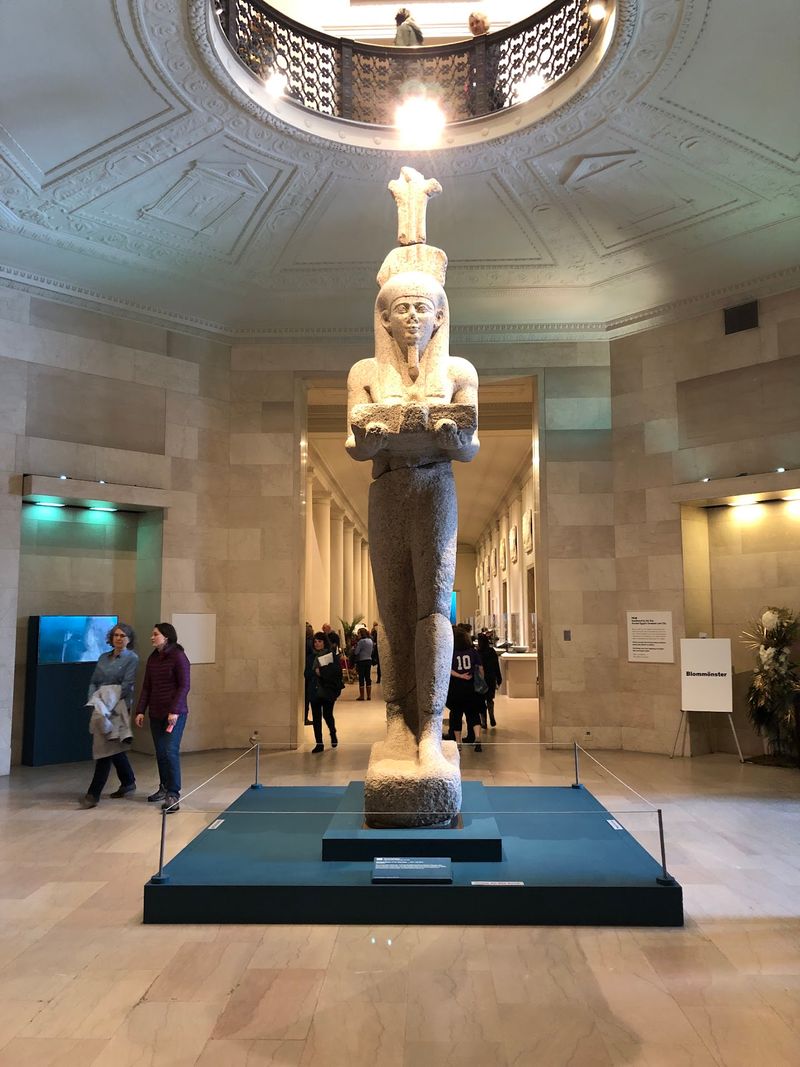
Tucked into the ancient galleries sits the museum’s most whispered-about resident, a mummy resting inside a painted coffin. Kids tend to spot it first and then go quiet, which almost never happens.
Nearby cases hold amulets, carved stone fragments, canopic jars and small figures meant to serve the dead in another life. Reading the labels slowly helps. Details about wrapping, burial goods and beliefs about the afterlife turn a curiosity into a genuine history lesson.
Egypt sections in big museums can feel crowded and rushed. Here the room stays calm enough to lean in and study the coffin’s painted eyes and faded colors. Photography without flash is generally allowed in the permanent galleries, though checking posted signs is smart.
Ancient stone carving shows up throughout this part of the building, and the range of materials, limestone, granite and alabaster, quietly doubles as a lesson in rock and mineral. Give the area twenty unhurried minutes. It sets a mood that carries into everything else upstairs.
Old Masters and Impressionists Upstairs
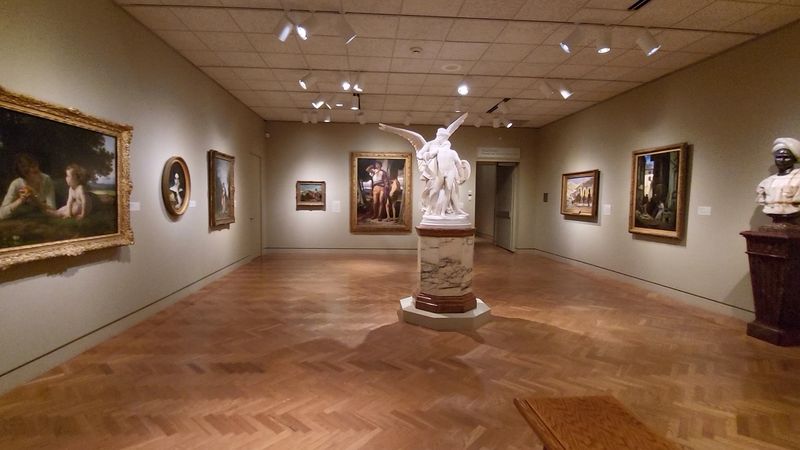
Third floor holds the European heavy hitters, and the climb up the staircase builds a little anticipation. Rembrandt, El Greco, Rubens and Goya share space with quieter portraits that rarely make postcards.
Impressionist rooms bring Monet and Pissarro, plus landscapes that glow under careful lighting. Expect fewer household names than in New York or Chicago, and enjoy the trade-off. Galleries stay uncrowded enough to stand close, step back, then return without waiting for a gap in a tour group.
A favorite trick is picking one painting per room and studying it for a full minute. Lesser known works often steal the visit, like a moody self portrait or a still life packed with symbolism.
Labels here do real work, explaining who commissioned pieces and why certain details mattered to the original viewers. Chairs sit in several rooms, and the natural light from skylights shifts through the afternoon.
Late Thursday hours make this floor especially pleasant, since evenings feel slower and the marble halls echo a little. Bring reading glasses if small labels usually give trouble.
Modern Wing With Plenty of Attitude
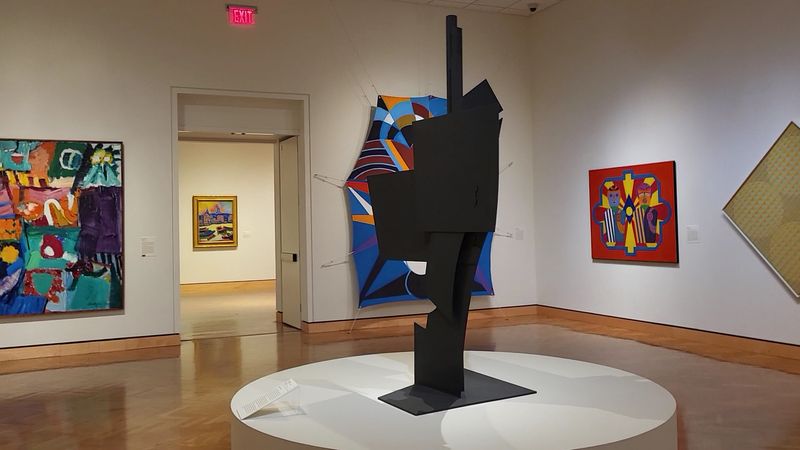
Modern galleries deliver the sharpest change of pace in the building. Bold color, odd materials and pieces that ask questions instead of answering them fill wide open rooms. Names like Picasso, Matisse and Dali appear, along with contemporary artists working in photography, video and textiles.
German Expressionist works have drawn strong attention, and the histories behind them, exile, censorship and destroyed canvases, add weight to every frame. Sculpture gets room to breathe here. Walking around a piece changes it completely, which never happens with a painting.
A design section covers furniture, household objects and vehicle styling, proving that art includes chairs and car bodies. Kids who tune out during old portraits usually wake up in these rooms. Rotating installations mean two visits a year rarely look identical.
Try reading the artist statements even when the work seems confusing, since one sentence often unlocks the whole thing. Benches face several large works. Sitting for a few minutes turns a quick glance into something closer to a conversation.
Momentum builds fast in this wing. Save it for last if energy usually fades.
Rotating Exhibitions Worth Timing a Trip Around
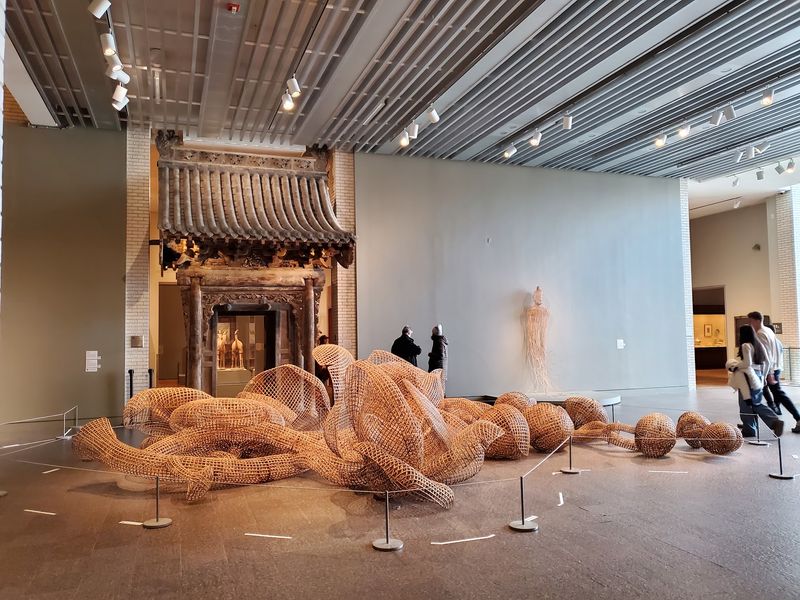
Repeat visitors keep coming back for the special exhibitions, which change often enough to reset the whole experience. Recent shows have covered German art from the early twentieth century, Botticelli, and Cambodian sacred sculpture.
Some require a ticket while the permanent galleries stay free, so check ahead. Timed entry sometimes applies to popular shows, and weekday mornings usually feel calmest. Curators tend to build these exhibitions around a clear idea instead of a pile of famous names.
That approach makes them easier to follow, even for visitors without an art background. Exhibition catalogs and related talks often accompany the bigger shows, and schedules go up on the museum website.
A quick look at the calendar before arriving prevents the sting of missing a closing weekend by two days. Locals get to watch the rhythm of the year, one show ending as another goes up behind temporary walls.
Anyone visiting Minneapolis more than once should treat the special galleries as the reason to return. Small focused displays tucked into side rooms deserve attention too. They are easy to walk past and often the most surprising.
Asian Galleries, Jade and a Hidden Teahouse
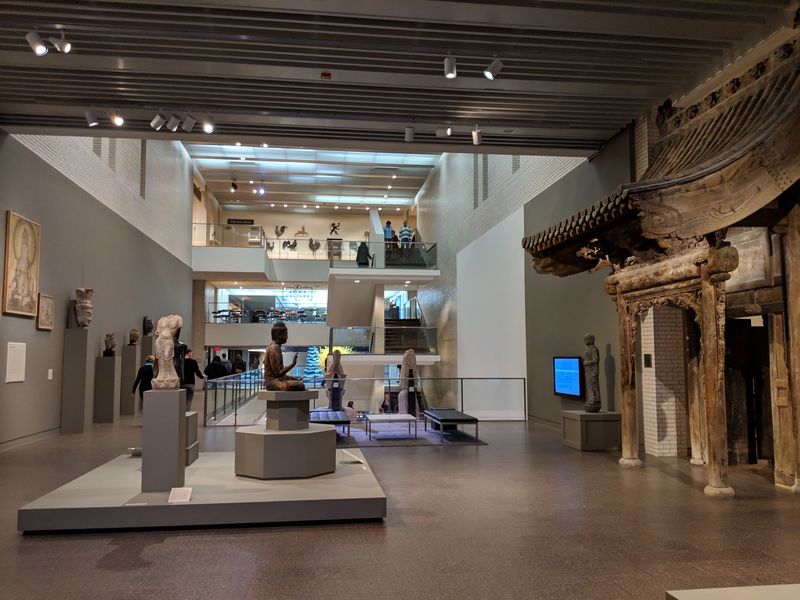
Second-floor Asian galleries surprised me most, mostly because of how much ground they cover. Chinese bronzes, jade carvings, Japanese screens, Korean ceramics and South Asian sculpture fill room after quiet room.
A reconstructed teahouse and a scholar’s study sit inside the galleries, built with traditional joinery and careful proportions. Peering into the teahouse feels like catching a private moment, all soft wood, paper and restraint. Visitors often name this section their favorite, and the depth explains why.
Look for the colossal Cambodian and Hindu sculpture that has appeared in special presentations, along with Buddhist figures whose hand positions each carry meaning. Benches appear at good intervals, which matters after an hour of walking.
Audio guides help here more than anywhere else in the building, since context turns a beautiful object into a story about trade, faith and craft. Try moving slowly through one region at a time rather than skimming everything.
Jade carvings reward close attention. Thin walls, tiny drill marks and translucent edges show what patience with stone actually looks like.
Art in Bloom, Minnesota’s Favorite Spring Ritual
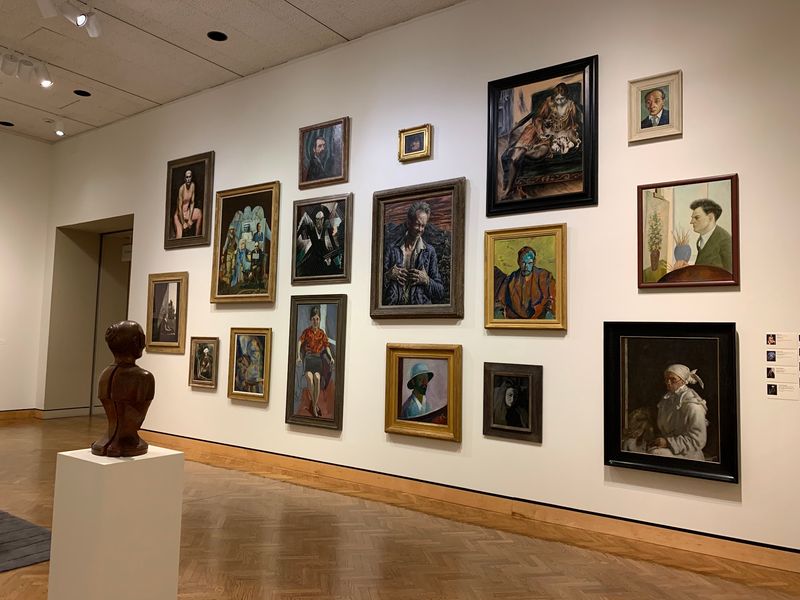
Spring brings Art in Bloom, when florists build arrangements inspired by specific works in the collection. Flowers stand beside the paintings and sculptures that inspired them, and the pairings can be clever, funny or oddly moving.
The building smells different that week. Lilies, eucalyptus and roses drift through galleries that usually smell like polished stone. Crowds grow, especially on weekends, so early mornings help. Regulars treat the event as an annual tradition, a signal that Minnesota winter finally gave up.
Photographers love it, and phones come out constantly, though the arrangements last only a few days. Comparing an artwork to its floral interpretation turns the visit into a game of spot the connection.
Some designers copy colors exactly. Others chase a mood, using bare branches or a single stem to echo something inside the frame. Volunteers and staff put months into the setup, and the labels credit each designer.
Anyone in the Twin Cities during that stretch of spring should rearrange plans to catch it. Even without flowers, the same galleries hold up beautifully in every other season.
Parking, Hours and Making a Day of It
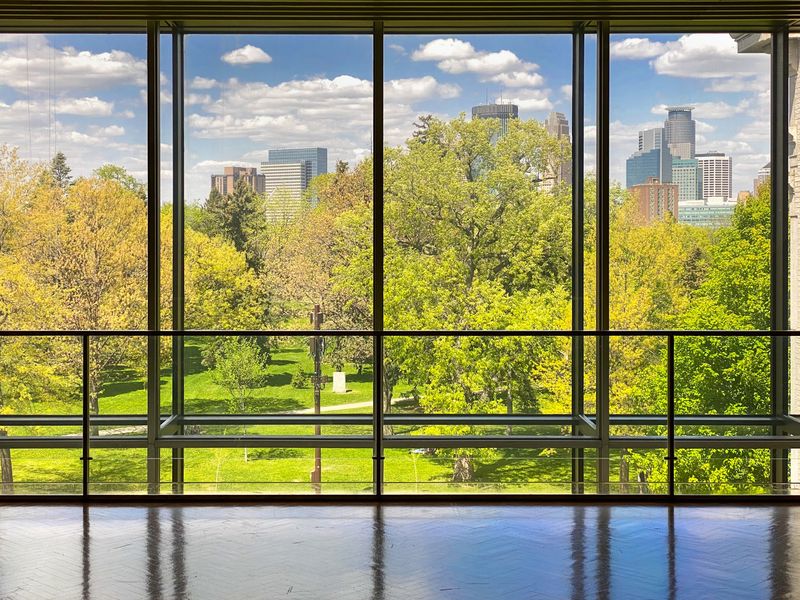
Sunday mornings reward early arrivals with easy street parking along the surrounding blocks. Free two hour spots fill fast, and by afternoon the neighborhood gets tight. A paid lot handles longer visits for anyone planning a full day inside.
Doors open at ten most days, with Monday closed and Thursday running late into the evening. Two hours covers a highlights loop. Four hours barely scratches the collection, and even locals admit they have not seen everything.
The museum sits in the Whittier neighborhood, walkable to cafes and restaurants along Eat Street on Nicollet Avenue. Coat check and lockers help during winter, since hauling a heavy parka through three floors gets old fast.
A cafe inside handles coffee and lunch, useful for splitting a long visit into two halves. Bring a refillable water bottle, wear comfortable shoes and skip the oversized backpack. Strollers move fine through most galleries, though the busiest rooms take patience.
Public transit runs nearby, and buses along Third Avenue drop visitors close to the entrance.
Address: 2400 3rd Ave S, Minneapolis, Minnesota.
