A giant eyeball staring back at me across a green field made me laugh out loud in my car the moment I pulled into the lot. That was my introduction to a Missouri sculpture park, and honestly, it set the tone for everything that followed.
I had expected a quiet patch of grass with a few statues, not acres of rolling meadows, shaded woods, and artwork the size of small buildings. Some pieces sit right out in the open where you cannot miss them, while others hide behind trees along dirt trails, waiting for you to stumble across them.
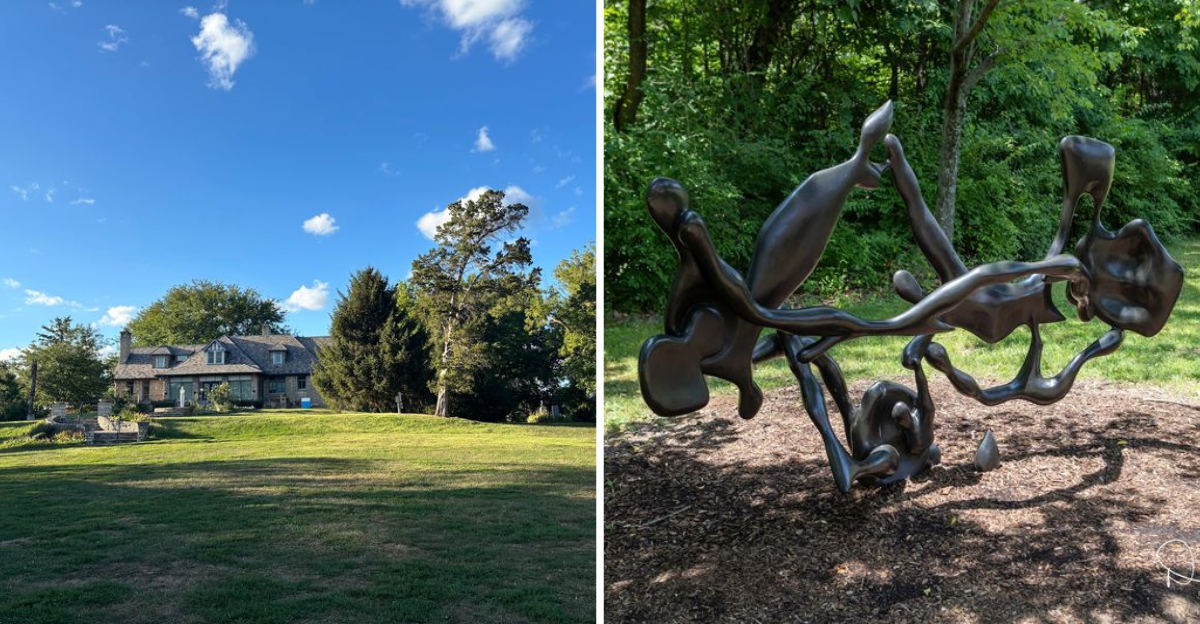
I spent close to three hours wandering and still left feeling like I had missed half of it. A massive steel spider crouched near the treeline, a pair of concrete shoes sat alone in a clearing, and a bright red geometric structure seemed to float above the grass.
The land itself is part of the experience, rolling hills and wooded paths that make each piece feel like a discovery. The best part is that walking in costs nothing at all, which still surprises me every time I think about it.
I have been to a lot of sculpture gardens, but this one feels different. It feels alive.
A Towering Red Landmark Called The Way
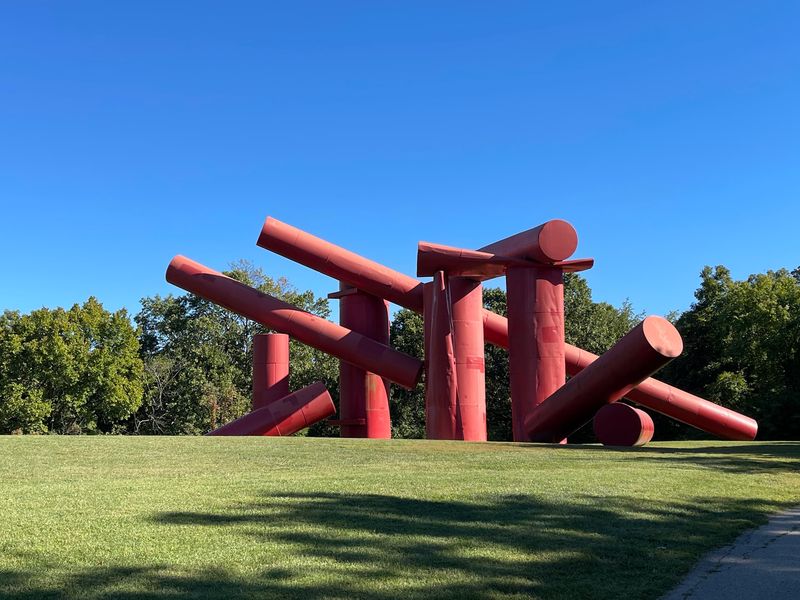
Nothing quite prepares you for the scale of Alexander Liberman’s The Way. Built in 1980 from 18 salvaged red steel oil tanks, it rises 65 feet into the air and stretches over 100 feet across.
I walked right up to the base and felt tiny. The metal is weathered in places, streaked and imperfect, which somehow makes it feel more alive than a polished museum piece.
People often say the curving red arches echo the Gateway Arch across town, and once you notice that, you cannot unsee it. Frame it right with your camera and the sculpture looks like a doorway leading straight into the sky.
The field around it stays open and grassy, so families spread out blankets and let kids run in circles underneath. Dogs on leashes trot past constantly, and nobody seems in a hurry.
A quick reminder that matters here: touching is welcome at Laumeier, but climbing on the artwork is not allowed. Those tanks are heavy industrial steel, and the rule protects both the piece and you.
Morning light hits the west side beautifully, while late afternoon turns the whole structure into a glowing orange silhouette. I preferred the evening visit, when the shadows stretched long across the grass.
If you only have twenty minutes at the park, spend them here. The paved Central Pathway loops right past it, so you can reach the sculpture without much walking at all, and the payoff is immediate.
That Giant Eyeball Watching the Meadow
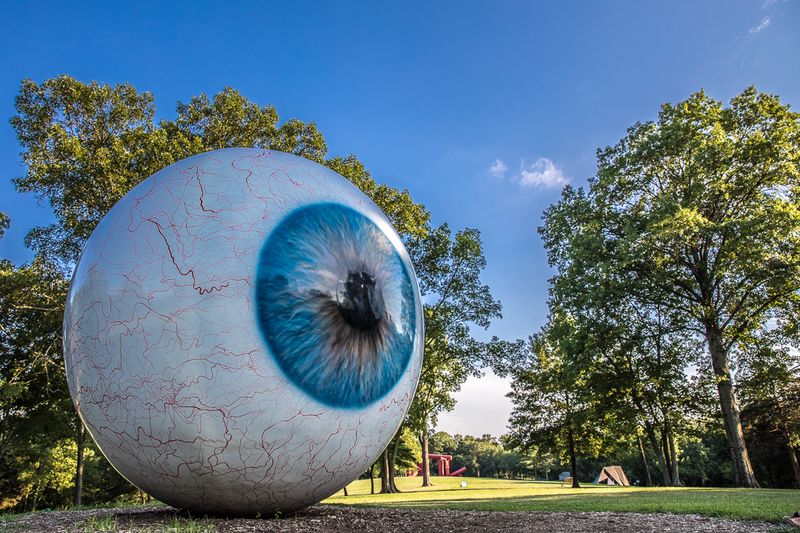
Tony Tasset made a 2007 sculpture called Eye, and it is exactly what it sounds like. A huge disembodied eyeball, veins and all, resting in the grass and staring across the meadow.
My first reaction was pure delight, followed by a slightly uneasy feeling that it was following me. Kids either adore it or hide behind their parents, and both reactions are fair.
Up close, the detail is what gets you. The iris has real depth, the red veins wander across the white surface, and the whole thing looks weirdly wet even though it is bone dry.
Photographers love this one. Try crouching low so the eye fills the frame with sky behind it, or step way back and let the surrounding trees make it look like something that landed overnight.
Because it sits near the paved loop, Eye is easy to reach for visitors using wheelchairs or pushing strollers. That accessibility matters, and Laumeier does a decent job of keeping key pieces close to smooth pavement.
Here is a small thing I noticed. People slow down around this sculpture in a way they do not around others, almost like they are checking whether it blinked.
Bring water if you plan to linger, since the meadow offers almost no shade. There are drinking fountains in the park, but the open grass gets warm fast on a bright summer afternoon.
The Overgrown Pool Ruins Tucked in the Woods
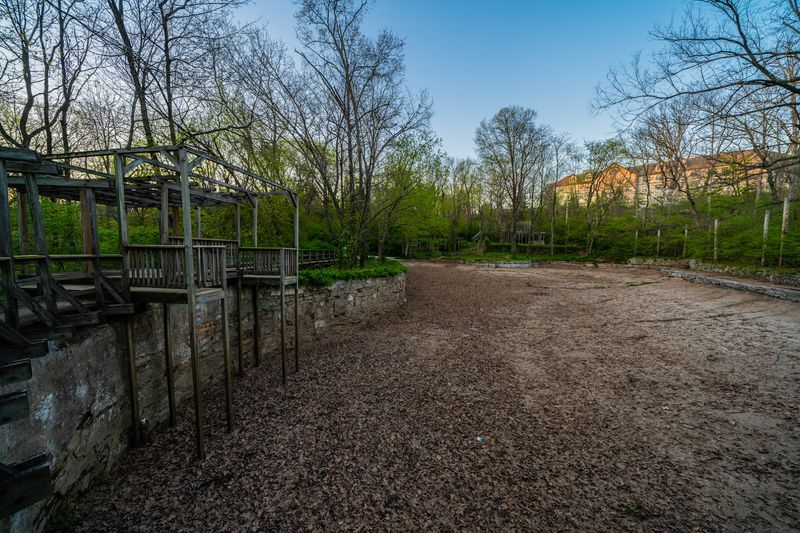
Deep in the eastern woodland sits my favorite discovery at Laumeier, and it barely looks like art at first. Mary Miss created Pool Complex: Orchard Valley between 1983 and 1985, building wooden pavilions, walkways, and stairs around the leftover shell of an old twentieth century swimming pool.
The pool itself was once a pond on the Hedenkamp estate, and the area earned the name Orchard Valley because of the apple trees that grew there. That layered history is part of what makes the spot feel so still.
Sunlight filters through the canopy in patches. Leaves collect in the empty basin, and the wooden decks have gone soft and gray with age.
Visitors sometimes compare it to an abandoned garden, which is not far off. I sat on one of the platforms for a while and heard nothing but birds and the occasional footstep on the trail above.
You reach it from the Art Hike Trail, which runs about 0.77 miles through the Eastern Woodland and starts near the Lower Entrance parking lots. That trail is for walking only, no bikes.
Wear shoes with real grip, especially after rain, because the dirt path has roots and a few short climbs. Sneakers are fine, but leave the brand new white ones at home.
Bring a book or a sketchpad if you want. Something about the place invites you to stay put longer than you planned.
Wandering the Paved Loop Without a Plan
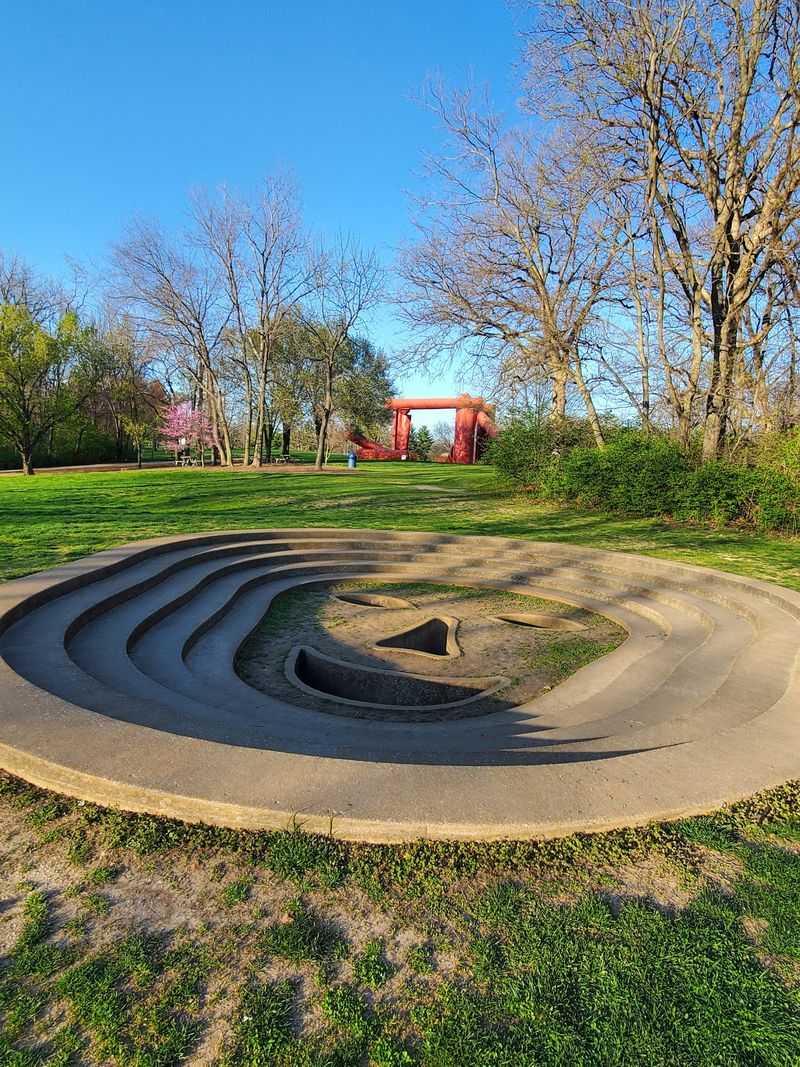
Easiest way to get your bearings here is the Central Pathway, a paved loop that runs about 0.64 miles and takes roughly 25 minutes at a relaxed pace. I did it twice on my first visit because I kept spotting things I had walked past.
The loop connects several of the park’s biggest hitters, including EyeThe WayBall? Ball!, , and Donald Lipski’s
Wall? Wall!, a 300 foot wall built from steel marine buoys.
Bikes are allowed on the paved sections, though the path gets busy with walkers and dogs, so riders need to take it slow. Most people seem to leave the bikes at home anyway.
What I liked was how little effort it takes to see a lot. The surface stays smooth and mostly level, which makes it workable for strollers and wheelchairs.
Stop by the Aronson Fine Arts Center first and grab a map. Names and artist details turn a nice walk into something you actually understand, and staff can point out newer additions to the collection.
Benches show up at reasonable intervals, and shade appears in patches along the edges where the trees crowd in.
If you have limited time or you are visiting with older relatives or small kids, this loop is the answer. It gives you the greatest hits without committing to a woodland hike, and you can always add trails later.
Longer Trails for Anyone Who Wants to Keep Going
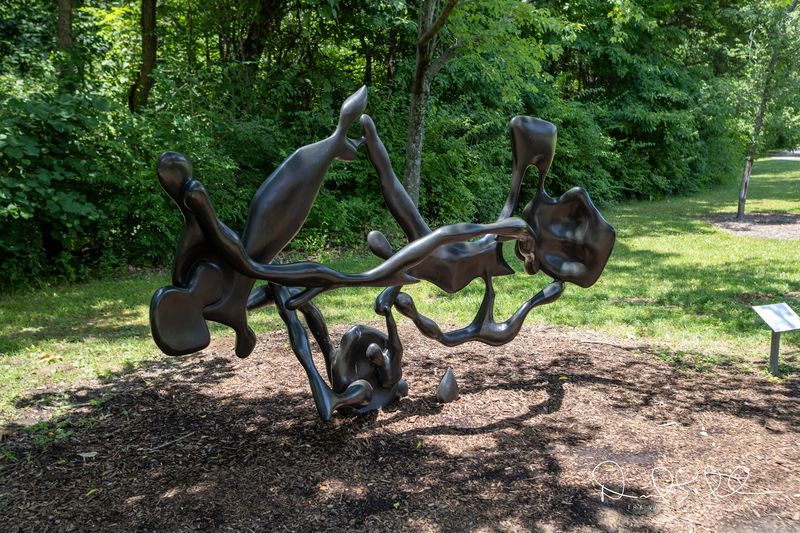
Beyond the pavement, Laumeier opens up in ways most first time visitors never realize. The Whitaker Nature Trail forms an easy 1.6 mile loop that carries you through wooded stretches where art shows up without warning.
There is also a short Western Woodland Trail, only 0.15 miles, that takes about ten minutes along the west edge of The Way Field. Perfect when you want a quick change of scenery.
Small hills and gentle climbs give the longer routes a bit of a workout, and the paths crisscross enough that you can improvise. I got mildly turned around and did not mind at all.
Jackie Ferrara’s Laumeier Project sits along the Art Hike Trail, and Charles Ginnever’s Crete, made in the late 1970s, reads like a jagged little mountain range dropped into Missouri.
The park takes part in the St. Louis County Parks 30/30 Hikes Program, which highlights routes built for roughly half hour walks. Handy if you are squeezing in exercise on a weekday.
Pack water and a snack. Fountains exist, but the wooded sections run long between them, and shade does not replace hydration.
Leashed dogs are welcome outdoors here, and you will see plenty. Bring bags and clean up, since that is the one complaint I hear from regulars.
Trail surfaces stay natural, so expect dirt, roots, and mud after storms.
Picnics, Programs, and the Story Behind It All
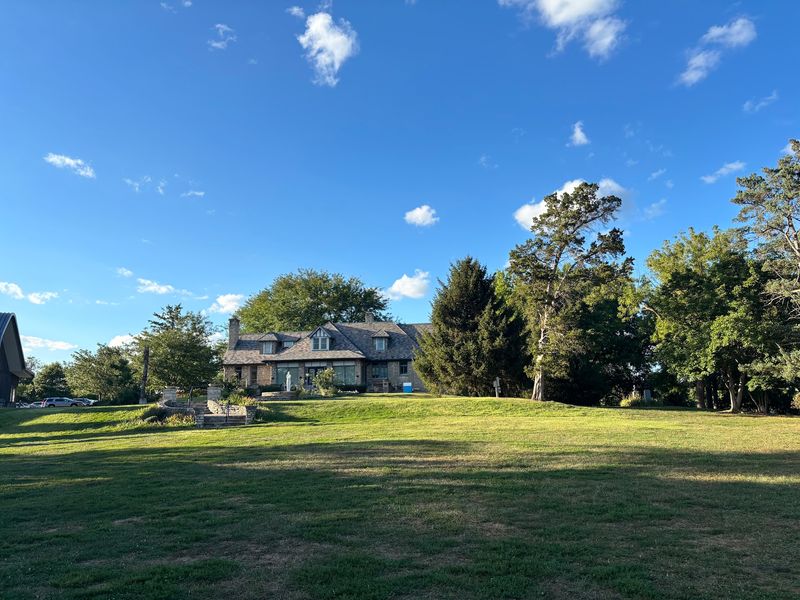
Back in 1968, Matilda Laumeier left 72 acres of her estate to St. Louis County in memory of her husband Henry, asking that it stay open land rather than become ball fields. That single request set everything in motion.
The couple’s 1917 stone house still stands on the grounds and now serves as the Kranzberg Education Lab. Passing it, you get a real sense of how the property looked before the sculptures arrived.
In 1975, artist Ernest Trova offered 40 of his sculptures to the county, and the park opened in 1976. It became one of the earliest and largest sculpture parks in the country, growing to 105 acres with more than 70 large scale outdoor works.
Laumeier holds accreditation from the American Alliance of Museums, and it operates as a nonprofit alongside St. Louis County Parks and Recreation.
Modern visits are pretty relaxed. Spread a blanket on the grass, eat lunch, then wander over to the Aronson Fine Arts Center for indoor exhibitions and classes.
Throughout the year the park runs an annual Art Fair, summer art programs, clay workshops, and Laumeier After Dark events. Warm weekends often bring food trucks and live music.
Gates open daily around 7 a.m. and stay open until roughly 30 minutes past sunset, with occasional closures for special events. Check ahead, arrive early, and give yourself more time than you think you need.
Address: 12580 Rott Road, St. Louis, Missouri
