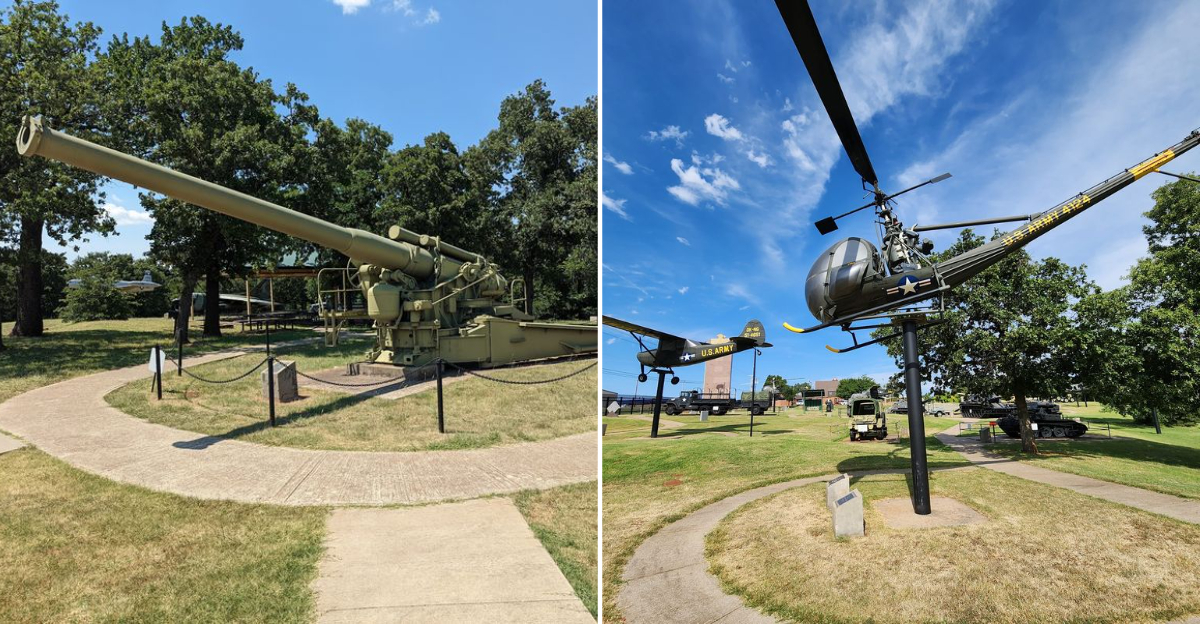
A free museum just reopened in Oklahoma, and the parking lot is already full of visitors. They are not here for the indoor galleries, though those are impressive.
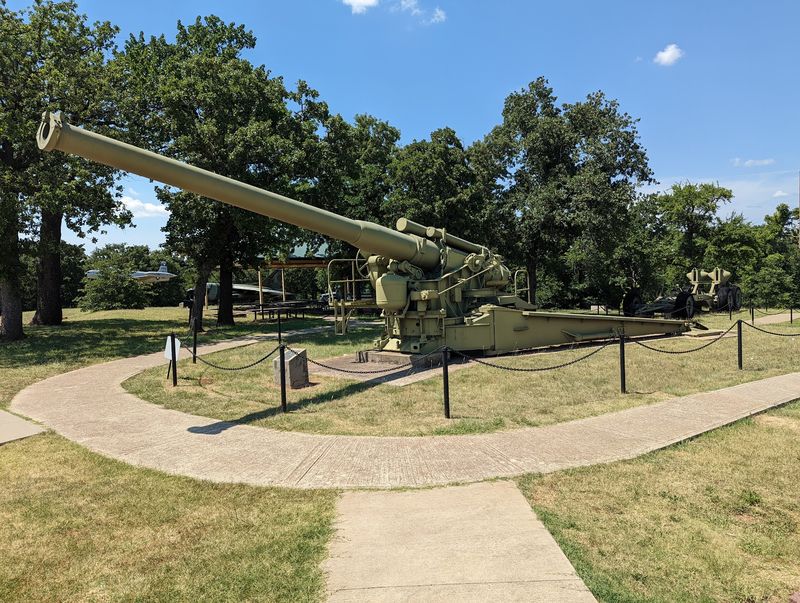
They are here for the outdoor park, a fifteen-acre field packed with more than sixty military vehicles. Tanks, helicopters, artillery pieces, and aircraft sit in neat rows, each one a relic of a different era.
You can walk right up to them, touch the cold metal, and imagine the weight of history they carry. The museum itself spans nearly forty thousand square feet, with exhibits that trace the state’s military history from the territorial militia to the present day.
Admission costs nothing, and the stories inside are priceless. In Oklahoma, the past is never far away, and sometimes it comes with tracks and a turret.
Rolling Up To A Yard Full Of Tanks
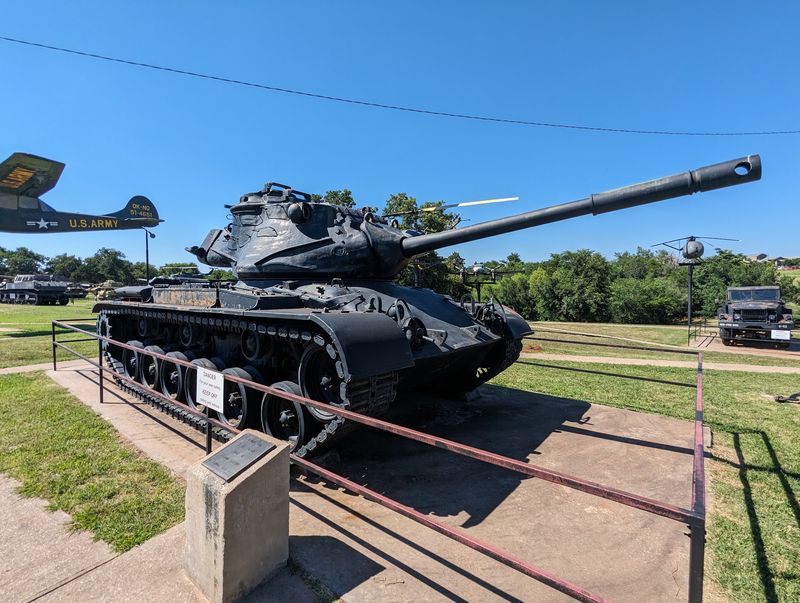
Most museums make you walk inside before anything interesting happens, and that is not the case here at all. You pull into the lot and there are armored vehicles sitting out in the open grass, close enough that you notice the rivets and the tread patterns.
It sets the tone before you have even locked your car door. Kids tend to lose their minds a little at this point, and honestly, most adults do too, because seeing these machines in person hits differently than seeing them in a documentary.
The grounds are wide and open, so nothing feels crowded or crammed together the way it does at some collections. You can circle around a vehicle, look at it from the back, and get a real sense of how enormous some of this equipment actually is.
My advice would be to give yourself extra time out here before heading indoors, because it is very easy to burn through half your visit outside without realizing it. Wear shoes you can walk in comfortably, since the grass and pavement stretch farther than they look from the parking area.
Bring a hat too, because Oklahoma sunshine does not mess around in the warmer months.
The Shiny New Building And Where To Find It
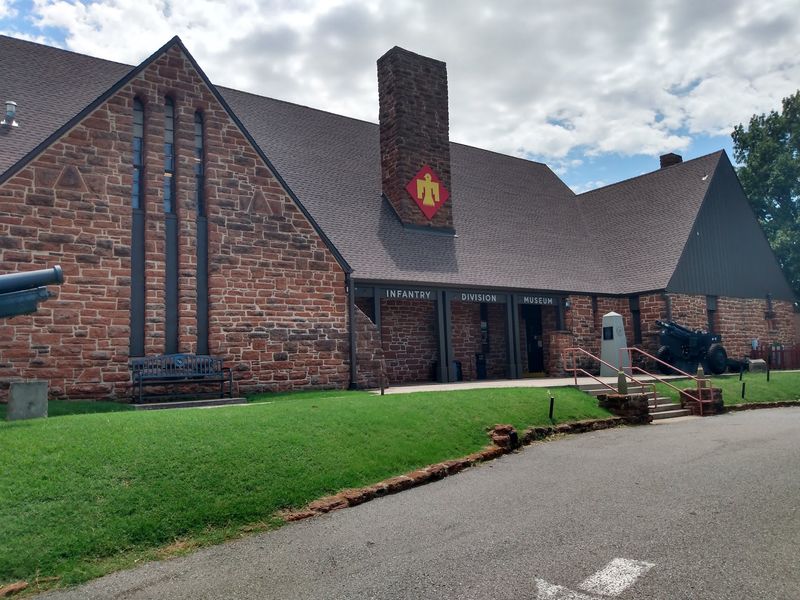
Punch 3301 NE Grand Boulevard, Oklahoma City, OK 73111 into your phone and you are set, because the place is easy to reach once you know where you are headed.
The building itself is genuinely new, not a remodel of something old with fresh paint slapped on it. That means clean floors, good lighting, wide walkways, and exhibit cases that let you actually see what is inside them without squinting through glare.
At nearly forty thousand square feet, there is room to breathe, and the layout guides you along without feeling like a maze. You are not bumping elbows with strangers trying to read a placard, which makes a bigger difference than you would think.
Because everything is fresh, the storytelling is broader than it used to be. Instead of focusing narrowly on one division, the exhibits now cover the full sweep of the Guard in Oklahoma, which gives the whole visit more depth.
Parking is straightforward, and the entrance is obvious from the lot. If you have someone in your group who uses a wheelchair or a walker, the smooth modern flooring and generous aisles make this an easier stop than a lot of older museums.
Strolling Around Thunderbird Park
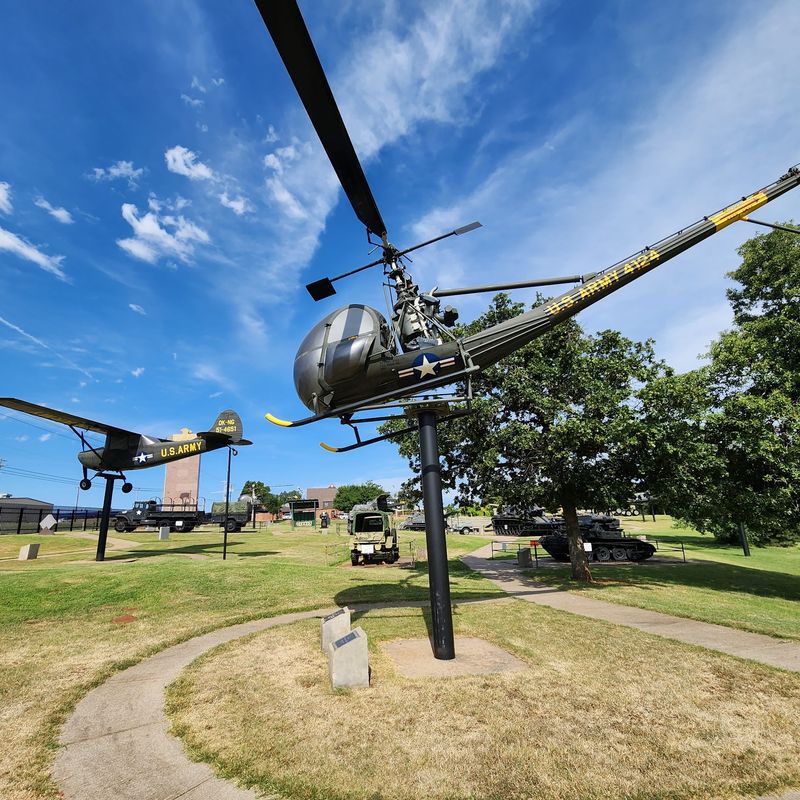
Fifteen acres sounds abstract until you are standing in the middle of it looking at row after row of hardware. Thunderbird Park is the outdoor portion of the museum grounds, and it holds more than sixty military vehicles that you can walk right up to.
We are not talking about a couple of tanks parked near a flagpole for decoration. There are artillery pieces, tracked vehicles, and aircraft lifted onto raised pedestals so you can study them from angles you would never get otherwise.
Having those aircraft up on stands is a smart touch, because you end up looking at the belly and the landing gear instead of just the side profile. Photographers especially seem to appreciate that setup.
Plan on spending a solid chunk of time here, since rushing through kind of defeats the purpose. Each vehicle has its own story, and reading the markers as you go makes the walk feel like a slow-moving timeline.
If you are visiting with restless kids, the park is a good release valve. They can move, point, ask a hundred questions, and get some energy out before you head into the quieter indoor galleries.
Getting To Know The Thunderbirds Of World War II
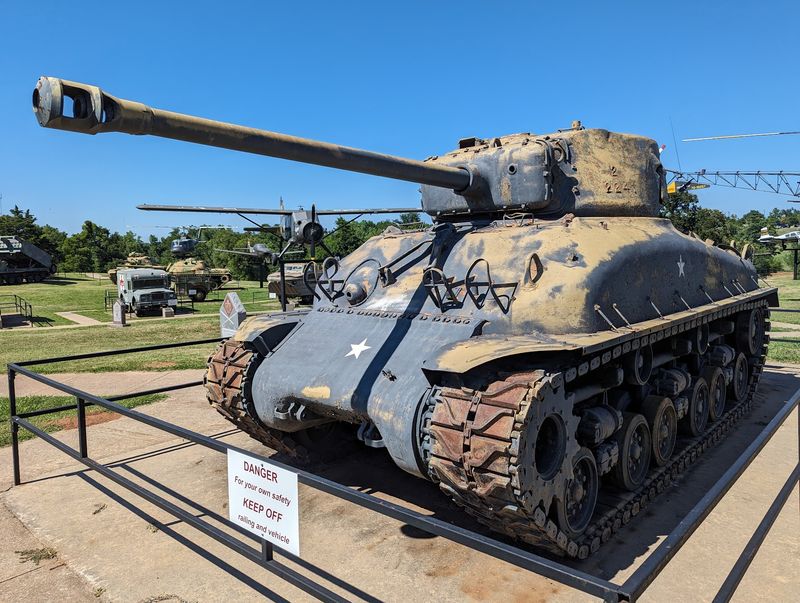
Ever heard of the Thunderbirds? That was the nickname of the Forty-Fifth Infantry Division, and their World War II record is a huge part of what this museum exists to preserve.
The indoor exhibits walk you through their campaigns with uniforms, gear, photographs, and personal items that belonged to real soldiers. Seeing a worn helmet or a folded letter in a case makes the scale of the war feel a lot more human and a lot less like a chapter in a textbook.
There is also a remarkable collection of cartoons drawn by Bill Mauldin, who served in the division himself. More than two hundred original pieces are held here, and his sketches capture the tired, wry humor of everyday soldiers in a way that formal history writing rarely manages.
Flipping through those images, you start to understand how people survive hard stretches by finding something to laugh about. That contrast between the heavy subject matter and the sharp humor sticks with you.
Take your time in this section, because the details reward slow looking. If you have a family member who served, this area tends to spark the best conversations of the whole visit.
A Quiet Tribute To Medal Of Honor Recipients
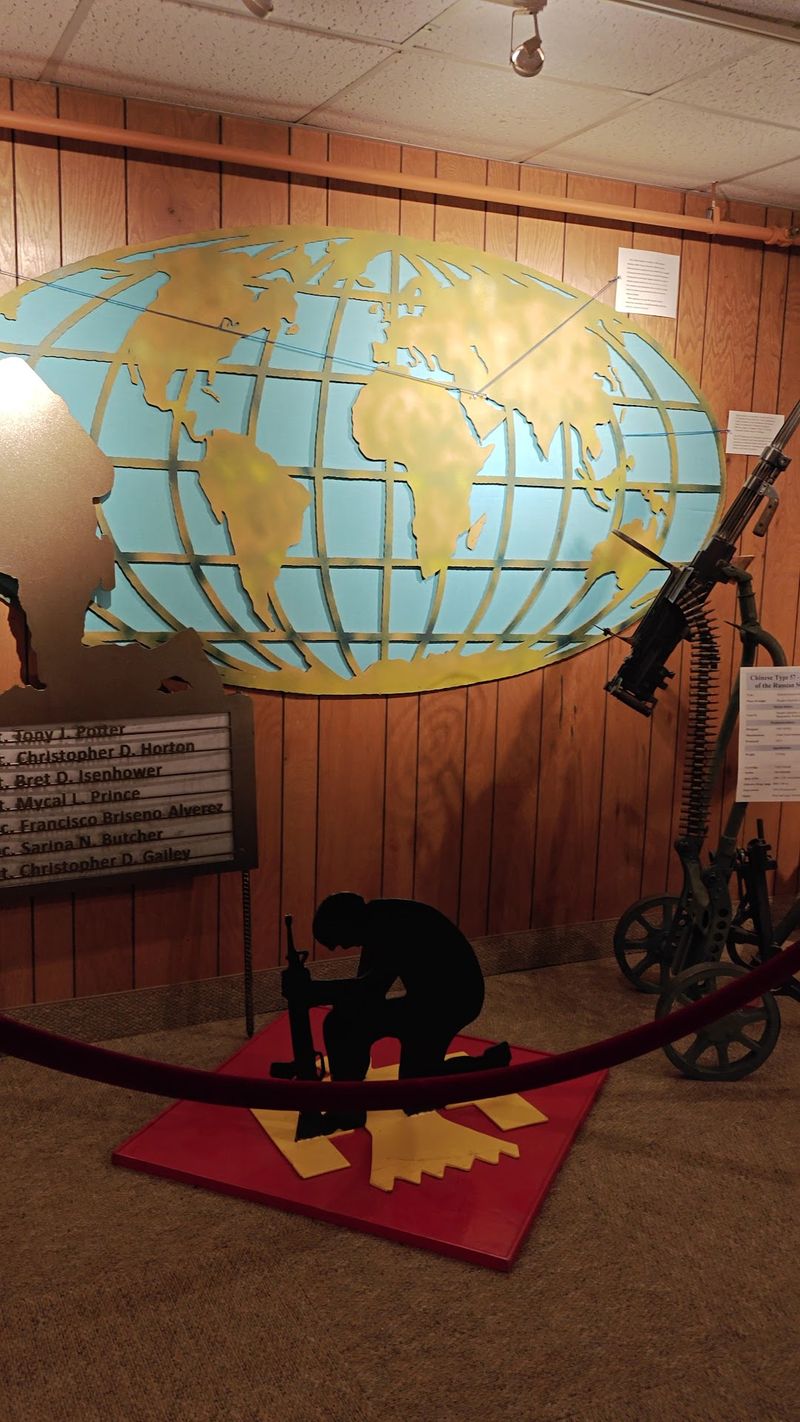
Twelve people connected to the Oklahoma National Guard and the Forty-Fifth Infantry Division received the Medal of Honor, and the museum sets aside a dedicated space to remember them.
The mood shifts when you step into that area, and you will notice it immediately. Voices drop, people slow down, and the whole room takes on a different weight than the galleries around it.
Each story is presented plainly, without dramatics, which somehow makes it land harder. You read what someone did in a specific moment under impossible pressure, and you find yourself standing there longer than you planned.
What I appreciate about this part is that it treats these individuals as people rather than statues. They had families, hometowns, and ordinary lives before the day that defined how history remembers them.
If you are bringing older kids, this is a good place to pause and talk about what courage actually costs. It is not the flashiest corner of the building, but it may be the one you think about on the drive home.
Give yourself a few unhurried minutes here rather than treating it as a walk-through stop between bigger exhibits.
The Guard’s Work Close To Home
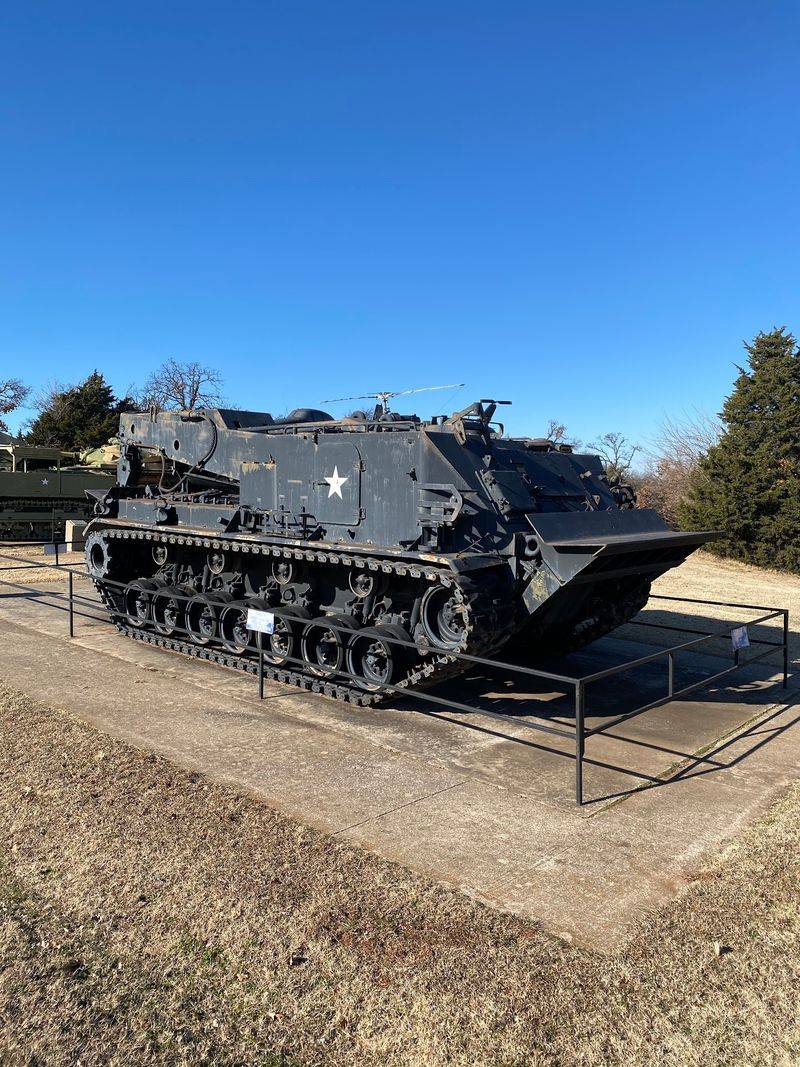
Here is something a lot of visitors do not expect, and it ended up being one of the most interesting parts of the whole place. The National Guard does an enormous amount of work inside Oklahoma itself, not just overseas.
Exhibits cover how Guard members responded to the Murrah Building bombing, to tornadoes that flattened neighborhoods, and to floods that swallowed roads and farmland. Those are events plenty of Oklahoma families remember firsthand, which gives the displays a personal charge.
Seeing the equipment and photographs side by side helps explain the dual role these soldiers carry. One week they might be training for a federal mission, and the next they are clearing debris or pulling neighbors out of high water.
It reframes the whole idea of service in a way that feels immediate and local rather than distant. You start recognizing the uniform as something you have probably seen in your own community during a rough week.
For anyone who grew up in the state, this section may hit closest to home. And for visitors from elsewhere, it offers a clear window into how Oklahoma handles the severe weather that comes with living here.
Weapons History Under One Roof
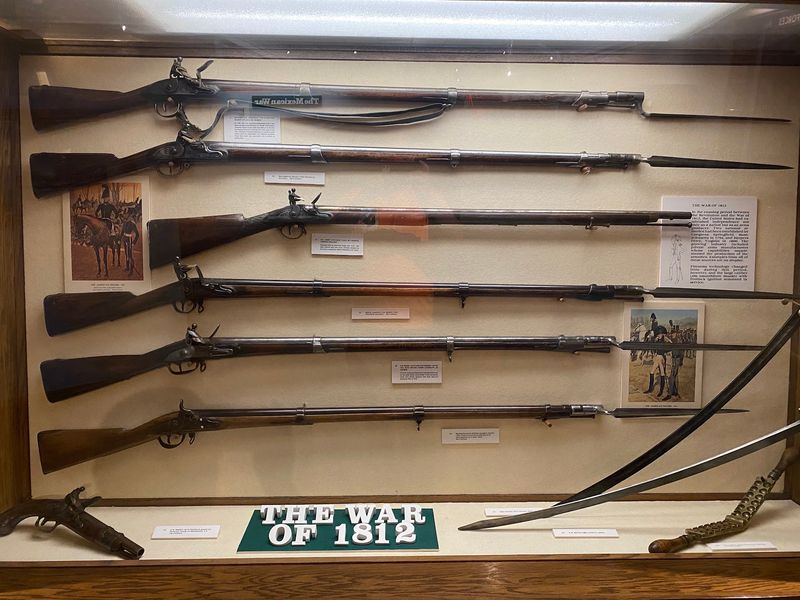
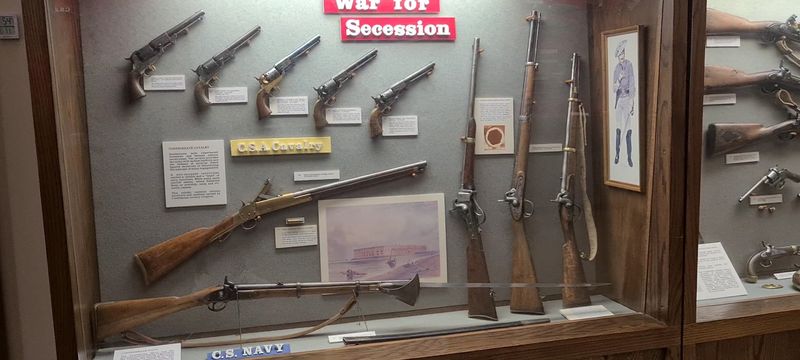
If historical firearms are your thing, clear your schedule, because the Jordan B. Reaves American Military Weapons Collection is not a small display case in a corner.
The collection traces how American military weapons changed from the Revolutionary War era all the way through Vietnam. You can follow the shift from long muskets to modern service rifles, watching the design logic evolve piece by piece.
Infantry and cavalry arms are both represented, which gives you a fuller picture than most collections manage. Seeing them lined up chronologically makes the technological jumps really obvious, even if you are not a specialist.
What surprised me is how much you learn about tactics just by looking at the hardware. The length of a barrel or the shape of a stock tells you something about how soldiers were expected to fight and move.
Even folks who arrive with zero interest in weaponry tend to slow down here, mostly because the craftsmanship on some of the older pieces is beautiful. There is real artistry in the wood and metalwork.
Read a few of the placards rather than just walking the line, since the context is what turns objects into a story worth remembering.
Native American Voices In The Story
Something I really respect about this museum is that it does not tell a partial story. Native American service members have been a major thread in Oklahoma military history, and their contributions are woven into the exhibits instead of parked in a side room.
That matters, because it is a piece of the past that gets skipped over in plenty of other places. Here it shows up as part of the main narrative, which is exactly where it belongs.
The Thunderbird symbol itself carries meaning rooted in the region, and understanding that background adds another layer to everything else you see on the walls. Small connections like that make the whole visit richer.
You come away with a clearer sense of how many different communities shaped the Guard over the generations. Oklahoma has an unusually deep tribal history, and the military record reflects that reality directly.
If you are traveling with anyone curious about tribal history in the region, point them toward these sections early in the walk-through. It gives useful context for the rest of the building.
It is a thoughtful inclusion that quietly improves how the entire collection reads.
Planning A Visit That Actually Works
Practical stuff time, because a little planning makes this trip go smoothly. The museum is open Tuesday through Saturday from ten in the morning until five in the afternoon, and on Sundays from one until five.
Everything inside is self-guided, so you set your own pace and linger wherever your interest pulls you. There are around twenty thousand square feet of exhibition space, built with modern graphics and audio-visual pieces that keep the storytelling from feeling flat.
My honest suggestion is to split your time deliberately, giving the outdoor vehicle park a real chunk rather than treating it as an afterthought. People consistently underestimate how long they will want to be out there.
Weather is worth checking before you drive over, since the outdoor portion is much better on a mild, dry day. Oklahoma weather can flip fast, so keep an eye on the forecast.
Admission is free, which makes it an easy repeat stop if you live anywhere nearby. Bring water, comfortable shoes, and a phone with room for photos, because you will take more than you expect.
Go on a weekday morning if you prefer quiet galleries and unhurried reading time.
