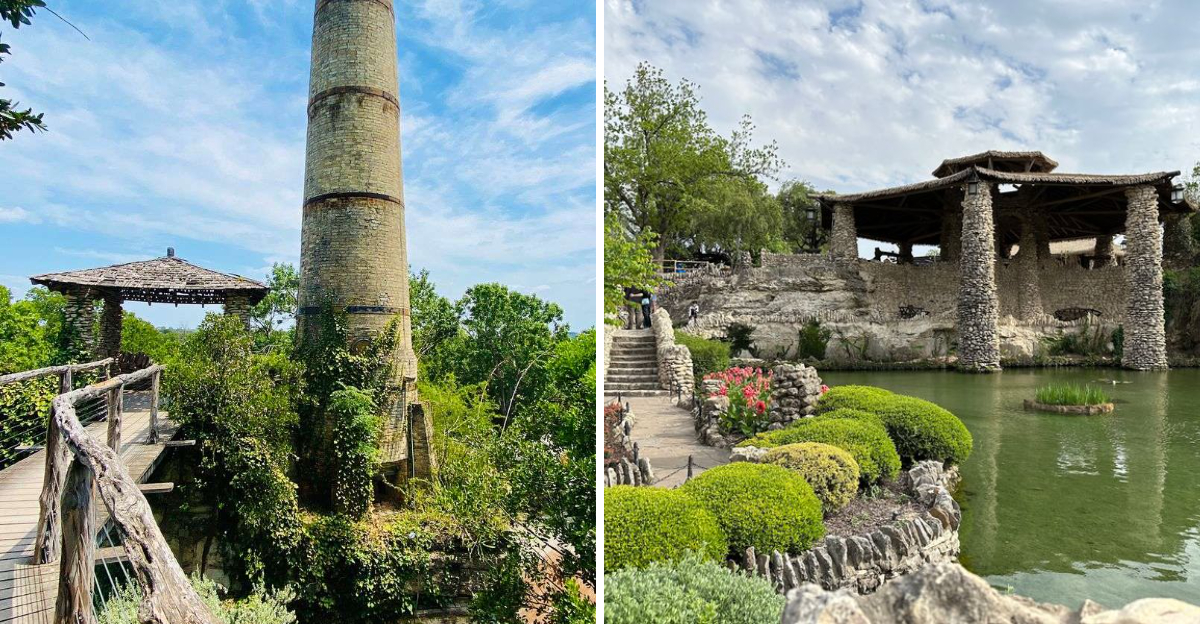
Free attractions usually come with modest expectations, which makes this Texas garden feel almost suspiciously generous.
What started as an old limestone quarry was transformed into a landscaped retreat with stone arch bridges, shaded walkways, koi-filled ponds, a pavilion, and a 60-foot waterfall, all without charging admission.
The garden is open daily, so there is no need to build an elaborate itinerary around seeing it, and the mix of water, bridges, stonework, and greenery gives even a short visit plenty to look at. It is one of those Texas stops that makes spending zero dollars feel unusually productive.
The only real problem is explaining why a former quarry now looks considerably more interesting than some attractions that charge twenty bucks just to walk through the door.
The Waterfall That Drops Sixty Feet Down A Mossy Wall
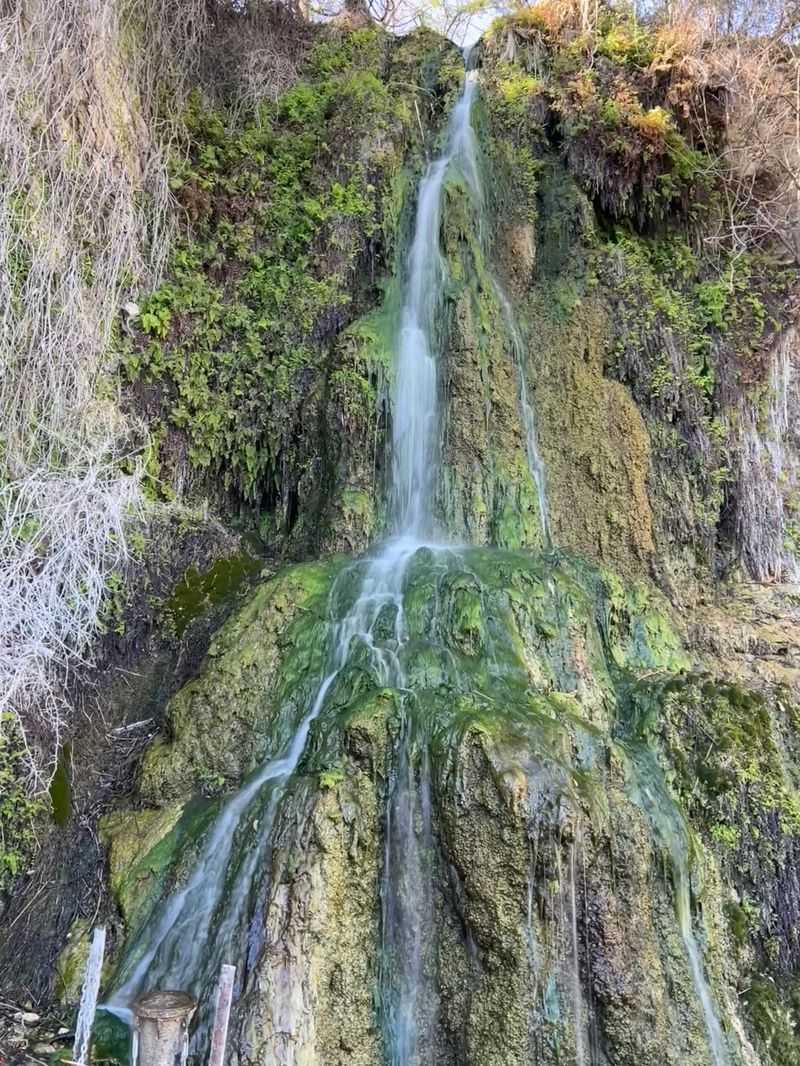
Water hits stone before the view even opens up. That sound carries across the whole sunken bowl, and it pulls visitors forward without any signs needed.
The waterfall drops roughly sixty feet down a rock ledge that has gone soft and green with moss and small ferns. Because the garden sits inside a former limestone quarry, the walls rise on nearly every side, which traps the spray and keeps the air noticeably cooler than the parking lot above.
What surprises most people is how close they can get. A paved walkway leads almost to the base, making this one of the easiest waterfalls in Texas to reach without hiking boots or a long trail.
Morning light works best here. Between about 8 and 10 a.m., sun slips over the quarry rim and lights the falling water while the lower paths stay shaded and calm.
Expect the stones near the water to be slick. Flat shoes with grip beat sandals, especially after rain, and holding the rail on the lower steps is simply smart.
Sit on one of the low walls for a few minutes instead of rushing off. The rhythm of the water blocks out traffic completely, and small details start showing up: dragonflies skimming the pool, water beading on fern tips, sunlight flickering on wet limestone.
Photographers often bring a cloth to wipe lens spray. That one small habit saves a lot of blurry shots.
Stone Arch Bridges Built By Hand In 1917
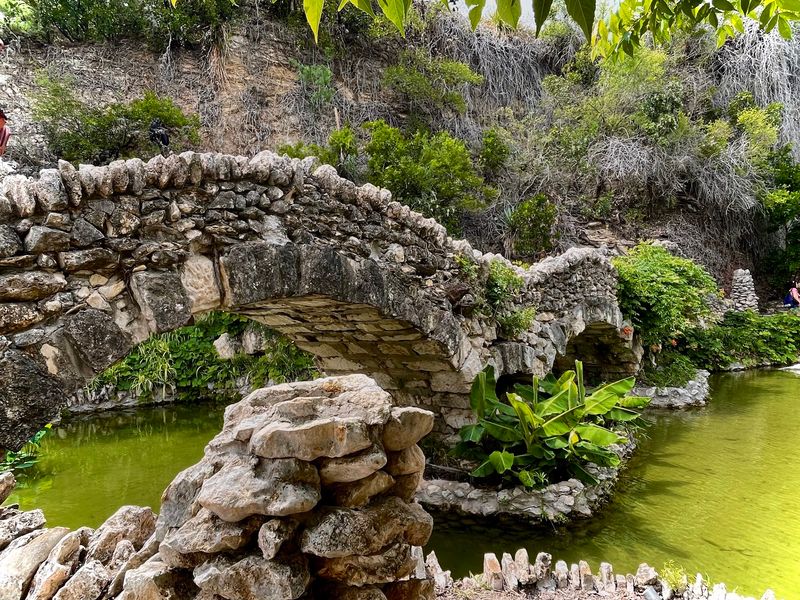
Curved limestone bridges are the reason so many wedding photos come out of this garden. They arch just enough to feel storybook, yet they were laid by hand between July 1917 and May 1918 during the original transformation of the quarry.
City Parks Commissioner Ray Lambert directed that work, and prison labor built the walkways, the island, and these stone crossings. Knowing the history changes how the bridges feel underfoot.
None of them match exactly. One has a steep hump, another stretches long and low over a lily-covered channel, and a third barely counts as a bridge at all until the water beneath comes into view.
Standing room on the smaller spans is limited, so patience helps. People tend to pause mid-bridge for photos, and a friendly nod usually clears the way within a minute.
Look down at the joints between stones. Ferns and tiny plants have wedged themselves into the gaps, softening every edge and proving how long these crossings have been part of the landscape.
The bridges also serve a practical purpose beyond looks. They stitch together a garden built on several levels, letting visitors loop the lower pond area without doubling back.
Handrails are minimal or missing in spots. Holding a child’s hand across the narrower stones is worth doing, and strollers work better parked on the wider paved sections nearby.
Quiet tip: the far bridge near the shaded corner sees the least foot traffic.
Koi Ponds Where The Fish Practically Greet Visitors
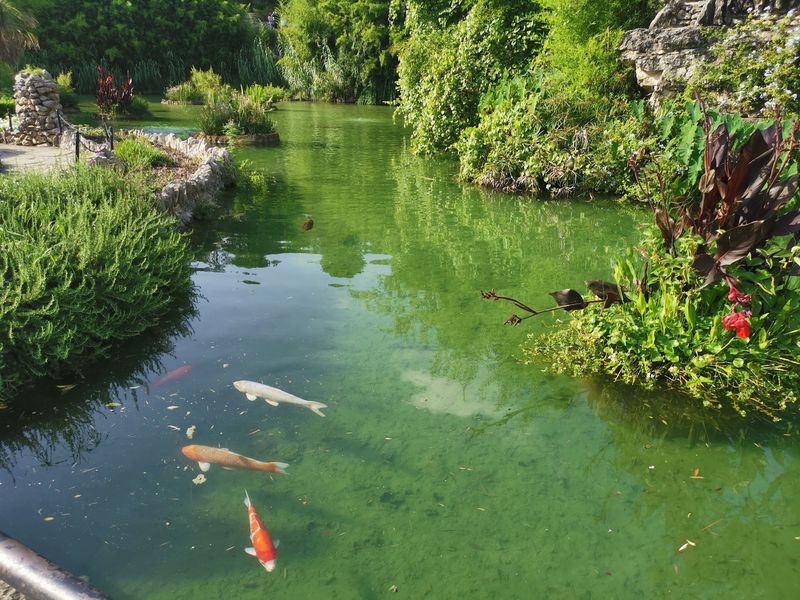
Bright koi crowd the shallows whenever footsteps get close, and honestly it is hard not to smile at that. Orange, white, black, and speckled patterns swirl together in slow circles beneath the lily pads.
The ponds sit at the base of the sunken garden, fed by the waterfall and connected by narrow channels that run under the stone bridges. A recirculation system installed during the 2007 to 2008 renovation keeps the water healthy for both fish and aquatic plants.
Feeding is not the point here. The koi are cared for by the city and the parks foundation, so the best move is simply watching, not tossing snacks in.
Kids tend to park themselves at the pond edge for ages. There is real entertainment in guessing which fish is the biggest, and a few of them are genuinely chunky.
Reflections make photography tricky. Standing with the sun behind the shoulder, or shooting from a bridge looking straight down, cuts most of the glare on the surface.
Turtles show up too, sunning on rocks or paddling lazily past the lilies. Herons occasionally stalk the shallows, which explains why the koi sometimes vanish all at once.
Lean over the edge carefully. The stone rims can be damp and uneven, and a phone dropped in that water is gone for good.
Late afternoon light turns the whole pond a warm gold. That hour rewards a slow lap.
From Limestone Quarry To Sunken Oasis
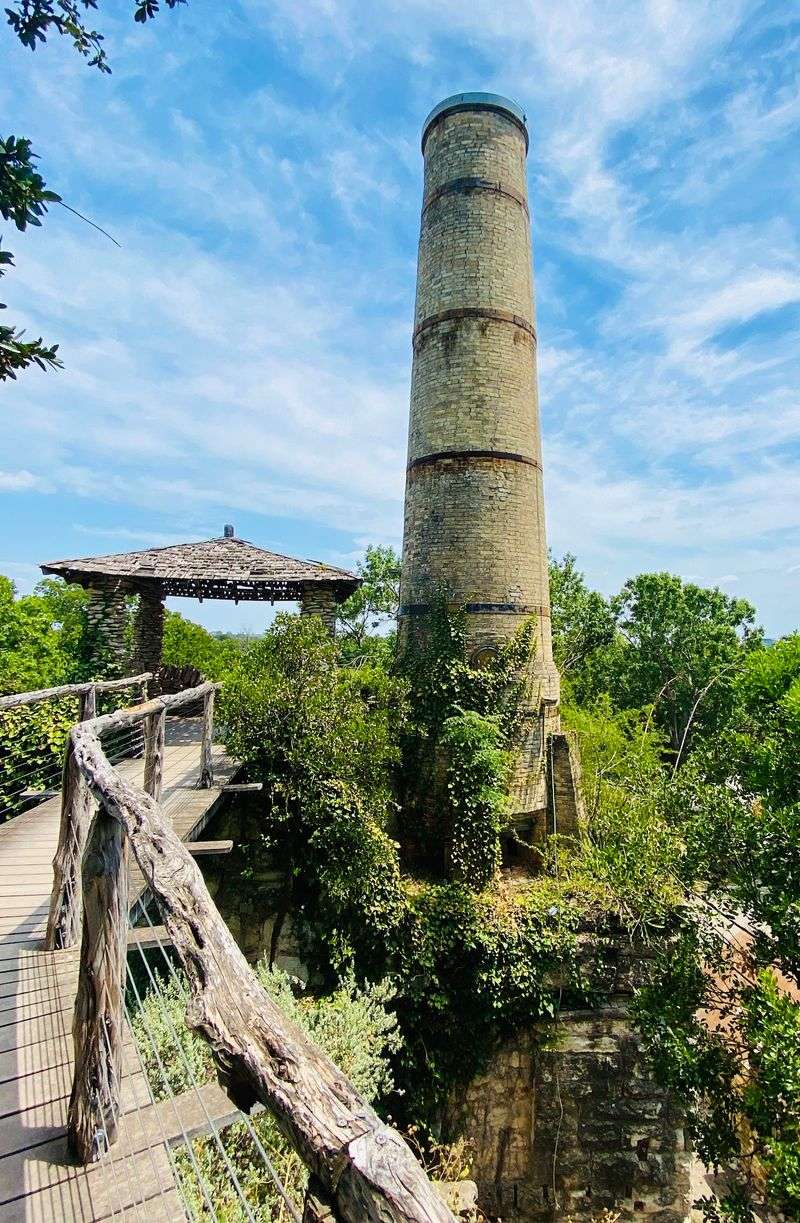
Hard to picture now, but this whole green bowl was once a working rock pit. German masons cut limestone here around 1840, and the Alamo Cement Company kept quarrying until 1908.
The land came to the city in 1899 as a donation from George Washington Brackenridge, then president of the San Antonio Water Works Company. For years afterward it sat as little more than a rocky hole near the river.
Ray Lambert saw something different in 1916. His idea was to shape the pit into a Japanese-style garden with a waterfall and a koi pond, and the work began the following summer.
Local residents pitched in with donated flower bulbs, while exotic plants arrived from the city nursery. That mix of civic effort and reused industrial scar is what makes the place feel so unusual.
Traces of the quarry are still easy to spot. Tool marks and blocky cut faces show up along the upper walls, especially where vines have not taken over yet.
Stand near the rim and the layout suddenly makes sense. Every terrace, stair, and pond follows the shape the quarrymen left behind rather than fighting it.
The garden carries real credentials too, including recognition as a Texas Civil Engineering Landmark, a Registered Texas Historic Landmark, and a spot on the National Register of Historic Places.
Reading a plaque takes thirty seconds. It changes the whole walk.
The Moon Gate Entrance Carved To Look Like Wood
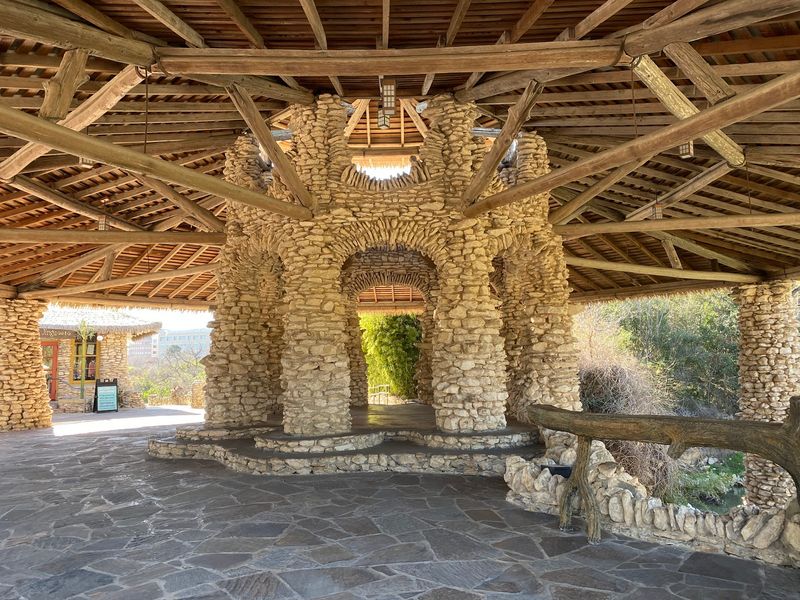
Reach out and touch the entrance gate. It looks exactly like weathered logs and rough bark, but every bit of it is concrete.
Mexican artist Dionicio Rodriguez created it using a technique he became famous for, sculpting cement so convincingly that visitors constantly second-guess their own eyes. The arched shape is known as a moon gate, and passing through it marks the shift into a quieter, almost sacred space.
Details reward a close look. Fake knots, grain lines, and split ends were all worked into the surface while the material was still soft, and after a century the illusion still holds.
Most people breeze past it in a hurry to see the waterfall. Slowing down for a minute here sets the tone for everything beyond.
Framing a photo through the arch works beautifully. Green foliage fills the opening, the rough gate edges act like a natural border, and no filter is needed.
Rodriguez left similar faux-wood work in other Texas spots, which turns the gate into a small treasure-hunt clue for anyone interested in his craft.
Shade gathers under the arch, making it a decent spot to regroup with a group or check a map before heading down.
Morning visitors get softer light on the textured surface. Midday sun flattens it out and hides the carving detail.
Small thing, big impression. That gate is the garden’s handshake.
The Jingu Family Story Behind The Name
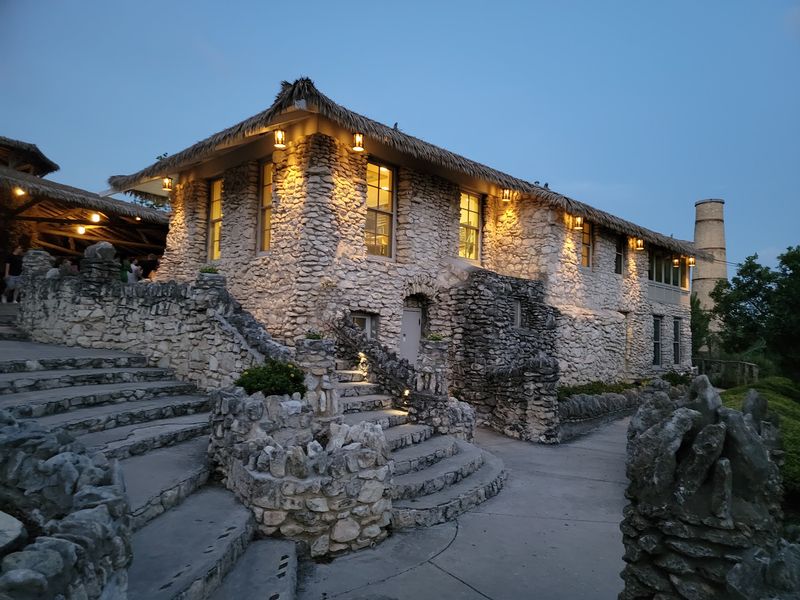
Behind the pretty views sits a family story worth knowing. In 1919 the city invited Japanese-American artist Kimi Eizo Jingu and his family to live on the grounds as caretakers of the new garden.
They made a real home of it. Eight children grew up among these ponds and stairways, and in 1926 the family opened the Bamboo Room, serving light lunches and tea to visitors.
For years the Jingus were as much a part of the attraction as the waterfall itself. Then came 1942, when anti-Japanese sentiment after the attack on Pearl Harbor led to the family being evicted.
The garden was renamed the Chinese Tea Garden, and the original name disappeared from signs for decades. Efforts to correct that started in the 1970s.
Rededication finally came in October 1984, with members of the Jingu family and representatives of the Japanese government present for the ceremony. When the garden reopened after renovation in March 2008, descendants of both the Jingus and Ray Lambert attended.
Knowing all of this shifts the mood of a visit. The pavilion stops being just a photo backdrop and becomes somebody’s former front porch.
Interpretive signs on site fill in more details, and they are worth a few minutes of reading time.
History here is not hidden away in a museum case. It sits right in the stonework.
Lunch With A View At The Jingu House
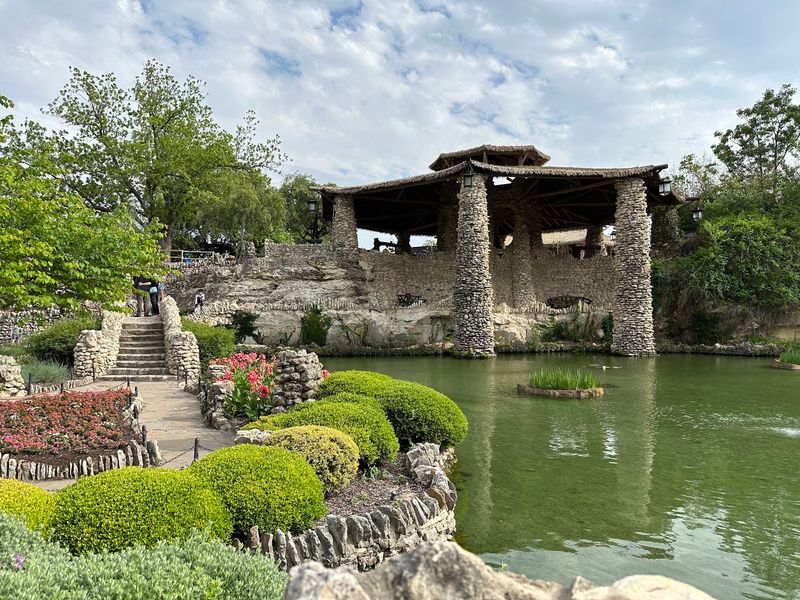
Hunger arrives fast in this kind of heat, and thankfully the garden solved that problem long ago. The Jingu House sits right inside the grounds, occupying the same spot where the family once ran their little tea room.
The menu leans Asian with a clear San Antonio accent, which is a combination that sounds odd on paper and works surprisingly well in practice. Tea remains part of the appeal, honoring the original purpose of the building.
Seating spills onto a terrace above the ponds. From a table there, the waterfall stays within earshot while lily pads shift below.
A portion of proceeds goes back into improvements, programs, and maintenance for the garden. Grabbing lunch here is one of the easiest ways to support a free attraction.
Timing matters. Late morning or mid-afternoon usually means shorter lines than the peak lunch stretch, especially on weekends.
Order something cold and sit for a while rather than eating on the move. The terrace breeze and the shade make it a genuine rest stop, not just a food break.
Hours can differ from the garden’s own schedule, so a quick check before visiting saves disappointment.
Ramp access reaches this upper area, which makes the restaurant one of the more comfortable spots for anyone avoiding stairs.
Simple pleasure: iced tea, a shaded chair, and the sound of water. Hard to beat.
Free Entry, Early Hours, And Easy Parking
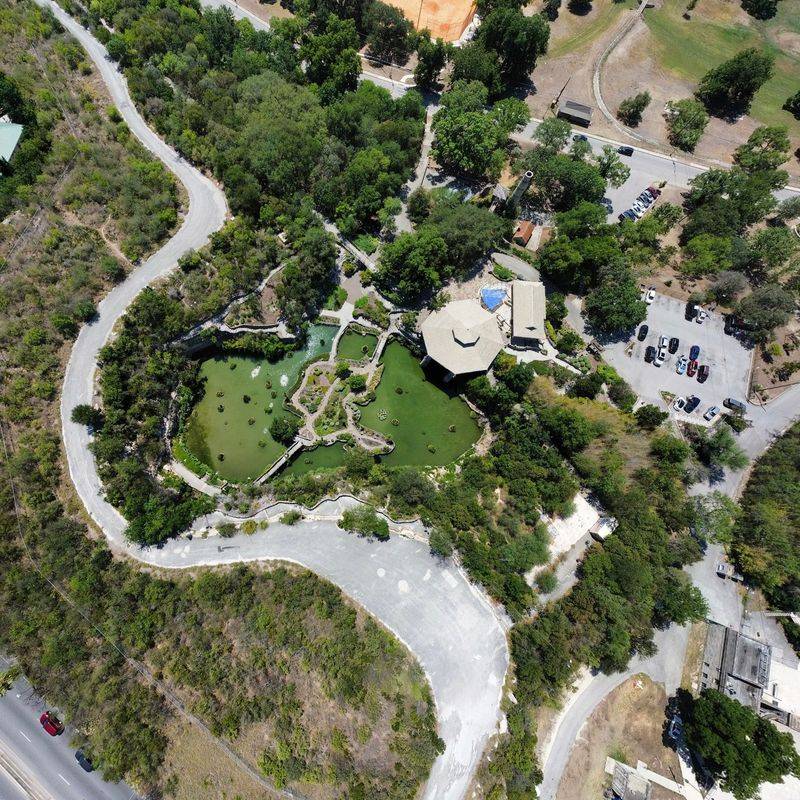
Zero admission fee. That fact alone makes this one of the best value stops in San Antonio, and it never stops feeling like a bonus.
Gates open daily at 7:00 a.m. and close at 5:00 p.m., which gives early risers a real advantage. Arriving right at opening often means having entire stretches of path to oneself.
There is a dedicated parking lot at the garden, including designated accessible spaces. Weekend mornings fill it faster than weekdays, so a slightly earlier start pays off.
The garden sits on the northwestern edge of Brackenridge Park, next door to the San Antonio Zoo. That neighborhood setup makes combining stops genuinely easy.
Plan on forty-five minutes for a relaxed loop. Add more if photos, a bench break, or lunch enter the picture.
Bring water, especially in summer. Shade helps, but Texas humidity in the sunken bowl is still Texas humidity.
Because entry is free, the crowd is wonderfully mixed: neighbors on morning walks, families, photographers with tripods, and travelers who just happened to spot the sign.
Restroom facilities are available near the upper area, worth noting before heading down the stairs.
Closing time comes quicker than expected once the light gets pretty. Keep an eye on the clock around 4:30 p.m.
No tickets, no reservation, no fuss. Just show up.
Photo Spots That Keep Wedding Planners Busy
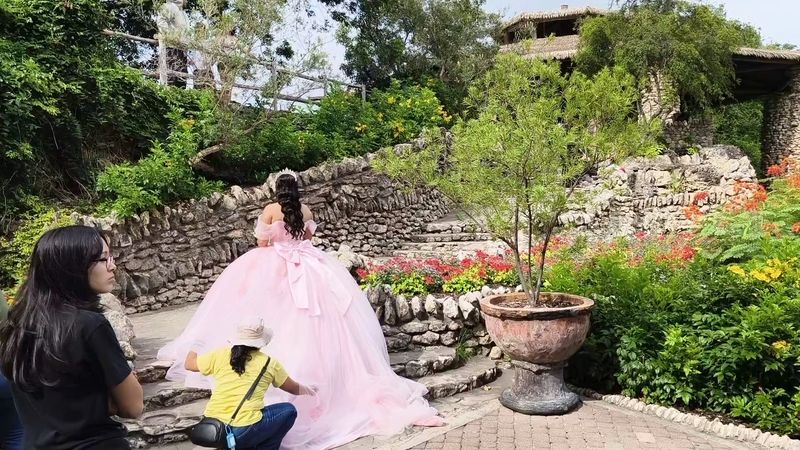
Chances are good that a camera will be clicking somewhere during any visit. Engagement sessions, maternity shoots, quinceanera portraits, and proposals all happen here regularly, and casual photography typically requires no permit.
The reasons are obvious once the paths reveal themselves. Layered stone, falling water, hanging vines, and bright koi give a photographer four completely different backdrops within a few dozen steps.
Favorite spots include the arched bridges, the pavilion overlook, and the shaded steps where light filters through leaves. The waterfall base draws the biggest crowd of tripods.
Sharing space is part of the deal. A quick wave and a short wait usually sort out any traffic jam on a narrow bridge.
Golden hour would be ideal, except the garden closes at 5:00 p.m., so early morning becomes the real prize window. Soft light, fewer people, and cooler air all line up before 9 a.m.
Phone cameras handle this place surprisingly well. Depth comes built in with all those stone layers.
Avoid climbing on walls or stepping into planting beds for a shot. The garden is a historic landmark, and those stones have already survived a century.
Larger commercial or formal shoots may involve additional arrangements with the city, so checking ahead is sensible for anything beyond casual snapshots.
Best advice? Take five photos, then put the phone away and just look around.
Paths, Stairs, And Knowing Before Going
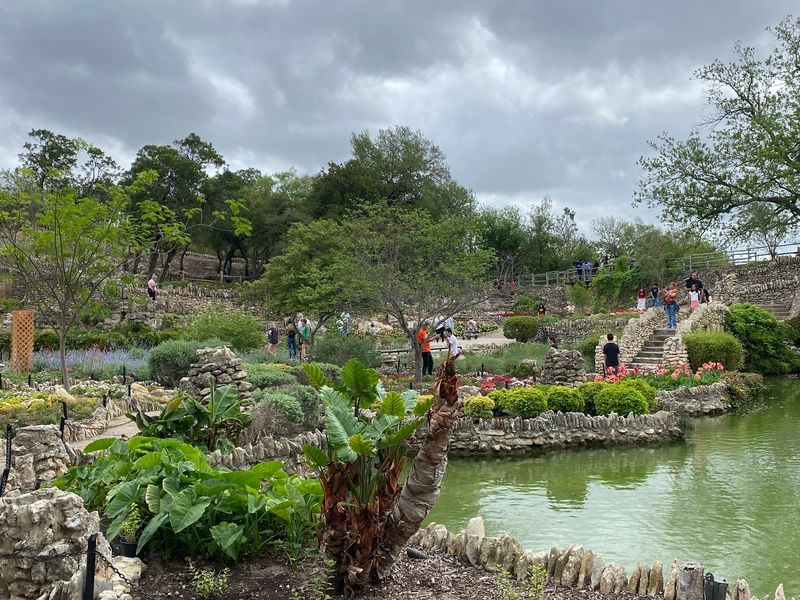
Layout is the one thing worth understanding in advance. The garden works on multiple levels, and the difference between the upper and lower areas matters a lot depending on mobility.
Upper garden and pavilion areas, including the Jingu House restaurant, are reachable by ramp. The lower garden, where the ponds and bridges sit, is accessible only by stairs.
Because of the uneven terrain and repeated steps, electric scooters are not recommended for covering the full path. Planning around that saves frustration on arrival.
Even for visitors with no mobility concerns, footwear choice makes a difference. Stone steps get damp from waterfall mist, and smooth soles slide more than expected.
Shaded walkways cover much of the lower loop, which is a relief in July. Benches appear at helpful intervals for anyone taking it slow.
Views from the upper terrace are genuinely good, so skipping the stairs does not mean missing the garden. The waterfall and pond spread out below in one wide frame.
Strollers can navigate the upper level comfortably. Down below, carrying a small child is usually easier than wrestling wheels down steps.
The 2007 to 2008 renovation repaired ponds, the waterfall, and infrastructure throughout, funded through the San Antonio Parks Foundation and the city.
Take the paths slowly and the garden opens up in layers.
Address: 3853 N St Mary’s St, San Antonio, TX
