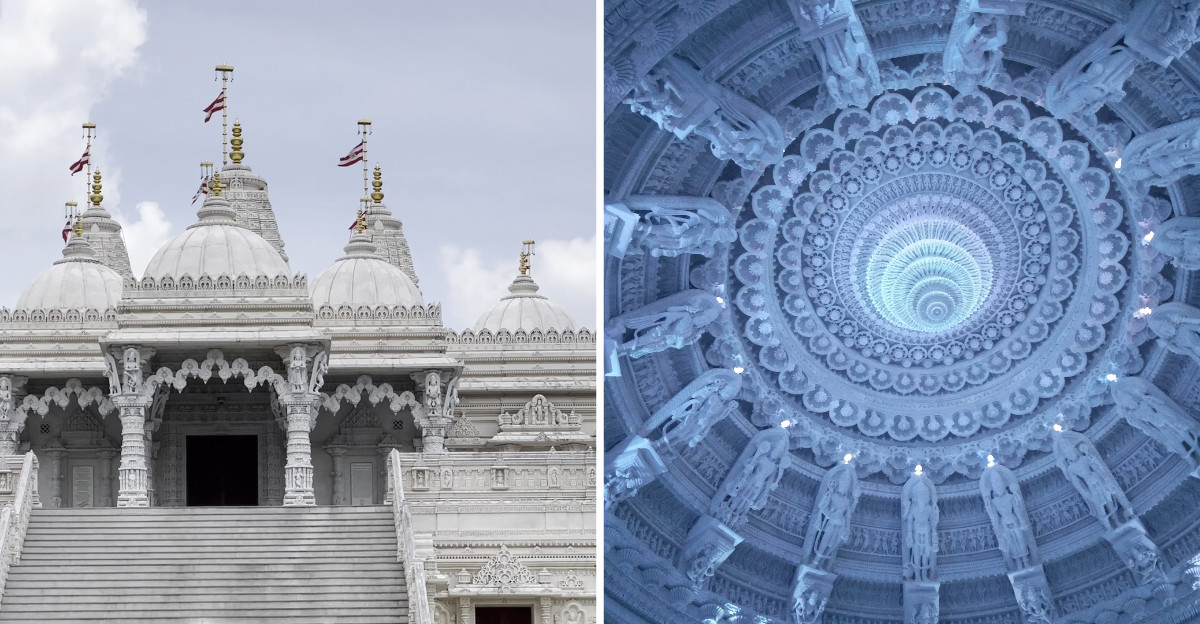
White stone spires rising above the trees on a Georgia road make you question whether you took a wrong turn. Barefoot on cool marble a few minutes later, staring up at ceilings carved so finely they look like frosting, the feeling only grows.
This temple is made from more than 34,000 hand-carved stones, and every single one traveled across oceans to get here. What amazed even more was learning that volunteers gave about 1.3 million hours to build it, and the whole thing was finished in just 17 months.
That is faster than some people remodel a kitchen. The carvings are intricate, the marble is cool underfoot, and the whole place hums with quiet devotion.
Leaving with sore eyes from looking up so much and a head full of questions is part of the experience.
A Giant Stone Puzzle Shipped Across the World
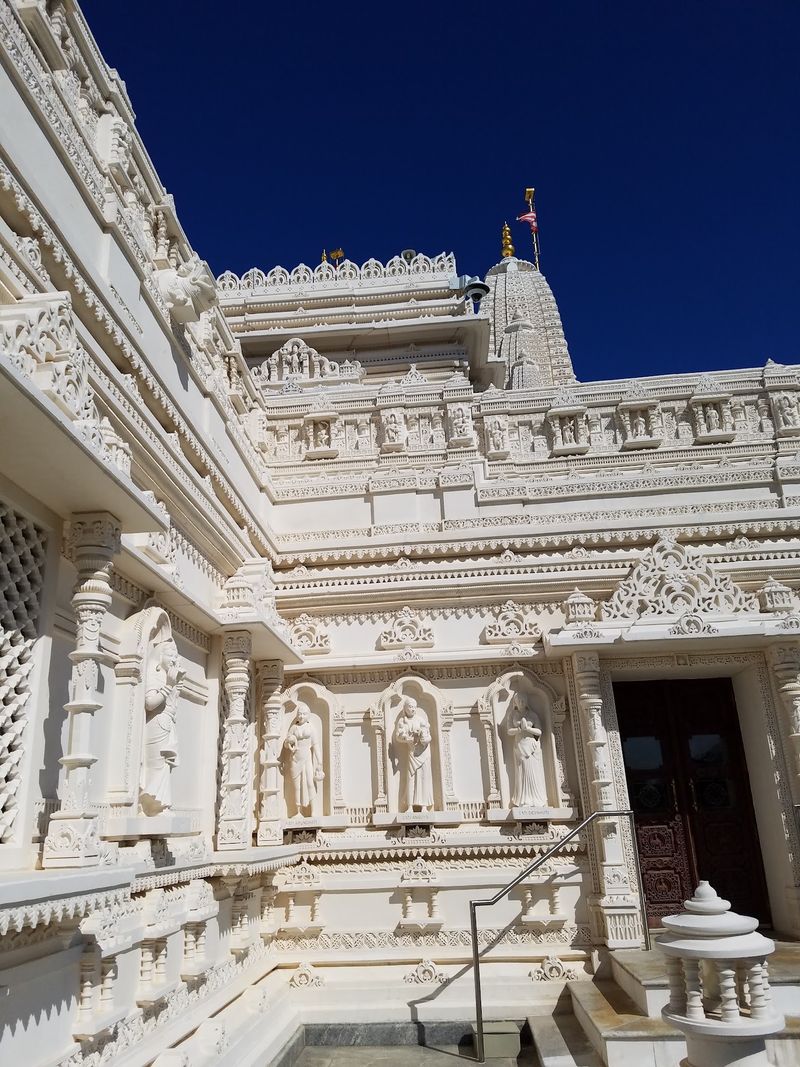
My brain kept trying to picture it as I stood near the front steps. More than 34,000 separate stones were carved by hand in India, packed up, and shipped all the way to a suburb outside Atlanta.
Once they arrived, the pieces were fitted together like a huge three-dimensional puzzle. The builders used Italian marble, Turkish limestone, and Indian pink sandstone, and each block had its own exact spot.
There was no structural steel holding the traditional stone parts together, which still blows my mind every time I think about it.
Imagine opening a box of puzzle pieces the size of a car, then realizing one missing edge could throw everything off. That is the kind of careful planning this project needed.
Every stone had to be numbered and tracked through a trip across oceans and continents.
When you visit, try looking at the seams between the blocks. They are so tight that the walls seem carved from one solid piece, and I caught myself running my fingers along them more than once.
Kids especially love hunting for the tiny lines where two stones meet.
Here is a helpful tip for the trip. Bring a light jacket in cooler months, because stone buildings hold onto the chill and the marble floors inside can feel refreshingly cold under bare feet.
The Volunteer Army Behind 1.3 Million Hours
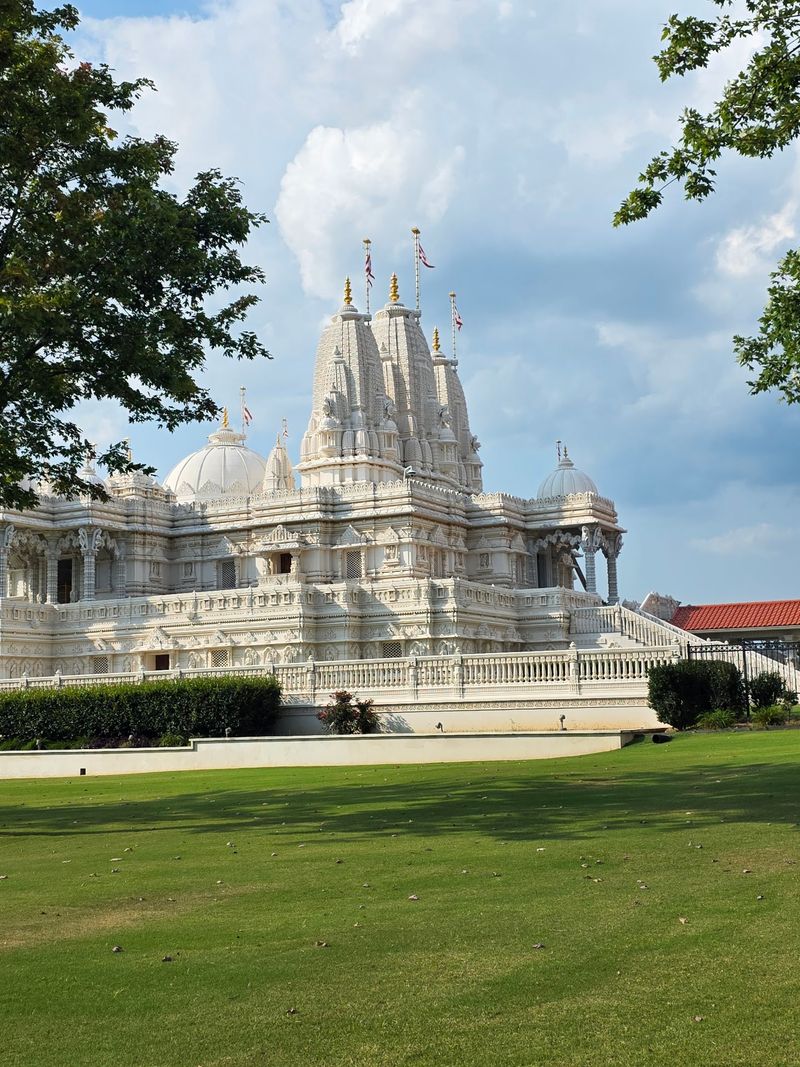
Numbers usually bore me, but one stuck with me all afternoon. About 1.3 million volunteer hours went into building this mandir, and I tried doing the math on my phone in the parking lot.
If one person worked eight hours a day with no days off, that would take more than 400 years. Instead, thousands of volunteers shared the load and squeezed it into a stretch of time shorter than a school year and a half.
That kind of teamwork is hard to wrap your head around.
You can still feel that giving spirit today, because volunteers help run much of the campus. When I visited, friendly helpers pointed me toward the shoe area and answered my questions without any rush.
Nobody made me feel like an outsider, even though I clearly had no idea what I was doing at first.
A good lesson hides in this story. Big goals get a lot smaller when many people each give a little, whether that means building a temple or cleaning up a local park.
If you have students with you, this makes a great talking point for a class project on community service. Ask them to guess how many hours they have volunteered in their lives, then compare it to 1.3 million.
The gap tends to leave them wide-eyed and quiet.
From Groundbreaking to Grand Opening in 17 Months
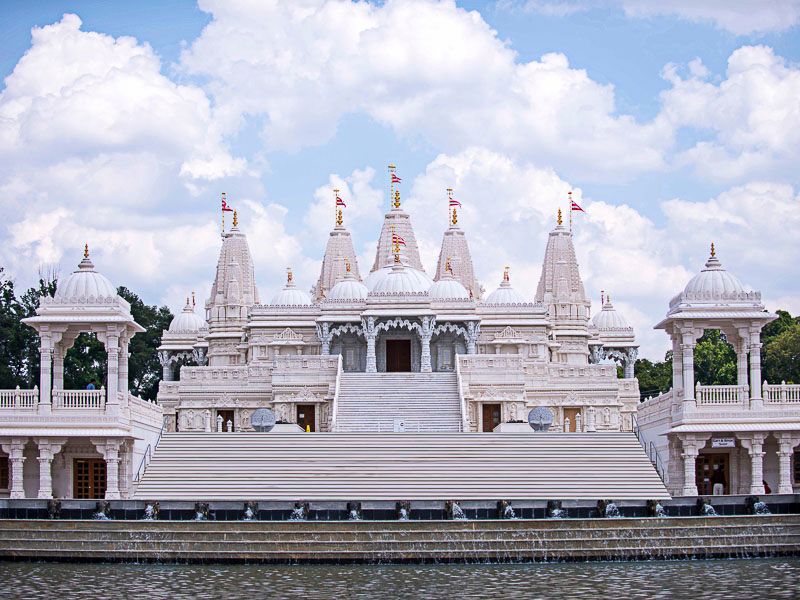
Speed and ancient stonework do not usually go together. So when I read that work started in September 2005 and the mandir opened on August 26, 2007, I had to read it twice.
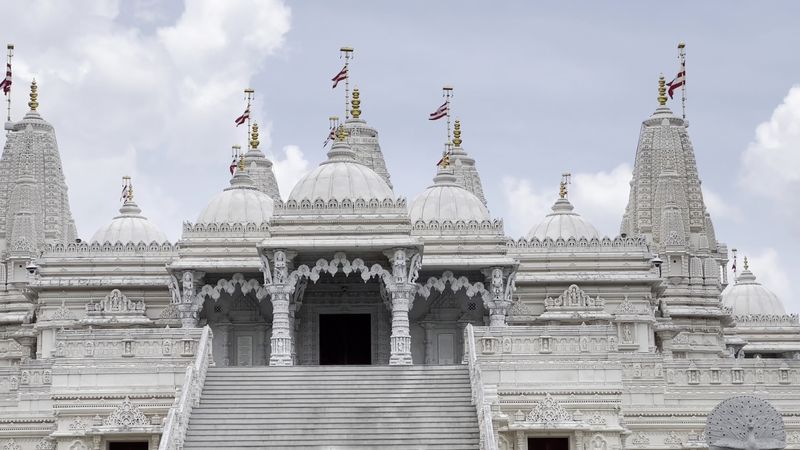
Seventeen months is a blink for a project this size. The tallest spire reaches 84 feet, and the building holds 340 columns, 116 archways, and 86 decorated ceilings.
Many modern office buildings with steel frames and cranes take longer than that.
Part of the secret was doing the carving in India while the site in Georgia was being prepared. Once the stones landed, crews could start assembling right away.
It is a bit like baking all your cookies ahead of time so the party can start the moment guests walk in.
I love sharing this fact with friends who think great things always take forever. Sometimes a clear plan and a crowd of determined helpers can move mountains, or in this case, stack them neatly into spires.
Standing under that 84-foot pinnacle, I tried to picture the empty land that was here before. It is almost impossible now, with the gardens so settled and the stone looking like it has watched over Lilburn for centuries.
Fun fact for trivia night: the mandir celebrated its opening in late summer, right in the heart of Georgia heat.
Rules Written in Ancient Scriptures
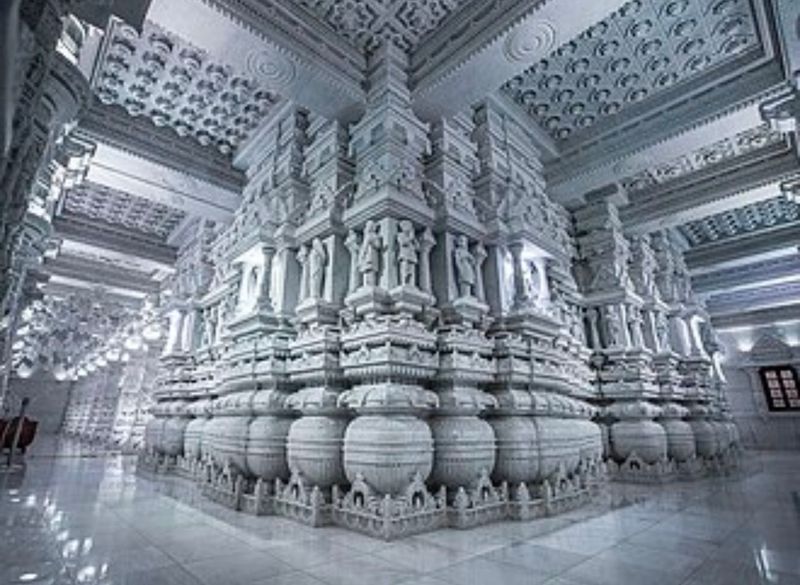
Something about the shapes felt balanced in a way I could not explain at first. Later I learned the whole design follows the Shilpa Shastras, a set of ancient Hindu writings that guide how sacred buildings should be made.
These old rules cover things like proportions, placement, and which details belong where. Because of that, the mandir is called a shikharbaddha mandir, meaning a traditional temple topped with stone spires.
It is also known as the largest mandir of its kind outside of India, which is a pretty big title for a spot in suburban Georgia.
Look closely at the columns and you will spot flowers, dancing figures, animals, and swirling patterns. Each carving was made to carry meaning, not just to look pretty.
I spent a long time trying to count the elephants and gave up somewhere around the second archway.
My advice is to slow down here. Pick one pillar and study it from top to bottom before moving on, because rushing turns all that detail into a blur.
You will notice far more that way.
Marble changes mood with the weather too. On a cloudy morning the stone looks soft and creamy, while bright afternoons make the pink sandstone glow a little warmer, so each visit can look slightly different.
Bare Feet, Covered Shoulders, and a Quiet Heart
Slipping off my sneakers at the door turned out to be my favorite small ritual of the day. The moment my socks touched cool stone, my whole pace seemed to slow down.
Visitors are asked to remove shoes before entering the temple and to dress modestly, with shoulders and knees covered. If you forget, several visitors have mentioned that coverings are offered at the entrance, so nobody gets turned away for a tank top.
Still, it is easier to plan ahead and wear comfortable, respectful clothes.
Inside, photography is not allowed in the main temple. At first I missed my camera, but then I realized I was actually looking at things instead of framing them.
The quiet made the carvings seem even more detailed.
Remember that this is an active place of worship. People come here to pray, so keep voices low and give them space, especially near the shrines.
A simple smile and a respectful attitude go a long way.
For timing, the campus is generally open from 9 AM to 6 PM, but hours can change, so check the official website before heading out. Weekday mornings tend to feel calmer than weekends and festival days.
Easy slip-on shoes will save you a little fumbling at the door, too.
Learning Along the Way

Curiosity got the best of me halfway through, so I grabbed an audio guide. It turned my wandering into more of a story, explaining what the carvings mean and how the mandir came together.
The guides share the history of the building, the meaning behind the sacred images, and why the architecture looks the way it does. There is a fee for them, but I found it worth it for a first visit.
Without one, I would have walked right past several details that turned out to be my favorites.
The campus also has an exhibition about Hinduism that helps beginners understand the traditions behind what they are seeing. One reviewer even mentioned using the visit for a middle school social studies project, and I can see why.
It is basically a field trip packed into a single afternoon.
Ceilings deserve special attention, by the way. With 86 decorated ceilings, many shaped like blooming flowers or rings of carved figures, you will want to tilt your head back often.
My neck complained a little, but my eyes were thrilled.
Plan on spending around an hour and a half to two hours if you want to take everything in without rushing. Bringing along a small notebook helps too, since you cannot snap photos inside to remember things later.
Gardens, Sweets, and One Last Look Back
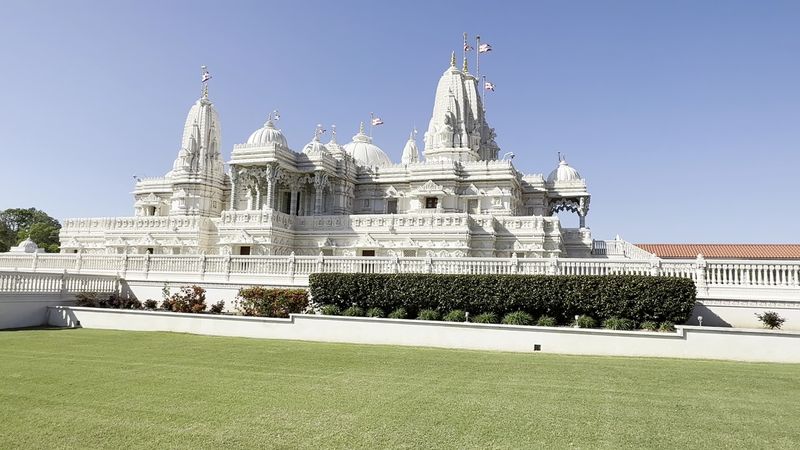
Back outside, the sunshine felt extra bright after the soft light indoors. The mandir sits on roughly 30 acres of landscaped grounds, and I happily wandered the paths for a while before leaving.
Neatly trimmed lawns and flower beds frame the building from every angle. Photos are welcome outdoors, so this is the time to pull out your phone.
My favorite shot came from farther back, where all five pinnacles fit into one frame.
Hungry visitors should head to Shayona, the on-site spot serving vegetarian Indian food, snacks, and sweets. Many dishes are made without onion or garlic, following traditional recipes.
I tried a couple of sweets and immediately wished I had bought more for the drive home.
There is also a gift shop with books, small figures, and keepsakes if you want something to remember the day. Parking is free and easy to find, which is always a pleasant surprise near Atlanta.
Before pulling away, I turned around for one last look. Knowing that so many hands, so many hours, and so many ocean miles went into those stones made the whole place feel even more special, and I suspect you will feel that too.
Address: 460 Rockbridge Road NW, Lilburn, GA 30047
