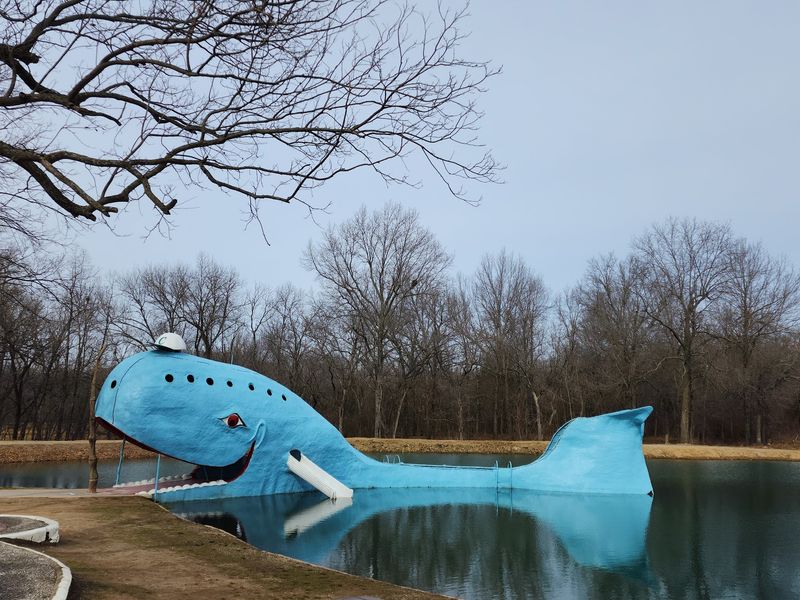
Some of the best stops in Oklahoma are the ones nobody puts on a fancy list. You round a bend on an old two-lane highway, glance to your right, and there it is: a grinning concrete giant lounging in a pond like it has all the time in the world.
It costs nothing to pull over, and somehow that free little detour sticks in your memory longer than the expensive stuff. Here is the story behind one of the friendliest roadside faces in the state.
A Smiling Giant Parked Beside the Mother Road
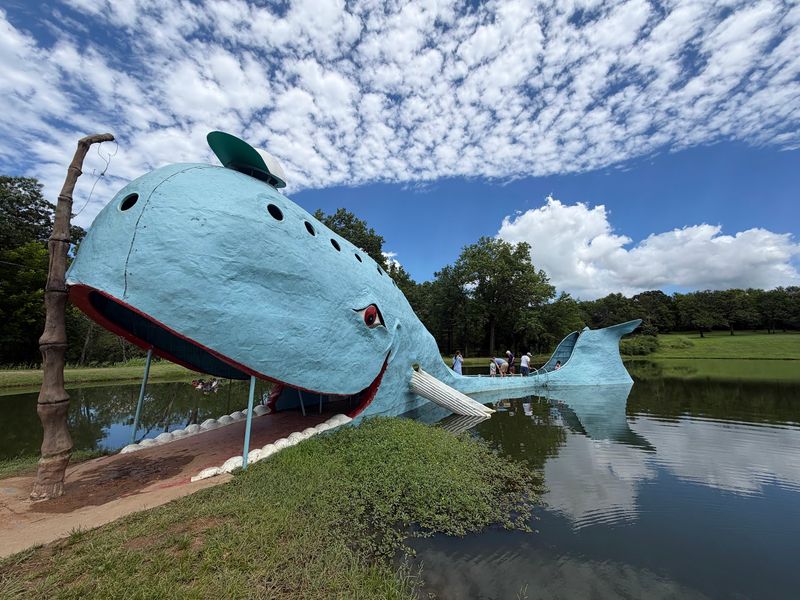
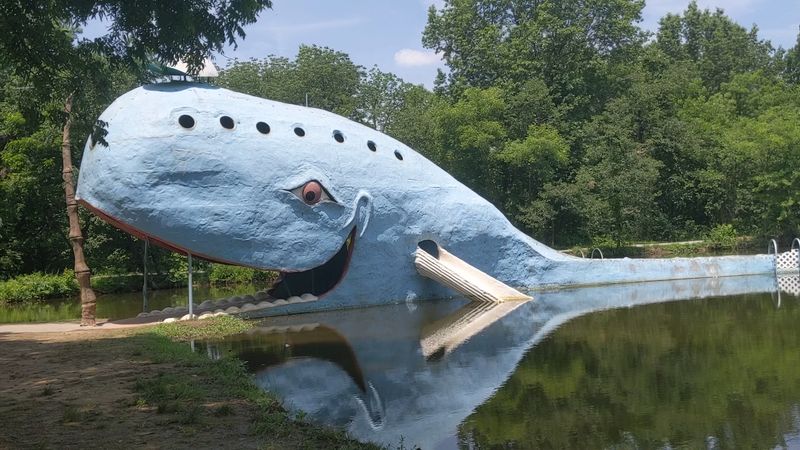
Head northeast out of Tulsa on old Route 66 and, about 20 minutes later, the landscape hands you something delightfully strange. Sitting at 2600 OK-66 in Catoosa, a 80-foot-long concrete whale rests half in, half out of a spring-fed pond, mouth open, eyes crinkled into a permanent grin.
Officially it is called the Blue Whale of Catoosa, and it has been greeting travelers since 1972. Unofficially, it is one of the most photographed objects in Rogers County.
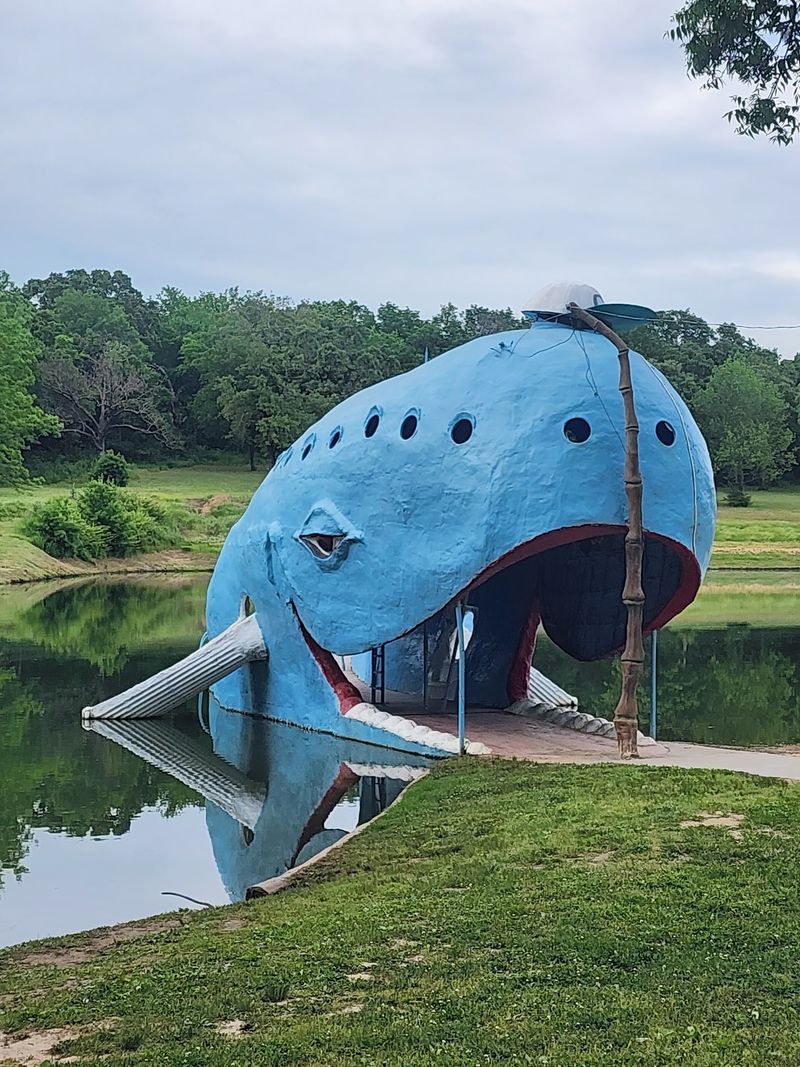
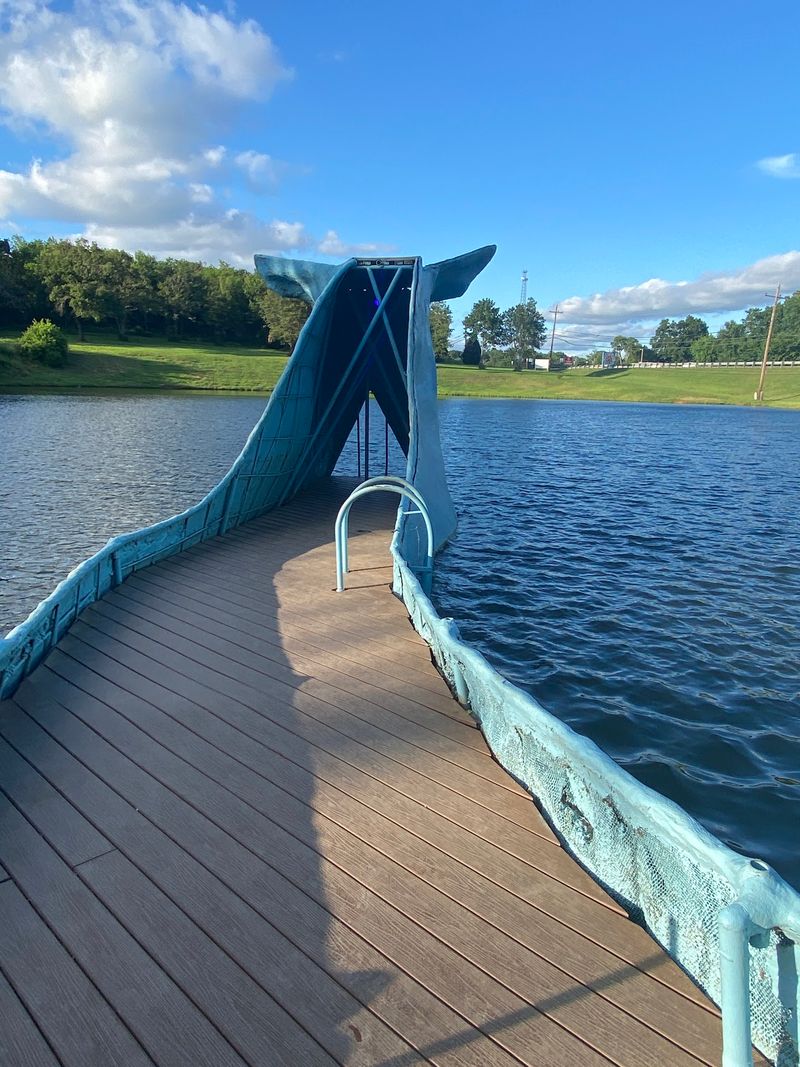
The scale surprises people. Standing roughly 20 feet tall at the head, it is big enough to walk into, with a wooden pier running along its body and openings where sunlight cuts through in stripes.
What makes it work is the total lack of pretense. There is no ticket booth, no velvet rope, no soundtrack.
You park, you walk down a short path, and you meet a whale.
Visitors often describe the mood as instantly cheerful, the sort of thing that makes grown adults grin without meaning to. For a state packed with big open highways, having a friendly sea creature as a landmark feels exactly right.
Hugh Davis and the Anniversary Surprise
Behind the whale is a love story, which is not something you expect from a lump of concrete and rebar. Hugh Davis, a zoologist by trade and a Catoosa family man by heart, wanted a safe place for his grandchildren to swim in the pond on the family property.
What started as a practical idea grew into something far grander. Davis quietly built the whale as a surprise gift for his wife, Zelta, who collected whale figurines and had no idea what her husband was up to out by the water.
The reveal came on September 7, 1972, marking their 34th wedding anniversary. Imagine unwrapping that.
Construction wrapped up in July of that year after roughly two years of steady, sweaty work. The numbers still make people blink: 126 sacks of dry concrete, 19,400 pounds of rock, and 15 tons of sand, most of it hauled by hand.
Reading that history on site, usually posted right outside the welcome center, changes how the whale feels. It stops being a novelty and becomes a very large, very public valentine.
Two Years, One Welder, and 15 Tons of Sand
Ask anyone who has built anything with concrete and they will tell you: five-gallon buckets are a brutal way to move material. That is exactly how Davis did it, mixing and carrying the cement himself, bucket after bucket, applying it by hand across the whale’s iron skeleton.
He did not do it alone. A friend named Harold Thomas, a welder by trade, shaped the framework and put in well over 100 hours without charging a dime.
That detail says a lot about small-town Oklahoma in the early 1970s. Somebody had a wild idea, and a neighbor showed up with a welding rig and a free weekend, repeatedly.
Look closely at the surface today and you can still read the handwork in it. The texture is uneven in the honest way that hand-troweled concrete always is, nothing like a factory mold.
Because of that craftsmanship, the structure has outlasted its builder by decades and shrugged off Oklahoma heat, ice storms, and relentless wind. Not bad for a backyard project that started as a grandparent’s summer solution.
When the Pond Was a Swimming Hole
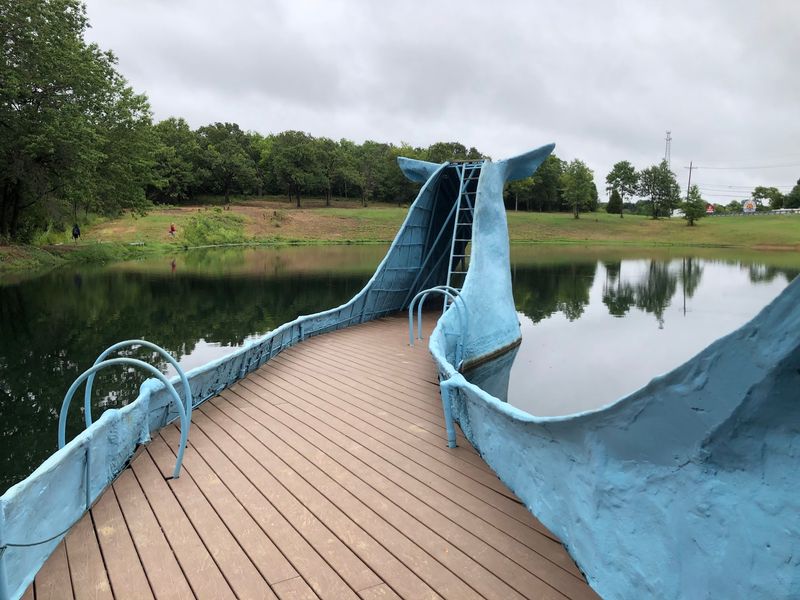
Older Oklahomans light up when they talk about the whale, and it is usually for one reason: they swam here. For years the pond served as a genuine swimming hole, complete with slides that shot kids off the whale’s sides and a platform for cannonballs.
Picture a summer afternoon in 1978, towels on the grass, sunburned shoulders, and somebody’s mom hollering about staying where she can see you.
Swimming ended in 1988, and the water has been strictly look-but-do-not-splash ever since. Visitors today often say they wish they could have experienced it, standing at the edge and imagining the noise.
The slides are gone now, but the shape of that old fun is still readable in the structure. You can see where feet once climbed and where the water once churned.
There is something bittersweet about it, though not sad. Plenty of families bring grandparents who point at a spot on the pier and start telling stories, which may be the best thing a landmark can do.
Nature’s Acres, the A.R.K., and the Reptile Days
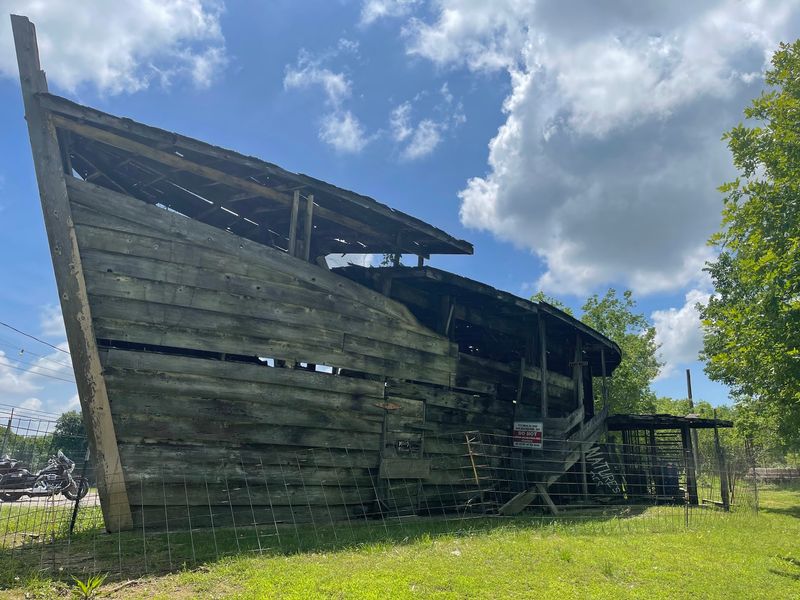
Long before the whale stood alone, it anchored a full-blown family attraction called Nature’s Acres. Davis, being a zoologist, could not resist filling the property with things that crawled, slithered, and taught kids something.
The site once included an A.R.K., short for Animal Reptile Kingdom, lined with painted wooden cutout animals. There was also an alligator ranch, a snake pit, and a prairie dog village.
Hard to imagine now, standing on the tidy modern grounds, but for a stretch of the 1970s this was a full afternoon’s entertainment for Rogers County families.
The gift shop still nods to that era with vintage postcards from the reptile-park days, which travelers mention as a fun little souvenir find.
Across the highway sat the Arrowood Trading Post, run by Davis’s brother-in-law, Chief Wolf-Robe Hunt, a full-blood Acoma artist known for painting and silversmithing. That connection roots the site in more than roadside kitsch.
Two attractions, one family, and a stretch of highway that gave travelers a reason to slow down.
Walking Straight Into the Whale’s Mouth
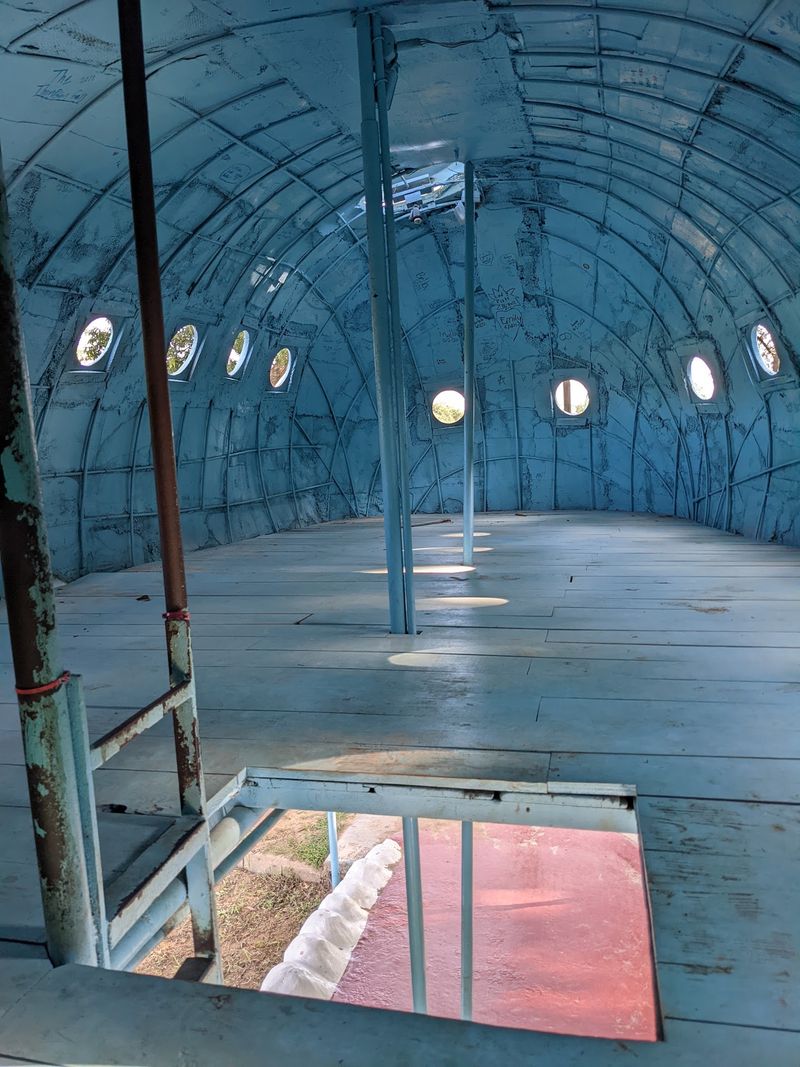
Here is the part kids sprint toward: you can walk right inside. The whale’s mouth opens onto a walkway that runs through the hollow body, and stepping in feels exactly as odd as it sounds.
Light filters through the openings along the sides, the air cools a few degrees, and the sound of the pond softens. One visitor cheerfully admitted the interior is a little creepy, and honestly, that is part of the charm.
From inside, the framed views of the water make for the best photos on the property. Point your camera out through the mouth and the pond becomes a perfect blue oval.
Access has changed over the years. An upper lookout section was climbable long ago but has been closed off for some time, which a few returning visitors genuinely miss.
What remains is still plenty. Walking the length of a hand-built whale from the inside out is not something most road trips offer, and the smooth concrete walls covered in decades of care make the whole thing feel oddly personal.
Turtles, Bluegill, and a Very Patient Pond
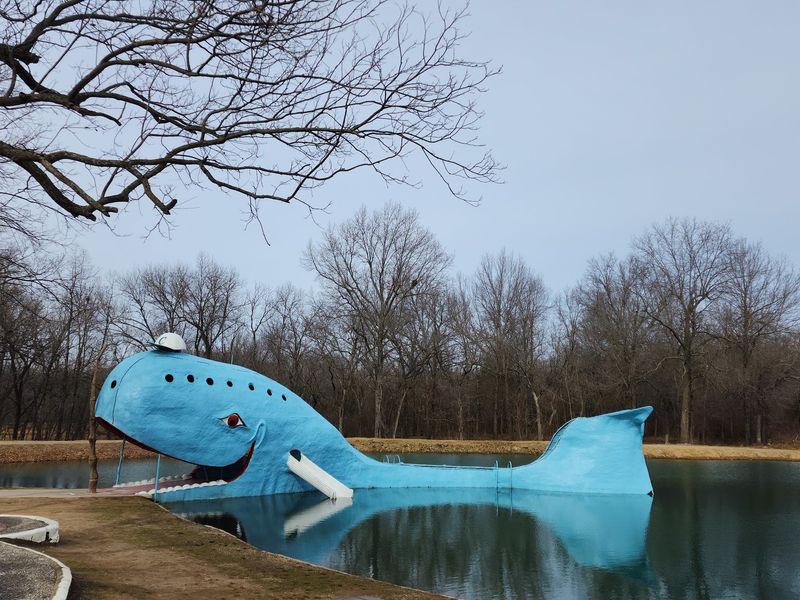
Bring a bag of something snackable and the turtles will find you. Feeding the resident turtles has quietly become one of the most beloved activities here, mentioned constantly by families who stop.
They surface near the dock with the confidence of creatures who know the schedule better than you do.
Fishing is welcome too, on a catch-and-release basis. The pond holds bass, perch, catfish, and bluegill, and recent visitors note there are plenty of fish swimming around down there.
You will often spot kids dangling lines off the middle section of the whale, which is exactly the kind of low-stakes fun that costs nothing and keeps a seven-year-old happy for half an hour.
Nobody comes here for trophy fishing, and that is rather the point. It is a pond, a pier, and a reason to sit still for a while under Oklahoma sky.
Pack your own gear if fishing matters to you, since the site does not rent equipment. A cheap rod and a shady spot beside a smiling whale is a pretty good afternoon by most measures.
From Neglect to Restoration, One Coat of Blue at a Time
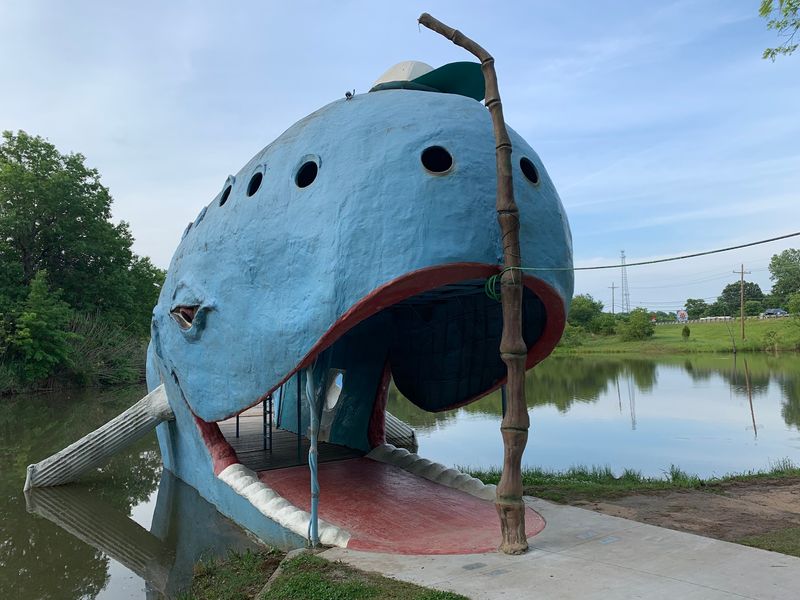
Landmarks do not maintain themselves, and for a while this one nearly slipped away. After Hugh Davis passed in 1990 and Zelta in 2001, the grounds fell into rough shape, with paint peeling and the pond going unloved.
Route 66 fans driving through in that stretch often described it as melancholy, a great idea going quietly to seed.
Then the community stepped up. A repaint in 1997 brought back the original bright blue, and in the early 2000s Hugh’s son Blaine Davis led volunteers in reclaiming the whale and the surrounding grounds.
Permanence arrived in 2020, when the City of Catoosa purchased the property outright. That single decision took the landmark off the endangered list and put it under public stewardship.
Visitors who remember the shabby years are usually the most impressed today. They notice the crisp paint, the cleaned-up shoreline, and the general sense that somebody is paying attention.
Preservation in Oklahoma tends to look like this: not a grant-funded spectacle, but neighbors with paintbrushes and a stubborn refusal to let a good thing disappear.
The New Welcome Center and Its Gift Shop
Ground broke in June 2025 on something the site never had: a proper building. The 4,000-square-foot Blue Whale Welcome Center opened on May 30, 2026, and visitors have been noticeably pleased with it.
Inside you will find a gift shop stocked with Route 66 and Blue Whale souvenirs, clean restrooms, cold water fountains, a concession area, and indoor tables and chairs.
Shoppers describe the retail space as compact but well curated, with prices that stay reasonable rather than tourist-trap steep. Vintage postcards from the old reptile-park era are a favorite grab.
A meeting hall takes up a sizable share of the building, which a few visitors have grumbled about, wishing more square footage went to the whale itself. Fair point, though the restrooms and shade are genuinely welcome in July.
Do not count on buying lunch here. The center does not sell food or drinks, so pack a cooler if you plan to linger.
One more tip repeated often: sign the guest book before you leave, and grab your Oklahoma Route 66 Passport stamp if you are collecting them.
Picnic Tables, Neon, and the Everyday Atmosphere
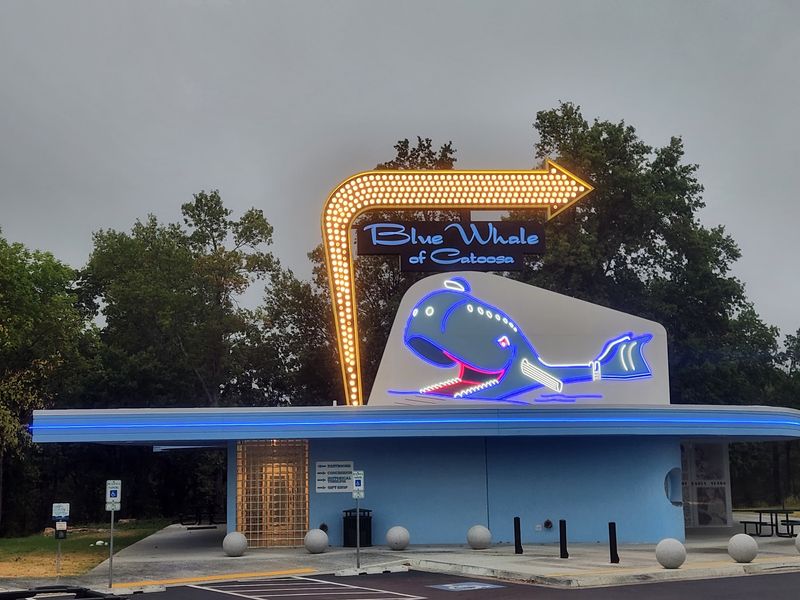
Sunset is when the site quietly shows off. A striking new neon sign now glows beside the highway, pulling in drivers the way roadside neon has done along Route 66 for a century.
During the day the mood is mellow. Families spread lunch on picnic tables, retirees walk the loop around the pond, and somebody is always crouched at the water’s edge with a phone camera.
Worth knowing: some regulars have noticed that outdoor picnic seating thinned out after the remodel, so seating may be limited on busy weekends. Indoor tables inside the welcome center help cover the gap.
Crowds swell in summer, and Oklahoma heat is no joke out there with little shade near the water. Early morning or the hour before closing tends to be calmer.
Photo etiquette can get competitive when a big group parks itself in front of the whale. A little patience usually sorts it out, and the light is better at the ends of the day anyway.
Cool fall mornings might be the sweetest time of all here.
Who Gets the Most Out of a Stop Here
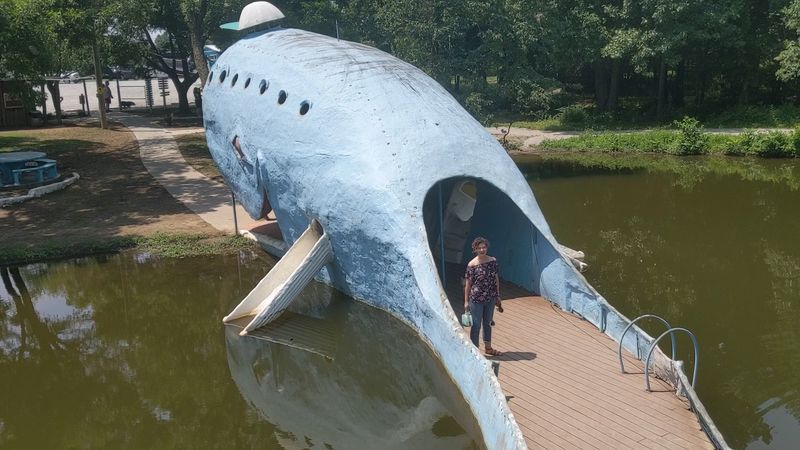
Grandparents win here, hands down. They arrive with memories of the swimming days and hand them straight to grandkids who are busy running toward the whale’s mouth.
Road-trippers chasing Route 66 mile markers get their money’s worth too, which is easy since the price is zero. It slots neatly between Tulsa and Claremore on a day of Mother Road hopping.
Photographers, especially the retro-Americana crowd, find plenty to work with: peeling-era charm, that neon sign, and a subject that never blinks.
Kids under about ten treat the place like a playground with a story attached. Fishing, turtles, and a walk-through sculpture usually buy parents a peaceful half hour.
Most people say 20 to 30 minutes is plenty, though anyone packing a picnic can happily stretch it to an hour or two.
Where it falls short is for travelers expecting a full attraction with rides, food service, and hours of programming. Come understanding it is a roadside landmark rather than a theme park, and it delivers exactly what it promises: a big blue smile and a good story.
Hours, Parking, and Getting There Without Fuss
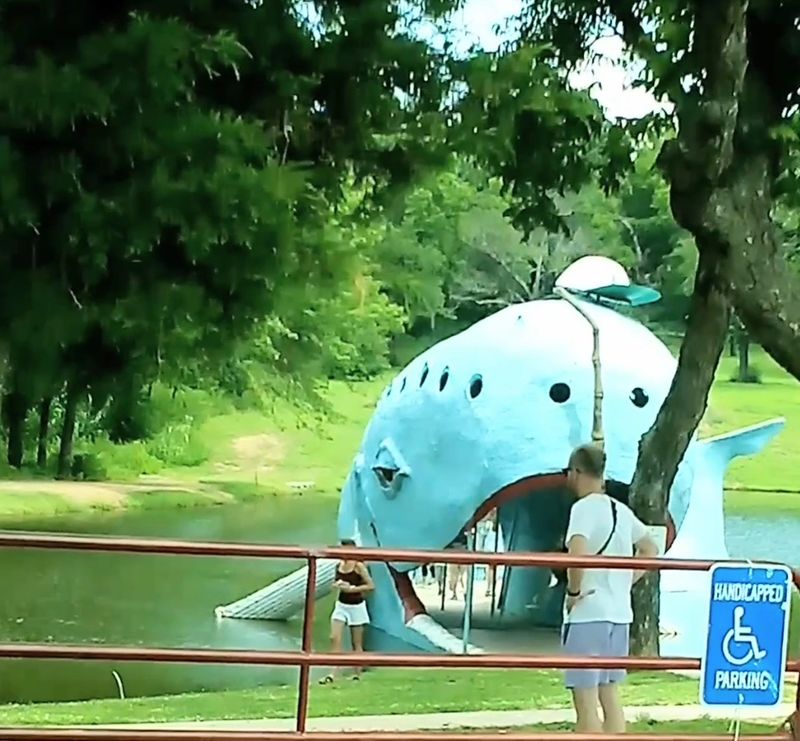
Practical stuff first: admission is free, parking is free, and the lot is new, paved, and easy to spot from the highway. That combination is rarer than it should be.
The address is 2600 OK-66, Catoosa, OK 74015, roughly 20 to 25 minutes northeast of downtown Tulsa and a little over 90 minutes from Oklahoma City. Phone is 918-857-0676 if you want to confirm anything before rolling out.
Welcome center hours generally run 9 AM to 4:30 PM Monday through Saturday, with Thursday stretching to 7 PM and Sunday opening at 11 AM. Hours have shifted during the transition to the new building, so a quick call can save disappointment.
Several travelers have been caught out by the 4:30 closing on Saturdays, and one arrived on a Monday to find the shop shut. Plan for late morning or early afternoon and you will be fine.
The park grounds themselves are generally accessible during daylight hours even when the shop is not open. Restrooms, however, live inside the building.
Why This Concrete Grin Still Earns the Detour
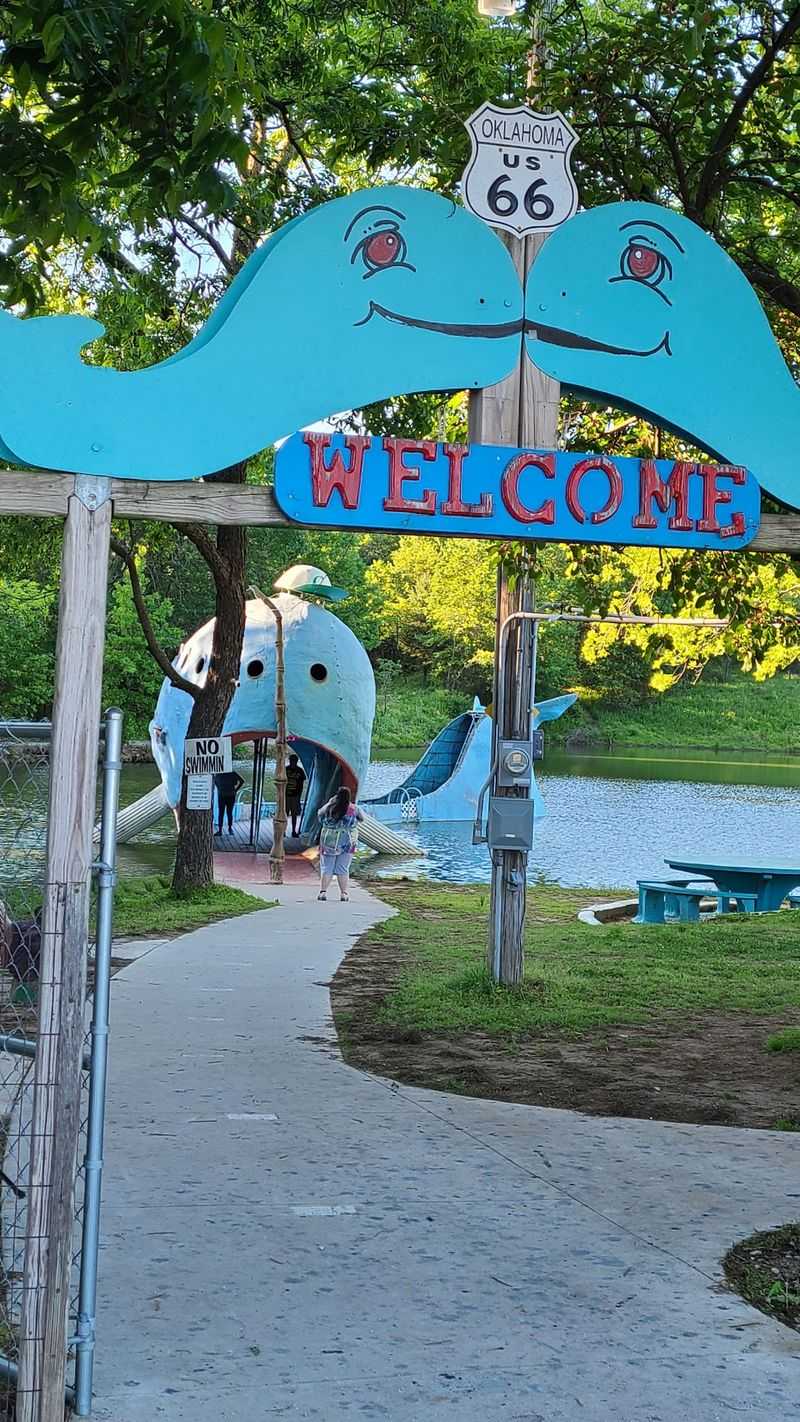
Fifty-plus years on, a homemade whale built as an anniversary gift is still stopping cars. That alone says something about what people actually remember from a road trip.
It is not grand. You will not spend a whole day, and there is no meal waiting at the end of it.
What you get instead is a genuinely odd, genuinely warm piece of Oklahoma that somebody’s family built by hand and a whole town decided to save.
The cost of finding out is nothing but gas money and a short exit off the highway. For Tulsa folks it is barely a detour, and for anyone driving Route 66 across the state it is close to mandatory.
Bring a sandwich, a camera, maybe a fishing pole, and give yourself half an hour longer than you think you need.
Hugh Davis never intended to build a landmark. He just wanted his grandkids to have somewhere fun to swim and his wife to feel loved on her anniversary.
Turns out that is a pretty solid recipe for something that lasts.
