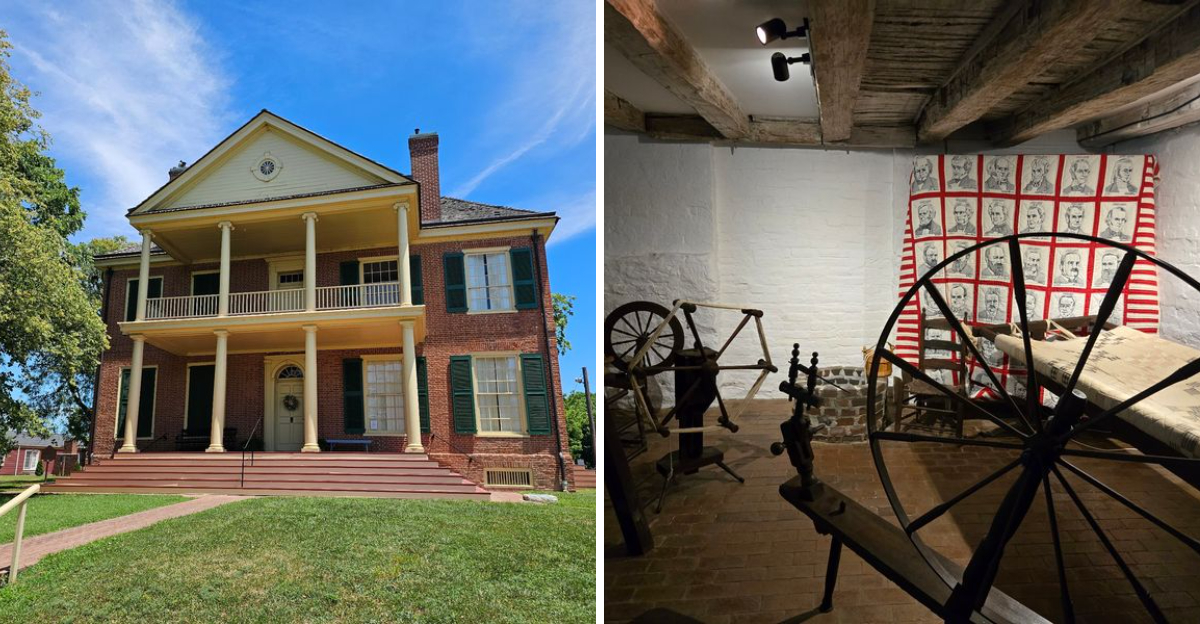
What if a beautiful historic mansion was also built with secrets meant for survival? This Indiana landmark offers a fascinating look at a time when grand homes could serve more than one purpose.
Behind its impressive architecture are unusual details that reveal its frontier past, including features designed for protection during a much different era. Walking through the property gives visitors a chance to discover the stories, craftsmanship, and history hidden within its walls.
Whether you enjoy exploring historic places or simply love finding destinations with unexpected details, this mansion offers an experience that goes far beyond a typical house tour.
A Glimpse into the Life of a Future President
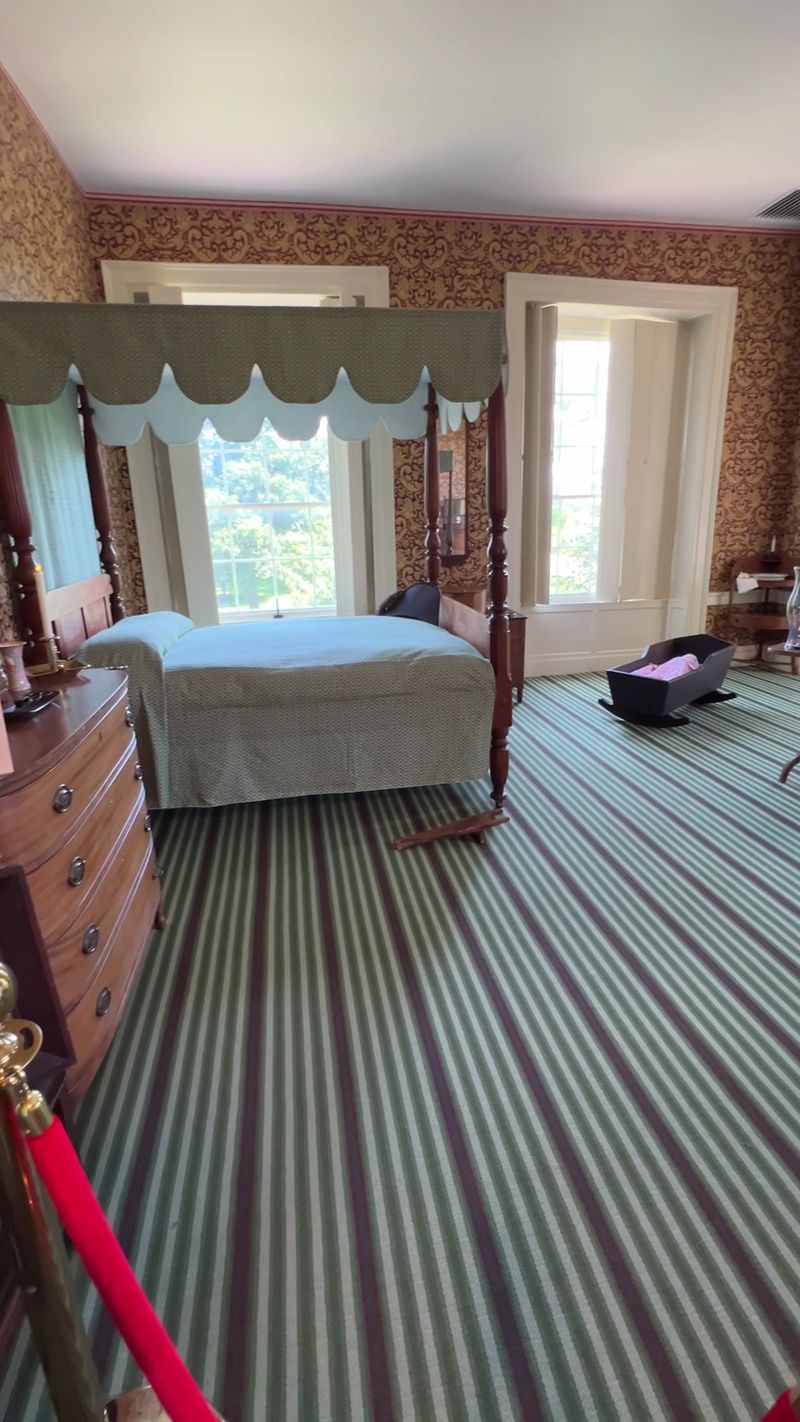
Not many places in the country let you walk through the actual home of a future U.S. President, and Grouseland is one of them.
William Henry Harrison, who became the ninth President of the United States, lived here during his years as the first governor of the Indiana Territory.
Built between 1802 and 1804, this mansion was far more than a political address; it was a real family home where Harrison raised his children and shaped the future of an entire region.
Three of Harrison’s ten children were born within these walls, including John Scott Harrison, who later became the father of Benjamin Harrison, the 23rd President. That means this single building has a direct family connection to two different American presidents.
That fact alone is remarkable, and it hits differently when you are standing in the actual rooms where it all unfolded.
The house reflects Harrison’s Virginia roots, designed to project authority and refinement in a territory that was anything but settled. Touring the rooms, you start to understand the kind of ambition it took to build something this grand on the edge of the American wilderness.
The guides here are genuinely knowledgeable and bring Harrison’s story to life in a way that no textbook ever could. This is presidential history you can actually touch and feel, not just read about.
The Secret Fortress Hidden Inside a Gentleman’s Home
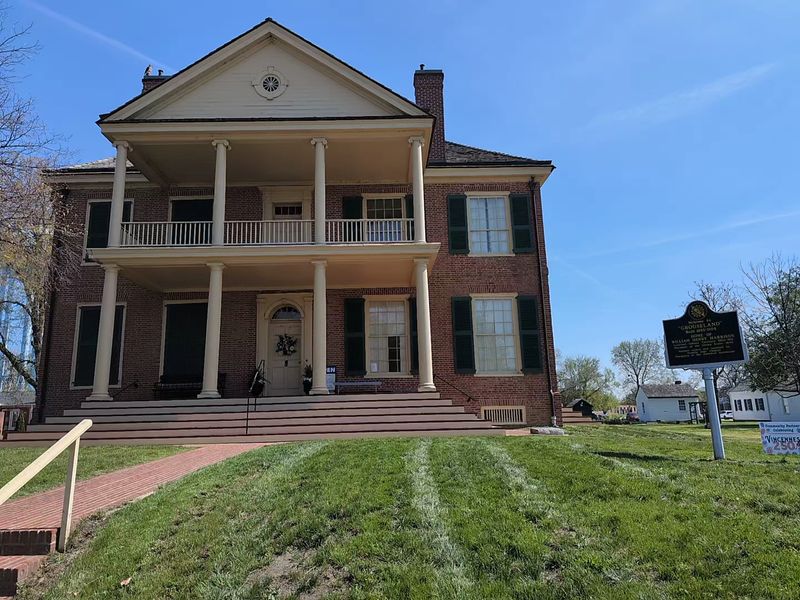
Here is something that most people do not expect when they visit a grand mansion: rifle slits built into the walls. Grouseland looks every bit the part of a refined gentleman’s residence from the outside, but Harrison had no intention of being caught off guard on the frontier.
The walls of this building measure an impressive 18 inches thick, engineered to withstand attack and provide cover for defenders firing back.
Small, strategic openings near ground level served as rifle vents, allowing people inside to shoot outward without exposing themselves to danger. A stockade wall once surrounded the property as well, turning the entire estate into a genuine defensive compound.
These were not decorative choices; they were survival decisions made by a man who understood exactly how dangerous life on the edge of the American frontier could be.
Seeing these features in person is one of those moments that makes history feel startlingly real. You stand next to a wall that looks perfectly elegant from a distance, and then your guide points out a small notch near the floor and explains what it was actually for.
It reframes everything. The mansion stops being just a beautiful old building and becomes something much more dramatic, a place where comfort and danger existed side by side every single day.
That tension is what makes Grouseland unlike almost any other historic home in the country.
Federal Architecture That Defied Its Surroundings
Picture the Indiana Territory in 1802. Log cabins, dirt paths, and a tiny settlement of roughly 700 people huddled near the Wabash River.
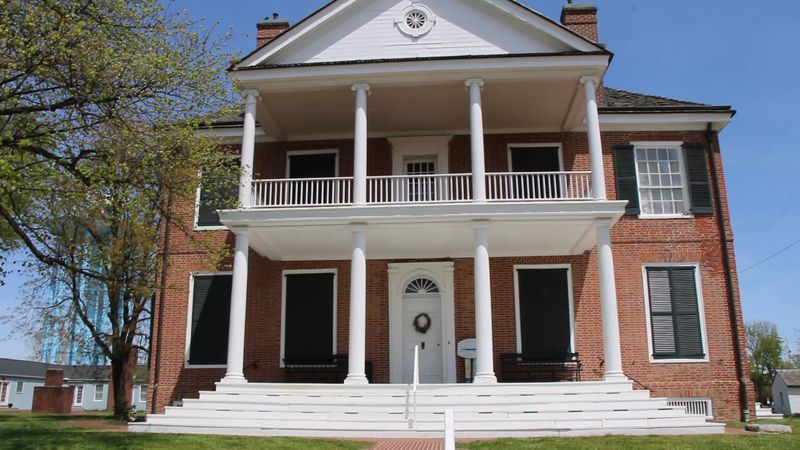
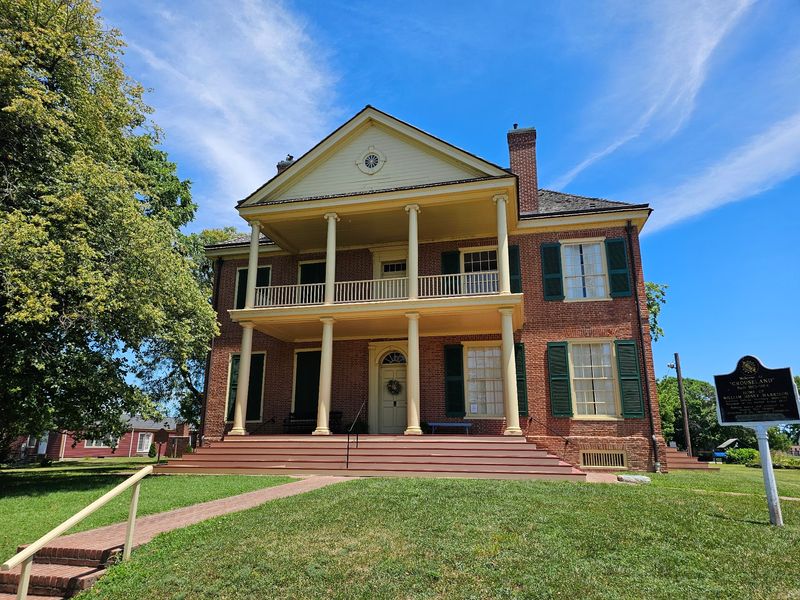
Now picture a two-story red brick mansion with dormer windows, a high-pitched roof, and the kind of symmetrical elegance associated with the great estates of Virginia. That contrast is exactly what made Grouseland so extraordinary when it was first built.
Grouseland is widely believed to be the first brick building constructed in Vincennes, and possibly in the entire Indiana Territory. Architect William Lindsay designed the structure in the Federal style, drawing on the architectural traditions Harrison had grown up with back east.
The bricks were made locally, and the limestone foundation came from nearby quarries, which means the building is rooted in Indiana soil in the most literal sense possible.
Every design choice communicated something deliberate. Harrison wanted to signal permanence, civilization, and authority in a place that was still very much a wilderness.
The building was a statement as much as it was a home. Even today, standing in front of it, you get a sense of how bold that vision must have seemed to the people who first saw it rise from the ground.
The craftsmanship has held up remarkably well, and the restored details make it easy to appreciate just how much skill and intention went into every brick and beam.
Where Frontier Diplomacy Shaped a Nation
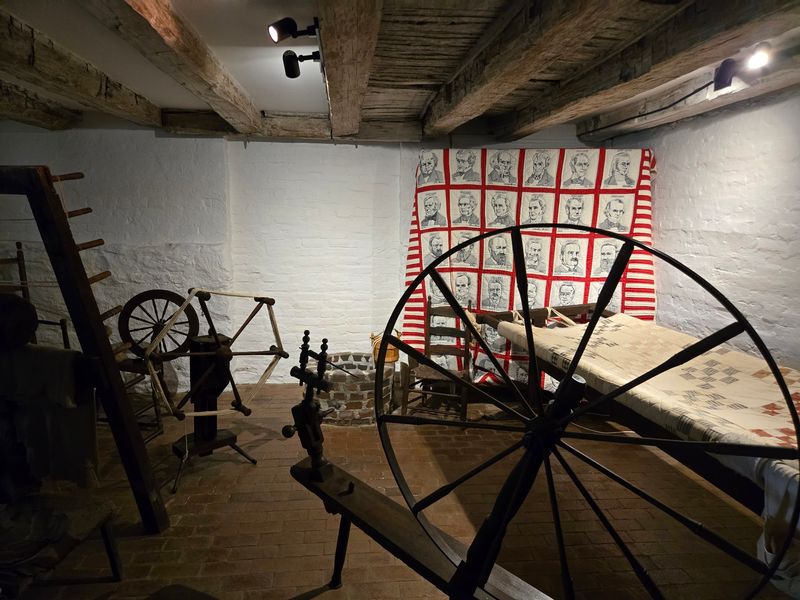
Some rooms carry a heavier atmosphere than others, and the council chamber at Grouseland is one of those spaces.
This is where Governor Harrison received Native American leaders, negotiated land agreements, and conducted the official business of a territory that stretched across what would eventually become Indiana, Illinois, Michigan, and Wisconsin.
The weight of those conversations still seems to linger in the air.
The Treaty of Grouseland was negotiated here in 1805, with influential leaders including Little Turtle and Buckongahelas present at the table. Then, in 1810 and 1811, the formidable Shawnee leader Tecumseh came to this very building for tense and consequential meetings with Harrison.
These were not friendly diplomatic exchanges; they were high-stakes confrontations over land, sovereignty, and the future of entire peoples.
Learning about these events inside the actual space where they happened gives them a completely different weight. History class never quite prepared me for how small and immediate that room would feel, or how close together these figures must have stood while deciding the fate of millions of acres.
The guides explain the context with real care, making sure visitors understand the complexity of these moments rather than flattening them into simple stories. Grouseland offers a chance to sit with that complexity, and that is something genuinely rare in a historic site visit.
Can You Believe This Place Is Packed With Authentic Artifacts
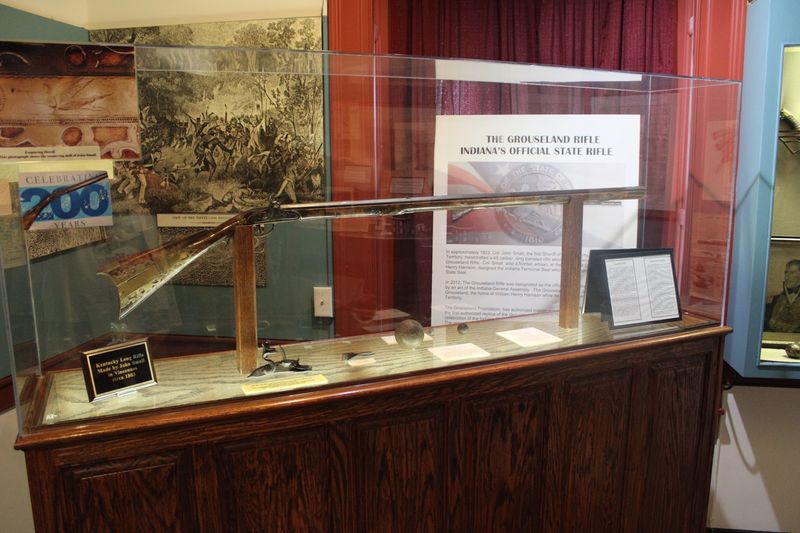
The collection inside Grouseland goes well beyond what you might expect from a small-town historic site. The mansion is furnished with period pieces from the early 1800s, many of which have direct connections to William Henry Harrison and his family.
His writing desk, the family dining table, personal objects from everyday life; all of it is here, arranged in a way that feels lived-in rather than staged.
Three original portraits of Harrison are on display, offering a rare visual record of the man at different points in his life.
These are not reproductions or prints; they are the real thing, and seeing them in the same building where he once worked and raised his family adds a layer of authenticity that is hard to replicate anywhere else.
The gift shop also carries some genuinely thoughtful items if you want to bring a piece of the history home with you.
One of the standout pieces in the collection is the Grouseland Rifle, crafted by Colonel John Small of Vincennes between 1803 and 1812. This long rifle holds the distinction of being the official state rifle of Indiana, and seeing it in person makes that title feel completely earned.
It is a beautiful object with a fascinating story attached to it. Each artifact in this building adds another thread to the larger story of frontier life, and together they create a picture that is both intimate and sweeping.
A Preservation Story Worth Celebrating
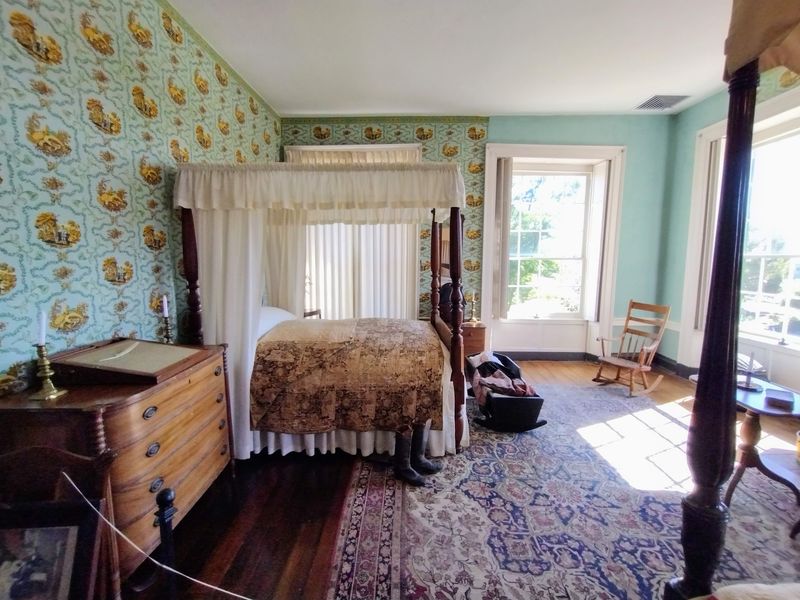
Grouseland almost did not survive into the modern era. In the early twentieth century, the building faced a very real threat of demolition, the kind of fate that has claimed far too many irreplaceable historic structures across the country.
Fortunately, the Francis Vigo Chapter of the Daughters of the American Revolution stepped in and saved the building from destruction in 1911. That intervention changed everything.
Since that rescue, the mansion has undergone extensive and painstaking restoration work aimed at returning it to its appearance during Harrison’s residency from 1800 to 1812. Original wood floors have been uncovered and preserved.
Plaster repairs have been carried out with careful attention to historical accuracy. Period-correct wall treatments have been recreated in key rooms like the dining room and council chamber, based on research into what those spaces would have actually looked like.
The Grouseland Foundation now manages the property, relying on a dedicated volunteer board to keep the site running and its educational programs active. That community-driven commitment shows in every corner of the building.
Nothing here feels neglected or half-finished; it feels genuinely cared for. Visiting Grouseland means benefiting from over a century of dedicated effort by people who believed this place was worth saving.
That kind of long-term commitment to preservation is something to appreciate deeply, especially when you see how beautifully the results have turned out.
Have You Thought About What Frontier Life Really Felt Like
Most people think of the early 1800s American frontier as something abstract, a concept from a history book rather than a lived reality. Grouseland changes that.
Being inside this building, surrounded by the actual objects and spaces that shaped daily life here, makes the era feel immediate and surprisingly relatable.
You start to imagine what it meant to wake up every morning in a house this grand, in a settlement this small, surrounded by a wilderness this vast.
Harrison built Grouseland at considerable personal expense, pouring resources into a structure that stood in sharp contrast to everything around it. The town of Vincennes had a population of only around 700 people at the time.
The nearest established roads were rough and unreliable. Getting skilled labor and quality materials to this location required serious logistical effort, and the fact that the building has stood for over two centuries speaks to the quality of that effort.
There is a particular kind of quiet that settles over you when you spend time here. It is not just the stillness of an old building; it is the feeling of being in a place where something genuinely significant happened, repeatedly, over many years.
Grouseland is the kind of site that rewards curiosity. The more questions you bring with you, the more satisfying the visit becomes.
Address: 3 West Scott Street, Vincennes, Indiana.
