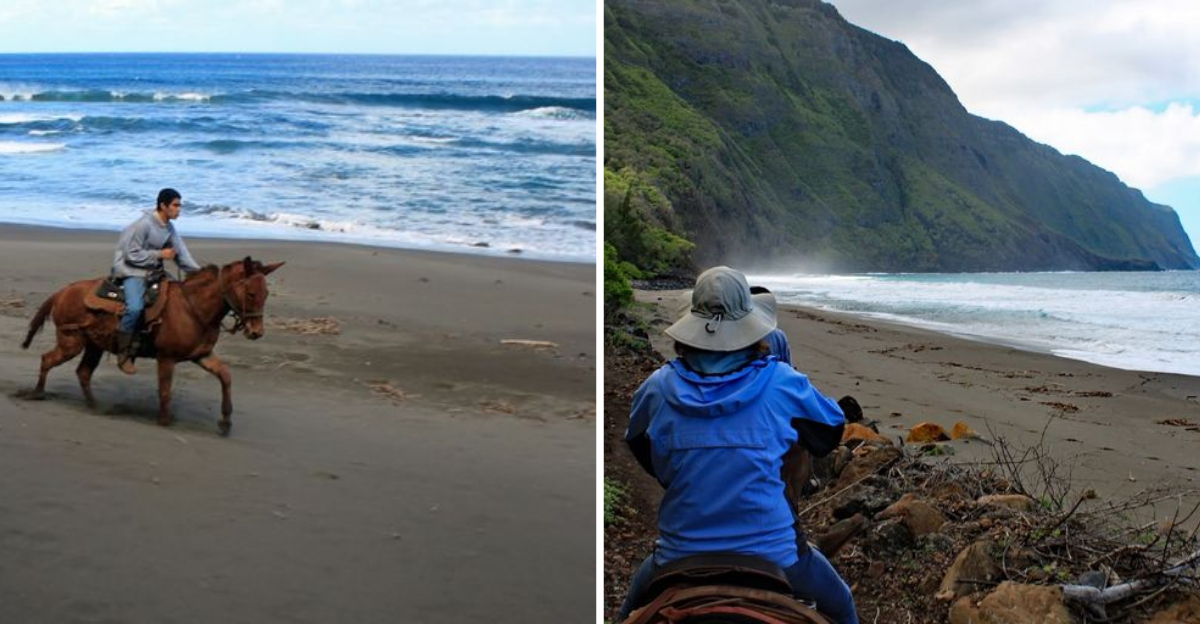
Backed by some of the tallest sea cliffs on Earth and sitting on a historically profound peninsula, that dark-sand beach in Hawaii exists in a world almost entirely its own.
I first read about it and thought the access requirements sounded more like an expedition checklist than a beach trip.
A small plane, a guided tour, strict permits, and a minimum age just to set foot on the peninsula. But that is exactly what makes it so extraordinary.
I found myself on that dark sand, cliffs rising behind me, the water stretching out in front, and realized the effort was part of the point.
The waves rolled in with a rhythm that felt older than anything I had ever witnessed, and the silence between them was heavy, almost sacred.
I sat there for a long time, not wanting to leave, knowing that most people would never see this place. It is not just a destination, it is an experience that starts long before you ever see the water.
Getting There: The Only Ways to Reach Awahua Beach
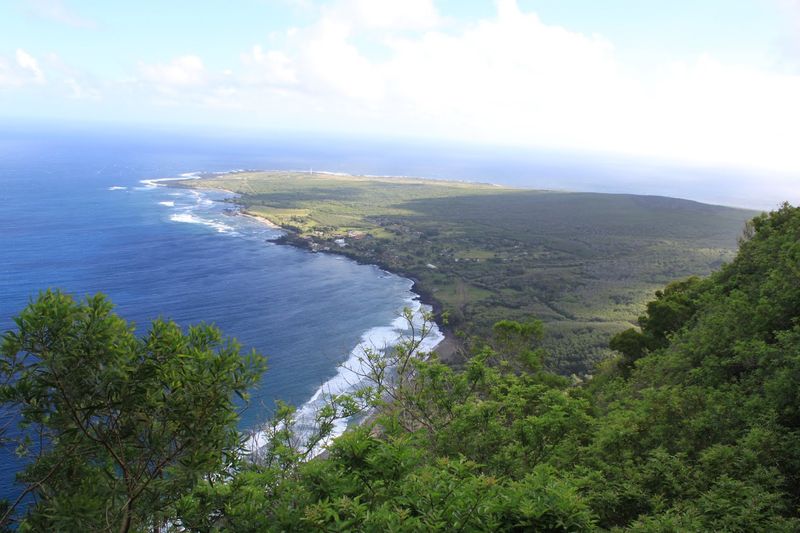
Most beaches have a parking lot. Awahua Beach has a small plane, a cliffside trail, and a history that makes the journey feel as meaningful as the destination itself.
Getting to this remote shoreline on the Kalaupapa Peninsula is not a casual decision. It requires planning, permits, and a genuine sense of adventure.
For most visitors today, the primary way to access Kalaupapa is by boarding a small aircraft, usually as part of an officially approved guided tour.
The peninsula has no road connection to the rest of Molokai, which means flying in is the most reliable option currently available.
Tour operators coordinate arrival and departure, and the whole experience is carefully managed to respect both the natural landscape and the peninsula’s resident community.
Historically, visitors could also descend the dramatic cliffs on foot or by mule. The Kalaupapa Trail winds down roughly 3 to 3.5 miles with 26 switchbacks and a steep elevation drop of around 1,600 to 2,000 feet.
The mule ride operation is no longer running, and public hiking access may be restricted depending on current regulations. It is always smart to check the latest guidance from Kalaupapa National Historical Park before making any plans.
Whatever method gets you there, the arrival itself is unforgettable. Dropping down from the cliffs or stepping off a small plane onto the peninsula feels unlike anything else in Hawaii.
The isolation is immediate and total, and Awahua Beach waits quietly at the edge of it all.
The Kalaupapa Trail: A Cliffside Path Like No Other
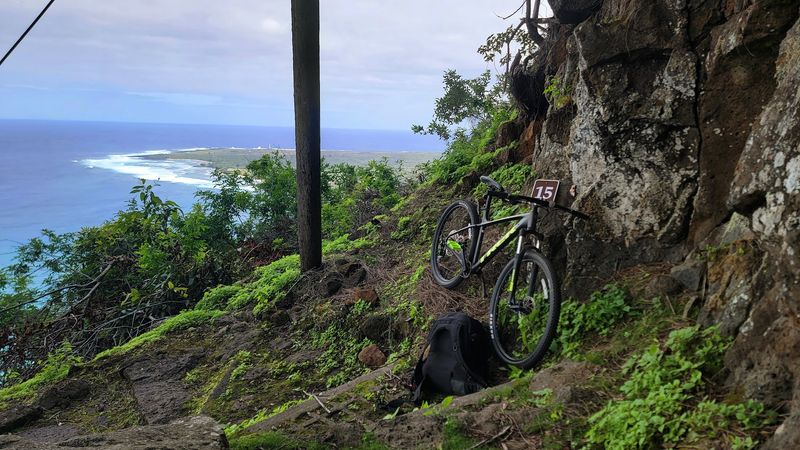
Few hikes in Hawaii come with this much weight attached to them.
The Kalaupapa Trail drops nearly 2,000 feet down the face of some of the world’s tallest sea cliffs, and every switchback feels like a reminder of just how isolated this place really is.
Twenty-six turns, loose footing in places, and views that stretch endlessly over the Pacific.
The trail runs about 3 to 3.5 miles one way, which sounds manageable until you factor in the steep grade and the fact that you have to come back up. Most people who have done it describe the descent as breathtaking in every sense of the word.
Your legs feel the effort immediately, but your eyes keep pulling your attention away from the path and toward the ocean far below.
Access to the trail is tied to the same permit and guided tour system that governs the entire peninsula. You cannot simply show up and start hiking.
Arrangements need to be made in advance, and the trail conditions can vary depending on weather and seasonal factors.
Checking in with Kalaupapa National Historical Park for the most current access information is genuinely important before planning a trip around this route.
What makes the trail special is not just the physical challenge. It is the sense of crossing into a completely different world with each step downward.
By the time you reach the bottom, the cliffs tower above you and the rest of Molokai feels impossibly far away. That feeling stays with you.
Awahua Beach: What the Dark Sand Actually Looks Like Up Close
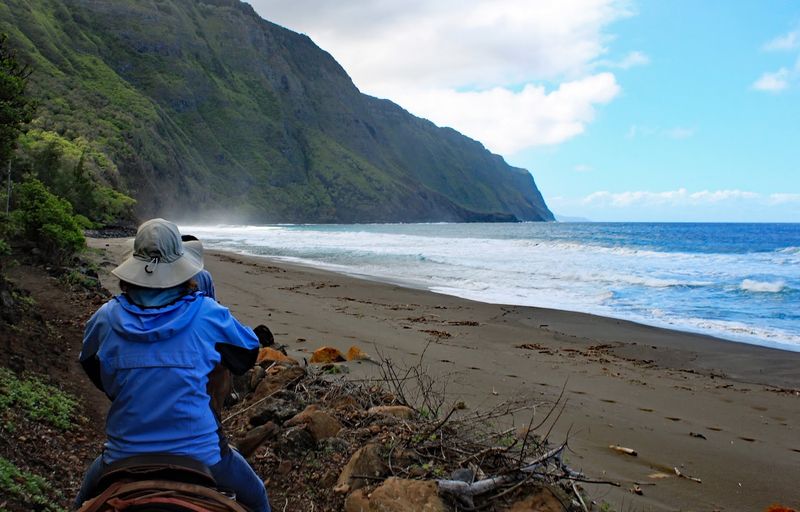
The first thing that surprises most people about Awahua Beach is the color of the sand. It is dark, almost charcoal in tone, and it stretches along the base of cliffs that rise so high above you that looking up feels slightly dizzying.
The combination of the dark shore, the deep blue water, and the sheer cliff walls creates a visual that is genuinely hard to describe without sounding like you are exaggerating.
Unlike many of Hawaii’s famous black sand beaches, which are formed from volcanic lava, the dark sand here comes from eroded sandstone.
That distinction gives the beach a slightly different texture and appearance, a bit coarser and more layered in color when you look closely.
It is one of those small details that makes the place feel even more unusual and specific.
The beach is not large, and it does not need to be. Its power comes from the landscape surrounding it rather than the size of the shoreline itself.
The cliffs frame everything, and the open ocean stretches out in front without any reef to soften the waves. It has a raw, exposed quality that feels nothing like the calm resort beaches most visitors associate with Hawaii.
Sitting on that dark sand and just taking in the scale of the cliffs above and the ocean ahead is one of those travel moments that quietly resets your sense of what is possible. It is not dramatic in a loud way.
It is dramatic in the way that real, untouched places tend to be.
Ocean Conditions: Why Swimming Here Is Strongly Discouraged
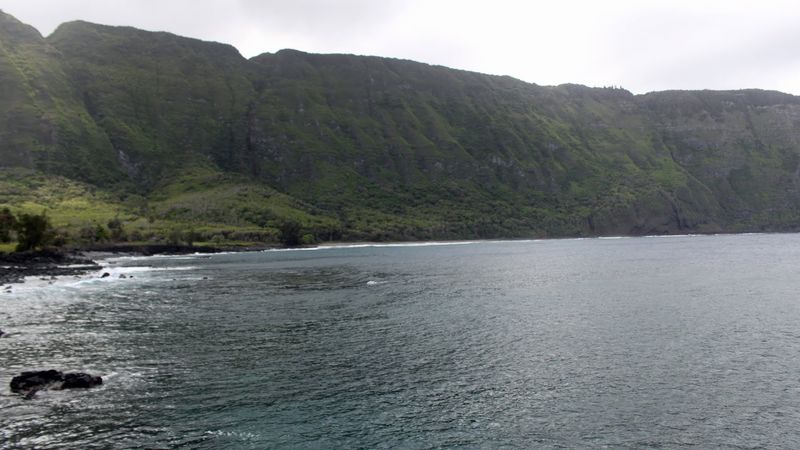
Awahua Beach looks stunning in photographs, and that beauty can be quietly misleading. The ocean here is not a place for swimming, wading, or surfing.
There is no protective reef between the shoreline and the open Pacific, which means waves arrive with full force and the currents are genuinely dangerous. The nearshore drop-off is sharp, and conditions can shift without much warning.
Rip currents are a serious concern. The combination of exposed ocean surf, powerful water movement, and an abrupt underwater shelf makes this one of the more hazardous shorelines in all of Hawaii.
Authorities and park staff strongly discourage any water entry, and that guidance is worth taking seriously rather than testing personally.
This is one of those places where the appeal is entirely visual and atmospheric rather than recreational.
You come to see it, to stand near it, to feel the spray and hear the waves hit the sand with that deep, full-body sound that only open-ocean beaches produce.
The experience of being there does not require getting in the water.
For travelers used to calm, clear snorkeling spots on Maui or Oahu, the energy at Awahua Beach can feel startling.
The ocean here seems less like an invitation and more like a force of nature doing its own thing completely independent of visitors.
Respecting that boundary is part of what makes the visit feel right. Some places are meant to be witnessed rather than entered, and Awahua Beach is absolutely one of them.
Kalaupapa National Historical Park: The History You Need to Know Before You Visit
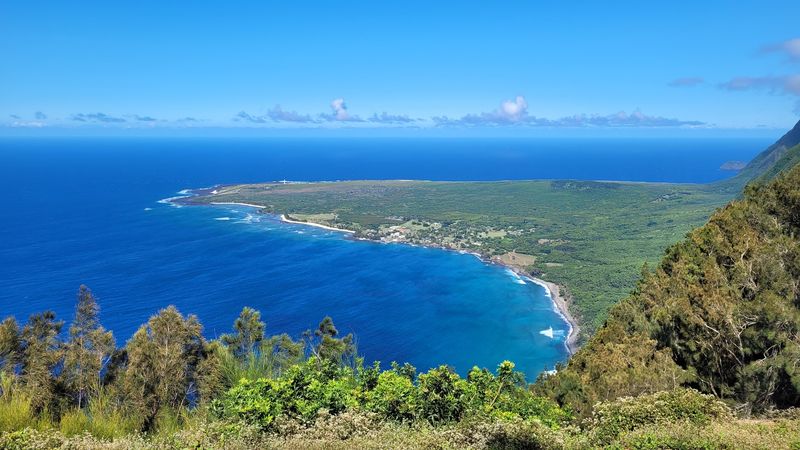
Awahua Beach sits within Kalaupapa National Historical Park, and understanding the history of that peninsula changes how you experience everything around you.
From 1866 to 1969, Kalaupapa served as a place of forced isolation for people diagnosed with Hansen’s disease, commonly known as leprosy.
Thousands of individuals were sent here against their will, separated from their families and communities by law.
The peninsula is still home to a small number of aging residents who chose to remain after the isolation laws ended. Their privacy is protected and deeply respected.
This is a significant reason why all visits are strictly controlled through guided tours, permits, and regulated access.
The park exists not only to preserve the natural landscape but to honor the lives and stories of those who lived here under incredibly difficult circumstances.
Visiting with that awareness makes the quiet of the place feel different. The stillness is not just geographic isolation.
It carries history in a way that few national parks in the United States do. Tour guides share stories rooted in the real experiences of the people who lived here, and those stories tend to stay with visitors long after they leave.
There are no restaurants, no cafes, and no medical facilities on the peninsula. Visitors need to come prepared with everything they need, and departure is not always guaranteed if weather conditions change.
That level of logistical seriousness is part of what keeps Kalaupapa feeling genuinely preserved rather than packaged for tourism.
Practical Tips for Planning a Visit to Awahua Beach
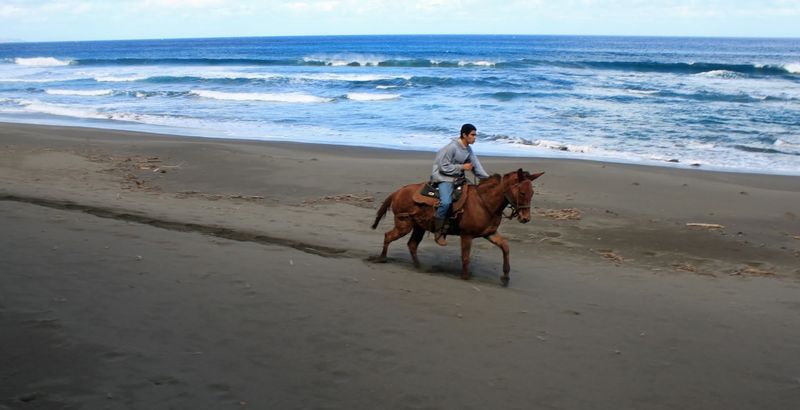
Planning a trip to Awahua Beach takes more preparation than almost any other beach visit in Hawaii. The access requirements are specific, and skipping any step typically means not getting in at all.
Permits are required, tours must be arranged through approved operators, and visitors must be at least 16 years old to participate in the general guided tours available to the public.
Small plane flights are currently the primary way to reach the peninsula, and those flights are usually bundled with a guided tour package. Booking well in advance is genuinely necessary, especially during peak travel seasons.
Tour availability can be limited, and the logistics of coordinating flights with guided access mean that flexibility in your travel dates helps considerably.
There are no food or beverage facilities on the peninsula, so packing your own supplies is essential. Water, snacks, and any personal medications should all come with you.
The weather can be unpredictable, and in some conditions, flights and departures may be delayed or cancelled. Building some flexibility into your schedule around the visit is a practical move rather than an overly cautious one.
Comfortable walking shoes matter more than you might expect. Even if you arrive by plane, the guided tour involves moving around the peninsula on foot.
Sunscreen, a hat, and a light layer for wind are all worth bringing. The experience itself is unlike anything else Hawaii offers, and arriving prepared means you spend your time fully present rather than managing small discomforts.
Address: 7 Puahi Street, Kalaupapa, HI 96742.
